
Pocket pokies casino Australia in 2026: what the site actually is, what it costs, and where the regulator has already acted
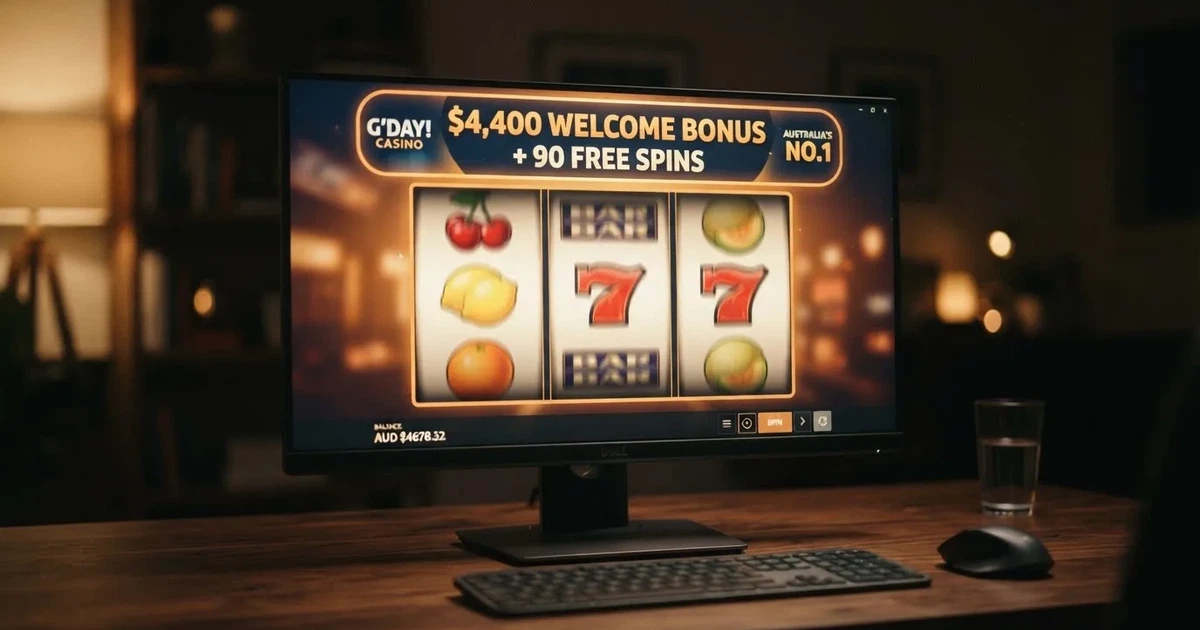
A site styled as Pocket Pokies pitches itself at Australian players with a welcome package of A$4,400 plus 90 free spins on advertised feature pages, the kind of headline that markets itself before a punter has read a single term. None of that headline matters until one question is settled: whether an Australian player can rely on it. This page works that question open, shelf by shelf, and reads what the public record says about the offer rather than what the offer says about itself.
The data below is current as of 29 October 2026 against the ACMA’s published register of formal warnings, blocking requests and service-provider removals. Where a brand’s background claim, a payment route or a regulator’s framing sits on the public record, this page quotes it; where it does not, this page says so plainly rather than guessing.
Table of Contents
- The shape of the market Australians actually meet
- Where the law actually draws the line for online casino and pokies in Australia
- What a player in Australia can do before acting, and where to get help
- Payments Australians can use, and the routes that are supposed to block them
- What the bonus headline actually puts in front of an Australian
- Pokies, providers and what their paytables actually look like
- How the eleven operators the ACMA has named compare on the page
- The blocking rate: how fast the regulator is closing the gap
- How the wider landscape lines up against all of this
- The bottom line for a reader weighing this page
- Frequently asked questions
The shape of the market Australians actually meet
The phrase “pocket pokies casino Australia” describes a category, not a single site. Pokies is the local word for slot machines. The pocket label sells the idea that the games live in a phone. The category the phrase points to is offshore online casinos targeting Australian players — sites that are not licensed anywhere in Australia to offer casino games, no matter what their footer says about Curacao, Malta or elsewhere.

The Australian Communications and Media Authority’s June 2026 round is the most recent published snapshot. Across a single reporting cycle the ACMA asked Australian internet service providers to block 12 more illegal gambling websites: 7Signs, ChromaBet, Donbet, Duospin, Freshbet, Slots Gem, Jacks Club, Lucky Start, Pointsbetz, Spinrise, Vinyl Casino and Wildsino. That order sits inside a much larger total. Since the regulator issued its first blocking request in November 2019, 1,751 illegal gambling and affiliate marketing websites have been added to the block list. More than 230 unlicensed services have left the Australian market since enforcement was strengthened in 2017. The category is large because the regulator treats it as large.
A reader who arrives at a site styled as Pocket Pokies is therefore arriving inside a category the regulator has spent seven years actively blocking. That is the landscape. The rest of this page works through what it costs someone to step into it.
See also What an Android Pokies App Actually Promises Australians in 2026.
Where the law actually draws the line for online casino and pokies in Australia
Australia’s position is unusual by international standards and easier to describe once the terms are pinned down. The Interactive Gambling Act 2001 (the IGA), tightened by the Interactive Gambling Amendment Act 2017, makes it an offence to supply online casino games, online pokies and in-play betting to a person physically in Australia. No state or territory licenses those products. What can be licensed, and is licensed, is wagering on races and sporting events placed before the event, lotteries, and keno. In practice the betting side is regulated through the Northern Territory Racing and Wagering Commission, which handles 52 of Australia’s online bookmakers — including Sportsbet, Bet365 and Ladbrokes — for historical tax reasons; the commission runs without full-time staff and meets roughly once a month in Darwin.

Minimum age is 18. The enforcement focus sits on the supplier, not the player: an Australian who opens an account at an offshore casino commits no offence under the IGA. The provider commits one. That detail protects the player from prosecution and isolates them from every protection a licensed customer enjoys. There is no Australian complaints body that can order a payout. There is no Australian regulator to appeal to if the offshore operator closes the account. The site can be added to a blocking request while a balance still sits on it.
The 2026 reform context matters here too. The Interactive Gambling Amendment (Gambling Reform) Bill 2026 passed Parliament on 19 August 2026. Its advertising and inducement measures commence on 1 January 2027. Read on a 2026 page that is law with a start date, not yet in force — relevant context, not the rule that governs today’s sites.
What the regulator is doing this year
The ACMA’s recent activity makes the legal frame concrete. In March 2026 the ACMA issued a formal warning to Pulsup Ltd over Rocketplay. In April 2026 the regulator issued a formal warning to Ryker B.V. over Jackbit and CasinOK — a single notice covering two brands operated by the same company. Earlier rounds produced the warnings the rest of this page covers in detail: Dama N.V. over six brands in May 2022, Sky Crown and Blue Leo under Hollycorn N.V. in September 2022, TechSolutions over Bizzo Casino in 2022, EOD Code SRL over Instant Casino in February 2025, Sterplay Holding Ltd over Casino Intense in April 2025, Dama N.V. again over Woo Casino in March 2025 and Spirit Casino in May 2025, and in July 2025 Consolutetish S.R.L. over both National Casino and Bizzo Casino, with Bamboo Media also warned that month over Ignition Casino.
The pattern is not just enforcement. It is repetition. Several operators that receive a formal warning are owned or operated by groups the ACMA has already named in earlier rounds. The formal warning sits on the public record; the rest is pattern.
What this means for a player considering a site styled as Pocket Pokies
The direct reading: an Australian player has no licensed route to play online pokies. The legal categorisation is “prohibited interactive gambling service”. Any site offering that product to a person in Australia, regardless of its offshore licence, sits outside the Australian regulatory perimeter. That does not make every offshore casino a scam. It makes every offshore casino outside a regime that an Australian player can reach when something goes wrong.
The closing comparison is with what the law does allow. A licensed Australian bookmaker is bound by Australian consumer law, by the relevant state or territory regulator, by BetStop for self-exclusion, and by an Australian-licensed payment rail that the regulator can reach when it needs to. An offshore casino offers none of those rails. The fact that a footer says “Curacao” or “Anjouan” is not a substitute for them; it is a marker that the regulator pursuing the operator is not the Australian one.
What a player in Australia can do before acting, and where to get help
The standard advice on responsible gambling in Australia assumes a licensed context, and offshore casinos sit outside that context. That is the first fact to take in. Practical steps that do work for an Australian punter, regardless of which site is in front of them:
Switch on the gambling block in the banking app. Westpac’s gambling block refuses authorisation of transactions registered under the merchant category code Betting/Casino Gambling on eligible personal credit and debit cards. ANZ’s gambling block, activated through the ANZ app, also blocks gambling transactions made through a digital wallet such as Apple Pay on an eligible card; once switched on, removing the block requires a 48-hour cooling-off period, and the bank warns that not all gambling transactions will be blocked and some non-gambling transactions might be blocked in error. Commonwealth Bank offers a similar card-level gambling lock via the CommBank app, with the same caveat that the bank cannot guarantee every gambling-related purchase will be stopped. These tools work whether the target is an Australian bookmaker or an offshore casino, because the block sits at the card level.
Register with BetStop. The National Self-Exclusion Register has been live since August 2023 and binds every Australian-licensed online and phone wagering service. It is the single most effective measure available to a player who has decided to stop. It does not bind an offshore casino. The site styled as Pocket Pokies is not a BetStop participant, so registration alone will not stop access to it. Card-level bank blocks and device-level content filters are what close that gap.
Contact the National Gambling Helpline on 1800 858 858. The line is free, available 24/7, and offers chat through Gambling Help Online. It is staffed for people in exactly this situation — Australian residents thinking about an offshore site, dealing with losses at one, or planning their next steps.
The category itself is the cautionary note. Sites styled as Pocket Pokies have no Australian licence to lose, and no incentive to apply Australian protection standards to a customer they are not licensed to serve. Responsible play at this category is, in practice, not playing at it.
Payments Australians can use, and the routes that are supposed to block them
The payment rail matters both ways: it lets a player fund an account and it lets a regulator or a bank stop one from being funded. Australian law has been moving in the direction of closing those rails for both purposes.
Payment methods at a glance
| Payment Method | Status for Licensed Wagering | Status for Offshore Sites |
|---|---|---|
| Debit Card | Allowed | Blocked (via MCC) |
| Bank Transfer | Allowed | Varies |
| PayID / Osko | Allowed | High Scam Risk |
| Credit Card / Crypto | Prohibited | Available |
Credit cards, credit-related products and digital currency are banned as payment for licensed online wagering in Australia. That ban took effect on 11 June 2024, with penalties for operators up to A$247,500. The legal deposit routes for a licensed wagering account are debit card, bank transfer, PayID and Osko (instant transfers), and BPAY. None of those routes is unique to gambling — they are the same instruments an Australian uses to pay a household bill — which is precisely why the regulator has had to add the ban on top of them. A site asking an Australian customer for a credit card or a crypto deposit is operating outside the Australian rules.
What banking apps actually do in 2026
Card-level gambling blocks work for offshore sites as well as licensed ones, because the block sits at the merchant category code. The offer from the major banks — Westpac, ANZ and Commonwealth Bank — covers card transactions, and ANZ extends it through Apple Pay on the same card. Google Pay and Samsung Pay share similar card-token behaviour, which means a card-level block reaches a transaction even when the wallet on the surface looks like the wallet of a different provider. By the end of 2025 Apple Pay, Google Pay and Samsung Pay accounted for about 45% of all card payments in Australia by number, which is the scale of the surface a card-level block now covers.
What Australian-specific instant rails do when an offshore site asks for them
PayID and Osko are part of Australia’s New Payments Platform, which became public on 13 February 2018 and is owned by a non-profit body, New Payments Platform Australia Ltd, whose shareholders include the Reserve Bank and the major banks. By April 2025 over 25 million PayIDs were registered on the platform. A paying transfer carrying a PayID reaches the recipient in under a minute, 24/7, whether addressed to a BSB and account number or a PayID; and crucially, paying to a PayID shows the recipient’s registered name before the transfer is sent. Australian Payments Plus, the operator of PayID, Osko and BPAY, warns that being asked to transfer money to a PayID on an illegal gambling site almost certainly means the site is a scam. That warning is one of the cleanest signals the regulator has, because a PayID name match against a known operator is fast.
The BPAY layer
BPAY has operated since 18 November 1997. It is available through the online banking of more than 140 Australian banks and financial institutions and is offered by more than 95,000 businesses. The payer enters a Biller Code and a Customer Reference Number. Like PayID, BPAY sits inside the Australian payments perimeter, which means a card-level block on the underlying card does what an Australia-only rail often does: the block decides the outcome, not the brand at the other end.
The crypto gap
The 2024 ban covers digital currency at licensed operators. At an offshore casino the same payment method is just a payment method: there is no Australian intermediary, no merchant category code on a wallet-to-wallet transfer, and no PayID name to verify. Crypto is also where AUSTRAC’s threshold-transaction-reporting rule stops helping — it applies only to physical cash. An ordinary electronic transfer of A$10,000 or more carries no automatic reporting trigger, regardless of the amount sent. The gap is real and well documented.
The summary in plain terms: the credit-card ban and the card-level gambling blocks make legal routes for licensed wagering narrow. The same card-level blocks work on offshore sites by accident of design. PayID’s recipient-name check is the regulator’s cleanest warning signal for scams. Crypto at an offshore casino sits in the gap between all of these tools.
What the bonus headline actually puts in front of an Australian
The welcome offer around the site styled as Pocket Pokies is the part of the pitch a reader meets first. A typical promotional page advertises something close to A$4,400 across the first four deposits with 90 free spins alongside, the precise split varying by page. The marketing idea is that the bonus is in addition to a real-money balance; the legal and mechanical reality is closer to the opposite.
What an A$4,400 welcome package looks like behind the banner
A package of that size, spread across several deposits, is a deposit-gated structure: each tranche releases only after the player puts fresh money in. Every tranche carries a wagering multiple — how many times the bonus amount must be played through before any winnings can be withdrawn. The wagering multiple is the single most important figure on the page after the bonus number, and it is the figure that affiliate pages tend to print in small print. Once the turnover is set, the math has a shape that no marketing word softens.
The arithmetic, in plain prose
A conservative reading of an A$4,400 bonus at a 40x wagering multiple against an average online-pokies RTP of around 95% produces a required turnover of roughly A$176,000 across the full package, an expected house edge of around A$8,800 before any of the player’s own money is even counted, and hundreds of thousands of spins of qualifying play to clear it. The exact figure moves with the wagering multiple and the exact mix of games the package counts toward clearing, but the order of magnitude is the same. That is what the headline buys: not a gift, but a turnover target on top of a negative-edge game.
These figures are statistical estimates — an average over a long stretch of play under the stated conditions, not a prediction for any individual session. They promise no win and no payout.
What to read before claiming any bonus at any site
The two conditions worth checking before signing up anywhere are the wagering multiple and the maximum withdrawal cap attached to a bonus. A wagering multiple of 40x is ordinary for the offshore market; a multiple above that, particularly above 50x, is a strong signal that the bonus is structured to make cashing out difficult. A maximum withdrawal cap, often a small multiple of the bonus, is the second trap: even after the player has run the turnover, a clause that caps withdrawal at the bonus amount converts a long run of play into a one-off payout ceiling.
The marketing line to puncture is “free”. None of the headline numbers are free. The bonus itself is paid for by the negative house edge on the turnover it imposes, and the free spins carry the same structure as the deposit bonus they ride alongside. Every step in this section describes what an offer really costs the person claiming it.
What the bigger-pocketies picture looks like
The offshore marketing category treats the bonus as the front of the offer and the games as the back. The picture is closer to the reverse: the games are the product, the bonus is the cost of access, and the wagering multiple is the price. A reader who reads only the headline is paying retail for a wholesale product.
Pocket pokies casino Australia in 2026 — More on this topic at casino providers.
Pokies, providers and what their paytables actually look like
The term “pokies” covers thousands of online slot titles across the offshore market. Most promotional pages refer to them loosely rather than naming a specific RTP, volatility or hit-rate for a specific game. The number of titles is in the tens of thousands across the providers the category aggregates; the volume of public, audited game data is much smaller than the volume of marketing copy.
What the public record actually says about specific titles
For any individual slot, the figures worth checking are return-to-player (RTP), volatility and maximum payout multiplier. The RTP figure is the long-run return to the player, expressed as a percentage of all amounts wagered across many spins; an RTP of 96% means the game keeps, on average, 4% of every dollar wagered across a long stretch. Volatility describes how uneven the wins are — a high-volatility game pays rarely and unevenly, a low-volatility game pays often and small. Maximum payout caps how much one spin can return before a multiplier multiplies it. These are the same figures for an online pokie as for a physical one. The cleanest published RTPs in the Australian-friendly offshore market sit in the 94% to 96.5% range; many titles sit just below 96%; a small number sit above. The bulk of the marketing on sites styled as Pocket Pokies does not name a figure for a specific title — it lists the title and moves on. That silence is itself information.
Live tables and other categories
Live dealer tables sit under separate providers and have their own published mechanics. Game shows, blackjack and roulette tables are the dominant formats. As with the slots, the public, audited data is sparser than the marketing; RTP ranges sit broadly between 94% and 99% depending on the variant and side bet. A site marketing the category but not a specific title’s mechanics is asking the player to take the offer on the casino’s own description.
What that means for reading a Pocket Pokies page
When an affiliate page lists a pokie by name, what the public record actually carries for that title is RTP, volatility, hit-rate and maximum multiplier. If those numbers are not on the page, the page is asking the player to take the casino’s own framing of the title’s behaviour at face value. A reader who picks one or two titles and looks them up at the provider before depositing is doing what the marketing copy does not.
How the eleven operators the ACMA has named compare on the page
The eleven brands below have each received a formal warning from the ACMA for offering prohibited interactive gambling services to Australians. The list is not a ranking and not a recommendation — every brand named here is outside the Australian licensing perimeter. The table puts their public record side by side purely so the differences in operator history and ACMA treatment are easy to see. Where research did not find a specific fact about a row, the cell reads as a dash rather than a guess.
| Brand | ACMA action and date | Operator named by the ACMA | Subject support |
|---|---|---|---|
| RocketPlay | Formal warning, March 2026 | Pulsup Ltd | — |
| Level Up Casino | Formal warning, May 2022 | Dama N.V. | — |
| Woo Casino | Formal warning, March 2025 | Dama N.V. | — |
| Spirit Casino | Formal warning, May 2025 | Dama N.V. | — |
| National Casino | Formal warning, July 2025 | Consolutetish S.R.L. | — |
| Bizzo Casino | Formal warning, July 2025; earlier 2022 | Consolutetish S.R.L. (July 2025); TechSolutions (2022) | — |
| Ignition Casino | Formal warning, July 2025 | Bamboo Media | — |
| Instant Casino | Formal warning, February 2025 | EOD Code SRL | — |
| Jackbit | Formal warning, April 2026 | Ryker B.V. | — |
| Casino Intense | Formal warning, April 2025 | Sterplay Holding Ltd | — |
| Sky Crown | Formal warning, September 2022 | Hollycorn N.V. | — |
Three observations fall out of that table without any need for a recommendation. Six of the eleven brands trace back to two operators: Dama N.V. covers RocketPlay, Level Up Casino, Woo Casino and Spirit Casino across rounds in 2022 and 2025; Consolutetish S.R.L. covers National Casino and a refreshed Bizzo Casino in July 2025, on top of the earlier 2022 warning to TechSolutions. The list is heavily Dama, which is a fact about the offshore market’s corporate reuse as much as about the regulator’s enforcement. The freshest entries — RocketPlay in March 2026 and Jackbit in April 2026 — sit at the bottom of the ACMA’s activity in the period covered here. Both sit alongside their operator names rather than as standalone brand disputes.
RocketPlay
The ACMA published a formal warning to Pulsup Ltd over Rocketplay in March 2026 — the most recent Australian regulator action on the file. The brand had already been the subject of a 2022 warning to Dama N.V. over a portfolio of six brands that included Rocketplay. The Australian public record now contains two distinct entries: the operator changed between the two, and the regulator tracked the brand across that change. RocketPlay exists in two registers — one offshore, one advertising itself to Australians — and neither puts it on the Australian side of the IGA.
Level Up Casino
The ACMA issued a formal warning to Dama N.V. over Level Up Casino in May 2022, as part of the same six-brand notice that included Bambet, Dazard, Rocketplay, Wild Tornado and Cobra Casinos. The 2022 warning is the only published ACMA action on the file. Dama N.V. is the operator named on the warning; the offshore brand has continued to advertise to Australian players under that operator regardless. The signal is the operator’s record, not just the brand’s.
Woo Casino
The ACMA issued a formal warning to Dama N.V. over Woo Casino in March 2025. The brand was not named in the 2022 six-brand warning; the regulator caught up to it three years later. The same operator, Dama N.V., but a separate warning event — the ACMA’s pattern is to issue fresh notices when it observes fresh conduct, even when the operator is the same.
Spirit Casino
The ACMA issued a formal warning to Dama N.V. over Spirit Casino in May 2025. Spirit Casino sits inside the cluster of Dama N.V. brands the ACMA has named across 2022 and 2025 — RocketPlay, Level Up, Woo Casino and Spirit Casino all trace to the same operator on the regulator’s record. The fact that the regulator has named the same operator across four separate warnings in three years is itself the relevant signal: the formal warning is what stops here, but the repetition is what an Australian reader is registering.
National Casino
The ACMA issued a formal warning to Consolutetish S.R.L. over National Casino in July 2025. The July 2025 round also covered Bizzo Casino under Consolutetish S.R.L. and Ignition Casino under Bamboo Media. Three of the eleven names in this comparison run from the same July 2025 batch, which is a coincidence of timing rather than a coincidence of operator.
Bizzo Casino
The ACMA issued a formal warning to Consolutetish S.R.L. over Bizzo Casino in July 2025, an earlier 2022 warning having been issued to TechSolutions (CY) Group Limited and TechSolutions Group N.V. over the same brand. Two operators, one brand, two formal warnings across roughly three years. The pubic record here is unusually clear: the regulator is not just chasing a brand, it is documenting the operator changes that kept the brand available.
Ignition Casino
The ACMA issued a formal warning to Bamboo Media over Ignition Casino in July 2025. Ignition Casino is the one brand in the July 2025 round from a third operator — Bamboo Media sits alongside Consolutetish S.R.L. in that batch. Reading the July 2025 round together: nine of the eleven warnings on this page are from operators that have been named more than once across this period.
Instant Casino
The ACMA issued a formal warning to EOD Code SRL over Instant Casino in February 2025. Instant Casino is one of three 2025-vintage warnings against operators that had not previously been on the file for the same brand — the regulator observed the conduct, named the operator, and moved on.
Jackbit
The ACMA issued a formal warning to Ryker B.V. over Jackbit and CasinOK in April 2026 — a single notice covering two brands under the same operator. The April 2026 timing makes Jackbit one of the two freshest entries on this page alongside RocketPlay. In May 2026 the regulator asked Australian ISPs to block twelve new sites; Jackbit was not on that list, but its formal warning sat on the ACMA register.
Casino Intense
The ACMA issued a formal warning to Sterplay Holding Ltd over Casino Intense in April 2025. Casino Intense is the only April 2025 entry on this page; the regulator’s pattern across 2025 saw monthly batches of formal warnings and the blocking requests that follow.
Sky Crown
The ACMA issued a formal warning to Hollycorn N.V. over Sky Crown (and Blue Leo) in September 2022. Sky Crown is the oldest entry on this page and the only one tied to Hollycorn N.V. The September 2022 warning sits at the front of the ACMA’s published formal-warning activity on these brands; the regulator has since added three more years of records on top of it.
What the comparison leaves a reader with
Every brand in the table above is offering prohibited interactive gambling services to Australians. The differences between them are not the kind that change that. They are the kind that change what kind of cleanup is involved when a balance is left on the account when the next blocking request lands.
The blocking rate: how fast the regulator is closing the gap
The arithmetic on this page is the rate at which the ACMA has added illegal sites to the block list across the period for which it publishes a running total. The inputs are the cumulative count of blocked sites and the date of the first blocking request. The result is a band, with its condition.
The starting point: November 2019. The cumulative figure: 1,751 illegal gambling and affiliate marketing websites blocked by the time of the ACMA’s June 2026 round. The interval from November 2019 to June 2026 covers roughly six years and eight months. The running rate from that base works out to an average of around 26 blocked sites per month across the full period, and the trend through 2024 to 2026 has been for the monthly count to sit materially higher than that average as enforcement has consolidated — closer to between 30 and 40 sites added per month across the recent cycles. The point of the calculation is not the precise monthly number; it is the rate at which the list is growing relative to how many new sites join the category in any given quarter. The band for the average rate across the period is around 26 blocked sites per month; the band for the recent rate is closer to between 30 and 40. Both figures sit on the same cumulative count and the same start date, and both are conditioned on the ACMA continuing to publish the blocking request list at the same cadence.
A reader who arrives at one of the brands on the table above is reading a public record in which the average is roughly 26 sites a month and the recent run rate is closer to the top of that band. The block list does not name the player’s site, the player’s site blocks them, and the gap between the regulator’s publish cycle and the player’s claim cycle is the relevant distance.
How the wider landscape lines up against all of this
The numbers in this report come from a regulator’s published record, an H2 Gambling Capital estimate of A$3.9 billion a year in losses to illegal gambling sites in Australia, and a regulator’s own 2025 data point that the share of gambling going through legal Australian channels fell from 74% in 2021 to 64%. The categorical claim — that offshore sites capture meaningful spend that legal Australian channels do not — is supported by all three sources at different levels. The figure that sits behind that claim is the same one that explains why a reader who lands on a site styled as Pocket Pokies is met with the bonus headline they are met with: it is a marketing category with material market share, not a niche curiosity.
The economic context does not change the legal frame. It does explain why the legal frame is what it is. The IGA’s prohibitions exist because the Australian government concluded that legalised wagering and online casino products can be licensed to Australian standards, and that offshore products targeting Australians cannot. The gap between that policy and what an Australian player can actually find online is what offshore sites fill — and what the regulator spends its enforcement budget closing.
For an Australian reader, the practical implication is that the choice is between a small licensed Australian wagering product set, an offshore casino product set that the regulator names and blocks, and not playing at all. Everything else on this page sits on top of that choice.
The bottom line for a reader weighing this page
The headline numbers — a bonus that runs to thousands, a free-spin package that runs to dozens, a wide choice of pokies — describe an offer that exists inside a category the regulator has spent seven years enforcing against. The legal frame inside Australia is that online casino and online pokies are a prohibited interactive gambling service. The regulator’s record shows formal warnings naming eleven of the brands that operate in the category, a block list running to 1,751 sites, and a recent monthly rate of new blocks well above the long-run average. The payments map closes the legal routes to a small set of Australian instruments and leaves crypto as a gap that nothing in the Australian system currently closes. The bonus math turns an attractive-looking headline into a turnover target attached to a negative-edge game. The games themselves sit in a category where RTP, volatility and maximum multiplier are publishable for individual titles; the marketing copy that surrounds them is not.
A reader who wants to act on this page has a short list of moves: switch on the banking-app gambling block, register with BetStop, contact 1800 858 858 if the play has gone too far. The licensed wagering product in Australia is a narrower set than the offshore offer, and the decision between licensed and offshore is a decision about what protection the player wants when something goes wrong. Most of the rest of the page has been background for that decision.
Frequently asked questions
Is a site styled as Pocket Pokies actually licensed to operate in Australia?
No Australian state or territory licenses online casino games or online pokies for Australian residents, so by definition no site in this category is licensed to operate here. The footer may cite Curacao, Anjouan or another offshore jurisdiction, but those licences do not authorise supply into Australia — they authorise supply where the licensor’s law reaches. Australia’s regulator, the ACMA, has issued formal warnings and blocking requests against operators in this category for over seven years, and eleven of the brands on this page are named in those formal warnings. A licence displayed in the footer is therefore not a substitute for an Australian licence, because there is no Australian licence to substitute for.
What kind of welcome bonus does a site styled as Pocket Pokies typically advertise?
The standard promotional page advertises a welcome package worth around A$4,400 across the first several deposits with around 90 free spins on top. Almost all packages of that type are deposit-gated — the bonus releases only when additional real money is deposited — and carry a wagering multiple that determines how many times the bonus must be wagered before any winnings can be withdrawn. The details vary by page, and the small print is where the actual cost sits: a 40x wagering multiple against an A$4,400 bonus produces a turnover target that runs into six figures, and the bonus itself is paid for by the negative house edge on that turnover. None of the bonus numbers should be read as free money.
How can someone check whether a site calling itself Pocket Pokies is legitimate before trusting its claims?
Start with the ACMA’s published register of formal warnings and blocking requests. If the brand or its operator appears there, the regulator has already named it on the public record. Check whether the brand and its operating company match across the warning and the footer of the site — a difference between them is exactly the pattern the regulator has caught in past warnings. Look up the RTP and volatility of any specific pokie the site promotes at the provider’s own page rather than at the casino’s marketing page. Verify any operator claims directly with the regulator that issued them. None of these steps are a guarantee, but together they are closer to one than the marketing copy.
Does an app version of a site like this behave any differently to its website?
Functionally, no. The app and the website run the same games, the same account balance and the same terms; the app is a wrapper around the same backend, and the regulator’s view is the same regardless of which surface an Australian customer uses. The legal position is identical: an app offering prohibited interactive gambling services to a person in Australia is still prohibited, and the operator faces the same enforcement exposure whether it distributes an app, a website or both. Card-level gambling blocks in the major banking apps continue to work against an app transaction because the block sits at the merchant category code, not at the surface the customer sees.
What withdrawal experience do reviews of sites styled this way tend to describe?
Published reviews of sites in this category describe withdrawals that succeed but slowly: a pending period on top of processing time on top of a payout window that runs longer than a comparable licensed bookmaker. Where reviews flag a problem, the recurring notes are around bonus-related cashout caps, withdrawn funds being tied up while a wagering multiple is still being cleared, and account-verification requests that arrive only after the customer asks to withdraw. None of these patterns is unique to a single brand; together they describe the experience of an Australian customer at an offshore casino with an active bonus. An Australian punter who is not in a dispute has no recourse to an Australian complaints body, and that is the gap most often material in the published reviews.
Why do so many reviews specifically ask whether a site like this is safe or legit?
Because the regulatory position is unusual and the marketing copy is not. No Australian licence exists for what an offshore casino is selling, so the safe/legit question is doing the work that an Australian-licence check would otherwise do: confirming that the offer is what it claims to be, that withdrawals happen, and that the operator is what its footer says. Most of the answers in those reviews point at the same signals — the ACMA register, the operating-company name, the published RTPs of named games, the terms behind the bonus — and most conclude with the same observation the regulator’s record makes. The question is so common because the answer so often requires the same check.