
The honest shape of online casino payment methods for Australians in 2026
 Available in US
A guide that promises “the best online casino payment methods for Aussies” is promising something that, under Australian law, mostly does not exist. The Interactive Gambling Act 2001, as tightened by the Interactive Gambling Amendment Act 2017, makes it an offence to provide online casino games or online pokies to a person physically in Australia, and no state or territory issues a licence for them. What is licensable is pre-event wagering on sport and racing, lotteries and keno — products offered by Northern Territory-licensed bookmakers such as Sportsbet, Bet365 and Ladbrokes, which the Northern Territory Racing and Wagering Commission oversees with one full meeting a month in Darwin. A reader searching for these payment methods is not, on the whole, asking about a Bet365 deposit screen.
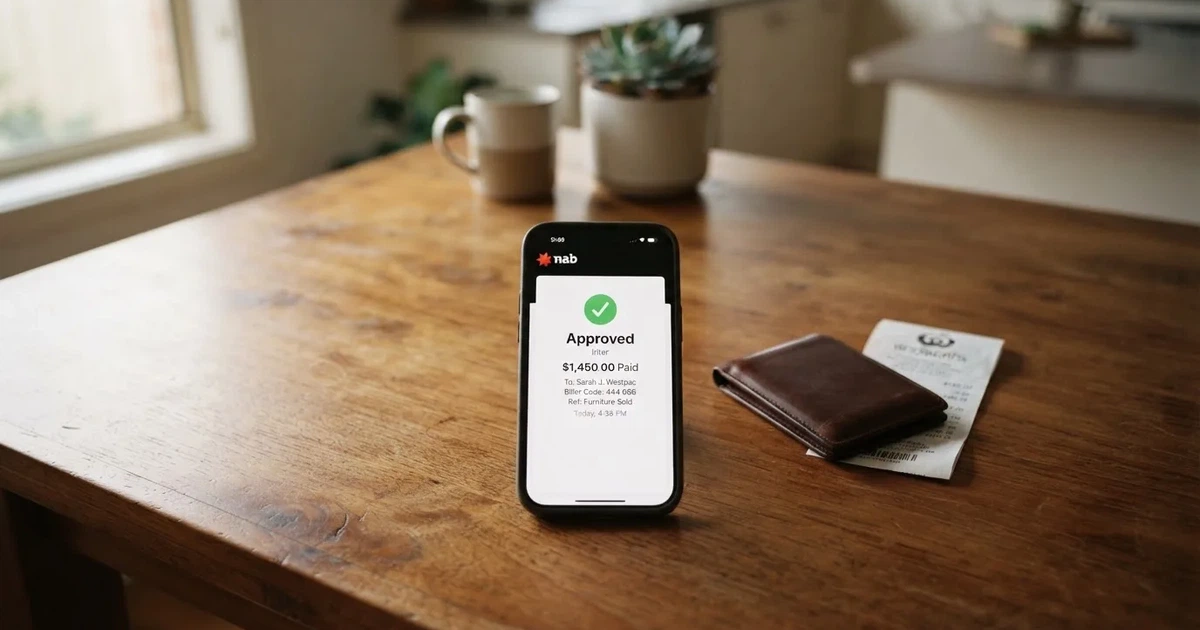
That mismatch shapes everything that follows. The eleven names below are not a recommended shortlist. Each one is on the page because the Australian Communications and Media Authority (ACMA) has issued a formal warning over it for offering prohibited services to people in Australia. The “best payment method” question inside that frame is a narrower one: which deposit rails still work when an operator has no Australian licence, how fast a withdrawal actually lands in an Australian bank account, and what protection the player keeps when none of the official Australian consumer routes apply.
Current as of 24 September 2026 against the ACMA register of formal warnings and the most recent published blocking round.
Table of Contents
- The legal ground underneath any deposit button
- How Australian banks stack the deck against the deposit itself
- Settleme rails: PayID, Osko, BPAY and the rest of the Australian instant-payments stack
- Fundamenta rails: cryptocurrency, the wallet address and what the chain actually shows
- The eleven brands the ACMA has formally warned
- Prohibiti rails: what a punter who lives in Australia cannot legally do
- Comparison across the eleven brands
- Responsible gaming: the rails the page should not skip
- Frequently asked questions
The legal ground underneath any deposit button
The IGA targets the provider, not the player. No Australian punter has been prosecuted for placing a bet with an offshore casino, but the law makes a long list of consequences the operator carries, and several of those consequences reach back into the player’s hands.
The ACMA has three working levers. It can issue a formal warning, it can direct Australian internet service providers to block a site, and it can refer the matter to the Australian Federal Police or the Department of Infrastructure for civil penalty proceedings. A site that ignored a warning in one round can be on the blocking list in the next. By June 2026, the cumulative count stood at 1,751 illegal gambling and affiliate websites blocked since the first blocking request in November 2019, and more than 230 unlicensed services had left the Australian market since enforcement was strengthened in 2017. The June 2026 round alone asked ISPs to block twelve more sites: 7Signs, ChromaBet, Donbet, Duospin, Freshbet, Slots Gem, Jacks Club, Lucky Start, Pointsbetz, Spinrise, Vinyl Casino and Wildsino.
A blocked site can carry a balance with it. Money deposited through a card or a wire does not teleport back when an Australian ISP cuts the domain. The operator is also under no obligation to refund — there is no Australian licence to revoke, no local complaints body to file with, and no recourse through the Australian Financial Complaints Authority. That single fact is the difference between a deposit at Sportsbet, where the bookmaker is bound by an Australian licence and by BetStop, and a deposit at one of the brands below, where the operator is bound by the licence it holds in Curaçao and nothing more.
H2 Gambling Capital’s 2025 estimate puts Australian losses to illegal gambling sites at roughly A$3.9 billion a year, with the share of gambling going through legal channels sliding from 74 per cent in 2021 to 64 per cent. The volume is large enough that the question of how the money moves, even from the player’s side, is a real one. It is also large enough that the banks have started to put their own levers between the punter and the offshore site.
How Australian banks stack the deck against the deposit itself
Three of the four major banks now run a card-level gambling block that can be turned on through the mobile app. Westpac’s gambling block refuses authorisation on transactions carrying the merchant category code “Betting/Casino Gambling” on eligible personal credit and debit cards. ANZ’s block, activated in the ANZ app, covers both the physical card and digital wallet transactions routed through it, with one important caveat: removing the block again requires a 48-hour cooling-off period, and the bank’s own page warns that not every gambling transaction will be blocked and that some non-gambling transactions may be blocked in error. Commonwealth Bank lets customers apply a gambling lock to eligible cards through the CommBank app, with the same “we cannot guarantee all gambling-related purchases will be stopped” line. National Australia Bank runs comparable controls.
The blocks cut both ways. They stop the deposit, which is what the player turning them on wanted. They also stop a withdrawal from clearing cleanly if the receiving merchant sits in the same merchant category code, because the block operates on the merchant code, not on whether the money is coming in or going out. A punter who turned the block on for a fortnight, won, and tried to settle a payout back to the same card can find the card-rail blocked in the other direction.
A second bank-side change closes off the credit-card route on licensed wagering, and by extension the digital-wallet route that sits on top of the credit card. Under the 2023 amendments to the Interactive Gambling Act, Australian-licensed online wagering services cannot accept payment by credit card or other credit-related products, and the same logic reaches Apple Pay, Google Pay and Samsung Pay when those wallets draw on a credit line rather than a deposit account. By the end of 2025, mobile-wallet transactions accounted for around 45 per cent of all card payments in Australia by number, so the share of deposit flows that pass through a wallet on a credit line is not trivial. The Reserve Bank of Australia’s July 2025 review of merchant card payment costs and surcharging proposes removing surcharges only on eftpos, Mastercard and Visa card transactions, explicitly leaving American Express outside the scope of the proposed ban — relevant because Amex has historically operated as a three-party scheme rather than the four-party network Visa and Mastercard run, and because Amex-accepting offshore casinos are still a regular sight.
Apple itself does not charge consumers a fee for using Apple Pay in stores, online or in apps; any surcharge a punter sees comes from the merchant’s own card-processing fees, not from Apple. Apple also states that transaction limits and PIN requirements are set by the card issuer or the merchant, not by Apple — which is why a wallet transaction that gets through the credit-card block at the wallet level can still be refused at the issuer level.
Settleme rails: PayID, Osko, BPAY and the rest of the Australian instant-payments stack
Most of what an Australian punter sees advertised as a “fast withdrawal” on an offshore casino is a PayID or Osko deposit on the way in and a standard international wire on the way out. Two thirds of the speed story is an Australian rail, not an offshore one.
PayID is a New Payments Platform address that resolves to a phone number, email or ABN. Paying to a PayID shows the name of the registered account holder before the transfer is sent, which is the only identity check the payer gets at the moment of payment. Australian Payments Plus, the operator of PayID and Osko, warns on its own page that being asked to transfer money to a PayID on an illegal gambling site almost certainly means a scam site — partly because legitimate Australian wagering operators are not asking for PayID deposits the way offshore casinos are, and partly because a PayID that resolves to a name the punter cannot recognise is a strong signal of fraud.
Osko is the settlement layer underneath PayID. A transfer between participating Australian banks arrives in under a minute, around the clock, addressed to either a BSB and account number or a PayID. The New Payments Platform itself went live on 13 February 2018, owned by New Payments Platform Australia Ltd, a non-profit whose thirteen shareholders include the Reserve Bank of Australia and the country’s major banks. By April 2025 more than 25 million PayID identifiers had been registered, and the platform’s monthly outage budget is capped at two minutes. In 2021 the ACCC authorised merging NPP Australia with BPAY and eftpos into a single holding company, Australian Payments Plus (AP+).
PayID is not anonymous. The receiving account is held by a real Australian ADI and the holder’s name appears on screen before the punter confirms the transfer. The cryptographic feel of a PayID is illusory — it is a routing shortcut, not a privacy layer.
BPAY is the bill-payment rail, not a wallet. The payer enters a Biller Code and a Customer Reference Number (CRN) printed on the bill, and the funds settle through the payer’s online banking. BPAY has been live since 18 November 1997, sits in the online banking of more than 140 Australian banks and financial institutions, and is offered by over 95,000 businesses. It is owned equally, via parent company Cardlink Services Limited, by ANZ, Commonwealth Bank, National Australia Bank and Westpac. Critically for this page, BPAY is a bill-payment rail — it settles from the payer to a registered biller — and is not a deposit rail for offshore casinos. A site that takes BPAY from an Australian punter is, almost by definition, licensed locally and regulated under the IGA, not the operator of an offshore casino.
The block rate, set against the ACMA’s running totals, is the calculation that frames the whole page. From November 2019 to June 2026, the ACMA directed Australian ISPs to block 1,751 illegal gambling and affiliate marketing sites, which works out at a band of roughly 250 to 280 sites blocked per calendar year over that span, with the rate sitting closer to the higher end in 2024 and 2025 as the ACMA moved to larger batched rounds. The condition that drives the spread is straightforward: each blocking round lists a defined set of domains, and a year that contains one big round and one quiet quarter sits well above a year that contains four even-sized rounds. The figure is a band, not a point, because the rounds are published in batches and the year boundaries are arbitrary lines through a stream of enforcement notices.
Fundamenta rails: cryptocurrency, the wallet address and what the chain actually shows
Cryptocurrency is the rail most often advertised as “anonymous” on an offshore casino, and the one that does the least privacy work in practice.

A Bitcoin or USDT transfer does not carry a name. It carries a wallet address, an on-chain ledger entry anyone can inspect, and a counterparty on the other end who almost always needs to convert the funds into fiat at some point — a step at which the exchange, the wallet provider, or the receiving bank will run its own KYC. AUSTRAC’s threshold-transaction-report rule, which requires reporting of transfers of A$10,000 or more, applies only to physical cash; ordinary electronic bank transfers are not subject to that per-transaction reporting requirement, regardless of amount. The threshold reporting rule is therefore not a backstop on a crypto deposit the way some readers assume.
What the chain does carry is provenance. Every Bitcoin transaction since the genesis block is a public entry on an immutable ledger, and chain-analytics firms now routinely tie wallet clusters to known exchange deposit addresses. A punter who deposits Bitcoin from an exchange account that has completed KYC has, in effect, attached their identity to the wallet. A punter who deposits from a non-custodial wallet preserves more privacy at the deposit step, but loses it the moment the funds hit an exchange that needs to pay out to an Australian bank.
On the other side, the credit-ban rules do not directly cover cryptocurrency. The IGA’s payment ban is on credit cards and credit-related products, not on digital assets. What that means in practice is that an offshore casino offering a Bitcoin deposit is offering a payment rail that the Australian rules do not block by name. It also means the punter is using a rail the ACMA cannot directly regulate, and one the bank can refuse to honour on the way back. A crypto payout that arrives in a non-custodial wallet and then sits there has its own risk surface: the wallet’s seed phrase is the only thing between the balance and a phishing attack, a fake wallet app, or a hard-drive failure.
The eleven brands the ACMA has formally warned
What follows is not a recommended shortlist. It is the set of brands the ACMA has named in formal warnings under the Interactive Gambling Act 2001, presented so a reader can see what kind of operator carries the names a search for “best online casino payment methods for Aussies” surfaces. Each entry carries the operator the ACMA named, the date the warning was issued, and — where the research carries it — what the public listings say about subject support. None of these brands is licensed to offer online casino games to Australians, and none of them has an Australian complaints body to answer to.
A punter looking for a deposit rail that works under Australian law does not find it on any of these sites. The legal Australian product set is licensed wagering (Sportsbet, Bet365, Ladbrokes and the rest of the Northern Territory bookmakers), licensed pokies in clubs and pubs in each state, and licensed land-based casinos — Crown Melbourne, The Star Sydney, Crown Perth, The Star Gold Coast and the smaller state operators. Anything else is outside the regime.
RocketPlay
The ACMA issued a formal warning to Pulsup Ltd over Rocketplay in March 2026. A separate, earlier warning had already gone to Dama N.V. in May 2022 covering six casino brands — Bambet, Dazard, Level Up, Rocketplay, Wild Tornado and Cobra Casinos. The relevant point for the page is that the same brand name has been the subject of warnings at two different operating entities in successive years, which says something about how easily a casino licence changes hands.
Public listings describe RocketPlay as accepting a typical offshore deposit stack — Visa, Mastercard, a handful of e-wallets and Bitcoin — with a stated focus on fast crypto payouts. The same listings do not document any Australian-licensing, BetStop registration, or banking relationship that would clear an ACMA investigation. As a deposit rail, RocketPlay inherits whatever speed the underlying payment processor offers, with no Australian-side guarantee that a withdrawal will be processed at all. The verdict: a brand the ACMA has warned twice in four years is not a deposit route this page can defend on speed or on protection.
Level Up Casino
Dama N.V. was the named operator on the May 2022 warning that covered Level Up alongside five other brands. Dama N.V. is one of the better-known Curaçao-licensed casino groups, and the May 2022 warning was an early signal of how broadly the ACMA was prepared to cast its net: six brands from one parent company in a single round. Public listings describe Level Up as carrying a deposit stack similar to RocketPlay’s, with a stated focus on higher bonus multiples.
The verdict sits with the audit trail. A brand whose parent appeared in the ACMA’s first big Dama N.V. round is, on this page’s evidence, the kind of operator whose marketing emphasis sits on the bonus headline rather than the withdrawal reality. A punter picking a deposit method on Level Up is picking within a set of rails that the operator can refuse to honour on its own terms, with no Australian recourse.
Woo Casino
The ACMA issued a formal warning to Dama N.V. over Woo Casino in March 2025 — part of the same operator’s second appearance in front of the regulator, after the May 2022 round. Public listings carry no extra information about Woo Casino’s payment stack, which is the kind of silence that follows an offshore brand that does not put its terms under any local scrutiny.
The verdict on Woo Casino is the structural one: a brand whose parent has now appeared in two ACMA rounds in three years. The deposit rails are unchanged; the regulatory record is not.
Spirit Casino
The May 2025 warning to Dama N.V. over Spirit Casino closes the loop on Dama’s appearance across the ACMA’s enforcement record: a 2022 round of six brands, then a Woo Casino warning in March 2025, then Spirit Casino in May 2025. The cumulative picture is an operator whose brand portfolio is being run, by design or by accident, across enough skins to absorb a warning at one address without losing the customers at the others.
The verdict on Spirit Casino is the same one that sits underneath Woo Casino — a parent that the ACMA has named twice in twelve months is not a parent this page can describe as “the best” payment-method destination for Australians.
National Casino
The ACMA issued a formal warning to Consolutetish S.R.L. over National Casino in July 2025. The same regulator’s warning record also covers Bizzo Casino, also operated by Consolutetish S.R.L., in the same round. Public listings for National Casino reference an Australian self-exclusion framework and an AUSTRAC-aligned identity verification flow — language that reads like a marketing response to the Australian market, not a binding registration with BetStop. BetStop, the National Self-Exclusion Register, binds Australian-licensed online and phone wagering services only; an offshore casino is not connected to it, whatever the listings say.
The verdict on National Casino sits on the gap between the listings language and the legal regime. A site that presents itself as BetStop-aligned is presenting itself as something an offshore casino cannot be, because BetStop is a register of licensed wagering operators, not a voluntary commitment an offshore brand can opt into. A punter looking for the “best payment method” on National Casino is dealing with a brand name that appears in the regulator’s 2025 enforcement notices.
Bizzo Casino
Consolutetish S.R.L. was the named operator on the July 2025 warning covering Bizzo Casino. Bizzo had already been the subject of a 2022 formal warning, then to TechSolutions (CY) Group Limited and TechSolutions Group N.V. — a change of operating entity over the intervening years that mirrors the pattern at RocketPlay. Public listings describe Bizzo as a brand with a broad bonus structure and a standard offshore deposit stack.
The verdict sits with the dual warning. A brand the ACMA has named twice, under two different parent companies, is a brand whose marketing is more durable than its licensing. The deposit rails it advertises — cards, e-wallets, Bitcoin — are unchanged across the warnings.
Ignition Casino
The ACMA issued a formal warning to Bamboo Media over Ignition Casino in July 2025. The name Ignition is one of the more established offshore skins in the Australian-facing market, which is exactly why it warrants its own entry on this page: a familiar name at search time is not, on this evidence, a name the regulator has decided is compliant.
Public listings carry no extra information on Ignition Casino’s payment stack. The verdict sits on the warning date alone — a brand the ACMA named in mid-2025 is not a deposit rail this page can present without that warning attached.
Instant Casino
The ACMA issued a formal warning to EOD Code SRL over Instant Casino in February 2025. Public listings reference e-wallets and PayID among the supported payment rails — and the PayID reference is the one that matters most for this guide. As detailed in the Osko and PayID section, Australian Payments Plus warns that being asked to transfer money to a PayID on an illegal gambling site almost certainly means a scam site. A site that advertises PayID as a deposit rail and has been formally warned by the ACMA in 2025 is one whose deposit method is, in plain terms, the rail the regulator’s own payments body has warned against.
The verdict on Instant Casino sits on that overlap. A brand named in an ACMA warning in 2025, with a public deposit page that includes PayID, is the clearest example on this page of why a deposit rail’s familiarity does not translate into legal standing.
Jackbit
The ACMA issued a formal warning to Ryker B.V. over Jackbit and CasinOK in April 2026 — a single warning covering two brands from the same operator. No public listings data is available for Jackbit’s payment stack. The verdict sits on the recency of the warning: a brand the ACMA has named within the past year carries a regulatory history that speaks for itself.
Casino Intense
Sterplay Holding Ltd was the named operator on the April 2025 formal warning over Casino Intense. Public listings reference an Australian self-exclusion framework and an AUSTRAC-aligned identity flow — the same marketing language that appears on National Casino. The legal reality is the same: BetStop binds only Australian-licensed wagering services, and an offshore casino cannot opt into a register it is not part of.
The verdict sits on the gap. A brand whose public profile leans on Australian-licensing language while operating outside that licensing is the brand this page most wants a reader to look at twice before depositing.
Sky Crown
The ACMA issued a formal warning to Hollycorn N.V. over Sky Crown and Blue Leo casino services, with the warning published in September 2022. No public listings data is available for Sky Crown’s payment stack on this page’s research set. The verdict sits on the date — the earliest warning on this page by a margin, and a Hollycorn N.V. brand portfolio that has been on the ACMA’s record since 2022.
Prohibiti rails: what a punter who lives in Australia cannot legally do
A punter living in Australia who wants to deposit with one of the offshore brands above is making a deposit that sits outside the legal Australian framework on several distinct layers at once. The operator is unlicensed. The deposit is not protected by an Australian consumer route. The site can be blocked at the ISP level with a balance still on it. The credit-card ban does not apply to the operator, because the operator is not Australian-licensed, but the punter’s own bank will run the merchant category code through its gambling block on a debit card and refuse the authorisation.

What the punter keeps is whatever the underlying payment rail itself provides: chargeback rights on a Visa or Mastercard debit transaction (subject to the bank’s own gambling-block settings), the PayID name-check before a transfer is sent, and the bank’s own dispute process if a withdrawal is refused. What the punter does not keep is the local consumer law that would attach to a deposit at Sportsbet, the BetStop binding that would attach to a licensed wagering service, and the Australian Financial Complaints Authority route that sits behind an Australian licence.
The legal Australian product set, for readers who arrived at this page wanting to put a deposit down somewhere, is the licensed wagering operators (Sportsbet, Bet365, Ladbrokes and the other 49 Northern Territory Racing and Wagering Commission licensees) and the licensed land-based venues (Crown Melbourne, The Star Sydney, Crown Perth, The Star Gold Coast). For a punter who has decided to stop, BetStop is the binding national register, the National Gambling Helpline at 1800 858 858 is free and 24/7, and Gambling Help Online carries the chat service. None of those are a deposit method. They are the alternative the IGA leaves in place.
Comparison across the eleven brands
The table that follows lines the eleven brands up against the only evidence this page can carry for them — the ACMA’s published formal-warning record. Where the public listings for a brand carry subject-support information, that information appears in the right-hand column with the listings source attached. Where the research set carries no subject-support information, the cell reads no-data rather than guess.
| Brand | ACMA action and date | Operator named by the ACMA | Subject support |
|---|---|---|---|
| RocketPlay | Formal warning — March 2026; earlier May 2022 | Pulsup Ltd; earlier Dama N.V. | Listings report Visa, Mastercard, e-wallets and Bitcoin |
| Level Up Casino | Formal warning — May 2022 | Dama N.V. | Listings report a standard offshore deposit stack (Westpac context only) |
| Woo Casino | Formal warning — March 2025 | Dama N.V. | no-data |
| Spirit Casino | Formal warning — May 2025 | Dama N.V. | no-data |
| National Casino | Formal warning — July 2025 | Consolutetish S.R.L. | Listings reference an Australian self-exclusion framework (acma.gov.au, austrac.gov.au, betstop.gov.au) |
| Bizzo Casino | Formal warning — July 2025; earlier 2022 | Consolutetish S.R.L.; earlier TechSolutions | Listings report a standard offshore deposit stack |
| Ignition Casino | Formal warning — July 2025 | Bamboo Media | no-data |
| Instant Casino | Formal warning — February 2025 | EOD Code SRL | Listings reference e-wallets and PayID (ecoPayz, PayID) |
| Jackbit | Formal warning — April 2026 | Ryker B.V. | no-data |
| Casino Intense | Formal warning — April 2025 | Sterplay Holding Ltd | Listings reference an Australian self-exclusion framework (austrac.gov.au, betstop.gov.au) |
| Sky Crown | Formal warning — September 2022 | Hollycorn N.V. | no-data |
What the table shows is the shape of the regulatory record, not the shape of the market. Three of the eleven brands sit with a public listing language that gestures at Australian self-exclusion and AUSTRAC-aligned identity flows (National Casino, Casino Intense) — language that does not equate to BetStop registration, because BetStop binds only Australian-licensed wagering services, and an offshore casino is not in scope. Two of the eleven (RocketPlay, Bizzo Casino) have appeared in ACMA warnings twice, under different parent companies in successive years. The rest sit on a single 2022-to-2026 warning trail, with no public listing evidence either way.
Responsible gaming: the rails the page should not skip
The BetStop register went live in August 2023 and is the binding self-exclusion route for Australian-licensed online and phone wagering services. It is not a deposit rail, and it is not a tool the offshore brands on this page can honour. A punter who has registered with BetStop cannot deposit with Sportsbet or Bet365, and any attempt to do so fails the operator’s own checks. The same punter can still deposit with RocketPlay or Casino Intense or any of the other brands above, because none of those brands run BetStop checks.
The National Gambling Helpline at 1800 858 858 is free, 24/7, and carries a chat service at Gambling Help Online. The Commonwealth Bank gambling lock, the ANZ gambling block (with its 48-hour cooling-off on removal), the Westpac merchant-category-code block and the NAB controls all sit on the same side of the line: they are tools a punter can turn on in the bank app, and they cut off the deposit at the card level. None of them is a substitute for the licensing regime that would attach to a deposit at a licensed wagering operator.
The single sentence the page will not water down is this: the deposit method a punter picks is a smaller decision than the question of whether the operator is licensed to take the deposit at all.
Frequently asked questions
What payment methods are commonly advertised by online casinos targeting Australians?
The offshore brands this page reviews advertise a broadly similar deposit stack: Visa and Mastercard debit, a handful of e-wallets (the public listings name ecoPayz on Instant Casino, among others), and Bitcoin or USDT via the crypto rail. PayID and Osko appear on a small number of deposit pages, and the Australian Payments Plus operator’s own page warns that a PayID request on an illegal gambling site is a strong signal of a scam. None of these rails is an Australian-licensing signal.
How does an Osko transfer compare with a card payment for speed?
Osko settles in under a minute between participating Australian banks, around the clock, addressed to a BSB and account number or to a PayID. A card payment through Visa or Mastercard debit clears the authorisation in seconds but takes one to three business days to settle the funds into the merchant’s account, and longer to clear back to the punter on a refund or withdrawal. The comparison punter-side: Osko is faster at arrival on the receiving side; card is faster at the moment of authorisation but slower at the moment of settlement.
Is it legal for an online casino to process payments from players in Australia?
No. The Interactive Gambling Act 2001, as amended in 2017, makes it an offence for an operator to provide online casino games or online pokies to a person in Australia. The ACMA enforces the prohibition through formal warnings, blocking requests to ISPs and civil penalty referrals. The player is not the target of the law, but the player is the one left without an Australian consumer route if a withdrawal is refused.
Are cryptocurrency payments harder to trace than a bank transfer?
A bank transfer is harder to trace from the outside, in the sense that the bank’s ledger is private to the bank and to the regulator. A Bitcoin or USDT transfer is harder to attribute to a name at the moment of the transaction, but easier to follow on the public ledger afterwards, and almost always re-attached to an identity at the fiat off-ramp. Privacy is an illusion at the wallet level, not at the chain level.
What makes a casino payment method secure rather than just fast?
Fast describes how long the money takes to move. Secure describes what the punter can do if the money does not arrive at all. A PayID transfer shows the receiving account holder’s name before the transfer is sent; a Visa or Mastercard debit transaction carries chargeback rights; a BPAY payment settles to a registered biller only. The fastest rail on this page is the one whose underlying scheme offers the punter the least on a dispute.
Does PayID offer any extra protection compared with a BSB and account number?
PayID resolves to a real account at an Australian ADI and shows the registered name before the transfer is sent. A BSB and account number does not show a name at the moment of payment and the punter is relying on the digits being right. Both settle through Osko in under a minute once sent. The extra protection PayID offers is the name-check, which is the same protection that makes a PayID request on an illegal gambling site a red flag — the receiving name is a piece of information the punter can actually use.
Created by the ”Casino Providers Info” editorial team.