
Best casino in Canberra 2026: the venue, the law, and what an honest comparison looks like
 Available in US
Anyone typing this question wants the same handful of things answered before they book a room or pick a table: the address, the games on the floor, the age door, the hotels within walking distance, and whether there is a credible alternative that does not involve crossing a border. Canberra is unusual in this respect because it has exactly one legal casino and zero legal online casinos, which means the comparison the search seems to ask for is shorter than the marketing pages would have it. There is no online alternative to compare it against, and pretending there is would lead a reader straight onto a site the Australian regulator has already warned or blocked.

What follows is a working guide to that situation. The first half covers the venue itself — Casino Canberra — and the cost of a visit in plain terms. The second half covers the law that keeps online casinos out of the comparison, the regulator’s record of acting against the offshore brands that target Australians anyway, and the support services a Canberra player can lean on when a session stops being entertainment. A shortlist section compares the offshore brands the ACMA has named in formal warnings, since those are the names a reader keeps meeting; nothing on the page reads as a recommendation to play at any of them.
Data current as of 24 September 2026; licence status checked against the ACMA register and the ACT Gambling and Racing Commission.
Table of Contents
- The fundamentals: what Casino Canberra is, and what it is not
- The legal frame: why an online casino is not on this list
- Player protection in the ACT
- The venue, in detail
- What the offshore brand contains, and what it costs
- The blocking rate, in plain numbers
- Payments: what an Australian can actually use
- Tax, wins and what the ATO actually says
- A short shortlist, in the spirit of the search
- Where to get help
- Frequently asked questions
The fundamentals: what Casino Canberra is, and what it is not
Casino Canberra is the only legal casino in the Australian Capital Territory. It sits in the Canberra CBD on a parcel of land excised from Glebe Park under a 99-year lease, at 21 Binara Street. The building itself does not have a hotel, theatre or shopping arcade attached to it, which is part of why it does not look like the integrated resort complexes other Australian state capitals have spent the last decade building. There is the floor, a bar, a poker lounge, a sports lounge and a couple of dining spaces, and that is the building. Visitors who want a room with a view of the gaming floor book separately, the way they would book a room near any other venue.

What it offers on the floor is narrower than the marketing of other Australian casinos suggests. Casino Canberra is the only casino in Australia not licensed to operate poker machines — pokies are forbidden on this particular licence. The gaming floor runs to 39 tables, covering blackjack, roulette, baccarat and the usual mix of side-bets and mini-games, plus a poker lounge and a sports lounge that handles racing and sport wagering displayed on screens rather than as live in-venue betting. The catalogue is table-heavy by Australian standards, which is partly an artefact of history and partly a policy choice the ACT has stuck with.
The ACT had 3,587 gaming machines operating in 46 venues on 1 November 2023, with another 1,504 approved but not yet in service. Player losses across the Territory totalled A$0.19 billion in 2022–23. None of those machines are inside Casino Canberra — they sit in clubs and hotels across the ACT — and a visitor who has come for pokies will not find them at 21 Binara Street.
The reason the building is the shape it is sits in a chain of decisions that started in 1992, when the ACT first licensed a casino. Casino Canberra was the result. The current licence holder is Casino Canberra Limited, which took over from Aquis Canberra Pty Ltd, the original licensee issued on 23 December 2014 under section 22 of the Casino Control Act 2006. The transition between operators did not change the offer on the floor or the door policy; it changed the corporate owner and the way the venue reports to the ACT Gambling and Racing Commission, which regulates it.
What it costs to get in
The minimum age to enter Casino Canberra is 18. Photo identification is required at the door — a driver’s licence, a passport or a Proof of Age card — and the venue reserves the right to refuse entry to anyone who cannot produce one, looks under 25 without ID, or is on the ACT’s venue-level self-exclusion register. The dress code is described on the operator’s site as “smart casual”; closed shoes for men is the practical floor minimum, and thongs or workwear will be turned away at the discretion of the door team.
There is no admission fee to enter the venue itself. The cost is what a player puts on the tables. That is true of every legal casino in Australia, and it is worth saying plainly because the marketing of the offshore brands a Canberra reader will see in search results often quotes a “free entry” line as if the cost were anywhere else than on the felt.
The legal frame: why an online casino is not on this list
The Interactive Gambling Act 2001, tightened by the Interactive Gambling Amendment Act 2017, makes it an offence to provide online casino games, online pokies or in-play betting to a person physically in Australia. The Act targets the provider, not the individual player; a Canberra resident who clicks through to an offshore site will not be prosecuted, but the site itself is operating unlawfully when it accepts Australian customers. The 2017 amendments also extended the prohibition to in-play online wagering on sports, which had previously been a grey area.
What is licensable is wagering on races and sport placed before the event, lotteries and keno. In practice, most of Australia’s online bookmakers — including Sportsbet, Bet365 and Ladbrokes — are licensed in the Northern Territory through the Northern Territory Racing and Wagering Commission. The Commission is a small body: no full-time staff, a monthly meeting in Darwin, and a remit that covers 52 wagering operators for tax reasons more than regulatory ones. That structure has been under pressure in 2026, with a bill before the Territory Parliament to overhaul the Commission’s role. Whatever the bill produces, it does not legalise online casino games.
So the comparison the search question implies — “which is the best, the venue or the app?” — does not exist under Australian law. The venue exists, is licensed, and answers to an Australian regulator. The app is, by definition, breaking Australian law when it offers casino games to a person in Canberra.
The ACMA record: how the prohibition is enforced
The Australian Communications and Media Authority investigates complaints, issues formal warnings, and can direct Australian internet service providers to block sites that continue to offer prohibited services. As of June 2026, the ACMA had asked ISPs to block 1,751 illegal gambling and affiliate marketing websites since the first blocking request in November 2019 — roughly six and a half years of enforcement. More than 230 unlicensed services have left the Australian market entirely since the ACMA’s enforcement powers were strengthened in 2017.
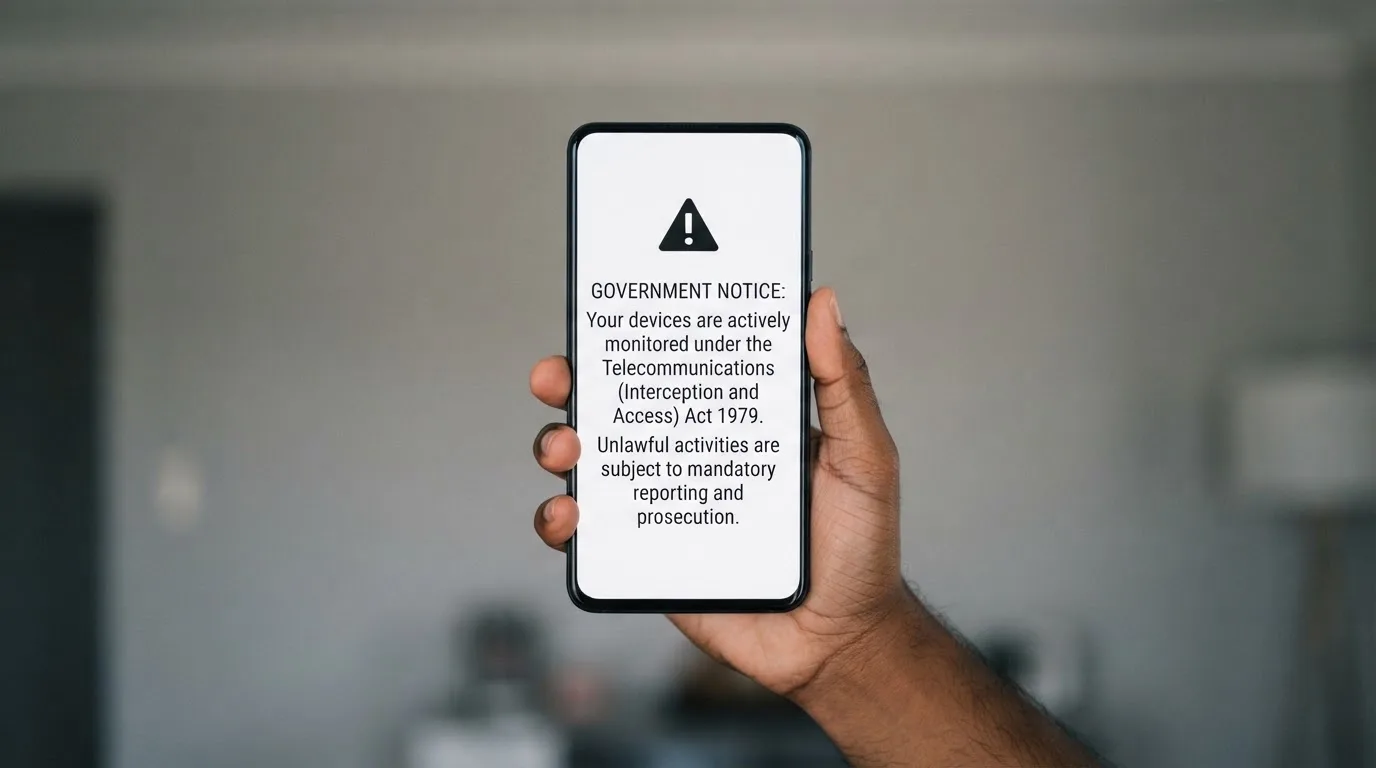
That is the headline number, and the rate matters as much as the total. Spread over the months since November 2019, the running average is somewhere in the order of 20 to 25 new blocking requests per month, with the rate lifting in waves tied to specific ACMA rounds rather than as a steady drip. The June 2026 round alone added 12 sites to the block list — 7Signs, ChromaBet, Donbet, Duospin, Freshbet, Slots Gem, Jacks Club, Lucky Start, Pointsbetz, Spinrise, Vinyl Casino and Wildsino. A second way to read the same data is to count from the other end: 230 services leaving the market in nine years is roughly one every two weeks, which suggests the ACMA’s approach is closer to attrition than to sweeping raids.
H2 Gambling Capital’s 2025 estimate puts Australian losses to illegal sites at about A$3.9 billion a year. The same source records that the share of gambling going through legal channels has fallen from 74 per cent in 2021 to 64 per cent, meaning more than a third of what Australians now wager flows to unlicensed operators. The reader who wants the cost of the situation in one sentence: an offshore site keeps roughly a third of every Australian dollar staked on gambling, and that dollar carries no Australian consumer protection on the way back out.
What a formal warning actually does
A formal warning is the ACMA’s first public step. It does not block the site; it records on the public register that the regulator has named the operator, the date, and the prohibited conduct. A site that ignores a warning will eventually appear in a blocking request. The ACMA has also escalated to civil penalties and to court action against repeat offenders, but the bulk of the visible record is warnings.
The warnings published on the ACMA register between 2022 and 2026 cover a wide net of operators. Dama N.V., a Curaçao-incorporated company that runs a stable of brands, was warned in May 2022 over six casino brands — Bambet, Dazard, Level Up, Rocketplay, Wild Tornado and Cobra Casinos — and then again in March 2025 over Woo Casino and in May 2025 over Spirit Casino. TechSolutions Group received a 2022 warning over Bizzo Casino, and Consolutetish S.R.L. was warned in July 2025 over National Casino and a second time over Bizzo Casino. Bamboo Media was warned in July 2025 over Ignition Casino. EOD Code SRL was warned in February 2025 over Instant Casino. Pulsup Ltd was warned in March 2026 over Rocketplay — a separate Australian-facing brand from the earlier Dama N.V. Rocketplay. Ryker B.V. was warned in April 2026 over Jackbit and CasinOK. Sterplay Holding Ltd was warned in April 2025 over Casino Intense. Hollycorn N.V. was warned in September 2022 over Sky Crown and Blue Leo.
The pattern, read across the dates, is that one operator entity often runs several brands, and that an entity warned once and then reappears under a different brand is a feature, not a bug, of the offshore casino market. The cost of spinning up a new domain is low, and the cost of being warned is, so far, mostly reputational on a regulator’s web page.
What this means for a Canberra reader
The legal situation is asymmetric in a way worth being clear about. A person in Canberra who opens an offshore casino site is not breaking Australian law; the operator is. But the player carries the consequences anyway. There is no Australian complaints body that can compel a payout from an offshore operator, no Australian regulator that can examine the site’s books if a withdrawal stalls, and no guarantee that a balance is recoverable if the site is added to a blocking list the next morning. The block is enforced at the ISP level, not at the player’s account level, so any funds left on the site at the time of blocking are effectively stuck.
The Interactive Gambling Amendment (Gambling Reform) Bill 2026 passed Parliament on 19 August 2026, and its advertising and inducement measures commence on 1 January 2027. The Bill is law with a start date, not yet in force on a 2026 page; what it changes is the Australian end of the marketing chain, not the offshore operators’ right to take a deposit from a Canberra resident. The same prohibition that has applied since 2017 applies today.
Player protection in the ACT
The Australian online safety net for problem gambling is two-tier, and the tiers do not cover the same ground. BetStop, the National Self-Exclusion Register, went live on 21 August 2023. It binds Australian-licensed online and telephone wagering services — the Northern Territory-licensed bookmakers are connected to it — so a Canberra resident who self-excludes through BetStop is locked out of every legal wagering site in the country. BetStop does not cover in-venue gambling, which means it does not cover Casino Canberra, and it does not cover offshore casinos, which means it does not cover any of the brands named in the ACMA warnings earlier on this page. For those, the ACT has its own process.
The ACT Gambling and Racing Commission’s self-exclusion process for Casino Canberra runs through the ACT Gambling Harm Prevention team. Self-exclusion is available for periods of six months to three years, and the venue is obliged to remove the person from loyalty programs, marketing lists and entry records for the duration. Breach by a venue is a disciplinary matter, not a private one, and a player who is admitted during a self-exclusion period has a clear complaint route to the regulator.
The ACT Gambling Support Service runs a free, 24/7 Gambling Helpline on 1800 858 858, with telephone, online and face-to-face counselling funded by the ACT Gambling Harm Prevention and Mitigation Fund. The same provider runs Gambling Help Online, which is the chat-and-counselling entry point for Australians regardless of which state or territory they are in. Both services are free at the point of use and confidential.
The honest reading of that two-tier structure is that it works well for someone who plays with licensed Australian bookmakers and wants to stop; it works less well for someone playing offshore, where the self-exclusion request has no mechanism behind it, and it does not apply at all to a visit to Casino Canberra for someone who has self-excluded through BetStop only. For a Canberra resident, the right self-exclusion tool is the ACT’s, not BetStop, and the wrong one is the offshore site’s own “responsible gambling” page, which has no legal force behind it.
The venue, in detail
Casino Canberra occupies a corner site in the CBD, between Binara Street, Genge Street and the southern edge of Glebe Park. The closest accommodation is the closely clustered set of CBD hotels within a short walk of the door: the QT Canberra on London Circuit, the Crowne Plaza Canberra a block further north on Binara Street, and the Avenue Hotel and the Canberra Rex on Northbourne Avenue, both within a few minutes on foot. The Novotel Canberra and the Hotel Realm are each roughly a ten-minute walk; for a reader comparing distances rather than stars, the practical “walking distance” cluster sits within roughly 500 metres of the door and offers the usual range from mid-market business hotels to the QT’s boutique tier.
A visitor who wants to combine a casino visit with a meal in the building has the in-house restaurant and bar; a visitor who wants to step out has Civic’s restaurant strip within a few minutes’ walk. The Canberra Centre, the city’s main shopping centre, is also within walking distance, and the Australian National Museum and the National Library are a short tram ride away on the light rail line that runs through the CBD. Parking at the casino is limited and metred; most visitors either walk from a nearby hotel or use the CBD’s paid parking stations.
The games on the floor
The floor runs blackjack, roulette and baccarat as the three main table offerings, with side bets and mini-games layered around each. The poker lounge runs cash games and tournaments under a separate rake structure; the sports lounge is a racing-and-sport viewing space where wagers are placed over the counter on events already running, not as in-play online betting. None of this is unusual for an Australian casino; what is unusual is the absence of pokies, which the operator and the regulator both treat as a permanent feature of the licence rather than a temporary gap.
A reader who arrives at Casino Canberra expecting a Star-City-style gaming emporium will find a smaller, calmer venue with a different rhythm. The 39 tables are spread across the main floor and a higher-stakes area, and the late-week evenings tend to be the busiest. Weekday afternoons are quieter and the staff more available for a newcomer who wants to learn the rules on the table rather than at a side screen.
What to bring, and what the door checks
Photo identification — a driver’s licence or passport is standard — and enough cash or a debit card for the session. The casino does not extend credit on the floor; it cashes out at the cashier’s cage, and the cashier will not advance funds against an expected win. This is a feature of Australian casino regulation rather than a quirk of Casino Canberra, and it means a session’s cost is bounded by the dollar in the player’s pocket, which is a useful guardrail that the offshore sites do not offer.
The door team will also check against the ACT’s self-exclusion register, against any venue-level barring orders, and against the venue’s own watch list of patrons who have been asked to leave for cause. A player who has previously been excluded for disorderly conduct, cheating or non-payment of markers will not be admitted, regardless of how the visit is funded.
Comparing Casino Canberra to other Australian casinos
Casino Canberra is the smallest of Australia’s state-capital casinos by almost every measure, and that is worth saying because most comparison pages set it against Adelaide Casino, Crown Melbourne and The Star Sydney without acknowledging how different the scales are. Adelaide Casino, commercially known as SkyCity Adelaide, runs 90 gaming tables and 950 gaming machines inside the heritage Adelaide railway station on North Terrace; its licence, extended in 2013, runs to 30 June 2035 and permits up to 200 tables and 1,500 machines subject to redevelopment. Crown Melbourne and The Star Sydney are an order of magnitude larger again. The Star Brisbane, which opened at the Queen’s Wharf precinct on 29 August 2024 after Treasury Casino closed on 25 August 2024, sits inside a A$3.6 billion integrated resort and is the most recent benchmark for what a state-capital casino looks like in 2026 Australia.
By comparison, Casino Canberra’s 39 tables and zero gaming machines place it firmly in the boutique tier. For a visitor who has decided to spend an evening on the tables, the practical question is not whether Casino Canberra matches the larger venues but whether the smaller scale suits the visit. A reader who wants pokies has no choice but to look outside the casino; a reader who wants a quieter table-game experience may find the venue’s scale a feature.
What the offshore brand contains, and what it costs
The brands on the shortlist that follows are the names that have appeared in ACMA formal warnings between 2022 and 2026. They are not reviewed and they are not recommended; they are described because a reader who has typed this question has almost certainly seen their names in search results, on social media, or in affiliate marketing pages that look like editorial. The honest summary of each is the same: an offshore operator, an ACMA warning, and no Australian consumer protection behind it. The variation across the list is in the operator behind the brand and in the date the warning was issued.
What follows should not be read as a recommendation to play at any of these operators. The Interactive Gambling Act 2001 prohibits offering online casino games to a person in Australia; the operators below have been formally warned for doing exactly that.
RocketPlay
RocketPlay appears twice in the ACMA register because two different corporate owners have run an Australian-facing brand under the same name. The most recent warning, in March 2026, names Pulsup Ltd as the operator of Rocketplay; an earlier warning, in May 2022, named Dama N.V. over six casino brands including a separate Rocketplay. The brand has been around long enough to wear two operators and two warnings, and the ACMA’s record of dealing with it is on the public register. Subject support details are not in the ACMA record; the warning is.
Level Up Casino
Dama N.V. was the operator named in the May 2022 warning that covered Level Up alongside Bambet, Dazard, Rocketplay, Wild Tornado and Cobra Casinos. Listings outside the ACMA register describe the brand, but those listings are not the operator’s own disclosure and the page does not adopt them as fact.
Woo Casino
Dama N.V. was the operator named in the March 2025 ACMA warning. Woo Casino sits inside the same Dama stable that produced the 2022 warnings; the ACMA has had occasion to name the parent operator across three separate formal warnings in three years.
Spirit Casino
Dama N.V. again, this time in May 2025. Spirit Casino is the third Dama N.V. brand to draw a separate formal warning in the ACMA’s record, alongside the 2022 cohort and Woo Casino.
National Casino
Consolutetish S.R.L. was named in the July 2025 ACMA warning. The brand sits in a different corporate group from the Dama N.V. stable and has appeared in third-party listings, which the ACMA warning does not adopt or contradict.
Bizzo Casino
Consolutetish S.R.L. was named in a July 2025 warning over Bizzo Casino, and TechSolutions (CY) Group Limited and TechSolutions Group N.V. were named in a 2022 warning over the same brand. Two operators, one brand, two formal warnings: the clearest case on the list of an offshore casino being warned under successive owners.
Ignition Casino
Bamboo Media was named in the July 2025 ACMA warning. Ignition Casino is one of the longer-established offshore brands targeting Australian customers; the ACMA warning is the only Australian regulatory fact on the record here.
Instant Casino
EOD Code SRL was named in the February 2025 ACMA warning. The brand had already attracted attention from other regulators before the Australian warning, but the only Australian-source fact on the page is the warning itself.
Jackbit
Ryker B.V. was named in the April 2026 ACMA warning, alongside another brand called CasinOK. The two brands are co-listed in the same formal action.
Casino Intense
Sterplay Holding Ltd was named in the April 2025 ACMA warning. Casino Intense has appeared in third-party listings that describe the operator’s offering; those listings are not the ACMA’s and the page does not adopt them.
Sky Crown
Hollycorn N.V. was named in a September 2022 formal warning covering Sky Crown and Blue Leo. The warning is the only ACMA fact on the record here; third-party listings describe the brand but are not adopted as fact.
| Brand | ACMA action and date | Operator named by the ACMA | Subject support |
|---|---|---|---|
| RocketPlay | Formal warning, March 2026 | Pulsup Ltd | — |
| Level Up Casino | Formal warning, May 2022 | Dama N.V. | listings only |
| Woo Casino | Formal warning, March 2025 | Dama N.V. | listings only |
| Spirit Casino | Formal warning, May 2025 | Dama N.V. | — |
| National Casino | Formal warning, July 2025 | Consolutetish S.R.L. | listings only |
| Bizzo Casino | Formal warning, July 2025; earlier 2022 | Consolutetish S.R.L. / TechSolutions | — |
| Ignition Casino | Formal warning, July 2025 | Bamboo Media | — |
| Instant Casino | Formal warning, February 2025 | EOD Code SRL | — |
| Jackbit | Formal warning, April 2026 | Ryker B.V. | — |
| Casino Intense | Formal warning, April 2025 | Sterplay Holding Ltd | listings only |
| Sky Crown | Formal warning, September 2022 | Hollycorn N.V. | listings only |
The pattern the table makes visible is not a comparison of products. It is a comparison of enforcement exposure. Every brand on the list has been named in a formal warning under the same statute, for the same conduct — offering prohibited online casino games to Australians. The dates are the variable. Reading across the rows, what stands out is how many of the same operator entities reappear: Dama N.V. shows up four times under three different brand names, and Consolutetish S.R.L. shows up twice for the same brand. That is what the offshore market looks like when it is mapped against the regulator’s record: a small number of corporate owners running a much larger number of front brands.
A column that might have run wagering multiples, payout times, payment-method exclusions or RTPs is not on this table for a reason. None of those figures are in the ACMA register or in research’s other named sources for this page; what affiliate marketing pages publish about each brand is not an Australian source, and a column built on it would be a column built on the marketing the regulator is warning against. The honest comparison the ACMA’s record supports is the one above.
The blocking rate, in plain numbers
The ACMA’s blocking record is the cleanest public measure of how aggressively the offshore market targets Australians. The running total at June 2026 was 1,751 sites blocked since the first blocking request in November 2019; the 12 most recent additions were named in the same announcement. Putting those two figures against each other, the running average is in the order of 20 to 25 sites added to the block list each month since enforcement began, with the actual rate varying from month to month and clustering around the ACMA’s published rounds.
That band — somewhere between 20 and 25 sites per month, more in heavy months and fewer in quiet ones — is the rate at which the offshore market refreshes its Australian-facing inventory under regulator pressure. It is also the rate at which the regulator’s published list grows, which means the list a reader might consult today will already be out of date by the time they look at it. A reasonable working assumption is that the 1,751 figure grows at roughly that pace until the next published round.
The cost of that band is not just regulatory. Each site on the list has been blocked at the ISP level, which means an Australian customer who opened an account the day before the block and still has a balance on it is, in practical terms, locked out of their own money until the operator chooses to refund it. There is no Australian complaints body that can chase a Curaçao- or Cyprus-incorporated operator on a single player’s behalf, and no Australian court that has jurisdiction over an offshore operator that does not consent to it. The blocking rate is therefore a measure of two things at once: how much of the offshore brand stays online. Casual, the ACMA keeps removing sites; less casually, every site removed is one more balance left in limbo.
Payments: what an Australian can actually use
The credit-card ban that took effect on 11 June 2024 prohibits credit cards, credit-related products and digital currency as payment for licensed online wagering in Australia; the penalty for an operator that breaches the ban is up to A$247,500. Legal deposit routes for a licensed Australian wagering account are debit card, bank transfer, PayID/Osko and BPAY.
The ban applies to operators licensed in Australia. An offshore casino is outside the ban’s reach, and an offshore site that accepts credit card deposits from an Australian customer is breaking the Australian rule without being subject to the Australian penalty. A reader who sees a deposit page that lists credit card or cryptocurrency on a site targeting Australians is looking at a deposit page that the Australian regulator would treat as unlawful advertising once it is in scope of the new inducement rules starting on 1 January 2027.
The practical version of this for a Canberra reader is short. A licensed Australian bookmaker takes debit cards, bank transfer, PayID/Osko or BPAY and nothing else. An offshore casino takes whatever the operator’s payment page lists, and the operator is not bound by the Australian rule. The risk lives on the player’s side of the deposit, not the operator’s.
Tax, wins and what the ATO actually says
Gambling winnings of a recreational player in Australia are not assessable income under section 6-5 of the ITAA 1997, and losses are not deductible. The rule is the same for a Casino Canberra blackjack win and for an online slots payout, but the second one carries the additional fact that the operator is not licensed in Australia. A recreational player who wins at Casino Canberra pays no tax on the win and cannot offset the session’s losses against other income; a recreational player who wins at an offshore casino sits in the same ATO position but with no Australian complaints route if the operator refuses to pay. The ATO rule is not the answer to the second problem; it only clarifies the first.
The exception is a person who carries on a business of gambling — a professional punter, in the ATO’s working definition — for whom the activity is assessable income. The threshold is high and the ATO’s guidance is conservative; a casual visitor to Casino Canberra is not in scope.
A short shortlist, in the spirit of the search
The search question is “best casino in Canberra”, and the answer is Casino Canberra. There is no second venue to compare it against inside the ACT, and there is no online casino to add to the comparison under Australian law. The closest analogue by venue type is Adelaide Casino, commercially known as SkyCity Adelaide, which is the smallest of the state-capital casinos outside Canberra; both venues are table-only or table-dominant, both run a smaller floor than the eastern-state integrated resorts, and both sit inside a heritage building. For a Canberra visitor who would otherwise consider Adelaide, the practical comparison is on the door policy, the table minimums and the loyalty programme, not on the legal status.
For a reader who came to the search looking for an online alternative, the shortlist is empty by design. The Interactive Gambling Act 2001 prohibits what those sites offer; the ACMA’s enforcement record is the empirical version of the same fact. The honest answer to “what is the best casino in Canberra” is “the licensed one, on Binara Street, with the games and the door policy described above”, and the honest answer to “what about an online casino” is “none of them are legal here, and the regulator’s record of warning the offshore operators is published on its register”.
Where to get help
The ACT Gambling Support Service runs a free, 24/7 helpline on 1800 858 858. Telephone, online and face-to-face counselling are all available, and the service is funded by the ACT Gambling Harm Prevention and Mitigation Fund so there is no charge at the point of use. Gambling Help Online is the chat-based entry point for the same network, available nationally.
For self-exclusion from Casino Canberra, the right tool is the ACT Gambling Harm Prevention team’s own process, available for periods of six months to three years. For self-exclusion from Australian-licensed online and phone wagering, the right tool is BetStop, the National Self-Exclusion Register, which has been live since 21 August 2023 and is administered by the ACMA. BetStop does not cover Casino Canberra and does not cover offshore sites; the ACT process and BetStop are not interchangeable.
A problem gambler in the ACT is not alone with the issue. The helpline is free, the self-exclusion tools are statutory, and the regulator — the ACT Gambling and Racing Commission — has both an enforcement role and a player-protection role under the Casino Control Act 2006. A reader who has decided to stop does not need to negotiate the process alone.
Frequently asked questions
What is the name of the main casino in Canberra?
Casino Canberra, at 21 Binara Street in the Canberra CBD, is the only legal casino in the Australian Capital Territory. It is the only casino in Australia not licensed to operate poker machines, with 39 gaming tables covering blackjack, roulette, baccarat and other games, plus a poker lounge and a sports lounge.
Where is the casino in Canberra located?
Casino Canberra sits on a parcel of land excised from Glebe Park under a 99-year lease, at 21 Binara Street in the CBD. The closest hotels are within walking distance: the QT Canberra, the Crowne Plaza Canberra, the Avenue Hotel and the Canberra Rex are all within roughly 500 metres of the door.
What is the minimum age to enter the casino in Canberra?
Eighteen. Photo identification is required at the door, and the venue reserves the right to refuse entry to anyone who cannot produce one, looks under 25 without ID, or is on the ACT’s self-exclusion register. There is no admission fee; the cost of a visit is what a player puts on the tables.
Does the casino in Canberra offer table games such as blackjack and baccarat?
Yes. Casino Canberra runs 39 gaming tables covering blackjack, roulette, baccarat and the usual mix of side bets, plus a poker lounge for cash games and tournaments and a sports lounge for racing and sport viewing. The venue does not operate poker machines, which is a feature of its ACT licence rather than a temporary gap.
Are there hotels within walking distance of the casino in Canberra?
Yes. The QT Canberra, the Crowne Plaza Canberra, the Avenue Hotel and the Canberra Rex are all within roughly 500 metres of the door. The Novotel Canberra and the Hotel Realm are roughly a ten-minute walk, and most of Civic’s CBD hotels are within easy reach on foot or via a short taxi.
Can Australians legally play at an online casino instead of visiting Casino Canberra?
No. The Interactive Gambling Act 2001, strengthened by the Interactive Gambling Amendment Act 2017, prohibits offering online casino games, online pokies or in-play betting to a person in Australia. No state or territory licenses online casino games. The ACMA enforces the prohibition by issuing formal warnings, directing ISPs to block non-compliant sites, and maintaining a public register of both.
Prepared by the Casino Providers Info editorial staff.