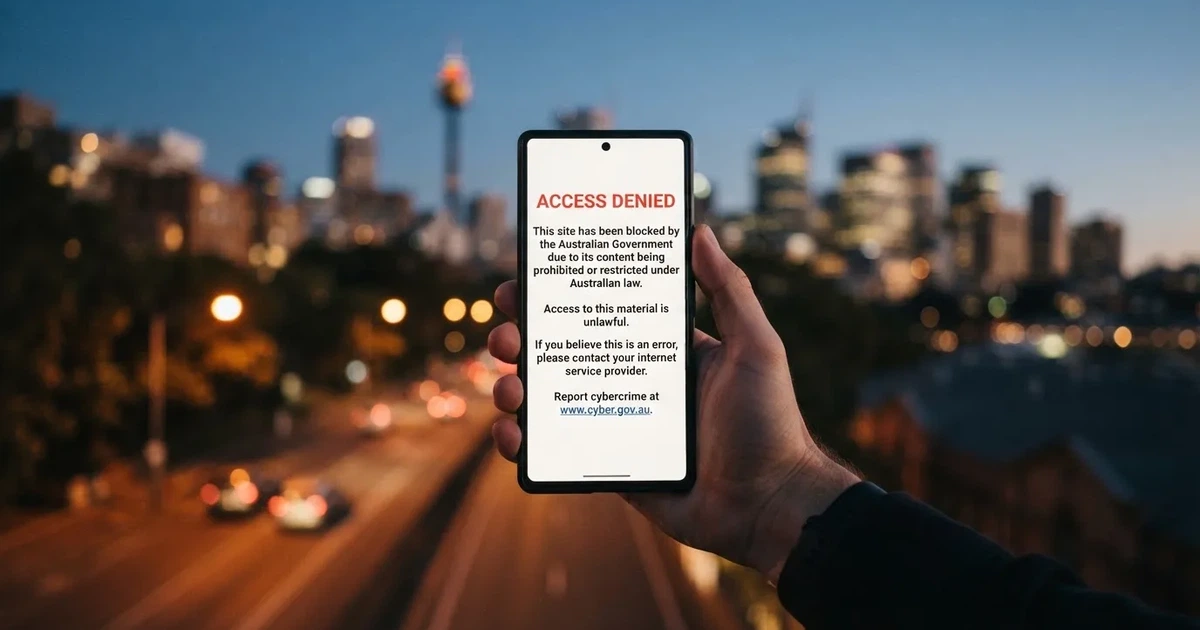
International casinos for Australian players, 2026: the offer that does not exist
 Available in US
Current as of 24 September 2026; verified against the ACMA’s published formal-warning register and the Interactive Gambling Act 2001 as it stands today.
An Australian reader typing “international casino” into a search bar wants a working shortlist. There is no honest way to hand one over. Online casino games — pokies, blackjack, roulette, baccarat, the rest of it — cannot be licensed for Australian players under any state or territory law, and the Interactive Gambling Act 2001 makes it an offence to provide them to anyone physically in Australia. The brand names that fill these search results, complete with welcome packages and VIP managers, are not licensed alternatives the reader has failed to find. They are prohibited services, and the regulator has been formally warning their operators, year after year, since at least 2022. That is the page’s central finding, and the rest of it is the practical detail a person needs to act on it.
Table of Contents
- What the Australian law actually says about international casinos
- How the ACMA enforces the prohibition
- The scale of the prohibited market
- What an Australian reader can actually do lawfully
- Responsible gaming tools that do and do not reach offshore sites
- The instant-payment rails an Australian reader actually controls
- The brands the ACMA has formally warned
- How often the ACMA has actually had to act
- Tax and the ATO position
- Where this leaves a reader who arrived looking for a recommendation
- Frequently asked questions
What the Australian law actually says about international casinos
The Interactive Gambling Act 2001 is the controlling statute. As strengthened by the Interactive Gambling Amendment Act 2017, it prohibits the supply of “prohibited interactive gambling services” to customers physically in Australia. The category covers online casino games, online pokies and in-play betting — the products an “international” casino typically offers. The prohibition targets the provider, not the player; an individual Australian opening an offshore account is not the person the Act is built to prosecute. What the Act does, in practice, is leave that person without Australian consumer protection when something goes wrong with the offshore site, and that asymmetry is the entire reason the search for “international casino” runs into the wall it does.

No state or territory licences online casino games. The Australian Capital Territory, New South Wales, Victoria, Queensland, South Australia, Western Australia and the Northern Territory each run their own gambling regimes, and what those regimes licence is wagering on racing and sporting events placed before the event, lotteries and keno. The closest cousin to an online casino in Australian law — the licensed online bookmaker — exists because the Northern Territory Racing and Wagering Commission (NTRWC) regulates 52 of them, including Sportsbet, Bet365 and Ladbrokes. The ABC reported in April 2026 that the commission has no full-time staff and meets once a month in Darwin, which is itself a useful fact: the regulator that does exist in this space is part-time by design.
So when an international site displays an “Antigua and Barbuda” or “Curaçao” licence badge and treats that badge as a substitute for an Australian one, the site is conflating two different markets. Curaçao and the smaller Caribbean jurisdictions licence the operator to take bets from outside their borders. They do not licence the operator to take bets from inside Australia; the IGA prohibits that, and the absence of an Australian licence is not a gap the page can route around. Some operators are licensed in more than one offshore jurisdiction; that combination does not bring the operation within Australian law, and no marketing copy on the landing page changes that.
How the ACMA enforces the prohibition
Enforcement is the Australian Communications and Media Authority’s responsibility. The ACMA investigates complaints, issues formal warnings to operators and, when a service does not respond, asks Australian internet service providers to block the underlying domain at the network level. As reported in June 2026, the ACMA’s running total of blocked illegal gambling and affiliate marketing websites had reached 1,751 since the first blocking request in November 2019. The same reporting puts the number of unlicensed gambling services that have left the Australian market since 2017 at more than 230.

Blocking runs in rounds. The 26 June 2026 round alone added twelve names: 7Signs, ChromaBet, Donbet, Duospin, Freshbet, Slots Gem, Jacks Club, Lucky Start, Pointsbetz.com, Spinrise, Vinyl Casino and Wildsino. Two patterns are worth noticing. First, the names change every round — operators rotate through new brands when the regulator blocks an old one. Second, the underlying corporate owners recur: Dama N.V., for instance, has been the subject of formal warnings covering multiple brands over multiple years. The brand name on the front of the site is rarely the entity the ACMA writes to.
The formal-warning pipeline is what the ACMA uses before it escalates to a blocking request, and the formal-warning register is the most readable public record of who is currently operating against Australians. The list is long enough that the page returns to it under each operator covered later on.
The scale of the prohibited market
H2 Gambling Capital’s 2025 estimate, carried by industry reporting, is that Australians lose about A$3.9 billion a year to illegal gambling sites. The same report put the share of gambling going through legal channels at 64%, down from 74% in 2021. Two things follow. First, the reader searching for an “international casino” is part of a real flow of money — these are not fringe sites, and the marketing that reaches them is not amateur. Second, the legal-channel share is falling, which is why the ACMA’s enforcement record looks as busy as it does and why the Government introduced the Interactive Gambling Amendment (Gambling Reform) Bill 2026, which passed Parliament on 19 August 2026 with advertising and inducement measures commencing 1 January 2027.
That last date is worth holding carefully. A law with a commencement date is law, but it is not yet in force; the inducement restrictions in the 2026 amendments are not operational on a page being read in 2026. Citing the 2027 start as if it were already binding publishes a false present-tense claim.
What an Australian reader can actually do lawfully
The lawful alternatives sit in three groups, and each is worth describing on its own terms because none of them is the product the search was after.
The first is licensed land-based venues. Crown Melbourne, Crown Perth, The Star Sydney, The Star Gold Coast, Treasury Brisbane, Adelaide Casino and the casino floors at SkyCity Darwin and Wrest Point in Tasmania run table games and pokies under state licences, with the consumer protections that come with Australian regulation: complaints channels, problem-gambling support on the floor, age verification, anti-money-laundering obligations. The product is casino gaming, but it is delivered in person, not online, and the law allows it for that reason.
The second is licensed online wagering, which is a narrower category than “online casino”. Australian-licensed bookmakers take bets on racing and sporting events placed before the event begins. In-play betting, where the wager goes down after the event has started, sits inside the prohibited category and is not available from any Australian-licensed operator. The wagering offer is real and accessible — Sportsbet, Bet365 and Ladbrokes are the well-known names — but it is not a substitute for what an international casino site offers.
The third is BetStop, the National Self-Exclusion Register. BetStop went live in August 2023 and lets a person exclude themselves from every Australian-licensed online and phone wagering service for a chosen period. The constraint matters here: BetStop binds Australian-licensed operators. An international casino, which is not licensed in Australia, is not connected to BetStop, and registering on BetStop does not block an offshore site. The register is the right tool for the lawful part of the market; it is not a complete firewall against offshore play.
For anyone who reads this page from inside Australia and decides the cost-benefit of going offshore is not for them, the National Gambling Helpline is 1800 858 858 — free, 24/7, with chat at Gambling Help Online. A line like this reads small in a comparison article. It is the part of the page with the longest half-life.
Responsible gaming tools that do and do not reach offshore sites
The asymmetry between Australian-licensed and offshore operators runs through the entire protection layer, and it is worth being explicit about what each tool actually covers.
BetStop covers every Australian-licensed online and phone wagering service. It does not cover offshore casino sites, because those sites are not part of the Australian regulatory perimeter. Self-exclusion at an individual international casino is a private contract with that operator; it depends on the operator honouring it, and there is no Australian complaints body to enforce it if it does not.
Card-level gambling blocks sit in the middle of this picture. Westpac’s gambling block, for example, refuses authorisation on transactions registered under the merchant category code “Betting/Casino Gambling” on eligible personal credit and debit cards. ANZ’s gambling transaction block, activated in the ANZ app, blocks gambling transactions made through a digital wallet such as Apple Pay on an eligible card — not just the physical card. Commonwealth Bank’s gambling lock, applied through the CommBank app, operates similarly on eligible cards. The mechanism is genuinely useful, but the caveat each bank attaches is the same: the block cannot guarantee every gambling-related purchase will be stopped, and a small number of non-gambling transactions can be blocked in error.
The Apple Pay and Google Pay layer sits above the card. Apple does not charge consumers any fee for using Apple Pay in stores, online or in apps, so any surcharge on a gambling deposit comes from the merchant’s card-processing fees rather than from Apple. The transaction limits and PIN requirements for Apple Pay purchases are set by the card issuer or the merchant, not by Apple, which means a gambling block set on the underlying card travels with the wallet. By the end of 2025, Apple Pay, Google Pay and Samsung Pay transactions collectively accounted for around 45% of all card payments in Australia by number, so the digital-wallet pathway is now a majority of card payment traffic and is worth thinking about on its own terms.
The credit-card prohibition sits on top of all of this. Since 11 June 2024, Australian-licensed online wagering services cannot accept payment by credit card or other credit-related products; the same logic constrains gambling use of linked digital wallets, because the wallet rides on the underlying credit instrument. The maximum penalty for an operator that breaches the rule is A$247,500. A site asking an Australian customer for a credit card or for a crypto deposit is operating outside the Australian rules on payment, and that is a second signal, after the offshore licence badge, that the site is not part of the Australian market.
The instant-payment rails an Australian reader actually controls
The lawful deposit rails for licensed Australian wagering are debit cards issued in Australia, bank transfers, PayID/Osko and BPAY. Each of these is a product the reader controls rather than a product the gambling site controls, which is part of the point.
Osko, run by Australian Payments Plus, sends a bank transfer between participating Australian banks in under a minute, 24/7 including weekends, addressed either to a BSB and account number or to a PayID. PayID-based instant transfers are available at more than 100 Australian financial institutions, and paying to a PayID shows the name of the account holder before the transfer is sent. AP+ warns that being asked to transfer money to a PayID on an illegal gambling site almost certainly means a scam site — that warning is part of the design, not an editorial flourish. More than 25 million PayID identifiers had been registered on Australia’s New Payments Platform as of April 2025; the underlying NPP went live to the public on 13 February 2018 and is owned by New Payments Platform Australia Ltd, a non-profit with thirteen shareholders that include the Reserve Bank of Australia and the major banks. Participants have to keep the platform’s monthly outages under two minutes. In 2021 the ACCC authorised the merger of NPP Australia, BPAY and eftpos into the single holding company Australian Payments Plus.
BPAY is the bill-payment rail: the payer enters the Biller Code and the Customer Reference Number (CRN) printed on the bill. It launched on 18 November 1997, is available in the online banking of more than 140 Australian banks and financial institutions and is offered by more than 95,000 businesses. It is owned equally, via parent company Cardlink Services Limited, by ANZ, Commonwealth Bank, National Australia Bank and Westpac.
The reason these rails matter in a piece about international casinos is the negative space around them. An offshore casino that cannot receive a PayID, cannot receive an Osko transfer, and does not display a BPAY biller code is, by construction, asking the Australian customer to leave the regulated payment system. That is the moment to stop. The same logic applies to AUSTRAC’s threshold-transaction-report rule, which only covers physical cash transfers of A$10,000 or more: an ordinary electronic bank transfer, no matter the size, is not subject to that per-transaction reporting rule, but the act of sending it to an unlicensed counterparty is still the act the IGA prohibits on the operator’s side.
The brands the ACMA has formally warned
Eleven brands appear on the ACMA’s published formal-warning register over online casino services offered to Australians, and they are listed here in the order the ACMA’s own register places them. This is not a ranking and not a recommendation. The only criteria are the operator the ACMA named and the date of the formal warning; the warning is published on the regulator’s own site, and each operator’s name carries the date the ACMA wrote to it.
| Brand | ACMA action and date | Operator named by the ACMA | Subject support |
|---|---|---|---|
| RocketPlay | Formal warning, March 2026; earlier Dama N.V., May 2022 | Pulsup Ltd (Rocketplay.com.au) | Listings mention it (Gamblinginsider.com) |
| Level Up Casino | Formal warning, May 2022 | Dama N.V. | Listings mention it (Westpac.com.au) |
| Woo Casino | Formal warning, March 2025 | Dama N.V. | No data |
| Spirit Casino | Formal warning, May 2025 | Dama N.V. | No data |
| National Casino | Formal warning, July 2025 | Consolutetish S.R.L. | Listings mention it (acma.gov.au, austrac.gov.au, betstop.gov.au) |
| Bizzo Casino | Formal warning, July 2025; earlier TechSolutions, 2022 | Consolutetish S.R.L. | Listings mention it (Gamblinginsider.com) |
| Ignition Casino | Formal warning, July 2025 | Bamboo Media | No data |
| Instant Casino | Formal warning, February 2025 | EOD Code SRL | Listings mention it (Ecopayz.com, Payid.com.au) |
| Jackbit | Formal warning, April 2026 | Ryker B.V. | No data |
| Casino Intense | Formal warning, April 2025 | Sterplay Holding Ltd | Listings mention it (austrac.gov.au, betstop.gov.au, Gamblinginsider.com) |
| Sky Crown | Formal warning, September 2022 | Hollycorn N.V. | No data |
The “subject support” column reflects how each brand appears in third-party listings the research consulted, not any claim the brands themselves make. Where research surfaced no listing mention at all, the cell carries the no-data marker rather than a guess. A reader who wants to see the formal-warning record on the ACMA’s own pages can find each one under the operator name in the table; the regulator publishes the correspondence as part of its register, and the link is the place the page itself stops short of advertising or directing.
How often the ACMA has actually had to act
A back-of-the-envelope figure is useful here, because the marketing the reader meets pretends the regulator is far less active than it is. The first blocking request was in November 2019. The running total reached 1,751 blocked websites by the June 2026 round. That is roughly 1,751 blocked websites across about 79 months, or close to 22 blocked sites per month on average since the blocking regime began — closer to one per working day. Stated as a band with its condition, the ACMA’s blocking pace runs at roughly 20 to 25 websites per month over the period since November 2019, with the rate accelerating rather than tapering as more offshore operators come into the regulator’s field of view. The pace is the reason the formal-warning register reads like a long list, and it is the reason the brand a reader meets today may not be the brand a reader meets six months from now.
RocketPlay
RocketPlay sits at the head of the ACMA’s recent list. The regulator issued a formal warning in March 2026 to Pulsup Ltd over Rocketplay.com.au. Earlier, in May 2022, Dama N.V. — a different corporate owner — was the subject of a formal warning covering six of its brands, RocketPlay among them. The shift in the named operator between the two warnings is the rotation pattern the ACMA’s enforcement record is built around: when one corporate entity is warned, the same product often reappears under a new one. RocketPlay displays an offshore licence badge, which is the licensing posture described earlier — it licences the operator to take bets from outside the operator’s jurisdiction, not from inside Australia. A reader who arrived at RocketPlay through an affiliate link has arrived at a service the ACMA has formally written to, on the regulator’s own page, and the IGA still prohibits what the site offers.
Level Up Casino
Level Up Casino was named in the May 2022 formal warning to Dama N.V. covering six casino brands: Bambet, Dazard, Level Up, Rocketplay, Wild Tornado and Cobra Casinos. The corporate-level grouping is the fact that matters: an operator with six brand surfaces is the same business reaching for six different customer-acquisition channels. The site’s display of an offshore licence does not change the Australian position; what is licensed offshore is licensed offshore, and what is offered to a person in Australia is offered in breach of the IGA.
Woo Casino
The ACMA formally warned Dama N.V. regarding Woo Casino in March 2025. The corporate connection puts Woo Casino alongside the Dama N.V. brands named in 2022 and in the May 2025 warning to the same operator over Spirit Casino. The pattern is consistent enough that Dama N.V. is now one of the more frequently named operators on the ACMA’s register, and the brand-name rotation around it is part of how the offshore market reaches Australian readers.
Spirit Casino
Spirit Casino drew a formal warning to Dama N.V. in May 2025. Two months after the Woo Casino warning, same operator. The brand cycle, in other words, is short — a regulator writes to one entity, the same group reappears under another name within the same calendar year. Spirit Casino’s subject support is no-data, which is a clean way of saying that no third-party listing the research consulted singles it out for anything in particular; the formal-warning record is what places it on this page.
National Casino
Consolutetish S.R.L. received a formal warning from the ACMA in July 2025 covering National Casino. The warning was issued alongside the one over Bizzo Casino, which the regulator had already written to TechSolutions (CY) Group Limited and TechSolutions Group N.V. in 2022. Two operators across two warning rounds: the brand name is new, the underlying pattern is the same one.
Bizzo Casino
Bizzo Casino was warned twice. The first warning was to TechSolutions (CY) Group Limited and TechSolutions Group N.V. in 2022; the second, in July 2025, was to Consolutetish S.R.L. The recurrence is itself the headline: the ACMA writes to operators, operators cycle through new entities, and the regulator writes again. A reader who meets Bizzo Casino for the first time in 2026 is meeting a brand the regulator has had to address more than once across more than one operator name.
Ignition Casino
Bamboo Media was formally warned by the ACMA in July 2025 concerning Ignition Casino. The brand sits outside the Dama N.V. cluster and outside the Consolutetish S.R.L. cluster, which is useful for the reader: it makes the point that the ACMA’s formal-warning record is not a single-operator story, and the offshore market’s reach into Australia is spread across a wider set of corporate entities than the well-known names.
Instant Casino
EOD Code SRL was the subject of a formal warning from the ACMA in February 2025 regarding Instant Casino. This warning is the most recently dated of those preceding the Woo Casino notice, and its timing puts Instant Casino near the start of the current enforcement round. The subject support column carries listings for Ecopayz.com and Payid.com.au — third-party pages the research consulted mentioned the brand, without that being a recommendation.
Jackbit
Jackbit was the subject of a formal warning to Ryker B.V. in April 2026. The brand sits in the most recent tier of the ACMA’s register alongside RocketPlay, which was warned in March 2026 to Pulsup Ltd. Two formal warnings in successive months, to two different operators, is the regulator’s working pace in early 2026.
Casino Intense
Casino Intense was the subject of a formal warning to Sterplay Holding Ltd in April 2025. The brand’s third-party listing footprint is wider than most in this set — austrac.gov.au, betstop.gov.au and Gamblinginsider.com all carry references in the research — which is a marker of how widely the brand has been listed rather than a sign that any of those references recommends it.
Sky Crown
Sky Crown was named alongside Blue Leo in a formal warning to Hollycorn N.V. that the ACMA published in September 2022. The Hollycorn warning is older than most of the others on this page, which is itself worth noticing: a formal warning is not a blocking order, and a brand can continue to operate against Australian readers for years after the regulator writes to it. The block only follows when the operator does not respond.
Tax and the ATO position
A reader who has used an international casino will eventually want to know how the winnings sit with the Australian Taxation Office. The position is straightforward: gambling winnings of a recreational player are not assessable income under section 6-5 of the Income Tax Assessment Act 1997, and losses are not deductible, unless the person carries on a business of gambling. That second clause matters at the edges — a professional punter is a different case from a recreational one — but for most readers the rule is plain: what is won is not taxed as income, and what is lost cannot be claimed back. The phrase the ATO uses, and that the page repeats without endorsement, is “check with the ATO” for any individual case that is not plainly recreational.
Where this leaves a reader who arrived looking for a recommendation
The honest answer is that the page cannot recommend an international casino to an Australian reader, because the product the search is asking about is prohibited under the Interactive Gambling Act 2001 and every operator that offers it has been formally warned or blocked by the ACMA at one point or another. The lawful Australian offer is real and it is narrower: licensed land-based casinos in each state and territory, licensed online wagering on racing and sport placed before the event, and BetStop self-exclusion for anyone who wants the licensed wagering channels closed. The card-level gambling blocks at Westpac, ANZ and Commonwealth Bank, and the credit-card prohibition in force since 11 June 2024, are the layers that sit on top.
The page’s angle throughout has been the cost — what the international-casino offer actually costs an Australian reader, in legal protection, in recourse if a withdrawal is refused, and in the absence of any Australian consumer-protection umbrella if the site is blocked with a balance on it. The arithmetic that runs underneath that cost is the ACMA’s blocking rate: roughly 20 to 25 sites per month since November 2019, with the rate rising rather than falling, and a formal-warning register that names corporate operators faster than those operators can rotate through new brand names. That is the figure that makes the marketing’s promise — a working alternative to the licensed Australian market — dissolve on contact. The marketing is a sales pitch for a product the regulator treats as a moving target, and a reader who reads the register as a single document sees what the sales pitch does not show.
Frequently asked questions
What does international casino mean as distinct from an Australian-licensed one?
An international casino is an online casino operated from outside Australia under an offshore licence — typically Curaçao, Malta or a smaller Caribbean jurisdiction — that takes bets from customers in many countries, including Australia. An Australian-licensed operator of the same product does not exist, because no state or territory of Australia licences online casino games for supply to people in Australia. The offshore licence covers the operator’s right to take bets from outside its own borders, not from inside Australia.
Can an international online casino legally accept players located in Australia?
No. Under the Interactive Gambling Act 2001, as strengthened in 2017, it is an offence for an operator to provide online casino games to a person physically in Australia, regardless of the licence the operator holds elsewhere. The Act targets the provider rather than the player, which is why individual Australians are not prosecuted for using these sites. What the Act leaves the player without is Australian consumer protection, an Australian complaints body and any Australian recourse if a withdrawal is refused.
Does an overseas gambling licence carry any weight for an Australian player?
It carries weight inside the jurisdiction that issued it. It does not carry weight in Australia, because the IGA prohibits the supply of these services to people in Australia regardless of the offshore licence, and no Australian regulator recognises an offshore licence as authorising supply into the Australian market. A licence badge on a landing page is a marketing artefact for that site’s position outside Australia; it is not a substitute for an Australian authorisation that does not exist.
What protections, if any, apply to an Australian using an international casino site?
None of the Australian protections apply. BetStop does not bind an offshore site, because BetStop covers Australian-licensed online and phone wagering services and the international casino is not one. Australian-licensed dispute resolution does not apply, because the operator is not licensed in Australia. The card-level gambling blocks at Westpac, ANZ and Commonwealth Bank can stop some gambling transactions at the card level, but each bank warns that not all gambling transactions will be blocked and a small number of non-gambling transactions can be blocked in error. Beyond those, the reader is on the operator’s own terms.
Are international land-based casino resorts different from the international online sites people search for?
They are different products in different legal frames. Land-based casino resorts in places like Macau, Singapore, Las Vegas and Monaco are licensed by the jurisdiction they sit in and operate under that jurisdiction’s consumer-protection regime. The international sites that surface in an Australian search for “international casino” are online operations offering casino games to remote customers; those are the operations covered by the IGA, and the IGA’s prohibition on supplying online casino games to Australians applies to them regardless of where the operator is physically based.
Who can an Australian contact if an international casino site will not pay out?
There is no Australian complaints body that can compel an offshore operator to pay. The realistic recourse is the licensing jurisdiction the operator displays on its site — a Curaçao or Malta-based regulator may run a complaints process, but it is slow, foreign-language in places, and not designed for Australian customers. The Australian-side support is the National Gambling Helpline on 1800 858 858 (free, 24/7, with chat at Gambling Help Online), which can talk through the financial side of a non-payment and the consumer-protection options that may exist under the operator’s home jurisdiction. The page repeats the helpline number here because it is the one Australian-facing service that exists for exactly this situation.
Written by the editors at Casino Providers Info.