
Anonymous crypto casino play in Australia: the offshore math the marketing skips
 Available in US
A search for “anonymous crypto casino Australia” sits on top of two claims that don’t quite fit together. The first is that crypto payments are legal in Australia, and any Australian-facing exchange converting crypto to Australian dollars has to register with the Australian Transaction Reports and Analysis Centre (AUSTRAC). The second is that online casino games and online pokies cannot be licensed anywhere in Australia, and every brand reviewed is an offshore operator running outside Australian law. “Anonymous” is what sits between the two, and overstates what a blockchain wallet address actually hides from anyone who later asks questions. What follows reads the ACMA’s enforcement record from the player’s side of the ledger: what it costs to sign up with a brand the regulator has already named, what protections an Australian player is not getting, what the tax treatment looks like when winnings come back as crypto, and what the responsible-gaming safety net actually covers. The math is on the player’s side of the ledger, not the operator’s.

Data current as of 24 September 2026. Licence claims and ACMA enforcement figures verified against the ACMA’s own publications.
Table of Contents
- The fundamenta of offshore casino play in Australia
- Australia’s prohibitive regime under the Interactive Gambling Act 2001
- Where to turn if it stops being fun
- Blockchain rails and the limits of pseudonymity
- What the ACMA has named, and what each warning costs an Australian player
- Frequently asked questions
The fundamenta of offshore casino play in Australia
Anonymous crypto casino play in Australia is the same product the IGA has prohibited since 2001, sold through a payment rail it does not regulate. The pitch is that the player funds the account from a blockchain address the casino does not see the name behind, which is true at the moment of deposit and largely false the moment the player tries to convert winnings back to Australian dollars. The pitch also assumes the player has not looked up what an Australian licence looks like for this product; the answer is that there is not one, and there has never been one.

The product is the same on every brand reviewed. Online casino games — slots, table games, live dealer — and online pokies, the Australian word for slot machines, are a prohibited interactive gambling service under the Interactive Gambling Act 2001. No state or territory issues a licence for them. The only wagering product that is licensable in Australia is pre-event wagering on racing and sport, lotteries and keno, and in practice those licences sit with the Northern Territory Racing and Wagering Commission, which regulates 52 online bookmakers including Sportsbet, Bet365 and Ladbrokes, has no full-time staff and meets monthly in Darwin. Online casino games are not on that list. The brands reviewed display licences from Curaçao, Anjouan, Kahnawake and similar offshore jurisdictions; none of those licences has any Australian reach, and an “international licence” on a casino homepage is not an Australian licence.
The payment rail is different. Buying, holding and spending cryptocurrency is legal in Australia. The Australian Taxation Office classifies crypto assets as property, not money or foreign currency, so most disposals — selling for Australian dollars, swapping for another crypto, or spending at a merchant — are capital gains tax events. Holding is not. The exchange that converts crypto to Australian dollars is regulated under the AML/CTF Act, with AUSTRAC requiring registration as a Digital Currency Exchange provider and, from 31 March 2026, extending that registration to crypto-to-crypto platforms, custody providers, digital asset transferors and stablecoin issuers and distributors. Operating unregistered is a criminal offence. None of that touches the offshore casino.
The interesting structural fact is that the offshore casino operates in the gap between two regulatory regimes that do not communicate. AUSTRAC’s reach covers the exchange; the IGA’s reach covers the casino; neither covers the gap, and the casino sits in it. The brand displays an offshore licence the IGA does not recognise; the player funds the account with an exchange that has identified the customer; the casino sees a wallet address, not a name, at the moment of deposit. The “anonymous” framing of the marketing depends on that gap. Closing it requires either AUSTRAC to extend its rules to the casino’s receipt of funds (which it has not done for offshore gambling) or the Australian Communications and Media Authority (ACMA) to block the casino’s domain (which it has done to 1,751 of them since November 2019).
For a player who has already signed up, the cost of the gap shows up in three places. The first is no Australian complaints body: there is no Australian regulator to whom a refused withdrawal can be escalated, no ombudsman, and no right of recourse under Australian consumer law. The second is no Australian consumer protection: there is no Australian requirement that winnings be paid, that bonus terms be honoured, or that the player’s data be kept confidential. The third is the structural risk that the site can be blocked with a balance on it. The blocking action does not return funds; it removes the player’s ability to log in and request them.
The ACMA’s enforcement record on offshore casino play has been running long enough that the warnings are no longer one-offs. In July 2025 the ACMA issued formal warnings to Bamboo Media over Ignition Casino and to Consolutetish S.R.L. over National Casino and Bizzo Casino. Bizzo Casino had already been the subject of a 2022 warning to TechSolutions (CY) Group Limited and TechSolutions Group N.V., which makes it one of two brands reviewed with repeat warnings under different operators. The repetition is the signal: the ACMA’s enforcement action is at the operator level rather than the brand level, and the corporate shells behind these brands shift more often than the warnings do.
The framing from here is the player’s side of the ledger: what each reviewed brand actually costs in lost recourse, in tax treatment, and in protection the Australian safety net does not extend to. The list is not a ranking; the ACMA’s record is. The prohibition is the regulator’s and is not negotiable. What follows is the legality frame, the responsible-gaming frame, the crypto and anonymity frame, and the eleven brands the ACMA has named.
Australia’s prohibitive regime under the Interactive Gambling Act 2001
The Interactive Gambling Act 2001 is the statute that makes the supply of online casino games, online pokies and in-play betting to a person in Australia a criminal offence. The Interactive Gambling Amendment Act 2017 strengthened it, extending the prohibition to in-play betting on sports, tightening the definition of a “prohibited interactive gambling service”, and giving the ACMA the powers it now uses to investigate, warn and block. The Act targets the provider, not the individual player; an Australian who opens an account with an offshore casino is not personally at risk of prosecution. The practical consequence is asymmetric: an offshore site that refuses a withdrawal cannot be compelled by an Australian regulator, because it has no Australian registration; a player who wants to recover funds from an offshore site has no Australian route to do so.
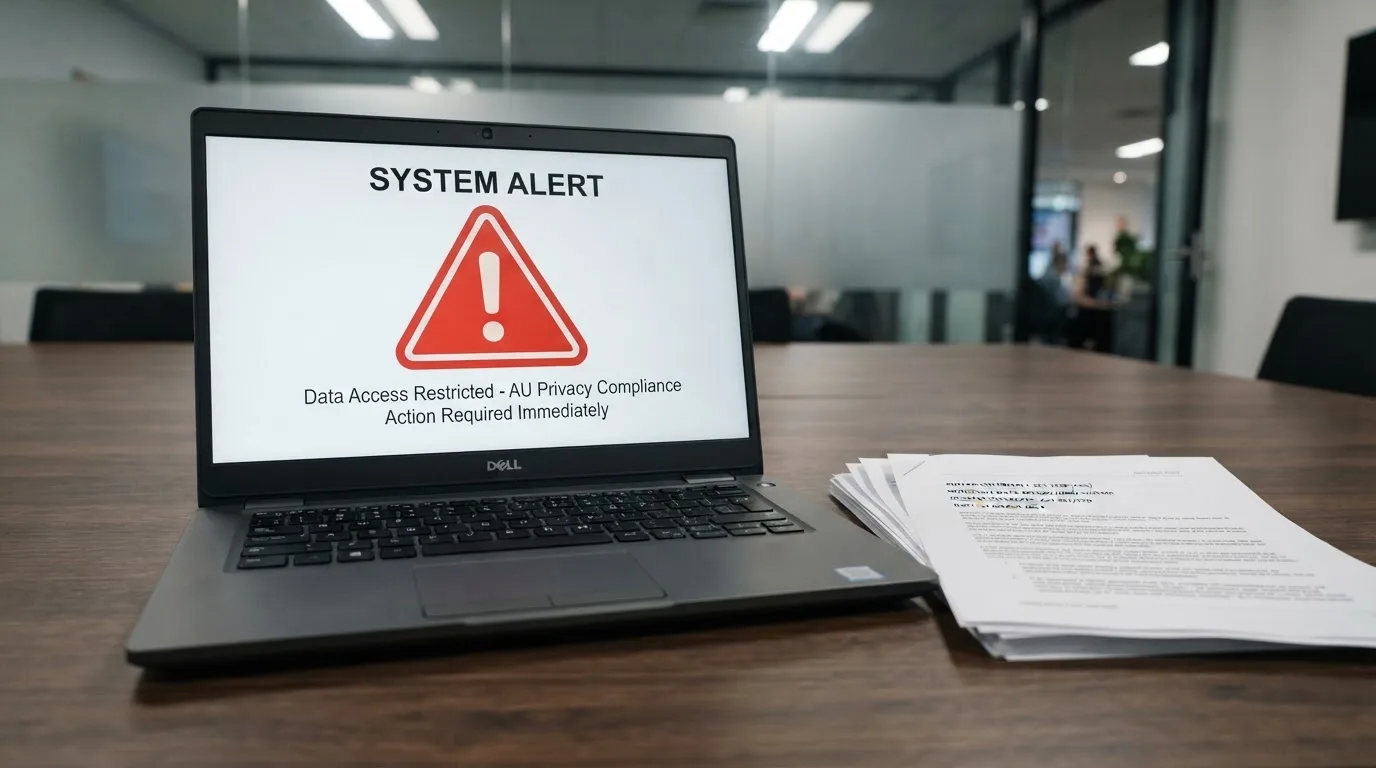
The ACMA does the enforcement work. It can investigate complaints, issue formal warnings, accept enforceable undertakings, and — most consequentially — ask Australian internet service providers to block illegal sites under section 313 of the Telecommunications Act 1997. The blocking regime has been running since 2017 and the cumulative numbers tell the story. According to the ACMA as reported in June 2026, a total of 1,751 illegal gambling and affiliate marketing websites had been blocked since the first blocking request in November 2019, and more than 230 unlicensed gambling services had left the Australian market since enforcement was strengthened in 2017. The June 2026 round alone added twelve sites — 7Signs, ChromaBet, Donbet, Duospin, Freshbet, Slots Gem, Jacks Club, Lucky Start, Pointsbetz, Spinrise, Vinyl Casino and Wildsino — to the list, and these are blocking actions on top of formal warnings to operators.
Translated into a rate, that is information the marketing’s “anonymous crypto” framing does not surface. Across the November 2019 to June 2026 enforcement period, the 1,751-site total averages out to a band of roughly 20 to 25 illegal gambling and affiliate marketing websites blocked per month on a long-run basis, or somewhere in the range of 250 to 280 a year. The condition is that this is an average over an uneven series: individual months have ranged from a handful of sites in a quiet round to dozens in a single sweep, and the long-run trend over the period has been flat to rising rather than flat to falling. The market has not closed itself. The condition also treats affiliate marketing websites and gambling sites as a single blocked category; the figures reported by the ACMA are aggregated, and a within-category split is not published.
Warnings and blocks are different tools. A formal warning does not block a site; it puts the operator on notice that continued supply may attract further action, including referral to the Commonwealth Director of Public Prosecutions. In February 2025 the ACMA issued a formal warning to EOD Code SRL over Instant Casino. The brand is still accessible through most residential ISPs as of the data snapshot, which is itself part of the picture. A formal warning is not a takedown; it is a documented step in the ACMA’s enforcement process that can be referenced in later blocking actions, criminal referrals or both.
The payment side of the prohibition is layered on top. From 11 June 2024, credit cards, credit-related products and digital currency are banned as payment for licensed online wagering, with penalties up to A$247,500 for operators. The legal deposit routes for licensed wagering are debit card, bank transfer, PayID/Osko and BPAY. A site asking an Australian for a credit card or a crypto deposit is operating outside the Australian rules; the deposit ban is one more reason an offshore crypto casino cannot also be an Australian-licensed product, and one more reason an offshore crypto casino cannot rely on the Australian payment system to settle winnings.
The 2026 reform picture: the Interactive Gambling Amendment (Gambling Reform) Bill 2026 passed Parliament on 19 August 2026, with its advertising and inducement measures commencing on 1 January 2027. The Bill is law with a start date; it has not yet commenced. The provisions target inducements, advertising and harm-reduction measures; they do not change the underlying prohibition on the supply of online casino games and online pokies, which has been in place since 2001.
The other half of the prohibition is what it does not do. The IGA does not require an offshore casino to refund a refused withdrawal, does not require an offshore casino to honour an Australian self-exclusion, does not require an offshore casino to keep player funds segregated from operating funds, and does not require an offshore casino to publish a payout rate that an Australian regulator has audited. The offshore licence the homepage carries — Curaçao, Anjouan, Kahnawake — is a licence to operate from that jurisdiction, not a guarantee of any of the things an Australian licence would require. Reading the offshore licence as equivalent to an Australian one is the single most expensive mistake a player can make on the brands reviewed, because every other cost flows from it.
The takeaway for a player looking at any of the eleven brands reviewed is straightforward. The product is prohibited. The payment rail is regulated separately. The enforcement is ongoing and has been for nearly seven years. None of the reviewed brands has an Australian licence, and none can acquire one for the product it sells. The legal frame is prohibitive and getting more so.
Where to turn if it stops being fun
If anonymous crypto casino play has started to feel compulsory rather than entertaining, free confidential help is available around the clock. The National Gambling Helpline on 1800 858 858 runs 24/7; the same service runs as webchat at Gambling Help Online. Counselling is independent of any operator, any regulator and any of the eleven brands reviewed. The service is funded by the Commonwealth and state governments and is free to Australian callers.
The Australian safety net for problem gambling has two layers, and only one of them reaches offshore casino play. The first is the National Gambling Helpline and the state-based counselling it connects to. That layer is universal: it covers anyone in Australia, regardless of where they gamble, and it is the layer the offshore casino does not block. The second is BetStop, the National Self-Exclusion Register, which has been live since August 2023 and lets a player exclude themselves from every Australian-licensed online and phone wagering service through a single registration. BetStop binds Australian-licensed operators only, which is to say licensed bookmakers. It does not bind offshore crypto casinos, which are not licensed in Australia, and it cannot compel an offshore brand to close an account or refund a balance.
The structural gap matters for one specific reason. The responsible-gaming advice for any Australian-licensed product is “set a deposit limit, register with BetStop, contact the helpline if needed”. The same advice for an offshore crypto casino has the deposit limit missing (no Australian operator to set it with), the BetStop registration not applying (no Australian-licensed service to bind), and the helpline as the only layer that catches the case. That is the entire safety net for offshore play, and it is the reason the framing has been the player’s side of the ledger from the lead.
For a player who has already opened an account with one of the eleven brands, the practical steps are the same as for any gambling that has stopped being a choice. Stop funding it. Contact the helpline. Tell the counsellor that the account is offshore; the counsellor will know what to do. Ask the offshore brand to close the account; some honour the request, most do not. The winnings, if any, can still be requested before closure, but no Australian route exists to compel payment if the offshore brand refuses. The responsible-gaming layer covers the player; it does not cover the balance.
The legal wagering channel in Australia is small in number of licences but tightly regulated. The Northern Territory Racing and Wagering Commission regulates 52 online bookmakers, and that is effectively the licensed wagering universe for online play. The regulatory reach is real: deposit limits, account closure on request, dispute resolution, and BetStop registration all sit behind that licence. None of it extends to the eleven brands reviewed.
The wider policy picture sits behind these numbers. The H2 Gambling Capital 2025 report estimates that Australians lose about A$3.9 billion a year to illegal gambling sites, and that the share of gambling going through legal channels fell from 74% in 2021 to 64%. The shift is the other side of the offshore casino’s pricing power: the cheaper it is to set up a wallet, the less the Australian legal channel matters in the player’s decision, and the further the safety net is from the player’s actual account. The framing from the lead is what the safety net does not reach.
One specific note on the helpline’s scope. The 1800 858 858 number is for Australian callers. For readers outside Australia, equivalent services exist in most jurisdictions — Gamblers Anonymous, GamCare in the UK, the National Council on Problem Gambling in the US — but those services are not the services the Australian safety net is built around, and an Australian self-exclusion does not bind an offshore casino under any of them.
Blockchain rails and the limits of pseudonymity
“Anonymous crypto casino” is the marketing phrase. The blockchain it sits on does not match the phrase. Bitcoin’s network was created on 3 January 2009 when the pseudonymous Satoshi Nakamoto mined the genesis block, after posting the Bitcoin white paper to a cryptography mailing list on 31 October 2008; Nakamoto’s real identity has never been verified. Ethereum’s network launched on 30 July 2015, with Vitalik Buterin as its primary creator, having published the original whitepaper in late 2013. Both run on a public ledger: every transaction is recorded on a chain that anyone with an internet connection can read, and every participant is identified by an address rather than a name.
That is pseudonymity, not anonymity. The address is a long string of letters and numbers that does not by itself reveal who controls it; the chain on which every transaction involving that address sits is, by design, public. A blockchain address is the equivalent of a pen name in a public ledger. The pen name is consistent, every entry under it is searchable, and anyone who learns the real identity behind it can connect the entire history. The address does not change unless the player moves funds to a new address; most casino deposits reuse the same address, because that is how the casino credits the account.
If the casino later hands its transaction history to an Australian or foreign authority, every deposit the player has made from that address is on it. If the player ever converts winnings back to Australian dollars through a registered exchange, that exchange has had to identify the customer under AUSTRAC’s anti-money-laundering rules, and the address is now attached to a name on the other side. The “anonymous” framing of the marketing depends on a particular set of conditions holding: the casino does not ask, the casino does not share, the player does not cash out, and no authority ever subpoenas either side. None of those conditions is contractually guaranteed.
The mechanics of the rail are worth understanding for what they cost in time. Bitcoin’s block time is roughly ten minutes on average, with the mining difficulty readjusting every two weeks to keep the average near ten minutes; block discovery is probabilistic, so a confirmation can arrive much sooner or much later. The mining reward halves every 210,000 blocks until a total of 21 million bitcoin have been issued, expected around the year 2140. Ethereum switched its consensus mechanism from proof-of-work to proof-of-stake in an upgrade called “The Merge” on 15 September 2022, and now produces a new block roughly every 12 seconds. Bitcoin Cash, the hard fork that launched on 1 August 2017 at block height 478,558, retains Bitcoin’s 10-minute target and SHA-256 proof-of-work but raised its block size limit from 8 megabytes at launch to 32 megabytes in 2018, and its project literature describes transaction fees as “under a penny” with confirmations in minutes.
The Australian regulatory reach into the rail is real and growing. Under the Anti-Money Laundering and Counter-Terrorism Financing Act (AML/CTF Act), any business providing a digital currency exchange service to Australian customers must register with AUSTRAC as a Digital Currency Exchange provider, regardless of where the business is incorporated; operating unregistered is an offence. From 31 March 2026 the registration was expanded beyond crypto-to-fiat exchange to also cover crypto-to-crypto platforms, digital asset transferors, digital asset custody providers and stablecoin issuers and distributors. Every step on the path from an Australian bank account to an offshore casino wallet — purchase, transfer, conversion — runs through a party AUSTRAC can compel to keep records, and every step on the path back — conversion to Australian dollars, withdrawal to a bank account — runs through the same gate. The privacy the marketing describes is privacy until the player wants to spend the winnings, at which point the exchange the player chose becomes the single point of identification.
The Australian Securities and Investments Commission (ASIC) has also moved on the rail’s edges. ASIC’s Information Sheet 225, “Digital assets: financial products and services”, was first published in September 2017 and updated in 2025 with worked examples covering stablecoins, wrapped tokens, tokenised securities and digital wallets, alongside a sector-wide no-action position on related licensing until 30 June 2026. The Information Sheet treats most crypto assets as financial products under Australian law, with the implications that follow: disclosure requirements, licensing obligations and the regulator’s powers to act on misleading conduct. None of that regulation binds the offshore casino at the receiving end of the deposit, but it does reach the exchange, the custodian and the issuer that the player used to fund the account.
The crypto wallet a player uses to fund an offshore casino account is the other layer of the gap. Custodial wallets — those run by a registered exchange — hold the player’s keys on the player’s behalf and identify the customer under AUSTRAC’s rules; non-custodyal wallets — those where the player holds their own keys — do not, but require the player to acquire the crypto through some channel that does. The mix of wallet and exchange is where the privacy the marketing describes is set: custodial wallets offer convenience and lose privacy; non-custodyal wallets preserve privacy and lose convenience. An Australian player looking to fund an offshore casino account cannot avoid both legs of the choice, because the path from an Australian bank account to the casino wallet runs through an exchange that has had to identify the customer under Australian law.
The tax treatment is the other layer the marketing skips. The ATO treats crypto assets such as bitcoin as property, not money or foreign currency; most disposals — selling for Australian dollars, swapping for another crypto, spending at a merchant — are capital gains tax events. A 50% CGT discount currently applies to crypto held longer than 12 months, but from 1 July 2027 that flat discount is replaced by CPI indexation of the cost base plus a 30% minimum tax rate on net capital gains. The ATO disregards capital gains on a crypto asset held as a personal use asset if the asset cost A$10,000 or less to acquire, but holding crypto as an investment takes it outside the exemption. Capital losses on personal use assets are disregarded entirely and cannot offset other capital gains. The upshot for an Australian player is that winnings on a casino funded by crypto, and converted back to Australian dollars, are a CGT event; losses on personal-use crypto cannot be used to offset the gain. The ATO has also made clear that “I lost it gambling” is not a CGT event in itself — the CGT event is the disposal, and the gambling outcome is just the size of the gain or loss.
The pattern on the warning record is consistent across brands that have taken crypto deposits. In March 2025 the ACMA issued a formal warning to Dama N.V. over Woo Casino; in May 2025 the same operator was warned again over Spirit Casino. The product on offer is online casino games and online pokies, which the IGA prohibits for supply to anyone in Australia; the rail that takes the deposit is crypto, which is regulated separately. Neither fact has stopped either warning, and the ACMA’s record makes no distinction between a brand that takes crypto and a brand that takes cards: the prohibition is on the product, not the payment method.
What the ACMA has named, and what each warning costs an Australian player
Eleven offshore casino brands are reviewed. The ACMA has issued a formal warning under the Interactive Gambling Act 2001 to the operator behind each of them, on dates ranging from May 2022 to March 2026. The list is not a ranking and is not a recommendation; it is the ACMA’s own published enforcement record, in the order the regulator’s record gives it. Each entry carries the brand name, the date of the ACMA’s formal warning, the operator the warning was addressed to, and what can and cannot be said about the brand’s anonymous crypto casino support from publicly available listings.
The verbs the ACMA uses are deliberate. A formal warning is published, addressed to a corporate operator, and recorded as part of the regulator’s enforcement history. It is not a takedown, and it is not a guarantee that the brand will be blocked. It is a documented step that can be referenced in any later blocking request, criminal referral or enforceable undertaking. Reading the table is reading the ACMA’s own steps, in the order it took them.
| Brand | ACMA action and date | Operator named by the ACMA | Subject support |
|---|---|---|---|
| RocketPlay | Formal warning under the IGA, March 2026; earlier May 2022 under a different operator | Pulsup Ltd (March 2026); Dama N.V. (May 2022) | — |
| Level Up Casino | Formal warning under the IGA, May 2022 | Dama N.V. | — |
| Woo Casino | Formal warning under the IGA, March 2025 | Dama N.V. | Listings only (Wikipedia) |
| Spirit Casino | Formal warning under the IGA, May 2025 | Dama N.V. | — |
| National Casino | Formal warning under the IGA, July 2025 | Consolutetish S.R.L. | Listings only (Nab.com.au) |
| Bizzo Casino | Formal warning under the IGA, July 2025; earlier 2022 under a different operator | Consolutetish S.R.L. (July 2025); TechSolutions (2022) | — |
| Ignition Casino | Formal warning under the IGA, July 2025 | Bamboo Media | — |
| Instant Casino | Formal warning under the IGA, February 2025 | EOD Code SRL | — |
| Jackbit | Formal warning under the IGA, April 2026 | Ryker B.V. | — |
| Casino Intense | Formal warning under the IGA, April 2025 | Sterplay Holding Ltd | — |
| Sky Crown | Formal warning under the IGA, publication September 2022 | Hollycorn N.V. | — |
RocketPlay: the only brand with two ACMA actions under different operators on the regulator’s record
RocketPlay is the freshest brand on the regulator’s record: the ACMA issued a formal warning to Pulsup Ltd over RocketPlay in March 2026, the most recent date in the table. The same brand was already the subject of a 2022 warning to Dama N.V., one of six brands caught in the May 2022 round (alongside Bambet, Dazard, Level Up Casino, Wild Tornado and Cobra Casinos). Of the eleven brands on this list, RocketPlay and Bizzo Casino are the only two with two ACMA actions under different operators on the public record; RocketPlay is the only one whose Australian-facing .com.au domain is named in the warning itself.
The operator behind the brand has changed within four years. The product has not. Australian players have always faced the same offer on RocketPlay: an offshore account, no Australian licence, no Australian complaints body, and the structural risk discussed earlier that the site can be blocked with a balance still on it. The two ACMA actions under two different operators do not change what an Australian signing up today would face, and they do not change what the regulator has already found: that the operator behind RocketPlay has offered prohibited interactive gambling services to Australians twice.
RocketPlay’s place on the regulator’s list survived the operator swap: a 2022 warning under Dama N.V. and a 2026 warning under Pulsup Ltd are both on the public record, and the brand has been named twice.
Level Up Casino: the oldest single warning on the regulator’s record
Level Up Casino’s only ACMA action on the public record is the May 2022 formal warning to Dama N.V., one of six brands caught in that round. The brand has continued to serve Australian-facing traffic in the four years since, with no further formal warning and no Australian licence issued in the interim. The IGA does not require a second warning before further action; the ACMA’s enforcement discretion is what stands between a warning and a blocking request, not the Act itself.
Of the eleven brands reviewed, Level Up has the oldest single formal warning on the list by date of warning, and one of the longest periods since warning without further action. That is information in two directions. It is evidence the ACMA has chosen not to escalate, and it is also evidence the ACMA’s formal warning has not been withdrawn, the brand is on the regulator’s list of services it has already established as offering prohibited interactive gambling to Australians, and a four-year gap is not the same as the warning being lifted.
Level Up is the structural pattern the responsible-gaming rules are built around: a four-year-old warning, still on the regulator’s record, still no Australian licence. The helpline covers the player; BetStop does not bind the brand.
Woo Casino: a fresh Dama N.V. warning on a brand with a Wikipedia entry
Woo Casino was the subject of a formal warning to Dama N.V. in March 2025, two and a half years after the operator was first warned under the IGA for Level Up Casino and the other brands in the May 2022 round. Of the eleven brands on this list, Woo is one of two with a public third-party listing a comparison page would actually surface: there is a Wikipedia entry for Woo Casino. The entry is not an endorsement and is not a regulatory record; it is a record that the brand has a Wikipedia article, with all the editing history that implies.
The entry does not say the operator is licensed in Australia, because none of the eleven brands is, and the public listings layer cannot speak to Woo’s anonymous crypto support in its own right beyond the listing. What the March 2025 warning does say is that the ACMA found Dama N.V. continuing to offer prohibited interactive gambling services to Australians, and that finding came nearly three years after the operator had first been put on notice.
What Woo costs a player is the combination no other brand on this list carries: a repeat Dama N.V. warning on a brand with a public Wikipedia entry that is not a regulatory endorsement.
Spirit Casino: the second Dama N.V. warning of 2025
Spirit Casino’s formal warning to Dama N.V. came in May 2025, two months after the same operator was warned over Woo Casino. The two warnings landed within a single enforcement quarter, against a single corporate operator, on two different brands. Reading them together rather than separately matters: it suggests the ACMA saw the warning pattern at the operator level, not the brand level. That is the part of an offshore casino that does not appear on a homepage — the operator behind the brand can change while the offer does not, and the ACMA’s records are organised by operator.
Spirit does not have a third-party listing comparable to Woo’s Wikipedia entry; subject support is no-data, meaning there is no source outside the ACMA’s own enforcement record to verify a claim about the brand’s anonymous crypto support. The May 2025 warning is a finding that Dama N.V. continued to offer prohibited interactive gambling services to Australians, on a brand the operator had not previously been warned over.
Spirit is the second Dama N.V. warning of 2025, and the regulator’s documented view that the operator’s conduct has not changed since 2022.
National Casino: a Consolutetish warning on a brand with a bank comparison listing
National Casino was named in the ACMA’s July 2025 formal warning to Consolutetish S.R.L., alongside Bizzo Casino. Of the eleven brands reviewed, National is one of two with a listings-only support record: the listing source is a bank comparison page on Nab.com.au, which lists National Casino among a number of offshore brands for comparison purposes. Like the Woo Casino Wikipedia entry, that is not an endorsement and does not speak to National’s anonymous crypto support in its own right; it is a record the comparison infrastructure surfaces, and a reader who lands on the Nab.com.au page is being routed to a comparison that describes itself as listings only.
The July 2025 warning is a finding that Consolutetish S.R.L. has been offering prohibited interactive gambling services to Australians. Reading National alongside Bizzo, the verdict that the ACMA’s enforcement is at the operator level rather than the brand level applies again, with the wrinkle that Bizzo’s repeat spans two different operators across three years (TechSolutions in 2022, Consolutetish in 2025).
The bank comparison page lists National Casino; the regulator’s record names Consolutetish S.R.L. as the operator. The two sources do not align, and the product is prohibited either way.
Bizzo Casino: warned twice, under two different operators, in three years
Bizzo Casino has been warned twice. The first warning, in 2022, went to TechSolutions (CY) Group Limited and TechSolutions Group N.V.; the second, in July 2025, went to Consolutetish S.R.L., alongside National Casino in the same round. Of the eleven brands on this list, Bizzo and RocketPlay are the only two with two ACMA actions under different operators on the public record, and Bizzo is the only one whose two actions bracket a change of corporate identity. A brand carrying a 2022 warning did not stop being warned when the operator behind it changed; the ACMA’s records track the brand name as well as the operator.
The 2025 letter is a finding that Consolutetish S.R.L. is currently offering prohibited interactive gambling services to Australians. For a player looking at Bizzo today, the costs are the same as for any offshore casino on this list — no Australian licence, no Australian consumer protection, no recourse on a refused withdrawal — and the historical record is one of the few pieces of evidence the marketing’s “anonymous” framing cannot dispute. The brand has been named in formal ACMA action twice, under two different operators, and the regulator’s record is permanent.
Bizzo is the only brand whose regulator record brackets a change of corporate identity, with two warnings under two different operators in three years.
Ignition Casino: a July 2025 warning on a brand whose operator appears once
Ignition Casino’s only ACMA action on record is the July 2025 formal warning to Bamboo Media. Bamboo is not the operator behind any of the other ten brands on this list; it appears once, here. The July 2025 round named Ignition alongside the Consolutetish pair (National and Bizzo), which gives a useful contrast: three different operators, three different brands, one enforcement wave.
Ignition has no third-party listings record comparable to Woo’s Wikipedia entry or National’s Nab.com.au comparison listing; subject support is no-data, meaning the public listings layer cannot make a sourced claim about Ignition’s anonymous crypto support beyond what the ACMA’s enforcement record already says. The July 2025 warning is the entirety of the ACMA’s published action against Bamboo Media as a corporate entity.
Ignition is the brand whose operator appears once in the regulator’s published record, named alongside the Consolutetish pair in the July 2025 wave.
Instant Casino: the earliest 2025 warning, on a single-operator brand
Instant Casino was the subject of a formal warning to EOD Code SRL in February 2025, the earliest 2025 warning on this list. The brand has no third-party listings record; subject support is no-data. February 2025 was three months before the Woo and Spirit warnings to Dama N.V., three months before the Casino Intense warning to Sterplay, and five months before the July 2025 wave that caught Ignition, National and Bizzo. It is the warning that opens the 2025 enforcement period on the ACMA’s record, and a reminder that the regulator was not waiting for the big rounds to act.
EOD Code SRL is named only once on this list — for Instant Casino — and the February 2025 warning is the entirety of the ACMA’s published action against the operator. The pattern is unusual for an operator that is fresh to the record: a single warning, early in the year, on a brand that has continued to serve Australian traffic under the same operator.
Instant is the warning that opens the regulator’s 2025 record, on a brand that has continued to serve Australian traffic under the same operator since.
Jackbit: a paired warning with CasinOK under Ryker B.V.
Jackbit was named in an ACMA formal warning to Ryker B.V. in April 2026, alongside CasinOK, which sits outside the eleven reviewed here but is part of the same warning letter. Ryker B.V. appears once on this list; the paired action with CasinOK is unusual among the warnings on record here, where most letters name a single brand per operator. Jackbit has no third-party listings record; subject support is no-data.
April 2026 falls between the March 2026 warning to Pulsup Ltd over RocketPlay and the June 2026 blocking round that added twelve new sites to the ACMA’s blocking list. The pairing signals a tighter legal approach than single-brand letters, and it is a reminder that the warnings are not the only enforcement tool — blocking requests under section 313 of the Telecommunications Act 1997 follow once the ACMA’s process allows.
For a player looking at Jackbit today, the costs are the standard ones for this list, with the added fact that the brand sits at the front edge of a 2026 enforcement round rather than the back of a 2022 one. The paired action with CasinOK is also worth reading as evidence the ACMA is grouping brands under a single operator where it can.
Jackbit is the paired-warning case: Ryker B.V. named alongside CasinOK in a single April 2026 letter.
Casino Intense: the middle of a busy 2025 for the ACMA
Casino Intense was the subject of an April 2025 formal warning to Sterplay Holding Ltd. Sterplay appears once on this list; this brand does not appear in public third-party listings. The April 2025 warning sits in the middle of a busy 2025 — after the February 2025 Instant Casino letter, before the May 2025 Spirit Casino letter, and before the July 2025 wave that caught Ignition, National and Bizzo.
The ACMA was clearly active across the year rather than concentrating enforcement in a single sweep, which is itself a useful piece of context for anyone trying to read the warnings as a one-off action. A warning in April 2025 is evidence the regulator was acting monthly rather than annually, and the cumulative weight of the year — Instant in February, Casino Intense in April, Woo in March, Spirit in May, Ignition/National/Bizzo in July — is what makes 2025 the busiest year of the ACMA’s published record on this set.
Casino Intense is one of five regulator warnings in the first seven months of 2025, evidence the regulator was acting monthly rather than annually.
Sky Crown: the oldest publication on the regulator’s record
Sky Crown was named in an ACMA formal warning to Hollycorn N.V., published in September 2022 alongside Blue Leo. Of the eleven brands on this list, Sky Crown is the oldest formal warning on record by publication date, and Hollycorn is one of three operators (with Dama N.V. and TechSolutions) who were first named in the 2022 enforcement rounds.
Sky Crown has no third-party listings record; subject support is no-data. The September 2022 letter sits ahead of the May 2022 round that warned the Dama cluster (which included Level Up Casino), which means Sky Crown and Blue Leo are part of the same year’s enforcement wave that started the ACMA’s published record on these operators.
Sky Crown in 2026 is what a 2022 warning looks like after three and a half years: still on the regulator’s record, still serving Australian traffic, no Australian licence, no warning lifted.
Frequently asked questions
Does paying with crypto actually make a casino account anonymous?
Paying with crypto does not make a casino account anonymous in the way the marketing suggests. A blockchain address is a public pseudonym, not a private identity. Every transaction sits on a ledger anyone can read, and a casino that wants to identify the holder can ask an exchange that knows.
Is owning cryptocurrency legal in Australia?
Yes. Buying and holding cryptocurrency is legal in Australia, and the Australian Taxation Office classifies it as property rather than money or foreign currency. Most disposals — selling, swapping, or spending — are capital gains tax events. Holding itself is not, and the asset is not prohibited under any Australian law.
What does AUSTRAC demand of a crypto exchange serving Australian customers?
A business exchanging crypto for fiat must register with AUSTRAC as a Digital Currency Exchange, regardless of where the business is incorporated; operating unregistered is a criminal offence. From 31 March 2026 the registration was expanded to also cover crypto-to-crypto platforms, digital asset custody providers, transferors and stablecoin issuers and distributors.
Can a casino tie a wallet address back to a real identity later?
Yes, it can. Most casinos reuse deposit addresses because that is how they credit an account. If the casino hands its transaction history to an authority, or the player ever converts winnings back through a registered exchange, the address is tied to a name on the other side.
Does the Interactive Gambling Act 2001 catch crypto casinos the same as any other?
Yes. The Interactive Gambling Act 2001 targets the product — online casino games, online pokies and in-play betting — not the payment method. A crypto casino offering those products to a person in Australia is in the same legal position as any other offshore operator, and no offshore licence changes that.
Published by the Casino Providers Info team.