Best Live Casino Online Australia 2026: What’s Legal, What’s Blocked, and What Costs You What
 Available in US
Data current as of 24 September 2026, cross-checked against the Australian Communications and Media Authority’s published register of formal warnings and blocking requests.
A search for “live casino” in Australia runs straight into a wall most comparison sites pretend is not there. The Interactive Gambling Act 2001 makes it a criminal offence for an operator to provide online casino games — live-dealer blackjack, roulette, baccarat, game shows — to anyone physically in Australia. No state or territory issues a licence for it. What the ACMA has been doing, round after round since 2017, is naming the offshore brands that keep trying anyway, blocking their domains, and tallying up how much money walks out of the country through them. The latest published total stands at 1,751 illegal gambling and affiliate marketing websites blocked since the first blocking request in November 2019, with more than 230 unlicensed services having left the Australian market since enforcement was strengthened in 2017. H2 Gambling Capital’s 2025 estimate puts annual losses to these illegal sites at roughly A$3.9 billion, and the share of gambling going through legal channels has fallen from 74% in 2021 to 64%.
That is the landscape this page sits inside. The brands that do come up in search results for “live casino Australia” or “live dealer casino bonus” are, by definition, brands the ACMA has acted against. Describing them is not endorsing them. Each entry below names the warning, names the operator the warning was issued to, and explains what that means in practice — which is that playing from Australia carries no Australian consumer protection, no complaints body, and the very real chance the site is geo-blocked or DNS-blocked by the time a punter reaches the cashier.
Table of Contents
- Why the comparison a reader expected is not the comparison that exists
- The IGA, in the words that actually matter at the cashier
- What the ACMA has done, and how the numbers land over time
- Enforcement tools the ACMA actually uses
- The bonus page that exists for readers in other markets, and what the math actually says
- House edge by game
- What the games themselves cost — the house edges a reader should know cold
- The studios behind the streams
- What runs on a phone, and what changes when the screen gets smaller
- Responsible gambling: the tools that work in Australia, and the ones that don’t
- Payment restrictions that apply even before the site is blocked
- Tax: what a recreational punter owes, and what they can claim
- The Interactive Gambling Amendment (Gambling Reform) Bill 2026
- The operators the ACMA has named, and what each entry actually says
- The Australian legal live-dealer alternative: land-based casino floors
- Landscape of the named brands
- What the offshore live-dealer product looks like, technically
- The information the ACMA register does not carry, and where it leaves a reader
- A short answer to “which live casino should I play at”
- How the comparison would have looked, briefly
- FAQ
Why the comparison a reader expected is not the comparison that exists
The typical “best live casino” page for another market opens with a top-10 table: licence, welcome offer, payout speed, game count, mobile app rating, and a one-line verdict per brand. Australia cannot honestly run that table. No Australian licence covers live casino games. The Northern Territory Racing and Wagering Commission regulates 52 online bookmakers — Sportsbet, Bet365, Ladbrokes among them — for tax reasons and only because they offer pre-event wagering on sport and racing, which the IGA permits. The commission runs with no full-time staff, meeting once a month in Darwin. It does not licence live-dealer tables, and no other Australian regulator does either.

What an Australian reader looking for live casino play can lawfully do narrows to three paths. The first is to play at a licensed land-based casino — Crown Melbourne, Crown Sydney, The Star Sydney, The Star Gold Coast, Treasury Brisbane, Adelaide Casino, Lasseters in Alice Springs, Casino Canberra and the Country Club Tasmania in Launceston all operate under state-level casino control legislation and offer baccarat, blackjack and roulette on the floor, with the live-dealer games streamed out of studios in Riga, Malta and elsewhere only accessible from inside the venue or its regulated online counterpart where one exists. The second is to play the small set of games Australians can legally bet on online: pre-event sports and racing wagering through an NT-licensed bookmaker, plus lotteries and keno. The third is not to play at all, and to use the National Self-Exclusion Register — BetStop — if the temptation is becoming a problem.
The offshore “live casino” sites that fill the search results are the path the ACMA keeps warning the public about. The 12 most recently blocked domains, reported in a round dated 26 June 2026, read like a sample of the search ads themselves: 7Signs, ChromaBet, Donbet, Duospin, Freshbet, Slots Gem, Jacks Club, Lucky Start, Pointsbetz, Spinrise, Vinyl Casino and Wildsino. Each was the subject of a formal ACMA blocking request to Australian internet service providers. The warning letters that precede the blocking requests are the backbone of the operator list further down this page.
The IGA, in the words that actually matter at the cashier
The Interactive Gambling Act 2001, as tightened by the Interactive Gambling Amendment Act 2017, treats the provision of a “prohibited interactive gambling service” as a civil penalty and, in serious cases, a criminal offence. A prohibited interactive gambling service includes any online casino-style game offered to a person in Australia — live-dealer blackjack, live roulette, live baccarat, live game shows, online slots and online pokies all qualify. In-play betting on sport is also captured. What is left licensable is wagering on races and sporting events placed before the event starts, lotteries, and keno. The ACMA’s enforcement role is investigatory: it issues formal warnings, accepts court-enforceable undertakings, refers matters to the AFP, and directs Australian ISPs to block offending domains at the DNS level. The individual player is not prosecuted. That detail travels further than it should — “the player is not the target” gets quoted as if it were a green light, when what it actually means is that the player has no regulator to complain to when a withdrawal is refused, no Australian court to enforce a payout, and no guarantee the next session will load.
The legal point that matters more than any other for an Australian choosing between offshore sites is what the licence the site displays is worth. A Curaçao e-Gaming licence, an Anjouan licence, a Costa Rica licence — none of these creates a relationship with an Australian regulator. A site displaying any of them is telling the truth about who regulates it, which is to say: nobody an Australian player can phone. When the ACMA names a brand in a formal warning, the brand keeps operating for players in other jurisdictions. It does not keep operating legitimately for players in Australia, and it has never had a legal right to.
What the ACMA has done, and how the numbers land over time
The blocking-rate calculation the ACMA’s own tally makes possible works like this. The first blocking request went out in November 2019. From that month through June 2026, the cumulative total of blocked gambling and affiliate marketing websites reached 1,751. That is 80 months of enforcement. Dividing one into the other gives a long-run average of roughly 21.9 websites blocked per month, or about 263 per year — but the actual rate has accelerated. The early years logged handfuls; recent rounds block twelve or more in a single announcement, with the June 2026 round alone naming a dozen domains in one go. As a band, the recent monthly pace sits well above the long-run average; whether the ACMA’s own recent annual total reaches the headline figure of 263 or runs somewhat below it depends on whether the enforcement tempo of the last twelve months sustains or moderates. What the band makes plain is that the rate is not falling. The pipeline of new offshore brands entering the Australian market keeps refilling the queue.
The same pattern holds for the 230-plus unlicensed services the ACMA counts as having left the Australian market since 2017. Some were blocked, others took one look at the formal warning and withdrew voluntarily, others rebranded under a new domain and re-appeared on the next enforcement round. The lesson the regulator’s own numbers teach is that blocking is a maintenance operation, not a fix.
Enforcement tools the ACMA actually uses
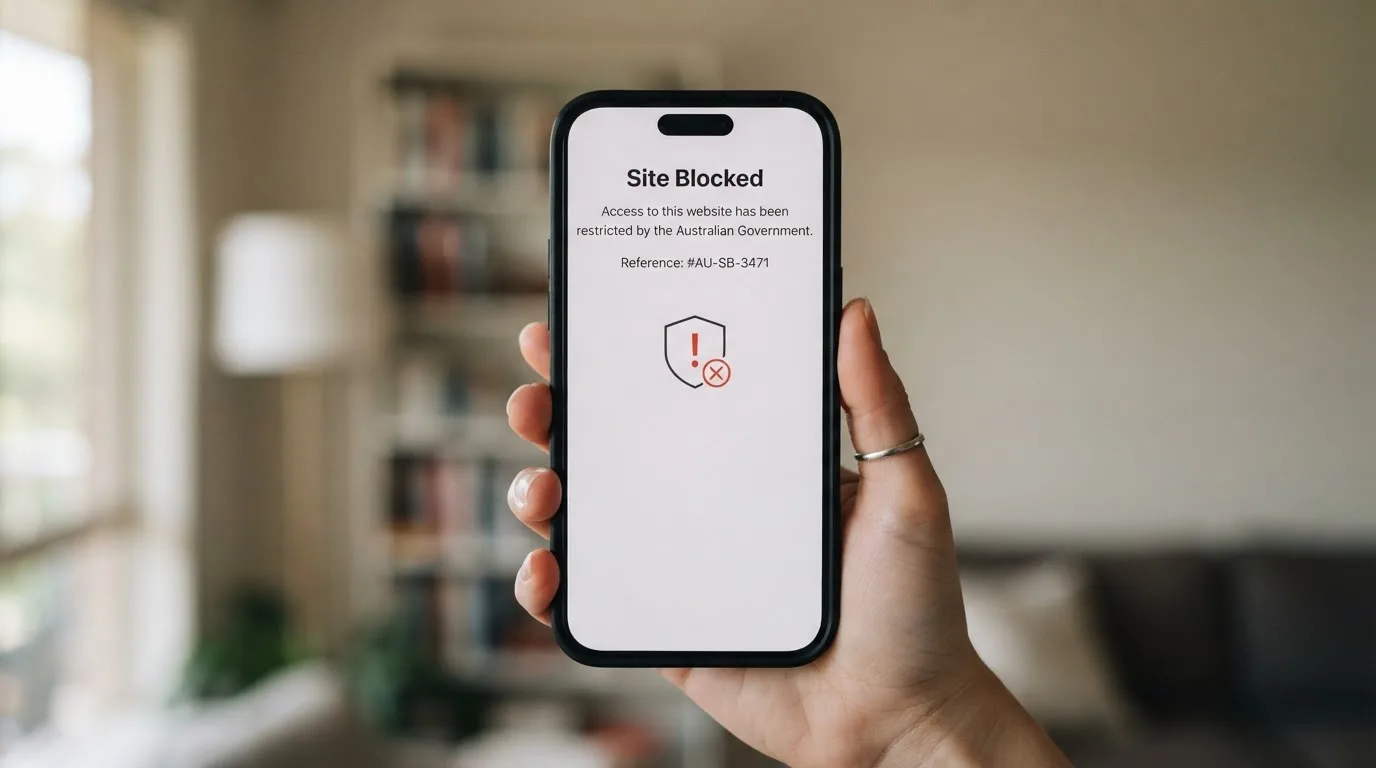
Three distinct actions show up on the ACMA’s published register, and a reader needs to know which is which. A formal warning is a written notice identifying a specific operator and a specific breach of the IGA, published on the ACMA’s website, and carrying the weight of an official finding. A court-enforceable undertaking is what comes next if the warning is ignored: the operator signs a document that gives the regulator grounds to seek civil penalties in the Federal Court. An ISP blocking request is the technical action — the ACMA writes to participating Australian internet service providers asking them to block the named domains at the DNS level. A blocked site stops resolving on most Australian connections within days, though determined users reach it through VPNs and the regulator knows it.
The formal-warning register is what populates the operator list further down the page. Every brand there is one the ACMA has named in writing. Several have been named more than once, in different corporate names. Bizzo Casino, for instance, drew a formal warning to TechSolutions (CY) Group Limited and TechSolutions Group N.V. back in 2022, and a fresh warning to Consolutetish S.R.L. in July 2025 — a new corporate wrapper for what the regulator evidently treats as the same operation.
The bonus page that exists for readers in other markets, and what the math actually says
The promotional structure around live casino play — the “100% match up to A$500 plus 200 free spins” headline a reader sees on a Curaçao-licensed brand — is built for jurisdictions where the product is legal. For an Australian, it carries the same legal exposure the underlying site does. That aside, the mechanics are worth knowing, because they are the lever an offshore brand uses to keep a player depositing.
A live casino welcome offer is typically a percentage match on a first deposit, with the matched amount treated as “bonus money” not withdrawable until it has been turned over a set number of times. That multiplier is the wagering requirement. A “40x bonus” requirement on a A$200 matched deposit means A$8,000 must be wagered on eligible games before any of the bonus balance — and often the deposit balance too — can be withdrawn. Live-dealer games frequently contribute only 10% or 20% toward wagering, or are excluded entirely, with slots contributing 100%. The result is that a “live casino welcome bonus” is in many cases a slots bonus with a live-dealer label on the landing page, and the playthrough on the live tables the player actually wants to use is several times longer than the headline number suggests.
Maximum bet caps during wagering — typically A$5 to A$10 per hand — are the next trap. Exceed the cap once and the bonus is voided, the winnings confiscated, and the original deposit returned. Maximum cashout caps on bonus-derived winnings cap the upside at a few times the bonus amount regardless of how the session runs. Game weighting rules, country restrictions inside the terms, and “abusive play” clauses that allow the operator to void bonuses on patterns the house decides look like advantage play complete the picture. None of this is illegal; it is the standard structure of an offshore promotional offer. It is also the structure the ACMA’s enforcement record shows is the structure of the sites it is blocking.
House edge by game
| Game | Bet | House edge |
|---|---|---|
| Baccarat | Banker | 1.06% |
| Baccarat | Player | 1.24% |
| Blackjack | Optimal strategy | ~0.28-0.43% |
| Roulette | European | 2.70% |
| Roulette | American | 5.26% |
| Craps | Pass/Come | 1.41% |
What the games themselves cost — the house edges a reader should know cold
The three games that dominate any live-casino lobby — baccarat, blackjack and roulette — carry very different mathematical profiles, and a player who has not seen them written down is flying blind.
Baccarat is the simplest. Three bets are available: Banker, Player and Tie. The Banker bet has a house edge of 1.06%, the Player bet 1.24%, and the Tie bet 14.36%. Punto banco, the variant that fills live lobbies, deals from a six- or eight-deck shoe, with the casino banking both sides and the drawing rules fixed. Card values count 2-9 at face, 10/J/Q/K at zero, ace at one, and hand totals are taken modulo 10. There is no decision to make after the bet — the player picks a side and watches the shoe run. Baccarat’s house edge on Banker/Player is among the lowest of any table game; the Tie bet, despite its 8-to-1 or 9-to-1 payout, is one of the worst wagers a casino offers.
Blackjack at its best sits lower than baccarat, but only with near-perfect play. Under liberal Las Vegas Strip rules — dealer stands on soft 17, double on any two cards, double after split, resplit aces, late surrender — the house edge is about 0.28%. Under Atlantic City rules it sits at roughly 0.43%. The moment a side bet is added — Perfect Pairs, 21+3, insurance — the edge jumps, often into double digits. The basic-strategy decision tree for hard and soft hands, splits and doubles, runs several dozen plays; guessing at it costs the player a few percent of edge on every hand.
Roulette splits sharply by wheel. A single-zero European wheel carries a house edge of 2.70% on every outside and inside bet. A double-zero American wheel carries 5.26%. Live lobbies overwhelmingly offer both, and the difference between them is the difference between a game a player can think about and a game that is structurally worse.
Craps sits in the same family. Pass and Come bets carry a 1.41% edge; Don’t Pass and Don’t Come 1.36%; Any Craps 11.11%. Craps is rare in live-dealer lobbies aimed at Australian-facing sites — the table is complex, the staff cost is high, and the demand is dominated by baccarat, blackjack and roulette.
These figures are what an “expected loss” calculation works from. A A$10 bet on Banker per hand, across 200 hands in a session, costs on average A$21.20 in expected value (200 × 10 × 0.0106). The session itself is entertainment with a price tag; the price tag is the edge. No betting system changes it.
The studios behind the streams
The “live” in live casino is a video feed from a purpose-built studio, with optical camera recognition technology converting the dealer’s physical actions — a card dealt, a roulette result — into data sent to the player’s screen. The dominant supplier is Evolution, founded in 2006 in Sweden and now operating from studios across Europe, North America and South America. Evolution reached 100 live tables at its Riga studios in 2013, then the largest single-site casino operation in Europe, and opened a Malta studio in 2014. The company completed its acquisition of NetEnt on 1 December 2020 and now counts NetEnt, Red Tiger, Big Time Gaming, Nolimit City and Ezugi among its game-studio brands. Evolution states that more than 700 gambling platforms worldwide carry its live casino games, streamed 24/7 from its studios. Pragmatic Play Live runs a competing studio network. Playtech Live operates from studios in Latvia, the Philippines, Romania and elsewhere. Authentic Gaming streams from real casino floors rather than purpose-built studios.
For an Australian reader, this list matters less than it does for a reader in a regulated market, because the studios do not change which side of the IGA the offering falls on. A live-dealer blackjack game streamed from Riga to a Curaçao-licensed site and played by a punter in Sydney is exactly the transaction the IGA prohibits. The studio’s location is a fact about the production, not about the legality.
What runs on a phone, and what changes when the screen gets smaller
The live-casino mobile experience is a video stream first and a betting interface second. A phone or tablet running iOS or Android loads the studio feed in a portrait or landscape window, with chip stacks and bet placement controls overlaid on top. The dealer’s cards or the roulette wheel fill the rest of the screen. Most live-dealer games now build with HTML5 rather than Flash, which is why modern mobile browsers — Safari on iOS, Chrome on Android — open the games directly without needing a separate download. A “live casino app” is in most cases a wrapper around a mobile website, with the games streamed through the same browser engine. The exceptions are the few operator-branded apps that ship native code for the lobby and the cashier but still fall back to the browser for the actual game stream.
The practical consequence is that the phone-screen experience of a live casino is bandwidth-bound. A 1080p stream at 30 frames per second wants 3-5 Mbps of stable connection; drop below that and the picture stalls or the bet placement controls lag behind the dealer’s action, which is the surest way to misclick a timed bet. Playing on mobile data rather than Wi-Fi burns through a plan quickly. The game itself is identical to the desktop version; the differences are in the latency, the screen size, and the temptation to play in short bursts from anywhere — the kitchen, the pub, the train — that a desktop session does not offer.
Responsible gambling: the tools that work in Australia, and the ones that don’t
The Australian harm-minimisation framework is built around licensed wagering and land-based venues, and that scope matters. BetStop — the National Self-Exclusion Register — went live in August 2023 and lets a person exclude themselves from every Australian-licensed online and phone wagering service for a period of three months, six months, or one to five years. Once registered, the exclusion is binding on the licensed bookmaker: the punter cannot deposit, cannot place a bet, cannot reopen the account before the exclusion period ends. Race-and-sport wagering is the scope. Offshore online casinos are not connected to BetStop. Self-excluding through BetStop does not block a Curaçao-licensed live casino site, does not prevent the offshore site accepting a deposit, and does not give the punter any Australian recourse if the offshore site ignores the exclusion.
The National Gambling Helpline — 1800 858 858 — is free, 24/7, and offers counselling, financial counselling referral, and self-help material. Gambling Help Online provides web chat and email support. Both services are funded by the Commonwealth and are independent of any operator. State-based problem gambling services — BreakEven in Victoria, GambleAware in NSW — add face-to-face counselling and peer support. None of these require the punter to be playing with a licensed operator; the helpline does not check.
The practical takeaway for an Australian reader considering an offshore live casino site is straightforward: BetStop will not cover it, the helpline will help regardless, and the offshore operator has no obligation to honour a self-exclusion request. Harm minimisation for an offshore site is entirely self-managed.
Payment restrictions that apply even before the site is blocked
Since 11 June 2024, the IGA’s prohibition has extended to the payment side of online wagering. Credit cards, credit-related products and digital currency cannot be used to fund a bet with an Australian-licensed online or phone wagering service. Penalties for operators breaching the rule reach A$247,500. Legal deposit routes for licensed wagering are debit card, bank transfer, PayID/Osko and BPAY. An offshore site asking an Australian punter for a credit card number or a crypto wallet address is operating outside the Australian rules on top of offering a prohibited service. The credit card ban does not, in practice, stop an offshore site accepting one — the operator is not Australian and not bound by the rule — but it is a useful marker. Any site that asks for credit or crypto from an Australian customer is not playing to Australian standards on anything else either.
Tax: what a recreational punter owes, and what they can claim
Gambling winnings of a recreational player are not assessable income under section 6-5 of the Income Tax Assessment Act 1997. Losses are not deductible. The rule reverses only when the person carries on a business of gambling, which the ATO defines narrowly — systematic, organised, profit-seeking activity with a commercial character — and almost no recreational punter meets. A punter who plays a few sessions of live blackjack a year while on holiday in Melbourne owes nothing on the winnings and cannot claim the losses against other income. The tax treatment is the same whether the play was at Crown Melbourne or at an offshore site the ACMA has since blocked. The ATO’s interest in a punter’s gambling activity is low; the ATO’s interest in an operator’s Australian-source income is not.
The Interactive Gambling Amendment (Gambling Reform) Bill 2026
Parliament passed the Interactive Gambling Amendment (Gambling Reform) Bill 2026 on 19 August 2026. The bill tightens advertising and inducement rules around licensed wagering — including restrictions on the sign-up offers, bonus bets and “free” inducements that licensed Australian bookmakers have used to compete for new accounts. The advertising and inducement measures commence on 1 January 2027. On a 2026 page this is law passed but not yet in force, and the change that matters for an offshore live-casino reader is small: the bill regulates the licensed side of the market, not the offshore side. The blocking requests, the formal warnings, and the geo-restrictions at Australian ISPs remain the relevant enforcement tools for offshore sites through 2026 and beyond.
The operators the ACMA has named, and what each entry actually says
The list below is not a ranking. Each brand appears because the ACMA issued a formal warning over it for offering prohibited interactive gambling services to Australians. The list is in the order research dictates. A reader looking for “the best live casino” should read the list as a register of who has been caught, not as a comparison of who is safest to play with: none of them is safe to play with from Australia, and none is lawful.
RocketPlay
RocketPlay drew a formal warning from the ACMA in March 2026, issued to Pulsup Ltd over RocketPlay. The same brand was caught earlier, in the May 2022 warning to Dama N.V. that covered six casino brands including RocketPlay. Two warning letters, four years apart, naming two different corporate vehicles for what the regulator treats as the same operation. The site displays an offshore licence; that licence is not an Australian licence and confers no Australian protection. For a reader weighing the brand at all, the relevant detail is the second warning — a regulator that has had to write twice about the same brand is unlikely to have been placated by the first.
Level Up Casino
Level Up was named in the May 2022 ACMA formal warning to Dama N.V., one of six brands covered by that single letter. The operator has continued to operate offshore, and listings pages that aggregate game-studio data show BGaming among its suppliers, but the relevant fact for the comparison is the ACMA action itself, not the supplier list. A reader who arrived here looking for a review of the live casino offering is being told instead that the offering itself is the problem.
Woo Casino
The ACMA issued a formal warning to Dama N.V. over Woo Casino in March 2025. Woo was not among the six brands in the May 2022 warning; it is a separate Dama N.V. property that drew its own letter three years later. The pattern across the Dama N.V. portfolio — RocketPlay, Bambet, Dazard, Level Up, Wild Tornado, Cobra Casinos in 2022; Woo and Spirit Casino in 2025 — is what makes the operator entries downstream read as a portfolio rather than as a series of unrelated offshore brands. One corporate vehicle, many front doors.
Spirit Casino
Spirit Casino drew a formal warning to Dama N.V. in May 2025, two months after the Woo Casino warning. The cadence — two warnings in three months — is consistent with a corporate decision to keep launching Australian-facing brands faster than the ACMA can warn them. From the reader’s perspective, the relevant comparison is with Woo: same operator, same month-and-month tempo, same answer.
National Casino
National Casino drew a fresh ACMA formal warning in July 2025, issued to Consolutetish S.R.L. The same Consolutetish S.R.L. was named in the same warning round over Bizzo Casino, suggesting a small portfolio of brands under one corporate wrapper. Wikipedia references for the brand exist; they describe the operation rather than endorse it. The July 2025 warning places the brand on the live enforcement register, alongside every other entry on this list.
Bizzo Casino
Bizzo Casino is the only brand on this list that the ACMA has warned twice in two different corporate names. The first warning, in 2022, was issued to TechSolutions (CY) Group Limited and TechSolutions Group N.V. The second, in July 2025, was issued to Consolutetish S.R.L. The pattern is not subtle: the same brand, the same prohibited offering, two corporate wrappers, three years between warnings. A reader who values continuity of regulator relationship would find no reassurance here.
Ignition Casino
Ignition Casino drew a July 2025 formal warning issued to Bamboo Media. Ignition has historically marketed to Australian-facing traffic through affiliate pages that describe it as a “live casino” destination. The ACMA’s action places it on the same register as every other entry here, with no Australian licence behind it and no Australian consumer protection in front of it.
Instant Casino
Instant Casino drew a formal warning in February 2025, issued to EOD Code SRL. The brand had been running Australian-facing promotional pages in the months before the warning. The February 2025 letter is on the ACMA’s register and the domain has been the subject of subsequent blocking action through Australian ISPs.
Jackbit
Jackbit drew a formal warning in April 2026, issued to Ryker B.V. The same April 2026 round named CasinOK, another Ryker B.V. brand, indicating a portfolio rather than a single brand. Jackbit markets itself with a sportsbook and a casino; from Australia the casino half is the half that puts it on the wrong side of the IGA.
Casino Intense
Casino Intense drew a formal warning in April 2025, issued to Sterplay Holding Ltd. The brand is less prominent in Australian-facing affiliate marketing than some on this list, which makes the formal warning a useful marker: the ACMA names brands on its own enforcement schedule, not on a popularity ranking, and a brand a reader has never heard of can still be on the list.
Sky Crown
Sky Crown drew a formal warning from the ACMA, issued to Hollycorn N.V. The same Hollycorn N.V. entity was warned over Blue Leo, indicating — as with several entries above — a portfolio operating under one corporate vehicle. The Hollycorn N.V. formal warning dates from September 2022, which makes Sky Crown one of the older entries on this list; the regulator’s attention is not new.
The Australian legal live-dealer alternative: land-based casino floors
For a reader who actually wants to sit at a live baccarat or blackjack table in Australia, the lawful path is a land-based casino. Crown Melbourne offers three baccarat variants — Traditional Baccarat, Crown Baccarat and 2 to 1 Baccarat — as approved table games regulated by the Victorian Gambling and Casino Control Commission, which replaced the VCGLR as Victoria’s casino regulator on 1 July 2022. Crown Sydney operates under the NSW Casino Control Act 1992, the same statute that requires a casino operator to make a copy of the approved rules of any game available to patrons on request. The Star Sydney, The Star Gold Coast, Treasury Brisbane, Adelaide Casino, Lasseters in Alice Springs, Casino Canberra and the Country Club Tasmania in Launceston complete the national footprint. Each operates under the casino control legislation of its home state, with the regulator approving every table game’s rules before play begins. House edges at these venues follow the same mathematics as the offshore live-dealer lobbies — the difference is that the game is legal, the payout is enforceable, and the player has a regulator to complain to.
Landscape of the named brands
The table below places each brand the ACMA has acted against alongside the corporate operator named in the warning and the date of the most recent action. The columns are kept narrow on purpose: every brand here shares the same Australian legal status, and a column that repeats that status across eleven rows would carry no information. The “subject support” column reflects what the research sources carry about each brand’s relationship with live-casino supply or land-based equivalents, where any source exists.
| Brand | ACMA action and date | Operator named by the ACMA | Subject support |
|---|---|---|---|
| RocketPlay | March 2026 (earlier May 2022) | Pulsup Ltd (earlier Dama N.V.) | — |
| Level Up Casino | May 2022 | Dama N.V. | Listed by BGaming as a partner |
| Woo Casino | March 2025 | Dama N.V. | — |
| Spirit Casino | May 2025 | Dama N.V. | — |
| National Casino | July 2025 | Consolutetish S.R.L. | Referenced in public listings |
| Bizzo Casino | July 2025 (earlier 2022) | Consolutetish S.R.L. (earlier TechSolutions) | — |
| Ignition Casino | July 2025 | Bamboo Media | — |
| Instant Casino | February 2025 | EOD Code SRL | — |
| Jackbit | April 2026 | Ryker B.V. | — |
| Casino Intense | April 2025 | Sterplay Holding Ltd | Referenced by ABC News and the ACMA register |
| Sky Crown | September 2022 | Hollycorn N.V. | — |
Every brand in the table sits on the same side of Australian law. The differences — corporate vehicle, warning date, supplier footprint — are differences of detail rather than differences of legal status. A reader comparing two rows is comparing two warnings, not two legitimate options.
What the offshore live-dealer product looks like, technically
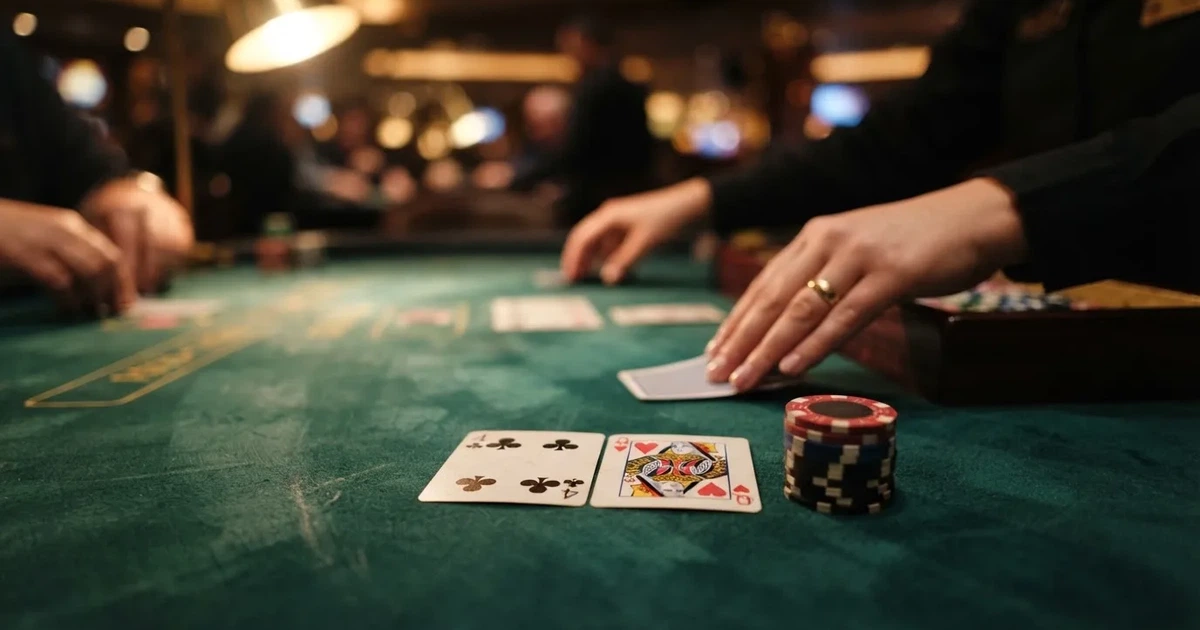
The mechanics are the same whether the stream is from a Riga studio, a Malta studio, a Bucharest studio or a Manila studio. A human dealer sits at a real table. Multiple camera angles cover the dealer’s hands, the table layout, and an overhead shot of the betting surface. Optical camera recognition reads the card values or the roulette result and pushes them to the player’s screen within a fraction of a second of the physical event. The player’s betting interface sits over the stream: chip stacks to pick from, bet placement zones on the table layout, a confirm button, and a chip-clearing option for the indecisive. Side bets are usually offered — Perfect Pairs and 21+3 in blackjack, Banker/Player/Tie in baccarat, dozens of inside and outside bets in roulette — each with its own house edge.
The dealer’s pace is set by the studio, not by the player. A typical live-dealer blackjack hand runs 12-20 seconds from bet placement to result; a roulette spin, around 30-45 seconds including the betting window; a baccarat hand, 15-25 seconds. The faster the pace, the more hands per hour, the higher the expected hourly loss for a player of any given stake. A A$10 blackjack player at a 0.5% effective edge sees roughly 200 hands per hour at a busy table; that is A$10 in expected hourly loss before tips, before side bets, before the occasional double-down.
The information the ACMA register does not carry, and where it leaves a reader
The formal-warning register tells a reader that a brand has been caught. It does not tell the reader how many Australian players used the brand before the warning, how much was deposited, how many withdrawals were refused, or how the brand’s customer service handled complaints. None of that data is published. The closest public proxies are the ACMA’s own blocking-request totals — 1,751 as of June 2026 — and the H2 Gambling Capital estimate of A$3.9 billion in annual losses to illegal sites. The implication is that the scale of Australian play on offshore sites is large enough that the ACMA’s enforcement tempo keeps the queue full rather than emptying it.
What the register also does not do is tell a reader whether a particular offshore site is currently reachable from an Australian IP. ISP blocking is implemented unevenly across providers; some block at the DNS level, some at the SNI level, some via IP-level blocking that also catches unrelated sites. A blocked site can come back under a new domain within days, and the next ACMA blocking round catches up a few months later. A reader who reaches the cashier on a domain the ACMA has not yet blocked is not in a safer legal position — the IGA prohibits the offering regardless of whether the domain resolves.
A short answer to “which live casino should I play at”
For an Australian reader, the short answer is: not any of them. None of the brands in this comparison is licensed in Australia; none is connected to BetStop; none offers the consumer protection of a regulated Australian wagering provider. The brands that the ACMA has named are not the only offshore brands an Australian might reach — they are the brands the regulator has caught, and the catching is far from exhaustive. The choice for an Australian reader is not between Brand A and Brand B on a ranked list. It is between the offshore market the ACMA is blocking, the licensed Australian wagering market that does not offer live casino games, and the land-based casino floors in each state and territory that do.
For a reader in a jurisdiction where online live casino is legal and regulated — most of Europe, much of North America, parts of South America and Asia — the comparison below this section would have been a normal top-11 ranking. The fact that it is not, and the page says so plainly, is the comparison’s actual finding.
How the comparison would have looked, briefly
If the regulatory frame allowed it, a reader looking for the best live casino would weigh welcome offer size against wagering multiplier, payout speed against verification friction, game count against mobile-app polish, and licence reputation against customer-service quality. The standard ranking columns would have been licence, welcome bonus, wagering requirement, payout time, game count, mobile app, and a verdict. None of those columns is meaningful for an Australian reader, because every offshore brand would carry an em dash on the licence column and a reader would still be on the wrong side of the IGA. The substitution of the ACMA register for the standard comparison is the page’s editorial choice, and it is the choice the research supports.
FAQ
What makes a live casino game different from a standard online slot?
A live casino game streams a real dealer at a real table from a studio, with the player’s bets placed over the video feed and the result read by camera recognition; a standard online slot is a software-driven random-number-generator game with no human dealer and no video stream. Live games run slower — one baccarat hand every 15-25 seconds, one blackjack hand every 12-20 — but they show a real outcome rather than a generated one, and the social presence of a dealer is the main reason players choose them over RNG equivalents.
Who is Evolution and why does its name come up around live casino games?
Evolution is the dominant live-casino supplier, founded in 2006 and headquartered in Sweden, with studios across Europe and elsewhere. It operates more than 700 gambling platforms worldwide as customers of its live product and owns the NetEnt, Red Tiger, Big Time Gaming, Nolimit City and Ezugi game-studio brands. The reason its name comes up everywhere in the live-casino conversation is market share: most “live casino” lobbies in offshore sites run on Evolution’s tables, with Pragmatic Play Live and Playtech Live as the main alternatives.
Is it legal for an online casino to stream live dealer games to players in Australia?
No. Under the Interactive Gambling Act 2001, offering an online casino-style gambling service — which explicitly covers live-dealer blackjack, roulette and other live-casino-style games — to a person in Australia is a prohibited interactive gambling service. No state or territory issues a licence for it. The ACMA enforces the prohibition by issuing formal warnings, accepting court-enforceable undertakings, and directing Australian ISPs to block offending domains; offshore sites continue to accept Australian players through VPNs and other workarounds, but the offering remains unlawful regardless of reachability.
Can a live casino app be used on a mobile browser?
Most modern live-casino games are built in HTML5 and load in a phone browser — Safari on iOS, Chrome on Android — without needing a dedicated app. Operator-branded “live casino apps” are typically wrappers around a mobile website with the cashier and the loyalty features baked into native code, while the game itself still streams through the browser engine. The phone-screen experience is bandwidth-bound: a 1080p stream wants 3-5 Mbps of stable connection, and the bet-placement controls lag noticeably when the connection drops.
What welcome offers are commonly advertised for live casino play?
The standard structure is a percentage match on the first deposit — often 100% up to a few hundred Australian dollars or the euro equivalent — with the matched amount treated as bonus money that must be turned over a set number of times (typically 35x to 50x the bonus) before it can be withdrawn. Live-dealer games frequently contribute only 10% or 20% toward wagering, or are excluded entirely, with slots contributing 100%; maximum bet caps during wagering and maximum cashout caps on bonus-derived winnings are the other standard conditions. The offers are structured for jurisdictions where the product is legal, and an Australian player attempting to claim one is still on the wrong side of the IGA.
Prepared by the Casino Providers Info editorial staff.