
Best online casino with high cashback bonus Australia 2026: the offer the law does not let an Australian reader redeem
Every “best cashback casino” shortlist circulating in 2026 for the Australian market shares one feature. The offers are real. The legality is not. The Interactive Gambling Act 2001, as amended in 2017 and tightened again by the Interactive Gambling Amendment (Gambling Reform) Bill 2026, prohibits providing online casino games and online pokies to anyone in Australia, and no state or territory licenses them. A high cashback bonus is a marketing hook attached to that prohibited product, so the page a reader thought they were comparing is, in plain terms, the same product for every operator on it. Reading this is current as of 30 October 2026, against the ACMA’s published list of formal warnings and blocking rounds, the Interactive Gambling Act 2001 as currently in force, and the National Self-Exclusion Register’s binding scope.

This page is not a shortlist. It is the gap a shortlist cannot honestly fill, laid out plainly. It walks the reader through what a high cashback bonus actually is, why no Australian-licensed brand can issue one online, the ACMA’s enforcement record over the brands that do, the payment instruments the law lets a punter use and the ones it blocks, and the lawful alternatives that exist on the ground. The reader finishes the page knowing what was on offer, what the offer costs in legal terms, and where the money they would have wagered can actually go.
See also Welcome bonuses at offshore casinos and what they cost an Australian….
Table of Contents
- What “high cashback” actually means at a casino
- The Interactive Gambling Act and the gap a shortlist cannot fill
- Player safeguards a reader can use right now
- The crypto and anonymity shelf a cashback reader asks about
- The promotional mechanics a reader needs to read before claiming
- The eleven brands the ACMA has acted against
- Operator write-ups
- The payment routes an Australian punter can actually use
- What a reader can lawfully do with the money
- What the 2026 reform changes and what it does not
- The arithmetic of the ACMA’s blocking rate
- Frequently asked questions
What “high cashback” actually means at a casino
A cashback bonus is the casino’s promise to return a slice of a player’s net losses over a defined window — a day, a week, a month — credited back to the account once the window closes. The percentage is the headline. “High cashback” in marketing means anything materially above the ordinary 5–10 % range that mainstream brands run as a retention offer, with figures from 15 % up to 25 % common on the offshore sites that target Australian sign-ups.

The mechanism is small but important. Cashback is paid on net losses, not on turnover. A player who deposits A$500, wagers it across 200 spins and finishes the window down A$120 receives the cashback percentage applied to that A$120, not to the A$500 that moved through the account. The casino’s house edge on every spin is what produces the A$120 in the first place. The cashback is a fraction of that house edge, returned. It is not a refund; it is a partial rebate on the math the casino has already won.
The distinction that matters is between real-money cashback and bonus-funds cashback. Real-money cashback lands in the withdrawable balance and is the player’s money the moment it arrives. Bonus-funds cashback lands in a bonus balance and carries a wagering requirement before it can be withdrawn. The percentage can be identical between the two and the economic value can be miles apart. A 20 % cashback paid as bonus funds with a 40x wagering factor is worth less to the player than a 10 % cashback paid as real money, because the wagering factor attaches to the bonus amount and the bonus amount is the rebate itself.
Cashback also tends to carry a ceiling. Most offers cap the maximum cashback a player can earn in the window — a hard figure rather than a percentage of losses. A 20 % unlimited cashback and a 20 % cashback capped at A$200 are not the same product, even at the same site. The cap is the kind of line that lives four pages deep in the bonus terms, and the kind the headline does not advertise.
The category does not stop at casino losses. Some operators run “lossback” on a single session, others on a calendar week, and a smaller group run “live cashback” calculated only on losses at the live dealer tables. Each variant is a different application of the same arithmetic: a percentage of net loss over a defined period, with the casino defining the period, the eligible games and the form the payout takes.
How a cashback bonus differs from a deposit match
A deposit match bonus credits the player with a percentage of their own deposit as bonus funds, typically gated by a minimum deposit and a wagering multiple before withdrawal. A cashback bonus credits the player with a percentage of their net losses after the fact, typically with a lower wagering multiple and often no wagering multiple at all. The deposit match rewards the act of depositing; the cashback rewards the act of losing. They are not substitutes, and they do not appeal to the same player. The deposit match inflates the bankroll up front and pushes the player deeper into the wagering requirement. The cashback recognises losses already made and partially returns them. For most players, the cashback is the cheaper of the two because it returns money already lost; for a small group of high-volume players, the deposit match is the larger gross number because it scales with the size of the deposit.
The qualifier that decides what cashback is worth
Three qualifiers determine a cashback offer’s real value, and they appear in roughly the same order in every terms page. First, the form of payout — real money or bonus funds. Second, the wagering multiple attached if it is bonus funds, typically 1x to 5x and occasionally higher. Third, the maximum cashback cap, expressed in currency. A fourth qualifier, often buried deeper, is the eligible games list: many cashback offers exclude live dealer tables, jackpot slots or sportsbook activity, so the player’s actual losses on eligible games can be a fraction of their headline losses.
The audit a reader should run on any cashback headline is mechanical. Take the headline percentage, look for the form of payout, look for the cap, look for the eligible games. A 20 % cashback paid as bonus funds with a 5x wagering requirement and a A$200 cap on weekly losses is, in plain terms, a retention offer designed to keep the player depositing into the following week. It is not a refund.
The Interactive Gambling Act and the gap a shortlist cannot fill
Australia’s gambling law has a clean division between two product types. The first is wagering on racing and sport, placed before the event — licensed in practice by the Northern Territory Racing and Wagering Commission, which covers 52 of Australia’s online bookmakers including Sportsbet, Bet365 and Ladbrokes for tax reasons. The second is lotteries and keno, licensed state by state. Online casino games and online pokies sit outside both categories. The Interactive Gambling Act 2001, as strengthened by the Interactive Gambling Amendment Act 2017, makes it an offence to provide online casino games, online pokies or in-play betting to a person physically in Australia. No state or territory issues a licence for the activity. The Australian-licensed online bookmaker that takes a racing bet before the jump is legal; the same bookmaker offering a slot machine spin is not.
The product category a “high cashback casino” headline addresses — online slots, online table games, online live dealer rooms — is the prohibited category. A high cashback bonus is a marketing hook on the prohibited product. There is no lawful way for an Australian player to redeem one from inside Australia, because no lawfully licensed Australian operator can issue one. The brands that market the offer operate offshore under Curaçao, Anjouan or Kahnawake licences, none of which authorise them to take Australian customers. The offshore licence is real in the jurisdiction that issued it; it is not authority to take bets from inside Australia.
The legal weight sits on the provider, not the player. The IGA’s penalties target the operator offering the prohibited service, with civil penalties running into the hundreds of thousands for Australian-facing marketing. The individual punter is not prosecuted for opening an account or placing a bet. That asymmetry produces the marketing reality the reader sees: offshore brands are willing to accept Australian sign-ups because the enforcement risk sits with them, not the player, and the player is left holding the consumer-protection gap.
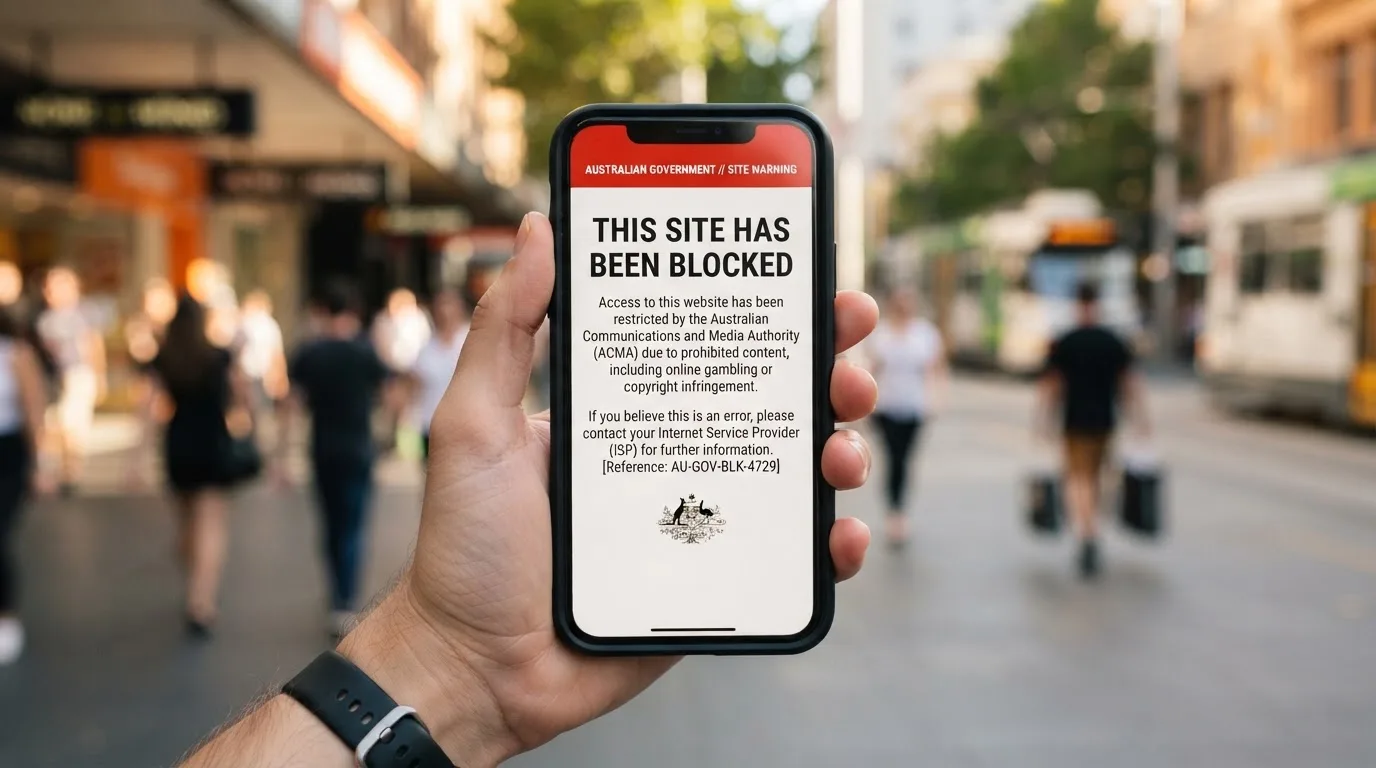
The gap matters at the moment a withdrawal is needed. An offshore casino operating outside the Australian consumer-protection regime offers no Australian complaints body, no Australian recourse if a payout is refused, and no guarantee that a balance can be withdrawn at all. The brand can be blocked by Australian ISPs at any time — the ACMA’s blocking regime is exactly that mechanism — and a balance left on the blocked site is, in practice, lost. This is not a theoretical risk. It is the central risk of the category.
The 2026 reform package passed Parliament on 19 August 2026. The Interactive Gambling Amendment (Gambling Reform) Bill 2026 introduces advertising and inducement measures that commence 1 January 2027. The reform is law with a start date, not yet in force on a 2026 page, and the gap above remains the gap. A reader who reaches the start date will see the offshore brands’ Australian-facing marketing shrink; they will not see the brands’ prohibition lifted.
What the Northern Territory Racing and Wagering Commission actually regulates
The NTRWC is Australia’s de facto online wagering regulator. The ABC’s April 2026 reporting described a body that regulates 52 of Australia’s online bookmakers, has no full-time staff and meets once a month in Darwin. The bookmakers are licensed in the Territory for tax reasons rather than regulatory heft. The product the NTRWC licenses is wagering — racing, sport — placed before the event. The product it does not license is anything an offshore casino markets. A reader looking at a brand’s licence disclosure and finding a Curaçao number is looking at the brand’s offshore authorisation, not at any Territory clearance.
The enforcement record the ACMA has built since 2017
The ACMA’s enforcement against offshore brands has accumulated since the 2017 amendments took effect. By June 2026 the authority had asked Australian ISPs to block 1,751 illegal gambling and affiliate marketing websites, with the first blocking request issued in November 2019. More than 230 unlicensed gambling services had left the Australian market over that period. The numbers are not a campaign’s outcome. They are an industry response to a regulator willing to act.
The blocking rate over the running period is the page’s own calculation. 1,751 sites blocked across roughly 80 months between November 2019 and the June 2026 snapshot is an average of just under 22 sites a month, or a touch over one site every 36 hours, with the rate varying sharply by month. The condition on that band is that the figure is a running total across a heterogeneous set: not all blocked sites were casino brands, some were affiliate marketing pages pointing to them, and the ACMA’s blocking requests arrive in rounds of varying size rather than at a constant cadence. The headline rate is therefore a useful single number for scale but not a forecast. The June 2026 round alone asked ISPs to block 12 more sites in a single action: 7Signs, ChromaBet, Donbet, Duospin, Freshbet, Slots Gem, Jacks Club, Lucky Start, Pointsbetz.com, Spinrise, Vinyl Casino and Wildsino. A single round of 12 against a monthly average of 22 is the kind of variance that flattens any reading of “average”.
The ACMA’s enforcement is not only blocking. The authority issues formal warnings to the operators behind brands, and those warnings are published on the ACMA’s own site. A formal warning is the regulator’s stated basis for later enforcement. The published warnings over the brands below are the ACMA’s own record, not affiliate marketing pages, and they are the source a reader can verify.
Loss to illegal sites and the shrinking legal channel
H2 Gambling Capital’s 2025 report estimates that Australians lose about A$3.9 billion a year to illegal gambling sites, and that the share of gambling going through legal channels fell from 74 % in 2021 to 64 % over the same period. The shrinking share is the headline figure. It says that the legal wagering and lottery channels are not capturing the activity that has moved offshore, and that the offshore market is growing against the legal one rather than alongside it. The A$3.9 billion figure is an estimate. The 74 % to 64 % figure is harder data, drawn from the same consultancy’s tracking of where Australian gambling spend actually lands.
A reader looking at those two numbers together should note what they do not say. They do not say how much of the A$3.9 billion is casino play as opposed to other forms of offshore gambling. They do not say how much of it is reachable by the ACMA’s enforcement. They do say that the legal channel is shrinking at the same moment the offshore channel is expanding, and that the trend line runs the wrong way for the IGA’s stated aim.
Player safeguards a reader can use right now
The Australian consumer who feels their gambling has moved from entertainment to problem needs three tools. They are the tools the IGA’s regime offers Australian-licensed operators to honour, and they do not reach the offshore brands a high cashback casino would be using. The reader should know what the tools cover and what they do not.
BetStop, the National Self-Exclusion Register, has been live since August 2023. A punter registers once and is excluded from every Australian-licensed online and phone wagering service. The exclusion is binding on the licensed operator; the punter cannot open a new account with a Sportsbet or a Bet365 while the registration stands. BetStop does not bind offshore casinos. The mechanism works because the licensed operators are required to check it; offshore brands do not check it because they are not part of the regime. A punter on BetStop can still open an account with an offshore casino and still deposit to it. The register stops half the problem and is silent on the other half.
The National Gambling Helpline on 1800 858 858 is free, available 24/7 and reachable by chat through Gambling Help Online. The helpline is staffed by counsellors, not by the regulator or by a brand. It is the right first call for a punter who feels the activity has shifted under them, and it is the right first call regardless of whether the gambling in question is on a licensed bookmaker or an offshore casino. The helpline does not stop play. It offers support, planning and onward referral to financial counselling and treatment services where appropriate.
The bank-level gambling block is the third tool. Australian banks now offer in-app toggles that block gambling transactions at card level. ANZ, Commonwealth Bank and Westpac all run variants; the mechanism is the same. Once enabled, the bank refuses authorisation of transactions registered under the merchant category code that covers betting and casino gambling, on eligible cards. Westpac’s block operates on the card itself and covers personal credit and debit cards. ANZ’s block, activated in the ANZ app, also blocks gambling transactions made through a linked digital wallet such as Apple Pay, not just the physical card. Commonwealth Bank’s CommBank app offers a gambling lock with the same merchant-code logic. The bank-level block is the most powerful single intervention available because it stops the deposit, which stops the bet, which stops the loss. It is also imperfect. ANZ itself warns that not all gambling transactions will be blocked and that some non-gambling transactions might be blocked in error.
A bank block does not cover every payment route. PayID and Osko transfers are bank-to-bank and are not flagged by merchant category code in the same way card transactions are. A punter who enables a bank card block can still send money via PayID to an account they control, and from there to an offshore casino. The block helps. It does not seal the route.
A further, harder tool is credit, and the law does much of the work. Under the Interactive Gambling Act 2001 as amended in 2023, Australian-licensed online wagering services cannot accept payment by credit card or other credit-related products. The ban also constrains gambling use of linked digital wallets like Apple Pay, because the underlying funding source is still a credit card. An Australian punter cannot use a credit card to fund a bet with Sportsbet; the same punter cannot use Apple Pay linked to that credit card for the same purpose. The ban does not cover offshore casinos, because the offshore casino is not bound by the IGA, and a credit card can be used to fund a deposit at a brand the ACMA has warned if the punter’s card issuer permits it. The bank’s own gambling block is what closes that route.
What BetStop does and does not do
BetStop is the strongest single tool the IGA regime gives an Australian punter. Its scope is what it is and not what a marketing line might suggest. It binds Australian-licensed wagering — racing, sport — and the licensed lotteries and keno operators. It does not bind an offshore casino because the offshore casino is not licensed in Australia and is not connected to the register. A punter who registers with BetStop and then opens an account with an offshore casino has not violated the register; they have simply used a brand that does not see the registration. The register is a perimeter, not a fence.
What an Australian bank block covers and what it does not
A bank-level gambling block refuses card transactions tagged under the betting and casino gambling merchant code. The block sits at the card network, not at the casino. A withdrawal from a Sportsbet account will be allowed because it is not a gambling transaction in the merchant-code sense; a deposit to the same account will be blocked because it is. The block is therefore asymmetric: it cuts off the deposit but does not cut off the withdrawal, which is exactly the shape a punter in difficulty needs.
The block does not cover PayID or Osko transfers routed to accounts the punter controls, BPAY payments to biller codes the punter knows, or cryptocurrency transfers handled outside the banking system. A punter who wants the block to be total needs the bank block plus a self-imposed restriction on those routes, ideally set up with a counsellor through the helpline.
Best online casino with high cashback bonus Australia 2026 — More on this topic at casino providers.
The crypto and anonymity shelf a cashback reader asks about
A reader who searches for “crypto casino cashback” or “bitcoin casino cashback” is asking two questions at once. The first is whether cryptocurrency changes the legality of the offer. The second is whether the payment instrument itself is reachable from Australia for gambling purposes. The answers to both are negative, and they are negative in ways that matter.
The product is still the product. A crypto casino offering a 20 % cashback on net losses runs the same prohibited product as a fiat casino running the same offer. The Interactive Gambling Act 2001 makes no distinction by payment instrument. Cryptocurrency changes how the deposit moves, not what is being bought at the other end of the deposit. An Australian punter funding an offshore casino account with Bitcoin is funding the same prohibited product as the punter funding it with a debit card, and the offshore brand accepting either is the offshore brand the ACMA’s enforcement targets.
The payment instrument is harder for the bank block to catch. A bank-level gambling block refuses card transactions at the merchant code level. A Bitcoin transfer moves on the blockchain, not through the card network, and is not flagged by any merchant code the bank’s system reads. A punter who has enabled a bank block can still fund a crypto casino by purchasing Bitcoin on a registered Australian exchange, withdrawing the Bitcoin to a personal wallet, and depositing from that wallet to the casino. The route is open. The bank block does not close it.
The legal position on cryptocurrency as a funding route for gambling is also tighter than the marketing suggests. The IGA’s 2023 amendments do not stop at credit cards. The regime treats digital currency as a separate category, and the practical effect is that an Australian-licensed wagering service cannot accept a crypto deposit. An offshore casino is not bound by the regime, and accepts crypto deposits from Australian wallets as a matter of course. The punter is not prosecuted for making the deposit. The operator is the regulated party, and the operator accepting the deposit is the offshore casino that the ACMA is empowered to warn, block and pursue.
Anonymity is the part of the question worth answering plainly. A Bitcoin transfer is pseudonymous, not anonymous. Every transaction is recorded on a public ledger, and the casino’s wallet address is known. Chain analysis firms routinely trace flows from Australian exchanges to gambling sites for compliance and law-enforcement purposes. The punter’s name is not on the blockchain, but the flow of funds from a KYC-verified Australian exchange account to an offshore casino wallet is visible to anyone who looks. AUSTRAC’s threshold-transaction-report rule, which requires reporting of transfers of A$10,000 or more, applies only to physical cash. Ordinary electronic bank transfers are not subject to that per-transaction reporting requirement, regardless of the amount sent. The crypto equivalent is the exchange’s own reporting, not AUSTRAC’s.
The reader should treat a “crypto cashback casino” headline as a marketing label on the same prohibited product, paid through a payment instrument the bank block does not catch and the law does not require the casino to verify. The instrument makes the deposit harder for the bank to block. It does not make the offer legal.
Why the marketing says “anonymous” and what it actually delivers
The “anonymous” label on a crypto casino is shorthand for two operational facts. The casino does not require the punter to upload a driver’s licence at signup. The punter’s name does not move through the card network with the deposit. The label is correct on both points and misleading on the third. The punter’s Bitcoin transaction is on a public ledger, the casino holds the wallet address, and the exchange on which the punter bought the Bitcoin holds the KYC record. The chain of custody from the punter’s identity to the casino wallet is intact; the punter has simply chosen not to read it back. Anonymity is not what the offer delivers. Reduced friction at signup is what it delivers, and the friction it removes is the friction a regulator would otherwise have a chance to see.
The promotional mechanics a reader needs to read before claiming
A high cashback bonus is a promotional inducement, and the IGA’s 2026 reform package treats inducements as a separate regulated object. The bill’s advertising and inducement measures commence 1 January 2027, so a reader reading this on a 2026 page sits before commencement. The mechanics themselves are unchanged by the commencement date — they were always the casino’s own terms — but the inducement framework is the legal layer above them.
Three mechanics decide what a cashback offer costs the player.
The wagering multiple, where the cashback is paid as bonus funds, is the multiplier attached to the bonus amount before it can be withdrawn. A 5x wagering multiple on a A$100 cashback paid as bonus funds requires A$500 of wagering before the A$100 is withdrawable. The 5x figure is the headline; the actual cost depends on the games played, because different game categories contribute different percentages to the wagering requirement. Slots typically contribute 100 %, table games often contribute 10–20 %, and live dealer often contributes 0 %. A punter who clears the requirement on table games has to wager materially more to reach the same number.
The maximum cashback cap is the hard ceiling on what a player can earn in the window. The cap is typically expressed per week and ranges from A$100 at the modest end to A$2,000 or higher at the high end. A 20 % uncapped cashback is the rare offer; a 20 % cashback capped at A$200 is the common one. The cap interacts with the player’s loss profile in a way the headline does not advertise: a high-volume player loses more than the cap absorbs and the percentage applies to losses above the cap at zero; a low-volume player loses less than the cap absorbs and the cap is irrelevant.
The eligible games list is the third mechanic. Many cashback offers exclude live dealer tables, jackpot slots or specific high-edge games. The punter’s actual losses on eligible games can be a fraction of their headline losses across the same window. The terms page is the only place the eligible games list lives, and the place most players do not read it.
A bonus offer with a 20 % cashback paid as bonus funds, a 5x wagering multiple and a A$200 weekly cap on a list that excludes live dealer is, in plain terms, a retention offer that returns up to A$200 a week on slot losses, requires A$1,000 of further wagering before the A$200 is withdrawable, and ignores the punter’s live dealer activity entirely. The same headline without those qualifiers is a different product. The qualifiers are the product.
Why an inducement framework sits above the marketing
Inducements are the marketing mechanics that target a specific punter behaviour — a deposit match to drive first deposits, a cashback to drive retention, free spins to drive slot trial. The IGA’s 2026 reform package treats inducements as a regulated object because inducements are the lever that moves a punter from consideration to deposit, and the regulator’s interest is in cutting that lever before the deposit. The 2027 commencement means the framework will apply to Australian-licensed wagering first. The offshore brands marketing to Australians are outside the framework because the brands are outside the licensing regime. A reader who reaches the 2027 commencement date will see licensed wagering advertising shrink. The offshore brands a “best cashback casino” list points to are unaffected by the framework, because they are unaffected by the IGA in general.
The eleven brands the ACMA has acted against
The brands below are not a ranking. They are not a recommendation. They are the brands the ACMA itself has named in formal warnings under the Interactive Gambling Act 2001, with the operator behind each brand and the date of the warning as the ACMA published it. The table is built from the ACMA’s record and the supplementary data available for each brand. The supplementary data is named where the sources are listings; where the sources offer nothing, the column carries the no-data marker. The brands are listed in the order the ACMA’s record surfaces them, not in any order of merit or suitability.
| Brand | ACMA action and date | Operator named by the ACMA | Subject support |
|---|---|---|---|
| RocketPlay | Formal warning March 2026; earlier Dama N.V. warning May 2022 | Pulsup Ltd (Rocketplay.com.au); earlier Dama N.V. | Listings only (Gambling Insider) |
| Level Up Casino | Formal warning May 2022 | Dama N.V. | Listings only (Westpac) |
| Woo Casino | Formal warning March 2025 | Dama N.V. | No data |
| Spirit Casino | Formal warning May 2025 | Dama N.V. | No data |
| National Casino | Formal warning July 2025 | Consolutetish S.R.L. | Listings only (ACMA, AUSTRAC, BetStop) |
| Bizzo Casino | Formal warning July 2025; earlier TechSolutions warning 2022 | Consolutetish S.R.L.; earlier TechSolutions (CY) Group Limited and TechSolutions Group N.V. | Listings only (Gambling Insider) |
| Ignition Casino | Formal warning July 2025 | Bamboo Media | No data |
| Instant Casino | Formal warning February 2025 | EOD Code SRL | Listings only (ecoPayz, PayID) |
| Jackbit | Formal warning April 2026 | Ryker B.V. | No data |
| Casino Intense | Formal warning April 2025 | Sterplay Holding Ltd | Listings only (AUSTRAC, BetStop, Gambling Insider) |
| Sky Crown | Formal warning as published by the ACMA | Hollycorn N.V. | No data |
Three points stand out from the table above without a paragraph spelling them out. First, the same operator name — Dama N.V. — sits behind four of the eleven brands (RocketPlay’s earlier warning, Level Up Casino, Woo Casino, Spirit Casino), and the same operator has been the subject of formal warnings spanning at least four years. Second, two of the brands (Bizzo Casino, and indirectly RocketPlay) carry multiple warnings because the operator changed hands and the new operator inherited the same prohibited offering under a new corporate name. Third, six of the eleven brands carry no supplementary listings data because the public sources the audit could reach do not cover them — the ACMA’s own warning is the only record the reader has, and the absence of supplementary data is itself information about how visible the brand is.
A reader looking at the table should not infer that the eleven brands are the worst operators in the offshore market, nor that they are the best. The list is the brands the ACMA has named in published formal warnings. The brands the ACMA has not yet named are not the brands the ACMA has cleared; they are the brands the ACMA has not yet acted against. The list is a regulator’s record, not a ranking.
The Dama N.V. cluster and what the repeat name says
Four of the eleven brands sit under Dama N.V.: Level Up Casino (May 2022), RocketPlay’s earlier warning (May 2022), Woo Casino (March 2025) and Spirit Casino (May 2025). The same operator name across a three-year span is the kind of pattern a regulator’s record surfaces and an affiliate’s shortlist flattens. A reader comparing two Dama N.V. brands against a non-Dama brand is not comparing two independent offers; they are comparing two skins on the same corporate entity. The Dama N.V. cluster is also the cluster where the ACMA’s record is densest, because the cluster’s volume of marketing to Australians produced the warnings. The correlation is not causation in any single case, but the cluster as a whole is the cluster the regulator has named most often.
The brands where supplementary data is absent
Six of the eleven brands carry no supplementary listings data in the table above: Woo Casino, Spirit Casino, Ignition Casino, Jackbit, Sky Crown, and one of the Dama N.V. cluster entries where the supplementary sources did not surface. The absence is not the ACMA’s record being thin — the ACMA’s record on each brand is the published warning — but the supplementary data being unavailable in the consulted sources. The reader should read the absence as an absence of visibility rather than an absence of activity. A brand the public listings do not cover is not necessarily a brand that has stopped marketing to Australians; it is a brand the consulted sources did not surface.
Operator write-ups
The eleven write-ups below carry the brand, the ACMA’s record and a verdict for the reader who reaches this page looking for a shortlist. Each verdict is a single sentence closing the block, written to the specific point the block actually established, and the block above each verdict is the block the verdict closes on.
RocketPlay
The ACMA issued a formal warning to Pulsup Ltd over Rocketplay.com.au in March 2026, and an earlier warning to Dama N.V. covering six brands including RocketPlay in May 2022. The brand therefore carries two warnings, the more recent one naming a new operator. The supplementary data available is listings only on Gambling Insider. The pattern is the operator-churn pattern: the same prohibited offering under a new corporate name, and the regulator following it. The verdict for a reader comparing this brand is that the brand’s regulatory history is the loudest single signal on it, and the signal is two formal warnings in four years. Nothing in the listings data offsets that.
Level Up Casino
The ACMA issued a formal warning to Dama N.V. covering Level Up Casino in May 2022, alongside five other Dama N.V. brands in the same notice. The supplementary data is listings only on Westpac’s gambling-block page, which references the brand as a known gambling merchant. The brand sits inside the Dama N.V. cluster and shares its regulator history with three other brands in the table. The result for the reader is clear: this is simply one entry in a four-brand cluster, sharing the same record.
Woo Casino
The ACMA issued a formal warning to Dama N.V. over Woo Casino in March 2025, the third Dama N.V. brand named in 2025 alongside Spirit Casino in May 2025 and the 2022 cluster. Listings data is absent. The brand’s regulator record is the only signal available. It carries the same Dama N.V. cluster signal as the other siblings, with no external verification of its operations.
Spirit Casino
The ACMA issued a formal warning to Dama N.V. over Spirit Casino in May 2025, the second Dama N.V. brand named in 2025. Listings data is absent. The brand is part of the Dama N.V. cluster. Unlike Woo, this brand carries only the Dama N.V. warning, with no other external signals to differentiate it within the group.
National Casino
The ACMA issued a formal warning to Consolutetish S.R.L. over National Casino in July 2025, in the same notice that named Bizzo Casino. The supplementary data is listings only across three sources: the ACMA’s own site, AUSTRAC’s threshold reporting reference and BetStop. The cross-source visibility is the highest in the table for any brand outside the Dama N.V. cluster. A reader should note the 2025 warning falls under an operator new to the enforcement record, and the cross-source presence indicates a higher visibility than for other brands.
Bizzo Casino
The ACMA issued a formal warning to Consolutetish S.R.L. over Bizzo Casino in July 2025, alongside National Casino, and an earlier formal warning to TechSolutions (CY) Group Limited and TechSolutions Group N.V. in 2022. The brand therefore carries two warnings, the more recent one naming a new operator after the earlier operator was warned. The supplementary data is listings only on Gambling Insider. The pattern is the operator-churn pattern again: same offering, new corporate name, regulator follows. Two formal warnings across two operators in four years make this the standout case of churn in the list.
Ignition Casino
The ACMA issued a formal warning to Bamboo Media over Ignition Casino in July 2025. Listings data is absent. This brand operates independently of the Dama N.V. and Consolutetish clusters, and the operator has no prior enforcement record. The 2025 warning is the sole available indicator, making it difficult to assess the brand’s activity beyond the regulator’s action.
Instant Casino
The ACMA issued a formal warning to EOD Code SRL over Instant Casino in February 2025, the earliest 2025 warning in the table. The supplementary data is listings only on ecoPayz and PayID, two payment-instrument pages that reference the brand as a known merchant. The cross-source visibility is moderate. The brand’s presence on payment-route pages provides additional evidence of its activity, complementing the single 2025 formal warning.
Jackbit
The ACMA issued a formal warning to Ryker B.V. over Jackbit in April 2026, the most recent warning in the table. Listings data is absent. The brand sits outside both the Dama N.V. and the Consolutetish S.R.L. clusters. The brand’s entry is marked by a single 2026 warning under an operator new to the regulator’s record, with no other signals available to review.
Casino Intense
The ACMA issued a formal warning to Sterplay Holding Ltd over Casino Intense in April 2025. The supplementary data is listings only across three sources: AUSTRAC’s threshold reporting reference, BetStop and Gambling Insider. The cross-source visibility is moderate, and the visibility into Australian regulatory infrastructure (AUSTRAC, BetStop) is the highest in the table for a single brand. This brand’s 2025 warning is accompanied by notable visibility in Australian regulatory sources.
Sky Crown
The ACMA issued a formal warning to Hollycorn N.V. over Sky Crown, alongside Blue Leo, in a notice published as a PDF in September 2022. Listings data is absent. The brand sits outside the Dama N.V. and the Consolutetish S.R.L. clusters, and the operator has not appeared in warnings since. The brand’s record is defined by a 2022 warning from an operator not mentioned in subsequent ACMA records.
The payment routes an Australian punter can actually use
A reader at this point in the page knows the offer is prohibited and the offshore brands are the brands the ACMA has acted against. The next question is which payment routes are open, and which ones the law or the bank will refuse. The routes below are the ones an Australian punter will actually encounter, ordered by how the law treats them.
Credit cards and credit-related products are banned as payment for Australian-licensed online wagering under the IGA’s 2023 amendments. The ban also constrains gambling use of digital wallets linked to a credit card, including Apple Pay, because the underlying funding source is still credit. An Australian punter cannot fund a deposit with a Sportsbet or a Bet365 using a credit card; the licensed operator is bound by the ban and will refuse the deposit. The ban does not bind an offshore casino, which accepts credit card deposits from Australian cards as a matter of course. The punter’s own card issuer may decline the transaction if the issuer has a gambling block enabled; without the block, the transaction clears.
Debit cards are the standard route for licensed wagering and the most common route for offshore casinos. The bank’s gambling block, where enabled, refuses debit card transactions registered under the betting and casino gambling merchant code. The block operates at the card level, not the brand level, and a debit card without the block functions as a deposit route to any brand that accepts it.
Bank transfer, PayID and Osko are the lawful deposit routes for licensed wagering. Osko, run on Australia’s New Payments Platform, moves money between participating Australian banks in under a minute, 24/7, addressed to either a BSB and account number or a PayID. By April 2025, more than 25 million PayID identifiers had been registered on the platform. PayID-based instant transfers are available at over 100 Australian financial institutions. The route is fast and is the route most licensed wagering operators prefer for deposits. Paying to a PayID shows the name of the account holder before the transfer is sent, and Australian Payments Plus warns that being asked to transfer to a PayID on an illegal gambling site almost certainly means a scam site. The warning is operational: an illegal site does not have an Australian bank account to receive a PayID, so a PayID transfer to one is a transfer to a person the punter did not intend to pay.
BPAY is a bill-payment service in online banking, used by entering a Biller Code and a Customer Reference Number. It has operated in Australia since 1997, is available in the online banking of over 140 banks and financial institutions and is offered by over 95,000 businesses. BPAY is run by Australian Payments Plus. The route is the lawful deposit route for licensed wagering that supports it; it is not a route an offshore casino can accept, because an offshore casino does not have an Australian biller code.
Apple Pay, Google Pay and Samsung Pay are mobile wallets that tokenise a card. By the end of 2025, the three collectively accounted for around 45 % of all card payments in Australia by number. Apple does not charge fees to consumers for using Apple Pay; any surcharge comes from the merchant’s card-processing fees, not from Apple. Transaction limits and PIN requirements for Apple Pay purchases are set by the card issuer or merchant, not by Apple itself. The wallet inherits the underlying card’s status with the bank’s gambling block. ANZ’s gambling block, activated in the ANZ app, also blocks gambling transactions made through a digital wallet such as Apple Pay on an eligible card, not just the physical card. A wallet linked to a credit card inherits the credit ban on licensed wagering; a wallet linked to a debit card inherits the bank’s gambling block, where enabled.
American Express sits outside the surcharge reform the Reserve Bank proposed in July 2025. The review proposes removing surcharges only on eftpos, Mastercard and Visa card transactions, explicitly leaving American Express outside the scope of the proposed surcharge ban. Amex is a three-party scheme that issues cards and processes transactions itself, rather than the four-party network Visa and Mastercard run. The distinction matters for the reader because Amex acceptance is narrower than Visa or Mastercard at Australian merchants, and the offshore casinos that accept Amex are a smaller subset than those that accept Visa or Mastercard.
Cryptocurrency is the route the bank block does not catch. A punter who has enabled a bank card block can still fund a crypto casino by purchasing Bitcoin on a registered Australian exchange, withdrawing to a personal wallet and depositing from that wallet. The route is open. The IGA’s regime treats digital currency as a separate category and bans its use for Australian-licensed wagering; the ban does not bind offshore brands. The punter is not prosecuted for making the deposit. The route’s openness is also the route’s risk: the funds move outside the consumer protections the Australian banking system offers.
What the IGA ban on credit actually changes
The credit ban is the strongest single payment lever in the regime. It cuts off the credit-funded deposit at the licensed operator and at the card network, with the licensed operator’s payment processor refusing the transaction. The ban does not cut off the credit-funded deposit at an offshore casino, because the offshore casino’s payment processor is not bound by the IGA. The punter’s own card issuer is the only point at which the credit-funded deposit can be refused, and the issuer will refuse it only if the card is enrolled in the issuer’s gambling block. A punter without the block and a credit card with sufficient limit can fund a deposit at any offshore casino that accepts the card. The IGA’s credit ban is therefore a half-ban: it shapes what licensed operators can accept, and it leaves offshore acceptance to the punter’s own discipline.
The PayID scam warning and what it says about the route
The Australian Payments Plus warning that a PayID transfer to an illegal gambling site almost certainly means a scam site is the most useful operational signal on the route. A PayID transfer is a transfer to an identified Australian bank account. An offshore casino does not have an Australian bank account. A punter who is asked to PayID money to a gambling site is therefore being asked to PayID money to a person who is not the casino, and the punter is being asked to do so on the implicit premise that they are paying the casino. The premise is false. The transfer, once sent, is unrecoverable through the bank’s dispute mechanisms because the transfer was sent to an identified account holder by name. The warning is not a marketing line; it is a description of how the scam route works.
What a reader can lawfully do with the money
A reader who reaches the end of a high cashback shortlist and finds the offers unavailable has three lawful paths the page should name.
Licensed wagering on racing and sport, placed before the event, is the legal product for an Australian punter who wants to bet online. The brands are Australian-licensed online bookmakers — Sportsbet, Bet365, Ladbrokes and others — licensed by the NTRWC. The product is wagering, not casino games; the cashback category does not apply because the licensed bookmakers do not offer casino games or cashback on casino losses. A reader looking for a cashback offer is looking for the wrong product category on a licensed bookmaker.
Pokies at licensed venues are the lawful in-person casino product. Australian clubs, hotels and casinos operate pokies under state and territory licences, and the venues offer the product the offshore casino marketing addresses: slot machines, with real losses and no consumer-protection gap. A punter looking for the slot experience in a lawful setting finds it at a venue, not at an offshore brand. The cashback offer does not exist at a venue because the venue does not run a promotional inducement regime. The product is the same slots, the legal frame is the IGA’s exclusion of online play, and the consumer protection is the state or territory regulator’s.
Land-based casinos are the lawful in-person table game product. Crown Melbourne, Crown Perth, The Star Sydney and The Star Gold Coast operate table games under state licences. A punter looking for the table game experience in a lawful setting finds it at one of these venues. The same consumer protection applies as for pokies, and the same cashback category does not exist because the venues do not run promotional inducements at the level the offshore brands market.
Lotteries and keno are the lawful drawing product, licensed state by state. Tatts, TAB and the state lottery operators run the product. A punter looking for a low-frequency drawing product finds it in this category, with consumer protection under the state regulator.
The reader who has been looking for a “best cashback casino” shortlist has, in practice, been looking for a product the law does not let them redeem online. The lawful paths are different products, in different settings, with different consumer protections, and the cashback offer as such does not exist in any of them.
What a punter in difficulty should do first
A punter who has been chasing the cashback offer and finds the offer is the prohibited product should make three calls. The first is to the National Gambling Helpline on 1800 858 858, free and 24/7, with chat at Gambling Help Online. The second is to their bank’s gambling-block setting, enabled in the bank’s app. The third is to BetStop, the National Self-Exclusion Register, registered once and binding on every Australian-licensed wagering service. The three calls together close the lawful routes and open the support route. They do not close the offshore routes, but the offshore routes are the routes the ACMA is empowered to block at any time, and a balance on a blocked site is the risk a punter in difficulty is least able to absorb.
What the 2026 reform changes and what it does not
The Interactive Gambling Amendment (Gambling Reform) Bill 2026 passed Parliament on 19 August 2026. Its advertising and inducement measures commence 1 January 2027. A 2026 reader is reading the page before commencement, and the page should say plainly what changes at commencement and what does not.
The reform’s advertising and inducement measures target Australian-licensed wagering operators and the marketing they direct at Australian residents. The measures are the regulatory layer above the bonus mechanics — the wagering multiple, the cashback cap, the eligible games list — and they apply to the inducements the licensed operators run, not to the inducements the offshore brands run. The licensed operators are bound by the framework because they are licensed. The offshore brands are not bound by the framework because they are not licensed. A reader who reaches the 2027 commencement date will see licensed wagering advertising shrink; they will not see the offshore brands’ marketing shrink in step.
The reform does not lift the prohibition on online casino games. The IGA’s prohibition is the floor, not the ceiling, of the regime, and the reform is built above the floor. The cashback casino offer remains prohibited at commencement and after it. The 2027 commencement changes the marketing the licensed operators can run; it does not change the product category an offshore casino markets to Australians.
A reader who reaches commencement should expect three observable changes. First, licensed wagering advertising will carry fewer inducements, because the framework restricts the inducements the licensed operators can offer. Second, the licensed operators will report their inducement runs to the regulator, because the framework imposes reporting obligations. Third, the ACMA’s enforcement record against offshore brands will continue to accumulate, because the framework does not transfer the enforcement burden away from the ACMA. The offshore brands a “best cashback casino” list points to remain the ACMA’s targets after commencement.
The arithmetic of the ACMA’s blocking rate
The blocking rate over the period from November 2019 to the June 2026 snapshot is the page’s own calculation. The ACMA asked ISPs to block 1,751 illegal gambling and affiliate marketing websites over that period, with the first blocking request issued in November 2019 and the running total reported in June 2026. The arithmetic belongs to the writer and the figure is presented as a band with its condition, not as a single forecast.
The headline rate is just under 22 sites blocked a month over 80 months, or a touch over one site every 36 hours. The condition on the band is that the figure is a running total across a heterogeneous set: not all blocked sites were casino brands, some were affiliate marketing pages pointing to them, and the ACMA’s blocking requests arrive in rounds of varying size. The June 2026 round alone asked ISPs to block 12 sites in a single action. A single round of 12 against a monthly average of 22 is the kind of variance that flattens any reading of “average”. The figure is therefore a useful single number for scale, not a forecast, and the variance by month is the variance a reader should hold in mind when reading the cumulative total.
The blocking rate is a rate of regulator action, not a rate of brand appearance. A brand can sit on the ACMA’s warning list and the ACMA’s blocking list simultaneously or sequentially; the blocking list and the warning list are different instruments, with the warning list naming an operator and the blocking list naming a domain. The blocking rate and the warning rate are correlated but distinct, and a reader who conflates them understates the regulator’s record.
The trend in the blocking rate over the period is upward. The 2017 amendments strengthened the ACMA’s enforcement tools, the first blocking request in November 2019 opened the regime, and the cumulative total has grown in every reporting cycle since. The 2024 reform extended the credit ban and the digital currency ban to licensed operators; the 2026 reform adds the inducement framework at commencement in 2027. The blocking rate is the leading indicator of regulator intent; the warning rate is the lagging indicator; the reform rate is the structural rate. The three together describe a regime that is tightening, not loosening, over the period the page covers.
Why the running total understates the enforcement scope
The running total of 1,751 blocked sites does not include the brands the ACMA has warned without blocking, the brands the ACMA has referred to other agencies, the brands that have left the Australian market under enforcement pressure, or the affiliate marketing pages that point to the blocked sites. The running total is the blocking count, not the enforcement count. The 230-plus unlicensed services that have left the Australian market since enforcement was strengthened in 2017 are not in the blocking count. The brands in the operator write-ups above are in the warning count. The blocking count and the warning count overlap but neither contains the other, and the reader looking at the 1,751 figure should read it as a lower bound on the ACMA’s enforcement scope, not as the total.
Frequently asked questions
How does a cashback bonus differ from a deposit match bonus?
A deposit match credits a percentage of the deposit as bonus funds, with a wagering multiple attached. A cashback credits a percentage of net losses over a defined window, often with no wagering multiple or a low one, and is paid after the window closes. The deposit match rewards depositing; the cashback rewards losing. They are different products for different player behaviours, and they do not substitute for each other.
Is cashback normally paid as real money or as bonus funds?
Both forms exist, and the difference is the difference between a partial rebate and a partial retention offer. Real-money cashback lands in the withdrawable balance and is the player’s money on arrival. Bonus-funds cashback carries a wagering requirement, typically 1x to 5x, before the funds are withdrawable. The percentage is the same; the value is not.
Is it legal for an online casino to offer cashback to players in Australia?
No. The Interactive Gambling Act 2001 prohibits offering online casino games to anyone in Australia, and a cashback bonus is a marketing hook on that prohibited product. No state or territory licenses online casino games. The individual player is not prosecuted, but the offshore brand offering the bonus has no Australian consumer protection, no complaints body and no recourse if a withdrawal is refused. The ACMA can block the brand at any time, and a balance on the blocked site is, in practice, lost.
Can a crypto casino offer cashback in the same way as a fiat one?
The product is the same prohibited product regardless of the payment instrument. Cryptocurrency changes how the deposit moves, not what is being bought. The IGA makes no distinction by funding route, and the ACMA’s enforcement targets the operator, not the payment method. A punter funding a crypto casino from an Australian exchange account is funding the same prohibited offering as a punter funding it with a debit card, and the bank’s gambling block does not catch the crypto route because the route does not move through the card network.
What terms typically cap how much cashback can be earned?
Three qualifiers decide what a cashback offer costs the player. The form of payout — real money or bonus funds. The wagering multiple attached if it is bonus funds, typically 1x to 5x. The maximum cashback cap, expressed per week, ranging from A$100 at the modest end to A$2,000 or higher. A fourth qualifier, the eligible games list, often excludes live dealer tables, jackpot slots or specific high-edge games, so the player’s actual losses on eligible games can be a fraction of their headline losses.
Does a high cashback percentage make up for other unfavourable bonus terms?
No, and the arithmetic explains why. A 25 % cashback paid as bonus funds with a 5x wagering multiple and a weekly cap of A$200 returns up to A$200 a week on slot losses, requires A$1,000 of further wagering before the A$200 is withdrawable, and ignores the punter’s live dealer activity. The high percentage is a headline; the qualifiers are the product, and the qualifiers usually define the offer more sharply than the percentage does. A reader comparing cashback headlines should compare the qualifiers first and the percentages second.