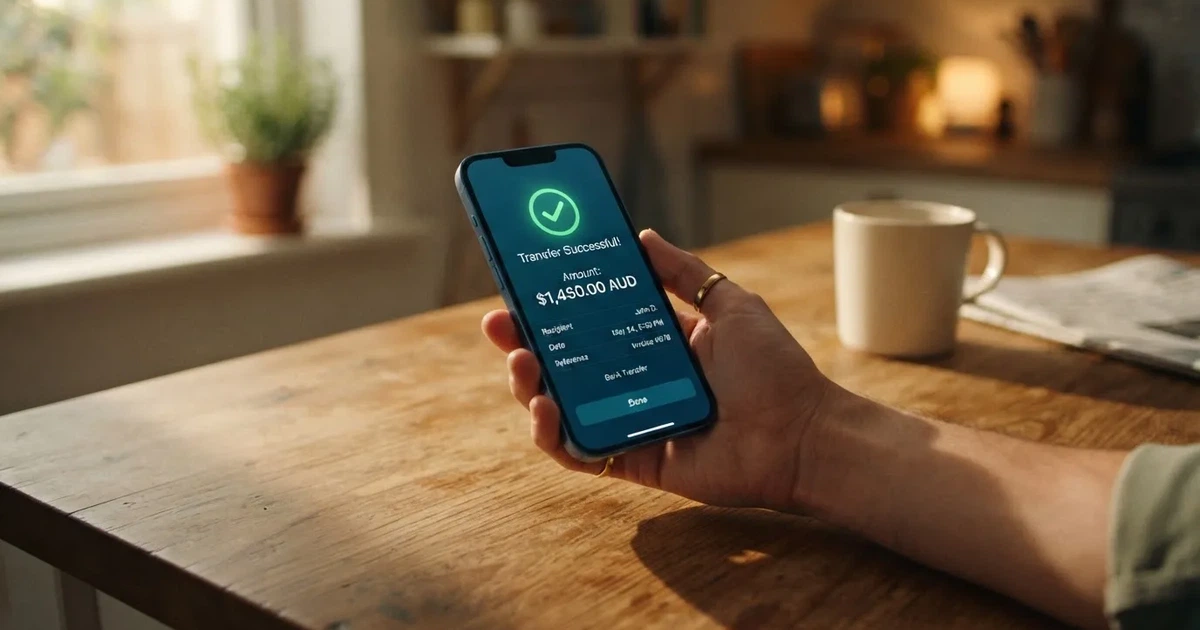
A $10 minimum deposit in Australia buys a product the law doesn’t sell
 Available in US
The pitch is short and the figures look friendly. Ten Australian dollars, real-money pokies, real-money tables, a site happy to take it. The trouble is that the product on offer is one no Australian licence allows anyone to sell. The Interactive Gambling Act 2001 makes it an offence to provide online casino games and online pokies to a person in Australia, and no state or territory issues a licence for the activity. A page promising a $10 minimum deposit at an Australian online casino is therefore not describing a market; it is describing offshore operators that the Australian Communications and Media Authority (the ACMA) has spent years warning and blocking.

This page is a working-out of that gap. It sets out the regulatory frame that turns a small deposit into a regulated exposure, the payment paths the law lets through and the ones it doesn’t, the safeguards that are supposed to catch a problem before it grows, and the specific brands the ACMA has formally named. The goal is to let a reader decide what the number actually means before it leaves a bank account.
Currency and register check: 24 September 2026 figures cross-checked against the ACMA’s published formal-warning register and the Reserve Bank of Australia’s public materials on card and instant-payment arrangements.
Table of Contents
- The legal ground underneath a $10 minimum deposit
- What a $10 deposit would actually have to clear
- Safeguards that work in Australia — and the ones that don’t
- Reading the ACMA’s formal warnings
- What a fair comparison would actually weigh
- What the legal Australian alternative looks like
- Frequently asked questions
The legal ground underneath a $10 minimum deposit
The amount on the deposit button is a marketing choice. What makes the deposit lawful is everything behind it, and behind a $10 minimum at an offshore casino there is nothing Australian law recognises.

The Interactive Gambling Act 2001, sharpened by the Interactive Gambling Amendment Act 2017, prohibits the supply of online casino games, online pokies and in-play betting to anyone in Australia. The offence sits with the provider, not the player, but the prohibition leaves nothing for a state or territory regulator to license. Race wagering, sports betting placed before the event, lotteries and keno remain licensable; in practice most online bookmakers — including Sportsbet, Bet365 and Ladbrokes — are licensed in the Northern Territory through the Northern Territory Racing and Wagering Commission, a body with no full-time staff that meets once a month in Darwin. No equivalent body licenses an online casino.
The consequence of that gap is that “licensed” written across the footer of a casino site is, for an Australian player, an offshore licence. Curacao, the Marshall Islands, Anjouan — the names vary. None of them grants Australian consumer protection, none connects to BetStop, and none obliges the operator to honour a withdrawal dispute in a forum an Australian can reach. A reader who treats the licence badge as a counterweight to the warning notices is reading the wrong register.
Enforcement sits with the ACMA. Its tools are formal warnings to operators, civil penalties and directions to Australian internet service providers to block websites. As of the figures published in June 2026, the ACMA reports that 1,751 illegal gambling and affiliate marketing websites have been blocked since the first blocking request in November 2019, and that more than 230 unlicensed services have left the Australian market since enforcement was strengthened in 2017. A single round in that month added another twelve names — 7Signs, ChromaBet, Donbet, Duospin, Freshbet, Slots Gem, Jacks Club, Lucky Start, Pointsbetz, Spinrise, Vinyl Casino and Wildsino — to the block list. A blocked site is not just unavailable; a balance held on it can become unreachable, with no Australian complaints route to ask for it back.
What a $10 deposit would actually have to clear
If a deposit at an Australian-licensed wagering service is what the page is meant to compare against, the mechanics matter. They also explain why the law goes out of its way to close some routes and leave others open.
Card rails the law closes
Australian-licensed online wagering services have been barred from accepting credit cards and other credit-related products since 11 June 2024, under amendments to the Interactive Gambling Act, with penalties for operators reaching A$247,500. The restriction reaches the digital wallets that draw on those cards: paying through Apple Pay on a credit card at a licensed wagering service is not a way around the rule. Apple itself charges no consumer fee for Apple Pay, and any surcharge a reader sees at checkout is the merchant’s processing fee, not Apple’s, but the card behind the wallet is still a credit card for the purposes of the IGA. The Reserve Bank’s July 2025 review on payment costs proposes removing surcharges on eftpos, Mastercard and Visa transactions and explicitly leaves American Express outside that scope; the credit side of the question is settled by the gambling law, not by the surcharging review.
Major banks have built their own layer on top of that. Westpac’s gambling block refuses authorisation on transactions carrying the merchant category code for betting and casino gambling, at card level on eligible personal credit and debit cards. ANZ’s block, set inside the ANZ app, covers transactions made through a digital wallet such as Apple Pay on the eligible card, not just the plastic; turning it off again requires a 48-hour cooling-off period, and ANZ warns that the block is not a fence — some gambling transactions will get through, some non-gambling transactions will be stopped in error. Commonwealth Bank offers a gambling lock on eligible cards through its app, with the same caveat that it cannot guarantee every gambling charge is caught. Card-level gambling blocks are a sensible guard rail and they are best understood as exactly that: a guard rail, not a wall.
Instant payments the law leaves open
For licensed wagering, the open deposit routes are debit card, bank transfer, PayID and Osko, and BPAY. Osko by Australian Payments Plus clears between participating banks in under a minute, around the clock, to either a BSB-and-account number or a PayID. Paying to a PayID surfaces the recipient’s name before the transfer is sent; that confirmation matters, because AP+ itself warns that being asked to transfer money to a PayID on an illegal gambling site almost certainly means a scam site. More than 100 Australian financial institutions offer PayID-based instant transfers, and by April 2025 over 25 million PayID identifiers had been registered on the New Payments Platform. Apple Pay, Google Pay and Samsung Pay together account for roughly 45% of Australian card payments by number — a figure that explains why a credit-card ban cannot be read narrowly.
BPAY is the older bill-payment rail, in Australian online banking since 18 November 1997 and now available at over 140 institutions and 95,000 billers; the payer keys in a Biller Code and a Customer Reference Number from the bill. BPAY, PayID, Osko and eftpos all sit under Australian Payments Plus, the merged entity authorised by the ACCC in September 2021; the New Payments Platform it runs went live to the public on 13 February 2018, with the Reserve Bank and the major banks among its shareholders. None of that helps the offshore casino case, because the offshore casino is not on these rails as a biller and PayID cannot reach it the way it reaches a registered Australian business.
The A$10,000 myth
A common misreading is that a $10,000 cash reporting threshold applies to electronic transfers. It does not. AUSTRAC’s threshold-transaction-report rule, which requires reporting of transfers of A$10,000 or more, applies to physical cash; ordinary electronic bank transfers are not subject to that per-transaction reporting, regardless of the amount. The misconception is worth flagging because it does the opposite of what a player hopes: it makes a $10 deposit sound under the radar at the very moment the regulator’s interest is not in the dollar figure at all but in the destination.
Safeguards that work in Australia — and the ones that don’t
A serious comparison has to ask what protection follows the deposit. The honest answer for an offshore casino is: none of the Australian ones.
BetStop, the National Self-Exclusion Register, has been live since August 2023 and binds Australian-licensed online and phone wagering services. An offshore casino does not see BetStop registrations and has no obligation to honour them. A self-exclusion request made through BetStop closes a real door at a licensed bookmaker; the same request posted to an offshore site is a polite request that the operator may simply ignore.
The first line of help when gambling starts to affect wellbeing is the National Gambling Helpline on 1800 858 858 — free, 24/7, with web chat at Gambling Help Online. The line is staffed by professionals, takes its calls anonymously, and is built for the moment a player decides the next dollar is one too many. It is also a service built around Australian consumer protection, which is the framework an offshore casino sits outside of, and it does not require the caller to be a customer of a particular licensed operator.
Card-level gambling blocks at Westpac, ANZ and Commonwealth Bank are practical tools in this mix. They are imperfect — the banks say so themselves — but they sit between the impulse and the deposit, and they apply regardless of where the casino is licensed. For someone trying to set a fence before the next session, a bank-level block reaches further than a casino’s own responsible-gaming page, which by definition only constrains the casino that hosts it.
Reading the ACMA’s formal warnings
The brands this page sets out are not a recommendation and not a shortlist to visit. They are the operators the ACMA itself has named, in writing, for providing prohibited interactive gambling services to Australians. Each card carries the ACMA-published operator and date, and only what is publicly on the record. Where a brand has resurfaced under a new company name, both warnings are noted. The order follows the ACMA’s published record rather than any ranking of risk; the reader should weigh newer warnings and repeat offenders more heavily, because the pattern is the information.
RocketPlay
Pulsup Ltd was issued a formal ACMA warning over Rocketplay in March 2026; the brand had already been the subject of an earlier May 2022 warning issued to Dama N.V. The site advertises to Australian players using a $10 deposit threshold; the ACMA’s position is that no offshore licence authorises that supply. A reader attracted by the small deposit is paying into a structure that has been formally told to stop, twice, by the regulator.
Level Up Casino
The May 2022 formal warning to Dama N.V. covered six brands at once, and Level Up Casino was among them. Listings pages reference Westpac-style gambling-block coverage as a reason an Australian payment card may not connect; that is the bank doing the regulator’s work after the fact. The casino’s pitch is unchanged.
Woo Casino
The formal ACMA warning over Woo Casino was issued to Dama N.V. in March 2025. Dama N.V. is the same operator that absorbed the 2022 warning covering the six-brand group, so this is the same corporate footprint putting a familiar name back in front of Australian search traffic.
Spirit Casino
Spirit Casino was named alongside Woo Casino in a separate May 2025 formal warning to Dama N.V. — another instance of an existing operator running a new brand name past the same regulatory line.
National Casino
A formal ACMA warning over National Casino was issued to Consolutetish S.R.L. in July 2025. Australian-facing listing directories reference ACMA, AUSTRAC and BetStop material on the brand, which is the right set of pages to read, not the casino’s own marketing.
Bizzo Casino
Bizzo Casino drew a formal warning to Consolutetish S.R.L. in July 2025, on top of an earlier 2022 formal warning issued to TechSolutions (CY) Group Limited and TechSolutions Group N.V. for the same brand. Two operators, two warnings, one product; that is the pattern.
Ignition Casino
The July 2025 batch also included a formal warning to Bamboo Media over Ignition Casino. The brand has been a fixture in affiliate search results for Australian players without ever having an Australian licence to point to.
Instant Casino
In February 2025 the ACMA issued a formal warning to EOD Code SRL over Instant Casino. Some listings reference PayID and ecoPayz in connection with the brand, which is a useful illustration of why AP+ warns that being asked to send money to a PayID on an illegal gambling site is a strong sign the site is not what it claims to be.
Jackbit
Ryker B.V. was the named operator in a formal ACMA warning over Jackbit, issued in April 2026, alongside a parallel warning over CasinOK. The offshore corporate shell is fresh; the offer is not.
Casino Intense
A formal ACMA warning over Casino Intense was issued to Sterplay Holding Ltd in April 2025. The brand’s listing footprint references AUSTRAC, BetStop and gambling-industry press, which is the read-the-warning material rather than the play-here material.
Sky Crown
Hollycorn N.V. is the operator named in the ACMA’s formal warning over Sky Crown and its sister brand Blue Leo, published in September 2022. The pattern across Hollycorn’s brands is the same Dama-style multiplication: one licence, many storefronts, an Australian-facing deposit page on each.
What a fair comparison would actually weigh
If the question were how to choose between two Australian-licensed services, the comparison would run along predictable lines: odds margin, market depth, withdrawal speed, the quality of the in-play product, the friction in closing an account. None of that applies here, because none of the operators on this page is Australian-licensed. The honest comparison is between an offshore casino and not playing at it, and the criteria that matter are the ones the licence was meant to answer.
Whether the operator is licensed to take the deposit
If the answer is no — and for every brand on this page the answer is no — the rest of the comparison collapses to the same question. A Curacao badge is not an Australian licence; it is a statement about the operator’s home jurisdiction, useful for some purposes and useless for an Australian consumer dispute. The audit criterion is binary, and the binary answer is already on the regulator’s website.
Whether the consumer has recourse on a withdrawal refusal
If the operator refuses a withdrawal, an Australian player has no external complaint channel. The IGA’s prohibition cuts both ways: it keeps the operator out of Australian regulator reach as well. A site that displays a complaints process is offering its own internal review, which is the same party the player is in dispute with. The cost of the $10 minimum deposit is whatever balance sits behind it the day the site is blocked or the day the operator decides the wagering requirement has not been met.
Whether the deposit rail reaches the casino at all
A debit card or a PayID transfer to an Australian-licensed wagering service works in seconds. A debit card or a PayID transfer to an offshore casino may be blocked by the card issuer’s gambling block, by the bank’s own transaction monitoring, or at the casino’s discretion. The same $10 takes a different path depending on where it is sent, and the path determines whether the deposit arrives at all.
Whether self-exclusion follows the player
A BetStop registration closes accounts at every Australian-licensed wagering service that the player can name. It does not bind an offshore casino. The same is true of deposit limits set at a licensed bookmaker: they apply to that bookmaker. Tools that move with the player — bank-level gambling blocks, the National Gambling Helpline — work everywhere; tools that live inside one operator do not.
The arithmetic of a blocked site
The blocking rate is the one figure a reader can verify on the regulator’s own page, and it sets the cost of a deposit at an offshore site in unusually concrete terms. The ACMA’s June 2026 figures record 1,751 illegal gambling and affiliate marketing websites blocked since the first blocking request in November 2019. That is roughly 1,751 blockings over about six and a half years, or close to 270 blockings a year on average, with the actual pace varying as the ACMA works through the list in published rounds. A player depositing $10 into an offshore casino is therefore making a bet against a regulator that, on the published record, removes the table on which the bet sits several times a month.
The figure is a band, not a single number, because the ACMA does not block at a fixed cadence; some rounds take out a dozen sites at once, others leave months between. What the band says is that a balance at an offshore casino has a non-trivial probability of becoming unreachable inside the lifetime of any one account, and an Australian player has no recourse on the day that happens. A $10 deposit is cheap; what it costs is the larger balance that may sit behind it when the regulator gets round to that particular domain.
What the legal Australian alternative looks like
For readers who want to put a $10 bet on a real-money outcome, the law provides clear options and they are not online casinos.
A pub, club or casino pokie takes a $10 note directly. The machine pays out at a published return-to-player percentage set under state regulation, and the venue is licensed in the state where it sits. Minimum age is 18. Losses are not tax-deductible, and winnings of a recreational player are not assessable income, with the usual caveat that a business of gambling changes the picture.
A tote, a TAB, or a licensed online bookmaker such as Sportsbet, Bet365 or Ladbrokes — all licensed through the Northern Territory Racing and Wagering Commission — takes small stakes on races and pre-event sport, with deposit by debit card, bank transfer, PayID/Osko or BPAY. A credit card will be refused, by law. Self-exclusion through BetStop binds the operator. A complaint to the relevant state or territory regulator is a real complaint because the regulator is in fact the regulator.
A lottery ticket and a keno entry are licensed products in every state and territory, sold through registered retailers and online where the local rules permit. The wagering options are narrower and the house edge is built into the price, but the consumer protection is Australian.
For anyone reading this page because a $10 deposit feels like a sensible first step that may not be the last, the National Gambling Helpline on 1800 858 858 is the number that answers before the deposit does.
Frequently asked questions
Can I actually deposit $10 at a licensed Australian online casino?
No Australian licence covers online casino games or online pokies. A site offering a $10 minimum deposit to an Australian player is operating offshore, and the Interactive Gambling Act 2001 makes that supply a prohibited interactive gambling service. A bank-level gambling block is a sensible backstop, and a deposit attempt may be refused at the rail before the casino sees it.
Why do so many sites advertise a $10 minimum deposit for Australian players?
The figure is a marketing lever. Offshore operators use it because it lowers the perceived barrier to entry and because search engines reward pages that name an Australian price. The minimum is unrelated to the legal status of the site; the IGA prohibits the supply whether the deposit is $10 or $10,000.
How would a $10 bank transfer normally clear if it were sent through Osko?
An Osko transfer between participating Australian banks settles in under a minute, 24/7, to a BSB and account number or a PayID. That is the experience at an Australian-licensed wagering service. At an offshore casino the rail is not the issue — the destination is, and AP+ warns that a PayID prompt on an illegal gambling site is itself a strong sign of a scam.
Is a $10 deposit at an offshore casino covered by any Australian consumer protection?
No. The casino is outside the Australian regulatory perimeter, so BetStop does not bind it, the ACMA does not license it, and there is no Australian complaints body to approach on a withdrawal refusal. A bank-level gambling block is the only Australian consumer-protection layer that reaches the transaction, and the banks say it is not a fence.
What is the legal, land-based alternative to a $10 deposit online casino in Australia?
A pub, club or casino pokie, a lottery ticket, a keno entry, or a small wager with a licensed online or retail bookmaker on races and pre-event sport. Each is licensed in the Australian state or territory where it operates, takes debit card or cash, and comes with the consumer-protection framework the offshore casino does not.
Which Australian law makes real-money online casino play illegal regardless of the deposit size?
The Interactive Gambling Act 2001, strengthened by the Interactive Gambling Amendment Act 2017. It prohibits the supply of online casino games, online pokies and in-play betting to anyone in Australia; the size of the deposit does not enter the test. The Interactive Gambling Amendment (Gambling Reform) Bill 2026 passed Parliament on 19 August 2026 and adds advertising and inducement measures commencing 1 January 2027.
Published by the Casino Providers Info team.