
Instant withdrawal casinos in Australia: where the fast-payout promise meets the law
The phrase “instant withdrawal casino” reads like a product comparison. A reader typing it expects to scroll past a shortlist, weigh welcome offers and pick one. What the Australian version of that search actually returns is a regulatory problem dressed up as a payments feature. Online casino games cannot be licensed anywhere in Australia; the Interactive Gambling Act 2001 prohibits offering them to anyone physically here. A site advertising instant withdrawals to Australian players is, by definition, one the Australian Communications and Media Authority has been telling to stop — and the ACMA has been telling a great many of them.

The honest read of “best instant withdrawal casinos Australia 2026” is therefore not a comparison of payout speeds but a comparison of risk. Offshore operators do not have to follow Australian rules. They do not connect to BetStop. They accept payment methods Australian-licensed sites are banned from taking. And they can be blocked by Australian ISPs with whatever balance the player has on the books at that moment. What looks like a payment feature is really an absence of consumer protection sold back as speed.
Verified against the ACMA’s blocking record and Australian Payments Plus on 30 October 2026.
Table of Contents
- What an “instant withdrawal” claim actually covers in the Australian market
- The legal frame: why no Australian licence can sit behind an “instant withdrawal” claim
- What the ACMA has done about it: an enforcement record, not a list of safe sites
- Responsible play: what Australian players can actually use
- Crypto and anonymity: why the “no verification” promise doubles the risk
- Payments and payout speed: what the Australian rails actually deliver
- Reading the offshore operators: what the ACMA’s record actually says
- What an Australian reader should do instead
- The blocking-rate calculation
- The ACMA enforcement record: a summary table
- What this page is, and what it is not
- Frequently asked questions
What an “instant withdrawal” claim actually covers in the Australian market
The marketing word “instant” means different things to different operators. Some use it to describe the casino’s own internal queue — the moment between clicking “withdraw” and the request leaving the cashier. Others use it for the rail once it leaves: PayID, Osko, a crypto confirmation, an e-wallet push. The two are routinely conflated, which is convenient for the site and confusing for the player.

The Australian payments system is genuinely fast at one specific layer. An Osko transfer between participating banks, addressed to a PayID or a BSB and account number, arrives in under a minute, twenty-four hours a day, seven days a week. That is the rail any casino could plug into if it had an Australian bank account. Offshore casinos do not. Their payouts arrive via SWIFT, correspondent banking, sometimes a third-party processor in a third country, and that path is where the actual delay lives — not inside the cashier.
Three layers tend to blur together when a site says “instant”:
- The internal queue. Some operators hold the request for a verification check, a fraud review or a cooling-off window before releasing funds. A genuine instant queue is measured in minutes.
- The rail. Once the funds leave, what carries them matters. PayID/Osko is sub-minute. SEPA Instant is sub-ten-seconds within Europe. SWIFT is same-day or next-day. Crypto confirms in block time, which is roughly ten minutes for Bitcoin but variable on other chains.
- The receiving bank. Even a fast rail slows if the receiving bank batches incoming credits, runs an end-of-day cut-off or sits outside the platform the casino is paying into.
A player who has been promised “instant” by an offshore site is usually being promised layer one only. Layer two is somebody else’s problem.
The legal frame: why no Australian licence can sit behind an “instant withdrawal” claim
The Interactive Gambling Act 2001, as amended in 2017, makes it an offence to provide online casino games, online pokies or in-play betting to a person in Australia. The prohibition targets the provider, not the player — no Australian has been arrested for spinning a reel at an offshore site — but no Australian jurisdiction issues a licence for those products. The Northern Territory Racing and Wagering Commission regulates fifty-two online bookmakers licensed in the Territory for tax reasons; it has no full-time staff and meets once a month in Darwin. What it regulates is wagering on racing and sport placed before the event, not casino games.
What the law does permit is licensed wagering. A sports bookmaker licensed in the Northern Territory can offer instant deposits and fast withdrawals within the Australian rails — PayID, Osko, BPAY — because it sits inside the law. A casino cannot, because there is no Australian casino licence to hold.
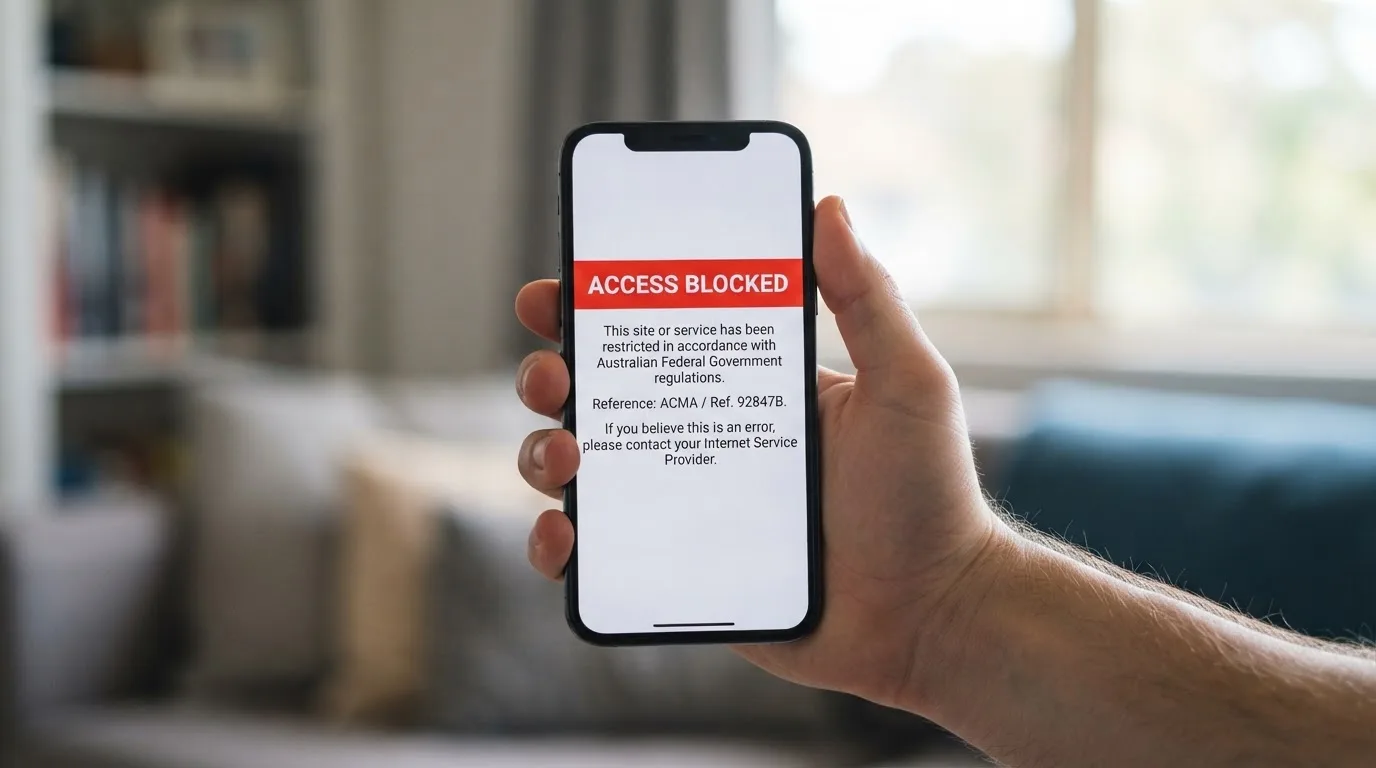
The 2017 amendments gave the ACMA three enforcement tools: formal warnings to operators, civil penalty proceedings, and the power to direct Australian internet service providers to block illegal sites. The blocking power has been the visible one. Since the first blocking request in November 2019, a total of 1,751 illegal gambling and affiliate marketing websites have been blocked, and more than 230 unlicensed services have left the Australian market since enforcement was strengthened in 2017. The most recent published round, reported in June 2026, asked ISPs to block twelve more — 7Signs, ChromaBet, Donbet, Duospin, Freshbet, Slots Gem, Jacks Club, Lucky Start, Pointsbetz, Spinrise, Vinyl Casino and Wildsino.
A site that promises an Australian player “instant withdrawal” is, in practice, one of three things: a licensed wagering service offering fast payouts on sports or racing, an offshore casino that the ACMA has not yet got to, or an offshore casino the ACMA has already warned or blocked. None of those are equivalent to “an Australian-licensed instant withdrawal casino.” That product does not exist.
What the ACMA has done about it: an enforcement record, not a list of safe sites
The ACMA’s enforcement record is the single best proxy for an Australian “market” in offshore casinos. Every brand on this page has been the subject of a formal warning or blocking action. That is not a verdict on game quality or payout honesty — the ACMA acts under the Interactive Gambling Act, not under a consumer-protection standard. It is, however, the closest thing to an authoritative Australian list of operators an Australian reader should think twice before signing up with.
The pattern is consistent. A site launches offshore, often under a Curacao or Anjouan shell. Affiliate marketing in Australia follows, particularly through SEO pages targeting “instant withdrawal” and related terms. The ACMA identifies the operator behind the brand, issues a formal warning naming the corporate entity, and in many cases escalates to a blocking request to Australian ISPs. The site then rebrands, the operator forms a new company, and the cycle starts again.
A formal warning is not a prosecution. It is a written notice that the ACMA considers the service to be in breach of the Interactive Gambling Act and that further action may follow. For an Australian player it is a useful signal because the ACMA has done the work of identifying the corporate operator behind the brand. It is the name on the licence (or the lack of one) that matters, not the brand painted on the homepage.
Responsible play: what Australian players can actually use
Australian-licensed wagering services are bound by the National Consumer Protection Framework for Online Wagering. The framework requires harm-minimisation measures, deposit limits, time-out tools and activity statements. The National Self-Exclusion Register — BetStop, live since August 2023 — lets a person exclude themselves from every Australian-licensed online and phone wagering service in a single registration. Once registered, the exclusion is enforced across the lot.
BetStop does not bind offshore casinos. An Australian who has self-excluded and then opened an account with an offshore operator is still gambling; the exclusion is local, not global. The same is true of deposit limits — they are a feature of the Australian-licensed product, not of the offshore one. A bank-level gambling transaction block, offered by Westpac, ANZ and Commonwealth Bank among others, can stop the payment leaving the account, which is a more reliable layer of protection.
For readers who feel their gambling is moving beyond what they can manage, the National Gambling Helpline is 1800 858 858 — free, twenty-four hours a day, with web chat at Gambling Help Online. The helpline is funded by the Australian Government and is independent of any operator on this page.
Crypto and anonymity: why the “no verification” promise doubles the risk
A separate shelf of search traffic — “instant withdrawal no verification casino”, “instant withdrawal bitcoin casino” and its variants — looks for the same payment speed plus the absence of identity checks. The combination is marketed heavily. It is also the worst combination of risks for an Australian player.
Two things happen when a casino waives identity verification. The first is that the casino is unable to enforce its own withdrawal limits, because limits are tied to a verified identity. The second is that the same absence of checks exposes the player to whatever the operator decides to do with the funds on the account, because there is no verified account holder for the casino to owe money to.
On the rail itself, crypto is genuinely fast on the inbound leg. Bitcoin blocks confirm in roughly ten minutes; some chains are faster; once the funds have cleared the casino’s confirmation threshold they are spendable. The Australian side is slower. Selling crypto to an Australian dollar balance and pulling it to an Australian bank account typically involves an exchange, a withdrawal queue and a bank transfer. The “instant” promise tends to apply to the moment the casino credits the crypto wallet, not to the moment the AUD hits the player’s bank.
The Interactive Gambling Act 2001 as amended in 2023 makes it an offence for Australian-licensed online wagering services to accept payment by credit card, credit-related products or digital currency. The ban takes effect on licensed services. An offshore casino accepting crypto from an Australian player is operating outside the Australian rules entirely — the rule does not bind it, and the protections that come from being inside the rules are not available to the player.
Payments and payout speed: what the Australian rails actually deliver
The Australian payments system has spent fifteen years building fast rails. The New Payments Platform, owned by New Payments Platform Australia Ltd (a non-profit whose thirteen shareholders include the Reserve Bank of Australia and the major banks), became accessible to the public on 13 February 2018. Osko, which runs over NPP, delivers a bank-to-bank transfer in under a minute, around the clock. PayID, also run by Australian Payments Plus, lets a payer address a transfer by phone number, email or ABN and see the account holder’s name before sending. By April 2025 more than twenty-five million PayID identifiers had been registered.
For an Australian-licensed wagering service, PayID and Osko are the working pair. Deposits clear in seconds, withdrawals arrive in under a minute. The constraint is that the operator must hold an Australian bank account and connect it to NPP. That is straightforward for a licensed bookmaker; it is structurally impossible for an offshore casino without an Australian banking relationship.
BPAY, owned equally by ANZ, Commonwealth Bank, National Australia Bank and Westpac via Cardlink Services Limited, has been live since 18 November 1997 and is available through more than a hundred and forty banks. It is a bill-payment service, designed for one-way payments from a customer to a biller. It is reliable for deposits at Australian-licensed services and is not used for withdrawals.
Apple Pay, Google Pay and Samsung Pay together accounted for around 45% of all card payments in Australia by number at the end of 2025. None of the three charges the consumer a fee — any surcharge is the merchant’s own card-processing cost. Transaction limits and PIN requirements are set by the card issuer or the merchant, not by Apple. The Reserve Bank of Australia’s July 2025 review proposes removing surcharges on eftpos, Mastercard and Visa transactions only, explicitly leaving American Express outside the proposed ban. American Express, established in 1850 as a freight-forwarding company and issuing its first charge card on 1 October 1958, operates as a three-party scheme — it issues cards and processes transactions itself, unlike Visa or Mastercard’s four-party network.
For an Australian gambler using Apple Pay on a card, the relevant layer is the card issuer. Westpac’s gambling block refuses authorisation of transactions registered under the merchant category code ‘Betting/Casino Gambling’ on eligible personal credit and debit cards. ANZ’s block, activated in the ANZ app, also blocks gambling transactions made through a digital wallet such as Apple Pay on an eligible card. Removing ANZ’s block requires a forty-eight-hour waiting period. Commonwealth Bank lets customers apply a gambling lock to eligible cards via the CommBank app; the bank states it cannot guarantee all gambling transactions will be stopped.
The bank-level block is a meaningful protection because it sits below the operator’s payment screen. A site cannot route around it without routing around the card network itself, which is hard to do and easier to detect. The block is also imperfect: some non-gambling transactions may be blocked in error, and merchant category codes are not always precisely assigned. It is the most reliable layer of protection available to a player who is uncomfortable with bank-level controls but wants a payment-side tripwire.
AUSTRAC’s threshold-transaction-report rule, which requires reporting of transfers of A$10,000 or more, applies only to physical cash. Ordinary electronic bank transfers are not subject to the per-transaction reporting requirement regardless of amount. A player worried about a large withdrawal flagging their account can be reassured on that point; the threshold is irrelevant to a bank transfer.
Reading the offshore operators: what the ACMA’s record actually says
The eleven brands below are the subjects of formal ACMA warnings for offering prohibited interactive gambling services to Australians. They are not a ranking. They are not a recommendation. They are what an Australian reader will meet if they search for these services, and the ACMA has already done the work of identifying the corporate operator behind each one. The corporate name is what matters — the brand on the homepage is replaceable; the corporate entity on the warning is not.
RocketPlay
The ACMA issued a formal warning to Pulsup Ltd over Rocketplay in March 2026, on top of an earlier May 2022 warning to Dama N.V. covering Rocketplay alongside five other brands. RocketPlay markets itself on fast payouts; the warning record shows it has been on the ACMA’s radar for nearly four years under two successive operators. Gambling Insider carries a listing for the brand. The site is not connected to BetStop, not bound by the National Consumer Protection Framework, and not subject to Australian consumer law. A balance on the account at the moment an ISP begins blocking the domain is at the casino’s discretion.
Level Up Casino
The ACMA issued a formal warning to Dama N.V. covering Level Up Casino in May 2022, alongside Bambet, Dazard, Rocketplay, Wild Tornado and Cobra Casinos. Westpac’s gambling-block reference page lists the brand among those whose merchant code matches its block — a reminder that the bank-level layer can do some of the work the regulator cannot. Level Up Casino operates offshore under a Curacao-issued licence; that licence is recognised by other regulators but not by any Australian jurisdiction. Australian players have no Australian complaints body to approach if a withdrawal stalls.
Woo Casino
The ACMA issued a further formal warning to Dama N.V. over Woo Casino in March 2025. The brand sits inside Dama N.V.’s portfolio of offshore casino sites; Dama N.V. has been the subject of multiple ACMA actions across multiple brands. There is no Australian-issued licence behind Woo Casino, no BetStop binding, and no Australian consumer-protection framework applying. A withdrawal complaint has no Australian address to land at.
Spirit Casino
The ACMA issued a further formal warning to Dama N.V. over Spirit Casino in May 2025. Spirit Casino operates under the same Dama N.V. corporate umbrella as Woo Casino, Level Up Casino, Rocketplay and the rest of that portfolio. The ACMA’s continued action against Dama N.V. — across new brands as they appear — is the most consistent single-company enforcement pattern in the offshore casino side of the Australian market. The brand’s promises, including any “instant withdrawal” language, are not backed by any Australian consumer protection.
National Casino
The ACMA issued a formal warning to Consolutetish S.R.L. over National Casino in July 2025. The brand sits on listings referenced by AUSTRAC and BetStop as a brand Australians have asked about, which is a useful proxy for how widely the site has been encountered inside Australia. The warning identifies the operating entity rather than the brand; Consolutetish S.R.L. is the legal counterparty if a dispute arises, and Consolutetish S.R.L. is not an Australian company. National Casino’s account terms are the contract; there is no Australian court to enforce them against.
Bizzo Casino
The ACMA issued a formal warning to Consolutetish S.R.L. over Bizzo Casino in July 2025, on top of an earlier 2022 warning to TechSolutions (CY) Group Limited and TechSolutions Group N.V. The 2022 warning was the first ACMA action against the brand; the 2025 action names a different operator, which is the typical reincorporation pattern. Gambling Insider carries a listing for the brand. A player signing up in 2026 is contracting with Consolutetish S.R.L., not TechSolutions; the ACMA has formally named that company as offering prohibited services to Australians.
Ignition Casino
The ACMA issued a formal warning to Bamboo Media over Ignition Casino in July 2025. Ignition Casino was already a long-established brand in the offshore market before the warning. The operator name — Bamboo Media — is the corporate entity the ACMA has identified. The brand’s “instant withdrawal” claim, like the others on this page, refers to the casino’s own internal processing window rather than to the Australian rails. There is no Australian-issued licence, no BetStop binding, and no Australian consumer protection framework applying to Ignition Casino.
Instant Casino
The ACMA issued a formal warning to EOD Code SRL over Instant Casino in February 2025. The brand name shares a common phrase used in search marketing in a way that is unlikely to be coincidental — affiliate marketing in Australia targets the search terms. ecoPayz and PayID’s own consumer-education pages both reference the brand, which is a useful signal that Australian consumers have asked about it. The warning names EOD Code SRL as the operating entity. As with the other offshore brands on this page, the contract is with EOD Code SRL and the dispute mechanism is whatever the casino’s own terms say it is.
Jackbit
The ACMA issued a formal warning to Ryker B.V. over Jackbit and CasinOK in April 2026. Ryker B.V. is the operator for both brands, named in the same warning. CasinOK has its own separate listing in the offshore market; Jackbit is the brand most associated with crypto-led marketing in that portfolio. The April 2026 warning is the most recent ACMA action on this list and reflects the regulator’s continued pace of action. There is no Australian licence behind either brand and no Australian consumer protection applying.
Casino Intense
The ACMA issued a formal warning to Sterplay Holding Ltd over Casino Intense in April 2025. Sterplay Holding Ltd is the operating entity. AUSTRAC and BetStop both reference the brand in their consumer-facing materials, indicating Australian consumers have asked about it; Gambling Insider carries a listing. The April 2025 warning is the ACMA’s most recent action against the Sterplay portfolio at the time of writing. The brand’s payout-speed claims are the operator’s own characterisation; there is no Australian framework within which those claims are measured or enforced.
Sky Crown
The ACMA issued a formal warning to Hollycorn N.V. over its Sky Crown and Blue Leo casino services, as published in the September 2022 formal warning PDF. Hollycorn N.V. is one of the more prominent operators in the offshore casino market and operates a portfolio of brands beyond Sky Crown and Blue Leo. The 2022 warning is the relevant ACMA action against the brand at the time of writing. Sky Crown’s payout-speed promises, like the others on this page, refer to the casino’s own internal processing rather than to the Australian rails; there is no Australian-issued licence behind the brand.
What an Australian reader should do instead
The honest answer to “which instant withdrawal casino should I use in Australia” is to use a licensed wagering service for the products the law actually permits. Online casino games and online pokies cannot be licensed. What can be licensed is wagering on racing and sport placed before the event, lotteries and keno. Within those products, an Australian-licensed bookmaker connected to PayID and Osko delivers genuinely fast withdrawals, with the consumer protections that come from being inside the National Consumer Protection Framework.
For casino-style play, the Australian legal alternative is a licensed pokies venue or a land-based casino. State and territory regulators oversee those venues; consumer protections apply; the gambling is in person. It is not the same product as an offshore online casino, and it is not marketed as instant, but it is the form the law permits.
For self-exclusion, BetStop binds Australian-licensed wagering services. It does not bind offshore casinos. A bank-level gambling transaction block on an eligible card is a more reliable layer of protection if the goal is to keep the payment from leaving the account regardless of which site is asking for it.
For support, the National Gambling Helpline is 1800 858 858 — free, twenty-four hours a day, with chat at Gambling Help Online.
The blocking-rate calculation
The ACMA’s first blocking request was issued in November 2019. As of June 2026, a total of 1,751 illegal gambling and affiliate marketing websites have been blocked. That is six years and roughly seven months from first action to current total.
A simple annualised rate divides the running total by the elapsed years and gives an order-of-magnitude figure of roughly 250 websites blocked per year across the period. The figure flattens the variation: enforcement was heavier in some years and lighter in others, with the visible cadence of public rounds — June 2026’s twelve sites, earlier rounds of similar shape. Read as a band, the rate is in the order of two hundred to three hundred sites per year, with material year-to-year variation. The important point is not the precise number but the trajectory — six years of sustained enforcement has produced a six-figure cumulative total and shows no sign of slowing.
For a reader, the trajectory matters more than the annual figure. Each blocked site is one an Australian reader was once able to reach. The cumulative total is the size of the market the ACMA has had to engage with, and the rate is the speed at which the regulator is catching up to the marketing.
The ACMA enforcement record: a summary table
The table below lines up the eleven brands above on the same four matters: brand, the ACMA’s action and date, the operator named in the warning, and whether the brand is referenced by other Australian consumer-facing sources. The third column is the column that matters most: the corporate entity the ACMA identified is the legal counterparty, not the brand on the homepage.
| Brand | ACMA action and date | Operator named by the ACMA | Subject support |
|---|---|---|---|
| RocketPlay | Formal warning, March 2026 | Pulsup Ltd | Listings only (Gambling Insider) |
| Level Up Casino | Formal warning, May 2022 | Dama N.V. | Listings only (Westpac) |
| Woo Casino | Formal warning, March 2025 | Dama N.V. | — |
| Spirit Casino | Formal warning, May 2025 | Dama N.V. | — |
| National Casino | Formal warning, July 2025 | Consolutetish S.R.L. | Listings only (ACMA, AUSTRAC, BetStop) |
| Bizzo Casino | Formal warning, July 2025; prior 2022 | Consolutetish S.R.L. | Listings only (Gambling Insider) |
| Ignition Casino | Formal warning, July 2025 | Bamboo Media | — |
| Instant Casino | Formal warning, February 2025 | EOD Code SRL | Listings only (ecoPayz, PayID) |
| Jackbit | Formal warning, April 2026 | Ryker B.V. | — |
| Casino Intense | Formal warning, April 2025 | Sterplay Holding Ltd | Listings only (AUSTRAC, BetStop, Gambling Insider) |
| Sky Crown | Formal warning, September 2022 | Hollycorn N.V. | — |
The table’s value is the operator column, not the brand column. Dama N.V. appears four times; Consolutetish S.R.L. appears twice; the rest are singletons. That is the ACMA’s own record of which corporate groups have been the most persistent in offering prohibited services to Australians.
What this page is, and what it is not
This page is a description of the Australian market for offshore casinos marketing on “instant withdrawal” terms. It is built on the ACMA’s enforcement record, the Australian Payments Plus documentation, and the relevant statutes. It is not a comparison of payout speeds, because Australian readers do not have a choice between licensed casino products — they have a choice between licensed wagering services and unlicensed offshore casinos, and the comparison that matters is between those two categories, not between brands within the second.
It is also not a verdict on individual brands’ payout honesty. The ACMA acts under the Interactive Gambling Act, not under a fairness standard. A brand with an ACMA warning is not necessarily one that refuses payouts; it is one that offers prohibited services to Australians. The payment-speed question is a question the offshore casino market answers for itself, on its own terms, with its own dispute mechanism. For an Australian player, the relevant comparison is between that arrangement and the Australian-licensed alternative, and the Australian-licensed alternative wins on every consumer-protection measure that exists.
The “instant” word is the marketing. The protection is the regulatory frame, and the regulatory frame is what “instant” promises to skip.
Frequently asked questions
What is the difference between a payout and a withdrawal request?
A withdrawal request is the player clicking “withdraw” inside the casino’s cashier; the casino then decides when — or whether — to release the funds. A payout is the funds arriving in the player’s account. The two are routinely conflated in marketing. An offshore casino can release a withdrawal request in seconds and still take days for the payout to land, because the rail from the casino’s bank to the player’s Australian bank is outside the casino’s control.
Why might a casino require identity verification before an instant withdrawal?
Identity verification is the casino’s mechanism for matching the account holder to the payment recipient and for satisfying anti-money-laundering checks. A casino that has verified the player can also enforce its own withdrawal limits and bonus conditions against a known account. A casino that has waived verification has waived its own ability to enforce those limits, which is why “no verification” marketing tends to be paired with unusual bonus terms or unusually low withdrawal caps.
Is it legal for an online casino to process withdrawals for players in Australia?
No Australian jurisdiction issues a licence for online casino games. The Interactive Gambling Act 2001 prohibits offering them to anyone in Australia, and the ACMA has issued formal warnings to more than a dozen offshore operators for doing exactly that. The individual player is not prosecuted — the law targets the provider — but there is no Australian consumer protection, no complaints body and no Australian court to approach if a withdrawal stalls.
Can a bank transfer withdrawal arrive within minutes in Australia?
Yes, on the Australian rails. An Osko transfer between participating banks, addressed to a PayID or a BSB and account number, arrives in under a minute, twenty-four hours a day. The constraint is that the sending party — the casino — must hold an Australian bank account connected to the New Payments Platform. Offshore casinos do not. The “instant” on an offshore payout refers to the casino’s own queue, not to the Australian rail.
Does a crypto withdrawal skip identity checks entirely?
Crypto can be sent without naming a sender, but the receiving exchange or casino still controls whether the funds are released into a playable balance. A casino that has accepted a crypto deposit from an unverified account can still refuse to release the balance, can still impose its own turnover requirements, and can still be blocked by Australian ISPs with the crypto balance on the books. The absence of identity verification at deposit is not the absence of identification at withdrawal.
What red flags suggest an instant withdrawal claim is not genuine?
The most reliable tell is the operating entity, not the brand on the homepage. If the ACMA has issued a formal warning over the operating entity, the casino is in regulatory trouble irrespective of what the brand’s marketing says. Other tells include a withdrawal cap that is lower than the welcome bonus would suggest, a requirement to “turn over the deposit” before any withdrawal is processed, a payment method that is not an Australian rail (PayID, Osko, BPAY), and any offer that requires a credit card or a crypto deposit from an Australian player — both of which are banned payment methods for Australian-licensed wagering services under the 2023 amendments to the Interactive Gambling Act.