Online craps for Australian players: Law, facts and alternatives
 Available in US
Anyone searching for “best casinos for online craps Australia” wants a shortlist they can sign up to tonight. The honest answer is that there is no such shortlist to give. Under the Interactive Gambling Act 2001, offering online casino games — craps included — to a person in Australia is a federal offence. No state or territory licences it. Every site that markets itself as an online craps casino for Australian players is operating outside the law, and the Australian Communications and Media Authority has been naming those operators by name for years. The page below explains how the prohibition works, how the ACMA has applied it, and where someone reading this from Australia can play craps lawfully — which is on a felt table in a licensed Australian casino, not on a laptop.
Currency current as of 24 September 2026, verified against the ACMA’s formal-warning register and the Interactive Gambling Act 2001.
Table of Contents
- The legal landscape for online craps in Australia
- Responsible gambling for Australians who feel the pull of offshore sites
- Bonus offers on offshore craps sites — what is on the table
- How craps actually plays, and why the table layout matters
- Where online craps stands against the law — the brands the ACMA has named
- A blocking-rate calculation: what the ACMA’s nine-year record shows
- Where craps can be played lawfully in Australia
- The 2026 reform picture
- Frequently asked questions
The legal landscape for online craps in Australia
Craps is a dice game where the shooter rolls against a bank on a layout of Pass, Don’t Pass, Come, Place and prop bets. The mechanics matter less for an Australian reader than the legal status of the platform offering it. The Interactive Gambling Act 2001, as tightened by the Interactive Gambling Amendment Act 2017, makes it an offence to provide a “prohibited interactive gambling service” — that phrase covers online casino games and online pokies supplied to anyone physically in Australia. Online wagering on sport and racing is treated differently and is licensable, which is why dozens of Australian-facing bookmakers exist; online craps is not wagering in that sense, and the same loophole does not apply.

Penalties under the Act bite the operator, not the player. An individual who knowingly provides a prohibited service faces fines of up to A$220,000 per day; a corporation faces up to A$1.1 million per day. No Australian reader has been prosecuted for opening an account at one of these sites, and none should expect to be. The exposure sits on the other side of the screen, and so does the absence of any Australian consumer protection when a withdrawal is refused, a bonus term is rewritten mid-play, or a site disappears overnight with balances on it.
What licences offshore craps sites display — Curaçao, Anjouan, the occasional Kahnawake — authorise them to operate in their own jurisdictions. None of those licences carries weight in Australia. The ACMA’s position is that a site offering prohibited games to Australians is breaking Australian law regardless of what its footer says, and it has acted on that position repeatedly.
What the prohibition covers, and what it leaves open
Three things stay licensable in Australia and are not what most readers came looking for:
- Wagering on racing and sport, placed before the event. The Northern Territory Racing and Wagering Commission regulates 52 of Australia’s online bookmakers — Sportsbet, Bet365 and Ladbrokes among them — licensed in Darwin for tax reasons. The commission has no full-time staff and meets once a month, which says something about how thin the regulatory layer is even for the legal half of the market.
- Lotteries and keno, run by state authorities.
- Land-based casino gaming in the physical venues licensed in each state. Craps, baccarat and blackjack are all on the floors of those venues.
Online craps, online pokies and in-play betting online are off limits. That prohibition is the page’s subject, as every result a reader meets when searching for craps sites sits in that regulated space.
How the ACMA enforces the prohibition
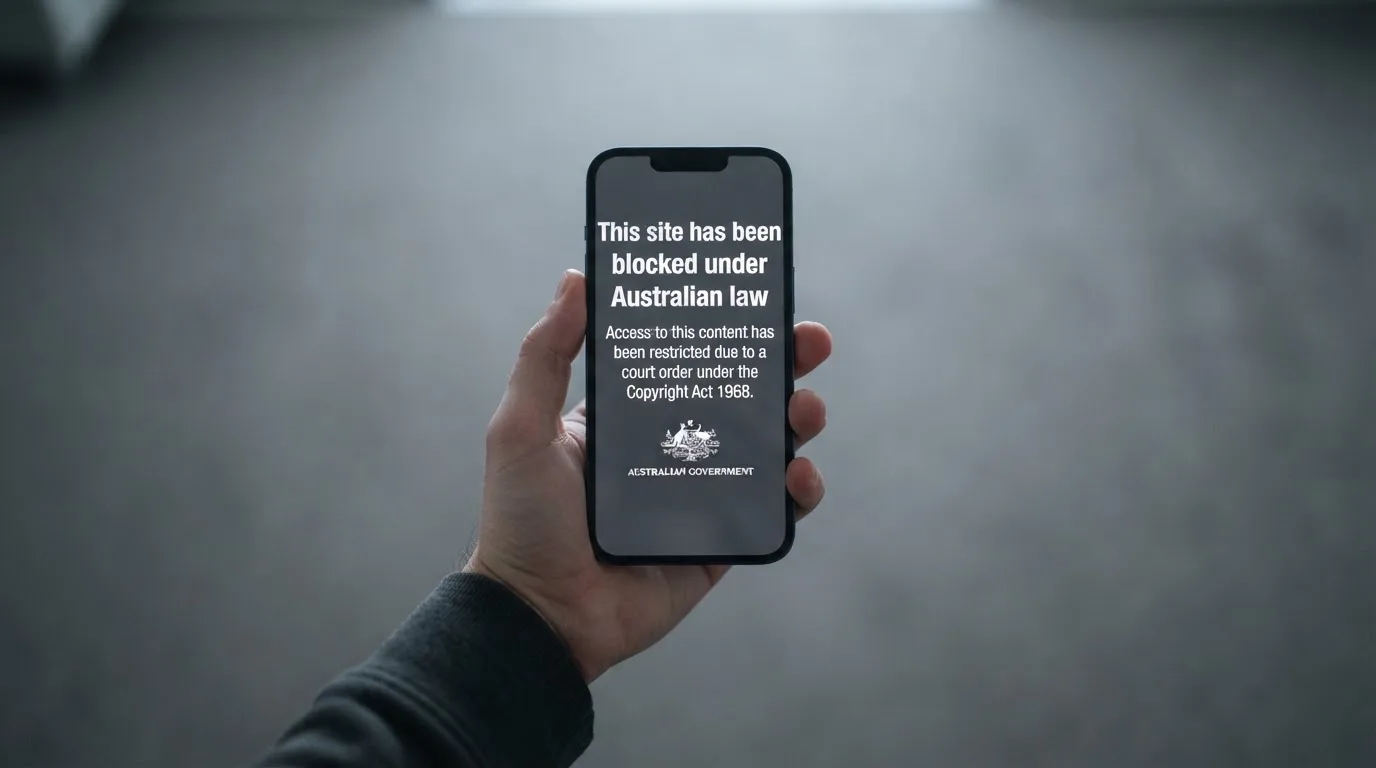
The ACMA has three tools: formal warnings, civil penalty orders and blocking requests to Australian internet service providers. Formal warnings are published on the regulator’s website with the operator’s name and the date, and they are the record most relevant to a reader weighing a brand. The ACMA has issued dozens of them since 2017. The June 2026 round added 12 more sites to the blocked list — 7Signs, ChromaBet, Donbet, Duospin, Freshbet, Slots Gem, Jacks Club, Lucky Start, Pointsbetz, Spinrise, Vinyl Casino and Wildsino — bringing the cumulative total to 1,751 illegal gambling and affiliate marketing websites blocked since the first blocking request in November 2019. More than 230 unlicensed services have left the Australian market since enforcement was stepped up in 2017.
The scale of the trade tells its own story. H2 Gambling Capital’s 2025 report estimates Australians lose about A$3.9 billion a year to illegal gambling sites, and that the share of gambling going through legal channels fell from 74% in 2021 to 64%. That drift is exactly what the ACMA’s enforcement is meant to reverse, and exactly why offshore craps sites keep appearing: there is real money chasing Australian customers who would prefer not to play on a licensed site.
Responsible gambling for Australians who feel the pull of offshore sites
The IGA leaves the player alone but leaves the player unprotected. An offshore craps site is not connected to BetStop, the National Self-Exclusion Register, because BetStop binds only Australian-licensed wagering services — bookmakers and the like. Excluding yourself through BetStop does not stop an offshore casino from accepting your deposits, your credit card or your crypto. The same goes for the deposit ceilings that apply to Australian-licensed wagering, and for the ban on credit cards and digital currency as payment for licensed wagering that took effect on 11 June 2024. An offshore site asking for a credit card number or a Bitcoin wallet address is operating outside Australian rules by definition, and a player handing one over has none of the protections those rules were written to provide.
The right tools for an Australian who has been playing offshore craps are the ones that were built for that situation. The National Gambling Helpline — 1800 858 858 — is free, runs 24/7 and connects callers to Gambling Help Online, which also offers web chat. Counselling, financial advice and self-exclusion support for state-licensed venues are all routed through those channels. BetStop can be used at the same time, and it covers the licensed half of the market that an offshore account cannot.
A reader who is chasing losses on online craps has the same problem a problem gambler on any other product has: the next spin is not a recovery, and the casino has the edge on every bet that is not the free-odds layer of the Pass Line. The arithmetic does not bend for any individual, no matter how the site dresses up its loyalty programme.
Bonus offers on offshore craps sites — what is on the table
The promotional machinery around offshore craps sites is built for one audience: people who arrived from a search and have not yet read the small print. A welcome package typically combines a deposit match with a batch of free plays, and the headline figure is rarely what the player ends up with. Three terms matter more than the size of the offer, and each one shifts the real cost:
- Wagering requirements. A deposit match of A$500 carrying a 40-times wagering requirement asks the player to turn over A$20,000 in eligible bets before the bonus — and often the deposit with it — converts to withdrawable cash. Craps is usually eligible, though prop bets frequently are not, which forces bets onto the high-edge wagers the player was trying to avoid.
- Maximum cashout caps. Many offshore sites cap how much of a bonus balance can ever be withdrawn, regardless of how well the player runs. A “win up to 10x your deposit” line is a ceiling, not a target.
- Game weighting. Slots typically count 100% toward wagering; table games including craps frequently count 10-20%. A 40x requirement on a craps-only bonus can quietly become a 200-400x requirement in practice.
The wagering math sits on top of the house edge the craps table already carries. A Pass Line bet has a 1.41% edge; Any Craps carries 11.11%. If the bonus pushes play onto the proposition bets in the middle of the layout — Any 7 is 16.67%, Any Craps is 11.11%, the Field is 5.56% — the wagering requirement clears faster but the player’s bankroll erodes faster too. The promotional word is “free”; the arithmetic word is “trade-off.”
No bonus terms are printed on this page. The brands below are not ranked by offer, because the only sources for current bonus terms are the sites’ own affiliate marketing pages, which is precisely the channel the ACMA is asking ISPs to block. A reader weighing an offer is better served by reading the bonus terms directly, slowly, than by trusting a third party’s summary.
How craps actually plays, and why the table layout matters
The Pass Line is the centre of the game. The come-out roll wins immediately on a 7 or 11, loses immediately on a 2, 3 or 12, and any other number becomes “the point.” The shooter rolls again until either the point comes up — a Pass Line win — or a 7 comes first, a Pass Line loss. The Don’t Pass line is the mirror image: it wins on a come-out 2 or 3, loses on 7 or 11, pushes on 12, and wins if a 7 rolls before the point after the come-out. Its house edge is 1.36%, marginally tighter than the Pass Line’s 1.41%.
The free-odds bet sits behind a Pass or Don’t Pass wager and pays at true odds, with a 0% house edge. That is the only bet on the table where the casino has no built-in advantage, and it is the bet a serious player backs the line with. Every other wager on the layout carries a house edge, and the worst of them — Any 7 at 16.67%, Any Craps at 11.11% — sit in the prop-bet centre of the table for a reason: they look exciting and they cost a lot.
Modern craps is an American simplification of an older European dice game called Hazard. Bernard Xavier Philippe de Marigny de Mandeville brought Hazard to New Orleans around 1805; the simplified version became known as “Pass,” from the French “pas.” Around 1907, Philadelphia dice maker John H. Winn introduced the Don’t Pass layout that is still used today, a change that made it worthwhile for casinos to use fair dice. The game has not changed much since.
Variants include Crapless Craps, which removes 2, 3, 11 and 12 as come-out losing or winning numbers, and street craps, an informal version played without a marked table or a stickman. Crapless craps looks like a gift to the player — no instant losses on the come-out — but the math tilts back through changes to the place payouts and the odds bet, so the house edge on the Pass Line in Crapless Craps is higher than in standard craps.
A comparison with baccarat and blackjack
Craps is not the only table game a player might be considering, and the house edge tells a useful story across the three. With optimal strategy, blackjack’s house edge is about 0.28% under liberal Las Vegas Strip rules — dealer stands on soft 17, double on any two, double after split, resplit aces, late surrender — and about 0.43% under Atlantic City rules. Baccarat runs 1.06% on Banker, 1.24% on Player and 14.36% on the Tie. Craps’ Pass Line sits at 1.41%, Don’t Pass at 1.36%, with the free-odds layer at 0%.
| Bet type | Craps | Baccarat | Blackjack |
|---|---|---|---|
| Best standard bet | Don’t Pass / Don’t Come (1.36%) | Banker (1.06%) | Optimal strategy, liberal rules (~0.28%) |
| Second-best standard bet | Pass / Come (1.41%) | Player (1.24%) | Optimal strategy, Atlantic City rules (~0.43%) |
| Worst common bet | Any 7 (16.67%) | Tie (14.36%) | Insurance (varies, typically high) |
| Zero-edge layer | Free odds behind Pass/Don’t Pass | None on standard layout | None in standard rules |
The table makes clear why craps, baccarat and blackjack are all played in Australian land-based casinos but none of them is licensed online. The product itself is not the issue. The product is fine. The distribution channel is what the IGA prohibits.
Where online craps stands against the law — the brands the ACMA has named
These brands are listed because the ACMA itself issued a formal warning over them for offering prohibited interactive gambling services to Australians. The regulator publishes this record to identify sites that should be avoided. Every entry listed also presents itself on its own marketing as an option for craps. The page names them to provide transparency regarding why these sites appear in search results, rather than leaving a reader to find them without context.
| Brand | ACMA action and date | Operator named by the ACMA | Subject support |
|---|---|---|---|
| RocketPlay | Formal warning, March 2026 (Pulsup Ltd); earlier warning, May 2022 (Dama N.V.) | Pulsup Ltd; Dama N.V. | — |
| Level Up Casino | Formal warning, May 2022 | Dama N.V. | Craps listed on BGaming aggregator pages (listings-only) |
| Woo Casino | Formal warning, March 2025 | Dama N.V. | — |
| Spirit Casino | Formal warning, May 2025 | Dama N.V. | — |
| National Casino | Formal warning, July 2025 | Consolutetish S.R.L. | Craps listed on Wikipedia game pages (listings-only) |
| Bizzo Casino | Formal warning, July 2025; earlier warning, 2022 | Consolutetish S.R.L.; TechSolutions | — |
| Ignition Casino | Formal warning, July 2025 | Bamboo Media | — |
| Instant Casino | Formal warning, February 2025 | EOD Code SRL | — |
| Jackbit | Formal warning, April 2026 | Ryker B.V. | — |
| Casino Intense | Formal warning, April 2025 | Sterplay Holding Ltd | Listed by ABC and ACMA references (listings-only) |
| Sky Crown | Formal warning, September 2022 | Hollycorn N.V. | — |
The columns track what the ACMA’s own register shows, the operating company behind the brand, and whether research confirms a craps title on offer. A dash in the right-hand column means the research pool found no third-party listing of a craps table for that brand — which is what most of these operators carry, and which is itself worth a reader knowing. Brands the ACMA has acted against more than once — RocketPlay, Bizzo — show both warnings in the date column, because the regulator’s repeat action is the relevant record.
The pattern behind the warnings
Eleven brands, drawn from a much longer ACMA list. Three things stand out from the table.
First, the operating companies cluster. Dama N.V. alone appears behind RocketPlay, Level Up Casino, Woo Casino and Spirit Casino, with the ACMA warning Dama N.V. four times in four years. Consolutetish S.R.L. appears twice in the July 2025 round, over National Casino and Bizzo Casino, with Bizzo also caught up in a 2022 warning to TechSolutions. The same Curaçao-incorporated operators keep running new brands under new names, which is one of the reasons the ACMA moved from warnings to blocking requests: a warning to one URL did not stop the next URL from appearing.
Second, the dates tell the reader what was happening on the regulator’s side at the time. The 2022 warnings (Level Up Casino, Sky Crown, Bizzo’s first) were the early enforcement round. The 2025 warnings — Woo Casino in March, Instant Casino in February, Casino Intense in April, Spirit Casino in May, National Casino and Bizzo Casino in July, Ignition Casino in July — sit in the period after the credit-card ban took effect on 11 June 2024 and after BetStop went live in August 2023, the years in which the ACMA’s enforcement was at its busiest. The 2026 warnings — RocketPlay in March, Jackbit in April — landed inside the lead-up to the Interactive Gambling Amendment (Gambling Reform) Bill 2026, which Parliament passed on 19 August 2026.
Third, the subject column shows what the research pool was able to confirm. Only three of the eleven brands have a third-party listing of a craps game attached to them, and each of those listings is a directory entry rather than a regulator’s confirmation that the game is being offered to Australians. The other eight carry an em dash because the research found no listing — which is what no-data means here, neither affirmed nor denied, and which the reader should treat as a reason to ask the site directly if craps is the game they want to play.
What a reader should do with this list
Three uses, in order of weight.
The first is avoidance. Every brand in the table is on the ACMA’s register because it offered prohibited services to Australians. A reader who was considering any of them now has the regulator’s own statement of why not. That is the strongest evidence base this page can put on the table, and it is not the page’s own opinion — it is the regulator’s.
The second is a check on what any new site the reader meets is. The ACMA’s formal-warning page is updated each time a new operator is named, and a reader who is weighing a brand that does not appear in the table above can look the brand up by name on the ACMA’s website. The search takes ten seconds and either clears the brand or puts it on the same register.
The third is the understanding that no offshore brand — warned, blocked or unmentioned — provides what a licensed Australian venue does: a regulator a reader can complain to, a self-exclusion register the site is bound by, a deposit ceiling set by Australian rules, a ban on credit cards and crypto, and a venue a player can walk into. The law is what makes those protections exist, and the offshore brands do not have them.
A blocking-rate calculation: what the ACMA’s nine-year record shows
The arithmetic this page is built around is not a bonus-clearance estimate. It is the blocking rate the ACMA has run since its first request to ISPs in November 2019.
The inputs come from the regulator’s own record. The first blocking request went to Australian internet service providers in November 2019. As of the June 2026 round, 1,751 illegal gambling and affiliate marketing websites have been blocked in total. That covers a window of roughly six and a half years.
Two ways to read the figure, depending on what the reader wants to know:
- Across the full window since the first blocking request, 1,751 sites over about 80 months works out to roughly 22 blocked sites per month on average. That is the through-put rate, sites going dark per month across the whole enforcement period.
- Across the more recent enforcement period from 2017 — when the strengthened Act came into effect and more than 230 unlicensed services began leaving the market — the cumulative blocked-site count reflects both the early-warning phase and the blocking-request phase, and the rate of new blocks per round has remained in the low double digits per request, with the June 2026 round adding 12.
The number to keep is the one the ACMA itself publishes — 1,751 sites blocked since November 2019 — and the order of magnitude it implies. A market that needs two dozen new blocks a month to keep up is a market where new sites replace blocked ones faster than the regulator can name them. That is the background against which any “best casino for online craps Australia” list is being asked to operate.
The figure is presented as a band, not a single number, because the blocking rate is uneven across rounds and because the cumulative total mixes operator sites with affiliate marketing sites, which the ACMA blocks together. A reader who wants the precise monthly rate for a given quarter can derive it from the ACMA’s published rounds; the band is what this page is responsible for stating accurately.
Where craps can be played lawfully in Australia
For a reader who wants to play craps, the lawful route is land-based. Australia’s licensed casinos operate under state-level Casino Control Acts and offer table games including craps, baccarat and blackjack under rules approved by the relevant state regulator. In Victoria, the Victorian Gambling and Casino Control Commission approves any rules for table games and any change to those rules before they are introduced at Crown Melbourne — a process that applies to blackjack variants such as the renaming of “Perfect Pairs” to “Crown Pairs” in December 2024 and the introduction of a “Free Bet” option with a “Pot of Gold” side bet in March 2024. New South Wales operates a parallel regime under the Casino Control Act 1992.
These are the only places in Australia where craps can be played under Australian supervision. Online, there is no equivalent. A reader who wants the experience that an offshore craps site markets — rolling dice from a phone or laptop, betting on the Pass Line from a kitchen table — cannot have it lawfully inside Australia. The substitute is the felt table in a licensed venue, with the rulebook the regulator approved and the protections that come with it.
The 2026 reform picture
The Interactive Gambling Amendment (Gambling Reform) Bill 2026 passed Parliament on 19 August 2026. Its advertising and inducement measures commence on 1 January 2027, which means the bill is now law with a future start date — not yet in force on a page dated to the current year. Once those measures commence, offshore operators face additional constraints on how they market to Australians, but the underlying prohibition on providing online casino games — which is the IGA 2001 prohibition this page is built around — is unchanged. The reform tightens the inducement side of the trade; it does not legalise the supply side.
Frequently asked questions
What house edge does the Pass/Come bet carry in craps?
Pass and Come both run a 1.41% house edge, the same figure on both bets because they pay out the same way. Don’t Pass and Don’t Come are marginally tighter at 1.36%, which is the best standard-wager edge on the table outside the free-odds layer. The free-odds bet behind Pass or Don’t Pass runs 0%, because it pays at true odds with no margin built in.
What is the difference between a Pass Line and a Don’t Pass bet in craps?
A Pass Line bet wins on a come-out roll of 7 or 11, loses on 2, 3 or 12 and ties on the rest until a point is established. A Don’t Pass bet is the mirror: it loses on 7 or 11, wins on 2 or 3, ties on 12, and wins if a 7 comes before the point after the come-out. Don’t Pass carries a slightly tighter house edge — 1.36% versus 1.41% — but most players avoid it because it bets against the shooter.
Is it legal for an online casino to offer craps to players in Australia?
No. The Interactive Gambling Act 2001, as amended in 2017, makes it a federal offence to provide online casino games — craps, baccarat, blackjack, online pokies — to a person in Australia. Penalties reach A$220,000 a day for individuals and A$1.1 million a day for corporations. The prohibition targets the provider; an Australian player is not prosecuted, but an offshore site offers no Australian consumer protection, no complaints body and no recourse if a withdrawal is refused.
Why is the Any Craps bet considered a poor-value wager?
Any Craps is a proposition bet that wins if the next roll is 2, 3 or 12, paying 7 to 1, and its house edge is 11.11%. The payout looks generous against a single-roll outcome, but the math of the dice makes 2, 3 and 12 show up far less often than the 7 that the bet loses to. Any 7, on the same layout, runs 16.67% — the worst standard bet on the table. Both bets sit in the centre of the layout because they read as exciting, and both bleed a bankroll faster than any Pass Line bet.
Can craps be played at a licensed Australian land-based casino?
Yes. Craps is offered as an approved table game at Australia’s licensed casinos under state-level Casino Control Acts. In Victoria, the VGCCC approves the rules and any rule changes before they go live on Crown Melbourne’s floor; New South Wales runs a parallel approval regime under the Casino Control Act 1992. Online, no equivalent exists. The lawful substitute for an offshore craps site is the felt table in a state-licensed venue, where the rulebook has been approved by an Australian regulator and the player’s protections are the ones Australian law provides.
Created by the ”Casino Providers Info” editorial team.