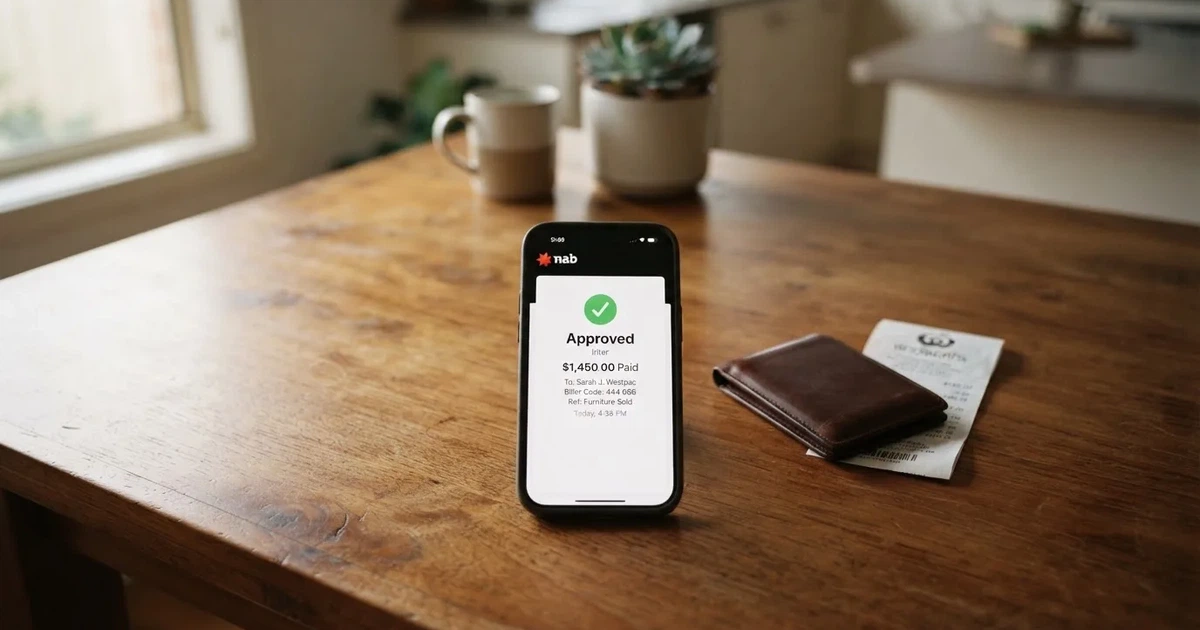
The price tag on a $10 PayID no-deposit casino bonus in 2026
 Available in US
A reader who lands on a “$10 PayID no-deposit casino bonus” search expects three things at once: a small credit, an Australian payment rail, and the safety that comes from pairing the two. The premise is that PayID means Australian and Australian means regulated, so the offer must be real and the bonus must be free. None of those inferences hold up. The offer does exist, but only on offshore sites the ACMA has spent years trying to block. PayID is genuine — it is Australia’s domestic instant payment rail — but the casino asking for it is not. And the “free” $10 is not free once the wagering requirement, the maximum cashout cap, the expiry clock and the absence of any Australian complaints body are all in the room. This page is the price list for chasing that $10, and the brands the regulator has already named along the way.
Verified on 24 September 2026 against the ACMA’s published register of formal warnings and blocking requests, the Reserve Bank of Australia’s New Payments Platform material, and Australian Payments Plus’s PayID guidance.
Table of Contents
- Fundamentals of what a $10 PayID no-deposit bonus actually is
- Prohibition, and what the ACMA has done about it
- When the offer stops being entertainment: help that is actually free
- How PayID actually settles — and why the rail is the wrong tool for this job
- What a $10 “no-deposit bonus” actually costs the player
- Comparing offers in this space without a real comparison to make
- The eleven brands the ACMA has named in this space
- How fast the regulator moves: the blocking rate
- What to ask before any “free $10” lands in an inbox
- Frequently Asked Questions
Fundamentals of what a $10 PayID no-deposit bonus actually is
The first thing to set straight is what the offer is in plain commercial terms, before any law enters the room. A “no-deposit bonus” is a small credit a casino adds to a newly registered account without requiring a deposit first. The dollar figure — A$10 in this case — sits at the low end of the no-deposit range, which typically runs from A$5 to A$25 in free play or bonus cash. The point of the small amount is not generosity. It is a hook. The casino is buying a verified account holder it can market to later, in exchange for what is, on average across the slot games the bonus is locked to, often more than A$10 of expected play before any of it can be withdrawn.

The “PayID” half of the offer is a separate matter. PayID is an easy-to-remember identifier — a mobile number, an email address, an ABN or an Organisation Identifier — linked to an Australian bank account, run by Australian Payments Plus on the New Payments Platform that the Reserve Bank of Australia oversees. Over 100 Australian financial institutions offer it, and as of April 2025 there were more than 25 million registered PayIDs in the country. None of those numbers are in dispute. They describe a domestic real-time payment service that does what it says on the tin. Settlements between participating banks under the Osko product arrive in under a minute, 24 hours a day, seven days a week, addressed either to a BSB and account number or to a PayID.
The combination is where the offer stops being two familiar things and starts being a sales pitch. There is no Australian-licensed online casino. Online casino games and online pokies are prohibited from being supplied to anyone in Australia under the Interactive Gambling Act 2001, and no state or territory issues a licence for them. A site that markets a “$10 PayID no-deposit bonus” to Australians is, by construction, operating outside the regime — and is therefore the kind of operation that the Australian Communications and Media Authority has been warning, blocking and listing for the better part of a decade.
Three things follow for the reader trying to evaluate the offer. First, the payment rail is real and Australian; the casino asking for it is not. Second, “no deposit” is a marketing word, not a description of what the bonus costs the player. Third, the only Australian body that has a view on this offer is the regulator trying to keep it out of the country. The remainder of this page unpacks each of those three, in that order.
Prohibition, and what the ACMA has done about it
The Interactive Gambling Act 2001, strengthened by the Interactive Gambling Amendment Act 2017, makes it an offence to supply online casino games, online pokies and in-play betting services to a person physically in Australia. What is licensable in Australia is wagering on races and sporting events placed before the event, lotteries and keno — and even those are licensed at the state and territory level rather than federally. In practice, the bulk of licensed online wagering sits with the Northern Territory Racing and Wagering Commission, which regulates 52 of Australia’s online bookmakers — including Sportsbet, Bet365 and Ladbrokes — for tax reasons. The commission has no full-time staff and meets once a month in Darwin. That is the size of the official Australian online wagering footprint.

The ACMA enforces the prohibition against online casino games. Its tools are three. It can issue formal warnings to operators it identifies as offering prohibited services to Australians, it can direct Australian internet service providers to block illegal sites, and it can refer matters for civil penalty proceedings. The individual player is not prosecuted — the Interactive Gambling Act targets the provider — but a player on an offshore site has no Australian consumer protection, no complaints body and no recourse if a withdrawal is refused. The site can also be blocked mid-balance, leaving whatever funds are on the account unreachable until the block lifts or the operator decides to pay out. The cost of playing on an offshore site is not just the bonus terms; it is the structural absence of anyone on the Australian side who can compel a payout.
The numbers behind the enforcement tell their own story. As of the June 2026 snapshot, the ACMA had directed Australian ISPs to block 1,751 illegal gambling and affiliate marketing websites since the first blocking request in November 2019. More than 230 unlicensed gambling services had left the Australian market entirely since enforcement was strengthened in 2017. In the round reported on 26 June 2026 alone, the regulator asked ISPs to block 12 more: 7Signs, ChromaBet, Donbet, Duospin, Freshbet, Slots Gem, Jacks Club, Lucky Start, PointsBetz, Spinrise, Vinyl Casino and Wildsino. H2 Gambling Capital’s 2025 report estimates that Australians lose about A$3.9 billion a year to illegal gambling sites, and that the share of gambling going through legal channels in Australia fell from 74% in 2021 to 64%. That is the background against which a “$10 PayID no-deposit bonus” sits — a marketing offer aimed at a market the regulator has spent the last seven years trying to make smaller.
The legal wagering side has tightened on the payments it accepts. Since 11 June 2024, Australian-licensed online wagering services have not been permitted to accept credit cards or other credit-related products as payment — the rule that, by extension, also constrains digital wallets that hold a credit instrument. Penalties for breaching the rule run up to A$247,500 for operators. Legal deposit routes for a licensed Australian wagering service are debit card, bank transfer, PayID or Osko, and BPAY. A site asking an Australian customer for a credit card or a crypto deposit is, by definition, operating outside the Australian rules. So is any site asking for a PayID on its way to a casino balance.
Tax is the third leg of the legal frame. Gambling winnings of a recreational player are not assessable income in Australia — the rule sits in section 6-5 of the ITAA 1997 — and losses are not deductible, unless the person carries on a business of gambling. That is the model only. Anyone with a real question about their own position should check with the ATO. The reason it matters in this context is that a player on an offshore site cannot claim even the limited protections the ATO framework assumes, because the operator is not reporting to the ATO and there is no Australian withholding or reporting chain the winnings could move through.
Settlement of formal warnings: the brands the regulator has named
A formal warning is not the strongest sanction available to the ACMA — that would be civil penalty proceedings — but it is the public, dated record that lets a reader match a brand they have seen advertised to a regulator that has acted on it. Each warning names the operator entity, the brand and the date, and the warnings are searchable on the ACMA register. The eleven brands that follow are listed here because the ACMA itself has issued a formal warning over each of them for offering prohibited services to Australians. They are not a ranking, and they are not a recommendation. They are the regulator’s own footprint in the offer space this page covers.
The pattern across the warnings matters as much as any single entry. The regulator returns to the same operator groups; the operator groups rebrand and recycle; the brands rotate under new corporate shells. The most recent warning on the list was issued in March 2026 over RocketPlay to Pulsup Ltd, after an earlier Dama N.V. warning over the brand in May 2022 — two formal warnings over a single brand, from two different operator entities, three and a half years apart. Dama N.V. was warned again in March 2025 over Woo Casino and in May 2025 over Spirit Casino — three warnings over the same operator entity, four years apart, on a rolling set of brands. In July 2025 the ACMA issued a further batch — to Bamboo Media over Ignition Casino, and to Consolutetish S.R.L. over National Casino and Bizzo Casino. Bizzo Casino had already been warned in 2022 to TechSolutions (CY) Group Limited and TechSolutions Group N.V., which made it the second brand on this list to draw two warnings under two different operators. In February 2025 the ACMA warned EOD Code SRL over Instant Casino; in April 2025 a warning to Sterplay Holding Ltd over Casino Intense; in April 2026 a warning to Ryker B.V. over Jackbit and CasinoOK. The list closes with the September 2022 warning to Hollycorn N.V. over Sky Crown and Blue Leo, the oldest of the batch. The next section walks through each of the eleven in turn.
When the offer stops being entertainment: help that is actually free
If thinking about a $10 PayID no-deposit casino bonus has started to feel compulsive or stressful, the help that is actually free is the help that does not require an offshore account and does not require handing over a PayID. The National Gambling Helpline is 1800 858 858 — free, confidential, 24 hours a day — and the same service is reachable by online chat at Gambling Help Online. Both are funded by the Australian government and operate independently of any casino operator. They are also the part of the system that works whether the player is dealing with a licensed Australian bookmaker or an offshore casino.
The harder question is self-exclusion. BetStop, the National Self-Exclusion Register, has been live since August 2023 and binds every Australian-licensed online and phone wagering service. A player who registers with BetStop is barred from those licensed services for the period they choose. The catch is structural: BetStop only binds services that are licensed in Australia. The offshore sites that market a “$10 PayID no-deposit bonus” are not licensed in Australia and are not connected to BetStop. A self-exclusion through BetStop does not stop those sites. Most of them have their own self-exclusion mechanism, but it is run by an overseas operator, enforced by an overseas complaints body, and absent for many of the brands the ACMA has warned.
That asymmetry is the cost. The Australian system is built to protect a player who plays with a licensed Australian bookmaker. A player who has decided to stop, but who is also on an offshore casino’s mailing list, has to do the self-exclusion work twice — once through BetStop, once through the offshore site’s own mechanism, with no guarantee the second one is honoured or even exists. The cheaper option, and the one BetStop is designed to support, is to stay on the licensed side. The eleven brands in the next section are not on that side.
The 2026 reform is worth flagging while the responsible-gambling question is in view. The Interactive Gambling Amendment (Gambling Reform) Bill 2026 passed Parliament on 19 August 2026, with its advertising and inducement measures commencing on 1 January 2027. It is law with a start date, not law in force on a 2026 page — which means a reader researching this topic before the start date is reading under the old framework, with the new one already on the books.
How PayID actually settles — and why the rail is the wrong tool for this job
The mechanics of PayID matter here because the offer is built on the assumption that the payment rail confirms the operator. PayID is built on Australia’s New Payments Platform, which launched in February 2018 to let households, businesses and government agencies make simply-addressed, near real-time payments 24 hours a day, 7 days a week. The Reserve Bank of Australia is the regulator and overseer of the platform, and separately owns and operates the Fast Settlement Service that settles NPP transactions individually in close to real time. The retail product on top of the platform is Osko — a bank-to-bank transfer between participating Australian banks that arrives in under a minute, 24/7, whether it is addressed to a BSB and account number or to a PayID. That is the speed a reader is being sold on.
What the offer does not say is what happens when an Australian bank looks at the transaction. The big four Australian banks run gambling blocks at the merchant category code level. Westpac’s gambling block refuses authorisation on transactions registered under the merchant category code for Betting/Casino Gambling on eligible personal credit and debit cards. ANZ’s gambling transaction block, activated in the ANZ app, also blocks gambling transactions made through a digital wallet such as Apple Pay on an eligible card, not just the physical card. Once ANZ’s block is on, removing it again requires a 48-hour waiting period — and the bank warns that not all gambling transactions will be blocked and some non-gambling transactions might be blocked in error. Apple Pay’s own terms are no help here: Apple does not charge fees to consumers for using Apple Pay in stores, online or in apps, but transaction limits and PIN requirements are set by the card issuer or the merchant, not by Apple. The block sits where the issuer sits, which is at the Australian bank. The mobile wallets themselves — Apple Pay, Google Pay and Samsung Pay — collectively accounted for around 45% of all card payments in Australia by number by the end of 2025, which means a great many of the gambling transactions an Australian bank might refuse are running through a wallet rather than a card.
Two practical consequences follow. A player who has turned on a bank-level gambling block cannot use that card or wallet at an offshore casino even if the casino accepts PayID — the transaction is refused before it reaches the operator. A player who has not turned on the block can still find the transaction refused, because the bank’s automatic fraud and category screening catches many of these merchants even with the block off. The “instant” in instant PayID is the speed at which the transfer reaches the recipient once the bank has decided to send it. It is not the speed at which the bank decides.
The other piece of the PayID picture is the name check. When an Australian pays to a PayID, the payer is shown the name linked to that PayID before the transfer is sent — the safeguard that protects against mistaken payments and scams. Australian Payments Plus is explicit about the implications for this market. “If you are asked to transfer funds to a PayID on an illegal gambling site, it is almost certainly a scambling website.” AP+ defines “scambling” as slang for illegal online gambling platforms advertised on social media and messaging apps that trick people into gambling on a scam website. The advice to anyone who thinks they have been scambled is to contact their financial institution directly. PayID itself never contacts customers directly, and emails or text messages claiming to be from PayID are a scam; PayID never asks anyone to send money in order to receive money, or to “upgrade” an account.
That last sentence is the practical bridge between the payment rail and the casino offer. An offer that asks a player for a PayID before it pays out a $10 bonus is, on AP+’s own published guidance, behaving like the kind of site the warning is aimed at. The reader who notices that the offer is asking for the PayID before the bonus is paid, rather than the other way around, has noticed the structure of the pitch.
What a $10 “no-deposit bonus” actually costs the player
The mechanics of the bonus itself are where the marketing word “free” does its quietest work. A no-deposit bonus is a credit on a new account, typically A$5 to A$25, attached to a set of conditions that determine how much of it, if any, ever leaves the casino as withdrawable cash. The conditions are four, and each one costs the reader.
The first is the wagering requirement. The bonus must be played through a multiple of its face value before any winnings can be withdrawn. The market standard sits between 30 and 60 times the bonus amount for no-deposit offers, with 40 times the most common figure. On a $10 bonus at 40 times, that is A$400 of slot play before any winnings become withdrawable. The requirement is what the operator’s marketing page calls a “fair play” condition; it is the cost the player is asked to absorb before any withdrawal is possible.
The second is the maximum cashout cap. Even after the wagering requirement is met, the casino typically limits how much of the resulting balance can be withdrawn to a small multiple of the bonus — often five to ten times. On a $10 bonus with a 5x cap, that is A$50 of maximum withdrawal, whatever the balance grew to along the way. Anything above the cap is forfeit. The cap is what makes “unlimited winnings” impossible — the headline the player reads and the cap the operator enforces are not the same statement.
The third is the game restriction. Most no-deposit bonuses are locked to online pokies and online slots, where the operator’s contribution to wagering is 100%. Table games and live casino games often contribute 0% to 10%, which means the player who tries to grind the requirement at blackjack or roulette either sees their wagering count at nothing or sees it count at a fraction. The games that count are also the games with the highest house edge, which is the operator’s quietest win. The “play anywhere” wording on the offer, where it exists, refers to anywhere inside the locked catalogue.
The fourth is the time limit. A no-deposit bonus typically expires in 7 to 14 days. If the wagering requirement is not met in that window, the bonus balance and any winnings tied to it are removed from the account. The expiry turns a slow grind into a forced pace, which in turn raises the expected loss.
The arithmetic of the offer is straightforward and almost always unfavourable. The expected loss on the wagering turnover depends on the return-to-player of the locked games. On a 96% RTP slot, the expected loss on A$400 of turnover is A$400 × 4% = A$16. So a “free” A$10 bonus costs the reader an expected A$16 to convert into a withdrawal-eligible balance. Then the cashout cap takes the rest: any winnings above A$50 are forfeit, so the upside is capped well below what the same A$400 of slot play would have produced without the bonus attached. The expected loss is higher than the face value of the bonus, and the upside is capped below it. “Free” is the marketing word, not the description.
There is one more cost that does not appear on the bonus terms page: the cost of giving an offshore operator a verified identity, a working email, a phone number, and a working PayID or card. That information is valuable, and once it is with an overseas operator there is no Australian privacy regulator that can compel its return or its deletion if the operator decides to keep it. The reader’s data is part of what the A$10 buys, and it is the part the marketing page never itemises.
Comparing offers in this space without a real comparison to make
A page about a $10 PayID no-deposit casino bonus is conventionally a place to rank operators, score them on payout speed, name the one with the best welcome package and link to it. None of that is possible here, and the impossibility is the point. The product is prohibited; the payment rail is borrowed; the offer is a marketing hook. Ranking the eleven brands the ACMA has named would amount to ranking operators by how attractively they have packaged the same prohibited product to the same Australian audience — a comparison that, in the Australian market, has only one permissible verdict.
What a fair comparison would weigh, in a market where the product itself were licensable, includes the licence jurisdiction and the regulator behind it; the operating company and its history with the ACMA, AUSTRAC and equivalent bodies elsewhere; the game catalogue and the named studios behind it; the bonus structure on the welcome package, the wagering requirement, the maximum cashout cap, the game contribution table and the expiry window; the payment methods for deposit and withdrawal, the settlement time on each, the fees applied at the cashier and the minimum and maximum amounts; the responsible-gambling tools — deposit limits, loss limits, time-out, self-exclusion and the route by which a complaint is made and answered; and the customer support channels, the operating hours and the language coverage. None of those fields can be filled in here from sources the research could verify as Australian-facing for these brands. The brands’ own terms pages were the only sources, and the ACMA’s record is what stands in for a comparison that the rest of the fields would otherwise supply.
The eleven brands that follow are therefore presented as the regulator’s own footprint rather than as a ranked shortlist. They are listed in the order the ACMA published its formal warnings, oldest to most recent, with the operator entity the regulator named on each warning alongside. Each entry closes on a verdict specific to that brand’s record. None of them is presented as a place to play.
The eleven brands the ACMA has named in this space
| Brand | ACMA action and date | Operator entity named by the ACMA | Subject support |
|---|---|---|---|
| Sky Crown | Formal warning, September 2022 | Hollycorn N.V. | — |
| Level Up Casino | Formal warning, May 2022 | Dama N.V. | Listings only — Westpac gambling-block merchant code page |
| Casino Intense | Formal warning, April 2025 | Sterplay Holding Ltd | Listings only — AUSTRAC register, ITnews and NAB pages |
| Instant Casino | Formal warning, February 2025 | EOD Code SRL | Listings only — ecoPayz and PayID pages |
| Woo Casino | Formal warning, March 2025 | Dama N.V. | — |
| Spirit Casino | Formal warning, May 2025 | Dama N.V. | — |
| National Casino | Formal warning, July 2025 | Consolutetish S.R.L. | Listings only — AUSTRAC register and Wikipedia entry |
| Bizzo Casino | Formal warning, July 2025; earlier 2022 | Consolutetish S.R.L.; earlier TechSolutions (CY) Group Limited and TechSolutions Group N.V. | — |
| Ignition Casino | Formal warning, July 2025 | Bamboo Media | — |
| Jackbit | Formal warning, April 2026 | Ryker B.V. | — |
| RocketPlay | Formal warning, March 2026 | Pulsup Ltd (RocketPlay); earlier Dama N.V., May 2022 | — |
A note on what “listings only” means in this table. Some of these brands appear on third-party pages the research could verify — a bank block’s merchant code reference, a payment service’s blocked-merchant list, an industry register entry, a press article. Those appearances are informational about the brand’s footprint; they are not endorsements, and they do not mean the brand supports the page’s named subject. The brands marked with an em dash have no documented footprint on the sources the research consulted, and the page makes no claim either way about them.
Sky Crown — the oldest formal warning on the list
Sky Crown and its sister brand Blue Leo were named in a Hollycorn N.V. formal warning published in September 2022. The warning is the oldest action on this page, and Hollycorn N.V. is a different operator cluster from the Dama N.V. and Consolutetish names that dominate the rest of the list. The brand’s record predates the 2025 enforcement surge that has reshaped the regulator’s footprint on this offer space, and the entry sits as the baseline against which the later cycles are measured rather than as a current finding. For a reader working through the regulator’s record, Sky Crown is where the file starts, and the verdict that follows the rest of the list reads more accurately with it in view.
Level Up Casino — the original Dama N.V. cluster
Level Up Casino’s formal warning dates to May 2022, when the ACMA named Dama N.V. across six brands: Bambet, Dazard, Level Up, Rocketplay, Wild Tornado and Cobra Casinos. Dama N.V. was warned again in March 2025 over Woo Casino and in May 2025 over Spirit Casino, which puts Level Up at the start of an operator cluster that has drawn three ACMA warnings across four years. The brand’s listings-only support shows up in Westpac’s gambling-block merchant code page, which is incidental to the brand’s footprint rather than an endorsement of it. The verdict on Level Up is that a reader looking at the brand is really looking at Dama N.V., and the ACMA has now warned that operator three times. The brand-level warning is a footnote inside the operator-level pattern.
Casino Intense — a single-operator mid-2025 warning
Casino Intense’s formal warning dates to April 2025, addressed to Sterplay Holding Ltd. The brand’s listings-only support shows up via the AUSTRAC register, an ITnews article and an NAB page, all of which are informational rather than endorsements. The warning is a mid-2025 action from a single operator, isolated from the larger enforcement clusters in the same year — neither the Dama N.V. trio nor the July 2025 three-brand batch. The verdict on Casino Intense is that its record sits on its own rather than as part of a larger pattern, which makes the operator entity — Sterplay Holding Ltd — the relevant unit of comparison rather than the brand itself.
Instant Casino — the earliest of the 2025 cohort
Instant Casino’s formal warning dates to February 2025, addressed to EOD Code SRL. It is the earliest of the 2025 cluster on this list, and it sits apart from the Dama N.V. and Consolutetish clusters that followed. The brand’s listings-only support shows up via the ecoPayz and PayID pages, which is incidental rather than endorsement. The verdict on Instant Casino is that it is a smaller-operator action, earlier than the rest, and a reader looking for the regulator’s most-recent action is not looking at this brand — they are looking at RocketPlay and Jackbit.
Woo Casino — the second Dama N.V. warning
Woo Casino’s formal warning dates to March 2025, again to Dama N.V., three years after the original Dama N.V. warning in May 2022. The brand is one of three on this list under the same operator entity. The verdict on Woo Casino is that the brand sits inside the broader Dama N.V. file rather than standing alone. A reader comparing Woo Casino against a brand that has been warned only once is not comparing like with like — Woo Casino’s ACMA record is shared with Level Up and Spirit Casino.
Spirit Casino — the third Dama N.V. warning
Spirit Casino’s formal warning dates to May 2025, again to Dama N.V., two months after the Woo Casino warning. Two ACMA warnings, same operator entity, same calendar year. Spirit Casino is the third piece of the Dama N.V. cluster on this list. The verdict is that by mid-2025 the ACMA was treating Dama N.V. as a repeat target, and Spirit Casino is a piece of the operator-level pattern rather than an independent regulator action.
National Casino — the July 2025 batch
National Casino was one of three brands the ACMA named in the same July 2025 enforcement round — alongside Ignition Casino, under Bamboo Media, and Bizzo Casino, under Consolutetish S.R.L. National Casino’s listings-only support shows up via the AUSTRAC register and a Wikipedia entry, both informational rather than endorsements. The verdict on National Casino is that the July 2025 round names it as part of a three-brand batch, and the regulator treated the three as a single enforcement event rather than three separate decisions — and the record reads more accurately that way too.
Bizzo Casino — the regulator came back
Bizzo Casino has been warned twice — first in 2022 to TechSolutions (CY) Group Limited and TechSolutions Group N.V., then again in July 2025 to Consolutetish S.R.L. Two ACMA warnings, two operator entities, three years apart. Bizzo is the second brand on this list to draw two warnings under two different operators, and the first to do so under a corporate reorganisation rather than a fresh start. The verdict on Bizzo Casino is that the regulator came for the brand once, the operator entity changed, and the regulator came back. The cycle is itself the headline, more than either individual warning.
Ignition Casino — the third name on the July 2025 batch
Ignition Casino’s formal warning dates to July 2025, addressed to Bamboo Media. It is one of three brands on the same-day batch, and the only one of the three under an operator entity other than Consolutetish S.R.L. The verdict on Ignition Casino is that the brand is the third name on a three-brand July 2025 round, under a different operator from National Casino and Bizzo Casino. A reader weighing it against those two is weighing three names the regulator named together, not three independent decisions.
Jackbit — a recent dual-brand warning
Jackbit was warned in April 2026 alongside CasinoOK, both under Ryker B.V. The brand is one of two in this list under the same operator, both named in the same enforcement round. The verdict on Jackbit is that the brand sits inside a small cluster of two rather than a one-off action, and a reader who treats it as a single-brand record is missing the operator-level file. Ryker B.V. is the unit the warning actually measures.
RocketPlay — a fresh warning on a brand with two operators
The RocketPlay entry is the most recent formal warning on the list, dated March 2026, addressed to Pulsup Ltd over RocketPlay. The brand had already drawn a formal warning in May 2022 to Dama N.V., which makes RocketPlay one of two brands on this list that have been warned twice — once under each of two different operator entities. The brand has cycled through operators and re-upped the same Australian-facing offer, which is the structural pattern the regulator’s record on this brand documents. The verdict on RocketPlay is that “freshly warned” does not mean “first time”. The brand sits inside an operator-rotation pattern the regulator’s own record makes visible.
How fast the regulator moves: the blocking rate
The arithmetic of the ACMA’s blocking record shows the scale of the regulator’s enforcement work. As of the June 2026 snapshot, 1,751 illegal gambling and affiliate marketing websites had been blocked since the first blocking request in November 2019. The first blocking request to the last published round, on a month-by-month count, is 79 months — six years and seven months. Averaged across that window, the regulator has been directing ISPs to block in the order of 22 illegal gambling and affiliate sites per month — a band that runs roughly 260 to 270 sites a year, with the variation coming from quiet months between larger rounds and from single rounds that add a dozen names at once.
That is the average across the whole enforcement window, and the average is the only honest figure to publish. The actual monthly and annual numbers vary: a single blocking round can add a dozen names, and there are quiet months in between. The band — 22 per month, or 260 to 270 a year, since November 2019 — is the rate at which the regulator has been removing sites from Australian reach, and it is the rate at which the offer space this page covers has been shrinking on a regulatory timeline rather than on a market timeline.
The number also has a denominator the marketing pages do not publish. Of those 1,751 sites, only a small minority have ever drawn the kind of formal warning the eleven brands above carry. Most blocks are issued without a public formal-warning step, and the formal warnings on this list represent a higher tier of regulatory action than the typical block. A reader looking for the regulator’s most serious contact with a brand is looking at the warnings, not at the total block count — but the block count is what tells them whether the regulator is winning or losing the longer race. As of mid-2026, the regulator is winning it at a rate of more than 250 sites a year.
What to ask before any “free $10” lands in an inbox
A handful of questions resolve most of what a reader needs to know about a “$10 PayID no-deposit casino bonus” offer. The five below are the ones the rest of this page’s material has built up to, answered in the same plain terms the rest of the page has used.
Frequently Asked Questions
Can a casino really credit $10 just because I gave it my PayID?
No. A PayID is an Australian payment identifier linked to a bank account — it is a way to send money, not a way to identify a player to a casino. A site that asks for a PayID before paying out a “free” bonus is asking for the player’s bank identifier, and Australian Payments Plus explicitly warns that being asked to transfer funds to a PayID on an illegal gambling site is almost certainly a “scambling” website. The bonus cannot be credited on the strength of a PayID alone; what gets credited on the strength of a PayID is the operator’s ability to send and receive money to and from that account.
Is PayID itself a legitimate, regulated Australian payment service?
Yes. PayID runs on the New Payments Platform, which the Reserve Bank of Australia oversees, and the retail product is operated by Australian Payments Plus. Over 100 Australian financial institutions offer it, and as of April 2025 there were more than 25 million registered PayIDs in Australia. The regulator of the platform is Australian; the operator is Australian; the participating banks are Australian. None of that makes an offshore casino using PayID an Australian business.
Why does an offshore casino want my PayID before it pays out a $10 bonus?
Because the offer is a sales funnel, not a transfer. The PayID — and the bank-account link behind it — is what makes the future deposit frictionless once the bonus is played through. The A$10 is the entry cost to a longer commercial relationship with a player whose bank account has already been verified. The bonus is the marketing word; the PayID is the asset the operator is actually buying. The reader’s job is to notice which side of that transaction they are on.
What does a $10 no-deposit bonus actually cost me once I claim it?
The bonus is “free” only until it is played. A typical no-deposit bonus carries a wagering requirement of 30 to 60 times the bonus amount, a maximum cashout cap of 5 to 10 times the bonus, a game restriction (usually slots only, at 100% contribution) and a 7-to-14-day expiry. On a $10 bonus at 40x wagering, that is A$400 of slot play required before any winnings become withdrawable — at an expected loss that is itself higher than the face value of the bonus, against an upside that is capped well below what the same play would have produced without the bonus attached.
Is a “PayID casino” bonus offer regulated by ASIC or the ACMA?
No. The ACMA regulates the prohibition — it can warn operators, block sites and refer matters for civil penalty proceedings — but it does not regulate offshore casino bonus offers as if they were licensed Australian products. ASIC regulates financial services and corporations, not bonus offers. The Interactive Gambling Act 2001 makes the offer itself unlawful to supply to a person in Australia. A player who takes one up is dealing with an unregulated offshore operator, with no Australian complaints body and no Australian recourse if a withdrawal is refused.
Prepared by the Casino Providers Info editorial staff.