
Casino sites that accept Trustly in Australia: the 2026 picture
Trustly is pitched as frictionless, the kind of word that gets used in checkout pages and gets used again in marketing decks. The pitch lands in front of an Australian player looking for an offshore pokies-style site, and the word arrives attached to a deposit box. What it does not arrive attached to is a permission. Under the Interactive Gambling Act 2001 no online casino may lawfully serve a person in Australia. A deposit route changes none of that. A deposit route that names a familiar European bank-transfer brand changes none of that either.
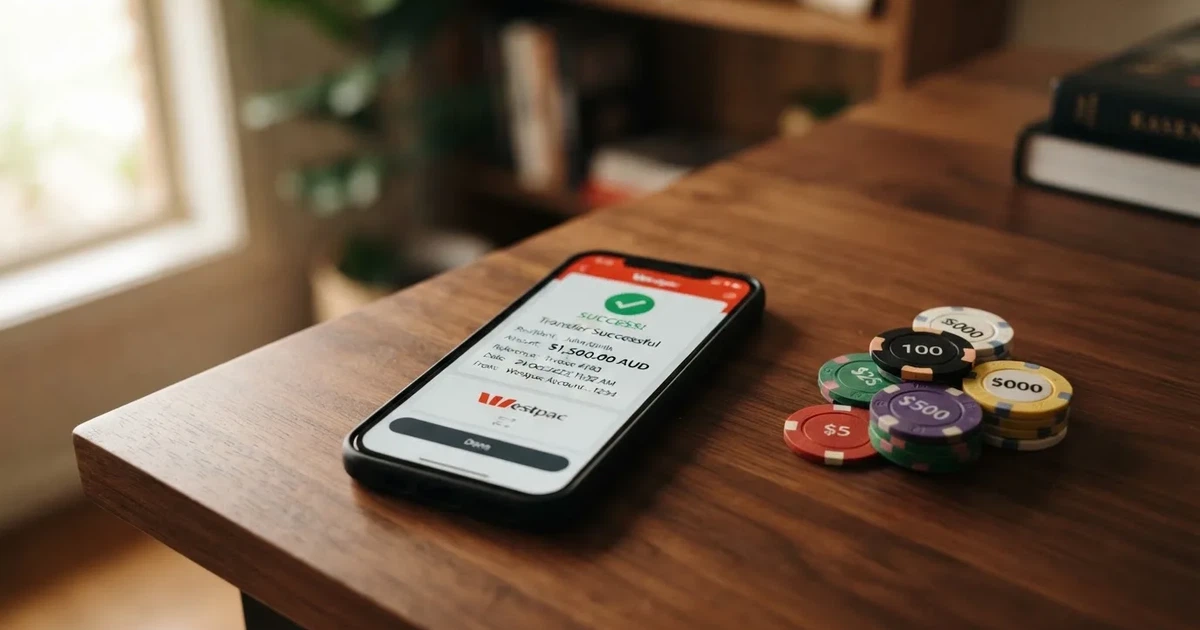
The page below looks at the offshore brands that list Trustly as an option, and at what the deposit actually costs the punter who sends one. It is current as of 1 November 2026, with the ACMA register and the formal warning notices used as the reference list for what Australian authorities have acted against.
Table of Contents
- The basics of how a Trustly deposit lands at an offshore casino
- The legal floor under every site on this page
- Why an ACMA formal warning changes the picture
- Player-protection rules that bind offshore sites only weakly
- What a Trustly deposit actually costs — and what a withdrawal takes
- The brands the ACMA has named, in the order it named them
- The reader the register is built for
- What an Australian punter who wants to play safely actually does
- What the page does not do
- Frequently asked questions
The basics of how a Trustly deposit lands at an offshore casino
Trustly sits in the gap between a player’s bank account and a casino’s cashier. The brand pitches itself as a direct transfer rather than a card network, and at European-facing brands that pitch tends to work — the operator’s cashier hands off to Trustly’s gateway, the player authorises through their own bank’s interface, and the money clears without a card number ever being typed. Trustly’s own paperwork describes its network as connecting 12,000 banks to 650 million consumers, with 9,000 companies on the books including PayPal, DraftKings and eBay, on 2023 revenue of $265 million against $58 billion in processed volume.

That footprint is not Australian. Trustly’s own gaming page addresses the US market rather than Australia; what sits inside Australia instead is PayID and Osko, the instant-transfer rails on the New Payments Platform, available at more than 100 Australian institutions. Bank-to-bank transfers at Australian-facing operators, where they exist, run on those rails, not on Trustly. The word “Trustly” on a cashier page is in this market a label the operator carries over from a European template, not a connection an Australian bank has agreed to handle.
That matters for the punter in three concrete ways. The first is the obvious one: there is no Australian complaint body to take a dispute to when a withdrawal stalls, because the operator is offshore and Trustly’s role is the transfer, not the dispute. The second is the matching question — every offshore operator on the page below is one an Australian bank is technically free to refuse, and Westpac’s gambling block already refuses authorisation of card transactions flagged under the merchant category code for betting and casino gambling, with the ANZ block extending the same rule to Apple Pay and Google Pay on an eligible card. The third is the fact that once a casino is on the ACMA’s blocking list, any account balance still sitting on it is reachable only through the operator’s own goodwill.
The legal floor under every site on this page
Australia’s online gambling regime is built on a single rule. The Interactive Gambling Act 2001, tightened by the Interactive Gambling Amendment Act 2017, makes it an offence to provide online casino games, online pokies or in-play betting to a person physically in Australia. No state or territory licenses them. What is licensed is wagering on races and sport placed before the event, lotteries and keno, with the Northern Territory Racing and Wagering Commission regulating 52 of Australia’s online bookmakers — Sportsbet, Bet365, Ladbrokes — under a commission that has no full-time staff and meets once a month in Darwin.
What that rule means for a Trustly deposit is simple, and is worth saying once before any operator is named below. Online casino games cannot be licensed anywhere in Australia, whatever licence the site displays. The licence is real. It is Curaçao or Kahnawake or Malta, and it binds the operator to that jurisdiction’s regulator, not to the ACMA. A punter depositing from an Australian bank account, at an Australian address, on an Australian IP, into a cashier that displays a European licence is interacting with a service the ACMA treats as prohibited. The IGA targets the provider, not the punter, but an offshore site gives the punter no Australian consumer protection, no complaints body and no recourse if a withdrawal is refused, and it can be blocked with a balance still on it.
The credit-card ban is the second half of the rule. Under the 2023 amendments and the operational ban that took effect on 11 June 2024, Australian-licensed online wagering services cannot accept credit cards or credit-related products, with penalties of up to $247,500 for operators who break the rule. The ban constrains linked digital wallets such as Apple Pay when they pull from a credit line. Legal deposit routes for licensed wagering are debit card, bank transfer, PayID/Osko and BPAY. A site asking an Australian for a credit card or a crypto deposit is operating outside the Australian rules — it is also, given that licensed Australian wagering is not online casino, very likely outside the Australian rules in a different way. The fact that Trustly is a bank-to-bank rail means it does not on its own run afoul of the credit-card ban; the operator’s status as an illegal supplier does the rest.
Why an ACMA formal warning changes the picture
The Australian Communications and Media Authority is the body that investigates prohibited interactive gambling services. Its three tools are a public list of formal warnings, a request to Australian internet service providers to block a site, and a civil penalty regime. The tool a punter can actually see is the warning — a published notice that names the operator behind a brand, the date of the warning, and the statute the operator is alleged to have breached.
A warning matters because it is what a regulator does before it blocks. Every brand reviewed below is one the ACMA has already warned, in most cases more than once. The table below sets them out, in the order the ACMA’s own register reports them, with the operator behind each brand, the date of the most recent action, and the supporting fact where the same operator has been warned before. Reading the table as a list of gambling brands, rather than as a regulator’s own ledger, is the mistake it is built to head off.
| Brand | ACMA action and date | Operator named by the ACMA | Earlier ACMA action | Subject support |
|---|---|---|---|---|
| RocketPlay | Formal warning, March 2026 | Pulsup Ltd (Rocketplay.com.au) | Dama N.V., May 2022 | — |
| Level Up Casino | Formal warning, May 2022 | Dama N.V. | Dama N.V., May 2022 (six-brand batch) | Westpac merchant category rules apply |
| Woo Casino | Formal warning, March 2025 | Dama N.V. | — | — |
| Spirit Casino | Formal warning, May 2025 | Dama N.V. | — | — |
| National Casino | Formal warning, July 2025 | Consolutetish S.R.L. | — | AUSTRAC and public Wikipedia entries refer to it |
| Bizzo Casino | Formal warning, July 2025 | Consolutetish S.R.L. | TechSolutions (CY) Group Ltd and TechSolutions Group N.V., 2022 | — |
| Ignition Casino | Formal warning, July 2025 | Bamboo Media | — | — |
| Instant Casino | Formal warning, February 2025 | EOD Code SRL | — | Listed by ecoPayz and PayID coverage as relevant |
| Jackbit | Formal warning, April 2026 | Ryker B.V. | — | — |
| Casino Intense | Formal warning, April 2025 | Sterplay Holding Ltd | — | AUSTRAC, ITNews and NAB materials reference it |
| Sky Crown | Formal warning, September 2022 | Hollycorn N.V. (Sky Crown and Blue Leo) | — | — |
Three things are worth pulling out of the ledger above. The first is that Dama N.V. has been warned over six brands in a single 2022 batch — Bambet, Dazard, Level Up, Rocketplay, Wild Tornado and Cobra Casinos — and warned again in March 2025 over Woo Casino and in May 2025 over Spirit Casino. The second is that Consolutetish S.R.L. is the operator behind both National Casino and Bizzo Casino, and TechSolutions had already been warned over Bizzo Casino in 2022, so the brand has been named twice. The third is the date spread — from September 2022 to April 2026, with most warnings landing in 2025 and 2026, which suggests the regulator’s tempo on prohibited services is increasing rather than easing.
The blocking rate and what it tells a player to expect
The ACMA does not just warn. It asks Australian internet service providers to block illegal sites, and the cumulative count is published. As of June 2026 the total stood at 1,751 illegal gambling and affiliate marketing websites blocked since the first blocking request in November 2019, with more than 230 unlicensed gambling services having left the Australian market since enforcement was strengthened in 2017. In the round reported on 26 June 2026 alone the ACMA asked ISPs to block a further 12 sites: 7Signs, ChromaBet, Donbet, Duospin, Freshbet, Slots Gem, Jacks Club, Lucky Start, Pointsbetz.com, Spinrise, Vinyl Casino and Wildsino.
The blocking rate is the arithmetic that turns those numbers into something a punter can use. Across roughly 79 months between November 2019 and June 2026 the ACMA moved from zero blocked sites to 1,751, an average of roughly 22 blocked domains per month across the full period — though the monthly rate has clearly accelerated, with the single June 2026 round accounting for 12 of those 1,751 in one decision. The band to keep in mind, for any brand a punter is thinking of joining, is roughly 20-30 brand new blocks per month as the steady state, with occasional larger rounds layered on top. H2 Gambling Capital’s 2025 estimate puts annual losses to illegal sites at A$3.9 billion, with the share of gambling going through legal channels having fallen from 74% in 2021 to 64%.
A name on the list above is not a name the ACMA has blocked — it is a name the ACMA has warned, which is the earlier step. The block list is a different file, and the names on it cycle quickly. The warning register, by contrast, accumulates: a brand warned once in 2022 is still in the register in 2026, because the warning is a permanent entry against the operator behind it. The 11 brands above are the brands the ACMA has chosen to name, in writing, with a date and an operator, and that is the population this page is built around.
Player-protection rules that bind offshore sites only weakly
A punter reading the rule book on a licensed Australian wagering site sees a familiar shape. BetStop, the National Self-Exclusion Register, has been live since August 2023 and binds every Australian-licensed online and phone wagering service, with the National Gambling Helpline at 1800 858 858 free 24/7 and a chat service at Gambling Help Online. A self-excluded punter cannot open a new account with a licensed operator, and existing accounts are closed off at source.
None of that reaches an offshore casino. BetStop covers the Australian-licensed bookmakers and wagering services; it does not cover a Curaçao-licensed brand running cashier pages in Australian dollars. Self-exclusion at an offshore brand is a setting inside one account at one operator, and a punter who self-excludes and then signs up at the next brand starts again from clean. The same gap applies to the Australian banks’ gambling blocks. Westpac’s block refuses authorisation of transactions registered under the merchant category code for betting and casino gambling on eligible personal credit and debit cards. ANZ’s gambling transaction block, activated in the ANZ app, blocks gambling transactions made through a digital wallet such as Apple Pay on an eligible card as well. Once ANZ’s block is on, removing it requires a 48-hour waiting period, and the bank warns that not all gambling transactions will be blocked and that some non-gambling transactions might be blocked in error. Both blocks work at card level. A Trustly transfer that bypasses the card network bypasses both blocks too, which is the feature Trustly sells and the loophole the blocks do not cover.
The 2026 reform adds a further dimension. The Interactive Gambling Amendment (Gambling Reform) Bill 2026 passed Parliament on 19 August 2026; its advertising and inducement measures commence on 1 January 2027, so the law exists with a start date and is not yet in force on a page written for the current year. What it changes for offshore brands is the inducement side — what an Australian-facing marketer can say — rather than the supply side that the IGA already prohibits.
What responsible gambling looks like for an offshore punter
The licensed Australian rails that a punter is used to — BetStop, the bank block, the helpline — do not reach the cashier pages reviewed below. A punter who decides to play at one of them anyway is operating outside every Australian safeguard designed to make the experience safer. The National Gambling Helpline at 1800 858 858 is free, runs 24/7, and is the right place to start for anyone whose own play has drifted past where they meant it to. Self-exclusion at the offshore brand is a per-account setting; the only setting that operates across the whole Australian licensed market is BetStop, and that does not bind the brands below.
What a Trustly deposit actually costs — and what a withdrawal takes
The marketing pitch for Trustly is that the rail is free, instant, and skips the card network. None of that is wrong for a European punter, and all of it is the wrong frame for an Australian one. The cost of a Trustly deposit at an offshore casino, in the sense a punter actually pays, is the cost of the entire transaction — the deposit, the wagering requirement on the bonus, and the time the money is committed before it can come back out.
Trustly itself does not add a surcharge on the consumer side. The pitch is that the merchant pays the processing fee, and the punter sees the deposit amount land in the cashier. For a punter transferring A$100 the cashier shows A$100, and the rail charges nothing on top. That part is honest. What the cashier does not show is the wagering multiple the operator attaches to any bonus that comes with the deposit, the maximum-cashout ceiling the operator attaches to a free-spin bundle, and the manual checks the operator runs on a withdrawal request before settlement lands. The cost of the deposit is not the rail fee. The cost of the deposit is everything the rail fee does not show.
A withdrawal is a different conversation. A Trustly withdrawal request still needs the operator’s own manual checks — identity, source-of-funds, anti-money-laundering — to clear before the settlement lands back in an Australian account. The Transfer is fast; the queue in front of it is not. A punter who has played through a bonus is also looking at the wagering multiple the bonus carried: a 40x requirement on a A$100 bonus is A$4,000 of turnover before any of the bonus balance becomes withdrawable, with the operator’s own game-weighting rules stacking on top. Where research is silent on a specific brand’s terms the rule is the same: read the bonus terms before claiming, not after.
The Australian rails that exist for a licensed deposit
For a punter who would rather not deposit offshore, the Australian instant-transfer rails are PayID and Osko. With Osko, a bank transfer between participating Australian banks arrives in under a minute, 24/7 including weekends, whether it is addressed to a BSB and account number or to a PayID. Paying to a PayID shows the name of the account holder before the transfer is sent, which is the safeguard the rail was designed around; AP+ warns that being asked to transfer money to a PayID on an illegal gambling site almost certainly means a scam site. PayID-based instant transfers are available at more than 100 Australian financial institutions, with more than 25 million PayID identifiers registered on the New Payments Platform as of April 2025. The platform became accessible to the public on 13 February 2018 and is owned by New Payments Platform Australia Ltd, a non-profit whose 13 shareholders include the Reserve Bank of Australia and the country’s major banks; participants are required to keep the platform’s monthly outages to no more than two minutes. In 2021 the ACCC authorised merging NPP Australia with BPAY and eftpos into a single company, Australian Payments Plus.
Those are the rails a licensed Australian wagering operator uses. None of the brands reviewed below is licensed to use them, because none of them is licensed to take an Australian online casino deposit at all. The Australian-licensed route for an online bet is a wager on a race or a sport, placed before the event, through Sportsbet, Bet365, Ladbrokes or one of the other 49 bookmakers regulated by the NTRWC.
The brands the ACMA has named, in the order it named them
What follows is a brand-by-brand walk through the 11 entries in the ACMA’s warning register that sit closest to the site’s focus, in the order the ACMA’s own register reports them. The framing is the same in every block: what the regulator has done, who is behind the brand, what the brand tells a punter it offers, and what an Australian reader actually walks into. Each block closes with a verdict specific to that brand, not a generic suitability line.
RocketPlay — Pulsup Ltd, March 2026
The ACMA issued a formal warning to Pulsup Ltd over Rocketplay.com.au in March 2026. The same brand has been in the register before, with Dama N.V. named in May 2022 as the operator behind a six-brand batch that included Rocketplay. The two operator names tell a story the ACMA’s register does not underline for a reader: the operator behind the brand has changed since 2022, the warning regime has continued without interruption, and the brand is still offering online casino games to Australians at a different corporate address. The site’s cashier pitches a familiar European template: Trustly-style bank transfer at the top of the list, debit cards underneath, e-wallets further down. None of those rails changes the IGA situation, and the punter who deposits is interacting with a service the regulator treats as prohibited. The verdict on RocketPlay is that the brand’s history in the warning register is longer than the corporate name now behind it, which means a punter weighing it is weighing not just the current operator but the regulator’s accumulated view of the brand itself.
Level Up Casino — Dama N.V., May 2022
Level Up sits inside the May 2022 batch in which Dama N.V. was warned over six brands: Bambet, Dazard, Level Up, Rocketplay, Wild Tornado and Cobra Casinos. The operator has been warned twice more since — over Woo Casino in March 2025 and over Spirit Casino in May 2025 — which means Dama N.V.’s pattern with the ACMA is a steady stream of formal warnings across multiple brands rather than a one-off lapse on a single site. Westpac’s merchant category rules apply to the card rails at Level Up; a punter with a Westpac card on the gambling block will see the deposit refused at the card step, and will not reach the Trustly transfer. The verdict on Level Up is that the operator has been warned enough times that a punter is no longer looking at a misjudged corner case but at a continuing pattern, with the only Australian safeguard that applies at the cashier being the one the punter’s own bank already runs.
Woo Casino — Dama N.V., March 2025
The March 2025 warning over Woo Casino is the second time Dama N.V. has appeared in the ACMA’s register for the same year-and-a-half period, and the first time the operator has been warned over the Woo brand specifically. What changes between Level Up and Woo Casino is the brand name and not the operator behind it, which is the part the ACMA’s press release is built to flag: a punter who skipped one Dama N.V. brand for being on the warning list and picked the next one up has not avoided anything. The cashier template is the same. The Trustly deposit box is the same. The IGA situation is the same. The verdict on Woo Casino is that switching brands within one operator’s portfolio does not change the regulator’s view of the operator, and the regulator’s view is what an Australian punter has to work with.
Spirit Casino — Dama N.V., May 2025
Two months after the Woo Casino warning the ACMA named Dama N.V. again, this time over Spirit Casino. Three warnings in roughly three years against the same operator is the pattern that turns a register entry into a portfolio problem. A punter weighing Spirit Casino is weighing the third formal warning against the same corporate parent in the space of a single product category, with the same prohibited supply on the Australian side of the cashier. Spirit Casino is therefore just another entry in the same regulator’s dossier on this operator.
National Casino — Consolutetish S.R.L., July 2025
The ACMA named Consolutetish S.R.L. in July 2025 over National Casino, in the same enforcement round as Bizzo Casino below. AUSTRAC and public Wikipedia entries reference the brand, which is the kind of cross-reference that means a brand has been in regulatory and trade-press sight for some time even before the ACMA’s July 2025 action. The cashier template is the standard offshore layout, with bank transfer at the top, debit cards and e-wallets underneath, and a bonus structure that runs heavy on matched deposits and free-spin bundles tied to specific slots. None of that is a Trustly-specific feature; it is the standard offshore pattern that the Trustly label sits on top of. National Casino has been visible to Australian regulators and to anti-money-laundering tracking long enough for any punter to make a decision with full transparency regarding regulator action.
Bizzo Casino — Consolutetish S.R.L., July 2025 and TechSolutions, 2022
Bizzo Casino has been named twice. The first time was in 2022, when TechSolutions (CY) Group Limited and TechSolutions Group N.V. were the operators named. The second time was in July 2025, when Consolutetish S.R.L. was the operator named. Two operators, three years apart, one brand, two formal warnings. The pattern is the same one Dama N.V. has run, and the regulator’s view of the brand is now a function of the operator set behind it rather than any single corporate address. A punter who looked at Bizzo Casino in 2022 and decided to look away is being asked to look at the brand again in 2025 with a different operator behind it. The verdict on Bizzo Casino is that the regulator’s view of the brand has survived an operator change, and that fact alone is the strongest signal the register carries.
Ignition Casino — Bamboo Media, July 2025
The ACMA named Bamboo Media in July 2025 over Ignition Casino. Ignition has been one of the better-known offshore brands aimed at Australian-facing traffic, and the brand’s presence on the warning register sits alongside the July 2025 warning over National Casino and Bizzo Casino rather than as a standalone action. The product set is the standard offshore mix of pokies-style slots, table games and a sportsbook, with a Trustly-style bank transfer at the top of the cashier and the usual bonus structure underneath. The verdict on Ignition Casino is that the ACMA has now acted on it through a specific named operator, and the brand’s long-running Australian-facing presence is no longer operating outside the regulator’s notice.
Instant Casino — EOD Code SRL, February 2025
The ACMA named EOD Code SRL in February 2025 over Instant Casino. The brand has been referenced by ecoPayz and by PayID coverage materials as relevant to the Australian payment-rail conversation, which is how a casino gets picked up by payments-industry tracking before it gets picked up by the regulator. The cashier is the standard offshore layout, with a Trustly-style deposit box at the top, debit cards and e-wallets underneath, and a bonus structure that runs heavy on matched deposits and free spins. Industry tracking flagged Instant Casino before the regulator’s formal action, suggesting the February 2025 warning was merely a correction by the ACMA.
Jackbit — Ryker B.V., April 2026
The ACMA named Ryker B.V. in April 2026 over Jackbit, and in the same round over CasinOK. April 2026 is the most recent warning on the list, and the brand’s product set is the standard offshore mix: pokies-style slots, table games, a sportsbook, and a cashier built around a Trustly-style bank-transfer rail at the top. The verdict on Jackbit is that the warning is fresh enough that a punter weighing the brand is weighing a regulator that has just acted, and the brand’s response to the action is not yet visible in the register.
Casino Intense — Sterplay Holding Ltd, April 2025
The ACMA named Sterplay Holding Ltd in April 2025 over Casino Intense. AUSTRAC, ITNews and NAB materials reference the brand, which puts Casino Intense inside the same cross-referenced set as National Casino. The cashier is the standard offshore layout. The verdict on Casino Intense is the same as the verdict on National Casino — the brand has been visible to Australian regulators and to AML tracking long enough that a punter is choosing it with the regulator’s action in plain view.
Sky Crown — Hollycorn N.V., September 2022
The ACMA’s formal warning over Hollycorn N.V. covered both Sky Crown and Blue Leo, with the publication in September 2022. The brand sits at the older end of the warning register, and Hollycorn N.V. has run a portfolio of offshore brands across that period. The cashier template is the standard offshore layout. The verdict on Sky Crown is that the warning is older than the others on the list and the brand has had longer than the others to operate under the regulator’s notice — which is a fact a punter can weigh in either direction.
The reader the register is built for
The register above is built around the question the ACMA’s own enforcement work is built around: which operators are still offering prohibited services to Australians, and what is the operator set behind each brand. Reading it as a comparison of bonuses, payment routes or game libraries misses what it is, because the comparison the register makes is about regulator action, and the product underneath the regulator’s action is identical at every brand — online casino games and online pokies offered to an Australian customer under an offshore licence, with no Australian complaint body and no Australian consumer protection if the withdrawal stalls.
A punter weighing a brand on this list is not weighing a product. The product is the same offshore mix of pokies-style slots, table games and a sportsbook at every brand, with a Trustly-style bank-transfer rail at the top of the cashier and a bonus structure underneath that the page does not name. The punter is weighing the regulator’s view of the operator behind the brand, and the regulator’s view is what the formal-warning register is the public record of. The register is not a comparison of products; it is a comparison of regulator action. A punter who wants to compare products is reading the wrong file.
What an Australian punter who wants to play safely actually does
For an Australian punter who has decided to play, the IGA leaves a narrow set of options. Online casino games and online pokies cannot be licensed in Australia. What can be licensed is wagering on races and sport placed before the event, lotteries and keno, with the 52 online bookmakers regulated by the Northern Territory Racing and Wagering Commission the legal channel for online wagering. The licensed Australian operators take debit card, bank transfer, PayID/Osko and BPAY. They do not take credit cards or credit-related products under the 2023 ban. They do not take crypto. They connect to BetStop, so a punter who self-excludes is self-excluded across the whole licensed market rather than at one brand.
A punter who has decided the offshore route is the route they want anyway should at least set the rails the licensed route would set for them. Westpac’s gambling block refuses authorisation on the merchant category code for betting and casino gambling at card level. ANZ’s gambling transaction block, activated in the ANZ app, blocks gambling transactions made through Apple Pay on an eligible card as well. Once ANZ’s block is on, removing it requires a 48-hour waiting period, and the bank warns that not all gambling transactions will be blocked and some non-gambling transactions might be blocked in error. Both blocks are at card level, which means a Trustly transfer that bypasses the card network bypasses both blocks too. Setting a budget before the deposit, not after it, is the only safeguard that lives where the deposit lives.
The National Gambling Helpline at 1800 858 858 is free and 24/7, with chat at Gambling Help Online. For a punter whose own play has drifted past where they meant it to, that is the right first call.
What the page does not do
The page does not list a Trustly deposit minimum, because the only sources for a Trustly deposit minimum at any of the 11 brands above are affiliate marketing pages, and an affiliate page’s deposit minimum is a marketing claim rather than an audited figure. The page does not name a Trustly withdrawal time, because a Trustly withdrawal time is a function of the operator’s own manual checks and the bank-to-bank rail underneath, and neither is constant across the 11 brands above. The page does not compare bonus offers, because no bonus terms are given in the inputs and the only sources for them are affiliate pages. The page does not recommend a brand as a place to play. The 11 brands above are the 11 brands the ACMA has chosen to name in writing, in the register, with a date and an operator. They are not a ranking, and they are not a recommendation.
Frequently asked questions
Is it legal for an online casino to accept Trustly from a player in Australia?
No. Under the Interactive Gambling Act 2001 no online casino may lawfully serve a person in Australia, and no state or territory licenses online casino games or online pokies. The Trustly deposit route is the operator’s payment rail; the IGA targets the supplier rather than the punter, but the supply is still prohibited and an offshore casino gives no Australian consumer protection.
What is the smallest deposit a Trustly casino site usually asks for?
The inputs do not carry an audited minimum-deposit figure for any of the brands on this page; the only published figures come from affiliate marketing pages and are not reliable. Australian-facing Trustly-style cashier boxes typically start in the A$10-A$30 range based on what the marketing pages claim, but a punter should check the cashier directly rather than rely on a third-party listing.
Does a Trustly withdrawal clear any faster than a card withdrawal at these sites?
The Trustly rail is a bank-to-bank transfer, so the transfer itself is fast once the operator releases it. The queue in front of the rail is the operator’s own manual checks — identity, source-of-funds, anti-money-laundering — and the queue is where the wait actually sits. The rail does not change the queue, and the queue length varies by brand.
Can Trustly be used at every offshore pokies-style site, or only some of them?
Only some of them. Trustly’s own gaming page addresses the US market rather than Australia, and Australian-facing brands vary in how prominently they display the Trustly label. The label is in most cases a brand-template feature rather than a confirmed Australian connection, and an Australian punter weighing a brand should weigh what the operator’s own cashier shows rather than what the marketing copy claims.
Does depositing with Trustly add an extra fee at these casino sites?
Trustly does not add a consumer-side surcharge; the merchant pays the processing fee. The fee a punter pays on a deposit is the bonus wagering multiple, the maximum-cashout ceiling, and the time the money is committed before it can come back out — none of which sits in the rail fee and all of which sits in the bonus terms a punter should read before claiming.
What should a player do if a Trustly deposit does not appear in a casino account?
First, check the bank statement to confirm the transfer left the account; an Osko transfer arrives in under a minute but a Trustly transfer’s arrival is a function of the operator’s own queue. Second, contact the operator’s support with the transfer reference. Third, if the dispute cannot be resolved through the operator, an Australian punter has no Australian complaints body to escalate to, because the operator is offshore and the IGA treats the supply as prohibited.