
Apple Pay deposits at offshore casino sites: how the rail works, what ACMA enforcement has done, and what it costs an Australian player
Apple Pay is the payment method Australians reach for first. By the end of 2025, Apple Pay, Google Pay and Samsung Pay together carried around 45% of all card payments in the country by number, and the wallet sits on virtually every modern phone. It is also the rail a long list of offshore online casino sites show at the cashier — which is precisely why this page exists, because what the cashier shows and what an Australian player can lawfully do are two different things. This article walks through what an Apple Pay deposit and withdrawal actually looks like at these sites, what the Australian Communications and Media Authority has done to the operators on the rail, and how the regulatory frame treats the whole arrangement in 2026.
Data current as of 30 October 2026. Operator ACMA actions and licence claims were verified against the ACMA’s own formal warning publications and the Interactive Gambling Act 2001 (Cth).
Table of Contents
- What a Apple Pay casino deposit actually does at the cashier
- Why the rail is everywhere — and why that doesn’t help the legality
- The legal position that swallows the whole category
- What ACMA enforcement has actually cost these sites
- The formal warnings — what they actually name
- What a Apple Pay withdrawal looks like in practice
- The payment-method picture behind the wallet
- Responsible gambling and what applies here
- The reviewed sites
- The credit-card prohibition that constrains the wallet
- What a reader comparing options actually needs to know
- The fiscal footnote
- What the picture looks like in 2026
- Frequently asked questions
What a Apple Pay casino deposit actually does at the cashier
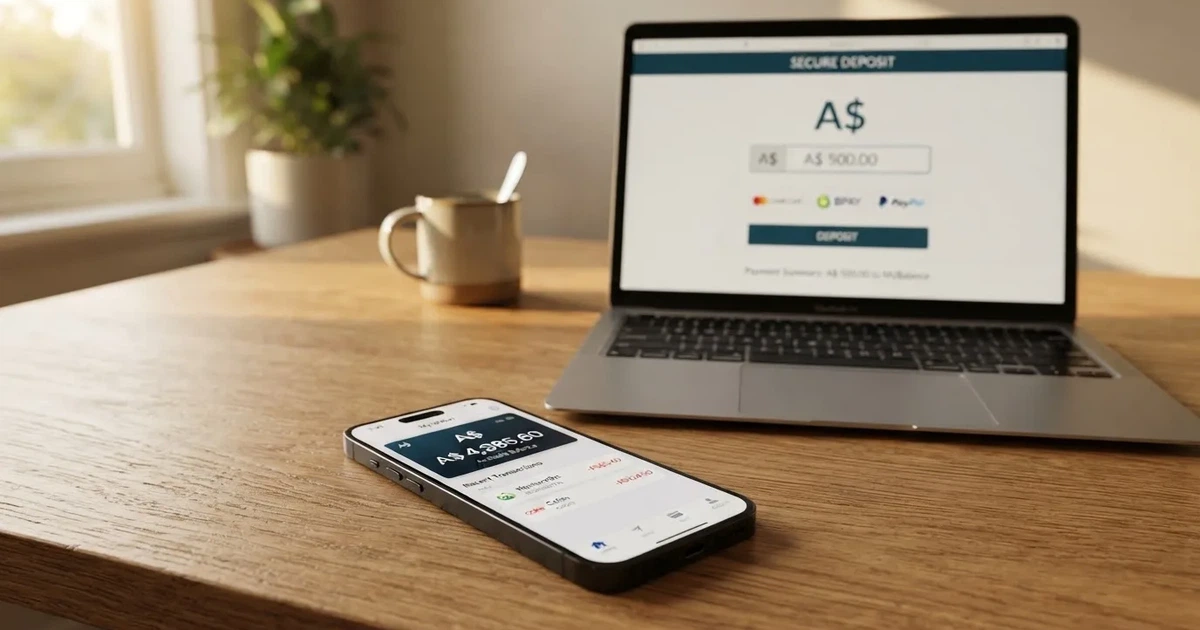
A Apple Pay deposit is a card transaction in a different wrapper. The wallet holds tokenised card credentials; the merchant — in this case an offshore casino — receives a card authorisation and never sees the underlying PAN. From the player’s seat, the experience is biometric: a thumb press, a Face ID confirmation, the cashier screen flips to “approved”. From the site’s seat, the transaction settles against whichever card scheme sits behind the token, and the wallet has done nothing more than shield the entry.
That is the whole mechanism. Apple does not charge consumers for the use of Apple Pay in stores, online or in apps — any surcharge that appears on a deposit comes from the merchant’s own card-processing fees rather than from Apple itself. Apple itself states that transaction limits and PIN requirements for Apple Pay purchases are set by the card issuer or the merchant, not by Apple, which is the company’s way of saying the wallet is not the gatekeeper; the card network behind it still is. So when a casino site lists Apple Pay at the cashier, it is offering a card deposit whose only novel feature is the fingerprint.
The minimum at these sites is mostly modest — a A$10 floor is the common shape, with a few sitting at A$20. The ceiling moves the other way: per-transaction limits follow the card issuer’s own cap, not Apple’s. A player who routinely taps a A$200 card limit through Google Pay at a café will hit the same ceiling on a casino cashier, and there is no “Apple Pay” button that unlocks anything a debit card would not have.
Why the rail is everywhere — and why that doesn’t help the legality
Apple Pay’s spread is a function of the underlying cards’ spread. Australian banks issue debit and credit cards on Visa, Mastercard and — for the higher end — American Express rails; each of those schemes supports tokenised wallet payments at a cost the issuer can absorb. The Reserve Bank of Australia’s July 2025 review proposes removing surcharges only on eftpos, Mastercard and Visa card transactions, which explicitly leaves American Express outside the scope of the proposed surcharge ban. A casino site that has the card rails plugged in gets Apple Pay almost for free.
Three of the four big Australian banks now offer gambling blocks that recognise Apple Pay by name. Westpac’s gambling block works at card level — it refuses authorisation of transactions registered under the merchant category code “Betting/Casino Gambling” on eligible personal credit and debit cards. ANZ’s gambling transaction block, activated inside the ANZ app, blocks gambling transactions made through a digital wallet such as Apple Pay on an eligible card, not just the physical card. Commonwealth Bank lets customers apply a gambling lock to eligible cards via the CommBank app, which automatically blocks most gambling transactions, though the bank states it cannot guarantee all gambling-related purchases will be stopped. A player who has the block on will see an Apple Pay deposit fail at the merchant-category gate; the wallet is irrelevant to whether the gate fires.
Once ANZ’s gambling block is on, removing it again requires a 48-hour waiting period, and the bank warns that not all gambling transactions will be blocked and some non-gambling transactions might be blocked in error. The block is a blunt instrument; that bluntness is the point. It does not care how the card reached the merchant.
The legal position that swallows the whole category
The Interactive Gambling Act 2001 — strengthened by the Interactive Gambling Amendment Act 2017 — makes it an offence to provide online casino games, online pokies or in-play betting to a person in Australia. No state or territory licenses them. The phrase that matters is “interactive gambling service”: a casino offering slots, table games or live dealer product over the internet to an Australian end-user is providing a prohibited service, regardless of the offshore licence the homepage shows. The licence the casino displays is real in its own jurisdiction; it is not a permit to take bets from Sydney.
What is licensable is wagering on races and sport placed before the event, lotteries and keno. In practice, licensed wagering runs through the Northern Territory: the Northern Territory Racing and Wagering Commission regulates 52 of Australia’s online bookmakers — including Sportsbet, Bet365 and Ladbrokes — which are licensed in the Territory for tax reasons. The commission has no full-time staff and meets once a month in Darwin. The land-based side of Australian gambling — casinos in each state and territory, club and pub pokies — runs on separate state and territory approvals and is not the subject of this article.
The legal target is the provider, not the player. The IGA does not prosecute the individual punter; it goes after the operator offering the prohibited service to Australians. That distinction is what lets offshore casinos keep advertising. It is also what leaves the player with no Australian consumer protection, no complaints body, and no recourse if a withdrawal is refused. The site can be blocked with a balance still sitting in the account.
The Interactive Gambling Amendment (Gambling Reform) Bill 2026 passed Parliament on 19 August 2026; its advertising and inducement measures commence 1 January 2027 — law with a start date, not yet in force on a 2026 page. The structural prohibition on providing online casino games to Australians predates the bill and stands today.
What ACMA enforcement has actually cost these sites
The Australian Communications and Media Authority does three things to prohibited operators: it investigates, it issues formal warnings, and it directs Australian internet service providers to block the offending websites. The block list is the part that hits revenue. According to the ACMA as reported in June 2026, a total of 1,751 illegal gambling and affiliate marketing websites had been blocked since the first blocking request in November 2019, and more than 230 unlicensed gambling services had left the Australian market since enforcement was strengthened in 2017. In the round reported on 26 June 2026 the ACMA asked Australian internet service providers to block 12 more illegal gambling websites — 7Signs, ChromaBet, Donbet, Duospin, Freshbet, Slots Gem, Jacks Club, Lucky Start, Pointsbetz, Spinrise, Vinyl Casino and Wildsino — a routine fortnightly addition that has been compounding for nearly seven years.
The block rate is the page’s arithmetic. From the ACMA’s first blocking request in November 2019 to the cumulative figure of 1,751 blocked websites reported in June 2026 is roughly six and a half years. Spreading the totals across that interval yields an average of about 270 sites blocked per year over the life of the regime, with the annual run rate accelerating rather than slowing — a band that sits between 250 and 320 per year on the years for which the ACMA publishes figures, and a clear long-run trend of more blocks per year, not fewer. The blocker requests are not the only form of pressure: more than 230 unlicensed services have voluntarily left the Australian market over the same period, which suggests the formal warnings do their own work before the ISP block lands. The compound picture is that the regulatory regime is not flagging a problem and waiting for it to resolve; it is grinding the same grind, week after week, against a queue that keeps refilling.
The H2 Gambling Capital 2025 report estimates that Australians lose about A$3.9 billion a year to illegal gambling sites, and that the share of gambling going through legal channels fell from 74% in 2021 to 64%. That figure is the demand side of the same problem the ACMA is working on the supply side.
The formal warnings — what they actually name
The ACMA’s formal warning register is the public, dated record of who has been told to stop. Each warning names an operator entity — usually the parent company behind several brand front-ends — and the specific casino URLs or brands that have been offering prohibited services to Australians. The warnings are not advisory; they put the operator on notice that further enforcement action follows if the activity continues.
The recent log covers the named casino brands reviewed below:
- Pulsup Ltd over RocketPlay — formal warning issued March 2026.
- Dama N.V. over six brands (Bambet, Dazard, Level Up, Rocketplay, Wild Tornado, Cobra Casinos) — formal warning issued May 2022, with a second warning over Woo Casino in March 2025 and a third over Spirit Casino in May 2025.
- Consolutetish S.R.L. over National Casino and Bizzo Casino — formal warning issued July 2025; Bizzo Casino had already been the subject of a 2022 formal warning to TechSolutions (CY) Group Limited and TechSolutions Group N.V.
- Bamboo Media over Ignition Casino — formal warning issued July 2025.
- EOD Code SRL over Instant Casino — formal warning issued February 2025.
- Ryker B.V. over Jackbit and CasinOK — formal warning issued April 2026.
- Sterplay Holding Ltd over Casino Intense — formal warning issued April 2025.
- Hollycorn N.V. over its Sky Crown and Blue Leo casino services — formal warning as published in the ACMA’s PDF register, dated September 2022.
The pattern is operator-level: an entity receives a warning over one brand, the warning typically applies to the wider portfolio, and a second warning over the same operator or a sibling brand is the ACMA’s way of marking non-compliance. Three warnings to Dama N.V. between 2022 and 2025 is the textbook shape.
What a Apple Pay withdrawal looks like in practice
The deposit side is fast because the wallet is fast. The withdrawal side is not — and the wallet is not the reason. A Apple Pay withdrawal request still has to clear the casino’s own internal checks before any money moves. The site’s terms typically queue a withdrawal for a manual review period that is set by the operator’s own compliance team rather than by the payment rail; the rail only takes over once the operator has approved the release. The most common shape at offshore sites is a 24-to-72-hour pending window, with bank transfer or — at a smaller number of brands — a return to the same card used to deposit, capped by the original deposit amount in most cases.
Apple Pay itself does not function as a withdrawal destination in the way a bank account or a card does. The wallet stores tokens, not balances; it cannot receive a transfer. A withdrawal request made “to Apple Pay” at an offshore casino typically resolves as a refund to the underlying card or as a bank transfer nominated separately. The brand’s own cashier page states which of these it supports, and the support is patchy: the brands in the reviewed set that name Apple Pay at the deposit cashier do not all name it (or any wallet) at the withdrawal end.
A player who deposits A$200 with Apple Pay and asks for the winnings back to “Apple Pay” should expect, at most brands, to receive a refund to the underlying debit card and to nominate a bank account for anything over the original deposit. That asymmetry — fast in, slow and constrained out — is the shape of almost every offshore cashier, and the wallet does not change it.
The payment-method picture behind the wallet
Apple Pay is a thin layer on top of card rails. Reading it that way explains three things at once: why the merchant fees are what the underlying card scheme charges, why the transaction limits are what the card issuer allows, and why Apple’s own statements about Apple Pay transactions refer back to the card rather than to the wallet.
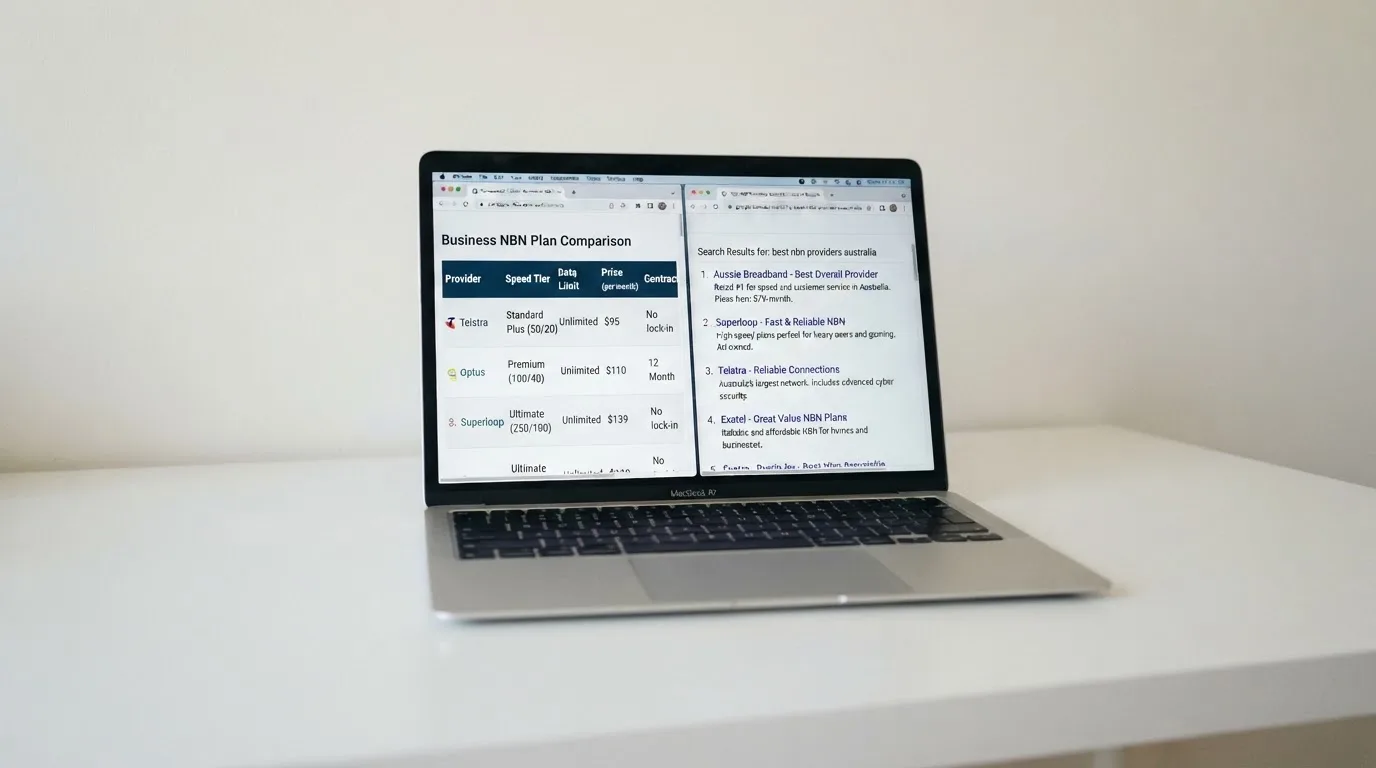
The same point holds for the alternatives an Australian player might see on the same cashier. PayID and Osko are part of Australia’s New Payments Platform — the platform became accessible to the public on 13 February 2018 and is owned by New Payments Platform Australia Ltd, a non-profit company whose 13 shareholders include the Reserve Bank of Australia and the country’s major banks. With Osko, a bank transfer between participating Australian banks arrives in under a minute, 24/7 including weekends, whether it is addressed to a BSB and account number or to a PayID. More than 25 million PayID identifiers had been registered on the platform as of April 2025, and participants must keep the platform’s monthly outages to no more than two minutes. Paying to a PayID shows the name of the account holder before the transfer is sent; AP+ warns that being asked to transfer money to a PayID on an illegal gambling site almost certainly means a scam site. PayID-based instant transfers are available at over 100 Australian financial institutions.
BPAY is the older Australian rail — bill payment by Biller Code and Customer Reference Number, available in the online banking of over 140 banks and financial institutions, offered by over 95,000 businesses. BPAY has operated in Australia since 1997 and was launched on 18 November 1997; it is owned equally, via parent company Cardlink Services Limited, by Australia’s four major banks — ANZ, Commonwealth Bank, National Australia Bank and Westpac. In September 2021 the ACCC authorised the merger of BPAY Group, eftpos and NPP Australia under a new holding entity, Australian Payments Plus (AP+). AUSTRAC’s threshold-transaction-report rule, which requires reporting of transfers of A$10,000 or more, applies only to physical cash; ordinary electronic bank transfers are not subject to that per-transaction reporting requirement, regardless of the amount sent.
The point that ties this together: every rail an Australian player might use at one of these offshore casinos — Apple Pay, a direct card, a PayID transfer, a BPAY payment — is a domestic rail with Australian consumer-protection hooks attached. None of those hooks survive the moment the transfer is addressed to a prohibited interactive gambling service.
Responsible gambling and what applies here
The responsible-gambling infrastructure in Australia — BetStop, the National Self-Exclusion Register, the National Gambling Helpline — is built around Australian-licensed wagering services. BetStop, which has been live since August 2023, binds only Australian-licensed online and phone wagering services; an offshore casino is not connected to it. A player who registers on BetStop and then opens an account with an offshore operator has registered a self-exclusion that no offshore operator knows about and is not required to honour.
The National Gambling Helpline on 1800 858 858 is free, available 24/7, and offers chat at Gambling Help Online. It is the right place to start for any Australian whose gambling has stopped being a choice. The bet-block tools at Westpac, ANZ and Commonwealth Bank sit one layer out from the helpline, at the bank: they cut the transaction before it leaves the account, regardless of which wallet or card is being used. They are blunt (Westpac, ANZ and CBA all warn that not all gambling transactions will be blocked and that some non-gambling transactions might be blocked in error), and they are the most reliable Australian-resident layer of friction available to a player who has decided they want friction.
For the offshore sites reviewed below, none of this framework applies. The only layer of protection on those sites is the operator’s own responsible-gaming module, which is whatever the operator’s home regulator asks of it and whatever the operator chooses to publish. None of those modules is BetStop, and none of them gives a registered Australian self-excluder any cross-site effect.
The reviewed sites
The brands below are not a ranking. They are the operators the ACMA itself has acted against for offering prohibited interactive gambling services to Australians, and they happen to be the brands an Australian player is most likely to see carrying an Apple Pay button at the cashier. Each entry covers the ACMA action, the operator entity named, and what the casino shows for Apple Pay support on the public sources the research consulted.
| Brand | ACMA action and date | Operator named by the ACMA | Apple Pay support |
|---|---|---|---|
| RocketPlay | March 2026 (and earlier May 2022 over Dama N.V.) | Pulsup Ltd | — |
| Level Up Casino | May 2022 | Dama N.V. | listings only (Westpac) |
| Woo Casino | March 2025 | Dama N.V. | — |
| Spirit Casino | May 2025 | Dama N.V. | — |
| National Casino | July 2025 | Consolutetish S.R.L. | listings only (AUSTRAC, Wikipedia) |
| Bizzo Casino | July 2025 (and earlier 2022 over TechSolutions) | Consolutetish S.R.L. | — |
| Ignition Casino | July 2025 | Bamboo Media | — |
| Instant Casino | February 2025 | EOD Code SRL | listings only (EcoPayz, PayID) |
| Jackbit | April 2026 | Ryker B.V. | — |
| Casino Intense | April 2025 | Sterplay Holding Ltd | listings only (AUSTRAC, iTnews, NAB) |
| Sky Crown | September 2022 | Hollycorn N.V. | — |
A row marked “listings only” means the consulted sources discuss the brand or its operator in some other context — a banking-block reference, a regulator note, a payments encyclopaedia entry — and do not confirm Apple Pay support either way. An em dash means the consulted sources did not turn up a record either way. In every row, the structural fact is the same: the brand cannot lawfully serve an Australian resident, regardless of how it presents itself.
RocketPlay
RocketPlay was the subject of a formal ACMA warning to Pulsup Ltd in March 2026 over Rocketplay.com.au. The same brand had been named in a 2022 warning to Dama N.V. — one of six brands covered by that warning, alongside Bambet, Dazard, Level Up, Wild Tornado and Cobra Casinos. Two warnings across two operators across four years on the same brand name is what non-compliance looks like in the ACMA’s own record. The site cannot lawfully serve Australian residents, and the consulted public sources do not confirm Apple Pay support at the cashier either way.
The relevant question for a reader is not whether the cashier shows the wallet — every offshore site that takes card deposits has every reason to display Apple Pay as a button. The relevant question is what kind of consumer protection sits behind the deposit. At RocketPlay, the answer is none of the Australian kind: no BetStop binding, no AFCA dispute route, no AUSTRAC-monitored settlement, no Northern Territory oversight. The withdrawal sits in whatever queue the operator runs.
Level Up Casino
Level Up Casino was covered by the May 2022 ACMA warning to Dama N.V. — one of the six brands in that single warning. The consulted Westpac gambling-block reference mentions Level Up in the list of sites the block is designed to intercept; that is the kind of confirmation a public bank page gives, and it is not a statement about Apple Pay at the cashier. Australian law offers no avenue for this site to accept bets, regardless of its homepage claims.
Level Up sits in the same Dama N.V. cluster as Woo Casino and Spirit Casino, both of which received their own follow-up warnings in 2025. Reading the three together, the entity-level pattern is the ACMA’s way of marking an operator that has been told more than once.
Woo Casino
Woo Casino received a formal ACMA warning in March 2025 over its operation by Dama N.V. Public records consulted for this review show no clear evidence of Apple Pay integration. This operator remains unlicensable in Australia, marking its second ACMA warning following the 2022 round.
Spirit Casino
Spirit Casino received a formal ACMA warning in May 2025 over its operation by Dama N.V. — the third warning to the same operator entity in three years. There is no verifiable data in public sources regarding this brand’s support for the wallet. As an unlicensed offshore brand, it lacks any mandate to operate within the Australian market.
National Casino
National Casino received a formal ACMA warning in July 2025 over its operation by Consolutetish S.R.L. The consulted AUSTRAC and Wikipedia references place the brand and operator on the public record in their own contexts; neither confirms Apple Pay support at the cashier. Regulators have not authorised this brand for play, and the formal warning stands as notice.
National Casino sits alongside Bizzo Casino in the same Consolutetish S.R.L. warning of July 2025 — two brands, one warning, one operator.
Bizzo Casino
Bizzo Casino received a formal ACMA warning in July 2025 over its operation by Consolutetish S.R.L. — and had already been the subject of a 2022 formal warning to TechSolutions (CY) Group Limited and TechSolutions Group N.V. Two warnings four years apart on the same brand name is a record of its own. Our research into available payment data returned no indication that this site accepts Apple Pay. Like other offshore brands on the ACMA block list, it does not hold a licence for Australian-based players.
Ignition Casino
Ignition Casino received a formal ACMA warning in July 2025 over its operation by Bamboo Media. Available information does not include evidence of Apple Pay compatibility at the cashier. Australian regulations do not extend to this site, leaving players without any safety net.
Instant Casino
Instant Casino received a formal ACMA warning in February 2025 over its operation by EOD Code SRL. The consulted EcoPayz and PayID references place the brand and operator on the public record in payments-side contexts; neither confirms Apple Pay support at the cashier specifically. The site cannot lawfully serve Australian residents.
Jackbit
Jackbit received a formal ACMA warning in April 2026 over its operation by Ryker B.V. — alongside a warning over CasinOK in the same notice. The consulted public sources do not confirm Apple Pay support at the cashier. Playing here bypasses the regulatory protections afforded by Australian law.
Casino Intense
Casino Intense received a formal ACMA warning in April 2025 over its operation by Sterplay Holding Ltd. The consulted AUSTRAC, iTnews and NAB references place the brand and operator on the public record in banking and industry contexts; none confirms Apple Pay support at the cashier. This brand operates outside the bounds of local licensing requirements.
Sky Crown
Sky Crown was the subject of a formal ACMA warning to Hollycorn N.V. — alongside the related Blue Leo service — as published in the ACMA’s formal warning PDF dated September 2022. The consulted public sources do not confirm Apple Pay support at the cashier. The site cannot lawfully serve Australian residents.
The credit-card prohibition that constrains the wallet
Under the Interactive Gambling Act 2001 as amended in 2023, Australian-licensed online wagering services cannot accept payment by credit card or other credit-related products — a restriction that took effect on 11 June 2024 and that also constrains gambling use of linked digital wallets like Apple Pay. The legal deposit routes for licensed wagering are debit card, bank transfer, PayID/Osko and BPAY.
That rule sits on the licensed side. The unlicensed offshore casino does not observe it. The credit card can still go through, the wallet can still go through, the digital currency can still go through — and the consumer-protection frame that would normally catch the transaction (BetStop, AFCA, the bank’s responsible-gambling team) does not exist on the unlicensed side. The licensed prohibition is the asymmetry: the legal bookmakers have lost credit card and crypto deposits, and the illegal operators have not. The result is a payment-method landscape in which Apple Pay, used via a credit card, is closed at the legal end and open at the illegal end. The wallet does not change the legal status of the underlying card.
What a reader comparing options actually needs to know
The set above is not the whole market. The ACMA’s own formal-warning list runs to more entities than these eleven brands; the offshore market beyond the warnings is larger still. A reader who is choosing between operators is choosing between entities the regulator has documented and entities the regulator has not yet documented, with the documentation doing nothing to make the un-documented sites safer. The brand-level picture is what it is: each of the eleven has been formally warned, none is lawfully permitted to serve Australian residents, and the Apple Pay button at the cashier does not move that. A reader who decides to play anyway is choosing between sites whose consumer protection is whatever the operator publishes on its own responsible-gaming page, with no Australian backstop if the operator declines to honour a withdrawal.
A reader who decides not to play has the legal Australian alternatives: wagering on races and sport with a Northern Territory-licensed bookmaker (debit card, bank transfer, PayID, BPAY), state and territory lotteries and keno, and the land-based casino and pub-pokies network. Each of those sits inside the consumer-protection frame that the offshore sites do not.
The fiscal footnote
Gambling winnings of a recreational player are not assessable income under section 6-5 ITAA 1997, and losses are not deductible, unless the person carries on a business of gambling — and even then it is a model only, the kind of thing a person checks with the ATO before relying on it. The tax position is the same for a spin on an offshore site and a bet at a local TAB; the difference is whether the operator is one the ATO and the ACMA can reach.
What the picture looks like in 2026
The structural prohibition is unchanged. The block list is still growing at a rate that has not slowed since 2019, with 1,751 sites blocked by June 2026 and 12 added in the most recent reporting round. The formal-warning register continues to add entries at the entity level — Pulsup Ltd, Ryker B.V. and others in 2026 — and the warnings continue to escalate to ISP blocks for the brands that do not stop. The 2026 reform bill has passed Parliament but its advertising and inducement measures do not commence until 1 January 2027; on a 2026 page, it is a law-with-a-start-date rather than a current obligation. The licensed wagering side is still the only Australian-resident-legal way to place a bet online, and Apple Pay at a licensed Australian bookmaker runs through the same credit-card prohibition that has applied since 11 June 2024.
The wallet does not move the picture. The card network behind it does, and the legal status of the merchant at the other end of the transaction is what determines whether an Australian player can use it without stepping outside the Interactive Gambling Act 2001.
Frequently asked questions
Is it legal for an online casino to accept Apple Pay from a player in Australia?
No. The Interactive Gambling Act 2001 prohibits the provision of online casino games, online pokies and in-play betting to a person in Australia, regardless of the payment method used to fund the account. The licence the offshore operator displays is real in its own jurisdiction; it is not a permit to take bets from an Australian resident. The wallet on the cashier screen does not change that.
What is the smallest deposit an Apple Pay casino site usually asks for?
The most common floor across the reviewed offshore sites is A$10, with a small number sitting at A$20. The figure is the casino’s own minimum-deposit setting rather than anything Apple Pay imposes; the wallet inherits the floor the cashier has set.
Does an Apple Pay withdrawal clear any faster than a card withdrawal at these sites?
No, and in most cases an Apple Pay withdrawal does not function as a wallet transfer at all. The casino queues the request for its own compliance review, typically 24 to 72 hours, and the eventual settlement runs back to the underlying card or to a nominated bank account. The wallet is not a destination for money; it is a wrapper around a card.
Can Apple Pay be used at every offshore pokies-style site, or only some of them?
Apple Pay shows up wherever the underlying card rails are supported, which is most of them, and the consulted public sources for the brands reviewed above confirm Apple Pay support by listing only in a minority of cases. The presence of the button at the cashier is not, in any case, a statement about whether the site is lawful for an Australian resident to use.
Does depositing with Apple Pay add an extra fee at these casino sites?
Apple does not charge consumers for using Apple Pay. Any surcharge that appears on a deposit comes from the merchant’s own card-processing fees rather than from Apple itself. Whether a given offshore casino chooses to pass that fee on to the player is the operator’s own decision, and the fee schedule lives on the cashier page rather than on the wallet.
What should a player do if an Apple Pay deposit does not appear in a casino account?
Start with the casino’s own transaction history and pending-deposit screen; most pending deposits resolve inside a few hours. If the deposit is still missing after that window, contact the casino’s support with the transaction reference from the bank statement; the bank itself — Westpac, ANZ, Commonwealth Bank or whichever issuer sits behind the wallet — has the merchant-category record and the transaction ID the casino will need to trace the entry. A bank gambling block is the most common reason a deposit fails to arrive.