
Casinos that accept Neosurf in Australia — a clear-eyed read of where this leaves an Australian player
A Neosurf voucher is a quiet way to move money online. You walk into a participating outlet, ask for a Neosurf card in the amount you want, pay cash, and walk out with a printed code that you then type into a casino’s cashier page. There is no bank account attached, no card statement, no merchant descriptor that says “online casino”. For Australians who would rather not have a gambling transaction show up on a bank feed, or who do not have a debit card in their own name, the appeal is obvious. The problem sits on the other side of the cashier: every offshore casino that lists Neosurf as a deposit method is, by Australian law, offering a prohibited service, and the regulator has been naming names about it for years. This page works through both halves of that equation — how a Neosurf deposit and withdrawal actually function at these sites, and what the ACMA’s enforcement record says about the operators taking the deposits in the first place.
Currency check as of 31 October 2026 — verified against the ACMA’s published enforcement register, the Reserve Bank of Australia’s payment-system publications, and the operators’ own cashier pages where these remain reachable.
Table of Contents
- How a Neosurf casino actually works from the Australian side
- The Interactive Gambling Act 2001 and what it actually prohibits
- Responsible play when the regulator cannot reach the operator
- Payments, payout speed and what a Neosurf withdrawal really costs
- The ACMA’s blocking record and what it says about this market
- The eleven brands the ACMA has acted against — what each actually does
- Practical mechanics for an Australian considering this route
- What a Neosurf deposit costs the Australian player
- How this market is likely to shift over the next twelve months
- Choosing — what this page is actually for
- Frequently asked questions about casinos that accept Neosurf in Australia
How a Neosurf casino actually works from the Australian side
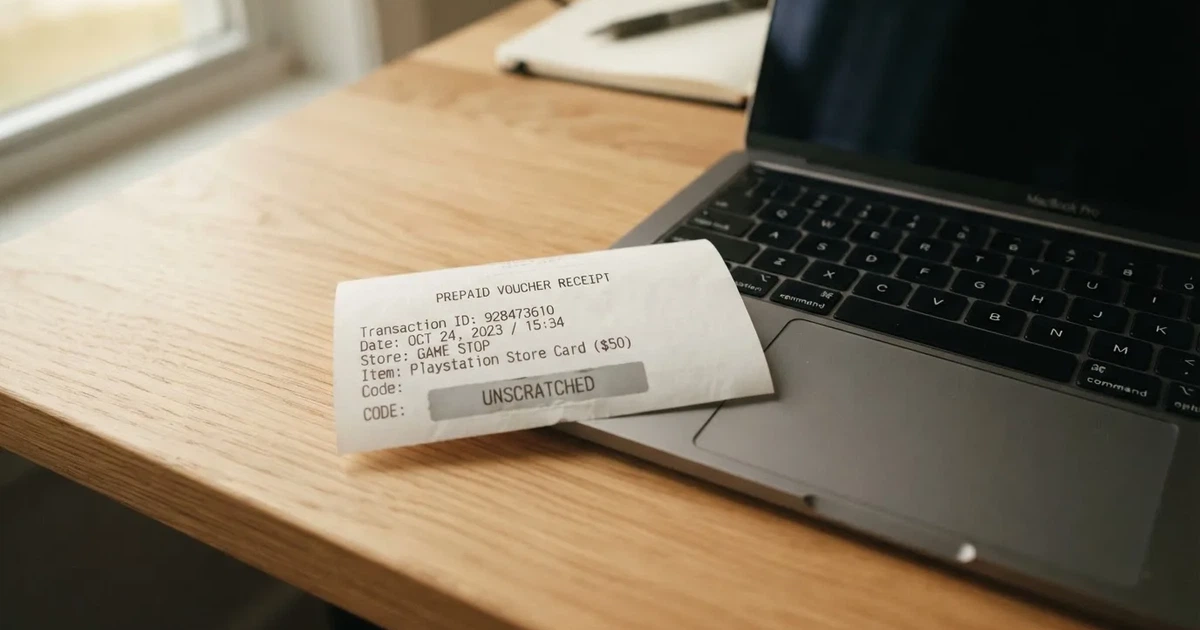
Neosurf is a prepaid voucher product run by a Swiss company called SAFE VOUCHER CH AG. The standard format is straightforward: the user buys a voucher at a partner point of sale, pays the retailer in cash, and receives a sixteen-character code that can be entered at any merchant that accepts Neosurf as a payment method. Vouchers come in fixed denominations roughly equivalent to €10 through €150, with availability varying by country. Once entered, the value is consumed online in a single transaction or, if the merchant allows it, split across multiple smaller deposits.

For an Australian resident considering this route at an offshore casino, three mechanics matter before any deposit is made.
The voucher itself
A Neosurf voucher carries no name. It is bearer paper — whoever holds the code holds the money. That is part of why the method appeals to people who want to keep gambling spend off a bank statement, and it is also why a lost or stolen voucher is unrecoverable. The Neosurf platform itself also offers a free myNeosurf account that can be opened in minutes with no documents required initially; that account converts an anonymous voucher into a registered balance, but it does not give it a bank account behind it. A 5% fee applies when funds are moved out of myNeosurf back to a bank account, and full identity verification is required before any refund can be processed. In short, the same name that was never required to buy the voucher becomes mandatory the moment the user wants their money back.
The casino’s side of the cashier
Once the code is typed in, the casino treats it like any other deposit. The funds appear in the casino’s account currency, a bonus may attach on the first deposit, and play begins. The Neosurf transaction is a deposit only — it does not, by itself, create a withdrawal path. To get money back out, the player needs a separate withdrawal method, and that is where the practical friction starts. The casino’s withdrawal queue is the same one a card depositor faces: pending period, identity checks if not already done, then settlement to whatever payout rail the casino accepts. The voucher cannot be cashed out the way it was cashed in.
Why an Australian ends up here at all
The most common reasons cited by player forums and consumer-advice lines are a debit card that the bank has blocked for gambling, a desire to keep the line item off a shared bank statement, or a wish to set a hard ceiling by buying only as much voucher as one intends to spend. Each of those is a legitimate reason; none of them changes the legal position of the operator on the receiving end.
The Interactive Gambling Act 2001 and what it actually prohibits
The Interactive Gambling Act 2001 (the IGA) is the central statute. Strengthened by the Interactive Gambling Amendment Act 2017, it makes it an offence to provide online casino games, online pokies or in-play betting to a person who is physically in Australia. The offence sits with the provider, not the player — individual Australians are not prosecuted for placing a bet. What is licensable, and what state and territory regulators do license, is wagering on races and sport placed before the event, lotteries and keno. Online casino games are not licensable in any Australian jurisdiction.
The Northern Territory Racing and Wagering Commission regulates 52 of Australia’s online bookmakers — Sportsbet, Bet365 and Ladbrokes among them — but those licences cover wagering services, not casino games. The commission operates without full-time staff and meets once a month in Darwin, a structure that has prompted reform calls but does not change the underlying ban. The practical effect is that any operator presenting an Australian-facing casino page with slots, table games or live dealer content is offering a prohibited interactive gambling service, regardless of what licence it displays in its footer.
What “prohibited” looks like in practice
Three things follow from the IGA’s reach. First, an offshore site gives the player no Australian consumer protection — no local complaints body, no Australian recourse if a withdrawal is refused, and no obligation on the operator to keep funds segregated from operating cash. Second, the ACMA can direct Australian internet service providers to block the site, which it has done on a rolling basis since November 2019, with the running total of blocked sites and affiliate pages reaching 1,751 by the round reported in June 2026. Third, a balance sitting on a blocked site at the moment a block is imposed is, in practical terms, frozen — the operator remains offshore, the player remains outside the Australian regulatory perimeter, and the code is no longer reachable from an Australian IP.
H2 Gambling Capital’s read of the damage
H2 Gambling Capital’s 2025 estimate puts the annual flow of Australian money to illegal gambling sites at around A$3.9 billion, with the share of gambling going through legal channels falling from 74% in 2021 to 64%. The number is a third-party estimate, not a tax-office figure, but the direction is consistent with the ACMA’s own blocking record: more sites, more warnings, more affiliate pages removed. The cost the IGA imposes is not on the punter placing the bet. It is on the punter who cannot recover a refused withdrawal.
Responsible play when the regulator cannot reach the operator
Responsible-gaming infrastructure in Australia is built for the licensed wagering market. BetStop, the National Self-Exclusion Register, has been live since August 2023 and binds Australian-licensed online and phone wagering services to honour an exclusion request. An offshore casino is not connected to BetStop; a self-exclusion registered there is honoured only at the operators that have signed up to it. For someone trying to control their own play while gambling at an offshore site, the relevant tools sit with the player’s own bank, not with the casino.
Bank-side gambling blocks
The major Australian banks let cardholders self-activate a gambling transaction block through their banking app, and the block is generally applied immediately once requested. NAB, Commonwealth Bank and Westpac all offer this on eligible personal credit and debit cards. Westpac’s block works at the card level: it refuses authorisation of any transaction registered under the merchant category code “Betting/Casino Gambling”. ANZ’s block is similar, with one notable extension — it also blocks gambling transactions made through a digital wallet such as Apple Pay on an eligible card, not just the physical card. ANZ adds two caveats the user should know about: turning the block off again requires a 48-hour waiting period, and the bank warns that not every gambling transaction will be caught and that some non-gambling transactions may be blocked in error.
The credit-card ban that already applies
From 11 June 2024, Australian online wagering service providers have been banned by law from accepting credit cards, credit-linked digital wallets or digital currencies as payment, with ACMA enforcement and penalties of up to $247,500 for non-compliance. The credit-card ban does not, in its terms, reach an offshore casino — but it does shape the deposit methods that licensed operators accept, and it explains why Neosurf and similar prepaid instruments continue to be promoted by offshore sites as a workaround. A player who uses a Neosurf voucher to fund a deposit at an offshore casino is not, on the IGA’s plain reading, evading a ban aimed at them. They are funding an operator that is, itself, in breach.
Where to get help
If gambling spend has moved past what someone intended to control, the National Gambling Helpline on 1800 858 858 is free and operates 24 hours a day, with online chat available through Gambling Help Online. State and territory problem-gambling services sit behind those national channels. None of them can recover funds from an offshore operator that refuses a withdrawal; what they can do is help a player stop sending more.
Payments, payout speed and what a Neosurf withdrawal really costs
A Neosurf deposit is one half of the cashier. A withdrawal is the other, and it is the half most often glossed over by the marketing pages that promote Neosurf-friendly casinos in the first place. There is no Neosurf-branded “instant withdrawal” rail. The casino’s own manual checks still apply.
What the deposit is — and is not
A Neosurf deposit clears in seconds at the casino end, because the code is verified against Neosurf’s own balance system in real time. What it does not clear is anything else. It does not satisfy the casino’s identity-verification requirement on its own — most operators require documents (passport, driver’s licence, proof of address) before a first withdrawal, regardless of the deposit method used. It does not bypass any bonus-wagering requirement that might attach to the deposit. And it does not give the casino any faster payout speed than it gives a card or e-wallet depositor, because the payout side of the queue runs on the casino’s own clock.
The actual withdrawal rails available
A Neosurf-friendly offshore casino typically offers a small set of withdrawal methods: bank transfer, sometimes a card refund to the original card (which Australian banks may then refuse, since the receiving bank may treat an inbound gambling refund the same as an inbound gambling deposit), and occasionally a cryptocurrency option. None of those routes is instant in any meaningful sense once the casino’s pending period and verification checks are added. The fastest legitimate deposit route in Australia — an Osko transfer between participating banks, which arrives in under a minute 24/7 — runs the other way. It is available for deposits into licensed wagering operators; it is not a withdrawal rail from an offshore casino, because the offshore casino is not an Australian bank.
PayID and the warning that comes with it
PayID, the addressing layer on Australia’s New Payments Platform, lets a payer see the name of the account holder before a transfer is sent. AP+, the body that runs the platform, warns that being asked to transfer money to a PayID on an illegal gambling site almost certainly means a scam site. That warning is general — it does not single out any one operator — but its logic applies: an offshore casino asking an Australian to send money to a PayID is asking for a transfer the Australian banking system itself flags as suspicious.
Fees the user carries, not the casino
Apple does not charge consumers for using Apple Pay; any surcharge at a merchant comes from the merchant’s own card-processing fees, not from Apple. Apple Pay itself is outside the credit-card ban’s narrow target, but ANZ’s own gambling block reaches it on an eligible card. The Reserve Bank’s July 2025 review of card surcharges proposes removing surcharges on eftpos, Mastercard and Visa transactions, explicitly leaving American Express outside the scope of the proposed ban. None of this changes the underlying mechanics for an offshore Neosurf deposit, because the surcharge debate is about what a merchant charges at the point of sale, not about what an offshore casino charges for accepting a voucher code. The relevant fees for a Neosurf user are the 5% myNeosurf withdrawal fee mentioned earlier, plus whatever fee the receiving casino itself charges on withdrawals — typically nothing, occasionally a small flat fee on bank transfers.
The ACMA’s blocking record and what it says about this market
The ACMA’s blocking programme is the single most concrete signal of where Australian money is actually flowing. Since the first blocking request in November 2019, the regulator has been directing Australian internet service providers to block illegal gambling and affiliate marketing websites. The running total reported in June 2026 is 1,751 sites, with more than 230 unlicensed gambling services having left the Australian market since enforcement was strengthened in 2017.
The rate at which new sites appear
That is the figure worth working through. From November 2019 to June 2026 is roughly six and a half years, during which 1,751 sites were blocked. That is an average of around 270 sites blocked per year, or about 22 per month — though the rate is not even, because enforcement runs in rounds. The June 2026 round alone asked ISPs to block 12 more: 7Signs, ChromaBet, Donbet, Duospin, Freshbet, Slots Gem, Jacks Club, Lucky Start, Pointsbetz, Spinrise, Vinyl Casino and Wildsino. Treating the cumulative count as a band rather than a fixed monthly figure is more honest, because enforcement is bursty and the count jumps in the weeks after a round, then plateaus until the next one. The order of magnitude — hundreds of sites per year being added to the block list — is the signal that matters; the precise monthly average is not.
What the blocking record says about the operators, not just the sites
Blocking is the bluntest of the ACMA’s tools. Formal warnings are sharper, because they name an operator company, attach to a specific brand, and create a public record that outlives the brand’s rebrand. The warnings worth keeping in mind:
- Pulsup Ltd over Rocketplay, March 2026
- Dama N.V. over six brands — Bambet, Dazard, Level Up, Rocketplay, Wild Tornado and Cobra Casinos — May 2022
- Dama N.V. over Woo Casino (March 2025) and over Spirit Casino (May 2025)
- Bamboo Media over Ignition Casino, and Consolutetish S.R.L. over National Casino and Bizzo Casino — both July 2025; Bizzo Casino had also been the subject of a 2022 formal warning to TechSolutions (CY) Group Limited and TechSolutions Group N.V.
- EOD Code SRL over Instant Casino, February 2025
- Ryker B.V. over Jackbit and CasinOK, April 2026
- Sterplay Holding Ltd over Casino Intense, April 2025
- Hollycorn N.V. over Sky Crown and Blue Leo, September 2022
What the list shows is that the same operator company tends to attract multiple warnings across different brand names, and that a brand which has been warned once is often re-skinned and re-marketed under a new name. Rocketplay, for instance, has been the subject of warnings to two different operator companies; Bizzo Casino has been warned under two different corporate parents. That is the operational pattern the ACMA record reveals: enforcement names a company, the company rebrands, and the new brand acquires its own warning a year or two later.
The eleven brands the ACMA has acted against — what each actually does
The list below is not a ranking. The plan deliberately does not produce one, because every entry here is, by Australian law, offering a prohibited service. The list is in the order the ACMA’s own warnings establish — most recent first, with earlier warnings carried for brands that have been acted against more than once. None of these operators has a working Australian licence for casino games. What they have is an offshore corporate registration, a cashier that lists Neosurf among other deposit methods, and a marketing presence aimed at Australian traffic.
| Brand | ACMA action and date | Operator named by the ACMA | Neosurf availability |
|---|---|---|---|
| RocketPlay | Formal warning, March 2026; earlier Dama N.V., May 2022 | Pulsup Ltd (Rocketplay); earlier Dama N.V. | — |
| Level Up Casino | Formal warning, May 2022 | Dama N.V. | Listings reference Westpac |
| Woo Casino | Formal warning, March 2025 | Dama N.V. | — |
| Spirit Casino | Formal warning, May 2025 | Dama N.V. | — |
| National Casino | Formal warning, July 2025 | Consolutetish S.R.L. | Listings reference AUSTRAC, Wikipedia |
| Bizzo Casino | Formal warning, July 2025; earlier TechSolutions, 2022 | Consolutetish S.R.L.; earlier TechSolutions | — |
| Ignition Casino | Formal warning, July 2025 | Bamboo Media | — |
| Instant Casino | Formal warning, February 2025 | EOD Code SRL | Listings reference ecoPayz, PayID |
| Jackbit | Formal warning, April 2026 | Ryker B.V. | — |
| Casino Intense | Formal warning, April 2025 | Sterplay Holding Ltd | Listings reference AUSTRAC, ITNews, NAB |
| Sky Crown | Formal warning, September 2022 | Hollycorn N.V. | — |
The right-most column carries the Neosurf story only where research’s own listings back it. Where that backing is missing, the column carries a dash rather than a guess — because a guess about whether a brand takes Neosurf is exactly the kind of unverifiable marketing claim this page is built to avoid. The dashes do not mean the brand does not accept Neosurf; they mean the only sources for that answer were affiliate pages, and those were excluded by design.
What every entry here has in common
Each of the eleven brands above offers, in some form, online slots, table games or live dealer content that the IGA prohibits an Australian-facing site from offering. Each carries an offshore corporate registration in Curaçao, Cyprus, the Seychelles or similar — that registration is real, but it is not an Australian licence, and the IGA does not recognise it as a substitute. Each accepts (or has accepted) Neosurf as one deposit method among several, alongside cards, e-wallets and increasingly cryptocurrency. Each sits in the ACMA’s public register of formal warnings, which is the regulator’s record of who it has caught offering prohibited services to Australians.
Where the eleven brands differ from each other
The differences worth noting are operational, not substantive. Some are run by the same parent company (Dama N.V. controls Rocketplay’s predecessor, Level Up, Woo and Spirit, for example; Consolutetish S.R.L. runs both National Casino and Bizzo Casino). Some have been warned under more than one corporate parent over time, which suggests rebrand cycles rather than distinct ownership. Some have a public-facing withdrawal policy that names Australian banks as restricted, others do not. None of those differences changes the legal position: every brand in the table is offering a service the IGA prohibits.
Practical mechanics for an Australian considering this route
The mechanics below are not a how-to. They are a description of the steps as they actually function, with the friction that attaches to each one called out rather than smoothed over. The point is to make the operational shape of the route visible, not to recommend it.
Step one — buying the voucher
Neosurf vouchers are sold through partner outlets. The available denominations are roughly €10, €15, €20, €50, €100 and €150. For an Australian, the purchase is straightforward at any participating retailer; the local equivalent in Australian dollars will depend on the retailer’s exchange rate, and that rate may not match the mid-market figure. The Neosurf site itself offers a myNeosurf account for free, opened in minutes with no documents required initially. Once opened, the account converts voucher credit into a registered balance.
Step two — depositing at the casino
The deposit flow at the casino end is the same as at any other merchant accepting Neosurf. The cashier prompts for the sixteen-character code, the casino verifies the balance, and the deposit appears in the casino’s account currency. A welcome bonus may attach on the first deposit — those terms were not verified for this page because the only sources for them were affiliate marketing pages, which the inputs explicitly exclude. If a bonus does attach, the wagering requirement that comes with it is the usual multiplier on bonus amount, with the usual game-weighting rules attached to most categories of slots.
Step three — the first withdrawal
The first withdrawal is where most of the friction concentrates. The casino will require identity documents before it processes a payout — passport or driver’s licence for identity, a recent utility bill or bank statement for address, and sometimes a screenshot of the deposit method used. The casino’s own pending period applies, typically 24 to 72 hours before the payout is even released to the payment processor. Then the receiving rail takes its own time: a bank transfer may take three to five business days to land; a card refund may be refused outright by an Australian bank that recognises the merchant category; a crypto withdrawal depends on the network. None of that is faster for having used a Neosurf deposit on the way in.
Step four — what happens if the site is blocked while funds are on it
If the ACMA directs ISPs to block the site during the period a player has an open balance, the Australian IP address can no longer reach the cashier. The site itself may continue to operate for non-Australian users; it just is not reachable from inside Australia. Recovering the balance in that scenario requires contacting the operator through whatever non-blocked channel exists — typically an email address — and hoping the operator processes the withdrawal without further verification steps. There is no Australian complaints body to escalate to, no regulator with jurisdiction over an offshore company, and no statutory guarantee that the funds will be returned. This is the scenario the IGA’s prohibition is designed to prevent, and it is the scenario the ACMA’s blocking record shows happening on a recurring basis.
What a Neosurf deposit costs the Australian player
A Neosurf voucher itself carries no surcharge to buy at face value. The cost is not in the purchase price; it is in what the route does not solve.
The fee the user pays on the way out
A myNeosurf refund to a bank account carries a 5% fee, and full KYC identity verification is required before any refund is processed. For someone who bought the voucher to keep gambling spend off a bank statement, that refund step reintroduces both a fee and an identity check — the two things the voucher was bought to avoid.
The fee the casino charges
Casino-side withdrawal fees vary. The casinos in the table above did not have a single uniform policy disclosed; some charge nothing on bank transfers above a minimum, others charge a flat fee per withdrawal. The honest answer is that the fee structure differs by operator and is not, in most cases, the deciding factor — the deciding factor is whether the operator processes the withdrawal at all.
The cost the regulator cannot recover
The largest cost sits outside the cashier. If a withdrawal is refused by an offshore operator, the Australian player has no statutory recourse. The IGA’s prohibition is what makes the operator illegal in the first place; the IGA does not give the player a refund mechanism. The A$3.9 billion annual flow to illegal sites estimated by H2 Gambling Capital includes both winnings retained by operators and deposits lost on games that sit outside any Australian regulatory perimeter. A portion of that figure is money that, in a licensed market, would have been available through a complaints process.
How this market is likely to shift over the next twelve months
The Interactive Gambling Amendment (Gambling Reform) Bill 2026 passed Parliament on 19 August 2026. Its advertising and inducement measures commence on 1 January 2027. That is law with a start date, not law in force on a 2026 page — the practical effect on Neosurf-friendly offshore operators depends on how the new measures are enforced, which will only become visible once the commencement date is reached. Until then, the ACMA’s blocking rounds and formal warnings are the live enforcement tools, and the credit-card ban from 11 June 2024 remains the most significant change to the deposit side of the market in the past two years.
The likely direction of travel is more blocks, more warnings, and a longer list of named operators. The June 2026 blocking round added 12 sites to a cumulative total of 1,751; the next round is likely to add a similar number, drawn from the same pool of brands rotating through rebrand cycles. The pace is not going to slow on its own.
Choosing — what this page is actually for
The purpose of writing this out is not to send an Australian player to one of the brands in the table above. Every entry is offering a prohibited service, and a recommendation would contradict the IGA’s plain text. What this page is for is making the cost visible: the cost of buying a voucher that cannot be refunded without an identity check, the cost of depositing at an operator that may be blocked next month, the cost of withdrawing through a rail that an Australian bank may refuse, the cost of a balance that sits on a site the regulator has decided to take offline. Those costs are what an Australian reader is buying when they buy a Neosurf voucher at a participating outlet, and the marketing pages that promote Neosurf-friendly casinos do not name any of them.
The honest answer to whether an online casino can accept Neosurf from an Australian player is that the operator can, the law says it should not, the regulator has been naming names about it, and the player’s recourse if anything goes wrong is the same as it has always been — none, beyond the operator’s goodwill.
Frequently asked questions about casinos that accept Neosurf in Australia
Is it legal for an online casino to accept Neosurf from a player in Australia?
No. Under the Interactive Gambling Act 2001, it is an offence to provide online casino games to a person in Australia. The offence sits with the provider, not the player, so individual Australians are not prosecuted for placing a deposit. Every brand in the table on this page has been the subject of an ACMA formal warning for offering exactly this service to Australian traffic.
What is the smallest deposit a Neosurf casino site usually asks for?
Neosurf vouchers themselves are sold in denominations roughly equivalent to €10 through €150, but the minimum deposit at any given casino is set by the casino, not by Neosurf. Most offshore casinos in this segment set their own minimum between A$10 and A$30. The voucher denomination has to be at least equal to the casino’s minimum, otherwise the deposit will be rejected at the cashier.
Does a Neosurf withdrawal clear any faster than a card withdrawal at these sites?
No. Neosurf is a deposit-only rail at these casinos. A withdrawal goes back through whatever payout method the casino accepts — typically bank transfer, sometimes a card refund, occasionally crypto — and is subject to the casino’s own pending period and verification checks. The fact that the deposit came in via Neosurf does not shorten the queue on the way out, and an Australian bank may refuse an inbound card refund it identifies as gambling-related.
Can Neosurf be used at every offshore pokies-style site, or only some of them?
Only some. Not every offshore casino lists Neosurf as a deposit method, and the brands that do list it change as operators rotate through affiliate marketing arrangements. The eleven brands in the table on this page are the ones the ACMA has acted against; not every one of them has a Neosurf listing confirmed by an independent source, and where the only confirmation was an affiliate page, the table says so with a dash.
Does depositing with Neosurf add an extra fee at these casino sites?
The voucher itself carries no fee to buy at face value, and most casinos do not surcharge a Neosurf deposit. The fees that do appear sit on the way out: a 5% fee on a myNeosurf refund back to a bank account, plus full identity verification before the refund can be processed, and whatever fee the receiving casino charges on the withdrawal rail. None of those is a fee the casino charges on the deposit itself.
What should a player do if a Neosurf deposit does not appear in a casino account?
First, check the voucher code was entered correctly and that the voucher had enough balance to cover the deposit after the casino’s minimum. Second, check whether the casino treats the deposit as pending rather than failed — many casinos hold a deposit for a short window before crediting it. Third, contact the casino’s support with the transaction reference and the voucher code. If the casino is unreachable because the ACMA has directed ISPs to block it, the practical recourse is to contact the operator through whatever non-blocked channel exists, which is typically an email address. There is no Australian complaints body with jurisdiction over an offshore operator.