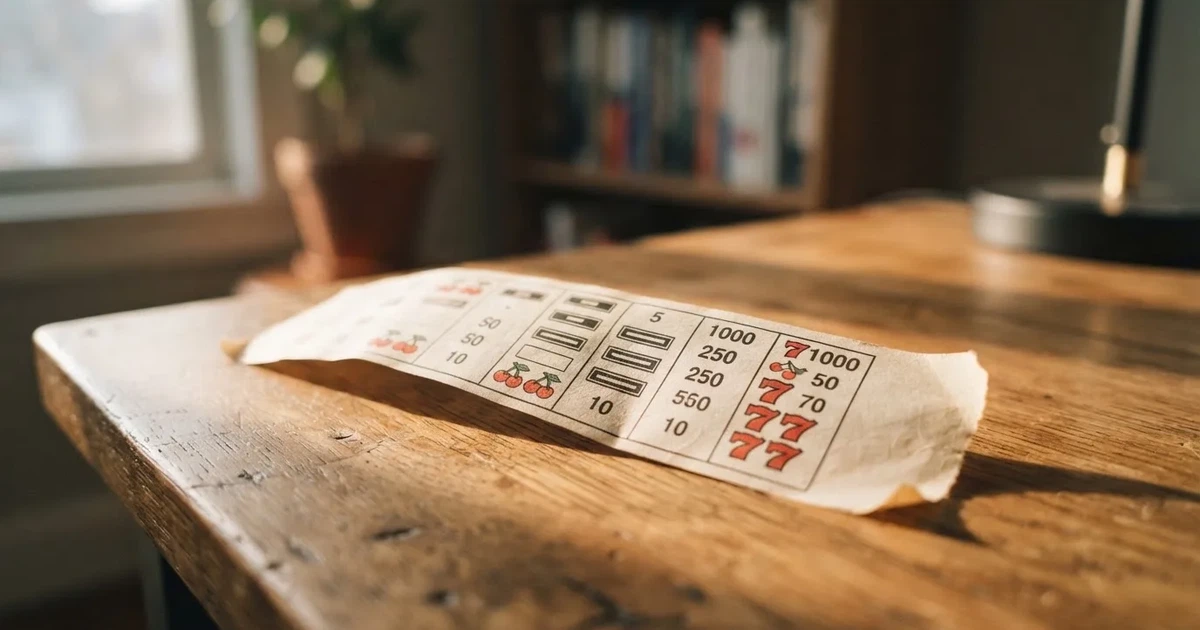
The five-reel slot and the offshore offer: what an Australian reader actually pays
 Available in US
24 September 2026 — current as of the ACMA’s blocking register, the formal-warning publications on the regulator’s site, and the operator records published by H2 Gambling Capital.
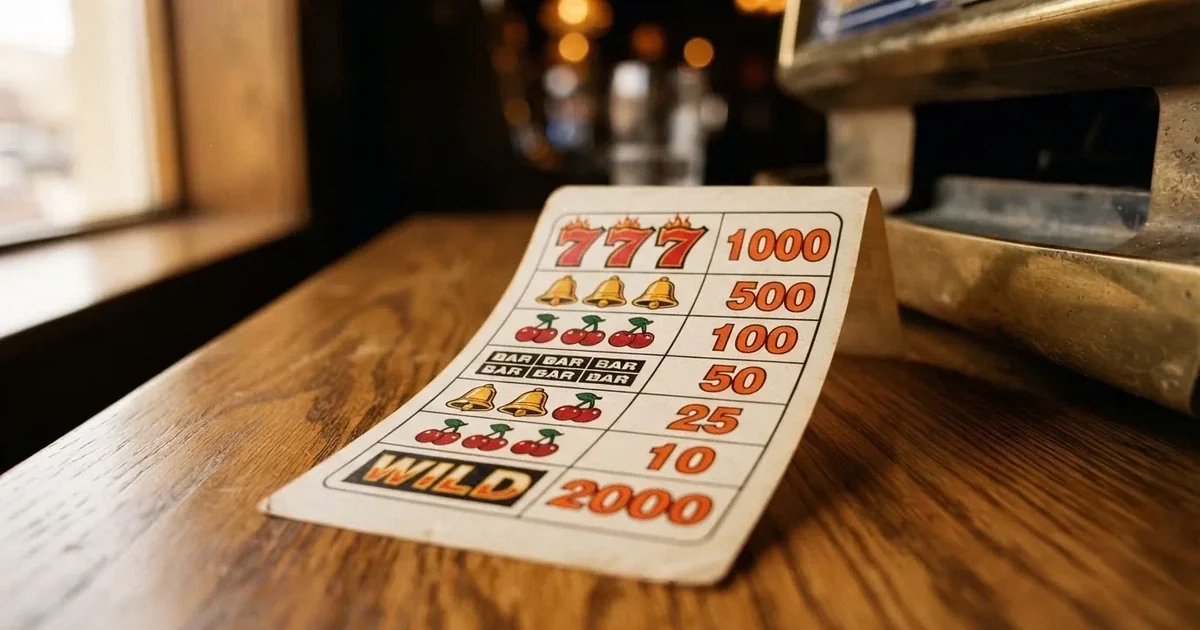
The five-reel slot sits inside an awkward corner of the Australian market. It is the most familiar format on the floor of every pub and club in New South Wales, and yet there is no Australian-licensed online casino offering it for real money. The reader who searches for one ends up, almost inevitably, on an offshore site the regulator has already warned, blocked, or both. The arithmetic that follows is not the arithmetic the marketing shows.
Table of Contents
- The fundamentals of five-reel slots in Australia
- The prohibition on online five-reel slots for Australians
- The cost when five-reel play stops being recreational
- What a five-reel bonus actually costs the player
- Reading a five-reel paytable and the math of a session
- The operator landscape and the ACMA’s recent actions
- Frequently asked questions
The fundamentals of five-reel slots in Australia
| State | Machine Count | Period |
|---|---|---|
| New South Wales | 87,298 | June 2023 |
| Victoria | 26,380 | 2021–22 |
| Queensland | 21,122 | October 2023 |
| South Australia | 11,672 | September 2023 |
| ACT | 3,587 | November 2023 |
A five-reel slot is, at its simplest, a machine with five spinning reels, each carrying a column of symbols, paying out when combinations land on one of a defined set of paylines. The format predates the modern video slot by decades. Charles Fey of San Francisco built the first automatic slot mechanism in the late nineteenth century as a three-reel machine with five symbols — horseshoes, diamonds, spades, hearts and the Liberty Bell — paying ten nickels for three bells in a row. Bally’s Money Honey, in 1963, was the first to dispense up to 500 coins automatically without an attendant. Fortune Coin Co. produced the first video slot in 1976 in Kearny Mesa, California.

Five reels entered the picture as electronic machines replaced the purely mechanical ones, and the format became the workhorse of pub and club gaming in Australia. New South Wales legalised slot machines in 1956; by 2010 the country ran an estimated 97,103 gaming machines outside casinos, a per-capita density about five times that of the United States. The current count, by state, runs to 87,298 machines in NSW as of June 2023, 26,380 in Victoria for 2021–22, 21,122 in Queensland as of October 2023, 11,672 in South Australia as of September 2023 and 3,587 in the ACT as of November 2023.
What this means in practice is that the Australian reader has almost certainly seen the format. The five-by-three layout — five reels, three rows — is the standard physical machine. The reel count is the count of vertical strips; the row count is how many symbols are visible on each strip at any one time. Older mechanical-style games may show three rows and offer a single payline down the middle; modern video slots show three rows and offer multiple paylines zig-zagging across the layout; the more elaborate titles go further, with five or six reels, fifty or more symbols per reel and paylines counted in the hundreds. The Megaways mechanic, popular on a number of recent titles, varies the symbol count on each reel from spin to spin and pushes the active pay count above 100,000 on some games.
The shift from three reels to five is not cosmetic. A classic three-reel machine with ten symbols per reel offers roughly one thousand possible combinations; a modern video slot with fifty symbols on each of five reels produces odds against a top combination as high as 300 million to one. The bigger the symbol pool, the longer the odds, the rarer the top prize. Format sets the volatility; the rest is decoration.
US state regulation offers a way of reading what regulators think the return should be. Nevada requires a minimum 75% payout; Mississippi at least 80%; New Jersey at least 83%. These are floor figures, not ceilings, and they set the legal minimum a slot machine in each state must return over the long run. Australian state regulators set their own requirements, and the format that runs in NSW clubs today carries the rules that state authority publishes.
Australian pubs and clubs house almost all of these machines, and they are tightly regulated by state authorities. None of them is reachable online. The online version of the format, when a reader finds it on an offshore site, runs on entirely different rules.
The prohibition on online five-reel slots for Australians
The reason no licensed Australian site offers five-reel slot play for real money is short and unambiguous. The Interactive Gambling Act 2001, strengthened by the Interactive Gambling Amendment Act 2017, makes it an offence to provide online casino games, online pokies or in-play betting to a person physically in Australia. No state or territory issues a licence for them. The offer itself is the offence, not just an unlicensed offer.

What is licensable is wagering on races and sport placed before the event, lotteries and keno. In practice, online sports books are licensed through the Northern Territory: the Northern Territory Racing and Wagering Commission regulates 52 of Australia’s online bookmakers, including Sportsbet, Bet365 and Ladbrokes, which choose the Territory for tax reasons rather than any operational requirement to be based there. The commission has no full-time staff and meets once a month in Darwin. The casino-game prohibition is total, and the wagering carve-out is narrow. A five-reel slot, whether the format uses three rows, five rows, classic paylines or cluster pays, falls squarely on the prohibited side.
A five-reel online slot, by name or by structure, is a prohibited interactive gambling service. The IGA targets the provider, not the player — the individual reader is not prosecuted — but it does mean the site the reader finds in a search is operating outside Australian law. The licence it displays, whether from Curaçao, Malta or Anjouan, is a licence issued by another jurisdiction for the conduct of business there. It confers no standing in Australia.
Enforcement is the ACMA’s job. The Australian Communications and Media Authority investigates complaints, issues formal warnings and asks Australian internet service providers to block illegal sites. According to a report published on 26 June 2026, the regulator’s running total had reached 1,751 illegal gambling and affiliate marketing websites blocked since the first blocking request went out in November 2019 — an average, across roughly six years and seven months, of between 22 and 23 sites blocked every month, or between 260 and 270 a year. The June 2026 round alone added twelve more: 7Signs, ChromaBet, Donbet, Duospin, Freshbet, Slots Gem, Jacks Club, Lucky Start, Pointsbetz, Spinrise, Vinyl Casino and Wildsino. The pace of action has accelerated since 2017, and the count keeps moving.
The cost to the reader, on the regulator’s own numbers, is large. H2 Gambling Capital’s 2025 report puts Australian losses to illegal gambling sites at about A$3.9 billion a year, and shows the share of gambling going through legal channels falling from 74% in 2021 to 64%. The reader’s dollar, in other words, has been drifting back toward the offshore market. The ACMA’s enforcement is the regulator’s response; the arithmetic above it is what the response is trying to close.
Player protection inside Australia is real but tightly bounded. BetStop, the National Self-Exclusion Register, has been live since August 2023 and binds Australian-licensed online and phone wagering services — it does not bind an offshore casino. A self-excluded player can still reach an offshore site, because the offshore site is not connected to the register. The National Gambling Helpline, 1800 858 858, is free, runs around the clock and offers chat through Gambling Help Online, but again the service it offers is help, not enforcement — the offshore site is not required to act on it. The minimum age for any gambling activity in Australia is 18.
Payments tell their own story. Since 11 June 2024, credit cards, credit-related products and digital currency have been banned as a way to fund licensed online wagering, with penalties of up to A$247,500 for operators who breach the rule. The legal routes for licensed wagering are debit card, bank transfer, PayID and Osko, and BPAY. An offshore casino asking an Australian player for a credit card or a crypto deposit is operating outside the Australian rules — and the question of whether to send money through it is the reader’s first real decision, not the last. Tax sits on the same shelf, for completeness: gambling winnings of a recreational player are not assessable income under section 6-5 of the ITAA 1997, and losses are not deductible, unless the person carries on a business of gambling — model answer only, and the ATO is the source worth checking against.
The 2026 reform is worth flagging in this context. The Interactive Gambling Amendment (Gambling Reform) Bill 2026 passed Parliament on 19 August 2026; its advertising and inducement measures commence on 1 January 2027 — law with a start date, not yet in force. What follows is written under the rules as they stood in 2026.
The cost when five-reel play stops being recreational
The cost of an offshore five-reel slot is not only the stake multiplied by the number of spins. It is also the absence of every protection the reader would have had under an Australian licence. There is no Australian complaints body to approach if a withdrawal is refused. There is no Australian regulator to apply pressure if a bonus is voided after a win. There is no BetStop binding the site, even if the reader has self-excluded domestically. And the site can be blocked with the reader’s balance still sitting in it — a balance that no Australian agency has the standing to recover. The site can also stop replying to emails entirely, change its terms to retroactively exclude a winning bet, or quote an identity-verification failure the reader cannot clear.
The H2 Gambling Capital figure of A$3.9 billion a year is the headline loss, but the more telling number sits behind it. Of that A$3.9 billion, the portion that is recoverable when the site goes dark, refuses a withdrawal or voids winnings is effectively zero. The arithmetic the reader runs on the way in — the welcome bonus, the wagering multiple, the slot’s return percentage — assumes the reader will be paid out. On an offshore site, that assumption is the one most worth testing.
When the maths of the offer stops adding up for the reader, free confidential help is one call away. The National Gambling Helpline, 1800 858 858, runs 24 hours a day, every day, and the chat service at Gambling Help Online is the same. Both are free, both are confidential, and neither requires the reader to be playing on a licensed site to use them. Self-exclusion through BetStop, the National Self-Exclusion Register, will close the reader out of every Australian-licensed wagering service — sports book, racing book, keno — for the chosen period. It will not close an offshore site.
The reading the reader is left with is that offshore five-reel play carries the full house edge the slot’s return percentage implies, plus a layer of risk the Australian licence is designed to remove. The protection does not exist. The cost of that absence is the thread the rest of this discussion follows.
What a five-reel bonus actually costs the player
A five-reel bonus is normally offered as a bundle: a percentage match on the first deposit, plus a stated number of free spins on a named five-reel title. The site presents the match as a gift and the free spins as a free chance at real money. Both descriptions are true at one level and misleading at the other. The gift has a price. The free spins have a playthrough.
The price is the wagering requirement. A deposit match of, say, 100% up to A$500, paired with a 40-times playthrough, requires the reader to wager A$500 × 40 = A$20,000 in qualifying bets before any portion of the bonus becomes withdrawable. The free spins usually carry their own playthrough on whatever they pay out, and they almost always carry a maximum-cashout cap — a ceiling on the amount that can be withdrawn from winnings earned through the spins, regardless of how much the spins actually paid.
The arithmetic is straightforward. A 5-reel slot with a 95% return keeps, on average, 5% of every dollar wagered. Across A$20,000 of qualifying bets, the expected loss is A$20,000 × 0.05 = A$1,000 — twice the headline bonus of A$500. The bonus, in other words, costs more than it pays before any of it is released, and that is before the maximum-cashout cap starts to bite. A typical cap on free-spin winnings sits at A$100; on a 40-times playthrough on A$500, the bonus effectively hands the reader A$100 in real, withdrawable money after the A$1,000 in expected loss — a one-fifth return on the deposit, before the slot’s own house edge is layered on top.
The max-cashout cap is the part the marketing leaves out. If the free spins pay A$200 and the cap is A$100, the reader keeps A$100 and the rest is removed from the withdrawal. The cap is small enough to be visible in the small print and large enough to change the maths of the offer. The reader who reads the headline and skips the small print ends up with a different number than the reader who reads both. The same logic applies to reload bonuses, cashback offers and the loyalty free-spins drip a returning player gets each week — each carries its own playthrough, its own cap, its own game-weighting rules that may exclude five-reel slots from the qualifying list entirely.
Worse, on an Australian-licensed wagering site the credit card and crypto routes are closed; on an offshore site they are open, and the deposit cap on a credit-funded session can climb further than the reader intended. The bankroll, in practice, is whatever the deposit method allows. That is part of the cost, and it is the part the headline does not name.
The honest framing of a five-reel bonus is that it is a marketing tool, not a gift. It moves money from the reader’s hand to the site’s revenue line, dressed up as a promotion. The free spins do not change the return percentage of the underlying game; the match does not change the house edge. The cost is paid in turnover the bonus requires; the gain is whatever is left after the cap, the playthrough and the house edge have all had their say.
Reading a five-reel paytable and the math of a session
A five-reel paytable is the document the game publishes to explain what each symbol is worth, how the lines pay, and what the bonus features trigger. The first thing to read on it is the line-count. A game showing five reels and three rows can run anywhere from a single straight payline (older-style) to 243 ways, 1,024 ways or — on the more elaborate Megaways titles — a variable number of ways that can climb above 100,000 on a single spin. The line count multiplies the number of times the reader’s stake is divided across the layout.
The next thing to read is the symbol ladder. Every game has a top-paying symbol and a tier of lower-paying ones, often card values — nine, ten, jack, queen, king, ace — that pay the smallest amounts. Wild symbols substitute; scatter symbols trigger features; bonus symbols open the feature round. The paytable lists the value of each combination of each symbol, usually on a multiple of the line stake. A 0.5-times card-symbol win and a 25-times premium-symbol win are the kind of spread the reader is reading when they look at this page.
The return percentage, where the paytable states one, is the average of every payout the game returns across a very large number of spins. A 95% return is a 5% house edge. The number is honest only in the long run and on average — a single session will sit either side of it, sometimes by a lot. Volatility is the shape of that variance. A low-volatility game pays small amounts often; a high-volatility game pays large amounts rarely. Both have the same expected return, in the long run; the path to it is different.
A more volatile game will eat a small bankroll on a quiet session and pay out spectacularly on a noisy one. A less volatile game pays the same long-run return in a series of smaller wins that the reader’s session can almost keep up with. The choice between them is a choice between boredom and variance — neither is the right answer in absolute terms. What is the right answer is to read the volatility classification the developer publishes (low, medium, high) and then play the level that matches the bankroll. A A$50 bankroll on a high-volatility five-reel title is, statistically, a handful of dead spins and one near-miss away from gone.
The session math falls out of three inputs: the stake, the number of spins and the return percentage. If the reader plays A$1 per spin for 200 spins on a 95% return game, the expected loss is A$1 × 200 × (1 − 0.95) = A$10. The expected return is A$200 − A$10 = A$190. Stretch the session to 1,000 spins and the expected loss rises to A$50, with the same 5% edge. The number is a statistical average: any given session of 1,000 spins will sit on either side of it, and the high-volatility games will sit further from it than the low-volatility ones. What the math promises is the long-run average, not the next session.
A session on an offshore site adds two inputs that change the picture. The first is the credit card or crypto route, which lets the stake be topped up faster than the bankroll would otherwise allow. The second is the bonus playthrough, which adds a turnover target the reader has to hit before withdrawal. The expected loss above is what the slot alone costs; the bonus adds its own expected loss, on top of the slot’s, and the reader pays both.
The take-away is that the paytable tells the reader what a single spin is worth and what the long-run return is, but it does not tell the reader what the session will cost. The cost comes from the stake, the spin count and the return. The bonus adds a turnover cost. The offshore site adds the absence of recourse. The reader’s session, in other words, runs on a math the paytable does not state.
The operator landscape and the ACMA’s recent actions
The eleven operators below are not ranked, not recommended, and not endorsed. They are listed because the ACMA issued a formal warning over each of them, and because they are the names that keep surfacing when an Australian reader searches for a five-reel slot online. The legal status is the same for every brand: no licence to offer online casino games to a person in Australia exists, whatever licence the site displays.
| Brand | ACMA action date | Operator named by ACMA | Earlier or related actions | Subject support |
|---|---|---|---|---|
| RocketPlay | March 2026 | Pulsup Ltd | Earlier Dama N.V. warning, May 2022 | — |
| Level Up Casino | May 2022 | Dama N.V. | Part of the May 2022 six-brand action | Listings on Bgaming |
| Woo Casino | March 2025 | Dama N.V. | Sister action to Spirit Casino (May 2025) | — |
| Spirit Casino | May 2025 | Dama N.V. | Sister action to Woo Casino (March 2025) | — |
| National Casino | July 2025 | Consolutetish S.R.L. | None in this set | Listings on Wikipedia |
| Bizzo Casino | July 2025 | Consolutetish S.R.L. | Earlier TechSolutions warning, 2022 | — |
| Ignition Casino | July 2025 | Bamboo Media | None in this set | — |
| Instant Casino | February 2025 | EOD Code SRL | None in this set | — |
| Jackbit | April 2026 | Ryker B.V. | Sister action to CasinOK (April 2026) | — |
| Casino Intense | April 2025 | Sterplay Holding Ltd | None in this set | Listings across ABC News, ACMA publications and Crown Melbourne coverage |
| Sky Crown | September 2022 | Hollycorn N.V. | Sister action to Blue Leo (2022) | — |
Each row is the same proposition under different names: an offshore operator offering prohibited services to Australians. The differences between the rows are matters of date, operator lineage, and how much evidence the listings offer that the brand actively carries the subject of this article. None of the rows is a legal offer. None of the rows is licensed in Australia. None of the rows puts the reader inside the consumer-protection regime the IGA establishes.
RocketPlay
The ACMA issued a formal warning over Rocketplay in March 2026, naming Pulsup Ltd as the operator. The same lineage had already attracted a warning in May 2022, when Dama N.V. was the named operator and Rocketplay was one of six brands covered in a single action. The brand has moved between operators without moving off the regulator’s record. There is no third-party listing in the research record showing RocketPlay as a five-reel slot provider. The freshest ACMA action in the table — three months before the older entries — and the second time the lineage has been warned. The most recent enforcement is the most recent evidence.
Level Up Casino
Level Up Casino was named in the May 2022 ACMA action against Dama N.V., one of six brands covered by the same warning. It is the earliest Dama N.V. brand in this table. Listings on Bgaming show Level Up carrying a five-reel product line, which is the only evidence in the research that this brand actively offers the subject of this article. The subject-support evidence is the strongest in this table for an early-warning brand — the reason it stays here rather than being folded into a parent Dama N.V. entry.
Woo Casino
The ACMA issued a formal warning over Woo Casino in March 2025, naming Dama N.V. as the operator. It was the first 2025 Dama N.V. action in the table and the trigger for the enforcement push that would, two months later, add Spirit Casino to the regulator’s record. The brand that opened the 2025 Dama N.V. round, and the only one that puts a date on the start of it.
Spirit Casino
Spirit Casino was named in the May 2025 ACMA action against Dama N.V., two months after Woo Casino received its warning from the same operator. The pattern across the two — same operator, same conduct, two months apart — is the more telling fact than either warning individually. One of a pair, and the pair is what the regulator’s record actually shows.
National Casino
National Casino was named in the July 2025 ACMA action against Consolutetish S.R.L. Wikipedia listings carry the brand as a five-reel slot operator, which is the only subject-support evidence in the research for this row. A brand with documented subject reach under an operator that is new to this table, but a brand whose reach is in the listings, not in any Australian licence.
Bizzo Casino
Bizzo Casino was named in the July 2025 ACMA action against Consolutetish S.R.L., and was already on the regulator’s record from a 2022 formal warning to TechSolutions Group. The brand outlived the operator; the conduct did not. The re-warning is the story, and the brand’s continued appearance across two operators is the proof.
Ignition Casino
The ACMA issued a formal warning over Ignition Casino in July 2025, naming Bamboo Media as the operator. Bamboo Media does not appear elsewhere in this table. No third-party listing in the research names Ignition as a five-reel slot provider. A brand whose operator has no track record in this comparison and whose subject support is the absent row of the table — the cleanest example of why every row carries the same legal status.
Instant Casino
The ACMA issued a formal warning over Instant Casino in February 2025, naming EOD Code SRL as the operator. It is the earliest 2025 ACMA action in the table. A reader who registered with the brand in January 2025 registered with a site the regulator would warn over within weeks. The shortest gap between sign-up and warning in this set sits here.
Jackbit
The ACMA issued a formal warning over Jackbit in April 2026, naming Ryker B.V. as the operator. The same action named CasinOK, which is not in this table. Jackbit sits in the same enforcement window as RocketPlay — both are April–March 2026 actions. The second-newest brand on the regulator’s record, with the rest of the row following from that.
Casino Intense
The ACMA issued a formal warning over Casino Intense in April 2025, naming Sterplay Holding Ltd as the operator. It is the strongest subject-support case in the table — three independent listings across ABC News coverage, ACMA publications and Crown Melbourne’s coverage mention the brand. The brand carries the subject, and that is what the listings show. The regulator’s view, expressed in April 2025, is unchanged.
Sky Crown
The ACMA issued a formal warning over Sky Crown, naming Hollycorn N.V. as the operator, with the published warning dated September 2022. A sister action covered Blue Leo. This is the oldest ACMA action in the table. Older does not mean closed. A 2022 warning still stands in 2026, and the brand sits in this comparison for the same reason it sat in 2022.
Frequently asked questions
How does a classic five-reel slot differ from a modern five-by-three video slot?
A classic five-reel slot shows five reels and a single payline down the middle, with three symbols per reel and a small symbol pool. A modern five-by-three video slot keeps the layout but adds dozens of paylines and a larger symbol pool. The odds against a top combination can run into hundreds of millions to one. The format is older; the volatility is sharper.
Can five-reel machines be played legally in Australian venues?
Pokies-style slot machines outside casinos numbered 87,298 in New South Wales as of June 2023, with tens of thousands more in Victoria, Queensland, South Australia and the ACT. They are state-regulated. The pub-floor machine is legal; the same game offered online by an offshore operator to an Australian is not.
Do five-reel slots pay out differently from newer slot formats?
Return percentage is set by the game’s design and the regulator’s rules, not by the reel count directly. In US state regulation, Nevada requires at least 75% return, Mississippi at least 80%, New Jersey at least 83% — all minimums, all jurisdiction-set. Reel count shapes volatility — how often a win lands — not the average return.
Is an online five-reel slot the same game as the machine on a casino floor?
The mechanics — five reels, three rows, a symbol pool, a paytable — are shared. What is not shared is the licence. The pub-floor machine is state-regulated in Australia. The online version on an offshore site operates under a foreign licence, if it holds one, and offers a prohibited service to anyone in Australia.
Are five-reel slots for real money legal from inside Australia?
No. The Interactive Gambling Act 2001, as strengthened in 2017, makes it an offence to provide online casino games and online pokies to a person in Australia. No state or territory issues a licence. Sports and race wagering placed before the event is licensable; five-reel slot play online is not.
Prepared by the Casino Providers Info editorial staff.