
Pokies Parlour casino Australia: what the marketing hides and the ACMA has already said
8 November 2026 · Verified against ACMA formal warning publications and the Interactive Gambling Act 2001.
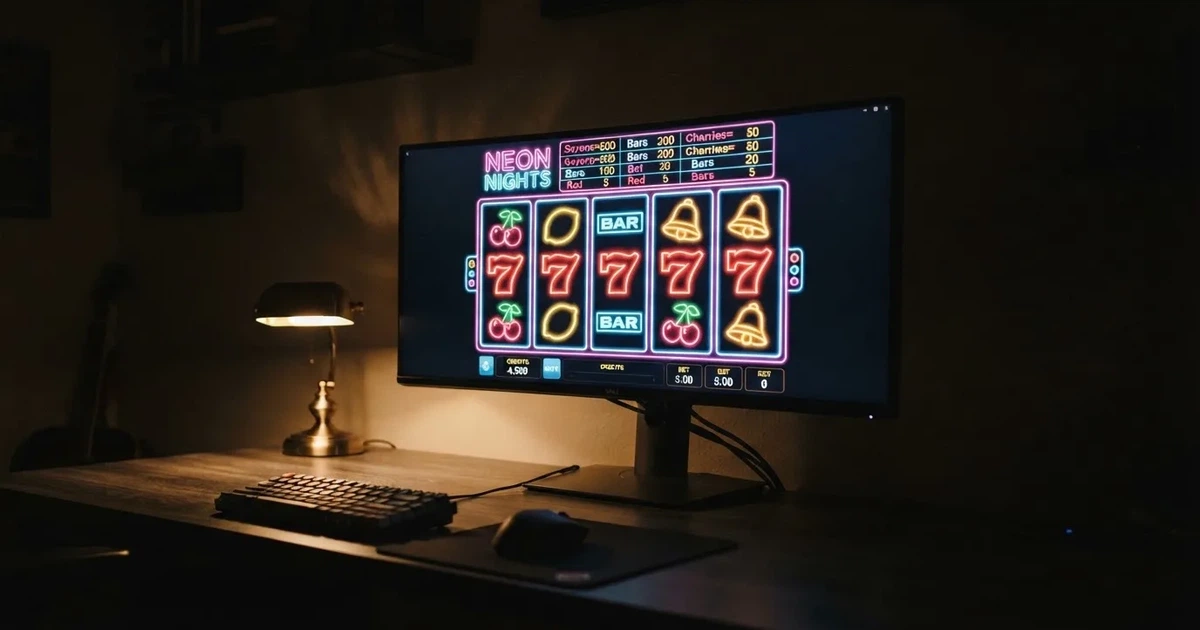
Pokies Parlour is the kind of name that shows up in a search and looks familiar enough to click. The pitch lands: an “Aussie-friendly” casino lobby, a multi-deposit welcome package advertised up to A$2,777 across the first seven deposits, a domain or three to choose from when the first one goes dark. What the marketing does not say, and what the Australian Communications and Media Authority has now said in writing, is that no Australian licence covers any of it. The site sits on Curaçao or similar offshore incorporation; the ACMA has formally warned its operators under section 64A of the Interactive Gambling Act 2001; and Australians who open an account do so without the protections the IGA was written to provide.
This page works through the publicly known record on Pokies Parlour and the offshore landscape it belongs to. The shelves are the legal prohibition Australians actually face, the payment layer that turns out to be one of the easier places for banks and regulators to intervene, the promotional architecture that keeps these sites visible, and a side-by-side look at the brands the ACMA has acted against in recent years — not as recommendations, but as the record of what the regulator considers prohibited interactive gambling services targeting Australian customers.
Table of Contents
- What the offshore pokie market actually looks like in 2026
- The legal prohibition Australians actually face
- Keeping offshore sites in perspective: the protection layer that does and does not apply
- Payments: the layer where banks and regulators do the most blocking
- Bonuses, free spins and the promotional architecture
- The paytable detail, the games, and what “Aussie-friendly” actually advertises
- The Pokies Parlour block and the brands the ACMA has acted against
- What the 2026 reform changes and what it does not
- Frequently asked questions about Pokies Parlour and the Australian offshore market
What the offshore pokie market actually looks like in 2026
Australians gamble online at scale, and most of that gambling is lawful. Licensed wagering on races and sport, lotteries, keno — all legal, all regulated, all spending the marketing budgets the offshore sector cannot. What sits outside that frame is online casino: pokies, blackjack, roulette, live dealer tables. The Interactive Gambling Act 2001, tightened by the Interactive Gambling Amendment Act 2017, makes it an offence to provide those services to a person physically in Australia. No state or territory licence covers them. Any site accepting Australian players under a “casino” banner is doing so from outside Australia, under whatever licence its operator chose to take, if any.

H2 Gambling Capital’s 2025 estimate puts Australian losses to illegal online gambling at roughly A$3.9 billion a year, with the share of gambling going through legal channels falling from 74% in 2021 to 64%. That is the pool the offshore sector is fishing in. Pokies Parlour is one entry into it; the ACMA’s blocking list runs into the thousands.
The name itself travels. Pokies Parlour, Pokie Parlour, Pokies Online Casino, CasinoAus, Australian Casino Sites, AU Online Casino — the ACMA ordered Australian internet service providers to block all six in a single round under the IGA, naming the operators Deloraze Limited and Versus Odds (BV) in a formal warning published under section 64A of the Act. The brands re-skin; the underlying operators continue. That is the pattern, and it is the pattern the rest of this page traces.
The legal prohibition Australians actually face
What the Interactive Gambling Act 2001 prohibits
The IGA, as amended in 2017, prohibits the provision of online casino games, online pokies and in-play betting to persons in Australia. The phrasing matters: the prohibition targets the provider, not the individual player. A punter in Brisbane clicking through a Pokies Parlour landing page is not committing an offence under the Act. The company serving that page, and the people behind it, are.
What the Act does not prohibit is wagering on sporting events and races placed before the event starts, lotteries and keno, all of which can be licensed in Australia. The Northern Territory Racing and Wagering Commission regulates 52 online bookmakers — Sportsbet, Bet365, Ladbrokes among them — for tax reasons, even though the commission runs on minimal staffing and meets once a month in Darwin. That is the licensable slice of the market.
How the ACMA enforces
The Australian Communications and Media Authority investigates complaints, issues formal warnings under section 64A, and directs Australian internet service providers to block non-compliant sites. By the ACMA’s own published figures, 1,751 illegal gambling and affiliate marketing websites had been blocked since the first blocking request in November 2019, with more than 230 unlicensed gambling services having left the Australian market since enforcement was strengthened in 2017. A single round reported in June 2026 added twelve more to the block list: 7Signs, ChromaBet, Donbet, Duospin, Freshbet, Slots Gem, Jacks Club, Lucky Start, Pointsbetz, Spinrise, Vinyl Casino and Wildsino.
The mechanism is administrative rather than criminal. A formal warning does not carry a fine on its own; what it does is put the operator on notice, and what follows the warning is usually a block. The cumulative effect is a moving wall: each round the wall extends, the marketing rotates to fresh domains, the next round extends the wall again.
What enforcement cannot do for a player
The IGA’s prohibition targets the provider, so the player pays for being on the wrong end of a relationship with no Australian backstop. An offshore casino gives no Australian consumer protection, no complaints body, no recourse through the Australian Financial Complaints Authority if a withdrawal is refused. A balance left on a blocked account is a balance lost. That asymmetry — the operator can disappear, the player’s funds cannot follow them home — is the cost the marketing never quotes.
Keeping offshore sites in perspective: the protection layer that does and does not apply
Australian-licensed wagering services sit inside a regime with mandatory harm-minimisation tools. Offshore pokies sites sit outside it. Two specific instruments matter for anyone weighing that gap.
BetStop, the National Self-Exclusion Register, has been live since August 2023. It binds Australian-licensed online and phone wagering services — a self-excluded punter cannot open a new account or place a bet with a participating licensed bookmaker for the chosen exclusion period. An offshore casino is not connected to BetStop. The exclusion register applies to the licensed bookmaker the player is registered with; it does not stop the player from opening an account on the next domain to advertise in their feed.
The National Gambling Helpline — 1800 858 858, free, 24/7, with chat at Gambling Help Online — is the right line if gambling is starting to cost more than money. The helpline works whether the gambling happens at a licensed bookmaker or an offshore site; the help is the same. The contrast with the marketing side is sharp: the offshore sector spends heavily on sign-up offers, the protection side is unfunded by it, and a player who needs to step back usually finds the number through a search rather than the site.
For the AUD-level reality, licensed wagering in Australia now bans credit cards and credit-related products entirely, and the rules also constrain gambling use of linked digital wallets like Apple Pay. That ban is for licensed operators; it is the legal floor, not the ceiling. An offshore site will still process a credit card deposit if the issuer allows it, and many issuers do not.
Payments: the layer where banks and regulators do the most blocking
Credit cards and digital wallets on licensed wagering
Since 11 June 2024, Australian-licensed online wagering services cannot accept payment by credit card or other credit-related products. The penalty for licensed operators who breach that rule runs up to A$247,500. The rule was deliberately written to extend to digital wallets linked to credit cards, which is why Apple Pay on a credit card account is treated as a credit transaction for the purposes of licensed wagering.
The licensed wagering universe therefore runs on debit cards, bank transfers, PayID/Osko instant transfers and BPAY. None of those are themselves blocked by the wagering ban; what is blocked is the credit-funding source.
What the banks layer on top
Australia’s major banks have built their own gambling blocks. Westpac’s block works at card level: it refuses authorisation on transactions registered under the merchant category code for betting and casino gambling, applied to eligible personal credit and debit cards. ANZ’s block, activated in the ANZ app, blocks gambling transactions made through a digital wallet such as Apple Pay on an eligible card, not just the physical card. Once turned on, ANZ’s block requires a 48-hour waiting period to remove, and the bank’s own terms warn that not all gambling transactions will be blocked and some non-gambling transactions might be caught in error.
The net effect is that an Australian punter trying to fund a Pokies Parlour deposit faces two filters: the bank’s transaction block, which depends on the merchant category code reaching the issuer, and the offshore operator’s payment acceptance, which is its own choice. Credit-card transactions tend to fail cleanly. Direct bank transfers and PayID transfers are harder for the bank to recognise at the merchant-category-code level, and that is the route the offshore sector pushes hardest.
Apple Pay, Google Pay and the mobile share
By the end of 2025, Apple Pay, Google Pay and Samsung Pay transactions collectively accounted for around 45% of all card payments in Australia by number. Apple does not charge consumer fees for using Apple Pay in stores, online or in apps; any surcharge is the merchant’s own card-processing cost, not Apple’s. Apple also states that transaction limits and PIN requirements are set by the card issuer or the merchant, not by Apple itself, which matters because the credit-card ban under the IGA is enforced through the issuer.
For the offshore question specifically: Apple Pay on a debit card can fund a deposit at a merchant willing to accept it; Apple Pay on a credit card cannot, both because the licensed ban catches it and because the credit-card networks themselves have tightened restrictions on gambling MCCs. The bank’s gambling block at the card level is the most reliable filter in the stack, and the offshore operator’s payment page is the least.
PayID, Osko and instant bank transfers
Osko transfers between participating Australian banks arrive in under a minute, 24/7, including weekends, addressed to either a BSB and account number or a PayID. Paying to a PayID shows the name of the account holder before the transfer is sent, and AP+ warns that being asked to transfer money to a PayID on an illegal gambling site almost certainly means a scam site. More than 25 million PayID identifiers had been registered on Australia’s New Payments Platform by April 2025, with the NPP available at over 100 Australian financial institutions.
The NPP’s uptime discipline is contractual: participants must keep monthly outages to no more than two minutes. The ACCC authorised the merger that brought NPP Australia together with BPAY and eftpos into Australian Payments Plus in 2021, so PayID, Osko and BPAY now sit in the same operational company. For a punter, that means instant transfers arrive in seconds when they work, and when the operator is offshore, the money is offshore in seconds too — faster than any dispute window.
BPAY’s place in the layer
BPAY is the bill-payment service inside Australian online banking. The payer enters the Biller Code and the Customer Reference Number printed on the bill; the money routes through the payer’s bank to the biller. BPAY has run since 1997, sits in over 140 Australian banks and financial institutions and is offered by over 95,000 businesses. It is run by Australian Payments Plus, the same operator as PayID and Osko, and is owned equally via Cardlink Services Limited by ANZ, Commonwealth Bank, National Australia Bank and Westpac.
BPAY is not a deposit route at offshore casinos. The bill-payment model does not map onto a casino cashier; the offshore sector uses card channels and direct bank transfers instead. That absence is informative: the payment methods Australians use for licensed wagering and the ones used at offshore casinos do not overlap as neatly as the marketing suggests.
American Express and the surcharge question
American Express was established in 1850 as a freight-forwarding company and launched its first charge card on 1 October 1958. Unlike Visa or Mastercard’s four-party network, Amex traditionally issues cards and processes transactions itself as a three-party scheme, which is one reason merchants pay higher acceptance costs on it. The Reserve Bank of Australia’s July 2025 review proposes removing surcharges on eftpos, Mastercard and Visa transactions and explicitly leaves American Express outside the scope of that proposed surcharge ban, which means Amex surcharges stay legal where the merchant chooses to charge them.
For the offshore gambling question, Amex matters less than its retail profile would suggest. Most offshore casinos accept Visa and Mastercard debit, where the bank-side gambling block does most of the work; Amex acceptance is patchier and the credit-card ban catches credit-funded Amex on the licensed side regardless.
AUSTRAC and the A$10,000 threshold
AUSTRAC’s threshold-transaction-report rule, which requires reporting of transfers of A$10,000 or more, applies only to physical cash. Ordinary electronic bank transfers are not subject to that per-transaction reporting requirement, regardless of amount. The reporting layer on bank transfers is at the bank level, not the per-transaction level — which is part of why the offshore sector routes instant bank transfers rather than asking for cash.
Bonuses, free spins and the promotional architecture
The welcome package across seven deposits
The Pokies Parlour marketing cycle that recurs across its various domains advertises a welcome package of up to A$2,777 spread across the first seven deposits, rather than concentrated in a single first-deposit match. The structure is deliberate: a smaller headline number per deposit stretches the playable runway, keeps a new account returning over a week of activity, and lowers the apparent ratio between deposit and bonus. The total is competitive with single-deposit packages at other offshore operators; the format is the point.
A multi-deposit package also spreads the wagering obligation. A bonus carrying, say, a 40x wagering multiple on the bonus amount across seven deposits produces seven separate turnover targets, each cleared at a different cadence. Players who stop after the second or third deposit leave the rest of the bonus unclaimed and the wagering half-cleared, which complicates any withdrawal request made before the package runs its full course.
Why a sign-up bonus runs across seven deposits
The marketing rationale is straightforward: a multi-deposit package keeps a player depositing through a week rather than abandoning after a single session. The operational rationale is no different from any loyalty architecture — the cost of acquiring a player is amortised over their first week of activity, and the wagering requirements that gate withdrawals are designed to make early withdrawal costly enough to deter. The seven-deposit structure is one of the more aggressive versions of that pattern; the offshore sector’s standard is closer to three or four.
For an Australian player specifically, the multi-deposit format runs into the credit-card ban on the licensed side, but on the offshore side it runs into the banks’ own gambling blocks and the offshore operator’s payment acceptance. A punter funding deposit two through PayID after a Visa deposit was blocked at deposit one is paying the friction of moving between channels, not the friction of a wagering requirement.
The bonus terms the marketing never quotes
Wagering requirements are the visible cost; the terms that actually determine whether a bonus is withdrawable are the ones a multi-deposit package usually conceals. Max-cashout caps, game weighting rules (slots at 100% and table games at 10% or excluded), time limits on the wagering window, and country-specific exclusions for jackpot games are the recurring mechanics. The offshore sector’s promotional copy tends to advertise the headline bonus number and the wagering multiple; the rest of the terms live several clicks into the site’s terms page, in language that reads as boilerplate until the moment a withdrawal is requested and refused.
This page does not reproduce those terms for any specific operator because the only sources for them were affiliate marketing pages, and the marketing pages did not agree with each other. The qualifier that holds across the segment is that the headline figure is not the figure that comes out the other end.
The paytable detail, the games, and what “Aussie-friendly” actually advertises
Pokies, live tables and the provider layer
The site styled as Pokies Parlour runs on a standard offshore aggregator stack: RealTime Gaming and Rival for the pokies catalogue, live dealer tables from Vivo Gaming and a handful of smaller studios, and a slot-led lobby with table games and a live casino subsection behind it. The provider mix is not distinctive — most Curaçao-licensed operators offer some subset of the same studios — but the marketing leans on the “pokies” framing for Australian readers, which is the local vernacular for slot machines.
“Aussie-friendly” in the marketing sense usually means AUD as a base currency, payment methods that include POLi or PayID where supported, and a game library weighted toward the high-variance pokies the offshore sector knows Australian players prefer. It does not mean Australian regulation. No offshore operator’s “Aussie-friendly” branding constitutes any kind of local licence, and the marketing does not assert one.
Paytable detail and RTP claims
The paytable detail commonly advertised around Pokies Parlour focuses on jackpot sizes, bonus feature frequencies and the maximum multiplier on the headline slots. RTP figures appear on individual game info pages; they are not aggregated into a single casino-wide figure. The RTPs that do appear are studio-published rather than independently tested, which is the standard for the offshore segment; the licensor that tests and publishes RTPs for Australian-facing casino games is, by definition, not Australian.
Volatility classifications are likewise studio-published and uneven across the catalogue. High-variance pokies dominate the front page, which is the part of the catalogue the marketing wants players to see. The implied math is that the offshore sector’s player acquisition is concentrated on the segment of players who prefer longer losing runs in exchange for larger-but-rarer hits; the marketing is built for that segment specifically.
The no-deposit and free-chip claims
Several of the domains styled as Pokies Parlour advertise a no-deposit sign-up offer or a free chip on registration, alongside the multi-deposit welcome package. The mechanics are the standard offshore version: a small cash credit or a fixed number of free spins credited on account creation, with a separate and usually higher wagering multiple than the deposit bonus, a cap on winnings convertible from the credit, and a maximum cashout that converts the bonus into a marketing cost rather than a payout.
The same caveat that applies to the welcome package applies here: the headline figure is the figure the operator publishes, and the figure that survives the terms is the figure the operator pays out. The affiliate pages that carry these offers tend to copy the headline; the operator’s own terms page, which is where the actual conversion rate lives, is several steps further in.
The Pokies Parlour block and the brands the ACMA has acted against
The brands below are not ranked, not recommended and not reviewed for playability. Each appears here because the ACMA itself issued a formal warning over it under the Interactive Gambling Act 2001 for offering a prohibited interactive gambling service to Australians. The pattern they form is the regulator’s record of what the offshore pokie market looks like at the operator level, and the dates the ACMA names are the dates those warnings were published. Online casino games cannot be licensed anywhere in Australia, whatever licence the site displays — Curaçao, Anjouan, the Kahnawake Gaming Commission or any of the smaller jurisdictions. The licence the operator chose to take is a licence to operate offshore; it is not a licence to target Australia.
The blocking record in numbers
By the ACMA’s own June 2026 figures, 1,751 illegal gambling and affiliate marketing websites have been blocked since the first blocking request in November 2019. The block rate over that period, taken as a simple ratio of sites blocked to months elapsed, is roughly 22 blocked sites per month — a useful band rather than a precise figure, because the ACMA’s enforcement is round-based rather than steady. The June 2026 round alone added twelve new names to the block list. The cumulative figure is the wall the offshore sector markets around, and it is also the wall that keeps being rebuilt.
The Pokies Parlour formal warning
The ACMA issued a formal warning under section 64A of the Interactive Gambling Act 2001 to Deloraze Limited and Versus Odds (BV) as operators of Pokies Parlour for providing a prohibited interactive gambling service to Australians. In the same enforcement round, the ACMA ordered Australian ISPs to block Pokies Parlour along with five other offshore sites — Ninja Spins, Pokies Online Casino, CasinoAus, Australian Casino Sites and AU Online Casino — after finding they breached the Interactive Gambling Act 2001. The block is the administrative consequence; the formal warning is the on-record finding that the operator was offering a prohibited service.
Side-by-side: brands the ACMA has formally warned
The table below sets out the brands the ACMA has formally warned under section 64A of the Interactive Gambling Act 2001 for offering prohibited interactive gambling services to Australians. The “subject support” column lists payment methods, providers or other commercial subjects named in listings the research consulted, where those listings mention them. Where the consulted listings did not mention a subject for a given brand, the column is intentionally blank rather than a denial — the absence is in the listings, not in the operator.
| Brand | ACMA action and date | Operator named by the ACMA | Subject support |
|---|---|---|---|
| RocketPlay | Formal warning, March 2026; earlier Dama N.V. warning, May 2022 | Pulsup Ltd (Rocketplay) | listings-only (Gamblinginsider.com) |
| Level Up Casino | Formal warning, May 2022 | Dama N.V. | listings-only (Westpac.com.au) |
| Woo Casino | Formal warning, March 2025 | Dama N.V. | — |
| Spirit Casino | Formal warning, May 2025 | Dama N.V. | — |
| National Casino | Formal warning, July 2025 | Consolutetish S.R.L. | listings-only (acma.gov.au, austrac.gov.au, betstop.gov.au) |
| Bizzo Casino | Formal warning, July 2025; earlier warning to TechSolutions, 2022 | Consolutetish S.R.L. | listings-only (Gamblinginsider.com) |
| Ignition Casino | Formal warning, July 2025 | Bamboo Media | — |
| Instant Casino | Formal warning, February 2025 | EOD Code SRL | listings-only (Ecopayz.com, Payid.com.au) |
| Jackbit | Formal warning, April 2026 | Ryker B.V. | — |
| Casino Intense | Formal warning, April 2025 | Sterplay Holding Ltd | listings-only (austrac.gov.au, betstop.gov.au, Gamblinginsider.com) |
| Sky Crown | Formal warning, September 2022 | Hollycorn N.V. | — |
The Dama N.V. cluster — Level Up, Woo, Spirit — is the most visible single-operator footprint on the list. One Curaçao-incorporated operator, three separate brand surfaces, three separate ACMA warnings over roughly four years. The pattern is structural: the operator persists, the brands rotate, the ACMA’s enforcement catches up brand by brand. The Sky Crown row, dating from September 2022, sits at the early end of the current enforcement wave; the RocketPlay row at March 2026 sits at the most recent. The intervening years show the regulator’s steady accumulation of named operators rather than any single decisive action.
For an Australian player reading the table, the operative question is not whether any one of these brands is worse than another — the IGA prohibits all of them, equally — but whether the offshore sector’s offer is worth the absence of Australian consumer protection. The answer the ACMA has given, repeatedly, is that it is not.
What a warning costs the operator and what it costs the player
A formal warning does not carry a fine. It puts the operator on the regulator’s record, and what usually follows is a block. For the operator, the cost is the loss of the Australian market for that domain; for the player who already had an account, the cost is potentially the loss of access to a balance that was sitting on a domain that is no longer reachable. The ACMA does not adjudicate player balances, and the operator has no incentive to refund them after the block lands.
That asymmetry is the single most important thing to read off the table. The offshore operator takes the warning and re-skins; the Australian player takes the block and keeps the loss.
What the 2026 reform changes and what it does not
The Interactive Gambling Amendment (Gambling Reform) Bill 2026
Parliament passed the Interactive Gambling Amendment (Gambling Reform) Bill 2026 on 19 August 2026. Its advertising and inducement measures commence on 1 January 2027. The bill is law with a start date, not yet in force on a 2026 page; the measures that begin in January 2027 will tighten the rules around promotional offers and advertising, and the gap between enactment and commencement is the regulatory breathing room the offshore sector is currently working through.
For Pokies Parlour specifically, the reform package will affect how multi-deposit welcome packages can be marketed to Australian audiences rather than whether offshore casino games can be offered — the underlying prohibition in the IGA predates the 2026 reform and is unchanged by it. What changes is the surface the marketing runs on.
Tax treatment for the player
Gambling winnings of a recreational Australian player are not assessable income under section 6-5 of the ITAA 1997, and losses are not deductible. The exception is a person who carries on a business of gambling, which is a higher bar than regular play meets. The model the ATO uses treats recreational play as a private recreational activity; the tax treatment is not the reason most Australians consider offshore play, and it is not the reason the regulator objects to it.
Frequently asked questions about Pokies Parlour and the Australian offshore market
Why does the Pokies Parlour name appear across several different domain names?
The same offshore operator runs multiple brand surfaces, each on its own domain, partly for marketing reach and partly because a blocked domain is replaced by another. The ACMA’s blocking round on Pokies Parlour covered the operator behind the name as well as the domain itself, naming Deloraze Limited and Versus Odds (BV), which is why a re-skinned domain does not mean a clean operator.
Is a site styled as Pokies Parlour actually licensed to accept Australian players?
No. No state or territory in Australia licences online casino games or online pokies. The Interactive Gambling Act 2001 prohibits the provision of those services to persons in Australia, and the ACMA’s formal warning to Pokies Parlour’s operators records that the site was offering a prohibited interactive gambling service. Any offshore licence the operator displays covers operation outside Australia, not service to Australian customers.
What deposit bonus does Pokies Parlour typically advertise on its various domains?
The recurring pitch across the Pokies Parlour network is a welcome package of up to A$2,777 spread across the first seven deposits, accompanied on some domains by a no-deposit sign-up offer or free chip. The wagering requirements, max-cashout caps and game-weighting rules that determine what is actually withdrawable are in the operator’s terms rather than the marketing copy, and the affiliate pages that carry these offers do not agree with each other on the precise terms.
How can someone tell which of several similarly named Pokies Parlour domains is currently being advertised?
The ACMA’s block list is the most reliable public record. Domains on the block list are not reachable through Australian ISPs without a workaround, and a domain that has appeared in one affiliate’s link this month and a different one next month is usually the same operator cycling surfaces. The payment method a domain asks for on its cashier page — and whether it accepts PayID or a bank transfer addressed to an account name matching the brand — is a secondary check that works because PayID shows the account-holder name before a transfer is sent.
What do reviews of Pokies Parlour usually say about its withdrawal process?
The recurring complaint in published reviews of the Pokies Parlour network is slow or refused withdrawals, with the wagering requirements and max-cashout caps in the bonus terms cited as the reason payouts are smaller than the headline bonus implied. Reviews of Curaçao-licensed operators more broadly tend to cluster around the same friction points: bonus-to-cash conversion rates lower than the headline, document verification requested at withdrawal rather than deposit, and account closure clauses that leave balances unrecovered. None of those complaints have an Australian complaints body to escalate to, because no Australian regulator has jurisdiction over the operator.
Why would a brand like Pokies Parlour run a sign-up bonus across seven deposits rather than just one?
A multi-deposit package keeps a player depositing across a week rather than abandoning after a single session. The wagering obligation is also split across the seven deposits, each with its own turnover target, which makes early withdrawal costlier and concentrates player activity inside the operator’s first-week window. For an Australian player specifically, the format runs into the licensed-side credit-card ban through a different mechanism: each successive deposit is a chance for the bank’s gambling block to catch the transaction, and the operator’s marketing keeps pitching because the player keeps coming back.