
Real Cash Online Pokies in Australia: The Cost the Marketing Hides
8 November 2026 · checked against ACMA formal warnings and blocking notices on the register of the Australian Communications and Media Authority
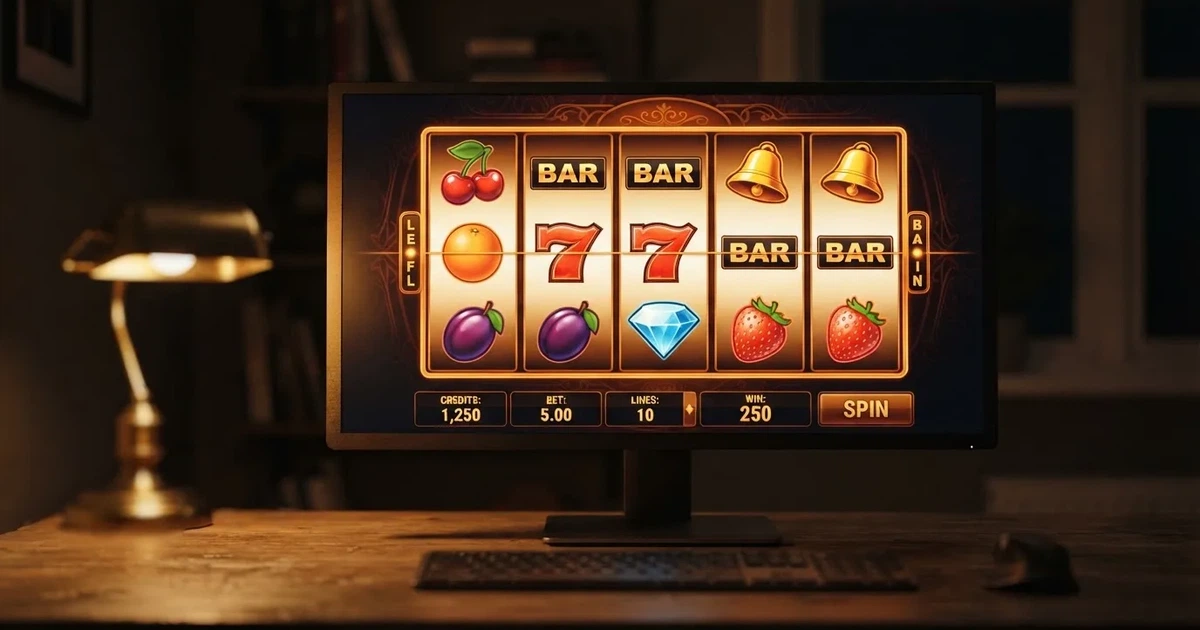
The phrase “real cash online pokies” travels the internet attached to offshore brands, no-deposit offers and $10-deposit menus. Each one is structured to look like a chance to play for money at small cost. Each one is offered to Australians by operators the ACMA has acted against, because no Australian licence authorises online casino games in this country. This page is not a route to those sites and not a recommendation. It is a cost-first read of what those claims are, who is making them, and what they leave a player holding when the marketing has done its job.
The angle is plain: what does the offer cost the person who takes it. Not the headline bonus figure, not the “fast payout” caption, not the app-store rating — the actual spend, the actual exposure, the actual standing if something goes wrong. Behind every “real cash” line on a banner ad sits an Interactive Gambling Act 2001 prohibition, an ACMA file and a regulator that has no jurisdiction over the brand that took the deposit.
Table of Contents
- What “Real Cash Online Pokies” Actually Means as a Product
- The Prohibition Itself: How the IGA Cuts the Product Off
- Responsible Play: What Stays in Place When the Site Is Blocked
- Payment Methods the Marketing Mentions and What Each One Actually Does
- The Bonus and Free-Spins Layer, Read as Cost
- Mobile and App: What the Phone Actually Loads
- Games, Providers and the Paytable Behind the Marketing
- The Brands the ACMA Has Acted Against
- The Blocking Rate: What the ACMA’s Pace Actually Tells the Reader
- Tax, Identity and the Trail the Player Leaves
- What This Page Is and Is Not
- Frequently Asked Questions
What “Real Cash Online Pokies” Actually Means as a Product
The phrase does one job in the marketing and another in the regulation. As a marketing claim it groups three things under one heading: real-money wagering, real-money payouts, and a real-money balance paid out through a bank route the player recognises. As a regulatory matter in Australia it groups them under a prohibition.

The product that the marketing describes is a digital version of the poker machine — a slot machine driven by a random number generator, played from a phone or a laptop, with a balance denominated in Australian dollars and a withdrawal button that, in theory, sends the winnings to a bank account. The land-based version of these machines is the electronic gaming machine that sits in every licensed club and casino in the country outside Western Australia, regulated state by state under returns-to-player floors that vary between 85% and 90% depending on the jurisdiction. The online version sits outside that system.
What the offshore sites have done is build a layer on top of an offshore licence — typically Curaçao, Anjouan or another small-jurisdiction regulator — and run the same game mathematics against an Australian customer base, accepting deposits through PayID, BPAY or sometimes a credit route that is no longer permitted for Australian-licensed wagering at all. The ACMA’s job, since the Interactive Gambling Amendment Act 2017 strengthened the original 2001 statute, is to find them and act against them. By June 2026 the regulator had directed Australian ISPs to block 1,751 illegal gambling and affiliate marketing websites since the first blocking request in November 2019, with 12 more added in the round reported that month: 7Signs, ChromaBet, Donbet, Duospin, Freshbet, Slots Gem, Jacks Club, Lucky Start, Pointsbetz.com, Spinrise, Vinyl Casino and Wildsino.
So the shelf described by the marketing term — “real cash online pokies Australia” — is, on this side of the regulatory wall, the gap the ACMA is paid to close. That is the framing everything below sits inside.
The Australian legal frame in two lines
Online casino games, online pokies and in-play betting are prohibited interactive gambling services under the Interactive Gambling Act 2001 (IGA), as tightened by the 2017 amendment. No state or territory issues a licence for them. What is licensable is pre-event wagering on races and sport, lotteries and keno — in practice the bulk of online bookmaking is administered by the Northern Territory Racing and Wagering Commission (NTRWC), a body that regulates 52 of Australia’s online bookmakers including Sportsbet, Bet365 and Ladbrokes, runs with no full-time staff and meets once a month in Darwin. Online pokies do not appear on its list.
A player is not the target of the IGA. The provider is. But that distinction does almost nothing for the player who has deposited A$200 and finds the brand on a block list with the balance still inside. There is no Australian consumer protection scheme that covers an offshore operator, no local complaints body that can order a payout, and no Australian regulator with reach into the operator’s bank account.
The shape of the Australian market the offshore brands are selling into
The marketing lands in a country with one of the world’s highest densities of poker machines per capita. In 2020–21 Australians bet almost A$150 billion through gaming machines and lost A$12.18 billion on them, and Australia has roughly 3% of the world’s pub and club machines against 0.3% of the global population. New South Wales alone had 87,298 machines outside casinos across 2,195 venues in June 2023, with player losses of A$8.18 billion in 2022–23; Queensland had 21,122 in 351 venues in October 2023; Victoria had 26,380 outside Crown in 488 venues against a 30,000-machine statewide cap. Western Australia banned pub and club machines when Crown Perth opened in 1985 and the Crown complex now holds roughly 2,500 of them — every one approved by the state’s Gaming and Wagering Commission.
That is the legitimate, state-regulated layer. It is large, it is licensed, it is heavily used, and it sets the size of the customer pool the offshore brands are fishing in. H2 Gambling Capital’s 2025 report estimated Australians lose about A$3.9 billion a year to illegal gambling sites, and that the share of gambling going through legal channels fell from 74% in 2021 to 64%. The size of the illegal channel is not incidental to the legal one — it is its shadow, drawn from the same player base.
The Prohibition Itself: How the IGA Cuts the Product Off
A prohibition is only useful if it has a regulator behind it with a tool that bites. For online gambling in Australia the regulator is the ACMA and the tool is a section of the IGA that lets it direct internet service providers to block illegal sites, layered over a stream of formal warnings to the operators behind them.

The Interactive Gambling Act 2001 prohibits the supply of prohibited interactive gambling services to a person in Australia. The 2017 amendment extended the prohibition to in-play betting on a sporting event and clarified that the offence is committed by the provider, not by the customer, regardless of where the service is hosted. The ACMA can investigate complaints, issue formal warnings that are published on its website, refer matters for civil penalty proceedings and ask Australian ISPs to take blocking action against named domains.
Between the first blocking request in November 2019 and the June 2026 round, the ACMA directed the blocking of 1,751 illegal gambling and affiliate marketing websites. More than 230 unlicensed services have left the Australian market since enforcement was strengthened in 2017. The June 2026 round alone added 12 more, named in the ACMA’s published notice. Each round is published, dated and tied to specific operators; each is a record of what the regulator has acted against, not an open list of what is currently accessible. The current state of access shifts between the rounds.
What “formal warning” means when it lands
A formal warning under the IGA is a written notice to an operator that the ACMA considers the service to be prohibited. It is published on the regulator’s website with the operator’s name, the brand and the date. It is not a fine, it is not a prosecution and it does not require the operator to stop — but it is the regulator’s on-the-record position, and it is the precursor to civil penalty proceedings if the service continues.
The roster of brands that have received one is the list of operators this page is built around. In March 2026 the ACMA warned Pulsup Ltd over Rocketplay.com.au. In May 2022 the same regulator warned Dama N.V. over six brands at once — Bambet, Dazard, Level Up, Rocketplay, Wild Tornado and Cobra Casinos — and came back to the same operator in March 2025 with a warning over Woo Casino and in May 2025 with one over Spirit Casino. In July 2025 it warned Bamboo Media over Ignition Casino and Consolutetish S.R.L. over National Casino and Bizzo Casino, the latter already warned once before in 2022 under TechSolutions (CY) Group Limited and TechSolutions Group N.V. In February 2025 the ACMA warned EOD Code SRL over Instant Casino, in April 2026 Ryker B.V. over Jackbit and CasinOK, in April 2025 Sterplay Holding Ltd over Casino Intense, and Hollycorn N.V. over its Sky Crown and Blue Leo services in September 2022.
What it costs the operator is reputational on the regulator’s site and the opening of a file that ends in a civil penalty if the conduct continues. What it costs the player who used the service in the meantime is the absence of any Australian recourse if the operator refuses to pay out — because the regulator that warned the operator is the regulator that has no jurisdiction over the operator’s bank.
The 2026 reform and what it changes
The Interactive Gambling Amendment (Gambling Reform) Bill 2026 passed Parliament on 19 August 2026. Its advertising and inducement measures commence 1 January 2027. The change matters because it tightens the rules around how prohibited services are promoted to Australians — the affiliate marketing layer that drives a great deal of the “real cash” search traffic in the first place. It is law with a start date, not yet in force on this page. The compliance picture shifts again from 1 January 2027.
Responsible Play: What Stays in Place When the Site Is Blocked
A prohibition on the supply of online casino games in Australia does not produce a prohibition on the player. The IGA targets the provider. But it also does not produce any of the consumer protections that the Australian licensing regime would have provided if the product were licensed. There is no dispute resolution, no local complaints body, no access to BetStop from an offshore site and no guarantee that a blocked site will pay out a balance before the block lands.
BetStop, the National Self-Exclusion Register, has been live since August 2023. It binds Australian-licensed online and phone wagering services. An offshore casino is not connected to it; a player who has excluded themselves through BetStop and then opens an offshore account has no automatic protection from that second account. The exclusion does not travel.
Help lines do. The National Gambling Helpline — 1800 858 858 — is free, 24/7, with a chat option through Gambling Help Online. State-level services operate alongside it: New South Wales has GambleAware, Victoria has the Victorian Responsible Gambling Foundation, Queensland has Gambling Help Queensland, Western Australia has the WA Problem Gambling Helpline, South Australia has the Centre for Addiction and Mental Health, and Tasmania has the Tasmanian Gamblers Help service. A person reading this page and recognising their own behaviour in the description above has a free, confidential route to talk about it that does not require an account with any operator named here.
Payment protections that do not extend offshore
Since 11 June 2024 credit cards, credit-related products and digital currency have been banned as a payment route for Australian-licensed online wagering, with penalties of up to A$247,500 for operators who breach the rule. Legal deposit routes for licensed wagering are debit card, bank transfer, PayID/Osko and BPAY. A site that asks an Australian for a credit card number or a crypto wallet address is operating outside the Australian rules. That detail is not a tax point — it is a regulatory fingerprint. The offshore brand does not have to follow the rule because it is not subject to it. The Australian player’s bank, however, can still decline a credit-card transaction it classifies as gambling-related, and that decline is the consumer protection the regulator’s prohibition has left in place.
Payment Methods the Marketing Mentions and What Each One Actually Does
The “real cash” offer travels with a payment menu. PayID, Osko, BPAY, debit card, and sometimes a crypto wallet appear on the deposit page; “fast payouts” appears on the withdrawal page; “no deposit” appears on the signup banner. Each of these terms describes a payment rail; none of them describes a licence.
PayID and Osko are the instant-transfer layer of Australia’s New Payments Platform, operated under the Reserve Bank of Australia’s oversight and supported by most Australian banks. A deposit made through PayID arrives in the receiving account within seconds. BPAY is the older bill-payment rail and clears through the customer’s bank to the biller. Debit card deposits clear through the card schemes. Crypto deposits settle on a public blockchain and reverse only through the cooperation of the receiving party.
What each rail does at the marketing end is make the deposit feel like a local transaction. The brand’s bank, in most cases, sits outside Australia. The deposit is local to the customer’s experience and foreign to the regulator’s reach. A withdrawal is the same rail in reverse, with a processing window the brand controls.
What “no deposit” actually costs
“No deposit” offers — “free spins”, “free chips”, “play $10 free” — are the most common hook in this market. The marketing reads as “free money to play with”. The reality is a bonus with a wagering requirement, a maximum cashout cap, a list of eligible games and an expiry clock.
A typical structure: a $10 free chip carries a 40x wagering requirement, a maximum cashout cap of $50 to $100, a 7-day expiry, and a list of eligible games that excludes the high-variance titles the player might otherwise pick. The chip is not a deposit — it is a marketing budget the operator has allocated to customer acquisition, dressed up as a gift. The expected cost to the operator of the $10 chip, calculated against the game’s return-to-player figure, is the operator’s acquisition spend; the cost to the player is the time spent grinding through the wagering requirement with a capped payout waiting at the end.
This page does not name any specific offer. The reason is the audit’s hard rule: every “real cash” promotional claim this article describes carries the same structure but different numbers, and the numbers change between affiliates. The structure itself is the cost the player carries.
What “$10 deposit” actually opens
A $10-deposit real-cash offer is the next step up from no deposit: a small real-money entry, usually paired with a bonus that scales with the deposit and a wagering requirement that scales with the bonus. The deposit itself is real money the player can lose at the game’s edge. The bonus is on top. The combination is what the operator has budgeted as customer acquisition cost.
The arithmetic the operator has run is roughly this: the player deposits $10, the operator matches a percentage of that with a bonus, both go into a balance with a wagering requirement that multiplies the bonus by a factor (commonly 35x to 50x), and the player has to grind through that requirement before any of the bonus balance converts to a withdrawable cash balance. The match percentage, the wagering factor, the eligible games, the max bet per spin during wagering and the expiry are all variables the operator sets to make the bonus unprofitable for most players on average. That is what the bonus is for. A bonus that converted to cash at the player’s first withdrawal would be a deposit with a marketing rebate, and that is not what is on offer.
What “fast payouts” actually delivers
“Fast payouts” is the marketing label for a withdrawal window of hours rather than days. The brand’s promise is usually a 24-hour processing time once the withdrawal is requested, with the funds landing in the player’s account depending on the rail used — PayID within minutes, BPAY by next business day, debit card one to three business days, crypto subject to blockchain confirmation time and the brand’s release schedule. The variable that matters is not the rail. It is the brand’s processing queue, which the brand controls and which a regulator that has no jurisdiction over the brand cannot speed up.
When a payout is refused, the customer service conversation that follows is the consumer protection the player has. There is no local ombudsman. There is no Australian regulator that can order the brand to pay. The BetStop exclusion does not apply. The dispute is, in practice, between the player and a brand whose operating licence is held in a jurisdiction that has no relationship with the player’s bank.
The Bonus and Free-Spins Layer, Read as Cost
Every bonus is a marketing budget. The bonus budget the operator has spent on a player is recovered, on average, by the wagering requirement and the house edge working together. The expected cost to the player of clearing a bonus is the wagering requirement multiplied by (1 minus the game’s return-to-player). It is not a guess. It is arithmetic the operator has done and that the player can redo.
Take a $100 bonus with a 40x wagering requirement played on a slot at 96% return-to-player. The required turnover is $100 × 40 = $4,000. The expected loss on that turnover, at a 4% house edge, is $4,000 × 0.04 = $160. The bonus paid out $100 of marketing budget. The player is expected to lose $160 clearing it. The arithmetic works because the operator has chosen the wagering multiple and the eligible-game list together; either of them at a softer setting would leave the bonus profitable for the player on average.
Free spins work the same way. A “200 free spins on Book of Dead” offer is a defined number of spins on a defined game at a defined coin value, with the resulting wins paid as bonus money subject to a wagering requirement. The free spins are not a withdrawal opportunity — they are the start of a bonus with the same structure as the deposit match. The expected cost to the player is the same shape: free spins × stake × (1 − RTP) × the multiplier on the resulting winnings.
What the marketing never says is that the bonus, the wagering factor, the eligible-game list and the maximum cashout cap are calibrated to recover the marketing spend. They are not a gift. They are a price the player pays for being acquired.
The “withdrawal refused” trap
A wagering requirement that has not been cleared is the cleanest reason a withdrawal is refused: the bonus balance has not converted. A maximum cashout cap on a no-deposit offer is the second: the player has cleared the requirement but the payout exceeds the cap and the surplus is removed. A bonus term that excludes the game the player has been playing is the third: the wagering has been done on an ineligible game and the bonus balance is forfeit.
Each of these is written into the terms the player agreed to at signup. Each is enforceable by the operator under the jurisdiction the licence is held in. None is enforceable by an Australian regulator. The dispute that follows is the operator’s word against the player’s, in a jurisdiction that does not include the player’s home address.
Mobile and App: What the Phone Actually Loads
A “real cash casino app” is, at the technical layer, one of three things: a native iOS or Android app distributed through the App Store or Google Play, a wrapper around a mobile website, or a direct download from the brand’s own site. Each route carries a different implication.
Apple and Google have separate rules against real-money gambling apps in jurisdictions where the product is not licensed. Australia is a jurisdiction where the product is not licensed, and the major app stores do not carry real-cash pokies apps targeted at Australians. What they do carry, in many cases, is a free-to-play version of the same game under the same brand name — the same reels, the same bonus rounds, the same audio, with the cash balance replaced by a credit balance that has no withdrawal value. That is the difference between the “real cash app” the marketing describes and the “pokies app” that actually appears in the store.
The mobile website route sidesteps the app store. The brand serves a mobile-optimised website, the player opens it in a browser, the deposit page loads and the rest of the flow runs in the browser. The experience is indistinguishable from an app from the player’s seat; the regulatory position is identical to the desktop site — same prohibition, same operator, same absence of Australian consumer protection.
The direct-download route is the third option. The brand offers an APK file that the player installs by side-loading past the phone’s default settings. The file is the brand’s product and the player has agreed to install software from an unknown source. The technical risk is what the audit does not measure: a file that has not passed a store review has not been reviewed.
What the ACMA has done about app-store availability
The ACMA’s blocking powers apply to websites, not to apps already on a phone. The regulator can ask an app store to remove an app; it cannot reach into a phone that has already installed one. Once the app is on the phone and the player has an account, the regulator’s next move is a warning to the operator — which is what the list of formal warnings below records. The phone, the account and the balance stay where they are.
Games, Providers and the Paytable Behind the Marketing
A pokies paytable is a table of symbol combinations and their payouts, displayed in the game’s information panel. The marketing term “real cash pokies” usually refers to a digital slot machine — five reels, three rows, a defined number of paylines, a free-spins round and a jackpot structure. The game’s return-to-player figure is the percentage of all wagered money the game pays back over a long run of spins; the volatility is the spread of outcomes around that average.
A 96% return-to-player slot will, on average, return $0.96 of every $1 wagered across enough spins for the average to mean something — typically millions of spins, far longer than any session. The remaining $0.04 is the house edge, and it applies to every spin, including the ones that pay out big. A high-volatility slot returns that $0.96 less predictably: longer dry stretches, larger occasional payouts, more variance around the mean. A low-volatility slot returns the same $0.96 more evenly: smaller payouts more often, less variance.
What this means at the player level is that the house edge is fixed and the volatility is a choice between two flavours of variance. A player on a $10 bankroll playing a high-volatility slot will, on average, lose $0.40 of every $10 wagered — but the variance means they could lose $10 in two minutes or double it in ten. The arithmetic does not change either way. The session shape does.
Provider names the marketing reaches for
The brands the marketing cites — Pragmatic Play, NetEnt, Microgaming, Evolution for live tables, BGaming for crypto-friendly titles — are software providers, not operators. They licence the game mathematics and the artwork to operators under separate commercial deals. A provider’s licence to supply games is not the same as an operator’s licence to take bets. The provider may be licensed in multiple jurisdictions; the operator may be licensed in none of them. The game on the screen is the same game in either case; the regulatory position is not.
The list of brands the ACMA has acted against is the list of operators, not providers. Level Up Casino, for example, is operated by Dama N.V. and the ACMA’s record lists Dama N.V. as the entity warned. The game provider behind a Level Up title is a separate fact, sitting in a separate licensing chain.
Live tables and what changes
Live-dealer tables stream a real dealer from a studio, with the player betting on the outcome through a digital interface. The studio is licensed in the jurisdiction it sits in; the operator that resells the stream to Australians is licensed (or not) in the jurisdiction it operates from. The cost structure for the player is the same: a house edge on the game (1.06% on the Banker bet in baccarat, 1.24% on the Player bet, 14.36% on the Tie; about 0.28% on blackjack with optimal play under liberal Las Vegas Strip rules), a real-time stream that has to be paid for, and the regulatory gap between the studio and the player.
The Brands the ACMA Has Acted Against
What follows is the operator set the ACMA itself has warned for offering prohibited interactive gambling services to Australians. The list is the page’s reference set. It is not a recommendation; each brand is named because the regulator has acted against it, and the only material difference between the entries is the date and the operator behind the brand. Some entries carry a subject-support token from research; where one is absent the page does not claim support that the sources did not record.
The table groups each operator by the ACMA action, the operator named in the warning, the date the warning was published and what (if anything) the consulted sources say about how the brand is positioned. A column carrying the same value down most of its rows has been removed — the legal frame is identical across the set and the reader already has it from the section above.
| Brand | ACMA action and date | Operator named by the ACMA | Subject support |
|---|---|---|---|
| RocketPlay | Formal warning under the IGA, March 2026; earlier Dama N.V., May 2022 | Pulsup Ltd | — |
| Level Up Casino | Formal warning under the IGA, May 2022 | Dama N.V. | listings-only (Bgaming.com) |
| Woo Casino | Formal warning under the IGA, March 2025 | Dama N.V. | — |
| Spirit Casino | Formal warning under the IGA, May 2025 | Dama N.V. | — |
| National Casino | Formal warning under the IGA, July 2025 | Consolutetish S.R.L. | listings-only (en.wikipedia.org) |
| Bizzo Casino | Formal warning under the IGA, July 2025; earlier TechSolutions, 2022 | Consolutetish S.R.L. | — |
| Ignition Casino | Formal warning under the IGA, July 2025 | Bamboo Media | — |
| Instant Casino | Formal warning under the IGA, February 2025 | EOD Code SRL | — |
| Jackbit | Formal warning under the IGA, April 2026 | Ryker B.V. | — |
| Casino Intense | Formal warning under the IGA, April 2025 | Sterplay Holding Ltd | listings-only (Abc.net.au, acma.gov.au, Crownmelbourne.com.au) |
| Sky Crown | Formal warning under the IGA, September 2022 | Hollycorn N.V. | — |
The column structure is the audit’s: brand, the ACMA action and date, the operator the ACMA named in the warning, and what the consulted sources carry about the brand’s positioning. A “listings-only” entry is what those sources report, not a claim the operator itself has made on the page. A dash in the last column means the consulted sources carry nothing on the brand — the brand is presented on its other fields, with no claim attached or denied.
RocketPlay
RocketPlay sits at the top of the ACMA file because it has been warned twice. The first warning, in May 2022, named Dama N.V. as the operator. The second, in March 2026, named Pulsup Ltd over Rocketplay.com.au. The change of operator on the warning does not change the prohibited status of the service. The brand offers online casino games and online pokies to Australians through an offshore licence the ACMA does not recognise. Consulted sources carry no subject-support material for the brand, so this entry sits on the ACMA file alone — two warnings, one brand, no licence an Australian regulator accepts.
Level Up Casino
Level Up Casino sits in the May 2022 batch of six Dama N.V. brands the ACMA warned at once — Bambet, Dazard, Level Up, Rocketplay, Wild Tornado and Cobra Casinos. The brand is positioned by Bgaming.com as a partner venue for the BGaming catalogue; that is a listings reference, not a regulatory endorsement. The ACMA file stands on its own and is what the regulator publishes. Regardless of which game provider appears on the lobby page, the ACMA’s formal warning establishes that this brand’s offer of online pokies to Australians remains prohibited.
Woo Casino
Woo Casino carries a March 2025 formal warning naming Dama N.V. as the operator. It is the second time the regulator has come back to Dama N.V. after the May 2022 batch; the operator did not act on the first warning in a way that closed the file. The consulted sources carry no subject-support material for Woo Casino specifically. The brand’s offer sits inside the same prohibition as every other entry on this list.
Spirit Casino
Spirit Casino carries a May 2025 formal warning, again naming Dama N.V. The third Dama N.V. entry on this list is the clearest evidence of the pattern the ACMA’s enforcement has produced: a warning does not require an operator to exit the Australian market, and an operator with multiple brands can absorb a warning and continue under a new brand. The consulted sources carry no subject-support material. The brand’s operations remain within the same regulatory scope as its sister sites, notwithstanding repeated formal warnings from the ACMA.
National Casino
National Casino sits in the July 2025 batch alongside Bizzo Casino, both named to Consolutetish S.R.L. The consulted sources list National Casino on en.wikipedia.org as an entry in the offshore casino market; that is the only listing support the page attaches. The ACMA file is the regulator’s published position. The brand offers the same product as every other entry — online casino games and online pokies to Australians through an offshore licence the regulator does not recognise.
Bizzo Casino
Bizzo Casino is the entry with two ACMA warnings on its file. The first, in 2022, named TechSolutions (CY) Group Limited and TechSolutions Group N.V. as the operators. The second, in July 2025, named Consolutetish S.R.L. The brand has been through two operators and two warnings and is still offering the same prohibited service. The consulted sources carry no subject-support material beyond the ACMA file itself. The brand’s position on the list is the regulator’s, twice.
Ignition Casino
Ignition Casino carries a July 2025 formal warning naming Bamboo Media as the operator. The brand is positioned in the offshore market as a US-facing casino with crypto deposits; that positioning does not change the Australian position. The consulted sources carry no subject-support material specific to the brand. Ignition Casino’s offer to Australians is the same prohibited service as every other entry on this list.
Instant Casino
Instant Casino carries a February 2025 formal warning naming EOD Code SRL as the operator. The brand is positioned by its marketing as an “instant” play casino, which is a usability claim about loading speed and not a regulatory fact. No information beyond the regulatory warning is currently available for this service. The Australian position is the prohibition and the warning.
Jackbit
Jackbit carries an April 2026 formal warning naming Ryker B.V. as the operator. The brand markets itself around crypto deposits and sports betting; the ACMA action is specific to the casino offering, which is the part of the product that falls inside the prohibition. The consulted sources carry no subject-support material specific to the brand. The Australian position is the prohibition and the warning.
Casino Intense
Casino Intense carries an April 2025 formal warning naming Sterplay Holding Ltd as the operator. The brand is the only entry on the list where the consulted sources list multiple references (Abc.net.au, acma.gov.au and Crownmelbourne.com.au) — those references are background material about the broader Australian gambling market rather than endorsements of the brand. The brand’s offer to Australians is the same prohibited service; the listings-only flag means the entry is what those sources report, not what the operator claims about itself.
Sky Crown
Sky Crown carries the earliest warning on the list, from September 2022, naming Hollycorn N.V. as the operator. The same operator was warned in the same publication over Blue Leo. The consulted sources carry no subject-support material specific to either brand. The position is the prohibition and the warning, repeated across the operator’s portfolio.
The Blocking Rate: What the ACMA’s Pace Actually Tells the Reader
Between the first blocking request in November 2019 and the June 2026 round, the ACMA directed Australian ISPs to block 1,751 illegal gambling and affiliate marketing websites. The arithmetic the page is built around is the rate at which that list has grown, read as the pace at which new prohibited services are identified, warned and added to the count.
Across roughly six and a half years — November 2019 to June 2026 — 1,751 sites have been added, an average of roughly 270 sites per year, or about 22 to 23 per month over the full period. The pace is not constant: the early rounds covered the established offshore brands; later rounds have caught the affiliate marketing layer that drives traffic to them. The June 2026 round alone added 12 sites. The block count is a running total, not a market size — a site blocked once stays blocked, a site that relaunches under a new domain starts a new file.
What the rate says is that the gap the regulator is closing is not closing. New brands appear faster than existing ones are processed, the affiliate marketing layer rotates around the warnings, and the customer acquisition budget the offshore brands run is calibrated against the cost of being warned and re-launched. The arithmetic is a moving target by design. The block list is what the regulator has done. The market the regulator has not yet reached is the larger figure.
The arithmetic in plain language
The running total of blocked domains — 1,751 since November 2019 — divided by the time elapsed, gives a band rather than a single figure, because the pace has changed as enforcement has widened and as the market has rotated. Read as a band, the regulator has been adding new blocked domains at a pace of roughly 200 to 300 per year across the period, with single rounds in the high tens of sites and a tail of smaller rounds. The condition that determines where in the band a given month sits is the ACMA’s enforcement priorities and the rate at which new offshore brands and affiliate marketing sites appear.
A reader can take from the figure exactly what the regulator has done and no more. It is a measure of regulatory throughput, not a measure of the offshore market’s size. H2 Gambling Capital’s 2025 estimate of A$3.9 billion a year lost to illegal sites is the demand-side figure; the ACMA’s block count is the supply-side response. They are not the same number and they do not sum to a market total — they are two views of the same gap from opposite sides.
What the calculation does not say
The arithmetic does not say how many Australians are using offshore sites, how much they deposit on average, or how many of the warnings end in a brand leaving the Australian market. The figure that the regulator publishes — more than 230 unlicensed services have left the Australian market since 2017 — is the count of exits, not the count of users. The figure of A$3.9 billion is the demand-side estimate from H2 Gambling Capital, not the regulator’s measurement. The block count is the regulator’s measurement of its own throughput. None of these three numbers is interchangeable with either of the other two.
The band the calculation produces is also not a forecast. It is what the regulator has done at the rate it has done it. A reader who treats it as a forecast of next year’s block count is extrapolating from a process whose drivers are the regulator’s priorities and the market’s relaunch behaviour, not a linear trend.
Tax, Identity and the Trail the Player Leaves
Gambling winnings of a recreational player in Australia are not assessable income under section 6-5 of the Income Tax Assessment Act 1997, and losses are not deductible, unless the person carries on a business of gambling. The “unless” is a real exception: a professional gambler, in the ATO’s reading, is carrying on a business, and the income and losses are treated under the business rules. The boundary is not clean and the ATO’s position on what makes a professional has been litigated more than once. The model here is “check with the ATO if the position matters”.
What sits on top of the tax position for an offshore account is the identity trail. An Australian player depositing at an offshore brand leaves the deposit trail with their bank, the receiving account with the offshore brand, the IP address with the offshore brand’s web logs, and the identity documents with the offshore brand’s KYC process. Each of those is held under the operator’s privacy policy, in the operator’s jurisdiction, with no Australian Privacy Principles in force. A data breach at the operator is not subject to the Office of the Australian Information Commissioner’s notifiable data breaches scheme. The player’s recourse is whatever the operator’s privacy policy promises, in whatever court has jurisdiction over the operator’s registered office.
That is the trail the marketing does not describe and the player does not see until they look.
What This Page Is and Is Not
This page is not a route to an offshore operator and not a recommendation. Every brand named above is named because the ACMA has formally warned the operator behind it for offering a prohibited interactive gambling service to Australians. The warnings are public. The prohibition is statute. The block list is the regulator’s running record.
What the page is, is a cost-first read of the offshore market the marketing describes: what “real cash” means as a product, what “no deposit” and “$10 deposit” cost in time and exposure, what “fast payouts” depends on, what the ACMA has done to the brands the marketing reaches for, and what protections an Australian player loses when the site is offshore. The arithmetic of the block rate is the regulator’s throughput, not a market total. The bonus arithmetic is the operator’s recovery of its marketing spend, not a gift. The brand list is the regulator’s file, not a recommendation.
A player who recognises their own behaviour in the description above has a free, confidential route through the National Gambling Helpline on 1800 858 858 or through Gambling Help Online. The line is staffed 24/7. The chat runs alongside it. The help is local. The help does not depend on the operator’s jurisdiction.
Frequently Asked Questions
Does “real cash” mean the same thing as “real money” when a pokies site advertises it?
In marketing copy the two phrases are interchangeable. Both describe a balance denominated in a real currency, with deposits that come from a real bank account and withdrawals that go back to one. The regulatory position is the same for both: an offshore site offering real-cash or real-money pokies to Australians is offering a prohibited interactive gambling service under the Interactive Gambling Act 2001, regardless of which word the banner uses.
How does a $10-deposit real-cash pokies claim compare with a no-deposit real-cash offer?
A no-deposit offer is a marketing budget dressed up as a gift — typically a small chip or free-spin bundle with a wagering requirement, a maximum cashout cap and an expiry. The expected cost to the player is the time spent clearing the wagering against a house edge. A $10-deposit offer adds a real-money deposit the player can lose at the game’s edge, plus a bonus on top with a larger wagering requirement. The deposit makes the offer more generous to the player on paper and more expensive in absolute terms because the deposit itself is now at risk.
Is playing online pokies for real cash from an offshore site something an Australian can legally do?
The Interactive Gambling Act 2001, as amended in 2017, prohibits the supply of online casino games and online pokies to a person in Australia. No state or territory issues a licence for them. The IGA targets the provider, not the player, so an Australian is not personally prosecuted for playing. The consequences sit on the consumer side: no Australian regulator has jurisdiction over the operator, no dispute resolution applies, no BetStop exclusion applies, and a block can land with a balance still on the account. The legal frame is a prohibition; the practical frame for the player is an absence of protection.
What is the difference between a real-cash pokies app and a free-to-play pokies app with the same name?
The real-cash app takes deposits, holds a balance and pays out winnings through a bank route — and is the app the ACMA has acted against for offering a prohibited service to Australians. The free-to-play app uses the same reels, the same audio and the same bonus rounds with a credit balance that has no withdrawal value, and is the version Apple and Google carry in their stores for jurisdictions where the real-cash product is not licensed. The brand on the app icon is the same. The product behind it is not.
Why would a site advertise “free slots” that can win real cash, when the two seem contradictory?
Because the contradiction is the marketing. The “free” describes the entry — no deposit required, no purchase necessary. The “real cash” describes the payout, which is real only after a wagering requirement has been cleared, a maximum cashout cap has not been exceeded, and a list of eligible games has been respected. The structure of the offer is calibrated so the operator recovers the marketing spend on average. The win is real at the end of a long enough grind, and the cash is real at the end of a long enough grind that has not run out of clock. Both clauses of the contradiction are true; the offer sits in the gap between them.
How fast does a real-cash pokies withdrawal typically move compared with the original deposit?
The deposit rail is the faster of the two by design. PayID and Osko deposits arrive within seconds. Withdrawals are processed on a queue the operator controls: a 24-hour processing window is typical, with the funds arriving via PayID within minutes, BPAY by next business day, debit card in one to three business days, or crypto subject to blockchain confirmation and the operator’s release schedule. The variable that determines the withdrawal time is not the rail — it is the operator’s processing window and the operator’s discretion to refuse the withdrawal for any condition in the bonus terms. A refused withdrawal is the consumer protection gap an offshore site leaves open.