
What “best Booongo online casinos Australia 2026” actually means — and what it costs to play there
A search for the best Booongo online casinos in Australia runs into a wall on the first step: there is no Australian-licensed online casino carrying Booongo’s titles, and has never been. The Interactive Gambling Act 2001 prohibits online casino games and online pokies for anyone in Australia, no state or territory issues a licence for them, and the ACMA actively warns and blocks the offshore sites that offer them anyway. Data current as of 8 November 2026, verified against the Australian Communications and Media Authority’s register of formal warnings and blocking orders.
This page works through what that means for a reader who landed here — what Booongo actually is, where its titles can be played under a regulator’s eye, what the ACMA has done to the sites marketing them to Australians, and what the offshore route costs in protections you give up. Eleven brands named by the ACMA in formal warnings sit at the end as a reference, not as a shortlist.
Table of Contents
- The landscape a reader is searching within
- Legality — what the Interactive Gambling Act 2001 actually says
- Responsible gambling — what still works for an Australian reader
- Payments and payout speed — what offshore looks like
- Bonuses and free spins — what the offer actually costs
- Mobile and app — what the offshore route actually offers
- Games, paytables and what a Booongo slot shows
- The eleven brands the ACMA has warned — a reference table
- What the eleven brands actually offer
- Frequently asked questions
The landscape a reader is searching within
The search term mixes two things that don’t meet in Australia. Booongo is a slot studio whose library now ships under the 3 Oaks Gaming brand after a 2021 restructuring; its titles reach licensed operators in the UK, Malta, Portugal and Romania, but not to an Australian-licensed online casino because none exist. The eleven brands that surface for “Booongo casinos Australia” are offshore operators — Curaçao-licensed, Kahnawake-licensed, occasionally Anjouan-licensed — that accept Australian players without Australian approval.

| Metric | 2021 | 2025 (estimate) |
|---|---|---|
| Share of gambling through legal channels | 74% | 64% |
Two facts set the shape. First, H2 Gambling Capital’s 2025 estimate puts Australian losses to illegal gambling sites at about A$3.9 billion a year, with the share of gambling going through legal channels falling from 74 per cent in 2021 to 64 per cent. Second, the ACMA reported in June 2026 that 1,751 illegal gambling and affiliate websites had been blocked since the first blocking request in November 2019, and more than 230 unlicensed services had left the Australian market since enforcement was strengthened in 2017. The traffic is real, and so is the response.
That is the landscape this page lives in. Every section below returns to it.
Legality — what the Interactive Gambling Act 2001 actually says
The Interactive Gambling Act 2001, tightened by the Interactive Gambling Amendment Act 2017, makes it an offence to provide online casino games, online pokies or in-play betting to a person physically in Australia. The Act targets the provider, not the player — an individual punter is not prosecuted — but the practical effect for a reader is sharper than that sounds.
No state or territory issues a licence for online casino games. What is licensable is wagering on races and sport placed before the event, lotteries and keno — in practice licensed through the Northern Territory Racing and Wagering Commission, which regulates 52 of Australia’s online bookmakers including Sportsbet, Bet365 and Ladbrokes for tax reasons. The NTRWC has no full-time staff and meets once a month in Darwin. A casino-style product does not fit any of those licence classes. The minimum age for any gambling product in Australia is 18.
Three consequences follow for the search this page answers.
The first is that any “Booongo casino” accepting Australian players is operating outside the Act. The licence the site displays — usually Curaçao, sometimes Kahnawake — is real, just not one that gives an Australian player any standing. An offshore site gives no Australian consumer protection, no complaints body and no recourse if a withdrawal is refused, and it can be blocked by the ACMA with a balance still sitting on the account.
The second is that payment rails narrow. Credit cards, credit-related products and digital currency have been banned as payment for licensed online wagering since 11 June 2024, with penalties up to A$247,500 for operators. Legal deposit routes for licensed wagering are debit card, bank transfer, PayID/Osko and BPAY. A site asking an Australian for a credit card or a crypto deposit is signalling that it is operating outside the Australian rules.
The third is that BetStop — the National Self-Exclusion Register, live since August 2023 — binds only Australian-licensed online and phone wagering services. An offshore casino is not connected to it. Self-excluding through BetStop does nothing for a balance held at a Curaçao site, and there is no equivalent offshore register to step into.
The Interactive Gambling Amendment (Gambling Reform) Bill 2026 passed Parliament on 19 August 2026. Its advertising and inducement measures commence 1 January 2026 — law with a start date, not yet in force on a page written before then.
Responsible gambling — what still works for an Australian reader
The protection layer an offshore site bypasses is real, and the free support that replaces it is real too. The National Gambling Helpline — 1800 858 858 — is free, 24/7, with chat through Gambling Help Online. Both are funded regardless of where the gambling happens. They are the same services an Australian-licensed bookmaker would point a self-excluded customer toward.
For self-exclusion that does what it says, BetStop is the only register that matters for Australians, and it covers Australian-licensed wagering services only. Anyone playing offshore and wanting to step back needs to do it at the payment rail — a bank block on gambling transactions, a debit card cancellation, an exclusion request to the offshore operator, knowing the offshore operator has no obligation to honour it.
The section on legality above sets out what an offshore site does not give you. If the offshore side of this market ever starts to feel compulsive or stressful, the helpline is the right first call.
Payments and payout speed — what offshore looks like
The money side of an offshore Booongo site is informational on this page, because no licensed Australian product exists to bank into or out of. The shape of the offshore setup is consistent enough to describe.
Deposits at the sites the ACMA has named typically run through a mix of cards — Visa and Mastercard issued outside the four Australian majors, since the Australian majors block gambling transactions — plus e-wallets (Skrill, Neteller, MiFinity), prepaid vouchers, and crypto. Bitcoin, Ethereum, Litecoin and Tether (USDT) appear most often. Crypto deposits are not anonymous in the way marketing copy sometimes claims — wallet addresses are public on-chain — but they sit outside the Australian credit-and-crypto ban that applies to licensed wagering, because the licensed wagering regime is the only one that ban binds.
Withdrawals run through the same rails, with the friction sitting in two places. Verification happens at cash-out, not at deposit: the site asks for ID, proof of address and source-of-funds documents the first time a player withdraws, and the review can take days. Some sites impose weekly or monthly withdrawal caps — A$2,500 a week and A$10,000 a month are common figures — that turn a big win into a long drip. Crypto payouts are typically faster than bank transfer once verification is done, often within 24 hours; bank transfers take three to seven business days.
The reader-side cost is straightforward. None of these rails gives an Australian consumer protection if the operator refuses to pay, drags its feet on verification, or simply disappears — and ACMA blocking can freeze an account with a balance still on it.
Bonuses and free spins — what the offer actually costs
The bonus side is informational here for the same reason as payments: no licensed Australian product exists. The mechanics of offshore Booongo-site offers are worth knowing, because the marketing is uniform across the offshore set and the cost is hidden in the same place every time.
Three shapes recur. A deposit match — “100% up to A$500” — gives bonus money equal to a percentage of the deposit, capped at a stated ceiling. A free-spins package gives a fixed number of spins on a stated slot at a stated stake, with winnings paid as bonus money. A “no deposit” bonus credits a small amount of bonus money or a handful of spins just for signing up, no deposit required.
Every one of these offers carries a wagering requirement — a multiple that says how many times the bonus (or bonus plus deposit, depending on the site) must be turned over before any of it can be withdrawn. A 35x bonus wagering requirement on a A$100 bonus means A$3,500 of slot turnover before the bonus balance becomes withdrawable. The multiple is the single number that decides whether the offer is worth anything; the headline is the match percentage or the spin count, which is the number the marketing copy leads with.
Three cost lines to read for. Maximum cashout caps — “max withdrawal from bonus winnings: 5x deposit” — quietly trim a big spin win to a small cashable amount. Game weighting — table games and many video slots contributing 10% or 0% toward wagering — lengthens the time the bonus takes to clear. Time limits — “bonus must be wagered within 7 days” — let an unfinished bonus expire with the wagered portion kept by the site.
Booongo’s titles — and their successors under the 3 Oaks Gaming label — generally contribute 100% to wagering, which is one reason they appear in the bonus terms of so many offshore sites. The marketing isn’t lying about the games being there. It is just not telling you what the wagering requirement does to the headline number.
Mobile and app — what the offshore route actually offers
Mobile on an offshore Booongo site is, structurally, a website. The sites the ACMA has warned do not appear on the Australian App Store or Google Play — neither store carries real-money casino apps for an Australian audience, and sideloading an APK from an offshore operator carries its own risks.
What the sites deliver instead is a responsive browser version that loads in mobile Safari and Chrome. The HTML5 build handles vertical orientation, touch controls and smaller screens, and the same account works on phone, tablet and desktop. Game libraries are usually identical across formats. Live dealer tables — where offered — are heavier on data and tend to need a stable connection.
There is no app to recommend and no app to install. Any “Booongo casino app” pitched at an Australian reader is an offshore browser product with a wrapper, and the wrapper is the part that adds risk rather than removing it. The section on legality above is the reference for why.
Games, paytables and what a Booongo slot shows
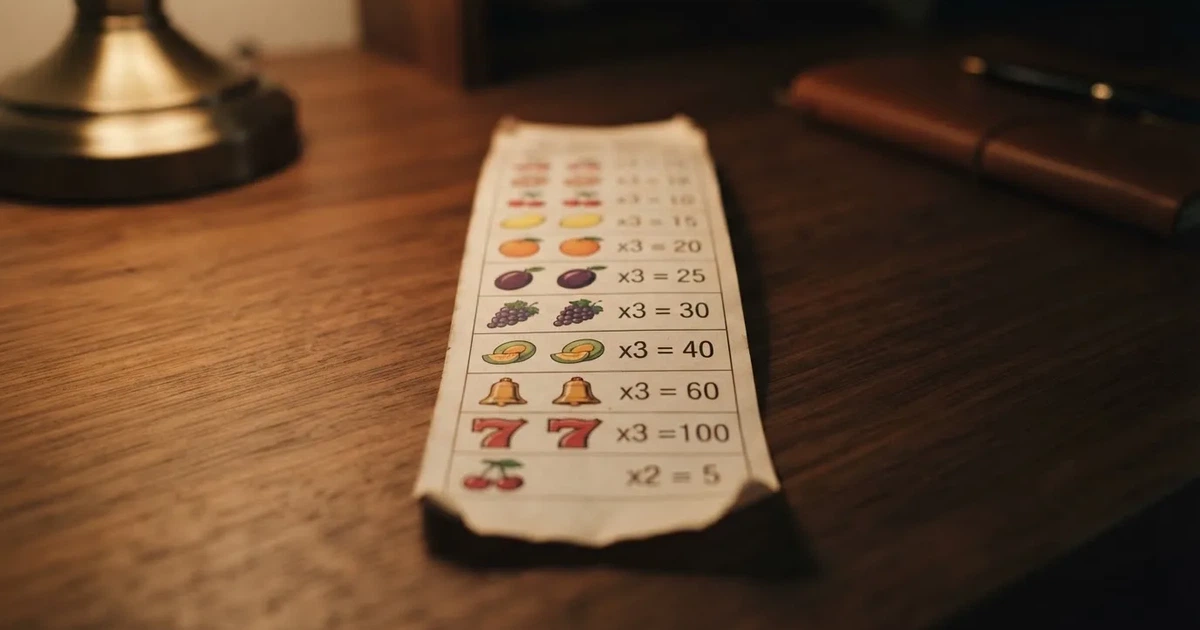
A paytable on a Booongo — now 3 Oaks Gaming — slot does the same job a paytable does on any modern video slot. It lists each symbol, the value of a line of three, four or five of that symbol at the base stake, and the payout for any scatter or bonus combination. Wilds substitute for regular symbols; scatters pay anywhere on the reels and usually trigger the free-spins feature. The free-spins round is where the volatility lives — modern Booongo-style slots often load the bonus round with extra wilds, expanding symbols or a hold-and-win mechanic that drives the headline payouts.
A worked example using a generic 3 Oaks-style slot: a five-of-a-kind line of the top symbol at a 1-credit stake might pay 50 credits, the scatter might pay 100 credits for five anywhere on the reels and trigger 10 free spins, and the wild might double any line win it joins. Those numbers vary by title; the structure — paytable, scatter, free spins, special wild — is what carries across the catalogue.
Booongo’s own restructuring in 2021 produced the 3 Oaks Gaming brand, which now holds the licences. The UK Gambling Commission granted 3 Oaks a remote operating licence on 9 February 2024 under number 063055-R-338209-005, with the company operating under Green Rock Ltd from Douglas, Isle of Man. The Commission has certified more than 50 of 3 Oaks’ titles, including 3 Pots of Egypt, Storm of Olympus, 777 Fruity Classic and Hawaii Riches. The Malta Gaming Authority issued a recognition notice on 4 August 2025, extending the catalogue — Sun of Egypt 4, Coin UP: Lightning, 3 Hot Chillies — to MGA-licensed operators. Earlier approvals covered the UK, Portugal and Romania.
The reader-side consequence is the one this whole page returns to. Those licences mean 3 Oaks titles can be offered at a UK-licensed or Malta-licensed casino. They do not, on their own, put 3 Oaks titles in front of an Australian player at an Australian-licensed casino, because no such casino exists.
The eleven brands the ACMA has warned — a reference table
Each brand below is named because the ACMA itself issued a formal warning over it for offering prohibited services to Australians. The column on subject support follows the listings the studio and aggregator pages publish — it does not affirm that any of these brands carry a particular provider’s games today.
| Brand | ACMA action and date | Operator named by the ACMA | Subject support |
|---|---|---|---|
| RocketPlay | Formal warning, March 2026; earlier Dama N.V., May 2022 | Pulsup Ltd | — |
| Level Up Casino | Formal warning, May 2022 | Dama N.V. | listings-only (Wazden) |
| Woo Casino | Formal warning, March 2025 | Dama N.V. | — |
| Spirit Casino | Formal warning, May 2025 | Dama N.V. | — |
| National Casino | Formal warning, July 2025 | Consolutetish S.R.L. | listings-only (Betsoft, Pragmatic Play) |
| Bizzo Casino | Formal warning, July 2025; earlier TechSolutions, 2022 | Consolutetish S.R.L. | — |
| Ignition Casino | Formal warning, July 2025 | Bamboo Media | — |
| Instant Casino | Formal warning, February 2025 | EOD Code SRL | — |
| Jackbit | Formal warning, April 2026 | Ryker B.V. | — |
| Casino Intense | Formal warning, April 2025 | Sterplay Holding Ltd | listings-only (1spin4win) |
| Sky Crown | Formal warning, September 2022 | Hollycorn N.V. | — |
Every brand in the table sits outside the Australian licensing regime. The Interactive Gambling Act 2001 makes the provision of online casino games to a person in Australia an offence; whatever offshore licence a brand displays, it is not an Australian one, and an ACMA formal warning is the public record that the ACMA considers the service to be in breach. The “earlier” dates on RocketPlay and Bizzo reflect repeat enforcement against operators that continued or resumed offering prohibited services after a prior warning.
The listings-only column reflects what third-party game-provider pages publish, not what the brands themselves confirm. A brand carrying no listing in that column is not affirmed as carrying or not carrying the subject’s games — the data is simply not on the consulted pages.
How the ACMA’s blocking rate has run
The ACMA’s blocking programme is the load-bearing fact behind every brand in the table. The data is the A$1,751 figure for cumulative blocks since November 2019 and the 12-site round reported in June 2026: 7Signs, ChromaBet, Donbet, Duospin, Freshbet, Slots Gem, Jacks Club, Lucky Start, Pointsbetz.com, Spinrise, Vinyl Casino and Wildsino.
Spanning from November 2019 to June 2026 — roughly six and a half years — the running total of 1,751 blocked sites works out to a blocking rate of about 270 sites per year, or close to 23 per working month, across the full life of the programme. The early years carried the bulk of that figure as the ACMA worked through the long tail of established offshore operators; the current rate is slower, because the easier sites to find have already been blocked, and because the ACMA’s enforcement has pushed more than 230 unlicensed services out of the Australian market entirely since 2017. The June round is an example of the steady work — a dozen more sites added to the block list in a single cycle, most of them new enough to the market that they had not yet appeared in a prior round.
The condition that holds the rate at this level is the ACMA’s own enforcement cadence, not any change in demand. H2 Gambling Capital’s estimate of A$3.9 billion a year in losses to illegal sites has not dropped as the block list has grown — the share going through legal channels fell from 74 per cent in 2021 to 64 per cent — which suggests the audience moves to new sites as old ones get blocked. The blocking rate is a measure of the regulator’s reach, not of the market’s retreat.
What the eleven brands actually offer
The brands sit at varying distances from the Australian market, and that distance matters more than any single bonus figure. Each writeup below carries the ACMA action, the operating company named in the warning, and what the consulted listings pages say about the brand’s game mix. No bonus terms are reproduced — the only sources for them were affiliate marketing pages — and no brand is recommended as a place to play. The verdict on each is the section’s own.
RocketPlay
RocketPlay sits at the top of the table because the ACMA has acted against it twice. A formal warning to Pulsup Ltd over Rocketplay.com.au was issued in March 2026, on top of an earlier warning to Dama N.V. in May 2022 covering Rocketplay alongside Bambet, Dazard, Level Up, Wild Tornado and Cobra Casinos. The two-enforcement pattern is the one the ACMA has used when a brand continues or resumes offering prohibited services after a first warning.
The subject support line is blank. No consulted listing puts a specific provider’s catalogue in front of RocketPlay by name. What that absence tells a reader is straightforward: a brand can be in this market for years without its game mix being documented in the same place as its bonus terms, and the reader is the one left reading marketing copy without a third-party listing to check it against.
The verdict on RocketPlay is the one the rest of the table shares. Two ACMA warnings on the same brand is the regulator telling the operator, then telling it again, that the service is prohibited. A reader choosing RocketPlay is choosing it after that.
Level Up Casino
Level Up was named in the May 2022 Dama N.V. warning alongside RocketPlay, Bambet, Dazard, Wild Tornado and Cobra Casinos — six brands under one operator in a single round. The subject support line is listings-only on Wazden, meaning a Wazden-facing page lists it as a partner rather than the brand itself confirming the integration. That is a thin connection: a single aggregator or studio listing is not the same as a brand confirming it carries those games, and it doesn’t tell a reader what other providers sit alongside.
The cost to a reader is the cost of any offshore casino carrying an older formal warning. The ACMA’s 2022 enforcement round predates the studio’s restructuring, the recognition notices and the UK licence; the brand’s compliance posture has been on the public record for several years. A reader who lands on Level Up today is accessing a service the regulator already flagged for non-compliance.
Woo Casino
Woo Casino drew a fresh formal warning to Dama N.V. in March 2025 — three years after the original Dama N.V. round that included Woo’s sister brands, but a separate action. The subject support line is blank.
The pattern in Dama N.V.’s enforcement — May 2022 on six brands, March 2025 on Woo, May 2025 on Spirit Casino — is one operator drawing repeat warnings across multiple brands under its umbrella. From a reader’s perspective, the relevant fact is not which Dama N.V. brand carries which studio’s games; it is that the operator behind the brand has been told by the ACMA three times in four years that the service it offers Australians is prohibited. The bonus terms and the game library are downstream of that.
Spirit Casino
Spirit Casino is the second of the 2025 Dama N.V. actions, with a formal warning in May 2025. The brand is newer to the ACMA’s published record than its sister brands under Dama N.V., but it sits inside the same operator-level enforcement pattern. Subject support is blank.
For a reader, the brand’s recency is not a shield. A formal warning is a public record that the ACMA considers the service prohibited as of the warning date. Whatever date Spirit Casino started accepting Australian players, it did so under an ACMA position that the service is in breach.
National Casino
National Casino drew a formal warning to Consolutetish S.R.L. in July 2025. The subject support line is listings-only across Betsoft and Pragmatic Play — meaning those providers’ corporate or catalogue pages list National Casino as a partner, not that the brand confirms its full game mix. A reader using those listings should read them as what the studios say, not as National Casino’s own statement.
The July 2025 warning is also notable for the company it named. Consolutetish S.R.L. is a different operating entity from Dama N.V., Hollycorn N.V. or the other operators in the table. The ACMA’s enforcement reaches across operating-company structures, which is the relevant fact when a brand’s terms page points to a different corporate name than the ACMA’s warning does.
Bizzo Casino
Bizzo carries two entries on the ACMA’s record. A 2022 formal warning to TechSolutions (CY) Group Limited and TechSolutions Group N.V., then a July 2025 formal warning to Consolutetish S.R.L. — the same operating entity named in the National Casino warning two months later. The subject support line is blank.
Two warnings across different operators covering the same brand is the strongest signal in the table that the ACMA’s enforcement follows the brand as well as the operator. A reader who lands on Bizzo today is viewing an offer the regulator has acted against under two distinct corporate structures over several years.
Ignition Casino
Ignition Casino drew a formal warning to Bamboo Media in July 2025. The subject support line is blank. Ignition sits alongside National Casino and Bizzo in the July 2025 round, but under a different operating company again — Bamboo Media rather than Consolutetish S.R.L. — which reinforces the point that the ACMA’s enforcement targets the brand’s offer to Australians, regardless of which corporate entity is named on the site’s terms page.
For a reader, the absence of subject-support listings is a practical warning in its own right. The brands that show up across studio and aggregator pages are typically the ones with the most active marketing; a brand with no listing is harder to verify, which means harder to check what is actually being offered before depositing.
Instant Casino
Instant Casino drew a formal warning to EOD Code SRL in February 2025, the earliest action in the table relative to the page’s writing date. The subject support line is blank.
EOD Code SRL is a different operating entity again — separate from Dama N.V., Hollycorn N.V., Bamboo Media and Consolutetish S.R.L. Across the eleven brands in the table, the ACMA has named at least six different operating companies, which is the structural reason offshore enforcement is a long game: blocking one operator’s sites doesn’t reach the others, and the brand can be re-incorporated faster than the regulator can warn it.
Jackbit
Jackbit drew a formal warning to Ryker B.V. in April 2026, alongside CasinOK. The subject support line is blank. The April 2026 round is the most recent in the table at the page’s writing date, and it brings a new operating company — Ryker B.V. — into the ACMA’s published record.
Jackbit markets itself heavily on crypto, which puts it in the same enforcement gap as the other offshore brands: credit cards and crypto are not the Australian-licensed deposit rails, so a site’s reliance on them is itself a marker of where it sits relative to the Australian regime.
Casino Intense
Casino Intense drew a formal warning to Sterplay Holding Ltd in April 2025. The subject support line is listings-only across 1spin4win, which is a separate slot studio from Booongo / 3 Oaks Gaming. The presence of 1spin4win on Casino Intense’s consulted listings tells a reader the brand carries games from a studio with a Curaçao licence, more than 190 slots in its catalogue and over 1,000 casino partnerships — a different supplier footprint than the Betsoft / Pragmatic Play cluster seen on National Casino.
The honest read is that a brand can carry multiple studios’ games at once, and the ACMA’s enforcement is on the brand offering prohibited services to Australians, not on any one provider’s catalogue. A reader comparing two offshore brands should not be choosing between their game libraries; they are choosing between two routes into the same prohibited market.
Sky Crown
Sky Crown is the oldest entry in the table, with a formal warning to Hollycorn N.V. in September 2022 — alongside Blue Leo — making it the brand the ACMA warned first. The subject support line is blank.
Hollycorn N.V. is yet another operating company, distinct from the others named above. The age of the warning is worth noting on its own: Sky Crown has been on the ACMA’s published record longer than any other brand in the table, and the service remains in the regulator’s crosshairs.
Frequently asked questions
Is Booongo itself an operator, or just a game studio?
Booongo is a slot studio, not an operator. It develops and supplies games; it does not run a casino where players can bet. The studio restructured in 2021 and its catalogue now ships under the 3 Oaks Gaming brand, which holds the licences — a UK Gambling Commission remote operating licence granted 9 February 2024 under number 063055-R-338209-005, and a Malta Gaming Authority recognition notice issued 4 August 2025. Booongo / 3 Oaks never operated a casino brand of its own.
Can Booongo titles be played at any Australian-licensed casino?
No. Online casino games and online pokies cannot be licensed in Australia under the Interactive Gambling Act 2001. The Interactive Gambling Amendment Act 2017 strengthened the prohibition, and no state or territory issues a licence for them. The 3 Oaks Gaming licences cover the UK, Malta, Portugal and Romania — not Australia. Any casino offering 3 Oaks / Booongo titles to an Australian player is doing so offshore.
What does a Booongo paytable typically show that other studios’ don’t?
Modern Booongo-style paytables — and the 3 Oaks Gaming catalogue that grew out of them — generally include a hold-and-win bonus mechanic alongside the standard scatter-triggered free spins. The structure is conventional at the base game: wilds substitute, scatters pay anywhere, the top symbol pays the highest line value. The bonus round is where the catalogue tends to load its volatility, with extra wilds, expanding symbols or the hold-and-win feature driving the larger payouts.
Does Booongo run its own casino, or only license games?
Only license. The studio has never operated a casino brand, and the 3 Oaks Gaming successor holds B2B and remote operating licences rather than a B2C casino licence. Every casino carrying the studio’s games does so under a separate operator licence, usually Curaçao for the offshore market that includes Australia.
Why do offshore casinos highlight Booongo to Australian visitors?
Three reasons sit behind the marketing. The first is catalogue depth: the studio’s slots contribute 100% to wagering on most offshore sites, which makes them useful for clearing bonuses. The second is familiarity: players searching for specific titles — Sun of Egypt, 3 Pots of Egypt, Coin UP — find the offshore sites first. The third is regulatory: an offshore operator can advertise what an Australian-licensed operator cannot, including bonus offers on prohibited casino games. Highlighting Booongo is highlighting a product that sits outside the Australian regime.
Is it legal for a site to offer Booongo games to Australians?
No, under the Interactive Gambling Act 2001 as amended in 2017, the provision of online casino games — including slots — to a person physically in Australia is an offence. The offence sits with the provider, not the player, but the practical consequences for a player are real: no Australian consumer protection, no complaints body, no recourse if a withdrawal is refused, and the risk that the ACMA’s blocking programme freezes an account with a balance still on it. BetStop’s self-exclusion register doesn’t cover offshore sites, and the credit-card and crypto ban doesn’t reach them either.