
Microgaming casinos for Australian players in 2026: the real shape of the market
Someone typing “microgaming casino” or “microgaming casino australia” is usually after a working shortlist of online casinos that run on the Microgaming platform. The honest answer is that no such shortlist exists for Australia, and that is the more useful thing to put on the page. Under the Interactive Gambling Act 2001, no operator anywhere in the world can lawfully offer online casino games or online pokies to a person physically in Australia, so any site that pitches itself as a “Microgaming casino for Australians” is, by definition, operating outside Australian law. The page below sets out what that prohibition means in practice, what the Australian Communications and Media Authority has done about it, what the lawful alternatives look like, and what to make of the offshore brands the regulator has named.

Data current as of 8 November 2026 and cross-checked against the Australian Communications and Media Authority’s published formal-warning register and the Interactive Gambling Act 2001.
Table of Contents
- The Australian position on online casino games
- What Microgaming actually is
- Bonuses, free spins and the arithmetic behind them
- Payments: how money actually moves
- The mobile and app experience
- Responsible gambling and self-exclusion
- The blocking rate, six years on
- Operator entries: every brand the ACMA has named
- What the comparison actually shows
- The 2026 reform
- What to make of it as a reader
- Frequently asked questions
The Australian position on online casino games
Australia’s wagering and gambling framework draws a hard line between licensed products and prohibited ones. Licensed wagering — pre-event bets on sport and racing, lotteries, keno — is regulated at state and territory level, with most online bookmakers holding a Northern Territory Racing and Wagering Commission licence for tax reasons. Online casino games, online pokies and in-play betting sit on the other side of that line, made prohibited interactive gambling services under the Interactive Gambling Act 2001 as strengthened by the Interactive Gambling Amendment Act 2017. No state or territory issues a licence for them, and no offshore licence — Curaçao, Malta, Isle of Man, Kahnawake — has any recognition under Australian law. A site displaying a foreign regulator’s seal is not licensed to take Australian play; the seal refers to the operator’s permission to operate somewhere else.

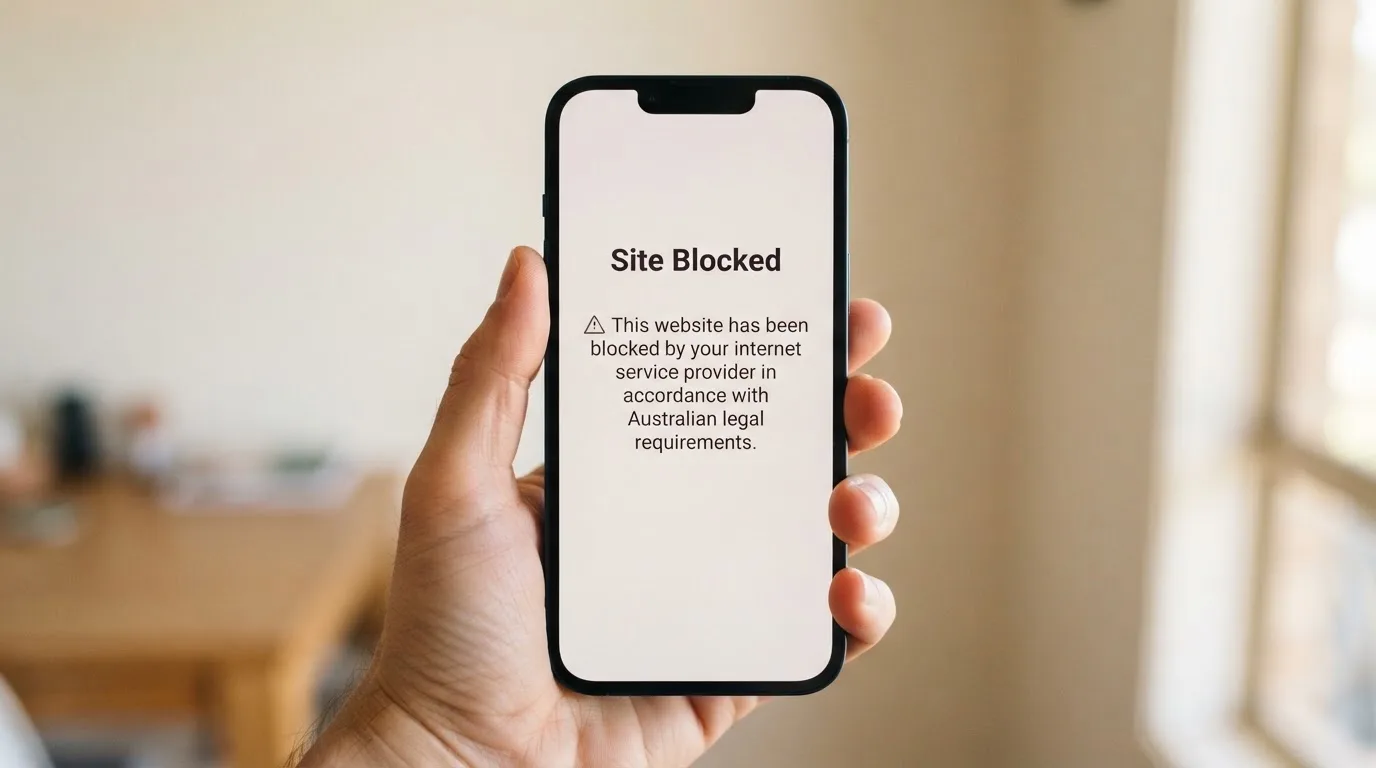
The enforcement picture is consistent. By the regulator’s own June 2026 update, 1,751 illegal gambling and affiliate-marketing websites had been blocked since the first blocking request in November 2019, and more than 230 unlicensed gambling services had left the Australian market since enforcement was strengthened in 2017. The June 2026 round alone added twelve more blocking requests — 7Signs, ChromaBet, Donbet, Duospin, Freshbet, Slots Gem, Jacks Club, Lucky Start, Pointsbetz, Spinrise, Vinyl Casino and Wildsino. The mechanism is that the ACMA asks Australian internet service providers to block the named domains at the network level; the sites themselves are still live elsewhere, which is why new domains appear and why the list keeps growing rather than shrinking.
H2 Gambling Capital’s 2025 estimate puts the annual flow of Australian consumer money to illegal offshore sites at roughly A$3.9 billion, with the share of gambling going through legal channels falling from 74% in 2021 to 64%. Those are estimates, not audited totals, and they describe a market the law is trying to compress.
What Microgaming actually is
Microgaming is one of the older names in online casino software. The Isle of Man-based company is credited by Wikipedia’s article on online gambling with building the first fully functional online gambling software in 1994, secured with CryptoLogic technology. Its founder, Martin Moshal, launched the Gaming Club casino from Durban in 1994 with Roger Raatgever signing the startup loan for a 50% stake. Microgaming launched Cash Splash in 1998, described as the first online progressive-jackpot slot game. That history makes the brand a recurring presence on listings of online casino software providers — the term “Microgaming casino” in search-engine shorthand means a casino whose games are powered by Microgaming’s software platform, which historically has run to several hundred slot titles plus table games and a progressive-jackpot network. None of that changes the legal position for Australian players.
For comparison, several other providers sit alongside Microgaming in the offshore catalogue. 1spin4win, founded in 2021, is Curaçao-licensed, headquartered in Willemstad, and reports a portfolio of more than 190 online slots built in HTML5 for low-bandwidth connections, with over 1,000 operator partnerships and 46% growth in total bet sum in the first half of 2025. Betsoft, founded in 2006, lists more than 200 RNG games spanning slots, table games, video poker and specialty titles, with RNG certification from Quinel and Gaming Labs International and partnerships across regulated markets in Europe, Scandinavia, Latin America and Africa. BGaming, operated by Stable Games Ltd of Valletta, holds a Malta Gaming Authority Critical Gaming Supply Licence (MGA/B2B/785/2020, issued 18 March 2021) and offers 250+ certified games. Aristocrat Leisure — Australian, founded 1953, listed on the ASX in 1996 under ALL — is the largest gambling-machine manufacturer in Australia and the second-largest slot manufacturer worldwide, with 2025 revenue of A$6.30 billion and a regulated online arm formed in April 2024 as Aristocrat Interactive. Aristocrat’s path is the instructive one: an Australian gambling-machine manufacturer whose Australian consumer-facing online offering is structured around the regulated real-money and social-casino channels the law permits, not around offshore casino.
Bonuses, free spins and the arithmetic behind them
A “Microgaming casino welcome bonus” almost always means the same shape of offer as any offshore casino welcome package: a percentage match on the first deposit, sometimes with free spins attached, and a turnover requirement that determines when bonus money becomes withdrawable. The turnover requirement is the part that matters and is the part the marketing copy tends to bury.
Taking a representative scenario: a 100% deposit match up to a stated cap, with a 35× bonus turnover requirement, on slots at roughly 96% RTP and a stake of A$1 per spin. The required turnover is the bonus amount multiplied by 35; the number of spins is that turnover divided by A$1 per spin; the play time at a five-second interval between spins is the spin count divided by 720 per hour. The expected loss over that play is the turnover multiplied by (1 − 0.96) = 4% of turnover, plus the stake of any non-bonus balance the player chooses to put through. The conclusion the formula yields is how long the bonus takes to clear and what it costs on average, and it makes no claim about the likelihood of any individual player winning.
What the calculation does not say is the part the marketing also tends not to say: that the wagering requirement applies to the bonus, not just to winnings from it; that free-spin winnings are usually capped at a small multiple of the free-spin value; that some games are weighted at less than 100% toward turnover; and that maximum-bet rules during the bonus period void the bonus if exceeded. None of those conditions is hidden in the sense of being secret, but they are routinely the difference between a bonus that pays out and a bonus that does not.
Payments: how money actually moves
For licensed Australian wagering, the payment channels allowed are debit card, bank transfer, PayID/Osko and BPAY. Since 11 June 2024, credit cards, credit-related products and digital currency have been banned as payment for licensed online wagering, with penalties up to A$247,500 for operators that breach. A site that asks an Australian customer for a credit card or a crypto deposit is, by the payment method alone, operating outside the Australian regime.
Offshore sites use a different set of routes — e-wallets, prepaid vouchers, bank transfers to overseas accounts, and increasingly crypto. The withdrawal side is where the gap between offshore and Australian practice is widest. A licensed Australian bookmaker pays out through the same PayID, BPAY or bank-transfer system that took the deposit, with stated timeframes in hours or a couple of working days. An offshore site typically processes withdrawals through the e-wallet or crypto channel the player used to deposit, and the timeframe depends on the operator’s own internal processing and the player’s verification status. The audited timeframes on an offshore site are not enforceable through an Australian complaints body, because the site is not in any Australian regulatory perimeter.
For a player comparing payout speeds, the practical question is who has standing to enforce the timeframe when the money does not arrive. On a licensed Australian bookmaker, the answer is the regulator. On an offshore casino, the answer is the operator’s own customer-support function, which is the only entity with the power to act, and which has no Australian-side obligation to do so. The IGA targets the provider, not the player, so a refused withdrawal is a commercial dispute in the operator’s home jurisdiction rather than an Australian consumer-law matter.
The mobile and app experience
“Microgaming mobile casino” and “microgaming casino app” both describe essentially the same thing — slots and table games running in a phone browser, with a native iOS or Android wrapper where the operator chooses to publish one. Microgaming’s catalogue was built progressively across desktop-first, download-client and instant-play eras; the modern instantiation is HTML5, which means the same game runs in a mobile browser without a separate app install. The visual fidelity and the game catalogue are essentially the same as on desktop for any title released after roughly 2017.
For an Australian player, the mobile experience of an offshore casino and of a licensed Australian wagering app is structurally different. Licensed wagering apps are published through the Australian App Store and Play Store channels that comply with local advertising rules, integrate with Australian payment rails, and connect to BetStop for self-exclusion. Offshore casino apps, where they are published, sit outside those channels — distributed through the operator’s own website, with side-loaded APK installs on Android, and with no connection to Australian self-exclusion or complaints infrastructure.
Responsible gambling and self-exclusion
BetStop, the National Self-Exclusion Register, has been live since August 2023. A person registered with BetStop is blocked from opening new accounts with Australian-licensed online and phone wagering services, and existing accounts are closed. The mechanism is Australian-jurisdiction binding: every licensed operator checks BetStop at account opening, and a registered person who tries to open an account is declined.
The mechanism stops at the Australian border. An offshore casino is not connected to BetStop, has no obligation to check it, and accepts a registered person’s deposit as readily as anyone else’s. Self-exclusion from an offshore casino is at the operator’s discretion, and a player who has registered with BetStop and then opened an offshore account is, in practical terms, attempting to manage a self-exclusion across two regulatory systems with only one of them doing what its name says. The National Gambling Helpline — 1800 858 858 — is free, 24/7, and chat-based through Gambling Help Online, and is the right first call for anyone whose play has moved from entertainment to something else.
For a player who has decided to step back, the lawful Australian-facing channels are the licensed wagering operators and the land-based venues in each state. The land-based casino floors in Melbourne, Sydney, the Gold Coast, Perth, Adelaide, Hobart, Darwin and Cairns are licensed and regulated under state regimes; they offer table games and pokies, they connect to state-level self-exclusion schemes, and they are subject to the responsible-gambling obligations those schemes impose. None of them offers a Microgaming progressive jackpot, because Microgaming’s online catalogue is not a product those venues carry. The trade is between a regulated physical venue with real self-exclusion infrastructure and an offshore online venue with a wider catalogue and no Australian enforcement behind any of its promises.
The blocking rate, six years on
By the regulator’s June 2026 update, 1,751 illegal gambling and affiliate-marketing websites had been blocked since the first blocking request in November 2019. Working the arithmetic at the page level: the running total divided by the months from November 2019 to June 2026 — roughly 79 months — gives an average in the order of 20 to 25 blocks per month across the full period. The first year of enforcement was lighter; the heavier monthly rate is from 2023 onwards, when the formal-warning register expanded and the ACMA began naming the operator entities behind the domains. The result is a band, not a single figure: somewhere between 20 and 25 blocks per month over the full period, with the post-2023 months consistently at or above the upper end of that band. The mechanism the band describes is that the regulator is moving faster than the offshore market is migrating to fresh domains, which is the mechanism the regulator needs to be moving faster than to compress the illegal market at all.
Operator entries: every brand the ACMA has named
What follows is not a ranking and is not a recommendation. Each brand below is included because the Australian Communications and Media Authority has issued a formal warning over it for offering prohibited online casino services to Australians. The brand-by-brand basis on which the ACMA named the operator, the brand, and the date is reproduced in the table beneath the entries, then each entry expands on what is on the public record.
RocketPlay
The ACMA named Pulsup Ltd as the operator behind Rocketplay and issued a formal warning in March 2026. The same brand appeared on an earlier warning in May 2022, when Dama N.V. was named across six casino brands including Rocketplay. The two-operator history is typical of how the offshore market works: a brand moves between operating companies without the consumer-facing site changing much, and the regulator’s records end up tracking that movement. The position for an Australian reader is straightforward — the brand is on the formal-warning register, and the underlying product is a prohibited interactive gambling service under the IGA, regardless of the licence the site displays.
Level Up Casino
Level Up appeared on the May 2022 Dama N.V. warning alongside Rocketplay, Wild Tornado, Cobra Casino, Bambet and Dazard. It surfaces on Wazdan’s provider listings as a casino carrying Wazdan slots, which is consistent with the multi-provider setup that offshore casinos run — Microgaming, Wazdan, Pragmatic Play and the rest stacked under one roof. The ACMA’s naming is the operative fact; the provider listings are background.
Woo Casino
The ACMA issued a formal warning to Dama N.V. over Woo Casino in March 2025. Dama N.V. is the same operating company named in the 2022 round, with the warning cycle tracking an operator that has stayed on the register across years and brands. Woo Casino’s site is one of the longer-running Dama properties.
Spirit Casino
The ACMA issued a formal warning to Dama N.V. over Spirit Casino in May 2025. Two months after Woo Casino, on the same operating company. The pattern of consecutive warnings against the same operator entity is the regulator’s way of dealing with a portfolio of brands run by one back office.
National Casino
The ACMA named Consolutetish S.R.L. over National Casino in July 2025. The brand surfaces on Betsoft’s and Pragmatic Play’s provider listings alongside a number of other offshore casino properties. National Casino’s presence on those listings says only what the listings report — that the brand carries those providers’ games.
Bizzo Casino
The ACMA issued a formal warning to Consolutetish S.R.L. over Bizzo Casino in July 2025, alongside National Casino. Bizzo had already been the subject of a 2022 formal warning to TechSolutions (CY) Group Limited and TechSolutions Group N.V., so the brand has crossed operators the way Rocketplay has. The 2022 warning to TechSolutions was the regulator’s first formal step against the brand.
Ignition Casino
The ACMA issued a formal warning to Bamboo Media over Ignition Casino in July 2025. Ignition has been a long-running offshore brand and is named here as one of the operator entities the regulator has acted against in 2025.
Instant Casino
The ACMA issued a formal warning to EOD Code SRL over Instant Casino in February 2025 — the first of the 2025 round. The “instant” branding and crypto-first positioning the site uses is a recurring pattern across the EOD Code SRL portfolio.
Jackbit
The ACMA issued a formal warning to Ryker B.V. over Jackbit and CasinOK in April 2026. The brand’s positioning is a crypto-first offshore sportsbook-and-casino combination, and the ACMA’s naming of two brands under one operating company is consistent with how Ryker B.V. has presented its portfolio.
Casino Intense
The ACMA issued a formal warning to Sterplay Holding Ltd over Casino Intense in April 2025. Casino Intense surfaces on 1spin4win’s partner listings alongside other offshore properties, with the listings naming the brand in the operator-partner context only.
Sky Crown
The ACMA issued a formal warning to Hollycorn N.V. over Sky Crown and Blue Leo — Hollycorn operates both brands under the same licence perimeter, and the formal warning published in September 2022 names both. Sky Crown is the older of the two and is the one most often cited as a stand-alone brand in industry listings.
Comparison of ACMA-named brands
| Brand | ACMA action and date | Operator named by the ACMA | Microgaming presence |
|---|---|---|---|
| RocketPlay | Formal warning, March 2026 (also May 2022 under Dama N.V.) | Pulsup Ltd (2026); Dama N.V. (2022) | — |
| Level Up Casino | Formal warning, May 2022 | Dama N.V. | listed on Wazdan |
| Woo Casino | Formal warning, March 2025 | Dama N.V. | — |
| Spirit Casino | Formal warning, May 2025 | Dama N.V. | — |
| National Casino | Formal warning, July 2025 | Consolutetish S.R.L. | listed on Betsoft and Pragmatic Play |
| Bizzo Casino | Formal warning, July 2025 (also 2022 under TechSolutions) | Consolutetish S.R.L. (2025); TechSolutions (2022) | — |
| Ignition Casino | Formal warning, July 2025 | Bamboo Media | — |
| Instant Casino | Formal warning, February 2025 | EOD Code SRL | — |
| Jackbit | Formal warning, April 2026 | Ryker B.V. | — |
| Casino Intense | Formal warning, April 2025 | Sterplay Holding Ltd | listed on 1spin4win |
| Sky Crown | Formal warning, September 2022 | Hollycorn N.V. | — |
The Microgaming column is empty for most rows because the research did not carry that information for those brands; the entries where listings mention Microgaming or a comparable provider are reported as the listings report them, not as an operator claim. Every other row is on the ACMA’s formal-warning register, with the operator entity and the date the regulator names. The point of putting them in one place is not to recommend them; it is to make the register’s contents searchable by brand.
What the comparison actually shows
Read across the eleven rows, the pattern is that offshore casino brands cluster around a small number of operating companies. Dama N.V. alone accounts for four of the rows — Rocketplay, Level Up, Woo Casino and Spirit Casino — across two warning rounds in 2022 and 2025. Consolutetish S.R.L. accounts for two more in 2025 alone. The remaining operating companies — Pulsup Ltd, Bamboo Media, EOD Code SRL, Ryker B.V., Sterplay Holding Ltd and Hollycorn N.V. — each account for one or two brands. The brands themselves cycle, but the operator entities persist.
For a player, the practical implication is that the brand on the marketing site is not the entity the regulator names when action is taken. The same Microgaming progressive jackpot can sit behind three brand front-ends run by the same Dama N.V. back office, and the formal warning over one of those brands is, in the regulator’s view, action against the operator behind all of them. The connection a player can verify from outside is the one in the table above; the brand-marketing layer is designed to make that connection harder to see.
The 2026 reform
The Interactive Gambling Amendment (Gambling Reform) Bill 2026 passed Parliament on 19 August 2026. Its advertising and inducement measures commence 1 January 2027. As of a page read in 2026, the bill is law with a start date, not yet in force — a reader encountering it now sees a published statute, not an active enforcement regime. The bill’s effect, once it commences, is to widen the prohibition on inducements and tighten the advertising rules around licensed wagering; it does not change the underlying prohibition on offering online casino games to Australians, which has been in force since 2017.
What to make of it as a reader
A reader comparing “microgaming casinos for Australia” is, before anything else, comparing licensed and unlicensed products. The licensed product is wagering on sport and racing, lotteries and keno, with the consumer protections that come with Australian-licensed operation — BetStop self-exclusion, PayID and BPAY payments, complaints through the regulator. The unlicensed product is everything else, including every offshore casino that pitches to Australians regardless of whether it uses Microgaming, Betsoft, Pragmatic Play or any other provider. The unlicensed product has a wider catalogue and faster game release, and the trade for that catalogue is the absence of the protections listed above, plus the standing risk that the operator’s site is on the ACMA’s blocking list the morning a withdrawal is pending.
For a reader who has decided the licensed product is the right frame, the right next step is a licensed Australian bookmaker for wagering, a licensed Australian pokies venue for poker-machine play, and BetStop if self-exclusion is the goal. For a reader who is comparing offshore sites on their own merits, the right next step is to read the formal-warning register at acma.gov.au before opening any account, to understand that the bonus terms on the marketing site are not enforceable through any Australian complaints body, and to know that the ACMA can ask an Australian ISP to block the domain with a balance still on the account.
Frequently asked questions
What kind of games does Microgaming make?
Microgaming’s catalogue is built around online casino software — slots, table games, video poker and a progressive-jackpot network. Cash Splash in 1998 was the first online progressive jackpot on the platform, and the wider catalogue has run to several hundred slot titles plus table games over the company’s history. The modern instantiation is HTML5, so the games run in a browser without a download. For Australian players, the practical point is that Microgaming’s catalogue is the catalogue an offshore casino carries; nothing in it changes the IGA’s prohibition on offering those games to a person in Australia.
Is Microgaming used by any casino licensed to operate in Australia?
No Australian state or territory issues a licence for online casino games or online pokies, so no Australian-licensed casino uses Microgaming’s online casino software. The Microgaming progressive-jackpot catalogue does not appear on any Australian-licensed gambling product. What does appear in Australia is Aristocrat’s land-based gambling-machine hardware in pubs and clubs, plus Aristocrat Interactive’s regulated online real-money and social-casino channels; Aristocrat is the comparable Australian-facing slot manufacturer, not Microgaming.
Can Australians legally play Microgaming slots at an online casino?
No. The Interactive Gambling Act 2001 prohibits offering online casino games and online pokies to a person in Australia. An offshore casino carrying Microgaming’s catalogue is offering a prohibited service; the prohibition applies to the operator, not the player, but the player has no Australian consumer protection on that site and no Australian complaints route if a withdrawal is refused. The lawful Australian-facing channels are licensed wagering on sport and racing, licensed lotteries and keno, and licensed land-based casino and pokies venues.
Are Microgaming games available at land-based Australian casinos?
Not in the Microgaming-branded sense. Australian land-based casinos run their own electronic gaming machine floors under state-level regulation, with Aristocrat as the dominant Australian slot-machine manufacturer and International Game Technology as the global leader. Microgaming’s online casino catalogue is a separate product line that does not appear on those floors. A player looking for slot-machine play in Australia goes to a licensed venue, not to a Microgaming-branded machine.
What should someone check before trusting a site that claims to offer Microgaming games?
The first check is the ACMA’s formal-warning register at acma.gov.au — every brand in this page’s comparison table is on it, and a search for the brand name will return the operator entity and the date. The second check is the payment method: an Australian-facing site that asks for a credit card or a crypto deposit is outside the Australian regime, because credit cards and digital currency are banned for licensed Australian wagering since 11 June 2024. The third check is the licence the site displays — a Curaçao or Isle of Man seal refers to the operator’s permission to operate in those jurisdictions, not to take Australian play. None of those checks is sufficient on its own; together they describe the gap between the marketing claim and the legal position.
Does Microgaming software run on mobile browsers?
Yes. Microgaming’s modern catalogue is built in HTML5, which means the same games run in a phone browser without a separate app install. The mobile experience is essentially the same as the desktop experience for any title released after the platform’s HTML5 transition. The mobile channel itself does not change the legal position for an Australian player — an HTML5 mobile casino is still a prohibited interactive gambling service if it is offered to a person in Australia.