
Best Relax Gaming Online Casinos Australia: The Reality Behind the Marketing
Online casino games carrying Relax Gaming’s library are being marketed to Australians by offshore operators right now. Not one of those operators holds an Australian licence to provide them, because the product itself — an online casino game, an online pokie — is prohibited under the Interactive Gambling Act 2001. What can be licensed onshore is wagering on races and sport placed before the event, lotteries and keno; what cannot be licensed anywhere in the country is the product Relax Gaming makes its living from.
Verified against the ACMA’s published enforcement record as of 8 November 2026.
Table of Contents
- What Relax Gaming actually is, and why that matters in Australia
- The Australian legal frame, plain
- Responsible gambling in a market the licensed framework doesn’t reach
- Deposits, withdrawals and the payment rules an Australian can’t use
- Bonuses, free spins and what the offer really costs
- Mobile, apps and what the touchscreen actually delivers
- The Relax Gaming catalogue: what the marketing glosses over
- The blocking rate, stated as a band
- The brands the ACMA has formally warned
- How this comparison is put together, and why the criteria matter
- What an Australian reader should take from this page
- Frequently Asked Questions
What Relax Gaming actually is, and why that matters in Australia
Relax Gaming is a B2B casino supplier, not a casino. The company was founded in 2010 by Patrik Österåker and Jani Tekoniemi and built out of a Malta office as its commercial and product hub. In July 2021 Kindred Group bought the remaining two-thirds of the company it did not already own at an enterprise value of up to EUR 320 million. The supplier now reports more than 300 staff, with a footprint that has grown from earlier hubs in Malta, Estonia, Sweden and Serbia into a base that the company itself describes in Mallorca, where it marked a 15th-anniversary milestone.

The catalogue that ends up on offshore sites is built under licences a regulator does recognise. Relax Gaming holds a UK Gambling Commission account (account number 37462), a Malta Gaming Authority licence, and authorisations from Gibraltar’s Gambling Division, Romania’s ONJN and Canada’s AGCO. None of those licences covers Australia, because none of them needs to: the supplier is regulated where it is incorporated and where its operators are licensed, and its customers are the operators themselves.
That distinction is the one the marketing blurs. A punter on a Curacao-licensed site reads “Powered by Relax Gaming” and infers that the supplier’s imprimatur extends to them. It doesn’t. The licence is the operator’s to lose, and in Australia the operator doesn’t have one to begin with.
The Australian legal frame, plain
The Interactive Gambling Act 2001, as tightened by the Interactive Gambling Amendment Act 2017, makes it an offence to provide online casino games, online pokies or in-play betting to a person physically in Australia. The offence sits with the provider, not the player — no Australian has been prosecuted for placing a bet on an offshore site — but the practical consequences for the player are heavier than the statute suggests.
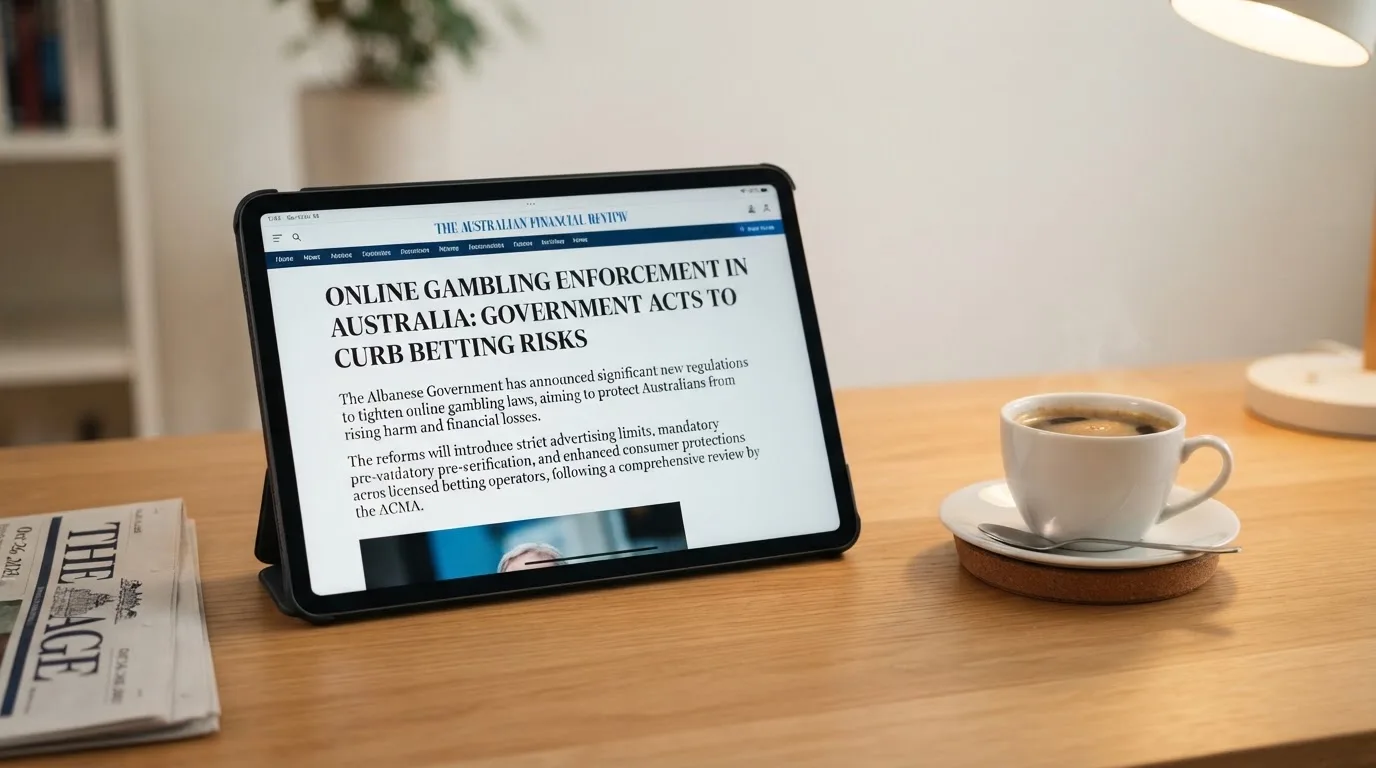
An offshore operator is outside the reach of Australian consumer law, outside any state complaints body, and outside any recourse mechanism if a withdrawal is refused or a bonus term is rewritten mid-play. The Australian Communications and Media Authority can direct local ISPs to block the site, and it has done so 1,751 times since the first blocking request in November 2019. More than 230 unlicensed services have left the Australian market entirely since enforcement was strengthened in 2017. A blocked site that still holds a player’s balance leaves the player with nowhere to complain, because the operator is by definition not in any jurisdiction bound to answer them.
The minimum age is 18. The licensed product set in Australia is pre-event wagering (racing and sport), lotteries and keno. The regulator for the racing and sports-betting side is, in practice, the Northern Territory Racing and Wagering Commission, which licences 52 of Australia’s online bookmakers — including Sportsbet, Bet365 and Ladbrokes — and runs without full-time staff, meeting once a month in Darwin. A “licensed Australian casino” is a phrase that has no referent, because no such licence exists.
What the 2026 reform changes
The Interactive Gambling Amendment (Gambling Reform) Bill 2026 passed Parliament on 19 August 2026 and its advertising and inducement measures commence on 1 January 2027. The prohibitions themselves were already in force; the reform tightens what licensed wagering services can advertise, and the inducement rules take effect at the calendar turn. On a page read in 2026 the new advertising rules are not yet binding.
Responsible gambling in a market the licensed framework doesn’t reach
The Australian responsible-gambling infrastructure is built for the product set that is licensed, which is racing, sport, lotteries and keno. Gambling Help Online runs the National Gambling Helpline on 1800 858 858, free and 24/7, with web chat for people who would rather type than call. BetStop — the National Self-Exclusion Register — has been live since August 2023 and binds every Australian-licensed online and phone wagering service, so a self-excluded punter cannot open new accounts with Sportsbet, Ladbrokes, Bet365 or any of their peers.
It does not bind an offshore casino. BetStop’s coverage is the licensed set, and offshore sites are not licensed. A self-exclusion registered with BetStop will not stop a Curacao site accepting a deposit; it stops the licensed Australian bookmakers from doing so. The asymmetry matters: a person trying to use self-exclusion as a circuit-breaker needs to know that the mechanism only interrupts part of what is available to them, and the part it interrupts is the part that is already legal.
For people outside the licensed framework, the supports that do reach them are Gambling Help Online and the state-based counselling services, the financial counsellors at the state-funded Financial Counselling Australia network, and the gambling-treatment programs each state health department funds. None of these requires the caller to be a customer of a licensed operator.
Deposits, withdrawals and the payment rules an Australian can’t use
The Australian rules on payment are tighter than on the product itself. Credit cards, credit-related products and digital currency have been banned as a means of paying for licensed online wagering since 11 June 2024, with penalties of up to A$247,500 for any operator that accepts them. The legal deposit routes for an Australian punter using a licensed bookmaker are debit card, bank transfer, PayID/Osko and BPAY.
An offshore casino asking for a credit-card deposit or a Bitcoin wallet is, by definition, operating outside the Australian rules — not merely outside the licence frame, but outside a payment frame that licensed operators themselves must observe. The same is true of an e-wallet routed through a provider that does not hold Australian authorisation, and the practical consequence for the player is chargeback friction: a card scheme may treat an offshore gambling transaction as out-of-policy and refuse the reversal, leaving the punter to recover funds from an operator with no local presence to compel.
Settlement times for offshore casinos are the same as for any offshore operator: instant to internal “pending”, then a review window of 24 to 72 hours for first-time withdrawals, sometimes longer if the operator requests source-of-funds documentation that an Australian player is not obliged to provide under any local law. The site holds the funds during the review, and the review’s outcome sits inside the operator’s own terms.
What that costs the punter in practice
The cost is not the payout delay; the cost is the absence of a remedy at the end of it. A withdrawal held “pending verification” on a licensed Australian bookmaker can be escalated to the Northern Territory Racing and Wagering Commission or to the relevant state regulator. A withdrawal held “pending verification” on an offshore site can only be escalated to the operator’s own customer service, and then, if that fails, to whatever complaints mechanism the operator’s own licence requires — which is often none, or a body in a jurisdiction the punter cannot practically reach. The cost is the absence of a referee.
Bonuses, free spins and what the offer really costs
The bonus on a Relax Gaming-branded casino game at an offshore site is the standard offshore bonus: a percentage match on the first deposit, with a wagering requirement expressed as a multiple of the bonus, the deposit, or both. Free spins arrive as a fixed allocation tied to a specific title, sometimes at a fixed coin value and sometimes at the minimum bet the game allows. The marketing language around these offers is uniform across the offshore market and uniformly generous-sounding.
The cost is uniform too. A 100% match bonus with a 40x wagering requirement on the bonus amount means a punter staking A$1,000 in bonus funds has to turn A$40,000 over before the bonus balance becomes withdrawable — and during those A$40,000 the house edge of the game is taking its usual cut. On a slot returning 96% to the player, the expected loss over that turnover is A$1,600, against a bonus headline of A$1,000. A “free” bonus with a 50x requirement and a maximum cashout cap is, on the arithmetic, less generous than a plain deposit.
Maximum bet rules, excluded games, time limits and maximum cashout caps are the small print that turns the headline upside down. The standard offshore maximum bet while a bonus is active is A$5 per spin; exceeding it voids the bonus and any winnings. Game-weighting rules routinely exclude the highest-volatility slots from contributing to wagering, or weight them at 20% of stake. A 7-day expiry on a 40x wagering requirement is operationally impossible to clear on a slot with a house edge in the 4% range, because the bonus expires before the turnover is reached.
None of these mechanisms is unique to Relax Gaming-branded sites. They are the standard offshore pattern, applied to a catalogue that includes Relax Gaming titles. What makes the pattern worth naming on this page is that it is the mechanism the marketing depends on, and the mechanism a player has no Australian recourse against if it is applied in a way the player disputes.
A worked example, stated plainly
Take a A$500 deposit bonus with a 35x wagering requirement on the bonus only, played on a slot at a 96% RTP with a A$1 stake per spin. Required turnover is A$17,500; that is 17,500 spins at A$1 each; at a five-second spin interval the play time is roughly 24 hours of continuous play, before any house edge is applied. The expected loss over the A$17,500 turnover at 4% house edge is A$700 — so the bonus headline of A$500 is paid for, statistically, by A$700 of expected loss before the A$500 is ever withdrawable. This is an average over many spins under the stated assumptions; it is not what any individual player will experience. A higher-volatility slot widens the variance but does not change the average.
Mobile, apps and what the touchscreen actually delivers
Relax Gaming builds in HTML5, and the mobile experience of its games is browser-based rather than app-based. A punter opens the site in a mobile browser, signs in, and the games load into the browser window. There is no Relax Gaming app to download, because the company does not operate consumer-facing apps: it supplies games to operators, and the operators are the ones who build or do not build the apps. Where an offshore site offers an “app”, it is a wrapper around a mobile browser rather than a native application, and the practical difference is mostly in push notifications and home-screen presence.
Load times on a current-generation handset over 4G sit in the 2–4 second range for a typical Relax Gaming slot, with the heavier 3D titles running a second or two longer. The games are designed for portrait and landscape orientation, and the touchscreen interface collapses to a single spin button with on-screen paytable access. Battery use on a long session is the limiting factor, not performance: a slot at 60fps on a mid-range phone will run a battery flat in three to four hours, which matters more for the punter’s experience than anything the supplier controls.
The reason there is no Australian “Relax Gaming app” is the same reason there is no Australian Relax Gaming casino: the product is not licensed in Australia, and an Australian app store will not carry an app whose central function is prohibited onshore.
The Relax Gaming catalogue: what the marketing glosses over
Relax Gaming’s content is broadly slots, with a smaller live-dealer and bingo offering built through partner studios. The slots run from classic three-reel formats through modern five-reel video slots with cluster pays and megaways-style mechanics, plus the supplier’s “Dream Drop” jackpot network that links progressive prizes across a curated set of titles. The titles themselves are licensed and tested in the supplier’s own regulated markets; the games on an offshore casino are the same games, on the same maths, hosted by an operator who does not hold an Australian licence.
That last clause matters when a player is comparing a Relax Gaming slot to a slot from another supplier. Aristocrat Leisure, the Australian-listed slot manufacturer, makes both land-based poker machines and — through Aristocrat Interactive, formed in April 2024 by combining the Anaxi unit with the NeoGames group — regulated online real-money content. Aristocrat’s online real-money product is licensed in jurisdictions that do permit it, and Aristocrat’s land-based product is regulated by state and territory authorities including the New South Wales Liquor & Gaming NSW, the Victorian Commission for Gambling and Liquor Regulation, and the Queensland Office of Liquor and Gaming Regulation. The product is regulated; the Australian consumer’s route to it is the local pub or club, not an offshore website.
BGaming and Betsoft occupy similar positions on the supply side: BGaming debuted in 2018 and offers more than 250 certified games, with RNG certification from independent labs; Betsoft has been operating since 2006 with more than 200 RNG games and RNG certification from Quinel and Gaming Labs International (GLI). 1spin4win, founded in 2021, runs an HTML5 catalogue of more than 190 online slots from a Curaçao base. All four are B2B suppliers licensed in their own jurisdictions; none of them is an Australian-licensed operator.
The slot maths themselves are published in the supplier’s game pages for a subset of titles. Betsoft’s The Slotfather, live since December 2012, carries a published RTP of 95.69%, “Medium” volatility and an 8.17% hit rate across 5 reels and 30 paylines. Betsoft’s Good Girl Bad Girl 2 has a published RTP of 96.22%, “Very High” volatility and a 15.59% hit rate across 5 reels and 20 paylines. These are the figures on the supplier’s own pages; they are what an Australian player would see if they read the game information panel rather than the casino’s marketing.
The blocking rate, stated as a band
Since the first ACMA blocking request in November 2019 and through the round reported on 26 June 2026, a cumulative 1,751 illegal gambling and affiliate-marketing websites have been directed to Australian ISPs for blocking. That figure is the running total the ACMA reports; the most recent single round added 12 sites (7Signs, ChromaBet, Donbet, Duospin, Freshbet, Slots Gem, Jacks Club, Lucky Start, Pointsbetz, Spinrise, Vinyl Casino and Wildsino).
Stated as a rate: between November 2019 and the end of June 2026, roughly 80 months, the ACMA has directed the blocking of about 22 illegal sites per month on average, with single rounds ranging from a handful to the larger sweeps that have come in waves. The rate has not been constant: enforcement intensified after 2017 and again after the 2024 payment reforms, and the early months of the programme were slower than the post-2017 average. The rate is also not a forecast — a single round can add 80 sites, and the ACMA’s enforcement priorities can shift — so the figure worth carrying is the band, not a single number.
What the rate shows is the scale of the supply the ACMA is dealing with, and the cost of trying to play inside it. A site that exists today may be on a blocking list next month, with whatever balance the player has left in it. The arithmetic favours the operator, not the punter.
The brands the ACMA has formally warned
The table below lists the brands covered in this comparison, each one named because the ACMA itself issued a formal warning over it for offering prohibited interactive gambling services to Australians. The dates and operating-company names are as published by the ACMA. Online casino games cannot be licensed anywhere in Australia, regardless of the licence any of these sites display on its footer.
| Brand | ACMA action and date | Operator named by the ACMA | Subject support |
|---|---|---|---|
| RocketPlay | Formal warning, March 2026; earlier warning May 2022 | Pulsup Ltd (March 2026); Dama N.V. (May 2022) | — |
| Level Up Casino | Formal warning, May 2022 | Dama N.V. | Listed by Wazdan as carrying its titles |
| Woo Casino | Formal warning, March 2025 | Dama N.V. | — |
| Spirit Casino | Formal warning, May 2025 | Dama N.V. | — |
| National Casino | Formal warning, July 2025 | Consolutetish S.R.L. | Listed by Betsoft, Pragmatic Play and Wikipedia references |
| Bizzo Casino | Formal warning, July 2025; earlier warning 2022 | Consolutetish S.R.L. (July 2025); TechSolutions (2022) | — |
| Ignition Casino | Formal warning, July 2025 | Bamboo Media | — |
| Instant Casino | Formal warning, February 2025 | EOD Code SRL | — |
| Jackbit | Formal warning, April 2026 | Ryker B.V. | — |
| Casino Intense | Formal warning, April 2025 | Sterplay Holding Ltd | Listed by 1spin4win, the UK Gambling Commission register and Wikipedia references |
| Sky Crown | Formal warning, September 2022 | Hollycorn N.V. | — |
Two patterns are visible in the table. The first is operator churn: Dama N.V. has been warned in 2022 and again in 2025, then again under a different trading entity (Pulsup Ltd, March 2026), and TechSolutions was warned in 2022 under the brand Bizzo and again in 2025. The rebranding is not new ownership in any sense that would matter to an Australian player; it is the same pattern the ACMA documents each time it warns a new entity over a brand the previous entity was warned for.
The second pattern is geography: the operating companies are registered in Curaçao, in Cyprus, in the British Virgin Islands — none of them in Australia, and none of them in a jurisdiction with an enforceable Australian-facing complaints mechanism. The brand name is the front of house; the entity behind it is offshore, the licence it displays is offshore, and the recourse a player has at the end of a disputed withdrawal is offshore.
For each brand the same disclaimer applies: the ACMA’s formal warning is the ACMA’s published view that the service is offering prohibited interactive gambling services to Australians; the brand’s own footer licence is not an Australian licence, because no such licence exists.
How this comparison is put together, and why the criteria matter
The criteria that separate one brand from another on this page are not the criteria that would separate them on an affiliate page. An affiliate page ranks by commercial terms: bonus size, free-spin count, wagering multiple. This page ranks by the ACMA’s own enforcement record, which is the only objective signal available for a product set the Australian framework prohibits.
A formal warning under the Interactive Gambling Act is the ACMA’s written notice that the operator has been offering prohibited services to Australians. It is published on the ACMA’s website, with the operator’s name and the date. A second warning to the same operator for the same brand is a stronger signal than a first; a second warning to a different operator over the same brand is the strongest signal available short of an actual blocking direction.
The date of the warning matters because the older the warning, the more likely the brand has been re-launched under a new operating entity — RocketPlay’s May 2022 warning to Dama N.V. was followed by a March 2026 warning to Pulsup Ltd over the same brand. The operating entity’s pattern of warnings is itself the data, because the pattern shows whether the operator has continued offering prohibited services across rebrandings, or has stopped after a single warning. None of the eleven brands in the table has stopped after a single warning.
What the comparison does not do: it does not rank the brands by play quality, payout speed, game variety or bonus generosity, because those are the criteria an affiliate page uses and they are the criteria an Australian reader should not be relying on for a product set no Australian framework will enforce on their behalf.
What an Australian reader should take from this page
The marketing on the search result the reader clicked on is not lying. The site does offer Relax Gaming slots, and the games do play. What the marketing does not say is that the product itself is prohibited in Australia and the operator is offering it anyway, with the full knowledge that the ACMA can direct an Australian ISP to block the site and that any balance the player has on it at the time is effectively unrecoverable.
H2 Gambling Capital’s 2025 report estimates that Australians lose about A$3.9 billion a year to illegal gambling sites, and that the share of gambling going through legal channels has fallen from 74% in 2021 to 64%. That is the cost at the population scale. At the individual scale it is a blocked site with a balance on it, or a withdrawal “pending verification” indefinitely, or a bonus term rewritten mid-play with no regulator to appeal to.
The reader’s three real options are: use the licensed Australian bookmakers for racing, sport, lotteries and keno, with the protections those licences provide; do not gamble at all; or accept that the product being advertised is being advertised in defiance of Australian law, and that the consequence of playing it is borne by the player alone.
Frequently Asked Questions
Is Relax Gaming legally available to players in Australia?
No online casino game is legally available to players in Australia, whether the supplier is Relax Gaming or anyone else. The Interactive Gambling Act 2001 prohibits the provision of online casino games and online pokies to people in Australia, and no state or territory licences them. What is licensed onshore is pre-event wagering, lotteries and keno.
What kinds of games does Relax Gaming make?
Relax Gaming is primarily a slot supplier, with a smaller live-dealer and bingo offering through partner studios. The catalogue runs from classic three-reel slots through modern video slots with cluster pays and megaways-style mechanics, plus the supplier’s “Dream Drop” progressive jackpot network. The company holds a UK Gambling Commission licence (account 37462), a Malta Gaming Authority licence, and licences in Gibraltar, Romania and Ontario.
Are Relax Gaming games offered at land-based venues in Australia?
Not under the Relax Gaming brand. Aristocrat Leisure, the Australian-listed slot manufacturer, makes land-based poker machines regulated by state and territory authorities. The games are different products under different brands, with different maths and different regulators, even where they share a genre. The licensed route to slot-style gaming in Australia is the local pub or club, regulated by the state authority.
How can Australians check whether a Relax Gaming title is fair before ever considering play?
The game-information panel inside any Relax Gaming slot displays the published RTP and volatility for that title. Betsoft publishes the same figures on its own game pages — The Slotfather at 95.69% RTP and Medium volatility, Good Girl Bad Girl 2 at 96.22% and Very High volatility. Independent RNG testing for the major suppliers is performed by labs including Quinel and Gaming Labs International, and the supplier’s own regulator (UKGC, MGA, ONJN, AGCO) audits the maths. The verification happens upstream of the casino; the casino is a customer of the supplier, not a regulator of the maths.
Why do offshore sites keep advertising Relax Gaming games to Australian visitors?
Because the offshore operators are not licensed in Australia and are not subject to the Australian advertising rules, and because the search advertising that targets Australians is itself regulated separately from the product offering. The ACMA’s enforcement targets the provider of the prohibited service, not the affiliate marketer or the search-engine ad. The marketing continues because the cost of being caught — a formal warning, eventually a blocking direction — is borne by the operator, while the player who arrives on the site bears the cost of the product.
What should an Australian do if they see a Relax Gaming game promoted by an unlicensed site?
Report the site to the ACMA through its reporting page; do not deposit. The ACMA’s enforcement is what eventually gets the site blocked, and reporting is the mechanism the public has for flagging a brand the ACMA has not yet acted on. For gambling-harm support, Gambling Help Online runs the National Gambling Helpline on 1800 858 858, free and 24/7, with web chat also available. The licensed route for wagering in Australia is through an Australian-licensed bookmaker; anything else is operating outside the framework that protects Australian consumers.