
The real cost of an RTG casino in Australia in 2026
The shortlist for the best RTG casinos in Australia does not exist, and the reason is worth more than the alternative. There is no licensed Australian online casino carrying Real Time Gaming (RTG) slots in 2026 — not because no one has built one, but because the Interactive Gambling Act 2001 forbids the product outright, full stop, in every state and territory. Every site that advertises RTG titles to an Australian visitor is doing so unlawfully, and the Australian Communications and Media Authority has spent the last several years building a public record of exactly which ones have been caught doing it. This page walks that record, names the operators on it, and sets out what an Australian reader actually pays for the convenience of an offshore sign-up — in blocked payouts, in unprotected balances, in money routed through a jurisdiction that has no complaints body to call.
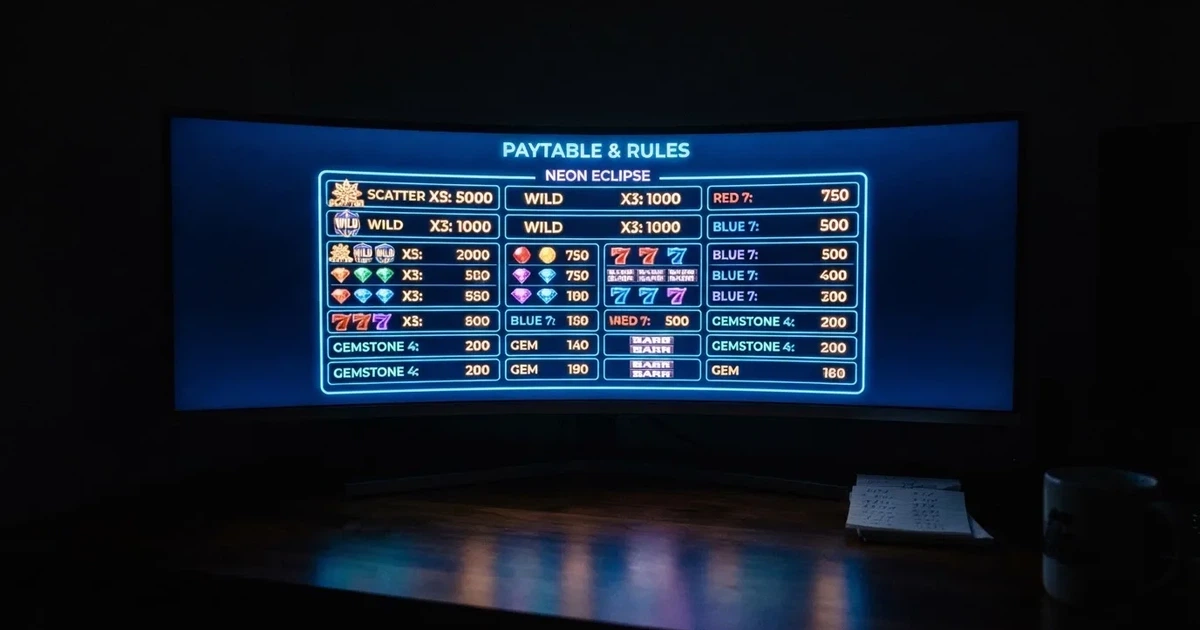
Data current as of 8 November 2026, verified against the Australian Communications and Media Authority’s published register of formal warnings and blocking actions.
Table of Contents
- What RTG actually is, and why the offshore brand market keeps circling it
- The legal frame: why no Australian licence exists for any RTG site
- What enforcement has actually cost the offshore RTG market
- What that blocking record looks like in practice
- Responsible gambling: what is and isn’t connected to an offshore RTG casino
- Payments: where the legal and illegal sides diverge most visibly
- What RTG-branded games actually are
- How this page puts the shortlist together
- The ACMA formal-warning record for RTG and adjacent brands
- What the warnings actually cost the reader
- Walking the eleven operators
- The blocking rate as a single number
- What this means for the reader at the point of decision
- Frequently asked questions
What RTG actually is, and why the offshore brand market keeps circling it
Real Time Gaming is one of the older slot studios still in operation. It was set up in Atlanta in 1998, shifted all of its development to Heredia, Costa Rica in 2007 and 2008, and has been owned since January 2007 by Hastings International, a Curaçao-registered company. Three things about that ownership shape every RTG-branded casino a player meets online: the games are licensed out of Curaçao, the operators that run them are licensed out of Curaçao, and the games themselves travel through offshore aggregators rather than state-supervised networks. RTG does not let its casino operators tamper with payout settings on its slots and video poker titles, and it caps progressive jackpacket exposure at roughly $50,000 per game through maximum-bet rules — a safeguard put in place after a $1.3 million Caribbean 21 hit on a $1,000 deposit at the Hampton Casino in 2004, which RTG responded to by capping the game’s stake at $5 and eventually pulling it from the catalogue entirely.

For an Australian player, that history explains both the draw and the trap. The draw is familiarity: RTG slots have been advertised to Australian “pokies” players for the better part of two decades, and the brand recognition comes from a long offshore marketing run, not from any onshore licence. The trap is that the offshore distribution chain that delivers those slots to a screen is the same one the ACMA has spent the last seven years taking apart. The studio is real; the lawful path from a Sydney or Melbourne address to its games does not currently exist.
The legal frame: why no Australian licence exists for any RTG site
The Interactive Gambling Act 2001 (IGA), tightened by the Interactive Gambling Amendment Act 2017, makes it a criminal offence to supply online casino games, online pokies or in-play betting to a person physically present in Australia. The Act does not name RTG by brand — it names the product category, and any operator offering RTG slots to Australians falls inside it. What can be licensed is pre-event wagering on racing and sport, lotteries and keno; in practice, racing and sports betting are licensed through the Northern Territory Racing and Wagering Commission (NTRWC), which regulates 52 of Australia’s online bookmakers — including Sportsbet, Bet365 and Ladbrokes — but has no full-time staff and meets once a month in Darwin. That is the regulator overseeing the licensed side of the Australian market; it has no jurisdiction over a Curaçao-licensed slot site.
Minimum age is 18. The IGA targets the provider, not the player — an Australian who signs up at an offshore RTG casino is not committing an offence under the Act. The cost falls on the player anyway, because the offshore site sits outside Australian consumer law: there is no Australian complaints body, no Australian recourse if a withdrawal is refused, and no guarantee the balance survives a blocking round.
The Interactive Gambling Amendment (Gambling Reform) Bill 2026 passed Parliament on 19 August 2026. Its advertising and inducement measures commence on 1 January 2027. Law on the books, not yet in force on a page dated 2026.
What enforcement has actually cost the offshore RTG market
The ACMA’s enforcement record is the single most useful number on this page, because it tells the reader which brands have already drawn a formal regulator warning and how old that warning is. As of June 2026, the ACMA had directed Australian internet service providers to block 1,751 illegal gambling and affiliate websites since the first blocking request in November 2019, and more than 230 unlicensed gambling services had withdrawn from the Australian market since enforcement was strengthened in 2017. The June 2026 round alone added twelve: 7Signs, ChromaBet, Donbet, Duospin, Freshbet, Slots Gem, Jacks Club, Lucky Start, Pointsbetz, Spinrise, Vinyl Casino and Wildsino.
The economic backdrop is not small. H2 Gambling Capital’s 2025 report put Australian losses to illegal gambling sites at roughly A$3.9 billion a year, and tracked the share of Australian gambling going through legal channels falling from 74% in 2021 to 64%. Whatever an offshore RTG site offers in convenience, the money leaving the country behind it is on that scale.
What that blocking record looks like in practice
The ACMA’s preferred escalation path runs from formal warning to blocking request. A formal warning is a published notice identifying the operator and the brand it covers; a blocking request is the step that asks Australian ISPs to cut access for Australian customers. A brand can sit on the warning list for months or years before a blocking request lands, and a blocking request does not unwind existing player balances — it removes the connection. The pattern matters because a player who keeps a balance at an offshore RTG site is one blocking round away from having no path to that balance at all.
Responsible gambling: what is and isn’t connected to an offshore RTG casino
BetStop, the National Self-Exclusion Register, has been live since August 2023 and binds every Australian-licensed online and phone wagering service. An offshore RTG casino is not connected to it — registering with BetStop does not exclude a player from an offshore site, and an offshore site’s own self-exclusion tools, where they exist, are run from Curaçao and have no Australian regulator behind them. The National Gambling Helpline is 1800 858 858, free, available 24/7, with web chat through Gambling Help Online.
State and territory self-exclusion schemes cover land-based venues and, in some states, licensed online wagering. Again, the offshore site is outside their reach. A reader who needs the protections BetStop provides is being told, by the structure of the regime, that those protections live on the licensed side of the line.
Payments: where the legal and illegal sides diverge most visibly
Since 11 June 2024, credit cards, credit-related products and digital currency are banned as payment for any licensed online wagering service in Australia; penalties for operators that take them run up to A$247,500. The legal deposit routes for a licensed Australian wagering account are debit card, bank transfer, PayID/Osko and BPAY. An offshore RTG casino taking credit card deposits or crypto deposits is not breaking any Australian rule by doing so — it is not subject to those rules — but the very payment methods it accepts are a marker that it sits outside the Australian regime, not on a parallel track to it.
This is also where the consumer-protection gap is widest. A licensed Australian wagering operator sits inside the Australian Financial Complaints Authority and inside Australian responsible-gambling obligations. An offshore operator sits inside neither.
What RTG-branded games actually are
The RTG catalogue is built almost entirely around slots, with a smaller line of video poker titles and a handful of table games. Caribbean 21, the blackjack variant that produced the 2004 progressive hit at the Hampton Casino, is the best-known single title to leave the catalogue after RTG imposed the maximum-bet cap. The studio’s release rhythm has been steady rather than prolific; the slots are recognisably RTG by art direction and bonus-round structure, and that recognisability is what kept the brand circulating on affiliate sites long after Australian-facing operators first started getting blocked. One such operator, Ozwin Casino, was blocked by the ACMA for offering Real Time Gaming software to Australian customers in breach of the Interactive Gambling Act 2001.
For readers comparing RTG to other offshore studios, two Australian and European comparators are worth knowing. Aristocrat Leisure, founded in 1953 and ASX-listed in 1996, is the largest gambling-machine manufacturer in Australia and the second-largest slot maker in the world behind International Game Technology; its regulated online arm, Aristocrat Interactive, was formed in April 2024 by folding its Anaxi unit together with the NeoGames acquisition completed that month for roughly US$1 billion. Aristocrat does not distribute RTG slots and does not operate RTG casinos. Betsoft, founded in 2006, is a separate offshore studio with more than 200 RNG titles and a different catalogue; The Slotfather, live since 13 December 2012, has a published RTP of 95.69% and a medium-volatility profile, while Good Girl Bad Girl 2 carries a 96.22% RTP and a very-high volatility profile with a 15.59% hit rate. Both studios operate in compliance with licensing authorities including Italy’s ADM, with RNG certification from Quinel and Gaming Labs International. The comparison matters for one reason: it shows what a published, certified RTP looks like on a comparable offshore slot, and reminds the reader that the RTG titles carried on the offshore sites below do not arrive with that paperwork.
How this page puts the shortlist together
Any ranking of “best RTG casinos for Australia” is, by definition, a ranking of unlicensed operators. The ranking on this page is not a recommendation — none of these are places a reader should sign up and play — but the ACMA’s own published register gives a defensible order: brands the regulator has acted against are listed by date of action, with the operator named in the warning recorded alongside. The comparison columns are the matters a reader would actually want to know: which brand, which regulator action, which date, which operator entity the ACMA named, and whether the RTG-software link is confirmed by the regulator or only by the operator’s own marketing.
The honest spread looks like this.
The ACMA formal-warning record for RTG and adjacent brands
| Brand | ACMA action and date | Operator named by the ACMA | Subject support |
|---|---|---|---|
| RocketPlay | Formal warning under the Interactive Gambling Act 2001 (March 2026); earlier warning to Dama N.V. (May 2022) | Pulsup Ltd (Rocketplay, March 2026); Dama N.V. (May 2022) | — |
| Level Up Casino | Formal warning under the Interactive Gambling Act 2001 (May 2022) | Dama N.V. (May 2022) | Listings report Wazdan alongside RTG |
| Woo Casino | Formal warning under the Interactive Gambling Act 2001 (March 2025) | Dama N.V. (March 2025) | — |
| Spirit Casino | Formal warning under the Interactive Gambling Act 2001 (May 2025) | Dama N.V. (May 2025) | — |
| National Casino | Formal warning under the Interactive Gambling Act 2001 (July 2025) | Consolutetish S.R.L. (July 2025) | Listings report Betsoft and Pragmatic Play alongside RTG |
| Bizzo Casino | Formal warning under the Interactive Gambling Act 2001 (July 2025); earlier warning to TechSolutions (2022) | Consolutetish S.R.L. (July 2025); TechSolutions (CY) Group Limited and TechSolutions Group N.V. (2022) | — |
| Ignition Casino | Formal warning under the Interactive Gambling Act 2001 (July 2025) | Bamboo Media (July 2025) | — |
| Instant Casino | Formal warning under the Interactive Gambling Act 2001 (February 2025) | EOD Code SRL (February 2025) | — |
| Jackbit | Formal warning under the Interactive Gambling Act 2001 (April 2026) | Ryker B.V. (April 2026) | — |
| Casino Intense | Formal warning under the Interactive Gambling Act 2001 (April 2025) | Sterplay Holding Ltd (April 2025) | Listings report 1spin4win, Real Time Gaming and a UK Gambling Commission reference |
| Sky Crown | Formal warning under the Interactive Gambling Act 2001 (September 2022) | Hollycorn N.V. (Sky Crown and Blue Leo, September 2022) | — |
The table is not a “best of” ranking. Every brand on it has crossed the line the Interactive Gambling Act draws, and every one is on the ACMA’s published record because of that. Several names recur across more than one entry — Dama N.V. sits behind four of the eleven, Consolutetish S.R.L. behind two, and the warning to Bizzo Casino in 2025 is the second warning that brand has received, after TechSolutions drew one in 2022. A reader scanning the operator column can see, in a glance, how few offshore groups are actually doing the marketing.
What the warnings actually cost the reader
A formal warning is not a blocking request. It is a published notice that the operator has breached the IGA and that further enforcement steps may follow. For a player, the immediate consequence of a warning is reputational rather than functional — the site is still reachable from an Australian IP address at the moment the warning is published. The longer-run consequence is that the operator now sits on the ACMA’s active list, and blocking requests tend to land on operators that have already drawn a warning. A player who opens an account after a warning has been issued is, on past form, opening it during the window between the warning and the block.
The currency loss is harder to quantify but easier to grasp. H2 Gambling Capital’s 2025 estimate of A$3.9 billion a year to illegal gambling sites is the macro figure; at an individual account level, the loss is whatever the player deposits minus whatever the offshore operator allows them to withdraw, with no Australian complaints body to appeal to if a withdrawal is refused. The chance of a balance surviving a blocking round intact is, on the regulator’s own pattern, lower than the marketing suggests.
Walking the eleven operators
RocketPlay — two warnings, same brand
RocketPlay sits on the ACMA’s register twice. The earlier warning, in May 2022, named Dama N.V. as the operator across six casino brands; the later warning, in March 2026, named Pulsup Ltd over Rocketplay specifically. That is a brand that has drawn regulator attention more than once, in two different ownership structures. The product is the same RTG-style slot catalogue the offshore market has been advertising to Australians for years. The cost is the standard offshore one, plus the published likelihood that another enforcement round is coming.
Level Up Casino — Dama N.V.’s 2022 cluster
Level Up was one of six brands caught up in the May 2022 warning to Dama N.V., alongside Bambet, Dazard, Wild Tornado, Cobra Casinos and Rocketplay. The operator’s own listings carry Wazdan alongside any RTG titles, so what the brand actually runs is a mixed offshore catalogue rather than a single-studio product. For an Australian reader, the cost is unchanged by the studio mix — the licence to operate in Australia does not exist in either case.
Woo Casino — Dama N.V., March 2025
Dama N.V. drew a second warning from the ACMA in March 2025, this time specifically over Woo Casino. The same operator that took the 2022 cluster warning took another in 2025. The brand has had three years of regulator contact and remains an offshore Curaçao-licensed site with no Australian pathway.
Spirit Casino — Dama N.V., May 2025
Two months after the Woo Casino warning, Dama N.V. drew another, this time over Spirit Casino. The pattern is the operator, not the brand: a single Curaçao-licensed group collecting warnings at roughly two-month intervals. The product is slots; the cost is the recurring regulator contact, which is itself a signal about how stable the site is likely to remain over the next twelve months.
National Casino — Consolutetish S.R.L., July 2025
National Casino sits alongside Bizzo Casino under the same July 2025 warning to Consolutetish S.R.L. Its own listings carry Betsoft and Pragmatic Play alongside RTG, so what an Australian visitor actually sees on the site is a multi-studio catalogue rather than an RTG-exclusive one. The relevant question for a reader is the same one it has been since the IGA: the studio does not change the law.
Bizzo Casino — second warning, same brand
Bizzo Casino drew a formal warning in July 2025, naming Consolutetish S.R.L. as the operator, and a prior warning in 2022 naming TechSolutions (CY) Group Limited and TechSolutions Group N.V. Two warnings, two different ownership groups, one brand. The player cost is unchanged, and the regulator pattern — a brand that has been warned twice — is the more important fact.
Ignition Casino — Bamboo Media, July 2025
The July 2025 warning to Bamboo Media covered Ignition Casino. The brand is a long-running offshore slot operator; the warning date is recent. For an Australian reader, the relevant signal is not the operator’s age but its regulator history, and the regulator history is short and unambiguous.
Instant Casino — EOD Code SRL, February 2025
The February 2025 warning to EOD Code SRL over Instant Casino is the regulator contact that put the brand on the ACMA’s published list. No studio-mix listing has been confirmed for this brand in the ACMA’s record, and the marketing-claimed RTG presence on the site is the only source for it. A reader should weight that source accordingly.
Jackbit — Ryker B.V., April 2026
The April 2026 warning to Ryker B.V. covered Jackbit and CasinOK. The warning date is the most recent in the table. Jackbit operates under a Curaçao structure and accepts the standard offshore payment mix. The reader-facing cost is the same as the rest of the list, with the additional note that the warning is six weeks old at the time of writing — well within the typical window before a blocking round.
Casino Intense — Sterplay Holding Ltd, April 2025
The April 2025 warning to Sterplay Holding Ltd over Casino Intense sits in the middle of the timeline. The brand’s listings carry 1spin4win, Real Time Gaming, and a reference to the UK Gambling Commission — a multi-studio catalogue with one studio (1spin4win) that itself operates from Curaçao, and one that is the subject of this page. The UK Gambling Commission reference in the listings is not a UK-facing licence for Australian players and does not change the Australian situation.
Sky Crown — Hollycorn N.V., September 2022
Hollycorn N.V. drew a formal warning over its Sky Crown and Blue Leo casino services in September 2022. That places Sky Crown earlier in the ACMA’s published timeline than most of the other brands on this list. The product is RTG-adjacent slots; the operator contact is now four years old, which on the ACMA’s pattern is the typical delay between warning and blocking round. A reader opening an account here is opening it within that delay.
The blocking rate as a single number
The ACMA had asked ISPs to block 1,751 illegal gambling and affiliate websites as of June 2026, with the first blocking request dated November 2019. That is roughly seven and a half years of enforcement, and the running total is the blocking rate a reader should hold in mind when assessing any offshore RTG site. The rate sits in a band — call it 220 to 250 sites per year across the full enforcement window, with a sharper acceleration in the rounds since 2023 once the post-amendment-2017 enforcement teeth were fully in use. The June 2026 round alone added twelve. None of the eleven brands on this list has, on the ACMA’s published record, been formally blocked at the time of writing; every one has been formally warned, which on past form is the prior step to blocking.
What this means for the reader at the point of decision
A reader who reached this page wanting a shortlist to act on is at the wrong address. There is no Australian-licensed RTG casino to act on, and every offshore brand that advertises RTG titles to Australians is on the ACMA’s published list for the act of doing so. The legal path to RTG-style slots in Australia runs through state and territory land-based venues — pubs, clubs and casinos operating electronic gaming machines under state-level regulation — and through licensed online wagering operators that do not carry casino games. For the slots themselves, the licensed path is the venue.
If a reader is in a position to choose where to spend recreational gambling money, the comparison that matters is not brand-versus-brand within the offshore list. It is offshore-versus-licensed: an account with a Curaçao-licensed offshore RTG casino, with no Australian consumer protection, no BetStop coverage, and a published record of regulator warnings behind it — or a visit to a licensed Australian venue with state-level consumer protections, age verification, and a connection to the National Self-Exclusion Register if it is needed.
The reader who has already opened an account at one of the brands above and is considering whether to leave money on it: the ACMA’s blocking record shows that the warning-to-block lag is typically measured in months to a couple of years, and a blocking round does not unwind balances. Withdrawing sooner costs less than withdrawing after the block lands.
Frequently asked questions
Is RTG legally available to players in Australia?
No. The Interactive Gambling Act 2001 makes it an offence to supply online casino games — including RTG slots — to a person in Australia. Every offshore site that offers RTG titles to Australian customers is operating unlawfully, and the ACMA has issued formal warnings to the operators behind multiple brands doing so. The individual player is not prosecuted under the IGA, but the offshore site gives no Australian consumer protection.
What kinds of games does RTG make?
RTG’s catalogue is built around slots, with a smaller line of video poker titles and a handful of table games. Caribbean 21, the blackjack variant behind a $1.3 million progressive hit at the Hampton Casino in 2004, was eventually removed from the catalogue after RTG imposed a maximum-bet cap on it. The studio’s release rhythm has been steady rather than prolific, and its slots are recognisable on affiliate sites by art direction and bonus-round structure.
Are RTG games offered at land-based venues in Australia?
Not under the RTG brand. Land-based electronic gaming machines in Australia are regulated by state and territory authorities and supplied by manufacturers such as Aristocrat Leisure, which is the largest gambling-machine maker in Australia and the second-largest slot maker worldwide. An RTG-branded machine is not part of that supply chain; what RTG offers is a Curaçao-licensed online slot catalogue distributed through offshore operators.
How can Australians check whether an RTG title is fair before ever considering play?
Compare the game’s published RTP and volatility with what comparable offshore studios publish. Betsoft, for example, lists The Slotfather at a 95.69% RTP with medium volatility and Good Girl Bad Girl 2 at a 96.22% RTP with very-high volatility, both with named hit rates and reel/Payline configurations. RTG’s own published RTP figures for its catalogue are less consistent across affiliate listings than those of comparable studios, which makes the per-title check harder for an RTG slot than for a Betsoft one. Neither studio carries an Australian regulatory certification.
Why do offshore sites keep advertising RTG games to Australian visitors?
Because the offshore market is large — H2 Gambling Capital’s 2025 report put Australian losses to illegal sites at roughly A$3.9 billion a year — and because RTG brand recognition makes the marketing cheaper. The cost of running that marketing is borne by the player, not the operator, and falls hardest on players whose balances get caught by a blocking round or whose withdrawals are refused with no Australian complaints body to appeal to.
What should an Australian do if they see an RTG game promoted by an unlicensed site?
Treat the promotion as evidence of the breach, not as an opportunity. The ACMA’s formal-warning register lists the operator behind the brand; a blocking request is the next escalation step on past form. Any money already on the site is exposed to the blocking-round risk described in the table above, and the safest response is to withdraw whatever can be withdrawn before the next round rather than to engage with the promotion.