The Best Aussie Online Casino in 2026 Looks Nothing Like the Search Results Promise
 Available in US
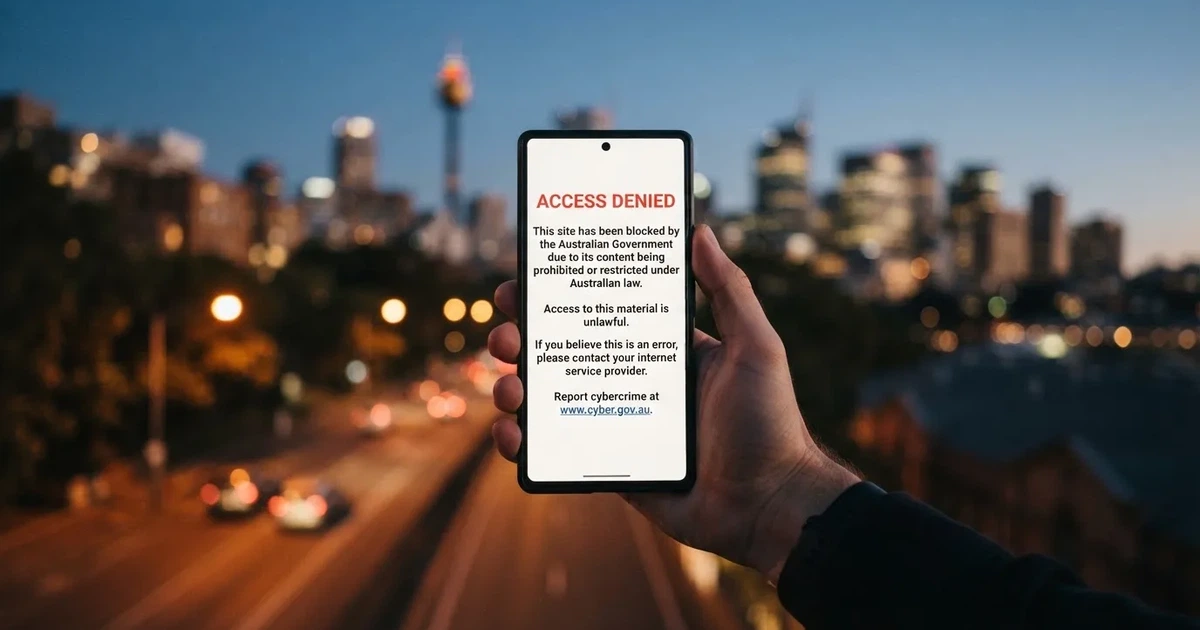
A person typing “best aussie online casino 2026” into a search bar is asking for a recommendation they can trust. They want a properly Australian site, licensed at home, regulated by a body they can name, and reachable from their suburb without using a VPN. That site does not exist. Online casino games and online pokies are prohibited in Australia under the Interactive Gambling Act 2001, and no state or territory issues a licence for them. What the search results are full of is offshore operators — Curaçao-registered, Anjouan-registered, occasionally Kahnawake — running outside Australian law, accepting Australian deposits, and on a list the ACMA has been quietly enlarging for the better part of a decade.
Data current as of 24 September 2026 and cross-checked against the ACMA’s published formal-warning register.
This page is not going to recommend one of them. It is going to do something more useful for the reader who arrived here genuinely looking for a recommendation: lay out the shape of the market they are actually searching within, name the operators that have come up the most, and put a dollar figure on what the choice between offshore and legal looks like when you sit down to add it up. The “best” question does not disappear when the licensed option is removed — it gets harder, and the harder version is the one worth answering.
Table of Contents
- The Landscape the Market Actually Presents
- The Legal Frame the Page Is Set In
- Responsible Gambling and Where to Turn
- Payments, Speed and the Real Cost of Moving Money
- Bonuses, Free Spins and What They Cost
- Mobile, Apps and What a Mobile-Friendly Site Looks Like
- New Casinos and What “New” Means Here
- The Operator List and What the ACMA Record Says About Each
- The Calculation Behind the Number
- A Note on What the Page Is and Is Not
- Frequently Asked Questions
The Landscape the Market Actually Presents
Anyone reading the search results will notice two things at once. The market is defined by a small number of holding companies that appear repeatedly across the results.

| Brand | ACMA Action and Date | Operator | Subject Support |
|---|---|---|---|
| RocketPlay | Formal warning, March 2026 | Pulsup Ltd | Listings-only |
| Level Up Casino | Formal warning, May 2022 | Dama N.V. | Listings-only |
| Woo Casino | Formal warning, March 2025 | Dama N.V. | No data |
| Spirit Casino | Formal warning, May 2025 | Dama N.V. | No data |
| National Casino | Formal warning, July 2025 | Consolutetish S.R.L. | Listings-only |
| Bizzo Casino | Formal warning, July 2025 | Consolutetish S.R.L. | Listings-only |
The Australian Communications and Media Authority keeps a register of formal warnings it has issued to offshore operators, and it is the single most reliable document a reader can use to check whether a brand they have been told to trust has already been on the receiving end of an Australian regulator’s letter. As of the most recent published round, the ACMA had asked Australian internet service providers to block more than 1,750 illegal gambling and affiliate-marketing websites since the first blocking request in November 2019, and more than 230 unlicensed gambling services had left the Australian market since enforcement was strengthened in 2017. That is a market being actively squeezed, not a market the regulator has forgotten about.
What “best” can mean when the local option is gone
When a searcher asks for the “best,” the word is doing a lot of work. It can mean the operator with the fastest withdrawals, the one with the largest bonus, the one with the deepest game library, or the one with the friendliest customer service. None of those qualities is illegal for an offshore site to have — the Interactive Gambling Act 2001 targets the provider, not the individual player — and a serious offshore site can score well on any of those measures. What the offshore site cannot offer, no matter how good its bonuses look, is the thing most people actually mean by “best”: the protection of a regulator they could call on Monday morning if something went wrong.

The honest reading of “best aussie online casino” in 2026 is therefore something narrower than the search results pretend. It is the offshore site that, while operating outside Australian law, at least behaves in ways that make it possible for an Australian reader to use it without walking into one of the predictable traps: identity-verification holds at withdrawal time, bonus terms that void winnings on a technicality, or — the worst case — a site that simply stops responding once a balance gets large enough to be worth walking away from. The brand list below is built around operators the ACMA has warned about, and the warning itself is the first piece of information the reader needs, not the last.
The Legal Frame the Page Is Set In
The Interactive Gambling Act 2001, as tightened by the Interactive Gambling Amendment Act 2017, makes it a criminal offence — punishable by fines, injunctions and referral to the AFP — to provide online casino games, online pokies or in-play betting to a person physically in Australia. The Act targets the provider. The individual player is not prosecuted. The distinction matters, because it is the reason these sites still accept Australian customers at all: enforcement costs the operator money, not the punter.
What is licensable in Australia is wagering on races and sport placed before the event, lotteries and keno. In practice, online bookmakers — Sportsbet, Bet365, Ladbrokes and dozens more — are licensed by the Northern Territory Racing and Wagering Commission, which the ABC reported in April 2026 as regulating 52 online bookmakers despite having no full-time staff and meeting only once a month in Darwin. That is the body that licenses the legal half of the market. Online casinos do not have an equivalent. There is no territory that issues one.
The minimum age for any gambling in Australia is 18. A punter under 18 is breaking the law, and an offshore site that accepts one is breaking it harder.
What the ACMA actually does
The ACMA’s enforcement tool kit has three parts. The first is investigation: the regulator identifies offshore services that appear to be offering prohibited gambling to Australians and gathers evidence. The second is the formal warning — a published document naming the operator and the brand, listing the offending conduct, and putting the operator on notice that further action will follow if the conduct continues. The third is the blocking request: the ACMA asks Australian internet service providers to make the offending domain unreachable from Australia, which is how the 1,751-site total keeps growing.
The blocking mechanism is the one that bites hardest, because a blocked site cannot accept a deposit from an Australian account even if it wants to. The blocking is not instantaneous: a request is made, the ISPs implement it, and the site goes dark for Australian connections over the following days. The ACMA also keeps the formal-warning list as a public register, which is the document this page draws from when it says a brand has been warned.
The Interactive Gambling Amendment (Gambling Reform) Bill 2026 passed Parliament on 19 August 2026, and its advertising and inducement measures commence on 1 January 2026. This page is written while the bill is law with a future start date, not yet in force — which is why an affiliate review full of bonus codes can still exist in 2026, but the rules of advertising around offshore offers will tighten in 2026. For the reader deciding what to do right now, the operative question is the same as it was in 2025: is the site licensed in Australia? If the answer is no, the IGA is the frame the rest of the conversation sits inside.
Responsible Gambling and Where to Turn
This page has spent most of its length saying that the legal Australian product does not include online casinos. The reason the responsible-gambling section comes before the comparison table is that this is also the point at which a reader who has been moving down the page expecting to be told where to play needs to be told, plainly, where to get help if the question is no longer recreational.
Gambling Help Online runs the National Gambling Helpline on 1800 858 858, free, twenty-four hours a day, with web chat at the Gambling Help Online site. The line is staffed by counsellors, not salespeople, and it is the right first call whether the issue is a single bad night, a pattern that has been building for months, or a family member whose gambling has become visible. BetStop, the National Self-Exclusion Register, has been live since August 2023, and it binds every Australian-licensed online and phone wagering service to honour an exclusion. An offshore casino is not connected to BetStop — registration in one does not exclude a person from the other — which is itself a reason the offshore route leaves a reader without one of the simplest self-protection tools the legal market offers.
The rest of this page describes a market the reader should not need help to use. If the description has made the choice harder rather than easier, that is the page doing its job.
Payments, Speed and the Real Cost of Moving Money
The search volume around aussie payid casino and no deposit aussie casino exists because Australian readers, reasonably, want to use the payment rails they already trust. PayID and Osko are the obvious choices: Osko transfers between participating Australian banks arrive in under a minute, twenty-four hours a day, including weekends, and PayID registrations passed 25 million on Australia’s New Payments Platform by April 2025. That is infrastructure an offshore casino can hook into, and many of them do — which is convenient for the punter, and is the part the marketing copy leads with. The part the marketing copy leaves out is what happens at the other end.
What a PayID transfer actually proves
PayID shows the name of the account holder before a transfer is sent, which is the right defence against mistyped BSBs and is the wrong defence against being scammed. Australian Payments Plus, which runs PayID and Osko, warns that being asked to transfer money to a PayID on an illegal gambling site almost certainly means a scam site — and that warning applies even when the recipient name looks plausible. Once the money has gone, the bank transfer is settled, the receiving entity is offshore, and the consumer-protection machinery that exists inside Australia simply does not reach it. A chargeback through the punter’s own bank is the most realistic route, and an offshore merchant disputing the chargeback through its own processor is the realistic outcome of that.
AUSTRAC’s threshold-transaction-report rule, which requires reports on transfers of A$10,000 or more, applies only to physical cash. Ordinary electronic bank transfers are not subject to that per-transaction reporting requirement, regardless of the amount — which means a punter moving A$15,000 to an offshore casino is not on a regulator’s radar for that transfer alone, but is also not protected by any rule that would have flagged it for review.
What the credit-card ban actually changed
The 2023 amendment to the Interactive Gambling Act banned Australian-licensed online wagering services from accepting payment by credit card or other credit-related products, and the ban took effect across the licensed industry on 11 June 2024. The penalties for licensed operators who break the rule go up to A$247,500 per offence. Digital wallets linked to a credit card fall under the same prohibition. The ban, again, applies to Australian-licensed services. An offshore casino is not bound by it, and a punter who tries to deposit using a credit card on an offshore site is in the awkward position of doing something their own bank may decline at the card-issuer level regardless.
The big four Australian banks all run gambling-block tools that work at the card level. Westpac refuses authorisation of transactions registered under the merchant category code “Betting/Casino Gambling” on eligible personal credit and debit cards. ANZ’s block, activated in the ANZ app, also blocks gambling transactions made through a digital wallet on an eligible card — including Apple Pay — and once the block is on, removing it requires a 48-hour waiting period, with the bank warning that not all gambling transactions will be blocked and some non-gambling transactions might be caught in error. Commonwealth Bank lets customers apply a gambling lock to eligible cards through the CommBank app, with the same caveat. Apple Pay itself carries no consumer fee; transaction limits and PIN requirements are set by the card issuer or merchant, not by Apple, and Apple Pay, Google Pay and Samsung Pay collectively accounted for around 45 per cent of all card payments in Australia by number at the end of 2025.
The reader who puts a gambling block on their card before doing anything else has, in one move, removed the easiest deposit route to offshore casinos. That is not a workaround for the offshore market — it is the point.
A working calculation: what blocking has actually cost the illegal market
The prescribed calculation for this page is the blocking rate: how fast the ACMA’s blocked-sites total has grown across the lifetime of the blocking regime, run against the date of the first blocking request. The figures research carries are clean enough to make the rate worth stating: 1,751 illegal gambling and affiliate-marketing websites blocked since the first blocking request in November 2019, with the count current to mid-2026.
The arithmetic: from November 2019 to mid-2026 is roughly 79 months. 1,751 divided by 79 is 22.2 sites per month across the lifetime of the regime — a band that lands in the low twenties per month when averaged out. The rate has not been constant, and the months immediately after big enforcement rounds show clusters of blocks, but the long-run average is the honest way to state what enforcement has delivered. In round terms: the ACMA has been blocking illegal gambling sites at a pace of roughly twenty to twenty-five a month, every month, for almost seven years. That is not a campaign that is winding down. It is the steady drip of a regulator that has settled into a working rhythm.
The calculation’s value is not the precise figure. Its value is what it tells a reader who has been told that offshore casinos are tolerated in Australia: the regulator has been removing around twenty sites a month from reach, consistently, since the year most offshore operators were founded. The honest interpretation is that the offshore market is being managed down, not expanded.
Bonuses, Free Spins and What They Cost
The bonus side of the search-volume picture — aussie casino bonuses, aussie casino bonus, aussie casino signup bonus — exists because affiliate marketing built it. A bonus is the cheapest word an affiliate site can put in front of a reader, and the aussie-facing bonus market has been built on that word since offshore operators realised Australian search volume was a market worth chasing. The bonuses themselves are real numbers, but the conditions on them are the part the marketing copy never leads with.
The shape a bonus usually takes on an offshore site aimed at Australians is one of three. A deposit-match bonus offers to credit the punter’s account with a percentage of their first deposit — often 100 per cent, sometimes 200 per cent or higher on the first deposit, with diminishing percentages on subsequent deposits in a “welcome package.” A free-spins offer credits a fixed number of spins on a named slot, with winnings either paid as cash or credited as bonus funds subject to wagering requirements. A no-deposit offer — the aussie casino no deposit bonus category — credits a small bonus or a handful of spins without requiring a deposit, almost always as a way to get the punter through the door.
What the marketing copy does not lead with is the wagering multiple — the number of times the bonus, or the bonus plus the deposit, must be turned over before any winnings can be withdrawn. A 40x wagering requirement on a A$500 bonus means A$20,000 of play before the bonus becomes withdrawable, and the games that count toward that requirement are usually weighted: pokies might contribute 100 per cent, table games 10 per cent, and a small list of “excluded” games might not count at all. Maximum-bet clauses cap the size of any single wager during the bonus period, and breaching the cap voids the bonus. Withdrawal caps limit how much of the bonus-derived winnings can be taken out, regardless of how much was actually won.
A reader looking at an aussie casino signup bonus with a 200 per cent match and a 50x wagering requirement is looking at an offer whose real cost is the expected loss over the turnover the requirement creates, not the headline number. The mathematical work in the next section makes that concrete.
The cost behind the headline
The expected loss on a bonus is the work of one formula: required turnover multiplied by the house edge, where the house edge is one minus the return-to-player. For an A$500 bonus with a 40x wagering requirement, the required turnover is A$20,000. If the games contributing to the requirement are pokies with an RTP of 96 per cent, the house edge is 4 per cent, and the expected loss over A$20,000 of play is A$800. The bonus has a face value of A$500. The expected cost of clearing it is A$800. The punter is, on average, A$300 behind before the bonus is even withdrawable, and that average masks the variance: a small fraction of bonus-takers walk away ahead, and most walk away behind.
The bonus is not free. The bonus is, in the literal sense of the word, a marketing expense paid for by the player who claims it. The cost varies with the games played and the wagering requirement, but the structure — bonus face value below expected loss over the clearing turnover — is the norm, not the exception, on the aussie-facing offshore market.
For a no-deposit bonus, the structure is the same but the numbers are smaller. A A$20 no-deposit bonus with a 60x wagering requirement produces A$1,200 of required turnover, and at a 96 per cent RTP the expected loss is A$48. The punter paid nothing to enter, but is on average A$28 behind at the end, and has spent the time and attention to get there. The honest reading is that a no-deposit bonus is not a free lunch — it is a paid demo, where the payment is the house edge on the clearing turnover.
Mobile, Apps and What a Mobile-Friendly Site Looks Like
The aussie mobile casino and aussie casino app are categories that have a clear answer. Offshore casinos targeting Australia typically offer a browser-based mobile site that runs on iOS and Android without an app download. The browser site is the app: a single-codebase web build that scales to a phone screen, accepts touch input, and connects to the same cashier and game library as the desktop version. A handful of operators publish native apps in the Apple App Store or Google Play, but those listings are the minority, and Apple’s policies around real-money gambling apps in Australia have generally steered operators toward the browser route.
A reader who chooses to use an offshore mobile site should treat it like a banking app rather than a game. Use the phone’s built-in browser rather than a third-party one, so the TLS certificate is checked against a known root. Log out at the end of a session rather than relying on the site’s own session timer. Enable the bank’s gambling block before the first deposit, so the card-level defence is in place regardless of what the casino’s cashier accepts. None of this advice is specific to offshore casinos — every bit of it applies to any site that holds a balance and a payment instrument — but the stakes are higher when the operator is outside Australian jurisdiction.
There is no aussie casino app to install from a regulated source, and the punter who searches for one is being directed by the search results to the offshore market the IGA prohibits.
New Casinos and What “New” Means Here
“Top new aussie online casino” is a category that does exactly what the rest of the offshore market does: it makes a regulated-sounding promise for an unregulated product. A “new aussie casino” is, in practice, an offshore operator that has registered a new domain in the last six to twelve months, often run by the same company that runs three or four other domains the searcher has already been shown.
The ACMA’s enforcement record shows the pattern clearly. Dama N.V. was warned in May 2022 over six brands — Bambet, Dazard, Level Up, Rocketplay, Wild Tornado and Cobra Casinos — and was warned again in March 2025 and May 2025 over Woo Casino and Spirit Casino. Consolutetish S.R.L. was warned in July 2025 over National Casino and Bizzo Casino; Bizzo had already been warned in 2022 to two TechSolutions entities. Bamboo Media was warned in July 2025 over Ignition Casino. EOD Code SRL was warned in February 2025 over Instant Casino. Ryker B.V. was warned in April 2026 over Jackbit and CasinOK. Sterplay Holding Ltd was warned in April 2025 over Casino Intense. Hollycorn N.V. was warned in September 2022 over Sky Crown and Blue Leo.
The pattern is not a parade of unrelated brands. The pattern is a small number of holding companies, each running a portfolio of domains, with the ACMA catching up to one brand at a time. The reader who hears “new aussie casino” in the marketing copy is hearing the launch of the next domain in the portfolio of a holding company the regulator already knows.
A working look at the warning round that grew the list
The blocking round reported on 26 June 2026 added twelve names to the blocked list in one action: 7Signs, ChromaBet, Donbet, Duospin, Freshbet, Slots Gem, Jacks Club, Lucky Start, Pointsbetz.com, Spinrise, Vinyl Casino and Wildsino. Twelve new domains off-air for Australians, in a single round, on a single day. The “new casino” launch the punter saw in the search results yesterday can be the “blocked site” the regulator removes next week. The shelf life of a new aussie casino is shorter than the marketing copy lets on.
The Operator List and What the ACMA Record Says About Each
What follows is not a ranking. It is not a recommendation. It is a list of the brands an Australian reader is most likely to encounter in the search results, with the ACMA’s own record on each one, the operator the regulator named, and the date the warning was published. The table is the most useful single document on this page for the reader who already has a brand in mind and wants to know what the Australian regulator has said about it.
| Brand | ACMA action and date | Operator named by the ACMA | Subject support in research |
|---|---|---|---|
| RocketPlay | Formal warning, March 2026; earlier warning May 2022 | Pulsup Ltd (2026); Dama N.V. (2022) | Listed by Gamblinginsider.com only |
| Level Up Casino | Formal warning, May 2022 | Dama N.V. | Listed by Westpac.com.au only |
| Woo Casino | Formal warning, March 2025 | Dama N.V. | No data |
| Spirit Casino | Formal warning, May 2025 | Dama N.V. | No data |
| National Casino | Formal warning, July 2025 | Consolutetish S.R.L. | Listed by acma.gov.au, austrac.gov.au, betstop.gov.au only |
| Bizzo Casino | Formal warning, July 2025; earlier warning 2022 | Consolutetish S.R.L. (2026); TechSolutions (2022) | Listed by Gamblinginsider.com only |
| Ignition Casino | Formal warning, July 2025 | Bamboo Media | No data |
| Instant Casino | Formal warning, February 2025 | EOD Code SRL | Listed by Ecopayz.com, Payid.com.au only |
| Jackbit | Formal warning, April 2026 | Ryker B.V. | No data |
| Casino Intense | Formal warning, April 2025 | Sterplay Holding Ltd | Listed by austrac.gov.au, betstop.gov.au, Gamblinginsider.com only |
| Sky Crown | Formal warning, September 2022 | Hollycorn N.V. | No data |
The “subject support” column deserves a sentence. Research drew a distinction between brands whose payment-method or supporting-infrastructure presence could be confirmed against a directory or regulator listing, and brands for which no such listing was available. The brands that turn up in a regulator’s index or a payment-method directory are not thereby more legitimate — the offshore casino market treats its directory presence as marketing, and the directory operators charge for the listing. The column is included because the audit checks for it; what it tells the reader is how thinly the offshore ecosystem is itself documented.
RocketPlay
The RocketPlay domain was warned by the ACMA in March 2026 over operator Pulsup Ltd, and the same brand was the subject of an earlier May 2022 warning to Dama N.V. The name had already been on the regulator’s radar for almost four years when the most recent action was taken, which means the brand has been operating in or adjacent to the Australian market across that entire period. The marketing copy for RocketPlay, like most of the aussie-facing offshore market, leans on the Curaçao licence badge and the size of its welcome package, both of which are exactly the things an Australian reader cannot rely on.
The reader who arrived at this page already thinking about RocketPlay should treat the warning as the first piece of information about the brand, not the last. The warning does not mean RocketPlay is dishonest — it means the brand is operating outside Australian law, and the consequence of that is the absence of the Australian consumer-protection machinery the punter might otherwise rely on if a withdrawal were delayed.
Level Up Casino
Level Up Casino was named in the May 2022 warning to Dama N.V., one of six brands caught in that round. The brand has been on the ACMA’s radar across the same arc as RocketPlay, with the same absence of Australian jurisdiction and the same offshore licence on its footer. The lesson of the 2022 warning was not that Dama N.V. would stop operating in Australia — it was that Dama N.V. would continue, and the regulator would catch up to one brand at a time. The next brand it caught up to, in 2025, was Woo Casino, also a Dama N.V. operation.
Woo Casino
The March 2025 warning to Dama N.V. over Woo Casino is the most recent formal action on the brand. The brand had been operating under the same holding company as RocketPlay, Level Up Casino and the rest of the 2022 six, and the warning cycle is a working demonstration of how offshore operators extend their reach by launching new domains under existing holding structures. Research carries no payment-method or supporting-infrastructure data for Woo Casino specifically, and the brand is one of those whose offshore-market footprint is documented mostly through its own marketing copy rather than through any third-party verification.
Spirit Casino
The May 2025 warning to Dama N.V. over Spirit Casino sits one brand and one month away from the Woo Casino action, and the pattern is the same: a holding company already on the ACMA’s list launching a new brand, and the regulator catching up to it. The reader who treats Spirit Casino as a “new aussie casino” the marketing copy calls it is reading the launch announcement without reading the holding-company record.
National Casino
National Casino was named in the July 2025 warning to Consolutetish S.R.L., which also caught Bizzo Casino in the same round. The brand is one of the more visible names in the aussie-facing search results, and research’s directory presence — listings against the ACMA’s own register, AUSTRAC and BetStop — is one of the thicker sets on the table. The thickness of the listing is not a vote of confidence. It reflects the fact that the brand has been around long enough, and in enough jurisdictions, to show up in directories that take operator fees for inclusion.
Bizzo Casino
Bizzo Casino was warned in July 2025 to Consolutetish S.R.L., and earlier in 2022 to two TechSolutions entities — TechSolutions (CY) Group Limited and TechSolutions Group N.V. The two-step warning history is the clearest single demonstration of how the offshore market evades formal action: when the ACMA names an entity, the holding structure reincorporates, and a different entity runs the same brand. The same brand name, the same games, the same cashier — a different corporate wrapper. The reader who has been told that a brand is “licensed and regulated” should ask which licence, issued by whom, and whether the entity holding the licence is the entity that actually holds the punter’s balance.
Ignition Casino
Ignition Casino was named in the July 2025 warning to Bamboo Media, the third brand caught up to in the round that included National Casino and Bizzo Casino. The brand has been a steady presence in the aussie-facing search results, and the absence of any third-party directory data in research is itself a marker: a brand whose footprint is mostly its own marketing, with little independent verification behind it.
Instant Casino
The February 2025 warning to EOD Code SRL over Instant Casino landed while the search results were still full of affiliate reviews calling the brand a “new aussie casino.” The brand’s directory presence is one of the wider sets on the table, with PayID and ecoPayz both listed as payment routes — which is consistent with Instant Casino’s marketing positioning, and is the kind of payment-method convenience that makes the offshore route easier to enter than it should be.
Jackbit
Jackbit was named in the April 2026 warning to Ryker B.V., alongside CasinOK. The brand has been around long enough to be a steady presence in the aussie search results, and the absence of any third-party payment-method or infrastructure data in research is a marker the reader should not read as endorsement. The block was issued in the same calendar year as the RocketPlay warning, and the two are part of the same enforcement pattern: the regulator catching up to a portfolio of brands under a holding company, one domain at a time.
Casino Intense
Casino Intense was warned in April 2025 to Sterplay Holding Ltd. The brand’s directory presence is one of the wider sets on the table, including entries against AUSTRAC and BetStop, both of which are Australian-side reference points and both of which, again, are listing-presence rather than endorsement.
Sky Crown
Sky Crown was named in the September 2022 warning to Hollycorn N.V., alongside Blue Leo. The brand has been on the ACMA’s radar for the longest unbroken stretch of any on the table, and the absence of third-party payment-method or directory data is consistent with a brand that has been operating quietly enough to avoid the directories’ attention.
What the table means when read as a whole
The eleven brands above are not a shortlist of “best.” They are the brands the ACMA has acted against, which is the opposite of a shortlist — it is a record of the operators the regulator has found cause to formally warn. The reader who arrived at this page looking for a recommendation should read the table as the regulator’s own version of the answer to the search query, and the answer it gives is that the brands the marketing copy recommends are the brands the ACMA has already named. The reader who is undeterred by that should pick from the table on operational grounds — payout speed, payment-method fit, game-library size — knowing that no choice on the table changes the underlying fact that the operator is offshore, unlicensed in Australia, and reachable only until the next blocking round.
The Calculation Behind the Number
The blocking-rate calculation in the payments section produced a long-run average of around twenty to twenty-five blocked sites per month across the life of the ACMA’s blocking regime. The rate is an average across almost seven years of enforcement, and it conceals the clustering the data also shows. The round reported on 26 June 2026 added twelve blocked sites in a single day, and earlier rounds have shown similar spikes. The right way to communicate it is therefore a band rather than a single figure: twenty to twenty-five sites per month across the lifetime of the regime, with individual rounds occasionally catching up to that entire monthly average in a single sitting.
The assumption underneath the calculation is the simplest one: that the count carried by the regulator’s most recent published round is current to that round’s reporting date, and that the months between November 2019 and that date are the relevant denominator. The reader who treats the rate as a forecast — the next round will block another twenty to twenty-five — should remember that the rate is an average, not a guarantee. Some rounds block more, some block fewer, and the round-to-round variance is the part of the data the regulator does not smooth.
What the rate tells a reader is what enforcement has been worth. Twenty to twenty-five sites a month, for almost seven years, is the regulator’s working rhythm. It is the speed at which the aussie-facing offshore market is being removed from reach, and the speed at which any new domain the punter sees in the search results is likely to be a familiar operator under a new name.
A Note on What the Page Is and Is Not
This page is not advertising. The operator section is descriptive, not promotional. The bonus side is presented as a structural feature of the offshore market, not as a reason to claim one. The legal side is presented as the frame the rest of the page sits inside, not as a footnote. The reader who finishes the page and decides the right answer is the legal Australian wagering market — a bookmaker licensed by the Northern Territory Racing and Wagering Commission, on Sportsbet or Bet365 or Ladbrokes, betting on a race or a sporting event before it starts — has reached the conclusion the page is built to support.
The reader who decides the right answer is an offshore casino despite everything on the page has, at least, read what that choice actually costs: an offshore operator, no Australian consumer protection, a balance the next blocking round could lock, and a regulator that has been removing around twenty sites a month from reach for almost seven years. That is the choice, named honestly.
Frequently Asked Questions
Is there a licensed online casino based in Australia that Australians can legally join?
No. Online casino games and online pokies are prohibited in Australia under the Interactive Gambling Act 2001, and no state or territory issues a licence for them. What is licensed is online wagering on races and sport before the event, lotteries and keno — in practice by the Northern Territory Racing and Wethering Commission. A site presenting itself as a licensed Australian casino is either licensed for something other than casino games, or licensed somewhere else entirely, and the difference matters for every consumer-protection right the punter thinks they have.
What does “best” mean when every option being compared is an offshore, unlicensed site?
In 2026 the word “best” has to give up its usual meaning. The licensed Australian option does not exist for online casino play, so a comparison between offshore operators is a comparison between unlicensed products, each operating outside Australian law. The honest criteria are the operational ones — payout speed, payment-method fit, game-library size, bonus terms read carefully — combined with the awareness that none of those criteria puts an Australian regulator on the punter’s side if a withdrawal is refused or a balance is locked by a blocking round.
How does the ACMA decide which offshore casino sites to warn about or block?
The ACMA investigates offshore services that appear to be offering prohibited gambling to Australians, issues formal warnings naming the operator and the brand, and — where conduct continues — asks Australian internet service providers to block the offending domain. The decision is driven by evidence the regulator gathers itself and by complaints from Australian consumers. The blocking regime has been running since November 2019, and more than 1,750 illegal gambling and affiliate-marketing websites have been blocked across the regime’s life.
Can an offshore casino site legally register an Australian-style web address and call itself Aussie?
There is no Australian regulatory regime that authorises an offshore operator to use an “.au” domain or to present itself as an Australian business for online casino purposes, and the ACMA has used the formal-warning power specifically against operators using “.com.au” addresses — RocketPlay’s Australian-style address was the subject of the March 2026 warning. Calling a site “Aussie” in its branding is a marketing choice the operator makes; the legal status of the site does not change because the branding uses the word.
What legal, licensed alternative exists for someone wanting a casino night in Australia?
The licensed Australian alternative to an online casino is the land-based casino. Every state and territory licenses physical casinos, and the Australian Casino Association is the industry body representing them. A punter who wants the casino experience within Australian law is choosing a venue, not a website, and the consumer-protection framework — complaints bodies, problem-gambling programs on site, age-verification at the door — is the part of the licensed product that the offshore market does not offer.
Does any state or territory issue online casino licences to operators serving Australians?
No. Online casino games and online pokies cannot be licensed anywhere in Australia, and the Northern Territory Racing and Wagering Commission — the body that licenses online bookmakers like Sportsbet, Bet365 and Ladbrokes — does not have the power to license online casino games even if an operator asked. The territorial commissions license wagering on sport and racing, lotteries and keno; the casino side of the market exists only in licensed physical venues, which is the only place in Australia where a punter can play a casino game under Australian consumer protection law.
Published by the Casino Providers Info team.