
Best casino in Brisbane 2026: the legal route, the prohibited one, and what each one costs
 Available in US
A visitor to a Brisbane casino is looking for an address, a dress code, a minimum age and a parking option — the practical facts of a night out at the city’s only licensed venue. The situation is different online, as almost every online casino pitched at Australian players is operating against the law. The Interactive Gambling Act 2001 makes it an offence to provide online casino games to anyone physically in Australia; the ACMA investigates, warns and asks ISPs to block; no state or territory issues a licence to override that prohibition. The cost to the reader is not just a lost deposit if a site is blocked with money still on it, but the absence of any Australian complaints body, any local self-exclusion binding the operator and any recourse when a withdrawal stalls. The landscape includes both the legal, physical venue, and the offshore products the ACMA has acted against, with the numbers behind each.
Data current as of 24 September 2026, checked against the Australian Communications and Media Authority’s published formal warnings and blocking notices.
Table of Contents
- The legal frame: why the search ends at a Queensland address
- What the ACMA has actually done: a measured record of blocking
- What the ACMA has warned: the operators behind the brands
- What “licensed” actually means on an offshore site
- Where the legal casino actually sits: Brisbane and the alternatives
- What the table games look like inside the legal venues
- Pokies, slots and the wider gaming-machine context
- The cost of a session at a legal Brisbane venue
- The cost of an offshore session — and what disappears when the site is blocked
- Responsible gambling: what works inside Australia and what does not
- Side-by-side: the brands the ACMA has warned over
- RocketPlay
- Level Up Casino
- Woo Casino
- Spirit Casino
- National Casino
- Bizzo Casino
- Ignition Casino
- Instant Casino
- Jackbit
- Casino Intense
- Sky Crown
- What a Brisbane reader is actually choosing between
- Tax and winnings: the part that surprises readers
- The Queen’s Wharf licence question — and what it means for a 2026 visit
- How to read an offshore casino’s terms when the ACMA has named the brand
- Where this leaves the search
- Frequently asked questions
The legal frame: why the search ends at a Queensland address
The Interactive Gambling Act 2001, as tightened by the Interactive Gambling Amendment Act 2017, prohibits the supply of online casino games, online pokies and in-play betting to a person physically in Australia. What is licensable is wagering on races and sport placed before the event, lotteries and keno — in practice licensed by the Northern Territory Racing and Wagering Commission, which regulates 52 online bookmakers including Sportsbet, Bet365 and Ladbrokes from a Darwin office that meets once a month and has no full-time staff.
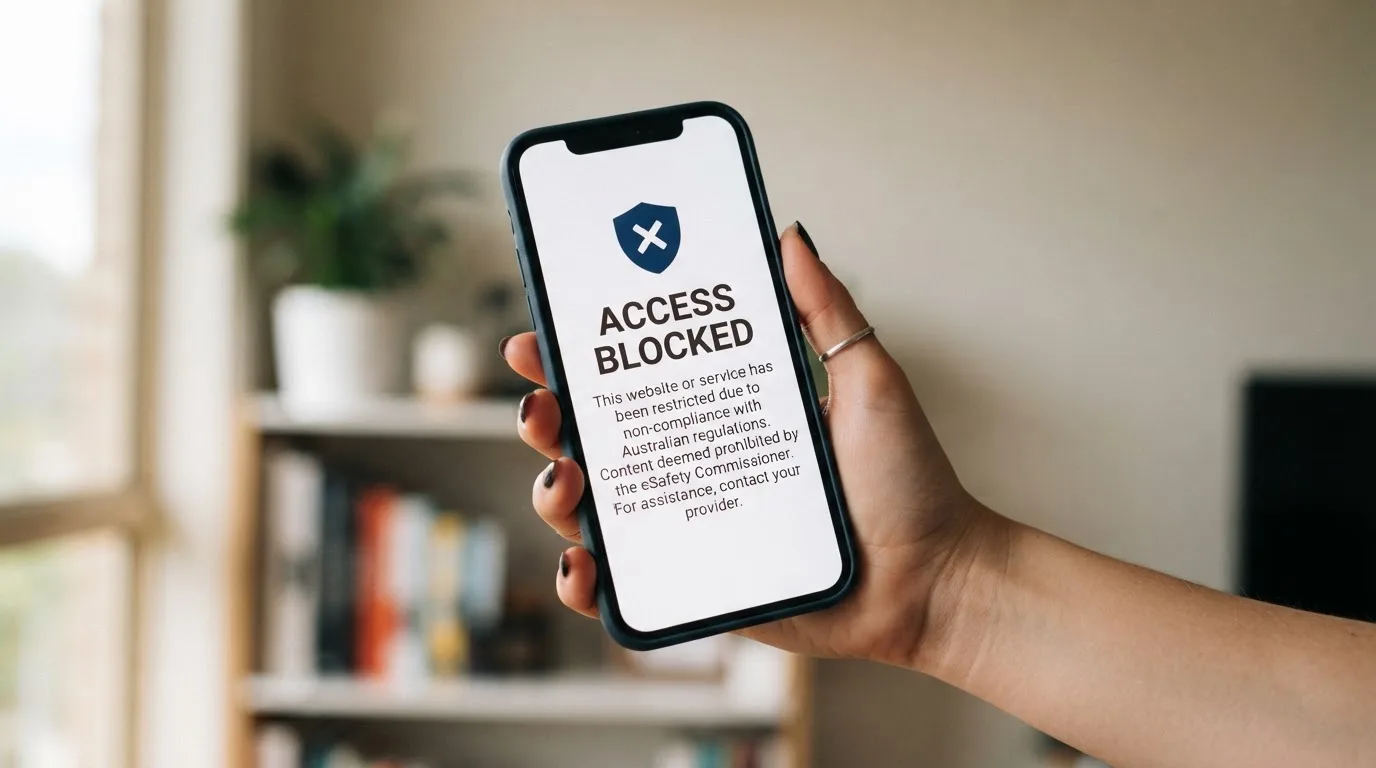
The IGA targets the provider, not the player. No Australian has been prosecuted for placing a bet with an offshore site. That is the only leniency in the system, and it cuts in two directions: it explains why offshore brands keep advertising, and it explains why the same brands cannot offer a player any of the protections an Australian licence carries. No Australian consumer protection law applies. No Australian complaints body will hear a dispute. No Australian self-exclusion register binds them. When the ACMA moves and ISPs block the site, any balance still on the account is, in practice, unreachable.
The credit-card ban settled that side of the payment question on 11 June 2024: credit cards, credit-related products and digital currency are banned as payment for any licensed online wagering, with penalties of up to A$247,500 for the operator. Legal deposit routes for an Australian-licensed wagering service are debit card, bank transfer, PayID, Osko and BPAY. An offshore casino asking for a credit card or a crypto deposit is not operating inside the Australian rule set at all.
There is a reform sitting in the wings. The Interactive Gambling Amendment (Gambling Reform) Bill 2026 passed Parliament on 19 August 2026; its advertising and inducement measures commence 1 January 2027. Law with a start date, not yet in force on a page read in 2026.
What the ACMA has actually done: a measured record of blocking
The Australian Communications and Media Authority runs the enforcement side of the prohibition. Its two main tools are formal warnings to identified operators, and requests to Australian internet service providers to block identified sites at the network level. Both tools have produced a measurable record since the regime was strengthened in 2017.
By June 2026 the ACMA reported that 1,751 illegal gambling and affiliate marketing websites had been blocked since the first blocking request in November 2019, and more than 230 unlicensed gambling services had left the Australian market since enforcement was tightened. The most recent round reported on 26 June 2026 asked ISPs to block twelve sites in one go: 7Signs, ChromaBet, Donbet, Duospin, Freshbet, Slots Gem, Jacks Club, Lucky Start, Pointsbetz, Spinrise, Vinyl Casino and Wildsino. That is roughly one round every few weeks; the cadence has been steady since the November 2019 baseline.
H2 Gambling Capital’s 2025 estimate puts Australians’ annual losses to illegal gambling sites at about A$3.9 billion, and shows the share of gambling going through legal channels falling from 74 per cent in 2021 to 64 per cent. The legal share is shrinking because the illegal share is growing; the ACMA’s blocking record is the visible part of a larger problem the IGA was amended in 2017 specifically to slow.
The blocking rate is the arithmetic that pulls the regime into a single number. Between the first blocking request in November 2019 and the ACMA’s June 2026 reporting point, 1,751 sites were blocked across roughly 79 months. That works out to a long-run average of about 22 sites blocked per month across the whole enforcement window — a band that runs from a low single-digit monthly count in the early rounds to the most recent bursts of a dozen or more. The point of the number is not the rate itself but what it tells a reader about the pace at which offshore brands cycle through Australian-facing URLs: the ACMA is not dealing with a static list of known offenders; new domains appear as fast as old ones are blocked, and the average masks a pipeline that has been running hot for the past two years. The blocking rate is what the prohibition looks like in practice, and in practice it is a treadmill.
What the ACMA has warned: the operators behind the brands
Formal warnings are the ACMA’s middle step, issued before a blocking request and naming the legal entity behind a brand. The published warnings since 2022 give a near-complete map of the offshore casino brands most actively targeting Australian customers.
In May 2022 the ACMA warned Dama N.V. over six brands at once: Bambet, Dazard, Level Up, Rocketplay, Wild Tornado and Cobra Casinos. Two more warnings followed the same operator in 2025: Woo Casino in March 2025 and Spirit Casino in May 2025. In July 2025 the warnings widened to two more operators: Bamboo Media over Ignition Casino, and Consolutetish S.R.L. over National Casino and Bizzo Casino — the latter having already been warned in 2022, when it sat under TechSolutions (CY) Group Limited and TechSolutions Group N.V. In February 2025 the ACMA warned EOD Code SRL over Instant Casino. In April 2025 the warning went to Sterplay Holding Ltd over Casino Intense, and in March 2026 to Pulsup Ltd over Rocketplay. In April 2026 Ryker B.V. was warned over Jackbit and CasinOK.
That is the working set of offshore brands targeting Brisbane readers in 2026. The same legal entity can hold several of them; the same brand can resurface under a new operator company after a warning, which is part of why the ACMA’s pace has not slowed. A reader comparing offshore offers is in practice comparing wrappers around the same few companies — Dama N.V. alone has been named over eight brands across three years of warnings.
What “licensed” actually means on an offshore site
Most offshore casinos display a licence on their footer: Curaçao, Anjouan, the Kahnawake Gaming Commission, occasionally the Malta Gaming Authority. None of those licences authorises the site to take online casino play from a person in Australia. The IGA prohibition applies to the activity — providing online casino games to an Australian — not to the operator’s home jurisdiction, and it overrides any foreign authorisation a brand chooses to print.
The practical consequences line up in three places. There is no Australian regulator to complain to: the Curaçao Gaming Control Board and its equivalents do not hear disputes from Australian players on behalf of Australian players. There is no Australian self-exclusion binding the operator: BetStop, the National Self-Exclusion Register launched on 21 August 2023, covers Australian-licensed online and phone wagering services only, and an offshore casino is not on it. And there is no guarantee a withdrawal will be paid: a reader with a blocked site and a positive balance has no path to recover the funds inside the Australian legal system.
That is the cost the marketing page never prices. The advertised welcome bonus and the published RTP are inside a structure that can disappear with one ACMA round, and what is left when it does is the player’s problem.
Where the legal casino actually sits: Brisbane and the alternatives
Brisbane’s licensed casino is The Star Brisbane at Queen’s Wharf, on the Brisbane River at the southern edge of the CBD. It opened in stages beginning 29 August 2024 inside the A$3.6 billion Queen’s Wharf precinct, developed jointly by Star Entertainment Group and Hong Kong-based Chow Tai Fook Enterprises. The main casino floor and premium gaming rooms opened first; the hotel, dining and retail components followed in subsequent stages. The precinct is within walking distance of the CBD’s hotel strip — the Marriott, the Hilton, the Sofitel are all a short walk across the bridge — which is what most searchers asking for “accommodation near brisbane casino” actually want.
The Star Brisbane replaced Treasury Casino, which had operated from the historic Treasury Building since April 1995 and closed on 25 August 2024. Treasury was the casino most Brisbane readers will remember: three gaming levels, 80 tables, over 1,300 gaming machines, a hotel, six restaurants, five bars and a nightclub. The relocation was not a routine refurbishment; it was a move into a new precinct built around the same licence.
That licence has had a troubled recent history. In late 2022, on an independent review by former Court of Appeal judge Robert Gotterson, the Queensland Government found Star Entertainment unsuitable to hold its Queensland casino licences after concluding it had misled regulators and failed its anti-money-laundering duties. Star was fined A$100 million on 9 December 2022. A 90-day suspension of the Treasury Brisbane and Star Gold Coast licences was deferred to 1 December 2023 to allow remediation, and Queen’s Wharf opened in 2024 against that backdrop. The licensed venue is open; the licence’s standing has only just stabilised.
Two other Australian capital-city casinos are the natural points of comparison for a reader weighing Brisbane against alternatives. Adelaide Casino, commercially known as SkyCity Adelaide, sits in the heritage-listed Adelaide railway station building on North Terrace, with 90 gaming tables and 950 gaming machines. It is the sole licensed casino in South Australia under the Casino Act 1997, regulated by the state’s Independent Gambling Authority and Liquor and Gambling Commissioner. Its table-game monopoly was extended to 30 June 2035 under a licence formalised on 11 October 2013, which also allows the casino to expand to up to 200 gaming tables and 1,500 gaming machines subject to redevelopment. Casino Canberra is the only casino in Australia not licensed to operate poker machines, with 39 gaming tables for blackjack, roulette, baccarat and other games, a poker lounge and a sports lounge, regulated under the ACT’s Casino Control Act 2006 by the ACT Gambling and Racing Commission.
For a Brisbane reader the comparison is mostly geographic — the question is usually which Australian capital’s casino to visit on a trip, not whether to play online. Each of the three sits inside its own state’s regulatory regime, with its own limits, its own responsible-gambling infrastructure and its own local harm-minimisation fund.
What the table games look like inside the legal venues
The Star Brisbane runs a standard Australian casino-floor mix: blackjack, roulette, baccarat and craps on the main gaming floor, plus a higher-stakes section in the premium rooms. Treasury Casino offered the same — 80 tables across three levels — and the new venue inherited that floor plan rather than reinventing it. Game rules follow the conventional international variants: blackjack pays 3 to 2, roulette offers both single-zero and double-zero wheels depending on the room, baccarat runs the punto banco format, and craps is the standard dice layout.
Casino Canberra runs a similar table mix at smaller scale. Adelaide Casino runs the full international spread plus poker. A reader who has played at one will not be surprised at another, and a reader who has not will find the rules printed at each table — the same rules the international floor uses, not a Queensland-specific variant.
What changes between venues is the surrounding infrastructure. The Star Brisbane sits inside a resort precinct with bars and restaurants, the Treasury Hotel having moved with the licence. Adelaide Casino’s EOS by SkyCity tower added 120 hotel rooms and expanded gaming space when it opened in 2021. Casino Canberra has no hotel at all — it sits on a 99-year lease of land excised from Glebe Park, with no accommodation, theatres or retail attached.
Pokies, slots and the wider gaming-machine context
Queensland had 21,122 gaming machines operating in 351 hotels and clubs in October 2023. That number does not include the machines inside the Star Brisbane — the casino is licensed and counted separately — but it gives the scale of the legal, in-venue market a Brisbane reader walks past every day.
The casino-floor slot product inside The Star Brisbane is governed by Queensland’s casino rules rather than the state-wide machine standards that apply to hotels and clubs. There is no statutory minimum return-to-player rate for Queensland casino machines of the kind South Australia applies to its non-casino machines, where the floor is 87.5 per cent and the general maximum bet outside the casino is A$5.00; the casino in Adelaide itself has no maximum-bet limit, and the Brisbane casino is in the same regulatory category. The exact RTP on a given cabinet is set by the manufacturer and the operator; the published figure is on the machine’s help screen, and is the only figure a reader can verify before playing.
South Australia recorded gaming-machine losses outside Adelaide Casino of about A$0.92 billion in 2022-23, equivalent to about A$497 per adult — the per-adult cost of a legal, in-venue market that sits on a fixed RTP floor. Queensland publishes its own figures through the Office of Liquor and Gaming Regulation; the comparable per-adult loss is in the same order of magnitude.
The cost of a session at a legal Brisbane venue
A standard casino session at The Star Brisbane carries three costs the reader pays in turn: the entry threshold, the table minimum and the house edge on the game.
The entry threshold is age, not money. Queensland’s minimum age for casino entry is 18, with photo ID required at the door. There is no cover charge and no entry fee; the floor is open to anyone who passes the age check and is not on the venue’s self-exclusion list.
Table minimums vary by room and by time. The main floor typically runs blackjack and roulette from A$5 minimums on weekday afternoons, rising to A$25 or A$50 on a Saturday night. Premium rooms start higher. The minimum bet is the floor on a session’s cost per decision; it is the number that determines how fast a bankroll of a given size disappears if the reader plays flat stakes without winning.
The house edge is the per-decision cost the reader pays on average. In standard blackjack with the dealer standing on all 17s, the house edge is about 0.5 per cent with basic strategy. In single-zero roulette it is about 2.7 per cent, in double-zero roulette about 5.3 per cent. In craps the pass-line bet with odds carries a house edge of roughly 1.4 per cent. In baccarat the banker bet is about 1.06 per cent, the player bet about 1.24 per cent; the tie bet, often advertised as the big payout, runs around 14 per cent and is the bet the floor makes most of its margin on.
These edges compound over a session. A$100 staked flat at a single-zero roulette table with a A$5 minimum produces an expected loss of about A$2.70 over those 20 spins — the cost of buying an hour of play on that table at that minimum. A reader who sits down with A$500 at a A$25 blackjack table with basic strategy faces an expected loss of about A$2.50 over 100 hands, but the variance is what empties the wallet in practice: a string of double-down losses can halve the stack before the expected loss has a chance to settle. The arithmetic is honest; the session rarely is.
The cost of an offshore session — and what disappears when the site is blocked
An offshore casino session runs on a similar cost structure, with two differences that matter. The published RTP on an offshore slot is set by the game provider and can be as low as the mid-80s on older titles, well below the 87.5 per cent floor South Australia applies to non-casino machines and below the effective floor a Queensland casino cabinet typically sits above. The house edge on an offshore table game is usually the international standard, since the games are the same software, but the reader has no way to verify that the operator is not running a different configuration for Australian-facing sessions.
The second difference is the cost that is not in the marketing. There is no Australian regulator to escalate to if a withdrawal stalls. There is no Australian dispute resolution service. There is no local self-exclusion binding the operator — BetStop does not cover offshore sites, and an offshore site is not connected to the ACT Gambling Support Service, the ACT Gambling and Racing Commission’s self-exclusion process for Casino Canberra, or any state-based equivalent. If the ACMA blocks the site mid-session, the balance is, in practice, unreachable.
That is the cost the offshore product adds on top of its published RTP and its published house edge: the option value of being able to withdraw. The bonus terms and the wagering multiples printed on the affiliate page are inside a structure that can disappear without warning, and the only part of the cost that is honest is the part the reader could lose on the casino floor instead — where the RTP is published on the machine, the minimum bet is on the table felt and the regulator is in the same state.
Responsible gambling: what works inside Australia and what does not
BetStop, the National Self-Exclusion Register, launched on 21 August 2023 and covers Australian-licensed online and telephone wagering services. It is the single national tool for a player who wants an Australian-licensed operator to stop accepting their bets. It does not cover in-venue gambling — pubs, clubs, casinos — and it does not cover offshore sites.
For Brisbane readers, in-venue self-exclusion from The Star Brisbane is handled by the venue’s own responsible-gambling staff under the Queensland Responsible Gambling Code of Practice. For ACT residents, self-exclusion from Casino Canberra runs through the ACT Gambling Harm Prevention team for periods of 6 months to 3 years. For Adelaide Casino, the equivalent is South Australia’s Consumer and Business Services, which administers the state-wide self-exclusion register.
For any reader affected by an offshore site, the practical tools are: BetStop, which will not block the offshore site but will block the licensed Australian wagering services and reduce the overall gambling load; the National Gambling Helpline on 1800 858 858, free, 24/7, with online chat at Gambling Help Online; and the bank side — most Australian banks will allow a gambling-block to be added to a debit card on request, which stops deposits to offshore sites at the payment rail rather than at the site.
A credit card ban settled the payment side of this in June 2024: credit cards, credit-related products and digital currency are banned as payment for any licensed online wagering in Australia, with penalties up to A$247,500 for operators. An offshore casino asking for a credit card or a crypto deposit is operating outside the Australian rule set entirely; a reader who hands one over is also outside the protections a licensed Australian payment rail provides.
Side-by-side: the brands the ACMA has warned over
The brands below are not a recommendation. They are the brands the ACMA has published formal warnings against for offering prohibited online casino services to people in Australia, including Brisbane. Each one is a snapshot of the warning the regulator issued; the licensing claim each site prints on its footer does not change the IGA’s application to the activity. The table is current to the ACMA’s published warnings as of the data date above.
| Brand | ACMA action and date | Operator named by the ACMA | Subject support |
|---|---|---|---|
| RocketPlay | Formal warning, March 2026 | Pulsup Ltd | — |
| Level Up Casino | Formal warning, May 2022 | Dama N.V. | listings-only |
| Woo Casino | Formal warning, March 2025 | Dama N.V. | listings-only |
| Spirit Casino | Formal warning, May 2025 | Dama N.V. | — |
| National Casino | Formal warning, July 2025 | Consolutetish S.R.L. | listings-only |
| Bizzo Casino | Formal warning, July 2025; earlier 2022 | Consolutetish S.R.L. | — |
| Ignition Casino | Formal warning, July 2025 | Bamboo Media | — |
| Instant Casino | Formal warning, February 2025 | EOD Code SRL | — |
| Jackbit | Formal warning, April 2026 | Ryker B.V. | — |
| Casino Intense | Formal warning, April 2025 | Sterplay Holding Ltd | listings-only |
| Sky Crown | Formal warning, September 2022 | Hollycorn N.V. | listings-only |
The repeated operators tell the story more clearly than the brands do. Dama N.V. has been named over Rocketplay, Level Up, Woo and Spirit — four brands in five years. Consolutetish S.R.L. now holds National Casino and Bizzo Casino, the latter previously warned under TechSolutions in 2022. The brand list on an offshore affiliate page is closer to a catalogue of marketing skins than to a list of distinct operators; a reader comparing two of them is often comparing two front ends on the same legal entity.
RocketPlay
RocketPlay has been warned twice. The first warning, in May 2022, named Dama N.V. as the operator. The second, in March 2026, named Pulsup Ltd over Rocketplay specifically — a separate legal entity taking over the brand, which is the pattern the ACMA’s record has been showing since 2022: a warning is issued, the operator shell is changed, the brand continues. The site is in the same position as the others on this list under the IGA: the activity it offers to Australians is prohibited, and the Curaçao licence it prints on its footer does not authorise it to take online casino play from a person in Brisbane. A reader with a balance when the next ACMA round lands has no Australian path to recover it.
Level Up Casino
Level Up Casino was named in the same May 2022 warning as five other Dama N.V. brands: Bambet, Dazard, Rocketplay, Wild Tornado and Cobra Casinos. The Dama cluster is the single largest concentration of warnings in the ACMA’s published record, and Level Up sits inside it. The marketing pages describe a welcome package and a tiered loyalty programme; the regulatory reality is that the activity is prohibited under the IGA and the operator is on the ACMA’s published warning list. The two are not in conflict because the IGA targets the activity, not the marketing. A Brisbane reader depositing here is paying the offshore cost — the higher effective house edge on older slot titles, the absence of Australian dispute resolution and the option value of a withdrawal that may not be paid if the site is blocked — for none of the protections the Australian regime offers.
Woo Casino
Woo Casino drew a separate ACMA warning in March 2025, still under Dama N.V., two and a half years after the 2022 cluster warning. The gap matters because the ACMA does not re-warn an operator lightly; the second warning is evidence that the brand continued offering prohibited services to Australians after the first. That is the pattern a reader needs to weigh: a single warning is a chance to remediate; a second warning is the regulator documenting that remediation did not happen.
Spirit Casino
Spirit Casino took a separate warning in May 2025, again under Dama N.V. — the third Dama brand to be warned separately since the original 2022 cluster. The five-year arc from 2022 to 2025 under the same operator is the cleanest illustration in the ACMA’s published record of how the offshore model works: one warning does not close a brand, because the operator can move it to a new domain or simply continue under the existing one until the next round.
National Casino
National Casino was warned in July 2025, with Consolutetish S.R.L. named as the operator. The same warning covered Bizzo Casino, and the same operator shell has surfaced in both names. The ACMA’s enforcement pattern here is to name the legal entity, which means the warning applies across every Consolutetish S.R.L. brand — a reader who has avoided one brand on the list because of an earlier warning can still end up depositing with another brand from the same operator.
Bizzo Casino
Bizzo Casino has the longest warning history on this list. The first warning, in 2022, named TechSolutions (CY) Group Limited and TechSolutions Group N.V. The second, in July 2025, named Consolutetish S.R.L. Two operator shells, four years apart, the same brand name still active. That is the strongest case on the list for the proposition that a warning does not close a brand; it closes one legal entity, and the marketing assets move.
Ignition Casino
Ignition Casino drew a warning in July 2025, with Bamboo Media named as the operator. The brand is not in the Dama or Consolutetish cluster, which makes it a useful reminder that the ACMA’s enforcement is not concentrated on one operator — there are at least five distinct legal entities across the eleven brands on this list.
Instant Casino
Instant Casino was warned in February 2025, with EOD Code SRL named as the operator. The February 2025 timing matters because it places the warning ahead of the credit-card ban that took effect on 11 June 2024 — Instant Casino was on the ACMA’s published list while still able to take credit-card deposits from Australian customers, which is no longer possible for an Australian-licensed operator but was never policed at the payment rail for an offshore one.
Jackbit
Jackbit was warned in April 2026, with Ryker B.V. named as the operator. The April 2026 timing makes it the most recent warning on this list at the data date, and one of the most recent published by the ACMA. A reader comparing Jackbit to a brand warned in 2022 might reasonably ask whether the newer warning represents a fresh offence — and the answer is yes: Jackbit was offering prohibited services to Australians in 2026, not in 2022.
Casino Intense
Casino Intense was warned in April 2025, with Sterplay Holding Ltd named as the operator. The brand sits outside the Dama and Consolutetish clusters; the ACMA’s enforcement here reaches a different operator shell. The pattern across the list is that the ACMA’s published warnings name the legal entity, not the brand, and the legal entity is the unit on which further enforcement runs.
Sky Crown
Sky Crown carries the oldest warning on this list, from September 2022, with Hollycorn N.V. named as the operator. The ACMA’s published PDF is the public record of that warning; Hollycorn N.V. was also warned over its Blue Leo casino service at the same time. The brand is still active in marketing channels targeting Australian customers, which is the same pattern the other operator clusters show: the warning does not close the brand, it documents the offence.
What a Brisbane reader is actually choosing between
A reader who searches “best casino in Brisbane” is choosing between three things: The Star Brisbane at Queen’s Wharf, which is the only licensed casino in the city and is the legal answer to the search; an interstate casino trip, where Adelaide and Canberra sit as the two alternative licensed venues with their own regulatory regimes; and an offshore online casino, which is the answer the marketing pages push hardest but which the IGA prohibits and the ACMA enforces against. The three are not equivalent.
The Star Brisbane is a physical venue with photo-ID entry, an 18-plus age floor, table games and slot machines operating under the Queensland regulatory regime, and a self-exclusion process run by the venue’s responsible-gambling staff. The cost is the published house edge on the table and the published RTP on the cabinet, plus the time and travel cost of getting to Queen’s Wharf.
An interstate casino trip shifts the regulatory regime but not the structure. Adelaide Casino operates under the Casino Act 1997 and the Independent Gambling Authority, with a casino-floor RTP floor that does not exist in Queensland but with the same kinds of table games and slot machines. Casino Canberra operates under the Casino Control Act 2006 and the ACT Gambling and Racing Commission, and is the only Australian casino without poker machines. Each interstate venue sits inside its own responsible-gambling infrastructure, with self-exclusion run by the local regulator.
An offshore online casino is a prohibited service under the IGA, regardless of the licence it prints on its footer. The ACMA has named eleven of the brands most actively targeting Australian customers in warnings over the past four years, and has asked ISPs to block 1,751 sites since November 2019. The published RTP on the slot is the only verifiable number; the house edge on the table is the international standard unless the operator has chosen otherwise; and the balance on the account is reachable only as long as the site is unblocked. The cost the marketing page does not price is the option value of being able to withdraw — and that cost is the difference between the licensed venue and the offshore product.
Tax and winnings: the part that surprises readers
Gambling winnings of a recreational player in Australia are not assessable income, and losses are not deductible. The relevant provision is section 6-5 of the Income Tax Assessment Act 1997, and the rule is the same at The Star Brisbane, at the offshore casino and at the pokies in a Brisbane pub. The ATO treats a recreational player’s gambling activity as a private recreation, not as a business, and the tax treatment is nil in both directions.
The exception is a person who carries on a business of gambling — a professional poker player, a sports bettor whose activity rises to the level of a business, a horse-racing professional. For that person, winnings are assessable and losses are deductible under the ordinary business-income rules, but the threshold for “carrying on a business” is high and the ATO scrutinises it. A recreational player does not need to declare a jackpot to the ATO and cannot claim a loss against other income. The rule applies equally to a session at The Star Brisbane and a session at an offshore site; the IGA prohibition does not change the tax treatment, because the tax treatment does not depend on the legality of the activity, only on whether the activity amounts to a business.
The practical takeaway is that a Brisbane reader who wins A$5,000 at the roulette table at The Star Brisbane owes no tax on it, and a Brisbane reader who loses A$5,000 at an offshore slot cannot claim it back. The ATO is not in the loop on either side.
The Queen’s Wharf licence question — and what it means for a 2026 visit
The Star Brisbane opened in August 2024 against a still-recovering licence position. The 2022 Gotterson review found Star Entertainment unsuitable to hold its Queensland casino licences; the A$100 million fine was levied in December 2022; the deferred 90-day suspension ran from 1 December 2023. The licence position is now stabilised — the venue is open, the precinct is operating, the regulator has not moved to re-suspend — but the residual effect is that The Star Brisbane is a venue under closer regulatory scrutiny than its interstate peers.
For a reader visiting in 2026, that scrutiny is mostly invisible. The age check at the door is the same as at any Australian casino. The responsible-gambling signage is the same. The self-exclusion process is the same in structure. What is different is the regulatory history in the file, and the chance — small but not zero — that further enforcement action against Star Entertainment would affect operations at The Star Brisbane the way the 2022 finding affected the Treasury Brisbane licence. A reader who plans a Brisbane casino visit around a specific date should check the venue’s published status before travelling; a reader who plans a flexible visit is unlikely to be affected.
How to read an offshore casino’s terms when the ACMA has named the brand
A reader who lands on one of the brands above — through an affiliate link, a search result or a redirect — can read the terms in three parts. First, the licence: whatever footer licence is printed, the activity is prohibited under the IGA and the ACMA has warned the operator. Second, the payment method: a request for a credit card or a crypto deposit is operating outside the Australian rules, and a debit card going through an international rail is not protected by the Australian ePayments Code the way a domestic debit transaction is. Third, the withdrawal terms: a published processing time of 24 to 72 hours is the optimistic case, and the pessimistic case is a withdrawal that sits in “verification” until the ACMA’s next round lands and the site disappears.
That is the practical reading. The bonus terms, the wagering multiples and the loyalty tiers are inside a structure that the ACMA’s enforcement record shows is unstable, and the only part of the cost a reader can verify is the published RTP on the slot and the published house edge on the table. The rest is the option value of being able to withdraw, which an offshore site cannot guarantee and an Australian-licensed venue can.
Where this leaves the search
“Best casino in Brisbane” has one good answer in 2026: The Star Brisbane at Queen’s Wharf, which is the only licensed casino in the city and which sits inside a Queensland regulatory regime that includes photo-ID entry, an 18-plus age floor, table games and slot machines, and a venue-run self-exclusion process.
The cost comparison is the whole point of the page. The licensed venue costs the published house edge on the table and the published RTP on the cabinet, with an Australian regulator and a venue-run self-exclusion process on the back end. The offshore product costs the same published edges plus the absence of Australian dispute resolution, the absence of Australian self-exclusion binding the operator, the risk of an ACMA blocking round that lands with a balance still on the account, and the option value of being able to withdraw at all. The arithmetic is the same on both sides of the IGA; the cost is not.
Frequently asked questions
What is the name of the main casino in Brisbane?
The Star Brisbane, inside the A$3.6 billion Queen’s Wharf precinct on the Brisbane River at the southern edge of the CBD. It opened in stages from 29 August 2024, replacing Treasury Casino, which had operated from the historic Treasury Building since April 1995 and closed on 25 August 2024. The Star Brisbane is the only licensed casino in Queensland’s capital.
Where is the Star Brisbane located?
Inside the Queen’s Wharf Brisbane precinct, on the Brisbane River between the Victoria Bridge and the Go Between Bridge, walking distance from the CBD’s hotel strip — the Marriott, Hilton and Sofitel are all within ten minutes on foot. The address and approach directions are published on the Star Entertainment website.
What is the minimum age to enter the Star Brisbane?
Eighteen, with photo ID required at the door. The Queensland Responsible Gambling Code of Practice sets the age floor and the identification requirement; the venue’s entry staff enforce it. There is no cover charge and no entry fee beyond the age check.
Does the Star Brisbane offer blackjack, roulette and baccarat?
Yes. The main gaming floor runs a standard Australian casino-floor mix: blackjack paying 3 to 2, roulette in both single-zero and double-zero configurations, baccarat in the punto banco format, and craps on the standard dice layout. Premium rooms run higher minimums and a more concentrated table product. The rules are the international standard, not a Queensland-specific variant.
Are there hotels within walking distance of the Star Brisbane?
Yes — the CBD hotel strip sits across the river within walking distance of Queen’s Wharf, including the Marriott, the Hilton and the Sofitel. The Star Brisbane itself has hotel rooms inside the precinct that opened in later stages after the casino floor, dining and retail components launched first. Most searchers asking “accommodation near brisbane casino” want a CBD hotel within walking distance of Queen’s Wharf, which several options satisfy.
Can Australians legally play at an online casino instead of visiting the Star Brisbane?
No. The Interactive Gambling Act 2001 prohibits the supply of online casino games, online pokies and in-play betting to a person physically in Australia, and no state or territory issues a licence for it. The ACMA enforces the prohibition by issuing formal warnings to operators and asking ISPs to block sites — 1,751 sites blocked since November 2019, with 230 or more unlicensed services having left the market since 2017. An Australian player is not prosecuted for using an offshore site, but the offshore product carries no Australian consumer protection, no Australian complaints body and no local self-exclusion binding the operator, and an ACMA blocking round can land with a balance still on the account.
Written by the editors at Casino Providers Info.