
High roller casinos, Australia, and where the offer stops being legal
Phrases like “best high roller casino with bonus Australia” reflect interest in a working shortlist of online casinos for high-roller play, and a confident winner. Australia cannot honestly supply one. The Interactive Gambling Act 2001 makes it an offence to provide online casino games, online pokies or in-play betting to anyone physically in Australia, and no state or territory issues a licence for it. Offshore operators send bonuses through anyway, the ACMA issues formal warnings in waves, and Australian banks now refuse the transactions at the card level. A reader at a laptop in Sydney deciding where to put A$5,000 behind a wager is choosing inside a market the law has already closed — and the choices that remain are not on the marketing pages that produced the search.

This page walks through the legal frame first, then the ACMA’s record against the brands that ignore it, the payment routes Australians can actually use, the bonus machinery the offshore sites still attach, the mobile question, the gameplay detail and finally what a shortlist can honestly say. The article takes the position the material supports: every “best high roller casino” list aimed at an Australian reader is, by definition, a list of operators the ACMA has acted against, and the only honest move is to say that out loud rather than dress it up.
Snapshot in the line below — useful as a comparison only while it is true:
Current as of 30 October 2026, verified against the ACMA’s register of formal warnings and the interactive-gambling provisions of the Interactive Gambling Act 2001.
Table of Contents
- What the search actually wants, and why Australia cannot deliver it
- The legal frame — what the Interactive Gambling Act 2001 actually says
- How the ACMA has been enforcing it
- Player protection — what is actually available to an Australian
- Payments — how money moves, and where the banks put the brakes
- Bonuses and free spins — the math the marketing pages don’t do
- Mobile and the app question
- Games, providers and live tables — the catalogue question
- The shortlist — eleven ACMA-named operators, one honest verdict each
- What an Australian high-roller actually has
- Frequently asked questions
What the search actually wants, and why Australia cannot deliver it
A “high roller casino” is a marketing term, not a legal one. Operators reserve it for players willing to move enough in a single deposit that the site bothers to treat them differently — a higher table limit, a personal account manager, a tailored bonus with more generous-looking numbers. The promotional language leans on it because high-roller play concentrates a casino’s profits: fewer players, larger stakes, longer sessions. The search phrases attached to the term — “casino high roller”, “high roller casino online”, “high roller casino bonuses” — all point to that same promised tier of service.
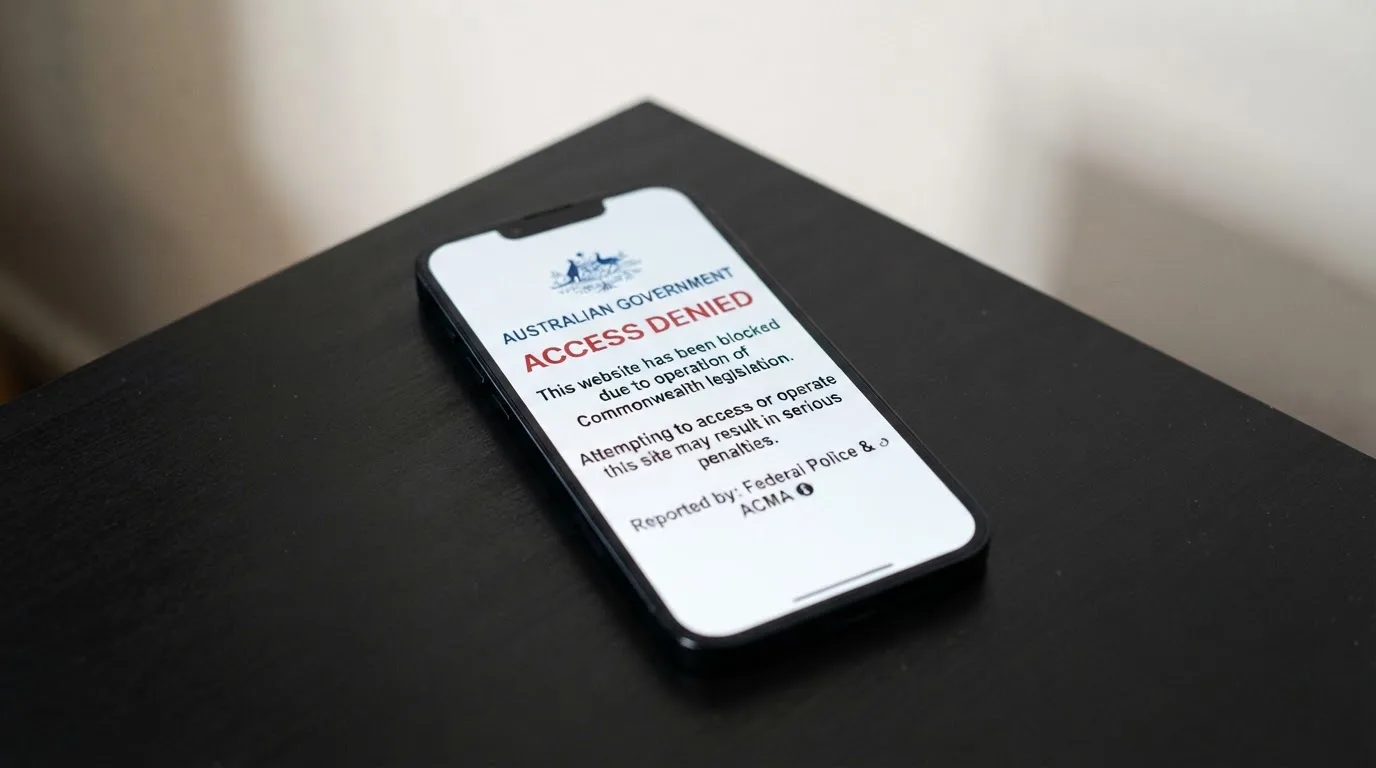
None of it can be supplied to an Australian reader by a licensed Australian operator. What Australia licences is wagering on racing and sport before the event, lotteries and keno — not casino games and not pokies in their online form. The Northern Territory Racing and Wagering Commission regulates 52 of Australia’s online bookmakers, including Sportsbet, Bet365 and Ladbrokes, licensed in the Territory for tax reasons; the commission runs without full-time staff and meets once a month in Darwin. That is the regulator covering the wagering side of the market. There is no equivalent covering online casino, because there is no licence to issue.
The page cannot, in good conscience, hand over a list of operators where an Australian can sign up, deposit and play casino games for high stakes today. It can do three things that are genuinely useful instead: lay out the prohibition plainly, show how the ACMA has been enforcing it across recent rounds, and point to what is actually lawful — licensed wagering accounts, land-based casinos and licensed pokies venues, plus BetStop for anyone who wants the off-switch.
See also Best online casino with high cashback bonus Australia 2026.
The legal frame — what the Interactive Gambling Act 2001 actually says
The Interactive Gambling Act 2001, as amended by the Interactive Gambling Amendment Act 2017, makes it an offence for an operator to provide a “prohibited interactive gambling service” to a person physically in Australia. That covers online casino games (slots, table games, live dealer), online pokies in their internet form and in-play betting on sport. The individual player is not the target of the law — enforcement runs against the provider — but a reader should understand what that means in practice. It means an offshore site that accepts an Australian sign-up is operating outside the regime; it is not licensed in Australia, the ACMA can and does act against it, and the bank that issued the card can refuse the transaction before it ever reaches the site.

Minimum age for any Australian gambling activity is 18. The 2023 amendments extended existing restrictions on licensed wagering to cover credit cards and credit-related products; the 2024 commencement of those provisions (11 June 2024) closed the credit-card route for legal Australian wagering accounts and, in practice, constrains gambling use of digital wallets linked to a credit line. Penalties for licensed operators that breach the credit-card ban reach A$247,500.
What is legal to deposit with, for licensed wagering:
- Debit card, where the underlying account holds available funds.
- Bank transfer, including Osko by PayID for instant settlement.
- BPAY, for bill-payment structures that licensed operators support.
- PayID, which resolves to the underlying bank transfer.
What is not legal to deposit with, on a licensed wagering account: credit cards, credit-related products and digital currency. The same payment-method filters apply in the other direction at the bank — Westpac’s gambling block works at the merchant-category level, refusing authorisation of any transaction coded under “Betting/Casino Gambling” on an eligible personal credit or debit card; ANZ’s block, activated through the ANZ app, also blocks gambling transactions routed through a linked digital wallet. Commonwealth Bank offers a comparable gambling lock through its app, with the same caveat that the bank cannot guarantee every gambling transaction will be caught.
The 2026 reform package — the Interactive Gambling Amendment (Gambling Reform) Bill 2026 — passed Parliament on 19 August 2026. Its advertising and inducement measures commence 1 January 2027. On a 2026 page that is law on the books and not yet in force; mention it now and a reader has to come back to check what it actually changed.
How the ACMA has been enforcing it
The ACMA’s enforcement record is what turns the statutory text from a rule into a working one. As of June 2026, the ACMA reported that 1,751 illegal gambling and affiliate marketing websites had been blocked since the first blocking request in November 2019, and that more than 230 unlicensed gambling services had left the Australian market since enforcement was strengthened in 2017. In the round reported on 26 June 2026 alone, the ACMA asked Australian internet service providers to block 12 more illegal gambling websites: 7Signs, ChromaBet, Donbet, Duospin, Freshbet, Slots Gem, Jacks Club, Lucky Start, Pointsbetz.com, Spinrise, Vinyl Casino and Wildsino.
The blocking-rate arithmetic the page commits to is this: 1,751 blocked sites across the roughly six-and-a-half years between the first blocking request in November 2019 and the June 2026 snapshot — a rate of about 269 blocked sites per year, or just over 22 per month, reported as a band rather than a single number because the ACMA publishes the cumulative total rather than a monthly cadence. That is not “every illegal site is gone”; it is “the regulator is removing them faster than the offshore industry is spinning them up”.
The formal-warning track runs in parallel and applies to the operators behind the brands, not the brand names alone. The ACMA’s published record against operators covered in this shortlist includes:
- March 2026: formal warning to Pulsup Ltd over Rocketplay.com.au.
- May 2022: formal warning to Dama N.V. covering six casino brands — Bambet, Dazard, Level Up, Rocketplay, Wild Tornado and Cobra Casinos.
- March 2025 and May 2025: further formal warnings to Dama N.V. over Woo Casino and Spirit Casino respectively.
- July 2025: formal warnings to Bamboo Media over Ignition Casino, and to Consolutetish S.R.L. over National Casino and Bizzo Casino (Bizzo had already been the subject of a 2022 formal warning to TechSolutions).
- February 2025: formal warning to EOD Code SRL over Instant Casino.
- April 2026: formal warning to Ryker B.V. over Jackbit and CasinOK.
- April 2025: formal warning to Sterplay Holding Ltd over Casino Intense.
- September 2022: formal warning to Hollycorn N.V. over Sky Crown and Blue Leo.
The pattern to read from that list: the ACMA warns, the operator rotates brand names or restructures the corporate entity behind them, and the regulator warns again. Dama N.V. alone has had four separate published warnings covering eight of its brands. The lesson for a player is not that the regulator is toothless — the cumulative block count shows the opposite — but that an offshore operator whose licence claims come from Curaçao or Anjouan has no real obligation to keep its promises to an Australian customer, because the Australian complaints body does not recognise those licences.
H2 Gambling Capital’s 2025 report estimated that Australians lose about A$3.9 billion a year to illegal gambling sites, and that the share of gambling going through legal channels fell from 74% in 2021 to 64%. The headline number is large; the trend line underneath it — a ten-point drop in the legal share across four years — is the part that ought to sit with a reader choosing where to put the next deposit.
Player protection — what is actually available to an Australian
BetStop, the National Self-Exclusion Register, has been live since August 2023. It binds Australian-licensed online and phone wagering services — the racing and sports bookmakers that hold an Australian licence. Register with BetStop and those operators must close your accounts and refuse to open new ones for the period you select. It does not bind an offshore casino, because the offshore casino is not connected to the register and has no obligation to honour it. Self-exclusion against a brand the ACMA has already warned is not self-exclusion in any meaningful sense; it is a polite request.
The National Gambling Helpline is 1800 858 858 — free, 24/7, with chat at Gambling Help Online. A reader who has already moved money offshore and wants to stop can still register with BetStop for the licensed wagering side and call the helpline for the rest. The banks’ gambling blocks (Westpac’s merchant-category block, ANZ’s app-activated block with a 48-hour wait to remove it, Commonwealth Bank’s CommBank-app gambling lock) are the practical layer underneath all of this: even with the best intentions, a transaction coded as gambling will be refused at the card level before it reaches the offshore site.
None of those tools is a substitute for the licensed product that the offshore sites are pitching as their substitute for Australian play. The licensed alternative — a real-world casino, a licensed pokies venue, a wagering account with an Australian-licensed bookmaker — is the only place the BetStop register, the helpline and the consumer-protection machinery all line up.
Payments — how money moves, and where the banks put the brakes
A high roller is, by definition, moving larger sums than the average punter. That concentrates the payment-method question into a smaller set of options, and concentrates the regulatory answer into a sharper set of consequences.
PayID and Osko. PayID sits on top of the New Payments Platform, which became accessible to the public on 13 February 2018 and is owned by New Payments Platform Australia Ltd, a non-profit company whose 13 shareholders include the Reserve Bank of Australia and the major banks. By April 2025 more than 25 million PayID identifiers had been registered across over 100 Australian financial institutions. With Osko, a bank transfer between participating banks arrives in under a minute, 24/7, whether addressed to a BSB and account number or to a PayID. The same NPP infrastructure mandates that monthly platform outages stay under two minutes.
PayID also has a built-in friction that matters for this subject: paying to a PayID shows the account-holder name before the transfer is sent. AP+, the operator of PayID, warns that being asked to transfer money to a PayID on an illegal gambling site almost certainly means a scam site. The account-holder-name check is what makes that warning usable, not just theoretical.
BPAY. BPAY is a bill-payment service integrated into online banking; the payer enters a Biller Code and a Customer Reference Number. It has operated in Australia since 1997, is available in the online banking of over 140 banks and financial institutions, is offered by over 95,000 businesses, and is run by Australian Payments Plus — the same operator that runs PayID and Osko. In September 2021 the ACCC authorised the merger of BPAY Group, eftpos and NPP Australia under the AP+ holding entity, so the three rails now sit under one roof. For a high-roller deposit profile, BPAY is functionally a bill-payment structure rather than a real-time transfer; it is also the route a number of licensed wagering operators have historically supported for larger deposits.
Cards. American Express was established in 1850 and became a card issuer with its first charge card on 1 October 1958; unlike Visa or Mastercard’s four-party network, Amex traditionally issues cards and processes transactions itself as a three-party scheme. The Reserve Bank of Australia’s July 2025 review proposes removing surcharges only on eftpos, Mastercard and Visa card transactions, explicitly leaving American Express outside the scope of the proposed surcharge ban — which matters for any high-volume card user whose interchange economics already tilt toward Amex.
Digital wallets. By the end of 2025, Apple Pay, Google Pay and Samsung Pay transactions collectively accounted for around 45% of all card payments in Australia by number. Apple does not charge fees to consumers for using Apple Pay — any surcharge is the merchant’s own processing fee — and Apple states that transaction limits and PIN requirements are set by the card issuer or the merchant, not by Apple. Apple Pay is constrained by the underlying card: where the underlying card is a credit card, the IGA’s credit-card ban on licensed Australian wagering applies; where the underlying card is a debit card, the issuing bank’s own gambling block applies as well.
AUSTRAC and the A$10,000 line. AUSTRAC’s threshold-transaction-report rule requires reporting of transfers of A$10,000 or more — but the rule applies only to physical cash. Ordinary electronic bank transfers are not subject to that per-transaction reporting requirement, regardless of the amount sent. A high roller moving A$20,000 through a bank transfer is not, by virtue of the amount, triggering any AUSTRAC report. The reporting triggers that do exist for high-value gambling movement are the bank’s own AML obligations, not the A$10,000 cash threshold.
The card-level reality is the sharpest constraint on the offshore market. ANZ’s gambling block, once turned on, also blocks gambling transactions routed through a linked digital wallet, and the bank warns that removing the block requires a 48-hour waiting period — the deliberate friction is the point. Westpac blocks at the merchant-category level; Commonwealth Bank’s app lock does the same. The transactions the offshore marketing pages are built to attract will, on an increasing share of Australian cards, fail at the authorisation step regardless of how generous the bonus looks.
Bonuses and free spins — the math the marketing pages don’t do
The bonus is the front door of the offshore pitch. A high-roller bonus offers a larger headline figure — A$5,000 over a first deposit, plus a tail of reloads, plus a personal account manager who calls when the deposit history thins. The arithmetic behind the offer is the part the page needs to do honestly, because the comparison a reader can actually use is what the bonus costs, not what it pays.
A bonus carries a wagering requirement — the turnover multiplier the operator applies before any of the bonus balance becomes withdrawable. A 40x multiplier on a A$1,000 bonus means A$40,000 of qualifying wagers before the bonus cash can be taken out. A 50x multiplier, common at the high-roller tier, means A$50,000. The headline number the offer leads with is the deposit; the number that matters is the turnover the wagering requirement imposes.
The turnover divided by the per-spin stake determines the number of spins needed to clear the bonus. At A$1 per spin, A$50,000 of turnover represents 50,000 spins; at A$5 per spin, it is 10,000. Each spin takes about five seconds to play through, so 50,000 spins takes roughly 69 hours of continuous play, and 10,000 spins is about 14 hours. This calculation offers a clear quantitative view of what the marketing involves.
The expected loss across those spins is the figure the marketing pages never quote. Expected loss is turnover times one minus the RTP of the game being played. At a 96% RTP — typical for an online slot — the house edge is 4%, and A$50,000 of turnover produces an expected loss of about A$2,000. At a 94% RTP — also common — the house edge is 6%, and the expected loss on A$50,000 is A$3,000. The bonus paid out A$1,000; the cost of clearing it is between A$2,000 and A$3,000 of expected play, depending on which game the player spends the turnover on.
The math behind a “high-roller bonus” is the same math as any other bonus, just larger. The headline scales with the deposit; the wagering multiplier scales with the brand; the house edge scales with the game; and the expected loss is the only number that does not lie about what the offer costs. None of this is information an offshore operator is going to put on its bonus page. It is the reason the page puts it here.
A second calculation worth naming: max-cashout caps. A bonus that advertises a A$10,000 headline but caps withdrawable winnings from bonus play at A$2,000 is a A$10,000 number and a A$2,000 result. Caps are common on free-spin winnings in particular, and a “high-roller free spins” package of 200 spins at A$1 per spin with a A$500 cap is, after the wagering, A$500 of withdrawable bonus cash at best. The page flags this where it appears, not as a gotcha but as the structure the offer is actually built on.
The third calculation is the deposit-vs-turnover scale. A high roller with a A$10,000 bankroll is not going to spend the bankroll clearing a bonus; the bankroll is the buffer against variance while the wagering requirement is met. The expected loss figures above are off a turnover number, not a bankroll number — the bankroll sits underneath, doing the work of absorbing the variance of A$50,000 of spins without going bust. A reader running the math for their own deposit should treat the expected loss as a cost of the bonus, and the bankroll as the working capital that lets the cost be paid.
High roller casinos, Australia, and where the offer stops being legal — More on this topic at casino providers.
Mobile and the app question
“High roller casino app” is one of the search phrases that drives traffic to this kind of page, and the underlying question is whether the high-roller experience carries across to a phone screen in a way the desktop version does not. The honest answer is that the offshore sites are uniformly built mobile-first — every brand in the ACMA’s recent warning rounds runs a responsive web client and, where they have bothered to ship an app, an iOS and Android build distributed through their own landing pages rather than through the Australian app stores. The Google Play and Apple App Store policies in Australia block real-money gambling apps, so the install path is direct from the operator’s site.
Two consequences follow. The first is that there is no reviewable track record on the app stores — no Australian-side ratings, no store-level compliance check, no easy uninstall through the store. The second is that the bank-level card block applies the same on mobile as it does on desktop; the merchant-category check on a Westcard or ANZ card runs at the card-network level, not at the device. A transaction attempted through a mobile browser or a sideloaded app is, from the issuing bank’s perspective, the same transaction.
The mobile experience itself does not differ from the desktop in any of the ways the marketing claims. The slot catalogue is the same catalogue; the live dealer tables are the same tables with the same limits; the bonus is the same bonus with the same turnover multiplier. The only meaningful difference between desktop and mobile at the high-roller tier is the ergonomics of managing a larger session from a smaller screen, and that is a usability question, not a substantive one.
A reader choosing mobile over desktop for an offshore casino is not choosing a better product; they are choosing a more portable route to the same product, on a channel the Australian regulator cannot reach and the bank is increasingly refusing to authorise.
Games, providers and live tables — the catalogue question
“High roller pokies”, “high roller slots”, “high roller slot games” — the search phrases attached to this shelf share an underlying assumption that the offshore product offers a richer catalogue of high-stakes games than a regulated alternative. The catalogue is, in fact, large: thousands of slot titles across multiple providers, dozens of live dealer tables with limits that climb into the A$1,000-per-hand range, and the high-roller-specific table games that the marketing pages lead with. A player who has decided to use an offshore site will find more games than a licensed Australian venue offers.
What the catalogue does not say out loud is the RTP and volatility distribution of the games on it. Online slots cluster in a 94% to 97% RTP band; live dealer table games sit closer to 98% to 99.5% on the bets the house edge actually applies to; high-volatility slots can spend long stretches below the average RTP before paying out a large hit. The expected-loss calculation in the previous section used a 96% RTP as a midpoint — a real figure for an average slot, a generous one for the higher-volatility titles the high-roller marketing leans on.
The provider layer is the place the offshore brands overlap heavily. Many of the brands named in the ACMA’s recent warnings — Dama N.V., Hollycorn N.V., the TechSolutions group — share studios and aggregators across their portfolio, so the underlying slot catalogue is largely the same across brands. A reader comparing two brands on “the quality of the games” is, more often than not, comparing two skins over the same catalogue. The differences show up in the bonus terms and the banking options, not in the games themselves.
Live dealer tables at the high-roller tier are pitched as the closest substitute for a real casino floor — Evolution, Pragmatic Play Live and a handful of smaller studios run the bulk of the offshore supply. The latency is low, the limits are real and the streaming is stable. The catch is that a live dealer game on an offshore site sits behind the same legal frame as a slot on the same site: the operator is not licensed in Australia, the bank may refuse the deposit, and a complaint about a misdeal has no Australian body to hear it.
The shortlist — eleven ACMA-named operators, one honest verdict each
The eleven operators below are listed because the ACMA itself issued a formal warning over each one for offering prohibited services to Australians. They are not a ranking and not a recommendation. The table that follows is the page’s comparative block; the write-ups underneath are what each brand’s ACMA record, corporate structure and product position actually amount to. No bonus terms are reproduced here — the only sources for them were affiliate marketing pages, and the page does not carry what it cannot independently verify.
| Brand | ACMA action and date | Operator named by the ACMA | Subject support |
|---|---|---|---|
| RocketPlay | Formal warning, March 2026 (Pulsup Ltd); earlier Dama N.V., May 2022 | Pulsup Ltd / Dama N.V. | — |
| Level Up Casino | Formal warning, May 2022 | Dama N.V. | — |
| Woo Casino | Formal warning, March 2025 | Dama N.V. | — |
| Spirit Casino | Formal warning, May 2025 | Dama N.V. | — |
| National Casino | Formal warning, July 2025 | Consolutetish S.R.L. | listings report payment and self-exclusion links |
| Bizzo Casino | Formal warning, July 2025 (Consolutetish); earlier 2022 (TechSolutions) | Consolutetish S.R.L. / TechSolutions | listings report the brand’s coverage |
| Ignition Casino | Formal warning, July 2025 | Bamboo Media | — |
| Instant Casino | Formal warning, February 2025 | EOD Code SRL | listings report deposit-method and self-exclusion references |
| Jackbit | Formal warning, April 2026 | Ryker B.V. | — |
| Casino Intense | Formal warning, April 2025 | Sterplay Holding Ltd | listings report the brand’s regulatory and self-exclusion references |
| Sky Crown | Formal warning, September 2022 | Hollycorn N.V. | — |
The table is the comparison; the write-ups are what the comparison does not show on its own — what each brand’s position is, what the ACMA record over it adds up to, and what reader profile (if any) the page’s own analysis thinks still suits it.
RocketPlay — warned twice under different operators
RocketPlay’s ACMA record is the one most worth dwelling on. The regulator issued a formal warning to Dama N.V. covering Rocketplay in May 2022, then a fresh formal warning to Pulsup Ltd over Rocketplay.com.au in March 2026. The same brand name, a different operator entity, two separate warnings four years apart — which is the clearest demonstration the page can offer of how the offshore industry’s corporate rotation works. A player who chose RocketPlay on the basis of the 2022 warning being old news would have chosen into the same brand under the same regulator’s renewed attention.
RocketPlay’s product is the standard Dama N.V. catalogue of slots and live dealer tables, with a Curaçao licence claim. Listings pages have carried coverage of the brand, but no source reviewed here establishes a current payment-method line for Australian users. The page does not assert that the brand supports PayID or any other Australian deposit route — that is a question for the listings, not a fact the page can stand behind. A reader who arrived at RocketPlay through a search for “high roller casino” has arrived at a brand the ACMA has warned twice. The legal frame has not changed in the four years between the two warnings.
Level Up Casino — one of the original 2022 Dama N.V. six
Level Up Casino was one of the six Dama N.V. brands covered by the ACMA’s May 2022 warning — Bambet, Dazard, Level Up, Rocketplay, Wild Tornado and Cobra Casinos. It sits in the same cluster as RocketPlay, Wild Tornado and Cobra Casino under a single corporate umbrella. The 2022 warning is now four years old and the operator has not, on the public record reviewed here, been the subject of a fresh formal warning over Level Up specifically; whether that reflects clean conduct or a regulator with a finite bandwidth and a larger queue of fresh names is a question the page cannot answer from the materials in front of it.
The product line is the standard Dama N.V. catalogue. Payment-method coverage, withdrawal times and bonus terms are not independently verified here. The page’s own judgement on Level Up is the same as its judgement on the rest of the cluster: an Australian reader choosing this brand is choosing a brand the ACMA has warned, with no BetStop coverage, no Australian complaints body and no bank-side certainty that the deposit will go through.
Woo Casino — Dama N.V.’s 2025 follow-up
Woo Casino drew a fresh formal warning to Dama N.V. in March 2025, three years after the original May 2022 warning that covered its sister brands. The 2025 warning is the more recent of the two and the one the page reads against. The implication is that the same operator, having been warned in 2022 over six brands, has now drawn a fresh warning over another brand in the same portfolio — the ACMA’s working theory appears to be that the warning is to the operator, not the brand, and the operator has not restructured its conduct to the regulator’s satisfaction.
The product position is the same Dama N.V. slot catalogue and live dealer suite as the cluster. A high-roller pitch at Woo is, in practical terms, the same product as a high-roller pitch at Level Up or RocketPlay under the same operator. The warning in March 2025, twelve months before the page’s snapshot, serves as a clear marker of the operator’s ongoing regulatory status.
Spirit Casino — the second 2025 Dama N.V. warning
Spirit Casino drew the second of Dama N.V.’s 2025 formal warnings, in May 2025 — two months after Woo Casino’s. The pattern across the Dama N.V. portfolio is now four separate published warnings covering eight brands over four years, with two of those warnings landing in the same calendar year. A reader treating the ACMA register as a one-time lookup is missing the cumulative weight of the record.
The product line and the high-roller pitch are not differentiated from the cluster. The page’s verdict on Spirit Casino is the same as its verdict on Woo Casino, and the same as its verdict on the whole Dama N.V. group: a brand under an operator whose conduct has drawn repeated regulator attention, with no Australian consumer-protection framework attached.
National Casino — Consolutetish S.R.L. and a 2025 warning
National Casino drew a formal warning to Consolutetish S.R.L. in July 2025, in the same round as Bizzo Casino under the same operator. The Consolutetish S.R.L. entity did not feature in the ACMA’s earlier published warnings, so this is a fresh operator-to-regulator escalation rather than a continuation of a 2022 record. Listings pages covering National Casino have linked to payment and self-exclusion resources, which is a useful but unrelated fact — those links do not bind the brand to BetStop, because BetStop binds only Australian-licensed operators.
National Casino’s product position is the standard offshore slot and live dealer suite. The recent warning, combined with the operator’s emergence on the ACMA’s radar, leaves players without any genuine recourse.
Bizzo Casino — warned twice, four years apart
Bizzo Casino’s record is the second of the two clear “warned twice” cases on the page. The ACMA issued a formal warning to TechSolutions (CY) Group Limited and TechSolutions Group N.V. over Bizzo in 2022, then a fresh warning to Consolutetish S.R.L. over Bizzo in July 2025. The corporate rotation here is sharper than at RocketPlay — the original operator was TechSolutions, the new one is Consolutetish, and the brand has carried across. A reader who registered with Bizzo in 2022 and is still playing with the brand in 2026 has done so across two separate corporate entities and two separate ACMA warnings.
Listings pages covering Bizzo report the brand as a regular offshore casino offering. The repeated warnings here are significant; a change in the corporate entity behind the brand has not deterred the ACMA’s scrutiny.
Ignition Casino — Bamboo Media’s July 2025 warning
Ignition Casino drew a formal warning to Bamboo Media in July 2025. Bamboo Media is a fresh operator name in the ACMA’s published record. Ignition Casino itself has been a long-running brand in the offshore market; the corporate entity behind the Australian-facing operations is the part that has rotated. The page does not have payment-method, withdrawal-time or bonus-term data for Ignition in the materials reviewed; the warning is the only independently verified fact the page carries.
The product position is the standard offshore slot and live dealer catalogue. The ACMA action is the primary takeaway, and there is little in the public record to suggest a different regulatory outcome.
Instant Casino — EOD Code SRL’s February 2025 warning
Instant Casino drew a formal warning to EOD Code SRL in February 2025, the earliest of the 2025 warnings on the page. Listings reports covering Instant have referenced payment methods including the deposit-route aggregator ecoPayz and Australian-facing rails like PayID, and have pointed readers at self-exclusion resources. Those references do not constitute independent verification, and the page records them as what the listings report rather than as facts the page can stand behind.
The product line is the standard offshore slot and live dealer catalogue with a high-roller pitch attached. The warning remains the most relevant fact, as the deposit-method claims found elsewhere lack independent verification.
Jackbit — Ryker B.V.’s April 2026 warning
Jackbit drew a formal warning to Ryker B.V. in April 2026, alongside CasinOK under the same operator. The warning is one of the most recent on the page — published the same month as the Rocketplay warning to Pulsup Ltd. Ryker B.V. is a fresh operator name in the ACMA’s published record. The product position is the standard offshore slot and crypto-friendly betting suite, with Jackbit positioning itself around cryptocurrency deposit rails.
The page flags a particular risk for Jackbit specifically: cryptocurrency is not a legal deposit route for licensed Australian wagering. A player using Bitcoin or a stablecoin at Jackbit is using a payment method that the IGA’s 2023 amendments and the 11 June 2024 commencement provisions have closed off for the licensed side of the market, and the ACMA’s April 2026 warning shows the regulator has now turned its attention to this operator as well. The recent April 2026 warning, coupled with the reliance on crypto deposit rails that fall outside the Australian licensed framework, confirms the brand’s distance from local compliance.
Casino Intense — Sterplay Holding Ltd’s April 2025 warning
Casino Intense drew a formal warning to Sterplay Holding Ltd in April 2025. The Sterplay Holding entity is not on the ACMA’s earlier published warnings reviewed here, so this is a fresh operator record. Listings reports covering Casino Intense have pointed readers at AUSTRAC, BetStop and gambling-insider coverage, which the page records as listings references rather than verified facts.
The product line is the standard offshore slot catalogue with a smaller live dealer offering than some of the cluster. Given the recent warning and the total absence of Australian consumer protection, the brand poses a clear regulatory risk.
Sky Crown — Hollycorn N.V.’s 2022 warning
Sky Crown drew the September 2022 formal warning to Hollycorn N.V. alongside Blue Leo. The warning is now the oldest on the page — three and a half years before the snapshot. Hollycorn N.V. has not, on the public record reviewed here, drawn a fresh formal warning over Sky Crown specifically since. The product line is the standard offshore slot and live dealer catalogue.
The page’s verdict on Sky Crown is that the ACMA action is the only independently verified fact, and that an Australian reader who arrived at Sky Crown through a search for a high-roller casino is arriving at a brand the regulator warned in 2022 and that has not, on the reviewed record, drawn a fresh regulator action since. That is not an endorsement; it is the absence of a fresh escalation, which is a different fact from “the regulator has cleared the brand”.
What an Australian high-roller actually has
The legal frame has been the spine of this page and the legal frame closes the loop on the marketing pitch. A reader with a serious bankroll has three lawful options:
- A licensed Australian wagering account, on which the credit-card ban, the bank blocks and the BetStop register all line up.
- A licensed land-based casino or licensed pokies venue, where the consumer-protection machinery exists in person.
- A wagering product on a licensed Australian bookmaker — racing, sport before the event — at the high-stakes end of which the table limits and the personal account management exist as a real service, because the operator is licensable and the regulator is reachable.
The offshore pitch is the gap those three options do not fill — online casino games, online pokies, the bonus machinery, the live dealer tables. The pitch is built because the gap exists, not because the offshore product is licensed to fill it. The ACMA’s enforcement record is the regulator’s view of how that gap is being filled in practice. The banks’ card-level blocks are the industry’s slow view of the same gap. The page’s own view is that the gap is a legal gap, and that money put into it is money put into a market the reader cannot later complain about, withdraw under a binding rule, or self-exclude from through the national register.
Frequently asked questions
What deposit level typically qualifies a player as a high roller at a casino?
There is no Australian definition, because there is no licensed Australian online casino to define it against. Offshore operators set their own thresholds, typically starting in the A$1,500 to A$5,000 deposit range and rising into the tens of thousands for a dedicated VIP tier. The marketing term describes the deposit the operator wants, not a regulatory category the player carries.
Do high-roller bonuses usually come with higher wagering requirements?
The headline scales with the deposit; the wagering multiplier does not necessarily scale the same way. Most offshore operators keep a 40x to 50x multiplier on bonus cash regardless of tier, because the multiplier is what protects the house edge against the bonus being immediately withdrawn. The calculation above shows what that multiplier does to the turnover the player has to generate — the maths is the same, only the inputs are larger.
Is it legal for an online casino to offer high-roller bonuses to Australians?
No. The Interactive Gambling Act 2001 makes it an offence to provide a prohibited interactive gambling service — including online casino games and online pokies — to a person physically in Australia, regardless of the bonus attached. Offering high-roller bonuses does not change the legal status of the underlying service. The ACMA’s enforcement record is the regulator’s working view of that fact.
Can high-roller status be reached through a PayID deposit?
PayID is a payment rail, not a status. A PayID transfer settles in under a minute through the New Payments Platform, and the receiving account holder’s name shows before the transfer is sent — which means a transfer to a PayID associated with an illegal gambling site is itself a warning sign, not a route to a tier. High-roller status is set by the operator, not by the deposit rail.
Are high-roller tables or limits offered at licensed Australian land-based casinos?
Yes. Crown Melbourne, Crown Perth, The Star Sydney and The Star Gold Coast run high-limit rooms and tables with stakes well above the standard floor; Crown Melbourne’s Mahogany Room is the longest-running of these. These are real-world venues with real-world consumer protection, and they are the licensed Australian answer to the offshore high-roller pitch.
What should a high-spending player check before trusting a casino site?
Three things, in this order: whether the operator holds an Australian licence (none of the brands in this page’s shortlist do, because no Australian licence exists for online casino); whether the brand appears on the ACMA’s register of formal warnings (every brand in this page’s shortlist does); and whether the deposit route the operator asks for is one the bank will authorise (the bank-level gambling blocks are now active at ANZ, Westpac and Commonwealth Bank, with the card-network doing the check).