
What a no-deposit free spins offer really costs an Australian player
A “no-deposit free spins” offer sounds simple: a casino hands you spins on a slot, you keep what you win. The mechanism is real. The part the page three screens above the offer does not say is that every operator promoting these offers to Australians is operating outside Australian law, that no state or territory issues the licence they would need, and that the consumer protection an Australian expects from a licensed wagering service does not reach the site they are about to sign up with.

This page walks through how those offers are actually constructed, what they cost the punter in time and in money, what the regulator has done about them and which brands have already received a formal warning. The angle through the whole piece is cost — what the offer takes from you, not what it gives you.
Data current as of 29 October 2026, based on ACMA and ATO regulatory records.
In the article language, that means more than just the face value of the spins. A 50-spin offer at A$0.10 each becomes a different proposition when the wagering multiple is 40x and only the bonus side of the win is treated as withdrawable cash. Independent analysis of the same offer from the angle of what changes once you start to clear it.
See also Crypto.
Table of Contents
- How offshore no-deposit free spins work in practice
- The legal frame around online casino games in Australia
- How the ACMA has acted — and what 1,751 blocks actually means
- The responsible gambling frame an Australian reader actually has
- Crypto, digital wallets and what paying differently does not change
- How the offers are built — bonuses, wagering and what “no deposit” actually promises
- Payments on offer — what the offshore pages describe and what that tells an Australian
- The games behind the headlines
- The eleven brands the ACMA has formally warned
- How the formal warnings and blocks compare
- The advertised offer versus the offer on the page
- What the wagering arithmetic actually shows
- The reader this page leaves in a better position
- Reform on the horizon — what changes from 1 January 2027
- Tax — the part an Australian punter is sometimes told is complicated, and isn’t
- What the picture looks like from the regulator’s chair
- Choosing between the offers — the comparison this page actually makes
- FAQ — the questions this page set out to answer
How offshore no-deposit free spins work in practice
A no-deposit free spins offer is a sign-up inducement: the casino credits spins to a new account before the player has transferred any money. The player runs the spins, accumulates winnings, and only at that point discovers what the offer actually is — a path from bonus balance to withdrawable cash, with terms that sit between the start and the finish.

Inducements of this shape have always existed in marketing. They become problematic when the offers cross a border where the operator has no licence. The Australian Communications and Media Authority (ACMA) is the body that polices that border for online gambling services, and its warnings and blocking actions are the public record of how the offers have been promoted here.
In July 2025 the ACMA issued formal warnings over Ignition Casino, National Casino and Bizzo Casino, the latter already warned once before in 2022.
This page is written for an Australian reader who has seen these offers and wants to understand what sits behind them before deciding what to do.
The legal frame around online casino games in Australia
The starting point is the Interactive Gambling Act 2001, as tightened by the Interactive Gambling Amendment Act 2017. Together they make it an offence to provide online casino games, online pokies or in-play betting to a person physically present in Australia. No state or territory issues a licence that would let an operator do so.
What is licensable sits on a different shelf. Wagering on races and sporting events placed before the event, lotteries and keno can each be supplied under an Australian licence — in practice, that work is mostly done by operators licensed in the Northern Territory, where the Northern Territory Racing and Wagering Commission (NTRWC) regulates 52 of Australia’s online bookmakers, including Sportsbet, Bet365 and Ladbrokes. The NTRWC has no full-time staff and meets once a month in Darwin.
That pool of licensed wagering providers is the universe the law recognises. An online casino — the place offering free spins to new sign-ups — sits outside it. Whatever Curacao, Malta or Anjouan licence the operator displays, the service itself is prohibited here.
The IGA targets the provider, not the individual player. Australian players are not prosecuted for opening an account. The asymmetry is the reason offshore sites keep advertising here: the legal weight falls on the operator, and an operator outside Australian jurisdiction is hard to reach.
The consumer consequence is what the player actually feels. A licensed Australian wagering service answers to an Australian regulator, sits behind a complaints body, and is bound by BetStop if a punter wants to self-exclude. An offshore site offers none of that. If the operator declines a withdrawal, finds a bonus-rule breach to void winnings, or vanishes with the balance, the punter has no Australian recourse and no platform the regulator can lean on.
How the ACMA has acted — and what 1,751 blocks actually means
The ACMA is the agency that issues formal warnings and orders Australian internet service providers to block illegal services. The numbers behind that work are large and current.
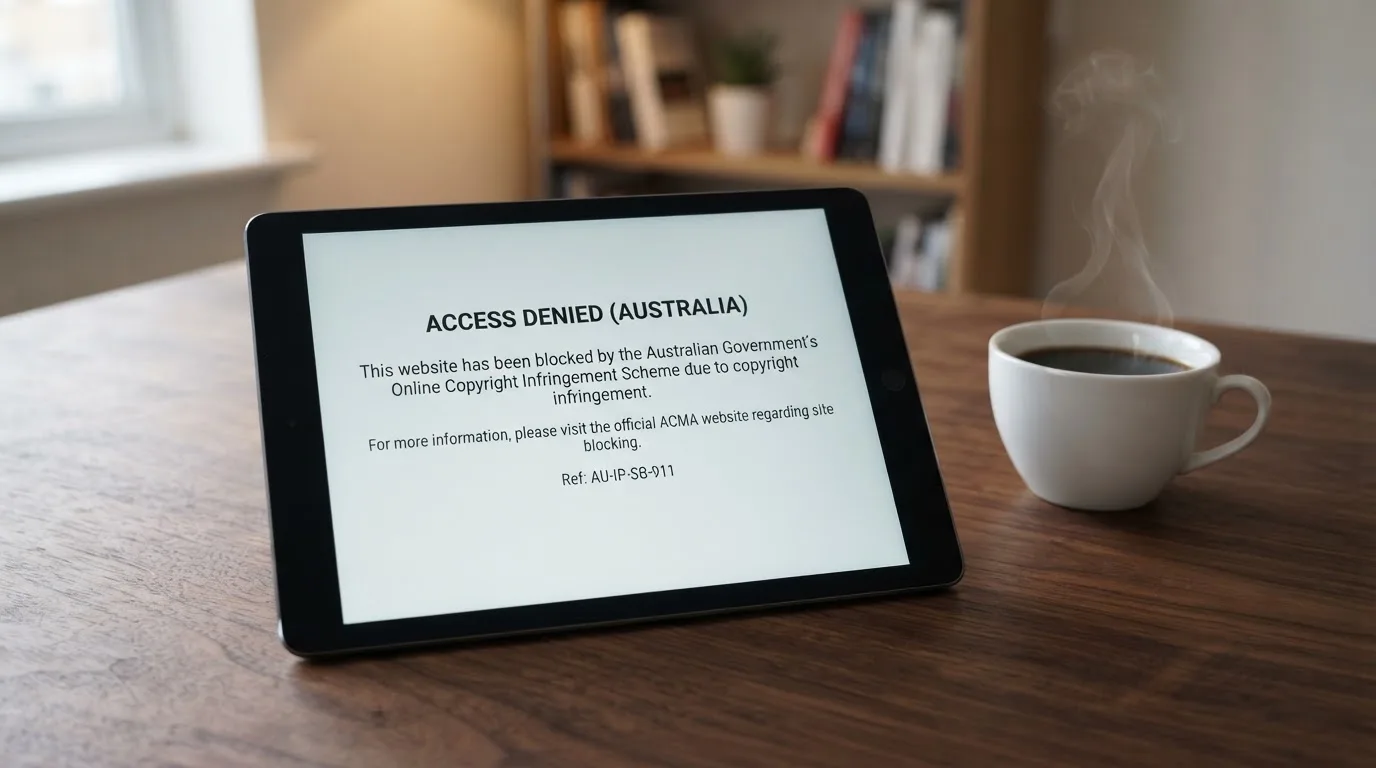
According to the ACMA as reported in June 2026, a total of 1,751 illegal gambling and affiliate marketing websites had been blocked since the first blocking request in November 2019, and more than 230 unlicensed gambling services had left the Australian market since enforcement was strengthened in 2017.
The arithmetic the page draws from those two figures is straightforward: in the roughly six and a half years between the first blocking request in November 2019 and the June 2026 round, the ACMA has averaged somewhere between two and three hundred blocking actions a year, with the count including affiliate marketing pages that feed traffic into the prohibited services. The most recent round reported on 26 June 2026 added twelve more: 7Signs, ChromaBet, Donbet, Duospin, Freshbet, Slots Gem, Jacks Club, Lucky Start, Pointsbetz.com, Spinrise, Vinyl Casino and Wildsino.
That blocking machinery is the regulator’s answer to a market that has been measured in dollar terms. H2 Gambling Capital’s 2025 estimate puts Australian losses to illegal gambling sites at around A$3.9 billion a year, and shows the legal share of gambling spend falling from 74% in 2021 to 64% in 2025. The blocking rate is fast. The illegal market it is trying to push back is large.
Formal warnings are the regulator’s other instrument, and they target the operator by name. Public records from the ACMA on this subject run from 2022 to 2026 and cover a long list of brands the agency has held to be offering prohibited services to Australians. Eleven of them — RocketPlay, Level Up Casino, Woo Casino, Spirit Casino, National Casino, Bizzo Casino, Ignition Casino, Instant Casino, Jackbit, Casino Intense and Sky Crown — are the brands the ranking below walks through one by one.
The responsible gambling frame an Australian reader actually has
The consumer protections that exist in this country were built around Australian-licensed services. They do not reach offshore sites; a responsible gambling section on a page about no-deposit free-spin offers is therefore mostly a matter of signposting readers to those protections, rather than to any offshore operator.
BetStop — the National Self-Exclusion Register — has been live since August 2023. It binds Australian-licensed online and phone wagering services, which is what an offshore casino is not. A punter who excludes themselves through BetStop will keep getting marketing from offshore sites and will keep being able to open accounts with them, because the site has no obligation to check the register. It is a useful tool and a partial one; readers comparing offers on this page should know where its reach stops.
The other side is support. The National Gambling Helpline on 1800 858 858 is free and runs 24/7. Chat is available through Gambling Help Online. Both lines are staffed by professionals who work with Australian callers on Australian terms, and they sit beside, not beneath, any offshore offer.
For readers who want a tangible limit before any of that becomes relevant, the major banks have built one in. Commonwealth Bank lets customers apply a gambling lock to eligible cards through the CommBank app, which automatically blocks most gambling transactions, with the bank noting it cannot guarantee every gambling-related purchase will be stopped. Westpac’s gambling block works at card level: it refuses authorisation on transactions registered under the merchant category code ‘Betting/Casino Gambling’ on eligible personal credit and debit cards. ANZ’s gambling transaction block, activated in the ANZ app, also blocks gambling transactions made through a digital wallet such as Apple Pay on an eligible card, and once turned on, removing it requires a 48-hour waiting period, with the bank warning that not all gambling transactions will be blocked and some non-gambling transactions might be blocked in error.
None of these is a complete wall. They are the tools an Australian reader already has, and they sit alongside the offshore offers this page describes, not in their place.
Crypto, digital wallets and what paying differently does not change
A recurring pitch for offshore no-deposit free spins offers is that paying in cryptocurrency solves something: anonymity, speed, an absence of identity checks. What it actually changes, in the Australian frame, is much narrower.
The Interactive Gambling Act already bans the use of credit cards and credit-related products for licensed online wagering, a restriction in force since 11 June 2024 that also constrains gambling use of linked digital wallets like Apple Pay. A site asking an Australian for a credit card deposit or a crypto deposit is therefore operating outside the Australian rules on payment, even before the wider question of whether the games themselves are licensable. The pitch for paying differently is a pitch for a payment route, not a licence. The games the spins run on sit outside Australian law either way.
The wording matters here. Australian banks do not process everything. The Reserve Bank of Australia’s July 2025 review proposes removing surcharges only on eftpos, Mastercard and Visa card transactions, explicitly leaving American Express outside the scope of the proposed surcharge ban. By the end of 2025, Apple Pay, Google Pay and Samsung Pay transactions collectively accounted for around 45% of all card payments in Australia by number. The digital infrastructure is large, and a fair portion of it is bolted to the card networks the regulator’s payment rules already address.
A bank block, where a punter has set one up, works at that card level. ANZ’s block covers Apple Pay transactions on an eligible card; the merchant-category-code check Westpac applies looks at the network, not the wallet interface. Crypto, by contrast, is a separate rail. The block does not apply, which is the part of the pitch that is true. The part the pitch leaves out is that the wallet a punter funds from, the exchange they bought the coin on, and the platform they are about to spin on are all in different jurisdictions, none of them Australian, and recourse for an unauthorised withdrawal still has to come from one of them.
The wagering requirement beneath the spins does not soften for paying in crypto. It is the same requirement under different funding, on a game still outside Australian law.
How the offers are built — bonuses, wagering and what “no deposit” actually promises
A no-deposit free spins offer has the same underlying machinery as a deposit bonus. The casino credits a number of spins, the punter runs them, the result accumulates in a bonus balance, and that balance becomes withdrawable only after the wagering requirement attached to the offer is satisfied. The “no deposit” line in the headline refers to the entry condition, not the exit condition.
The number of spins is the figure marketing leads with. A typical range across the offers this page covers is in the tens, sometimes up to a hundred or more as a sign-up headline. The number is one variable. What changes the offer’s actual cost is the wagering multiple attached to anything the spins win. A 40x turnover on winnings, applied to a small win, becomes a much longer path to a real payout than a 20x multiple on a larger win.
The other variable is the per-spin stake. Each spin runs at a fixed coin value, often at the lowest end of the slot’s range, sometimes forced onto a single named title. A 50-spin offer at A$0.10 each is, in wagering terms, A$5 of input turning into a turnover the punter still has to drive through. The maths is mechanical. The marketing pitch rarely mentions it.
Game restrictions are the third axis. Most no-deposit offers confine play to one or two named slots, and exclude table games, live casino and most jackpot titles from the wagering contribution. A punter trying to clear the bonus on roulette will find that contribution counts at zero. A punter trying to clear it on a progressive jackpot will find that the jackpot side of the bet does not count either.
The other thing a full deposit bonus would include that a free-spins-only bonus usually leaves out is a matched deposit side of the package — the part that enlarges when the punter funds the account. Where a deposit bonus has a cash component and a free-spins component, a no-deposit offer is the spins only, with no matched cash on top. That is the most concrete difference between a “no-deposit bonus” used loosely in marketing copy and a “no-deposit free spins offer” used accurately; the one is sometimes a wider package renamed, the other is spins on their own, with everything that means for what the punter can and cannot convert to a real payout.
Payments on offer — what the offshore pages describe and what that tells an Australian
The payment methods offshore no-deposit casinos list are useful as background, even when the offers themselves sit outside Australian law. The names recur enough across marketing pages to be worth one pass through them in plain language.
BPAY is a bill-payment service inside Australian online banking: the payer enters the Biller Code and the Customer Reference Number (CRN) printed on the bill. BPAY has operated in Australia since 1997, is available through over 140 banks and financial institutions and is offered by over 95,000 businesses, and is run by Australian Payments Plus (AP+), the same operator behind PayID and Osko.
PayID is a payment identifier that lets an Australian pay by something more memorable than a BSB and account number. With Osko, a bank transfer between participating banks arrives in under a minute, 24/7 including weekends, whether it is addressed to a BSB and account number or to a PayID. Paying to a PayID shows the name of the account holder before the transfer is sent, which is the part that matters on a page about offshore offers: AP+ warns that being asked to transfer money to a PayID on an illegal gambling site almost certainly means a scam site.
PayID-based instant transfers are available at over 100 Australian financial institutions. More than 25 million PayID identifiers were registered on the New Payments Platform as of April 2025. The platform became accessible to the public on 13 February 2018 and is owned by New Payments Platform Australia Ltd, a non-profit whose 13 shareholders include the Reserve Bank of Australia and the country’s major banks. In 2021 the ACCC authorised merging NPP Australia with BPAY and eftpos into a single company, Australian Payments Plus, and participants in the platform must keep monthly outages to no more than two minutes.
American Express shows up across some offshore sites too. The card network was established in 1850 as a freight-forwarding company, became a card issuer later and launched its first charge card on 1 October 1958. Unlike Visa or Mastercard’s four-party network, Amex traditionally issues cards and processes transactions itself as a three-party scheme.
AUSTRAC’s threshold-transaction-report rule, which requires reporting of transfers of A$10,000 or more, applies only to physical cash; ordinary electronic bank transfers are not subject to that per-transaction reporting requirement, regardless of the amount sent.
The pattern that matters to an Australian reader is the one the offshore pages don’t say out loud: any of those methods applied to a casino offering no-deposit free spins to Australians is paying into a service the regulator has already said is prohibited. The payment system itself is not the issue. The counterparty is.
The games behind the headlines
Pages promoting no-deposit free spins to Australians tend to spotlight a small, recurring cast of slot titles. The names below are the ones the offshore pages lead with, in the form the marketing uses. They sit behind the wagering requirement before any of the licensing questions matter for what the punter actually plays.
Free pokie spins are the typical headline in this category, and the markets tend to be the high-volatility slots: rising-max titles, hold-and-win bonuses, the kind of mechanic that pushes the balance around over a session. Free slot spins for real money is the slightly older phrasing still in use across affiliate pages, and free slot spins is the bare-bones version, used when the article has nothing else to lead with.
The combination of tight RTP bands and high volatility is the part the marketing rarely reads aloud. A pokies free spins offer on a 96% RTP slot gives the punter back A$96 per A$100 across enough spins to be statistically meaningful — and an extended clearing session is the one thing a high wagering multiple guarantees. The combination of headline offer and bonus condition is what determines the cost; the title itself is mostly a vehicle for the requirement.
What a no-deposit free spins offer really costs an Australian player — More on this topic at casino providers.
The eleven brands the ACMA has formally warned
Each of the operators below has received a formal warning from the ACMA under the Interactive Gambling Act 2001 for offering prohibited services to Australians. The names are recorded as the regulator published them. Online casino games cannot be licensed anywhere in Australia, and no bonus terms are reproduced here — the only sources for those terms are affiliate marketing pages, and reproducing them on a page whose subject is exactly what they cost would mis-state what the marketing is worth.
RocketPlay
The ACMA’s record shows a formal warning under the Interactive Gambling Act 2001 to Pulsup Ltd over Rocketplay.com.au in March 2026, with an earlier warning to Dama N.V. covering the same brand in May 2022. Subject support on the payment and games side is limited to listings-only mentions on industry indexes such as Gambling Insider. The relevant operator context for a reader is that a name on an ACMA warning is the regulator’s own record, distinct from the operator’s marketing.
Level Up Casino
Level Up Casino was named in the same May 2022 ACMA warning that covered several Dama N.V. brands. Subject support is listings-only. The signal the ACMA publishes is the warning itself; the gamblinginsider-style listing is a directory entry, not a sign that the offer is anything other than what the regulator has acted against.
Woo Casino
Woo Casino was included in the March 2025 ACMA warning issued to Dama N.V. Subject support is no-data on the inputs carried. The ACMA record is what the regulator publishes; the absence of a payment-method listing on the inputs is information about what is missing from public listings on this brand, not a defence of it.
Spirit Casino
The May 2025 ACMA warning to Dama N.V. over Spirit Casino is the regulator’s published record on this brand. Subject support is no-data. The brand’s appearance on a formal-warning list is, by itself, the meaningful fact an Australian reader needs to weigh.
National Casino
National Casino was the subject of an ACMA formal warning in July 2025, directed at Consolutetish S.R.L. Subject support runs through listings-only entries across Australian-facing bodies such as the ACMA, AUSTRAC and BetStop. The cross-reference between those registers — ACMA action, AUSTRAC reporting rules, BetStop’s exclusion scope — is the part an Australian reader can check on a regulator’s own site, which is more than the offshore site’s own pages will offer.
Bizzo Casino
Bizzo Casino was added to the list in July 2025 via an ACMA warning to Consolutetish S.R.L.; it had been warned previously in 2022 under TechSolutions. Subject support is listings-only, principally on Gambling Insider. Two separate warnings across different operators, both for offering the same prohibited service, are a stronger signal than one.
Ignition Casino
The ACMA issued a formal warning over Ignition Casino to Bamboo Media in July 2025. Subject support is no-data on the inputs the page works from. The name on the regulator’s warning is the relevant comparison point with the brands above.
Instant Casino
Instant Casino was identified in a February 2025 ACMA formal warning to EOD Code SRL. Subject support is listings-only across payment-side pages such as ecopayz and PayID. The fact that the brand shows up in the same listings as legitimate payment options is part of why the regulator’s page is the one to read.
Jackbit
The ACMA issued a formal warning to Ryker B.V. over Jackbit in April 2026. Subject support is no-data on the inputs the page works from. The warning is recent enough that the brand is exactly the kind of name a reader comparing offers this year will meet.
Casino Intense
Casino Intense received a formal warning from the ACMA in April 2025, issued to Sterplay Holding Ltd. Subject support is listings-only across Australian-facing registers including AUSTRAC, BetStop and Gambling Insider. Where a brand shows up across more than one of those registers, the reader can verify the regulator’s action against the listing — a small but real advantage of looking at the regulator’s page first.
Sky Crown
The ACMA issued a formal warning to Hollycorn N.V. over its Sky Crown and Blue Leo casino services, as recorded in the regulator’s September 2022 PDF publication. Subject support is no-data on the page’s inputs. The Sky Crown record is the earliest in this set and illustrates the arc of enforcement — a warning in 2022, ongoing blocking rounds, an unchanged prohibition through to 2026.
How the formal warnings and blocks compare
The table below sets the eleven brands above against the regulator’s published record. The point of the table is to put the names side by side under the ACMA’s own columns; the rank order of brands that all sit outside Australian law is a comparison that should not need making.
| Brand | ACMA action and date | Operator named by the ACMA | Subject support |
|---|---|---|---|
| RocketPlay | Formal warning, March 2026 (Pulsup Ltd); May 2022 (Dama N.V.) | Pulsup Ltd, Dama N.V. | listings-only |
| Level Up Casino | Formal warning, May 2022 | Dama N.V. | listings-only |
| Woo Casino | Formal warning, March 2025 | Dama N.V. | no-data |
| Spirit Casino | Formal warning, May 2025 | Dama N.V. | no-data |
| National Casino | Formal warning, July 2025 | Consolutetish S.R.L. | listings-only |
| Bizzo Casino | Formal warning, July 2025 (Consolutetish S.R.L.); 2022 (TechSolutions) | Consolutetish S.R.L., TechSolutions | listings-only |
| Ignition Casino | Formal warning, July 2025 | Bamboo Media | no-data |
| Instant Casino | Formal warning, February 2025 | EOD Code SRL | listings-only |
| Jackbit | Formal warning, April 2026 | Ryker B.V. | no-data |
| Casino Intense | Formal warning, April 2025 | Sterplay Holding Ltd | listings-only |
| Sky Crown | Formal warning, September 2022 | Hollycorn N.V. | no-data |
The shape of that table — eleven brands, four different operators, an enforcement action every year since 2022 — is the picture the ACMA’s own publications draw. None of the rows above sits inside Australian law, and the listing is the regulator’s, not a recommendation.
The advertised offer versus the offer on the page
The marketing headline names a number and a low entry bar. The terms behind the headline do several things the headline leaves out, and the practical reading of any of these offers needs to keep both halves in view at once.
The headline figure is the number of spins. The punter sees, say, 50 free spins, credits at A$0.10, on a named slot. The face value of the offer is A$5 of input. The wagering requirement is the second layer. A 40x turnover on bonus winnings means any payout the punter works up to has to be re-wagered 40 times before it is withdrawable, on a contribution set that usually runs at 100% on the named slot and at 0% on anything else.
The third layer is the maximum cashout. Most no-deposit offers cap the cash withdrawable from bonus winnings at a fixed amount — typically a small multiple of the face value, sometimes with a flat ceiling like A$100. Anything above the cap is voided at withdrawal. A punter who runs the spins, builds a balance, and tries to withdraw above the cap sees the excess removed.
The fourth layer is the game restriction. The spins are usually locked to one or two titles. The wagering contribution is usually locked to those titles too, often with table games, live casino and a long list of high-RTP slots excluded. A punter who wants the cash quickest stays on the named title at the lowest stake and accepts that the balance on offer is the ceiling.
Time limits are the fifth constraint. Most no-deposit offers expire within 24–72 hours of credit, and the wagering period is a separate short window on top of that. The clock is part of the cost — a punter with a small balance and a 40x turnover faces a session that measures in hours of continuous play, and the time cost is what the marketing never quotes.
Putting the layers together is the comparison the offer is actually trying to do. The headline figure is the variable that gives the marketing copy its shape. The wagering multiple, the cashout cap, the game restrictions and the time limit are the variables that determine what the offer pays out. The face value of the spins measures what is at stake. The cost to the punter is everything the face value leaves out.
What the wagering arithmetic actually shows
For a punter choosing between two offers, the headline numbers are the same shape, and the difference is in the wagering layer underneath. A worked example on a small base case shows how a typical offer becomes a real cost.
Take a 50-spin no-deposit offer at A$0.10 per spin on a slot with a 96% return-to-player. That is A$5 of spins at the face value. Suppose the punter’s result across those 50 spins is roughly A$4.80 in winnings, an average outcome at the stated RTP. The bonus winnings of A$4.80 carry a 40x wagering requirement before they become withdrawable cash, which means the punter has to place A$192 in additional bets to clear the bonus. At A$0.10 per spin, that is 1,920 additional spins.
A 40x multiple on a small win is exactly the case where the bonus’s face value and its real cost are furthest apart. The face value is A$5 of spins. The cost is the time to drive A$192 of bonus turnover through a single slot, on a session the punter is paying for with their attention and their time and with the continued erosion of the bonus balance at the house edge.
Spin the same offer at a 20x multiple and the wagering requirement is halved — A$96 of play, 960 additional spins at A$0.10 — and the time cost halves with it. The cashout cap, where it sits, is what bounds the upside: in real terms, a punter clearing a 40x turnover on bonus winnings and reaching a payout at the cap is still working through roughly a thousand spins to get there.
These figures are an estimate, not a guarantee. An estimate is what the arithmetic across many spins under stated assumptions produces; a guaranteed outcome for one player is what it deliberately does not. The arithmetic is the comparison the marketing does not want made, and the headline on the offer is exactly the figure the arithmetic least relies on.
The reader this page leaves in a better position
The comparison the page wants to leave a reader with is straightforward, and it does not depend on the offer.
A reader who has seen a no-deposit free spins offer and is weighing whether to open an account has three readings to make: the offer’s headline, the offer’s terms, and the offer’s legal status. The headline is a number the marketing gives them. The terms are the wagering multiple, the cashout cap, the game restrictions and the time limit that sit behind the number. The legal status is the one the ACMA has already written on its own page, in a formal warning the reader can look up before they look at the offer.
The most useful comparison this page can make is between the first reading and the third. The first reading tells the punter how many spins they would get. The third tells them those spins are on a service that is prohibited in Australia and that the operator behind it has been the subject of a regulator’s formal action. The terms in the middle determine what the spins cost if the punter is determined to clear them; the legal status determines whether they should be played at all.
For readers who have already spent on these offers, the position is the same as for readers who have not. BetStop exists and excludes from Australian-licensed sites. The National Gambling Helpline on 1800 858 858 is free and 24/7. Gambling Help Online runs chat. The bank-level gambling block at ANZ, Commonwealth Bank or Westpac is set up in the banking app and does not need a conversation with the bank to enable.
For readers who have been paid by crypto to an offshore site and not had the withdrawal clear, the position is the regulator’s, not a private one. AUSTRAC’s threshold-transaction-report rule applies to physical cash, not to bank transfers, but the bank-side records the punter has — the recipient PayID or wallet address, the amount, the date, the platform — are the inputs a complaint or a scam report needs to contain, not a piece of information the punter should expect the offshore site to volunteer.
A page on no-deposit free spins in Australia is a page about cost. The marketing cost the punter sees is the terms. The cost the punter does not see is everything the IGA and the ACMA’s published actions describe. Both are unavoidable, and the reader’s job is to weigh both before they sign up.
Reform on the horizon — what changes from 1 January 2027
The Interactive Gambling Amendment (Gambling Reform) Bill 2026 passed Parliament on 19 August 2026. Its advertising and inducement measures commence 1 January 2027. They are law with a start date, not measures in force on a 2026 page.
For a reader comparing offers in 2026, the practical position is unchanged from the IGA as it stands: online casino games cannot be supplied to a person in Australia, and the ACMA’s blocking machinery continues to operate against the offers that try. The reform package adds to that base. It does not replace it.
The shape the reforms will take, once commenced, is to tighten the rules around inducements — the bonus words, the marketing hooks, the affiliate partnerships — that have driven traffic to offshore sites in the first place. That is a different lever from the blocking lever, and it is the one the bill is built to pull.
For a punted offshore page that has built its traffic on Australian sign-ups over the last decade, the reform passage is the date the model changes. For an Australian reader comparing offers today, the date is the one to mark on the calendar.
Tax — the part an Australian punter is sometimes told is complicated, and isn’t
Recreational gambling winnings are not assessable income for an Australian player, under section 6-5 of the ITAA 1997, and losses are not deductible. That holds for poker machines, it holds for lotteries, and it holds for offshore casino winnings claimed legitimately. The position an Australian individual is in is: the winnings are yours, the losses are yours, and neither sits on a tax return.
The position changes if the Australian carries on a business of gambling. That is a higher bar than a hobby and a higher bar than a regular punter. The model answer — the ATO’s published position — is “check with the ATO or a tax adviser”. The default position, for the reader this page is written for, is that gambling is recreational and the tax treatment is no tax.
Reporting offshore gambling winnings to the ATO is also not required for a recreational player. The position the ATO itself publishes is that recreational gambling winnings are not assessable income, and that an Australian individual does not need to declare them on a return. The position for business-scale gambling is different and is not the assumption of this page.
What the picture looks like from the regulator’s chair
Sitting the eleven warnings above beside the blocking rounds and the loss estimate together gives a different picture from any one of them. The ACMA has issued formal warnings to eleven separate brands between September 2022 and March 2026. The blocking requests the agency has filed since November 2019 cover 1,751 sites. The losses to illegal gambling the regulator’s own commissioned estimate puts at around A$3.9 billion a year.
The point of pulling those three numbers onto a single page is not to suggest the enforcement is failing. It is to show the reader the scale of what sits between them and the offer. The blocking rate the agency works at is real and ongoing. The market the rate is trying to push back is large. The signal an Australian reader gets when they see a no-deposit free spins offer from one of the eleven brands above is the regulator’s own signal: that brand is on the warning list. The regulatory posture of the IGA does not depend on which brand has been warned most recently.
Choosing between the offers — the comparison this page actually makes
Punters comparing no-deposit free spin offers typically end up choosing between two or three sites at most. The choice that matters is the one the marketing copy makes hardest to see. Two brands on the ACMA’s warning list six months apart are not meaningfully different from each other; two brands on the warning list where one of them has a smaller cashout cap is also not the difference that matters.
What does matter is whether the offer sits inside Australian law at all. None of the eleven brands above do. The choice the punter faces is between offers that are all outside Australian law, and the most useful frame for that choice is the one that ranks the offers by what they cost in time and lost balance at the house edge, not the one that ranks them by the number of spins in the headline.
A punter who has read this far and still wants the offer can read the ACMA’s page. The agency publishes the warning, the operator named, and the date the warning was issued, and the page is the page a reader comparing offers should at least open before opening the offer. The ACMA’s record is what the marketing copy does not carry, and it is the side of the comparison a regulator-supplied reader gets for free.
FAQ — the questions this page set out to answer
How is a no-deposit bonus different from a no-deposit free spins offer specifically?
A no-deposit bonus can be cash, a matched credit or spins — any of several credit types handed to a new account. A no-deposit free spins offer is one specific shape: a fixed number of spins at a fixed stake on a named slot. The wagering requirement, the cashout cap and the game restrictions are otherwise the same. The spins-only form usually excludes a matched-deposit side and the bonus-buy features a larger package can carry, which is where the cost usually sits.
Do crypto slots sites attach different terms to their free spins than a fiat site does?
The marketing sometimes pitches crypto-specific terms — faster payouts, no identity checks, larger spin caps. The structural terms — wagering multiples, contribution rates, cashout caps — are set by the operator’s bonus policy and are not changed by the funding rail. Paying in crypto changes how the punter moves money onto and off the site. It does not change what the bonus mechanism takes from them once they are in it.
Is claiming free spins from an offshore casino something an Australian can lawfully do?
The Interactive Gambling Act 2001 targets the provider. The individual Australian who opens an account is not prosecuted. The legal weight sits on the operator, who is offering a prohibited service from outside Australian reach. The Australian consumer consequence is the practical one: no complaints body, no local regulator to escalate to, and the site can be blocked while a balance is still on it.
Why would a site pair free spins with a PayID deposit method claim if the spins are meant to be free?
“No-deposit” describes the sign-up step only. The path from bonus winnings to withdrawable cash still requires turnover, and the cashout cap is the figure the punter needs to clear the bonus against. PayID is one of the instant payment rails on Australia’s New Payments Platform; being asked to transfer to a PayID linked to an illegal gambling site almost certainly means a scam site, per AP+, which is the warning on the page that matters before any bonus terms.
How many free spins do these offers typically advertise, and does the number matter more than the terms?
The headline figure is usually between 20 and 200 spins, with 50 a common middle ground at A$0.10 per spin. The number is the variable the marketing leads with; what determines the cost is the wagering multiple behind it, the maximum cashout cap, the game restriction and the time limit. A 50-spin offer with a 20x turnover clears faster than a 100-spin offer at 40x, regardless of which one looks bigger on the page.