
Online Pokies No Deposit Bonus Australia in 2026: What the Marketing Picture Leaves Out
Data current as of 30 October 2026 and verified against the Australian Communications and Media Authority register of formal warnings and blocking notices.

The phrase “no deposit bonus” sounds like an exception to the rule that a casino keeps your money before you ever see the game. It is not. It is a marketing arrangement dressed up as a gift, and the arithmetic of how it actually pays out reads nothing like the marketing. In Australia the picture carries a second problem none of the offshore sites talk about: no state or territory licenses online casino games of any kind, which means the bonus is offered by an operator with no Australian licence, no Australian regulator behind it, and no obligation to honour its own advertised terms if you happen to win.
This page is a working-out of those two layers. The first is what a no-deposit bonus really costs a player in time, playthrough and capped cashout, using the mechanics that recur across the offers being advertised to Australian account holders today. The second is what the ACMA has done about the operators making those offers, and how that enforcement timeline changes the shape of the marketplace a reader in Australia is browsing.
The two layers are linked. A bonus that looks free on the page becomes part of a marketing relationship the moment a player deposits to clear the wagering, and from that point on the relationship is governed not by the bonus terms but by the licensing status of the operator. Offshore, with no licence held in any Australian jurisdiction, that relationship runs on whatever the operator chooses to enforce today, and on whether the site is still reachable at all.
Table of Contents
- How a No-Deposit Bonus Is Actually Built
- The Cost Side: What the Player Actually Pays
- The Law Side: Why No Australian Operator Offers This
- What the ACMA Has Actually Done
- Choosing a Responsible Path Around Offshore Offers
- Settlements and the PayID Question: What “Instant Withdrawal” Actually Means
- The Operator Record: Brands the ACMA Has Acted Against
- What the Table Says at a Glance
- The Practical Decision Facing an Australian Reader
- Frequently Asked Questions
How a No-Deposit Bonus Is Actually Built
The structure is uniform across the offers pitched at Australian players, and the uniformity is itself the tell. A no-deposit bonus is always three things at once: a small credited balance (typically between A$10 and A$50 in equivalent value, or a parcel of free spins valued similarly), a multiplier on the bonus amount that must be played through before anything can be withdrawn, and a ceiling on the amount that can ever be cashed out from the credited balance.
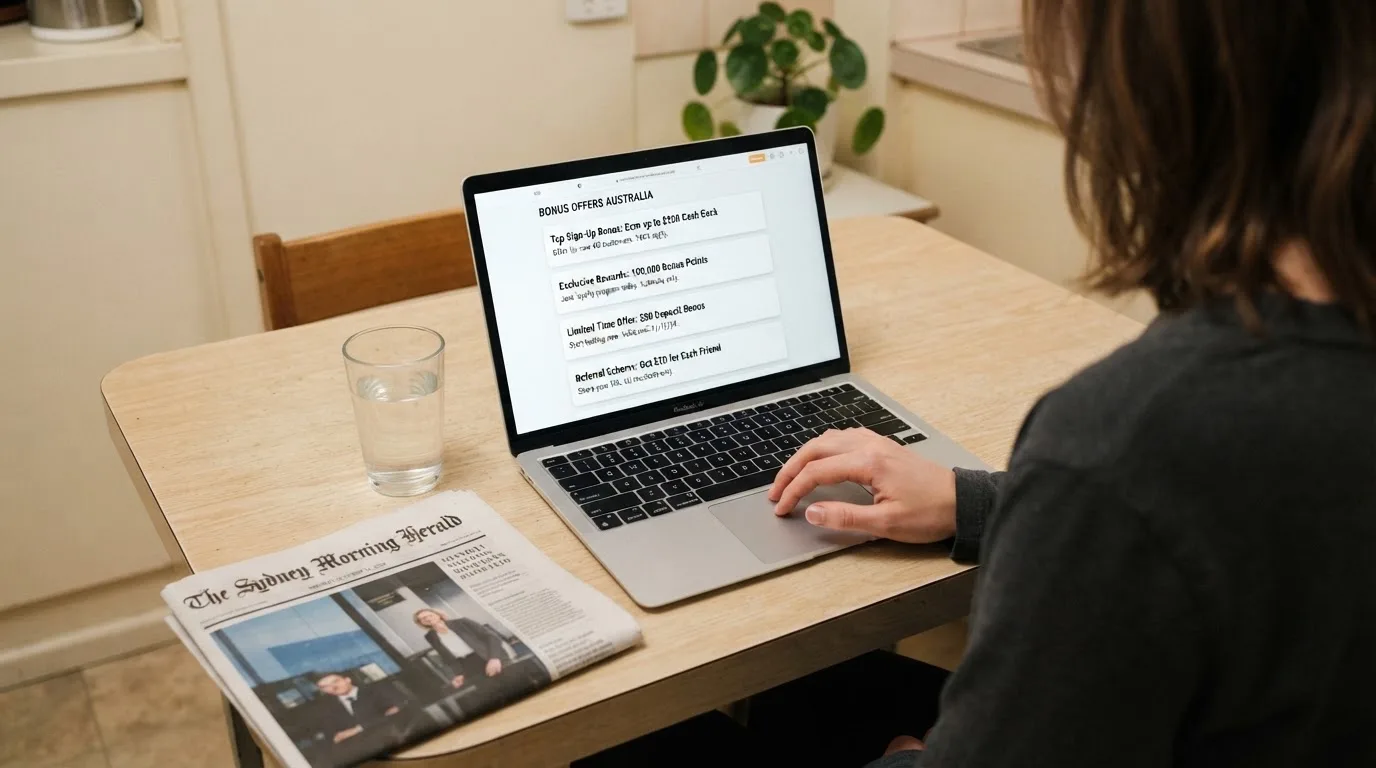
The numbers vary. The shape does not. The credited amount is small enough that the operator is comfortable losing every dollar of it to a player who decides to walk away without depositing. The wagering multiplier is high enough — the territory offshore casinos operate in typically attaches a 40× to 60× playthrough to the bonus, sometimes onto the bonus and deposit together — that the bonus itself rarely survives long enough to be cashed out in full. The withdrawal cap sits low, frequently between A$50 and A$200, so that even a lucky run on the credited balance returns only a fraction of what the player thought they were playing for.
What that adds up to, in plain terms: the player does not pay anything to start, but they also rarely get out with anything substantial. The bonus is a hook. Its function is to put a player inside the lobby, and the rest of the offer stack — the matched deposit, the reload bonus, the VIP tier — is where the operator’s economics actually sit.
Free-spin offers follow the same shape with one substitution: the credited balance is replaced by a fixed number of spins at a fixed stake, the wagering multiplier attaches to whatever the spins return, and the same withdrawal cap governs the cashout. The promotional page usually reads more favourably (“50 free spins on a featured title”) because the stake is not quoted in dollars. It is — the operator has simply moved it from the bonus description into the spin parameters.
The Marketing Words Worth Reading Twice
Three phrases recur across these offers, and each one repays a closer look. “Withdrawable” means withdrawable after the wagering and after the cap, and is often followed by a paragraph explaining why neither condition has been met in your case. “Sticky” — applied to a bonus — means the bonus itself cannot be withdrawn at all, only the winnings it produces, and the deposit the player is later asked to make to clear the wagering is the moment the operator’s economics actually begin. “Max cashout” or “maximum withdrawal” is the ceiling on what the bonus can pay out, full stop, and is the single most important number in the offer for anyone whose plan is to walk away with money.

None of these is fraudulent. All of them are unfriendly to a reader who does not already know them, and offshore marketing pages are good at presenting offers where the unfriendly clauses are on page three while the headline sits on page one.
The Cost Side: What the Player Actually Pays
“No deposit” is, taken literally, true. The player does not send money to start. What the player does instead is spend something less easily refunded: time, attention, and the goodwill of the offshore casino the moment they hold a balance above zero that the player cannot withdraw.
Time is the cost the marketing is least honest about. A 40× wagering multiplier on a A$20 no-deposit bonus requires A$800 of qualifying play, and at an average spin length of five seconds that is in the order of 200 minutes of seat time — slightly over three hours of continuous play — before the player has cleared the wagering and is allowed to attempt a withdrawal. A 60× multiplier on the same bonus pushes the figure to A$1,200 and around five hours. The bonus has cost the player nothing in dollars. It has cost them three to five hours of focused attention.
The withdrawal cap is the second cost, and it is a hard ceiling rather than a probability. If the cashout cap is A$100, then a streak that produces A$1,200 of bonus-balance play returns the same A$100 the player would have received from a streak that produced A$120. The cap is not a guide to probable outcomes — it is the maximum the offer can ever pay, and offers with low caps are systematically less generous than offers with high caps even when every other number is identical. Caps between A$50 and A$200 are the territory these offers sit in for Australian-facing marketing.
The third cost is the one a promotional page never describes: the moment a player deposits to take a subsequent offer, the relationship with the operator is now governed by the operator’s own terms and by whatever dispute resolution the player’s payment method provides. For an Australian player using a debit card or a bank transfer, that recourse is limited. The site’s terms typically restrict which games contribute to wagering, may exclude the very titles the bonus credits were issued for, and almost universally require extra identity and source-of-funds documentation before a first withdrawal — a process called “KYC” that the offshore casino uses as a final filter, not as a customer service.
The arithmetic, in short, is this. The bonus contributes zero dollars of player cost upfront and contributes three to five hours of player time, a withdrawal ceiling, and a transition into a licensed-outside-Australia relationship whose terms the player has no local regulator to lean on. The marketing page presents the first number and does not present the rest. A reader who reads only the marketing page comes away thinking they have found an exception to the rule that gambling costs money. They have not. They have found a different shape for the same cost.
The Law Side: Why No Australian Operator Offers This
Australia’s online gambling law is built on a simple prohibition. The Interactive Gambling Act 2001, as tightened by the Interactive Gambling Amendment Act 2017, makes it an offence to provide online casino games — including online pokies — to a person physically in Australia. The prohibition is on the provider, not on the player, but the consequence for the player is identical: there is no Australian-licensed source of this product, because such a licence cannot be issued.
What is licensable is wagering on races and sport placed before the event, lotteries and keno. In practice the same regulator — the Northern Territory Racing and Wagering Commission — handles more than fifty online bookmakers, including the major names, because the Territory’s licence arrangements suit operators whose product is racing and sport, not casino. The commission itself is small: it has no full-time staff and meets once a month in Darwin. That is the Australian regime, in shape.
The onshore prohibition shapes what offshore marketing can deliver. A casino licensed in Curaçao or in some other offshore jurisdiction can technically offer its product anywhere, including to Australian IP addresses, and many do. The Australian side of the arrangement is what is prohibited, but the Australian side is also what is unenforceable against a provider outside Australia, which is why enforcement runs through the channel that does work: the Australian Communications and Media Authority directing internet service providers to block the offshore site at the network level.
The blocker tool is real and it is being used. The cumulative count across the years now reaches past 1,750 illegal gambling and affiliate marketing websites blocked since the first blocking request in November 2019, and a round reported in June 2026 took the total up further with twelve more names added. Two rounds per year is the rough tempo of these waves. A player who opened an account at a brand that has since been blocked finds that the operator’s terms no longer matter — the operator’s site is unreachable from an Australian IP, the balance may or may not still be readable on a non-Australian VPN, and the deposit the player made is now in the hands of an entity outside Australian jurisdiction. This is what the offshore regulatory environment looks like in practice, regardless of what the homepage says about its licence.
The Licensing That Does Not Transfer
A reader who lands on one of these pages will see a licence badge. Usually it reads Curaçao. Sometimes Malta, occasionally Anjouan or Kahnawake. None of these has force in Australia. A Curaçao-licensed operator is licensed to offer gaming services under Curaçao law, in jurisdictions where Curaçao law applies — and that jurisdiction is not Australia, where online casino games are prohibited and where there is no licensing body that could issue such a licence to anyone.
Some offshore sites additionally display an Australian-issued licence. The licence is real. It is a licence to offer wagering — sports and racing bets — to Australians, not to offer online casino games or online pokies. The two products are governed by different sections of the same Act, and the licence the operator holds does not extend across the line. A reader who sees both a Curaçao badge and a Northern Territory Racing and Wagering Commission reference is looking at an operator with permission to take a racing bet, not permission to run a pokies bonus offer.
This is the licensing picture the marketing pages describe, and it is the licensing picture that does not apply to the bonus being advertised. The promotional product sits outside what any of those licences permits.
What the ACMA Has Actually Done
Enforcement is the second half of the picture and it is the half that updates fastest. The ACMA’s main tools are formal warnings to the operator, formal warnings to the corporate entity behind the operator, and referrals to internet service providers to block specific domains. Two patterns in the warnings are worth knowing.
The first is repetition. Operators and the corporate vehicles behind them get warned more than once, sometimes over different brand names, sometimes over the same brand at a different domain. Dama N.V. is the most prominent example: a May 2022 warning covered six of its casino brands, and further warnings followed in March 2025 over Woo Casino and in May 2025 over Spirit Casino. Each round listed the operator by name; each round targeted a different piece of the same corporate stable. The picture across two years is not a single unfortunate operator; it is a pattern of brands being set up, warned, rebranded and set up again.
The second is escalation. The early rounds were warnings and blocks at the brand level. The later ones extend into corporate vehicles, into affiliate marketing pages, and into specific Australian-facing domains. The April 2026 warning to Ryker B.V. over Jackbit and CasinOK, the March 2026 warning to Pulsup Ltd over the RocketPlay website, and the June 2026 blocking round of twelve more names all sit inside an enforcement direction that no longer treats each brand as a one-off.
The Block Rate
The arithmetic the page works out, given the cumulative blocking count and the date of the first request, is the rate at which Australia’s regulator has been adding illegal sites to the blocklist. The total stood at 1,751 websites blocked since November 2019, as reported in June 2026, with twelve further sites added in the most recent round. Spread across roughly six and a half years, that puts the average pace of new blocks at around 250 websites a year, with the rate running faster in the more recent rounds than in the early ones — a pace that has lifted in line with the 2017 strengthening of the Interactive Gambling Act and again as successive rounds have been prosecuted more aggressively. The exact figure moves with each round; what the trend shows is the regulator’s commitment of resources to a tool it did not have when the IGA was first enacted. Reader who arrived on an offshore page five years ago would have found the same site still there today; a reader who arrives on an offshore page now finds a much shorter half-life on its accessibility.
What a Player Should Read Into This
The pattern is not that the ACMA catches every operator. It is that the ACMA catches operators in order, that catching one rarely means the operator’s other brands stop appearing, and that the time between a player opening an account and the site becoming unreachable is now measured in months rather than years. A player weighing whether to open an account at any of these brands is weighing whether they want to be holding a balance at the moment the next blocking round is published.
Some of the brands covered here are still in operation at the time of writing. None of them is operating with Australian-issued permission for the product they advertise to Australians. The combination — offshore operator, no Australian licence, an existing formal warning from the regulator — is the position those brands hold in the Australian regulatory record.
Choosing a Responsible Path Around Offshore Offers
The decision a player faces is not whether to play. It is whether to play in a venue where the regulator has jurisdiction and where the player has recourse if the terms are not honoured. For Australians, that venue does not include offshore casinos, because the product those casinos sell is prohibited in Australia and there is no Australian-licensed site that offers online pokies with or without a no-deposit bonus.
The products that are licensed in Australia are wagering on racing and sport placed before the event, lotteries and keno. A reader who wants to bet on horses or football can do so with an Australian-licensed operator; a reader who wants to play online pokies cannot do so through any licensed Australian channel. The two products are not interchangeable, and the promotional pages that pitch offshore casino bonuses alongside licensed Australian wagering are not telling the reader about a parallel choice. They are offering the reader something the licensed channel does not offer, and they are doing it from a jurisdiction the ACMA can ask ISPs to block at the network level.
Where to Get Help If the Bonus Has Become the Problem
Gambling harm services in Australia are free, confidential and outside the offshore marketing relationship altogether. The National Gambling Helpline is 1800 858 858, free from any Australian phone, twenty-four hours a day. Chat support is available through Gambling Help Online, the federal program that connects people to local counsellors in each state and territory. BetStop, the National Self-Exclusion Register, has been live since August 2023; it covers every Australian-licensed wagering provider and lets a person exclude themselves from licensed wagering with one registration. It does not cover offshore casinos, because offshore casinos do not connect to it — a limitation that itself is one of the arguments for staying inside the licensed channel.
None of these services treats a person asking for help as having made a mistake. Each of them has handled the same call many times before.
Settlements and the PayID Question: What “Instant Withdrawal” Actually Means
A recurring phrase in the offshore marketing pitched at Australian players is “instant PayID withdrawal.” PayID itself is real and Australian: it is the New Payments Platform’s addressing layer that lets a transfer settle using a phone number, an email, an ABN or a business identifier instead of a BSB and account number, and it is used for Osko payments that settle in seconds within participating banks. The transfer takes seconds. The withdrawal does not.
The reason is that a casino withdrawal is not a transfer between banks. It is a transfer decision the casino has to make before the bank transfer starts. The casino approves the withdrawal in its own back office, runs KYC checks that can include source-of-funds documentation if it has not been done before, and only then sends the funds to the player’s nominated account. Once the funds are sent, PayID or Osko reduces the bank leg to seconds. The slot before that is where most of the waiting happens.
The advertised “instant withdrawal” therefore depends on the casino. Some operators at the higher end of the market process withdrawals in under an hour during business hours and run KYC in advance for verified accounts; many others take one to three business days for the approval alone, on top of any settlement time. The withdrawal that takes “five minutes” on a marketing page usually takes the time it takes the operator to decide to release the money, plus the time the bank takes to settle.
PayID and Osko do not change the casino’s internal queue. They change the bank leg. Players who care about withdrawal speed care about both — and the leg the player can do nothing about is the casino’s, not the bank’s.
Why So Many Pages Look the Same
The repeated handful of phrases on no-deposit bonus pages exists because the offers are commoditised. The number of offshore operators pitching to Australians is finite, the bonus mechanics are templated, and the marketing pages are largely produced by the same affiliate networks reading from the same templates. When a player finds four pages that quote the same bonus amount with the same multiplier and the same cap, what they are usually looking at is the same offer being resold four times by different affiliate sites, sometimes with different “exclusive” tags added at the top.
This is one reason it is hard for a reader to compare offers. The variation between pages is mostly surface — the offshore operator is the same, the bonus is the same, and the affiliate cut is the only number that genuinely differs from page to page. A page that pretends to be reviewing the offer is sometimes selling the offer; a page that distinguishes itself is doing it by reading the small print more carefully than the next one, not by offering a different deal.
The Operator Record: Brands the ACMA Has Acted Against
What follows is not a ranking and not a recommendation. It is the ACMA’s own record of formal warnings over brands that have offered prohibited online casino services to Australians. A reader who arrived at one of these brands through a search result is looking at a site whose offer sits outside the Australian regulatory framework, regardless of what the homepage says about licences elsewhere.
Each entry below names the operator the ACMA identified, the date of the formal warning, and the picture that emerges from the limited public record. Where the source material allows it, the entry carries a brief note on the kind of game product the operator was advertising at the time of the warning. Where it does not, that absence is itself the answer.
RocketPlay
Pulsup Ltd was the operator the ACMA named in March 2026 when it issued a formal warning over the RocketPlay website. The same brand had previously appeared in an earlier Dama N.V. warning, in May 2022, alongside five other Dama brands. Rocketplay has been marketed at Australian players as an online casino featuring slots and live dealer content, with bonus offers structured around a multi-part welcome package rather than the simple no-deposit arrangements that some competitors use. The brand’s regulator history is the same as several others here: a warning that did not produce an exit. It surfaced again under a different corporate entity and from a different domain. For a player who values an accountable regulator above all else, this is exactly the repetition that argues against the brand.
Level Up Casino
Level Up was one of the six brands the ACMA grouped together in its May 2022 warning to Dama N.V. The brand markets itself on a standard online casino offering — slots, live casino tables and a published welcome package. What distinguishes Level Up in the public record is that the brand surfaces in software provider listings as a partner of BGaming, the studio that ships a notable share of the games these offshore sites share between them. That link is a background detail about the games catalogue, not a comment on the operator’s regulatory standing, which remains that the ACMA has named Level Up as a brand offering prohibited services to Australians, and the brand is still named by the regulator in its formal warning.
Woo Casino
Woo Casino sat on the Dama N.V. side of the corporate structure until March 2025, when the ACMA issued a separate formal warning specifically to Woo Casino. The brand runs a standard online casino product — pokies, table games, live dealer — with a bonus structure typical of the offshore market. The 2025 warning makes Woo one of the more clearly recent entries on this list. It is the kind of name that a player reading a search result today is more likely to encounter than the older Dama brands, because the warning was published in the same year readers are searching. The pattern, though, is unchanged from the rest of the list: an offshore operator, a formal warning, no Australian-issued licence for the product on offer.
Spirit Casino
Spirit Casino received a formal warning in May 2025, also under Dama N.V.’s registration. The warning was issued in the same year as the Woo Casino warning and reflects the same pattern — a brand within the Dama corporate group being named by the ACMA after the 2022 batch had already covered six Dama brands. Spirit’s offer to Australian players is the standard offshore casino mix of pokies, table games and a layered welcome bonus. The Spirit Casino formal warning is the latest piece of evidence that the regulator’s actions against Dama brands have continued past the initial 2022 round, and that the corporate group has continued to operate new brands during the period in which warnings were being issued.
National Casino
National Casino was named in the ACMA’s July 2025 warning to Consolutetish S.R.L., the same round that also named Bizzo Casino. The brand’s product mix and the way it presents its welcome bonus are typical of the offshore operators covered in this list. National Casino is one of the more internationally circulated brands of the group, with references in the broader discussion of Curaçao-licensed operators and the affiliate marketing pages that push their offers into Australian search results. The 2025 warning places it in a similar regulatory position to Woo Casino and Spirit Casino: a brand whose offer to Australian account holders sits outside the Interactive Gambling Act’s permission, and which the ACMA has formally named for that breach.
Bizzo Casino
Bizzo Casino’s formal warning history is the most layered on this list. A 2022 warning was issued to TechSolutions (CY) Group Limited and TechSolutions Group N.V. over Bizzo Casino. The 2025 warning to Consolutetish S.R.L. named Bizzo again, this time alongside National Casino. Two warnings, two different operator entities, the same brand. A player who arrived at Bizzo through a search result today is looking at an offer from a brand that has been the subject of two ACMA formal warnings in three years, under different corporate names. The product offering — pokies, table games, live casino — is unchanged. The regulatory record is more extensive.
Ignition Casino
Ignition Casino was named in July 2025 in a formal warning to Bamboo Media. The brand has a longer international history than most on this list, having been established as an offshore-licensed operator for years, and is one of the more visible names in the affiliate marketing pages that pitch to Australian players. The Ignition offering is a standard offshore casino mix, with a particular emphasis on pokies and on the live dealer side that has been a key draw for the brand internationally. The 2025 warning places it alongside the others in this group: a brand that offers prohibited services to Australians and has been formally named for doing so by the regulator.
Instant Casino
The ACMA’s February 2025 warning to EOD Code SRL named Instant Casino as a brand offering prohibited interactive gambling services to Australians. Instant Casino is one of the more aggressively marketed brands in the offshore space, with affiliate pages targeting Australian search queries directly. The product offering is a standard offshore casino mix — pokies, table games, and live dealer content — with a particularly heavy emphasis on the kind of no-deposit and free-spin offers that this page is about. For a reader who arrived at Instant Casino through an affiliate page claiming an Australian-facing offer, the position is the one the warning describes: a brand the regulator has formally named for offering a prohibited service.
Jackbit
Jackbit and CasinOK were the two brands named in the ACMA’s April 2026 warning to Ryker B.V. The Jackbit offer differs from most of the brands on this list in that it markets a wider crypto-friendly product — sports betting, casino, esports — under one roof, but the casino side of the offer is the standard offshore mix. The 2026 warning places Jackbit among the more recent entries on this list and ties it to the same direction of travel: an offshore operator, an Australian-facing casino offer, a formal warning from the regulator, no Australian-issued licence for the product on offer.
Casino Intense
Casino Intense received a formal warning in April 2025, this time under Sterplay Holding Ltd. The brand’s product offering is the standard offshore casino mix — pokies, table games, live dealer — and Casino Intense has been named in the wider discussion of Curaçao-licensed operators in Australian-facing marketing. The 2025 warning places Casino Intense in a similar position to the other brands here: an offshore operator offering prohibited services to Australians and formally named by the regulator for that breach. Casino Intense is one of the operators that has also been the subject of broader reporting in Australian media on the offshore casino question, including the discussion of Curaçao licensing and Australian consumer protection.
Sky Crown
Sky Crown is one of two Hollycorn N.V. brands named in the ACMA formal warning record. The other was Blue Leo. The Hollycorn warning was issued under the same corporate umbrella that has run a number of offshore casino brands, and Sky Crown is one of the more marketing-visible of those brands. Sky Crown’s product mix is the standard offshore casino offering, with a particular emphasis on the slot-led catalogue that has been the core of its Australian-facing marketing. The Hollycorn warning places Sky Crown in the same regulatory position as the rest of this list: an offshore operator whose offer to Australians sits outside the Interactive Gambling Act’s permission and has been formally named by the regulator.
What the Table Says at a Glance
The table below puts the brands in a single field, sorted in the order the ACMA’s actions most recently placed them, with the corporate vehicle, the warning date, and the evidence available for whether the brand markets the specific product this page is about. The format is exactly that — a single line of detail per brand, with the honest gaps where the public record does not cover a field — because the value of the table is what it is honest about, not what it leaves out.
| Brand | ACMA action and date | Operator named by the ACMA | Subject support |
|---|---|---|---|
| RocketPlay | Formal warning, March 2026 | Pulsup Ltd (RocketPlay website); earlier Dama N.V., May 2022 | — |
| Level Up Casino | Formal warning, May 2022 | Dama N.V. | listings-only (per BGaming partner listings) |
| Woo Casino | Formal warning, March 2025 | Dama N.V. | — |
| Spirit Casino | Formal warning, May 2025 | Dama N.V. | — |
| National Casino | Formal warning, July 2025 | Consolutetish S.R.L. | listings-only (per general Casino listings) |
| Bizzo Casino | Formal warning, July 2025; earlier 2022 | Consolutetish S.R.L.; earlier TechSolutions, 2022 | — |
| Ignition Casino | Formal warning, July 2025 | Bamboo Media | — |
| Instant Casino | Formal warning, February 2025 | EOD Code SRL | — |
| Jackbit | Formal warning, April 2026 | Ryker B.V. | — |
| Casino Intense | Formal warning, April 2025 | Sterplay Holding Ltd | listings-only (per media coverage and regulator references) |
| Sky Crown | Formal warning, September 2022 | Hollycorn N.V. | — |
The brands read in two layers. The first is the warning date — every one of these is a brand the regulator has formally named, on a published date, for an offer to Australians that the Interactive Gambling Act prohibits. The second is what the regulator’s action did not do. None of the warnings forced the brand to stop offering to Australians immediately. None of them reversed the player relationships the brand had already built. None of them produced a refund mechanism for players with balances at the time the warning was issued. The ACMA’s tool is the blocklist and the formal warning; refunds and dispute resolution are not part of it. For a player with an existing balance at any of these brands, the regulator’s action has made the site’s accessibility shorter; it has not made the operator more accountable.
The Practical Decision Facing an Australian Reader
A reader landing on one of these pages through a search result is being offered an offshore casino product that no Australian regulator licenses and that the ACMA has, in most cases, already formally named as a prohibited service. The reader’s choice is not “which of these brands should I open an account at.” It is whether the product — a no-deposit bonus on offshore online pokies — is one they should be claiming at all.
For readers who want to play casino games online, the answer from the Australian regime is that there is no legal onshore channel for it. For readers who want to bet on racing or sport, the licensed wagering market is the appropriate channel and is subject to the responsible-gambling framework that offshore casinos are not. For readers who are concerned about their own gambling or someone else’s, the National Gambling Helpline and Gambling Help Online are the right starting point and they sit alongside BetStop for self-exclusion from licensed wagering.
The no-deposit bonus, in plain terms, is the entry point on the offshore side. The wagering multiplier is the bracket that the player stands in once they are inside. The bonus cap is the ceiling on what the bracket can ever pay. The deposit, if the player makes one to clear the wagering, is the moment the relationship becomes fully offshore and fully outside Australian jurisdiction. The block, when the next round of ACMA enforcement reaches the brand’s domain, is the moment the relationship ends. None of these moments is described on the marketing page. All of them are part of what the offer actually is.
Frequently Asked Questions
What is a typical online pokies no-deposit bonus actually worth, in real terms?
Worth is determined by the credited amount, the wagering multiplier and the withdrawal cap combined. A A$20 bonus with a 40× multiplier and a A$100 cap is in the order of three hours of qualifying play for a maximum payout of A$100, regardless of whether the player has a winning or losing session in between. The bonus is rarely cashable in full because the withdrawal cap is below what the wagering produces on a strong run.
Does a PayID no-deposit pokies bonus differ from a standard no-deposit one apart from the deposit method mentioned?
PayID affects the speed of any subsequent withdrawal’s bank leg, which on participating Australian banks is seconds. It does not change the casino’s approval queue before that leg, which is where most of the waiting happens. The bonus structure itself is the same as a non-PayID no-deposit offer — same credited amount, same multiplier, same cap — and the player’s exposure to the operator’s terms is unchanged.
Is claiming a no-deposit pokies bonus from an offshore operator something Australians can lawfully do?
The Interactive Gambling Act 2001 prohibits the provider, not the player. The player is not prosecuted for claiming, but there is no Australian-licensed source of this product because such a licence cannot be issued. Any bonus offer to an Australian account holder comes from an offshore operator whose site can be blocked at any time, whose terms do not bind it in Australia, and where there is no Australian complaint body to escalate a dispute.
What playthrough condition usually applies before winnings from a no-deposit pokies bonus can be withdrawn?
The wagering multiplier attached to the bonus, most commonly in the 40× to 60× range, applied to the bonus amount — and in some cases to winnings derived from the bonus as well. The exact multiplier, the games that contribute, and the cap are all in the offer’s small print and vary materially between operators.
Why do “instant PayID pokies no deposit” pages so often repeat the same handful of terms?
Because the offers are commoditised. The same offshore operators and the same affiliate networks produce the marketing, and the bonus mechanics are templated. Variation between pages is mostly presentational — a different headline or “exclusive” tag, a different bonus amount from the same template — rather than substantive.
What is the practical cap on how much can be withdrawn from a no-deposit pokies bonus win?
Whatever the offer’s stated maximum cashout is, frequently between A$50 and A$200. That cap is a hard ceiling: a strong run and a weak run pay the same once the cap is hit, and any excess is forfeited at withdrawal time. It is the most important number in the offer for a player who is aiming to walk away with money.