
Understanding low deposit casino mechanics in Australia
Currency stamp: as of 30 October 2026, cross-checked against the ACMA register of formal warnings and blocking actions.
A “low deposit online casino” sounds like a budget feature, a way to keep the bankroll in the player’s pocket. In Australia the offer is more complicated than that. The minimum-deposit number on the homepage is the smallest piece of the picture. The bigger one is that no online casino product may lawfully be supplied to an Australian resident under the Interactive Gambling Act 2001, so a low entry price is being offered by an operator that has, in many cases, already drawn a formal warning from the ACMA. A reader comparing low deposit brands here is comparing unlicensed offers that the regulator has already acted against, not a menu of legal choices.

That tension runs through the rest of this page. The mechanics of low deposit play — minimums, payment rails, settlement timing, network fees on a tiny bitcoin transfer — are real, and they explain what an offer costs a player. The legal frame is also real, and it explains what the offer costs the operator’s relationship with Australia, and with the player’s protection if a withdrawal stalls. The two halves of the page meet at the wallet: every dollar that goes in is governed by one set of mechanics, and every dollar that should come out is governed by another.
This article walks the mechanics first, then the law, then the payments, then the brands, then the questions that come up most often. The aim is not to recommend a place to play. No operator on this page may lawfully serve an Australian resident. The aim is to let a reader see exactly what a low minimum deposit means in this market, what it doesn’t change, and where the costs the marketing doesn’t mention actually live.
Table of Contents
- Low deposit online casino fundamentals: what a small first deposit really buys
- Legality and the Australian prohibition on online casino play
- Responsible gambling: why a small deposit is the riskiest entry point
- Crypto and small deposits: bitcoin, ether, and the network fee on a tiny transfer
- Payments and payout speed: PayID, BPAY, debit cards, and the rails Australia actually offers
- Eleven operators the ACMA has formally warned
- Frequently asked questions
Low deposit online casino fundamentals: what a small first deposit really buys
A minimum deposit on an offshore casino is the smallest amount the cashier will accept from a new account. Industry-wide the floor for fiat is usually A$10 to A$20, with a few brands accepting A$5 or A$10 in selected coins. Crypto minimums look lower still in headline form — 0.0001 BTC, the equivalent of a few dollars at most exchange rates — but they sit on top of a separate cost the page returns to below.

What the minimum buys is the same product a larger deposit buys. Slots pay the same RTP whether the bankroll is A$10 or A$10,000. Table games use the same house edge. Bonus eligibility, where it exists, usually activates at the minimum tier; the wagering multiple that converts bonus cash into withdrawable cash is unchanged. A small first deposit is not a cheaper game, it is a smaller stake on the same game.
What changes at the low end is the player’s margin for variance. A A$10 bankroll on a high-volatility slot will, over a meaningful sample of spins, spend most of its lifetime below the starting balance and post a heavy loss long before the wagering requirement clears. A A$200 bankroll on the same game has the same expected loss per spin, but a longer runway and a better chance of seeing the rare feature that returns more than the bet. The arithmetic is on the player’s side the moment the bankroll is large enough to absorb a normal downswing. The arithmetic is not on the player’s side at A$10 on a high-variance title, because the downswing arrives before the bonus has been played through. This is the single most useful piece of context a minimum-deposit figure can carry, and it is also the one the marketing page leaves out.
Why minimums exist at all
A casino sets a minimum for two reasons. The first is processing cost: a card authorisation has a fixed component, and a bank transfer has a fixed component, and absorbing a A$2 deposit on those rails costs the operator more in fees than the deposit brings in. The second is bonus control. Most low-deposit offers are designed to lure a player onto the platform with a small entry, then attach a bonus whose wagering requirement scales with the deposit. A minimum-deposit rule keeps the bonus liability bounded at the bottom — the operator knows that no matter how small the entry, it cannot be smaller than the cost of processing it.
The player’s side of the same calculation: the smaller the entry, the larger the bonus as a share of the deposit, and the larger the wagering obligation as a share of the bonus. A A$10 deposit with a 100% bonus carries a A$10 bonus and a wagering obligation that is the same multiple as a A$1,000 deposit. The minimum is a sizing rule, not a generosity rule.
What a low deposit casino site looks like to the cashier
The deposit flow is identical to a high-roller account. The cashier validates the payment rail, checks for a bonus opt-in, returns a balance and clears the transaction. Settlement review on a small deposit runs the same scripts as a large one. The deposit’s only job, from the operator’s point of view, is to fund real-money play. From the player’s point of view, the deposit should also be the smallest amount the player is willing to lose in full, because that is the realistic outcome over the long run on a house-edge product.
That framing matters for the comparison that follows. Brands here are not ranked by generosity, payout speed or game count. They are listed because the ACMA has issued a formal warning against the operator behind each of them, and the reader comparing them is comparing the regulator’s response to a marketing claim, not the marketing claims against each other. That frame is taken up again in the section on legality.
Legality and the Australian prohibition on online casino play
Online casino games and online pokies cannot be licensed anywhere in Australia. The Interactive Gambling Act 2001, tightened by the Interactive Gambling Amendment Act 2017, makes it an offence to provide these products to a person in Australia; no state or territory issues a licence for them. The licensable products are wagering on racing and sport placed before the event, lotteries and keno — and in practice the online wagering licences are issued in the Northern Territory, where the Northern Territory Racing and Wagering Commission oversees 52 of Australia’s online bookmakers including Sportsbet, Bet365 and Ladbrokes. The NTRWC runs without full-time staff and meets once a month in Darwin, which is part of why offshore casinos still find it easy to keep accepting Australian sign-ups without an Australian licence.
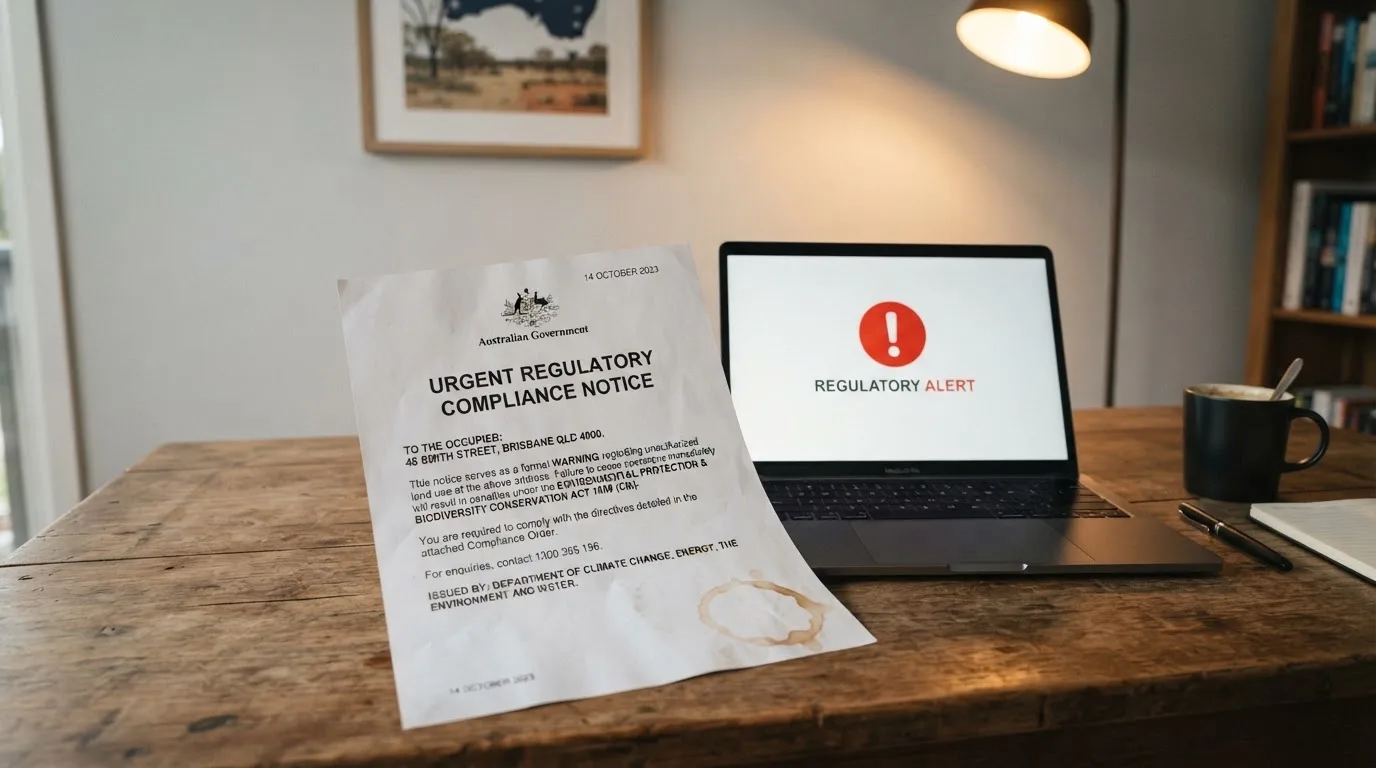
The IGA targets the provider, not the player. The Australian individual who opens an offshore account is not prosecuted. What the player gives up by going offshore is the Australian consumer-protection frame around the wager: no Australian complaints body, no BetStop coverage, no Australian Banking Code recourse if a withdrawal is refused, no guarantee that a balance survives a regulator-ordered block. The provider is the one the regulator goes after. The provider is also the one that can be cut off, with a player balance still inside.
What the ACMA has actually done
The Australian Communications and Media Authority investigates, issues formal warnings and, when warnings are ignored, asks Australian internet service providers to block illegal sites. By June 2026, the ACMA had asked ISPs to block a total of 1,751 illegal gambling and affiliate marketing websites since the first blocking request in November 2019, and more than 230 unlicensed gambling services had left the Australian market since enforcement was strengthened in 2017. That is the running total reported by the regulator; it does not include the brands still operating that the regulator has not yet reached. The blocking round reported on 26 June 2026 alone added 12 more domains to the list: 7Signs, ChromaBet, Donbet, Duospin, Freshbet, Slots Gem, Jacks Club, Lucky Start, Pointsbetz.com, Spinrise, Vinyl Casino and Wildsino.
Blocking-rate calculation, the figure this page was built to deliver. The first blocking request went out in November 2019; the running total reached 1,751 blocked sites by June 2026. Over the roughly 79 months from November 2019 to June 2026, that is an average of around 22 blocking requests per month — and that is the lower bound, because the running total includes only the requests the ACMA has reported; the actual number of blocked domains is higher when affiliate pages and mirror sites are counted in. The headline figure a reader sees in marketing is “blocked in Australia”, and what it actually counts is requests issued to ISPs over a 79-month window. The reader should expect the pace to keep rising, because the enforcement regime strengthened in 2017 and the ACMA’s block list is cumulative.
The financial scale on the other side of the regulator’s work is reported by H2 Gambling Capital: Australians lose an estimated A$3.9 billion a year to illegal gambling sites, and the share of gambling going through legal channels fell from 74% in 2021 to 64% over the four years to 2025. The illegal market is not a marginal slice of Australian gambling. It is the largest single channel by 2025.
Formal warnings, in date order, with the operator named
The ACMA’s earlier step, before a blocking request, is a formal warning. The published warnings are the audit trail behind the block list, and they are what links the operator set on this page to the regulator. The published set:
- March 2026: Pulsup Ltd, over Rocketplay.com.au.
- April 2026: Ryker B.V., over Jackbit and CasinOK.
- July 2025: Bamboo Media, over Ignition Casino; Consolutetish S.R.L., over National Casino and Bizzo Casino. The Bizzo Casino warning was the second the brand had received, the first having been issued to TechSolutions (CY) Group Limited and TechSolutions Group N.V. in 2022.
- May 2025: Dama N.V., over Spirit Casino.
- April 2025: Sterplay Holding Ltd, over Casino Intense.
- March 2025: Dama N.V., over Woo Casino.
- February 2025: EOD Code SRL, over Instant Casino.
- May 2022: Dama N.V., over Bambet, Dazard, Level Up, Rocketplay, Wild Tornado and Cobra Casinos.
- September 2022: Hollycorn N.V., over Sky Crown and Blue Leo.
The pattern in those warnings is the pattern in the market. The same operator-group name recurs across multiple brand launches, because the offshore model is built that way: one corporate wrapper, several retail skins, each one rebranded when the warning arrives. Dama N.V. alone accounts for four of the listed warnings across four different years. That is the texture of the low deposit casino market in Australia: an industry whose operator names cycle, whose brand names cycle faster, and whose regulator response cycles behind them.
Player protection that does and doesn’t apply
The Australian player-protection frame is real, but it is built for Australian-licensed wagering services. BetStop, the National Self-Exclusion Register, has been live since August 2023, and a registered exclusion blocks the customer from Australian-licensed online and phone wagering services. An offshore casino is not connected to BetStop, so a BetStop registration does not by itself stop play at the brands listed below. The national Gambling Helpline is 1800 858 858, free and 24/7, with chat through Gambling Help Online. The helpline is not the regulator, but it is the line a player can use regardless of which side of the licensing line the operator sits on.
The 2026 reform timetable: the Interactive Gambling Amendment (Gambling Reform) Bill 2026 passed Parliament on 19 August 2026, with its advertising and inducement measures scheduled to commence on 1 January 2027. That is law with a start date, not law in force on a 2026 page. The reform will not retroactively affect the brands named in the ACMA’s existing warning list. What it changes going forward is the inducement side of marketing — bonus offers, sign-up lures, the affiliate pages that link to a brand — which is precisely where the “low deposit” pitch lives.
Responsible gambling: why a small deposit is the riskiest entry point
A low deposit is sold as the budget option. In practice it is the moment a player is most exposed to the failure modes of casino play, because the entry amount is small enough that the player does not treat it as gambling.
The mechanics of the risk are simple. A A$10 deposit, lost in full over an hour, is a financial event a household budget absorbs. A A$10 deposit that survives for several hours and is then chased by a second A$10 deposit is a different event, because the second deposit is no longer the original decision — it is a recovery decision, made under the influence of a partial loss. The brand’s product is engineered around that second deposit, and a low first deposit is what makes the second one easier to authorise. A A$1,000 first deposit, lost in full, is also a recovery trigger, but the friction on the second A$1,000 is much higher. The low minimum exists partly to lower the friction on the second deposit. That is the only sense in which “low deposit” is the marketing claim it sounds like.
The player-side control that matters at this end is a personal spending cap set before the first deposit, not after it. A cap set in advance, honoured for the week, breaks the chase. A cap reset after every session becomes another item on the to-do list and tends to drift upward. The brand’s own responsible-gaming tools — session limits, deposit limits, timeouts — sit inside the same cashier that processes the deposit, and their effectiveness depends on whether the player activates them before play, not in the middle of it. The minimum deposit is, in a quiet way, a test of whether the player will set those limits; the brands that sell the smallest minimums have the least commercial reason to advertise the limits.
The BetStop caveat repeats here because the offshore casino is not connected to BetStop. A registered Australian exclusion does not, by itself, stop play at the offshore brands on this page. BetStop binds Australian-licensed wagering services, which by definition excludes the brands on this page from its coverage. The line that does cover offshore harm is the national Gambling Helpline (1800 858 858) and Gambling Help Online, both of which are free and confidential and operate outside any operator’s customer database.
Crypto and small deposits: bitcoin, ether, and the network fee on a tiny transfer
A “low deposit bitcoin casino” headline usually quotes a minimum in coin, not in dollars: 0.0001 BTC, 0.001 ETH, a few dollars’ worth at the current exchange rate. The number looks lower than the fiat minimum. The actual cost to the player depends on a separate input that the headline never quotes.
Bitcoin network fees are charged per transaction, not per dollar sent. A small bitcoin transfer pays the same fee as a large one, and the fee is set by the mempool at the moment the transfer is broadcast. In a quiet mempool the fee can sit around the equivalent of A$1 to A$3; in a busy mempool it can climb past A$10. A A$5 bitcoin deposit that pays a A$3 fee has lost 60% of its bankroll before a single spin. A A$100 bitcoin deposit that pays the same A$3 fee has lost 3% of its bankroll on the same transaction. The fee is the same. The player’s exposure to the fee is not.
Confirmation latency is the second cost on a low-value transfer. A bitcoin deposit is credited after at least one blockchain confirmation, which on a quiet network takes ten minutes on average and on a busy network can take hours. A A$10 first deposit that takes an hour to clear is, for the player, a moment to walk away from the cashier. The same hour on a A$1,000 deposit is friction the player is willing to absorb. The minimum deposit the player actually funds, after the fee and the wait, is not the minimum on the cashier page.
These two costs are why the answer to the question “do network fees make a low-value bitcoin deposit less worthwhile at a crypto casino” is yes, in a way the marketing page never frames. The fee is a percentage of a small deposit and a sliver of a large one, and the latency eats the player experience on a small one. A crypto deposit is most efficient above a few hundred dollars in coin value. Below that, the rail itself charges the player for using it.
The other thing the rail does is leave a public trace. Bitcoin and ether transactions are recorded on a public ledger and remain searchable indefinitely. A small bitcoin deposit to an offshore casino is a record that the depositor engaged with an offshore operator; the record is pseudonymous, not anonymous. That is the difference between a privacy-conscious payment method and a confidential one, and it is the difference the marketing around “anonymous crypto casino” usually blurs.
Payments and payout speed: PayID, BPAY, debit cards, and the rails Australia actually offers
The rails a low deposit casino site advertises are not the rails the player’s Australian bank actually lets them use. The legal frame around Australian-licensed wagering is the starting point. Since 11 June 2024, credit cards and credit-related products have been banned as payment for Australian-licensed online wagering, with penalties up to A$247,500 for operators that breach the rule. Digital currency is also banned on the legal side. The legal deposit routes for Australian-licensed wagering are debit card, bank transfer, PayID/Osko and BPAY.
A low deposit casino site that takes a credit card or a crypto deposit is operating outside the Australian rules. The IGA does not, by its terms, restrict the Australian player from using those rails — it restricts the licensed provider from accepting them. An offshore provider accepts them anyway. That is what “outside the Australian rules” means in practice: a rail the Australian side has closed for licensed play, open again at an offshore cashier, with the player the one who funds the difference.
PayID, Osko and the speed of a small bank transfer
PayID is the addressing layer on Australia’s New Payments Platform, which became accessible to the public on 13 February 2018 and is owned by New Payments Platform Australia Ltd, a non-profit whose 13 shareholders include the Reserve Bank of Australia and the major banks. With Osko, a transfer between participating Australian banks arrives in under a minute, 24/7 including weekends, whether it is addressed to a BSB and account number or to a PayID. More than 25 million PayID identifiers were registered on the platform by April 2025, and PayID-based instant transfers are available at over 100 Australian financial institutions. Participants are required to keep the platform’s monthly outages to no more than two minutes, and in 2021 the ACCC authorised the merger of NPP Australia with BPAY and eftpos into Australian Payments Plus.
The practical effect is that a PayID transfer to a low deposit casino site is fast on the Australian side and slow on the offshore side. The Australian bank releases the funds within a minute; the offshore cashier holds them in pending status while the operator’s payments team runs a settlement review. On a A$10 deposit the review takes the same time it would on a A$1,000 deposit. The cost is not in the time; the cost is in what the player gives up while the review runs, which is the same thing at both deposit sizes, which is why the cost is sharper on the small deposit.
PayID also shows the name of the account holder before the transfer is sent. AP+ warns that being asked to transfer money to a PayID on an illegal gambling site almost certainly means a scam site. That warning sits inside the cashier flow on the Australian side. An offshore site that asks for a PayID transfer is asking the player to confirm the warning AP+ has already published.
BPAY, debit cards, and the rails a low deposit casino may accept without an Australian licence
BPAY has operated in Australia since 1997 and is available through the online banking of over 140 banks and financial institutions, used by over 95,000 businesses. It was launched on 18 November 1997 and is owned, via parent company Cardlink Services Limited, equally by Australia’s four major banks: ANZ, Commonwealth Bank, National Australia Bank and Westpac. In September 2021 the ACCC authorised the merger of BPAY Group, eftpos and NPP Australia under Australian Payments Plus. BPAY is a bill-payment service in online banking: the payer enters the Biller Code and the Customer Reference Number printed on the bill, and the funds are debited from the payer’s account on the next business day. A low deposit casino site that accepts BPAY treats the player’s deposit as a bill payment, and the player’s account statement shows a bill payment to a Biller Code the player will have to look up to recognise.
A debit card deposit is the rail most players reach for first. The deposit clears immediately, the cashier credits the balance in seconds, and the experience feels like any other online purchase. The Australian bank’s side of that experience is changing. Westpac’s gambling block works at card level: it refuses authorisation of transactions registered under the merchant category code “Betting/Casino Gambling” on eligible personal credit and debit cards. ANZ’s gambling transaction block, activated in the ANZ app, also blocks gambling transactions made through a digital wallet such as Apple Pay on an eligible card, not only the physical card. Commonwealth Bank lets customers apply a gambling lock to eligible cards via the CommBank app, which automatically blocks most gambling transactions, though the bank itself notes it cannot guarantee all gambling-related purchases will be stopped. Once a customer turns on ANZ’s gambling block, removing it again requires a 48-hour waiting period, and the bank warns that not all gambling transactions will be blocked and some non-gambling transactions might be blocked in error.
By the end of 2025, Apple Pay, Google Pay and Samsung Pay transactions together accounted for around 45% of all card payments in Australia by number. That share matters for the gambling-block rules: the Westpac and ANZ blocks are written at the card level, which means they follow the card into a digital wallet, not just onto the physical plastic. A player who has turned on a gambling block at the bank has, in many cases, also blocked the same card through Apple Pay on the phone. The block is a card-level setting; the wallet is just a different way to present the same card.
Apple does not charge fees to consumers for using Apple Pay in stores, online or in apps; any surcharge on an Apple Pay transaction comes from the merchant’s own card-processing fees, not from Apple. Apple also states that transaction limits and PIN requirements for Apple Pay purchases are set by the card issuer or merchant, not by Apple itself. The bank’s rules are the rules that govern an Apple Pay gambling transaction, not Apple’s. Under the Interactive Gambling Act 2001 as amended in 2023, Australian-licensed online wagering services cannot accept payment by credit card or other credit-related products, a restriction that also constrains gambling use of linked digital wallets like Apple Pay on the licensed side. An offshore casino is not bound by that restriction, and will accept a credit-card-funded Apple Pay deposit, which is what an Australian player with a gambling block on the debit card may try next.
AUSTRAC’s threshold-transaction-report rule, which requires reporting of transfers of A$10,000 or more, applies only to physical cash. Ordinary electronic bank transfers are not subject to that per-transaction reporting requirement, regardless of the amount sent. A A$10,000 PayID transfer to a casino does not, by itself, trigger a threshold report. The reporting trigger for electronic transfers is structured or suspicious, not absolute.
American Express is its own case. Amex was established in 1850 as a freight-forwarding company and later became a card issuer, launching its first charge card on 1 October 1958. Unlike Visa or Mastercard’s four-party network, Amex traditionally issues cards and processes transactions itself as a three-party scheme. The Reserve Bank of Australia’s July 2025 review proposes removing surcharges only on eftpos, Mastercard and Visa card transactions, explicitly leaving American Express outside the scope of the proposed surcharge ban. An Amex deposit to an offshore casino, where the rail is accepted, will usually carry a surcharge the other networks would not — and that surcharge is the merchant’s processing fee, not a fee the Amex network is asking the player to absorb on its own account.
The Reserve Bank’s review notes that the Amex network is being left outside the surcharge ban. A reader comparing deposit rails on cost should expect Amex to be the most expensive of the four-party networks at the cashier. A reader whose Australian bank has turned on a gambling block on the debit card will often find that the Amex card, on a different network, still authorises the deposit. The block is set per card; it does not extend to a different card on a different network on the same account.
Eleven operators the ACMA has formally warned
Eleven brands sit on this page because the ACMA has issued a formal warning over each of them. They are not ranked by payout speed, bonus generosity or game count. The order is the order of the published warning trail, most recent first, with the older warnings grouped toward the bottom. The information a reader comparing them gets from the table below is which operator group the ACMA went after, on which date, over which brand, and what subject support the operator’s own listings pages still carry. None of these brands is licensed to offer online casino games to an Australian resident. The table records the regulator’s response, not the operator’s marketing.
Low deposit casino comparison: ACMA action and operator disclosure
| Brand | ACMA action and date | Operator named by the ACMA | Subject support |
|---|---|---|---|
| RocketPlay | Formal warning, March 2026; earlier warning over Dama N.V. wrapper, May 2022 | Pulsup Ltd (Rocketplay.com.au) | Listings pages on Gamblinginsider.com only |
| Jackbit | Formal warning, April 2026 | Ryker B.V. | No data |
| National Casino | Formal warning, July 2025 | Consolutetish S.R.L. | Listings pages on acma.gov.au, austrac.gov.au and betstop.gov.au |
| Bizzo Casino | Formal warning, July 2025; earlier 2022 warning over TechSolutions | Consolutetish S.R.L. | Listings pages on Gamblinginsider.com only |
| Ignition Casino | Formal warning, July 2025 | Bamboo Media | No data |
| Spirit Casino | Formal warning, May 2025 | Dama N.V. | No data |
| Woo Casino | Formal warning, March 2025 | Dama N.V. | No data |
| Instant Casino | Formal warning, February 2025 | EOD Code SRL | Listings pages on Ecopayz.com and Payid.com.au |
| Casino Intense | Formal warning, April 2025 | Sterplay Holding Ltd | Listings pages on austrac.gov.au, betstop.gov.au and Gamblinginsider.com |
| Level Up Casino | Formal warning, May 2022 | Dama N.V. | Listings pages on Westpac.com.au only |
| Sky Crown | Formal warning, September 2022 | Hollycorn N.V. | No data |
The Dama N.V. pattern is the single most useful read of the table. Four of the eleven warnings are over Dama N.V. brands — Spirit Casino (May 2025), Woo Casino (March 2025), the May 2022 group of six brands that included Level Up and Rocketplay, and the brand most recently warned as Rocketplay.com.au under a different corporate wrapper in March 2026. The operator-group name is the through-line; the brand names cycle around it. A reader who treats any individual brand on this page as an isolated entry is missing that the operator-group is what the regulator is responding to.
The second useful read is the gap between the warning date and the brand’s continued operation. The ACMA’s warning is a published regulatory finding, not a shutdown order. A brand that has been warned continues to operate offshore until a blocking request reaches ISPs, and the brand may continue running affiliate marketing pages aimed at Australian traffic after the warning is published. The brands on this page have been warned. The published warning is the regulator’s audit trail, not the regulator’s conclusion.
RocketPlay — freshest warning, March 2026
The ACMA issued its most recent formal warning to Pulsup Ltd over Rocketplay.com.au in March 2026, the same brand that had previously been named in the May 2022 Dama N.V. warning. The corporate wrapper around the brand has changed; the brand has not. The operator’s own listings pages, where they exist, are limited to Gamblinginsider.com. There is no public-facing record of the operator’s payment-method policy, no public-facing record of its game-testing certification, and no BetStop connection. A reader evaluating this brand is evaluating a brand whose two published warnings cover a four-year span, under two different operator names, with the IGA frame unchanged. The verdict here is that the warning trail is the only audit trail that exists, and it is the most recent entry on the table.
Level Up Casino — part of the May 2022 Dama N.V. warning group
Level Up Casino was named in the May 2022 Dama N.V. warning, alongside Bambet, Dazard, Rocketplay, Wild Tornado and Cobra Casinos. The corporate wrapper around all six is the same; the brand surfaces are different. The subject support listing, where one exists, is limited to a single source. The brand’s continued operation is consistent with the pattern of a Dama N.V. brand cycling through new skins, and the warning date is the regulator’s published record. This brand is one of four on this page sharing the same recurring operator-group pattern, with no independent audit trail outside the ACMA’s published warnings.
Woo Casino — March 2025 Dama N.V. warning
The March 2025 formal warning to Dama N.V. over Woo Casino was the second time the operator-group was named by the ACMA in twelve months, following the May 2022 warning over six brands. Subject support is no-data on this entry — the operator’s own listings pages do not carry a verifiable payment-method or game-testing disclosure. The brand’s continued operation is consistent with a brand on the post-warning side of the warning cycle. The ACMA has named this operator-group four times in four years, and the regulator’s short warning trail remains current.
Spirit Casino — May 2025 Dama N.V. warning
Spirit Casino was named in the May 2025 formal warning to Dama N.V., the operator’s third ACMA warning in roughly three years. No subject support is published. The brand surface is the most recent Dama N.V. brand to be named individually in a fresh ACMA warning; it follows Woo Casino by two months. The regulatory timeline here is even more recent than Woo’s, reflecting the same cycle of new branding under the same IGA-violating corporate wrapper.
National Casino — July 2025 Consolutetish S.R.L. warning
National Casino was named alongside Bizzo Casino in the July 2025 warning to Consolutetish S.R.L. The subject support listings include acma.gov.au, austrac.gov.au and betstop.gov.au, which means the brand appears in the regulator’s own archive and in the Australian consumer-protection frame. The betstop.gov.au reference is notable: it suggests the brand has been flagged against the National Self-Exclusion Register. The regulator’s warning acts as the brand’s primary audit trail, placing it explicitly within the directories intended to protect Australian consumers.
Bizzo Casino — July 2025 warning, the second formal warning since 2022
Bizzo Casino’s July 2025 warning to Consolutetish S.R.L. was the second formal warning tied to the brand. The first was issued in 2022 to TechSolutions (CY) Group Limited and TechSolutions Group N.V. The brand has therefore survived two rounds of regulatory action over a four-year span and remains in the published warning trail. The subject support is limited to Gamblinginsider.com. The verdict is that the brand is the only one on this table with two formal warnings from the ACMA, separated by roughly four years, against two different operator names, and the warning trail is the published audit trail.
Ignition Casino — July 2025 Bamboo Media warning
Ignition Casino was named in the July 2025 warning to Bamboo Media, alongside a separate warning to Consolutetish S.R.L. over National Casino and Bizzo Casino in the same round. Subject support is no-data. The brand is one of two named in the round; the other is Bamboo Media, and the operator-group named in the warning is the through-line. A single ACMA warning from July 2025 constitutes the brand’s entire regulator trail, lacking the broader, recurring patterns seen in other operator-groups.
Instant Casino — February 2025 EOD Code SRL warning
Instant Casino was named in the February 2025 formal warning to EOD Code SRL. The subject support listings are Ecopayz.com and Payid.com.au, which means the brand’s payment-method disclosure runs through an e-wallet aggregator and the Australian PayID directory. The PayID listing in particular is a signal: AP+ warns that being asked to transfer money to a PayID on an illegal gambling site almost certainly means a scam site. A brand whose published listings include a PayID entry is a brand a player may be asked to send money to via the rail AP+ has flagged. The operator’s payment listing sits in direct tension with the consumer-protection standards upheld by AP+, with the regulator’s warning on record since February 2025.
Jackbit — April 2026 Ryker B.V. warning
Jackbit was named alongside CasinOK in the April 2026 warning to Ryker B.V. Subject support is no-data. The brand’s audit trail is a single ACMA warning dated April 2026, which is the second-most-recent warning on this table. The brand’s regulatory history remains short and current, though it lacks the established, repeated warning patterns associated with some other listed operator-groups.
Casino Intense — April 2025 Sterplay Holding Ltd warning
Casino Intense was named in the April 2025 warning to Sterplay Holding Ltd. The subject support listings include austrac.gov.au, betstop.gov.au and Gamblinginsider.com, which means the brand appears in the regulator’s archive, the self-exclusion register and an industry listings page. The betstop.gov.au entry is a flag against the National Self-Exclusion Register. Listing the brand within the same consumer-protection directories as legal services highlights the regulatory gap, with the warning serving as the main audit record.
Sky Crown — September 2022 Hollycorn N.V. warning
Sky Crown was named in the September 2022 warning to Hollycorn N.V. alongside Blue Leo. Subject support is no-data. The brand’s regulator trail is the oldest single warning on this table, dated September 2022, and the brand sits inside a wrapper that has not appeared in the published ACMA trail since. The verdict is that the brand’s published regulator trail is dated and not refreshed, and the warning is the most dated audit entry on the table.
Frequently asked questions
The questions below are the ones a reader comparing low deposit casinos in Australia is most likely to carry away from the rest of the page. The answers stick to what the research carries and the regulator’s published record.
Is it legal for an online casino to accept a low deposit from a player in Australia?
No. The Interactive Gambling Act 2001, as tightened by the 2017 amendments, makes it an offence to provide online casino games or online pokies to a person in Australia. No state or territory issues an online casino licence. The minimum deposit amount on the cashier does not change that frame, and the IGA’s prohibition is on the provider, not on the player. The ACMA’s enforcement is also provider-side: formal warnings, then blocking requests to ISPs.
What is typically the smallest deposit a low deposit casino site will accept?
The floor is usually A$10 to A$20 in fiat, with selected brands accepting A$5 or A$10 in selected coins, and crypto minimums sometimes quoted as low as 0.0001 BTC. The smaller the minimum, the sharper the player’s exposure to processing fees and bonus wagering, because the same processing cost and the same multiple apply. The minimum is a sizing rule, not a generosity rule.
Do network fees make a low-value bitcoin deposit less worthwhile at a crypto casino?
Yes. Bitcoin and ether network fees are charged per transaction, not per dollar sent. A small deposit pays the same fee as a large one, and the fee is the larger share of a small deposit’s bankroll. Confirmation latency compounds the same point: a deposit that takes an hour to clear eats the player experience on a small bankroll. A crypto deposit is most efficient above a few hundred dollars in coin value. Below that, the rail charges the player for using it.
Does a low deposit paysafecard casino apply the same terms as a higher-deposit site?
Yes. The minimum is a sizing rule, not a different product. The RTP, the house edge, the wagering multiple on a bonus and the settlement review on a withdrawal are the same regardless of deposit size. A small entry that survives the cashier’s processing has the same wagering obligation, the same max-cashout cap and the same withdrawal review as a large one.
Is a low deposit casino subject to the same withdrawal checks as a high-roller account?
Yes. The settlement review runs the same scripts and takes the same time on a small withdrawal as on a large one. The cost of the review is not in the time; it is in what the player gives up while the review runs, which is the same at both deposit sizes. On a small bankroll the review is the sharper exposure; on a large bankroll the player is more willing to wait.
Why might a casino advertise a low minimum deposit specifically to attract new players?
Because the small entry lowers the friction on the second deposit. A first deposit lost in full is a financial event a household budget absorbs; a second deposit, made under the influence of a partial loss, is a recovery decision. The low minimum exists to make the second deposit easier to authorise. The marketing claim reads as budget-friendly; the behavioural claim is the opposite.