
Casino Dice Games in Australia: House Edge, the IGA, and What the ACMA’s Warnings Tell a Punter
Data current as of 31 October 2026, cross-checked against the ACMA’s published formal-warning notices and the Interactive Gambling Act 2001.
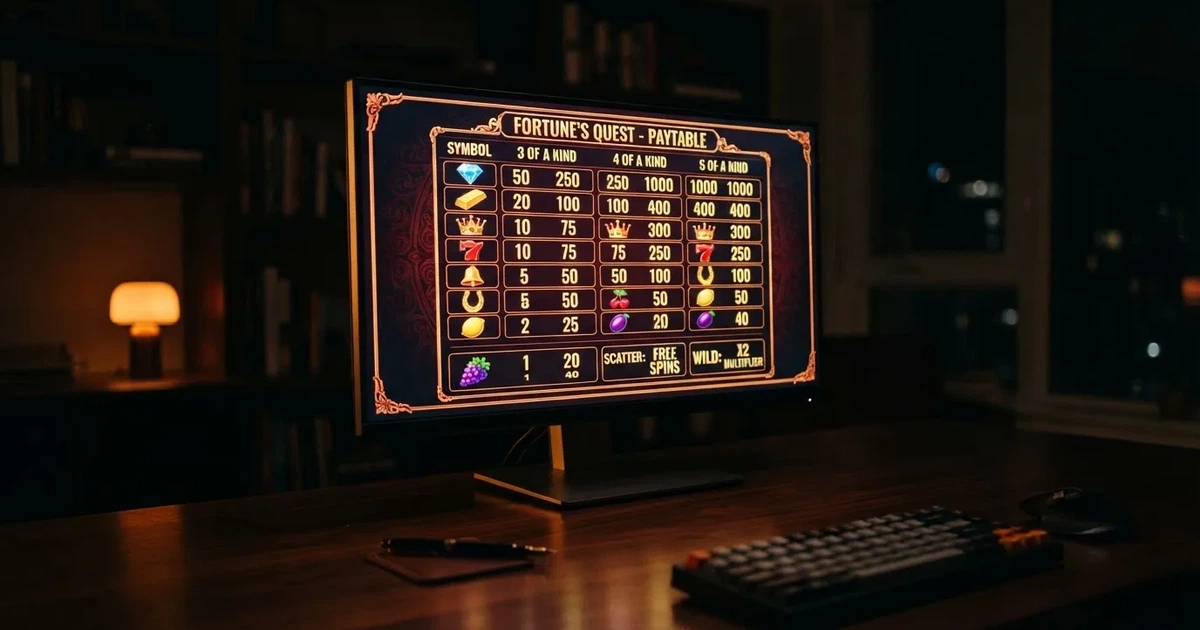
The marketing pitch around “casino dice games” lands like this: an Australian punter can sit at a screen and roll for real money, just like at the tables in Crown Melbourne. The page below is built on what is actually true. Craps, sic bo and two-up are real dice games with real mathematics — house edges from 1.36% on Don’t Pass to 30.09% on certain sic-bo triples — and they are part of Australia’s licensed casino floors. Online casino dice games, the ones the offshore sites advertise, are a different category entirely. They are prohibited under the Interactive Gambling Act, and the ACMA has spent the years since 2017 naming the brands that keep offering them. A reader weighing any offer against the math needs both halves of that picture: the house edge on the dice themselves, and the legal frame around how an Australian can reach them.
Table of Contents
- What a “casino dice game” actually is
- Craps bet by bet: where the math actually moves
- Sic bo: how three dice rearranges the math
- Two-up and the legal geography of Australian dice
- The legal frame: why the offshore “online dice” pitch runs into the IGA
- How the ACMA enforces it: warnings, blocks, and what “formal warning” actually means
- The offshore brands: an ACMA-action comparison
- H2 Gambling Capital: what the illegal-market figure actually means
- The math a reader cannot see: blocking rate over the IGA era
- Payment rules for licensed Australian wagering — and what the offshore version looks like
- Tax: what a punter in Australia actually owes
- Responsible play: what the IGA framework actually offers
- Baccarat and blackjack: why the table above carries them too
- Why an Australian reader ends up on an offshore site anyway
- What the page tells a reader who arrived looking for a recommendation
- Frequently Asked Questions
What a “casino dice game” actually is
Three dice games draw the most interest from players, and the math on each one moves sharply depending on which bet a player places.

Craps is the game most readers picture: a shooter rolls two dice on a come-out roll, the table bets on the result, and a long sequence of rolls resolves each round. The Pass Line and Come bets carry a 1.41% house edge; Don’t Pass and Don’t Come come in fractionally lower at 1.36%. The one-roll proposition bets — Any Craps in particular, which pays 7:1 and wins on a roll of 2, 3 or 12 — sit at 11.11%. That is the structural point of craps: most of the betting surface is generous to the house in the low single digits, and a handful of bets almost triple that.
Sic bo is older, played with three dice, and dominated by its proposition bets. The name means “precious dice,” the game arrived in the United States with Chinese immigrants in the early 20th century, and a single roll produces 216 equally likely combinations of which 56 are distinguishable once triples are sorted. The Big/Small wager — a wager on whether the three-dice total will sit in the middle of the range — carries a 2.78% house edge. Specific Triple bets, asking for one exact three-of-a-kind, run anywhere from 11.6% to 30.09% depending on the ruleset the casino has published. Sic bo is the cleanest illustration of why “playing dice” is not a single proposition: the bet chosen changes the cost by an order of magnitude.
Two-up is the Australian piece of the puzzle, and it is not technically a dice game at all — it is played with two coins tossed from a small paddle. The game evolved from the 18th-century English and Irish cross-and-pile and came to Australia with the convict transport. Today it is legal in Australian casinos only: Crown Perth and Crown Melbourne are the licensed casino floors that run it year-round, plus the annual exception under the Gambling (Two-Up) Act 1998 that lets NSW RSL clubs and hotels ring it in on Anzac Day. Kalgoorlie runs Australia’s only year-round legal two-up school.
A reader holding the term “casino dice game” needs to know it can mean any of these — and that the house edge on each runs from a low of around 1.36% to a high above 30%, all on bets sitting beside one another at the same table.
Craps bet by bet: where the math actually moves
The reason craps draws a sharper crowd than it deserves comes down to which bets the table is showing. The base game is cheap. Pass Line and Come both run at 1.41%; Don’t Pass and Don’t Come at 1.36%, marginally better because the casino takes the other side of the line. Place bets on individual numbers sit a step higher — 6 and 8 at 1.52%, 5 and 9 at 4.00%, 4 and 10 at 6.67% — and the proposition bets at the centre of the layout are where the table earns its keep. Any Seven pays 4:1 and runs a 16.67% house edge; Any Craps, 11.11%; the Horn and the C-and-E bets sit in the same neighbourhood. Hardways range from roughly 9% on 6 and 8 up to over 11% on 4 and 10.
That ordering is the practical lesson: the long bets and the line bets cost the player about a cent on the dollar over time, and the centre bets cost somewhere between nine and seventeen cents. A shooter who keeps their money on the line is playing a cheap game. A shooter pressing the proposition bets is paying the casino a margin that no streak of luck reliably overcomes. Wizard of Odds publishes the full edge across the layout; the figures above are the table at a glance.
The same structural split appears in the “right bettor” and “wrong bettor” terminology. A right bettor backs the shooter with Pass and Come bets, the conventional way the table runs. A wrong bettor plays Don’t Pass and Don’t Come, betting against the shooter — and the rest of the table, historically, does not love them for it. The math edges the wrong bettor out by 0.05 percentage points, which is real over thousands of rolls but is not what most people are playing craps for.
Sic bo: how three dice rearranges the math
Sic bo’s design is more honest about the proposition bet problem. With 216 equally likely outcomes and 56 distinguishable ones once dice are sorted, the Big and Small bets give the casino only a 2.78% edge — close to craps’ line bets, and competitive with most roulette wagers. The rest of the layout is where the game reveals its teeth.
Specific Doubles, asking for a particular pair plus a third matching anything, pay roughly 11:1 and carry a house edge in the low teens. Specific Triples, naming one exact three-of-a-kind, pay 180:1 and the edge on those bets swings between 11.6% and 30.09% depending on which ruleset the casino is using. The wider spread is the giveaway: a casino that uses a “triple loses” rule on Big/Small pushes more of the cost into the proposition bets, and a reader who does not check the printed layout before they play will not know which ruleset they have walked into.
That is the bit worth carrying away. Sic bo’s reputation as “expensive” is a property of its proposition layout, not of its dice. Sit on the Big or Small and the cost is the same neighbourhood as craps’ line bets. Press the triples and the math moves against the player ten times faster.
Two-up and the legal geography of Australian dice
Two-up stands apart from craps and sic bo on two grounds. First, it is not a dice game; it is a coin game, played with two pennies tossed from a “kip.” Second, the legal status of where it can be played is more precise than for any other game on the Australian floor.
Outside the Gambling (Two-Up) Act 1998 carve-out for Anzac Day in NSW, the only legal places to ring two-up in Australia are the licensed casino floors at Crown Melbourne and Crown Perth. Hobart’s casino was the first to legalise the game, in 1973, and the modern pair of licensed venues is what remains. Kalgoorlie’s school is the only permanent non-casino exception. Anywhere else — a pub, a club, a private house — is an illegal two-up game, and the penalties for both the spinner and the bookmaker have been on the books since the early 20th century.
For a reader who came to this page asking about casino dice games in general, two-up is worth knowing about because it explains how Australian gambling law handles a specific game: it permits a tightly bounded set of venues, names them in statute, and treats the rest as out of bounds. That same regulatory logic, applied to the much wider category of “online casino dice games,” is what produces the warnings described below.
The legal frame: why the offshore “online dice” pitch runs into the IGA
The Interactive Gambling Act 2001, tightened by the Interactive Gambling Amendment Act 2017, makes it an offence to provide certain interactive gambling services to a person in Australia. The services covered include online casino games and online pokies — which is the category every offshore site pitching “live craps” or “live sic bo” to an Australian falls into. Wagering on a sporting event or a race placed before the event is a different legal product and is licensed at the territory level; the Northern Territory Racing and Wagering Commission, for instance, regulates 52 of Australia’s online bookmakers, including Sportsbet, Bet365 and Ladbrokes, and that licensing is what the IGA permits those companies to do.
The legal line a reader needs to hold in mind is therefore simple. Pre-event sports and race betting is licensed and legal in Australia. Online casino games — craps, sic bo, baccarat, blackjack, slots — are not, and no state or territory has issued a licence to offer them online. The licence displayed in an offshore site’s footer is a Curaçao or Anjouan registration that has no Australian counterpart. The minimum age for any licensed wagering in Australia is 18, and the IGA’s offences target the provider, not the individual punter.
The Interactive Gambling Amendment (Gambling Reform) Bill 2026 passed Parliament on 19 August 2026 and adds new advertising and inducement measures that commence on 1 January 2027. On a page being read in 2026, the advertising restrictions are law with a start date — passed but not yet in force.
How the ACMA enforces it: warnings, blocks, and what “formal warning” actually means
The ACMA’s enforcement toolbox runs from formal warning to ISP-level blocking. A formal warning is the regulator telling an operator in writing that the ACMA considers the service to contravene the IGA, naming the operator and the URL, and putting the operator on notice that further action — including a civil penalty proceeding under section 254 of the Act — can follow. It is published on the ACMA’s website, indexed by operator name and date. A reader who lands on one of the brands below and wants to verify the claim they are seeing is licensed anywhere in Australia can do it in a minute.
Where formal warnings do not move the operator, the ACMA moves to blocking. The blocking figures published in June 2026 — 1,751 illegal gambling and affiliate marketing websites blocked since the first blocking request in November 2019, and more than 230 unlicensed services that left the Australian market since 2017 — are the cumulative result of that process. The June 2026 round alone asked Australian ISPs to block 12 sites: 7Signs, ChromaBet, Donbet, Duospin, Freshbet, Slots Gem, Jacks Club, Lucky Start, Pointsbetz.com, Spinrise, Vinyl Casino and Wildsino.
The framing matters because it is the opposite of how the offshore sites position themselves. The brands listed in the comparison below are not on this page because they are good places to play craps. They are on this page because the ACMA, the regulator tasked with enforcing the IGA, has put its name to formal warnings against them, and a reader who has reached an Australian-facing version of one of those sites is entitled to know that. The table is a record of regulator action, not a ranking of operators.
The frame also explains what is and is not on offer to an Australian punter who wants to play a dice game legally. The path is: a licensed casino floor (Crown Melbourne, Crown Perth, Crown Sydney, the Star Sydney, the Star Gold Coast, the Treasury Brisbane complex, Lasseters in Alice Springs) for any casino dice game the venue runs. There is no Australian-licensed path to play craps or sic bo online.
The offshore brands: an ACMA-action comparison
The table below is built from the ACMA’s published formal-warning notices. The “ACMA action and date” column gives the warning the regulator published; “operator named by the ACMA” is the legal entity the regulator named at the time of the warning. “Subject support” reflects what the regulator’s record and the brand’s own listings together say about whether the brand offered the kind of product this page covers (casino dice games including craps and sic bo). A “no-data” entry means neither source lets a reader tell either way, and the operator is presented on the ACMA action alone.
| Brand | ACMA action and date | Operator named by the ACMA | Subject support |
|---|---|---|---|
| RocketPlay | Formal warning, March 2026 | Pulsup Ltd | No data |
| Level Up Casino | Formal warning, May 2022 | Dama N.V. | Listings report dice content (Bgaming.com) |
| Woo Casino | Formal warning, March 2025 | Dama N.V. | No data |
| Spirit Casino | Formal warning, May 2025 | Dama N.V. | No data |
| National Casino | Formal warning, July 2025 | Consolutetish S.R.L. | Listings report dice content (Wikipedia listing) |
| Bizzo Casino | Formal warning, July 2025; earlier 2022 to TechSolutions | Consolutetish S.R.L. (July 2025); TechSolutions (2022) | No data |
| Ignition Casino | Formal warning, July 2025 | Bamboo Media | No data |
| Instant Casino | Formal warning, February 2025 | EOD Code SRL | No data |
| Jackbit | Formal warning, April 2026 | Ryker B.V. | No data |
| Casino Intense | Formal warning, April 2025 | Sterplay Holding Ltd | Listings only |
| Sky Crown | Formal warning, September 2022 | Hollycorn N.V. | No data |
The repeat operators across that list are themselves the headline. Dama N.V. has appeared at least four times — Level Up and a wider six-brand group in May 2022, then Woo Casino in March 2025 and Spirit Casino in May 2025 — for essentially the same conduct. A reader who recognises a brand name from an earlier warning is looking at the same operator recycling its front-of-house names under fresh URLs. The ACMA publishes the legal entity, not the marketing brand, for that reason.
The “Subject support” column is the one a reader needs to read with care. Where it reads “no data,” the page is not saying the brand does or does not offer dice games; it is saying that no published source we can point to settles the question either way. Where it reads “listings report dice content” or “listings only,” a third-party listing — Bgaming.com, Wikipedia, the ABC, the ACMA’s own file, Crown Melbourne’s table list — names the brand alongside casino dice content, but only as a listing entry, not as the operator’s own fact. The distinction matters because it lets the table describe what the regulator and the listings report without inheriting the marketing claim.
H2 Gambling Capital: what the illegal-market figure actually means
The 2025 H2 Gambling Capital estimate of A$3.9 billion a year lost by Australians to illegal gambling sites is the figure that gets quoted most often in coverage of offshore gambling. It is also the figure most often used to justify the pitch a reader sees in an advertisement for one of the brands above. The reverse reading is the one worth carrying away: A$3.9 billion is the size of the market the ACMA is trying to shrink, and the offshore sites are the supply side. The same H2 report finds the share of gambling going through legal channels fell from 74% in 2021 to 64%, which is the underlying trend: the legal channel is shrinking as a share, the offshore channel is growing.
For an Australian punter, the implication is practical, not abstract. The A$3.9 billion is the sum of money that left the legal system in a single year — money that, if it had gone through a licensed bookmaker, would have flowed through KYC checks, dispute resolution and BetStop self-exclusion. Instead it went to operators the ACMA is actively warning, blocking and, in some cases, successfully pushing out of the market. The size of that flow is what makes the formal-warning table above worth more than a footnote.
The math a reader cannot see: blocking rate over the IGA era
The blocking programme gives the page a single statistic that shows the regulator’s enforcement intensity over time, and that figure is worth working out. The cumulative number of sites blocked under the ACMA’s IGA process reached 1,751 in the round reported on 26 June 2026; the first blocking request was issued in November 2019. Between those two dates sits roughly six and a half years of enforcement.
Working it from those inputs, the average blocking rate across the period from November 2019 to June 2026 is somewhere in the neighbourhood of 270 sites per year, which is the headline number. The cadence is not even: the 2017-to-2019 stretch worked mostly through voluntary service exits (the 230-odd figure) before the blocking power under section 313 of the IGA was brought into regular use, and the most recent rounds have run in batches of a dozen or more per quarter. A reader who has seen the headline “more than 1,700 sites blocked since 2019” can hold the per-year cadence against the rate at which new offshore brands register, and the comparison shows the gap: blocking keeps removing sites faster than new ones appear, but only at the cadence of named enforcement rounds, not in real time. A site can be live and accepting Australian sign-ups between rounds; that window is the practical enforcement gap.
A short caveat belongs next to that estimate. The 1,751 figure covers “illegal gambling and affiliate marketing websites” together, so it is not a clean count of casino brands alone — affiliate sites that promote them are folded in. The cadence is still the right way to think about enforcement intensity, but the headline count is broader than just the brands in the table.
Payment rules for licensed Australian wagering — and what the offshore version looks like
A licensed Australian wagering operator cannot accept a credit card, a credit-related product or digital currency as payment for online wagering. The ban took effect on 11 June 2024, with penalties up to A$247,500 for operators that breach it. Legal deposit routes for a licensed bookmaker are debit card, bank transfer, PayID/Osko and BPAY. Crypto deposits are not in that list.
The offshore sites pitching to Australians do not enforce that distinction. A reader signing up to a brand in the table above will be asked to deposit by credit card, by crypto, or by an e-wallet the ACMA cannot reach. None of those routes carries the consumer protections of the licensed system: a failed withdrawal on an offshore site has no Australian complaint body to escalate to, and a payout dispute has no ombudsman behind it. The offshore convenience — fast sign-up, no ID check, crypto in and out — is the same feature the ACMA’s blocking regime is designed to disrupt. Where the licensed channel is slow precisely because it is checking identity, the offshore channel is fast precisely because it is not.
Tax: what a punter in Australia actually owes
Gambling winnings of a recreational player are not assessable income in Australia, and losses are not deductible. That is the working position under section 6-5 of the Income Tax Assessment Act 1997. The model only changes if a person is carrying on a business of gambling — a professional punter whose activity is structured as a trade. For the recreational reader, the position is the one above: winnings are tax-free, losses are out of pocket, and the ATO is not interested. The ATO’s own guidance makes that explicit and is the right starting point if the position ever looks different for a particular case.
A related point: the offshore site will not issue an Australian tax statement. A licensed Australian bookmaker will produce a transaction record that an accountant can use, which is one more reason the offshore channel looks friction-free at the cost of every downstream protection.
Responsible play: what the IGA framework actually offers
The two supports that matter for an Australian punter who feels the math is starting to bite are BetStop and the National Gambling Helpline.
BetStop is the National Self-Exclusion Register, live since August 2023, and it works by binding every Australian-licensed online and phone wagering service to a single self-exclusion record. A punter who registers with BetStop cannot open a new account with any licensed Australian bookmaker during the exclusion period, and the licensed operators cannot let them bet. The mechanism works because the licensed channel is closed-loop; an offshore site is not on the loop and is not affected by a BetStop registration. Self-excluding on BetStop is a clean break with the legal market and not a break with the offshore market — a distinction worth holding before registering.
The National Gambling Helpline is 1800 858 858, free, available 24/7, with web chat at Gambling Help Online. The line is the right first call for someone whose own gambling, or a family member’s gambling, has crossed the line they meant to hold. State-level self-exclusion registers — the one run by the Victorian VGCCC for Crown Melbourne, the one in NSW for the Sydney licences — sit underneath BetStop for the licensed casino floors and are worth registering with alongside BetStop if a punter’s problem is centred on a physical casino rather than an online account.
A reminder worth holding through the responsible-play section: the protections above attach to the licensed system. The offshore brands in the table below the ACMA section do not plug into BetStop, do not appear before an Australian complaints body, and do not honour a state-level self-exclusion. The offshore “easy sign-up” and the licensed protections are two sides of the same coin.
Baccarat and blackjack: why the table above carries them too
Two further games sit close enough to the dice category that a reader comparing “casino dice games” usually means to include them: baccarat and blackjack. The math on each is also dominated by which bet the player chooses.
Baccarat’s house edge runs 1.06% on the Banker bet, 1.24% on the Player bet and 14.36% on the Tie. Punto banco, the variant played in Australian casinos, is dealt from a shoe of six or eight decks with fixed drawing rules, and the casino banks the game at all times. Crown Melbourne offers three approved variants — Traditional Baccarat, Crown Baccarat and 2 to 1 Baccarat — under rules approved by the Victorian Gambling and Casino Control Commission, the regulator that replaced the VCGLR on 1 July 2022.
Blackjack, played with optimal strategy, runs about 0.28% under liberal Las Vegas Strip rules — dealer stands on soft 17, double on any two, double after split, resplit aces, late surrender — and 0.43% under Atlantic City rules. That figure is the optimal-strategy floor; a player who makes any of the standard mistakes (taking insurance, hitting on a stiff against a dealer’s weak upcard, splitting tens) plays against a higher edge. The same applies in Australia as anywhere else: the ruleset the casino runs determines the floor, and the floor is the lowest possible cost.
Neither game is a dice game in the strict sense, but both share with craps the structural lesson the page is built around: the bet chosen matters more than the game chosen. A punter who picks Banker on baccarat, plays optimal blackjack, and stays on the line in craps is paying around 1% to the house. A punter who presses the centre of any of these layouts is paying ten times that. The math is the same in all three.
Why an Australian reader ends up on an offshore site anyway
The offshore site’s pitch is built to solve three problems the licensed Australian system creates. Sign-up is fast because identity verification is loose. Deposits are friction-free because credit card and crypto are accepted. The catalogue is wide because offshore platforms are not limited to sports and race wagering.
The licensed Australian wagering system is built around the opposite trade-off. KYC is thorough precisely because the channel has to be closed-loop for BetStop to work. Credit cards are banned because the regulator wants deposits to feel like spending, not borrowing. The catalogue is narrow because the Interactive Gambling Act prohibits the rest. A reader who finds the licensed system restrictive has correctly identified what it is doing; the offshore system’s “convenience” is the licensed system’s lost friction.
None of that argues a reader into an offshore casino. It explains why the pitch works, and it tells the reader what they are trading away when they accept it: identity verification, dispute resolution, a regulator who will pick up the phone, a self-exclusion register that reaches them, and the small but real legal protection of betting on a service the IGA permits. The A$3.9 billion that left the legal channel in a single year is the price those protections cost the punter at the moment of trade.
What the page tells a reader who arrived looking for a recommendation
The page is built around a regulatory record, not a ranking. The brands in the table above appear because the ACMA named them in a formal warning under the Interactive Gambling Act, not because the page recommends them as places to play. None of them is licensed to offer online casino games to a person in Australia. A reader who has reached a sign-up page for one of them is being asked to deposit into a service the regulator has put on notice.
For a reader who actually wants to play craps, sic bo or baccarat — and to do it under Australian rules — the path is a licensed casino floor. Crown Melbourne and Crown Perth are the two licensed venues that run two-up; Crown Melbourne publishes a list of approved baccarat variants under VGCCC rules. The math on the table in those rooms is the math on the table everywhere, but the protections around the table are not.
Frequently Asked Questions
What is the house edge on a Pass Line bet in craps?
Pass Line carries a 1.41% house edge in standard craps, with the bet resolved over multiple rolls rather than one. That puts it among the cheapest bets on a casino floor, well below the centre proposition bets on the same layout. Don’t Pass is fractionally lower, at 1.36%.
Why does the Any Craps one-roll bet carry a much higher house edge than Pass Line?
Any Craps pays 7:1 and wins on a roll of 2, 3 or 12 — four winning outcomes out of 36, with the rest of the layout losing. The payout looks generous against the chance of winning, but the maths work out to an 11.11% edge. Pass Line wins or loses on a come-out roll and resolves over a sequence, which is what keeps its edge below 1.5%.
Are dice games like craps offered on licensed Australian casino floors?
Yes. Craps and sic bo appear on the licensed floors of Crown Melbourne, Crown Perth and other Australian state-regulated casinos, under rules approved by each state’s casino regulator. Two-up is offered only at Crown Melbourne and Crown Perth. No Australian-licensed online version of these games is available, because online casino games are prohibited under the Interactive Gambling Act 2001.
What’s the difference between a ‘right’ bettor and a ‘wrong’ bettor in craps?
A right bettor plays Pass Line and Come, backing the shooter to win. A wrong bettor plays Don’t Pass and Don’t Come, betting against the shooter. The wrong bettor gets a marginally lower house edge, 1.36% versus 1.41%, and is traditionally less welcome at the table.
Can an online dice game legally be offered to someone based in Australia?
No. Online casino games, including craps and sic bo, are prohibited interactive gambling services under the Interactive Gambling Act 2001 as amended in 2017. The IGA targets the provider, not the player, but the practical effect is that no Australian-licensed operator offers them, and an offshore operator offering them to Australians is acting outside Australian law. The ACMA’s enforcement record against offshore brands is the regulator’s response.