
The Real Price of an English-Dealer Live Roulette Table in Australia
A live roulette game streamed by a real croupier who speaks English sounds like a small matter — a dealer, a wheel, a chat box. It is not a small matter in Australia. Under the Interactive Gambling Act 2001, the act that decides whether the stream is legal at all, an online casino game offered to a person physically in Australia is a prohibited interactive gambling service. The dealer speaking English, a PayID deposit on the way in, or a bitcoin withdrawal on the way out does not change that. The page you are reading is built on what this prohibition has actually done since the ACMA started enforcing it, and what it costs the Australian who nevertheless opens an account at one of the offshore brands now targeted.
Data current as of 7 November 2026, checked against the Australian Communications and Media Authority register of formal warnings.
Table of Contents
- Australian Live Roulette at a Glance
- How a Wheel Works, and Why the Zero Matters
- The Prohibition: What the IGA Actually Says
- Blocking, Warnings, and the Bigger Catalogue
- Payments: What the Lawful Routes Cover, and What an Offshore Site Asks For
- Provider Tables and What the Stream Looks Like
- Top Sites Australian Players Tried and the ACMA Response
- What the Background Looks Like on the Other Games
- What an Australian Player Walks Into at an Offshore Site
- The Real Cost: What the House Edge and a Session Translate To
- What the ACMA’s Enforcement Pace Has Actually Bought
- Patterns to Watch For and Where the Player Loses the Most
- What the Practical English-Speaking-Dealer Question Comes Down To
- The Practical Stance for an Australian Who Has Reached This Page
- What to Do if Gambling Has Become a Cost the Reader Cannot Afford
- What the Page Did and Did Not Cover
- Common Questions on English-Dealer Live Roulette in Australia
Australian Live Roulette at a Glance
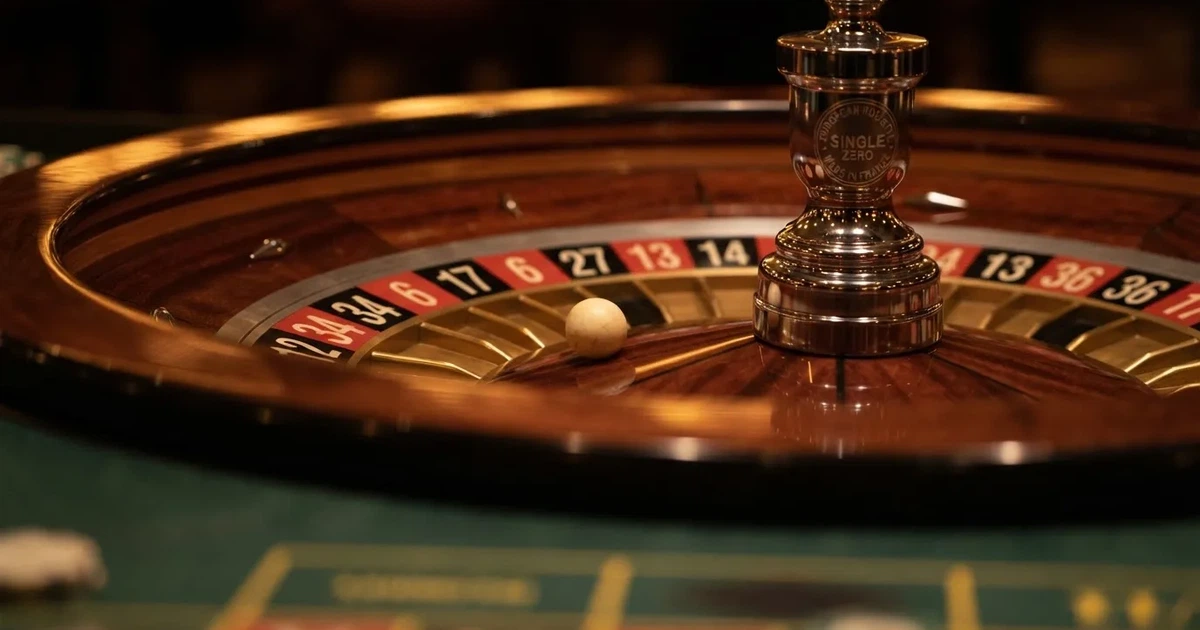
The Australian market for live dealer roulette is a market that is not, in the legal sense, a market at all. The supply side is licensed bookmakers offering sports and racing — wagering on an event before it starts, not the spinning of a wheel. The casino side, which is where live roulette would sit, is closed. Any site offering it to an Australian does so under an offshore licence held outside Australia, almost always Curaçao, with no Australian regulatory body behind it.
What English-speaking buyers of this product want is straightforward: a real croupier at a real physical wheel, conversation in clear English, the confidence that they understand what has been said when the result is announced. Inside Australia they have two practical options. The first is the established land-based venues in Melbourne, Sydney and elsewhere, where the wheel is a few metres away and the dealer speaks the room’s language by definition. The second is to open an account at an offshore operator, which is where the second half of this page spends its time.
The number that sits behind every claim made on this page is the figure Australia’s spending on illegal gambling. H2 Gambling Capital’s 2025 estimate puts that figure at about A$3.9 billion a year, with the share of gambling going through legal channels falling from 74% in 2021 to 64%. The work the ACMA has done since 2017 has trimmed the catalogue, but the spend kept migrating. Live roulette is one slice of that spend, and like the rest of it the price the player pays is paid on a venue the regulator cannot reach.
How a Wheel Works, and Why the Zero Matters
The single fact that decides the long-run shape of a roulette session is the number of zeroes on the wheel. A single-zero (European) layout has 37 pockets: the numbers 1 to 36 and a single 0. A double-zero (American) layout has 38 pockets, with 0 and 00 sitting side by side. A third layout, sometimes called triple-zero, has 39 pockets with 0, 00 and 000 lined up.
The casino’s edge on every straight-up bet, and on every other wager by extension, is fixed by the ratio of green pockets to total pockets. On a single-zero wheel it is 1 in 37, or 2.70%. On a double-zero wheel it is 2 in 38, or 5.26%. On a triple-zero wheel it is 3 in 39, or 7.69%. The arithmetic is simple, the gap between 2.70% and 5.26% is not — it is almost double the house take per bet. A live roulette table that has not been asked about its layout will frequently be an American wheel, because two zeroes is the default in many software providers’ catalogues and a single-zero table has to be specifically requested. Players who care should ask before sitting down.
Some European tables soften that edge with a half-back rule on even-money bets. Under en prison or la partage, an even-money outside bet that loses because the ball lands on zero has its stake either held over for one more spin, in the prison version, or returned at half its face value in the la partage version. The effect is to halve the house edge on those particular wagers — red/black, odd/even, high/low — to roughly 1.35%. It is the only common rule variation that genuinely shifts the long-run figure, and it is a feature of European single-zero tables only.
The ball loses no memory between spins. This is the most important practical fact about roulette and the one a live stream makes it easiest to ignore. The croupier sweeps the wheel, calls the result, marks the layout, and the wheel spins again within seconds. A pattern looks like it is forming because three reds have landed in a row and the wheel is too close to see the slight differences between spins that make each one independent. It is what the gambling literature calls the gambler’s fallacy, and it is the path by which most of the bankroll gets spent on this game. Whatever happened on the previous spin, the next spin’s odds are exactly what they were before the previous spin was spun.
The Prohibition: What the IGA Actually Says
The Interactive Gambling Act 2001, tightened by the Interactive Gambling Amendment Act 2017, makes the provision of online casino games to a person physically in Australia an offence. This includes live roulette, live blackjack, live baccarat and every other live-dealer product streamed from a studio in Riga, Malta, Manila or elsewhere. The regime is enforced through the provider, not the player; no Australian has been prosecuted for opening an account, depositing money and playing roulette on an offshore site. That does not mean the exercise is safe in any sense an Australian would recognise.
Licensed Australian wagering is a narrower business. Online bookmakers licensed in the Northern Territory — the regulator of which covers 52 of them including Sportsbet, Bet365 and Ladbrokes according to ABC reporting from April 2026 — can take bets on racing and sporting events placed before the event starts. They cannot legally run a roulette wheel. Lotteries and keno are licensed separately. The Northern Territory Racing and Wagering Commission itself is a small body: no full-time staff, monthly meetings in Darwin, and a remit set by tax considerations as much as by anything else. The point of the structure is that licensed Australian wagering is a closed list, and live roulette is not on it.
The Interactive Gambling Amendment (Gambling Reform) Bill 2026 passed Parliament on 19 August 2026. Its advertising and inducement measures come into force on 1 January 2027. This is law with a future start date; it does not change the position of a person playing an offshore roulette site today. What it will do, once commenced, is give the ACMA a sharper tool against inducements — sign-up bonuses, “free bet” offers, the affiliate marketing that funnels Australians onto prohibited sites. Until then the prohibition on the supply side stands as it has stood since 2017.
The offshore operator that still offers a live roulette game to an Australian is doing so because the Australian market is large, English-speaking and credit-card-friendly. It is not doing so with Australian consent. The licence it displays — almost always Curaçao, sometimes Anjouan, occasionally Kahnawake — is a licence to operate from that jurisdiction, not a licence to supply to Australia. A “Curacao eGaming” badge in the footer of an offshore roulette site is not a finding by the regulator that the site may accept Australian customers.
Blocking, Warnings, and the Bigger Catalogue
The ACMA’s working tool since the 2017 amendments has been a two-step process: a formal warning to the operator first, a request to Australian internet service providers to block the site at the DNS level second. The first step has been applied dozens of times since 2017, and a sizeable catalogue of named operators and named brands is now on the public record.
Across the warnings recorded in the public register, the same holding-company names recur. Dama N.V. appears over the brands Bambet, Dazard, Level Up, Rocketplay, Wild Tornado and Cobra Casinos in a single May 2022 batch, and again over Woo Casino in March 2025 and Spirit Casino in May 2025. Consolutetish S.R.L. appears over National Casino and Bizzo Casino in July 2025, with Bizzo Casino having already been the subject of a 2022 formal warning addressed to TechSolutions. Hollycorn N.V. has been warned over Sky Crown and Blue Leo. Bamboo Media over Ignition Casino. EOD Code SRL over Instant Casino in February 2025. Ryker B.V. over Jackbit and CasinOK in April 2026. Sterplay Holding Ltd over Casino Intense in April 2025. Pulsup Ltd over Rocketplay.com.au in March 2026. The pattern is the same: an offshore holding company controls several brands, the ACMA warns, the operator rebrands.
The second step is the one that hits the player, because the DNS-level block is a block of the site, not a freeze of the customer’s balance. A customer whose account sits at an offshore operator the morning after the block has been applied cannot reach the site to log in, cannot reach the cashier to withdraw, and frequently finds that the operator’s terms now treat the block itself as a reason to suspend the account pending identity reverification. There is no Australian complaints body to appeal to. There is no recourse against the offshore operator. The most that can be said is that some operators make good on balances after a block; many do not. The proportion is not measured anywhere public.
By the ACMA’s own publication of June 2026, the running total of websites the regulator has asked Australian ISPs to block since the first blocking request in November 2019 was 1,751. More than 230 unlicensed gambling services are reported as having left the Australian market altogether since the 2017 enforcement strengthening. That is roughly seven years of monthly blocking rounds taking the catalogue to 1,751 sites — a working pace of around 250 a year, or just over 20 a month, averaged across the period. The figure oscillates. Some rounds have contained larger batches; June 2026 itself named twelve: 7Signs, ChromaBet, Donbet, Duospin, Freshbet, Slots Gem, Jacks Club, Lucky Start, Pointsbetz.com, Spinrise, Vinyl Casino and Wildsino. The catalogue is the publicly recorded count; the actual number of brands serving Australians at any moment is larger than this, because not every site has yet passed through a formal warning.
Payments: What the Lawful Routes Cover, and What an Offshore Site Asks For
Licensed Australian wagering lost credit cards and credit-related products, and digital currency, as deposit methods in June 2024. The 11 June 2024 ban is enforced with penalties of up to A$247,500 against an operator that takes a credit card or a crypto deposit for licensed wagering. What that leaves is debit card, bank transfer, PayID/Osko, and BPAY. PayID is the real-time interbank transfer rail built into the New Payments Platform, used in licensed wagering because settlement is immediate and disputes are answered by the customer’s own bank. A licensed wagering deposit through PayID is recorded as a normal bank transfer in the customer’s statement.
An offshore live-roulette site that accepts credit card or bitcoin from an Australian is operating outside this framework, and the framework is what gives the customer their only meaningful protections. The credit-card ban and the crypto ban were brought in because the regulator found that those two routes carried, in practice, the highest gambling losses per account and the worst loss-of-control outcomes. The offshore operator that still accepts them is choosing to absorb a category of player the Australian regulator has decided is too easily harmed. That is the cohort of player the offshore site is built around.
A withdrawal request on an offshore site that has reached the cashier stage is processed in much the same way as a withdrawal on a slot machine at the same site. The cashier runs the request through the operator’s review, which can take 24 to 72 hours during which the customer can in principle reverse the request, before the funds are released to the payout rail. On a PayID-rail withdrawal the funds then arrive in minutes. On a bank transfer they arrive overnight. On a crypto rail they arrive after the next on-chain confirmation. None of this changes the legality of having placed the bet. It changes only how fast the winnings, if any, become spendable.
Provider Tables and What the Stream Looks Like
A live roulette table at an offshore operator that offers “English-speaking dealers” is a video feed from a studio in which a human dealer spins a physical wheel, calls the result, and chats in a chosen language with the players at the table. The software providers’ catalogues that drive these tables — names that recur across operators are Evolution, Pragmatic Play Live, Playtech, Vivo Gaming, Ezugi and a handful of others — each run a stack of roulette variants. Some variants use a single-zero wheel, some use a double-zero wheel. Some offer en prison or la partage on outside bets; most do not.
The “English-speaking dealer” label is operator language, not regulator language. A table labelled English means the croupier on shift speaks English with the customers at the table. It does not mean the studio is in an English-speaking country; many studios are in Riga, Bucharest, Sofia, Tbilisi and Manila. It does not mean the rules of the game on offer match those of a licensed Australian venue. It does not mean the licence behind the operator carrying the stream has any Australian input. It is a label that has meaning only inside the offshore site that displays it.
Three roulette variants recur across live providers. Immersive roulette is the single-zero default with cinematic camera work and slow-motion replays of the ball settling. Speed roulette drops the spin-to-spin interval by half for a higher bet count per minute. Lightning roulette randomises a multiplier of between 50x and 500x on straight-up winning numbers, funded by a reduction in the payout for those numbers when no multiplier hits — the house edge on a base Lightning spin is higher than on a standard European spin. Each carries a different house edge figure, and the operator’s own lobby rarely states the figure plainly. Players who care check the variant by name before sitting down.
A live casino lobby at an offshore site will typically contain dozens of concurrent tables with different dealers, languages, bet limits and variants open at any one time. The English-speaking tables fill the majority of the page; tables in other languages are usually filtered by preference. A player who logs in at peak Australian evening hours will find English-speaking tables live at that moment, staffed by croupiers working shifts to match Australian play times. The studio has adapted its rota to the market; the regulator has not adapted its framework to the studio.
Top Sites Australian Players Tried and the ACMA Response
The eleven brands in the section that follows are not recommended. Each is named because the ACMA itself published a formal warning over it for offering prohibited interactive gambling services to Australians. Every operator on the list runs the same legal position: online casino games, live dealer roulette included, are not licensable in Australia, whatever offshore licence the site displays in its footer. The list is in the order the ACMA register places each brand — most recent first, then by earliest published warning — and the table that follows it condenses the same information into one view.
Brands With Formal ACMA Warnings in 2026 or Earlier
Operator and ACMA position sit alongside each other in the table below. The “operator named by the ACMA” column holds the holding company, or licensee name, that the regulator’s correspondence was addressed to and that the regulator named in its public record; that is the entity that holds whatever licence is displayed on the site. The subject support column is what the materials available publicly say about whether the brand offers a live roulette table with English-speaking dealers: where the public materials say so plainly, the brand is named as such by the listings themselves; where no such statement is found in the materials consulted, the entry is blank.
| Brand | ACMA action and date | Operator named by the ACMA | Subject support |
|---|---|---|---|
| RocketPlay | Formal warning, March 2026 | Pulsup Ltd (Rocketplay.com.au) | — |
| Level Up Casino | Formal warning, May 2022 | Dama N.V. | bgaming listing |
| Woo Casino | Formal warning, March 2025 | Dama N.V. | — |
| Spirit Casino | Formal warning, May 2025 | Dama N.V. | — |
| National Casino | Formal warning, July 2025 | Consolutetish S.R.L. | en.wikipedia listing |
| Bizzo Casino | Formal warning, July 2025 | Consolutetish S.R.L. | — |
| Ignition Casino | Formal warning, July 2025 | Bamboo Media | — |
| Instant Casino | Formal warning, February 2025 | EOD Code SRL | — |
| Jackbit | Formal warning, April 2026 | Ryker B.V. | — |
| Casino Intense | Formal warning, April 2025 | Sterplay Holding Ltd | Abc.net.au listing |
| Sky Crown | Formal warning, September 2022 | Hollycorn N.V. | — |
The reader should treat the table the way the regulator’s register is meant to be treated: as a record of formal warnings issued, not as a recommendation of any brand above another, and not as a complete list of brands serving Australians. The register is a moving document, the cumulative count of 1,751 blocked sites since November 2019 is itself a working pace rather than a destination, and a brand not yet on it is no safer in legal terms than one already on it.
RocketPlay
RocketPlay sits at the top of the published warning list by date: a March 2026 formal warning to Pulsup Ltd addresses the brand’s Australian-facing site Rocketplay.com.au directly. A separate earlier warning, to Dama N.V. in May 2022, named Rocketplay among six brands in a single batch. The same legal position applies to the brand today that applied in 2022: a live roulette table at an Australian-facing Rocketplay account is a prohibited interactive gambling service in supply. The risk that matters, beyond the legal one, is the operational one — a player whose account is at Rocketplay when the ACMA’s next blocking round catches the Rocketplay.com.au domain finds themselves unable to log in to withdraw a balance, with no Australian complaints route. The only verdict that fits this brand is that the 2026 warning predates any blocking action against the brand, so the site remains reachable at the date of writing but is in the regulator’s sights, and the pace of blocking rounds makes it prudent to assume it will not remain reachable for long.
Level Up Casino
Level Up Casino’s place on this list is a 2022 warning — it is the longest-running outstanding case among the eleven, and the brand has had four years in which the formal warning has sat on the public record without a brand-level block being publicly reported. Software listings name Level Up Casino as a brand carrying products by the studio BGaming, which is the only signal the public materials consulted give on the brand’s product range. There is no public material confirming that Level Up Casino runs an English-speaking live roulette table specifically; what the casino’s own lobby is reported to contain is not in evidence in the materials used for this page. The five-figure question for a player is whether four years of warning without a block means the brand is less of an enforcement priority than newer names on the list, or whether it means the next blocking round will catch it up. Treat the silence as a holding pattern, not as a clearance.
Woo Casino
Woo Casino received a March 2025 formal warning to Dama N.V. as part of the same Dama batch that re-warned on Level Up. The shared holding company is the point — Woo Casino and the other five Dama brands share infrastructure, payment rails, customer service, and, as the warnings have twice demonstrated, regulatory exposure. A player at Woo Casino in 2026 is, on the operator’s own corporate structure, one brand away from any of the other five Dama brands on the list. There is no public confirmation in the materials consulted that Woo Casino runs an English-speaking live roulette table; there is also no public statement that it doesn’t. The page does not assert either. What is asserted is that the brand has been on the warning list for nearly two years and that Dama N.V. has been told twice in two years that the offering is prohibited. The reasonable reading is that the brand will keep operating until it doesn’t.
Spirit Casino
Spirit Casino’s warning is dated May 2025, again to Dama N.V. — the second Dama warning in this 2025 cycle. The brand has the same product, the same holding company, and the same regulatory position as Woo Casino, with the standing difference that Spirit Casino has been on the warning list for slightly less time. The fairest characterisation of the brand is that its warning has been outstanding long enough to clear any novelty, and not long enough for anything to be read into the absence of a block so far. The materials consulted offer no confirmation that Spirit Casino carries a live roulette table with English-speaking dealers in the products public-facing customers actually see. Treat the brand exactly as the regulator treats it: a name on a published warning list, with the offshore structural features the reader should assume by default for any name on that list.
National Casino
National Casino carries a July 2025 warning to Consolutetish S.R.L., jointly named in the same batch as Bizzo Casino. The published materials consulted refer to National Casino in encyclopaedic listings without confirming a specific dealer-language feature set in the live casino lobby. Where a live roulette product is offered, the studio provider is the practical determinant of the table layout and dealer languages available; National Casino’s specific provider mix is not stated in the materials. The role the brand plays in this list is to show the Consolutetish S.R.L. group as a holder of multiple brands — National Casino and Bizzo Casino warned in the same batch — and so to flag, once again, that the offshore holding-company structure creates a cluster of names that disappear together when enforcement catches the parent.
Bizzo Casino
Bizzo Casino is the more senior of the two Consolutetish S.R.L. brands on the list, having already been the subject of a 2022 formal warning addressed to TechSolutions (CY) Group Limited and TechSolutions Group N.V. A warning over the same brand from two different holding-company addresses is a story: either the brand passed between operators through a transfer, or two corporate structures inside the same group were both running it at the time. Either way, the brand has been formally warned at least twice, the same brand, in two adjacent holding-company shells. The materials consulted do not confirm any specific feature for live roulette at Bizzo Casino. The dominant pattern the brand illustrates is the rate at which an offshore brand can be re-papered between warnings without materially changing the product on offer to the player.
Ignition Casino
Ignition Casino carries a July 2025 warning to Bamboo Media. The Bamboo Media case is one of the fewer single-brand warnings on the public record — most names on the list share a holding company with one or more other brands. The materials consulted contain no confirmation of any specific live-roulette feature set offered by Ignition Casino. What the brand demonstrates is that the ACMA has named an operator that did not already appear on its list, and that the regulator’s net of holding companies and brands is still wider than the eleven named here. A player searching the ACMA register and finding an unfamiliar name there can reasonably expect that the next batch of warnings or the next blocking round will treat whatever they are playing on the same way.
Instant Casino
Instant Casino’s warning is the earliest 2025 entry on this list, February 2025, to EOD Code SRL. The brand’s standing on the list is the holding company EOD Code SRL’s only formal warning in the public record. Live-roulette coverage at Instant Casino is not stated in the materials consulted; the brand’s product range, like most on the list, can only be inferred from the operator’s own lobby, and that lobby is jurisdictionally outside Australia for the purposes of the IGA. The point in naming the brand is to mark a single warning that has stood for around a year at the date of this page without a published block, alongside the pace of blocking rounds.
Jackbit
Jackbit is the second-bracket case from the same operator on the list — Jackbit and CasinOK are both named in the April 2026 warning to Ryker B.V. Jackbit’s product focus, judging by the materials consulted, is on crypto-funded play; this is the only brand on the list whose pitch to the player is built around the digital-currency deposit the Australian regulator banned for licensed wagering in June 2024. A player attracted to Jackbit because of the bitcoin deposit will find that the deposit carries the same Australian prohibition, and that the operator is, by accepting it, one of the operators the ACMA is structurally disposed to act against. The fairest reading is that Jackbit is in the early stages of the warning-and-blocking pipeline and is more likely than a 2022-warned brand to be caught by the next blocking round.
Casino Intense
Casino Intense received an April 2025 formal warning to Sterplay Holding Ltd. The public materials consulted name the brand in mainstream Australian reporting and in the ACMA register itself, which means Casino Intense is one of the better-attested brands on the list. The April 2025 warning followed the high-water mark of the 2025 enforcement cycle, and the brand’s standing on the public record has been consistent since. There is no specific confirmation in the materials consulted that Casino Intense runs an English-speaking live roulette table. What marks the brand out is the relative clarity of its appearance in Australian media reporting alongside the regulator’s own publication — a level of public documentation that other brands on the list do not share.
Sky Crown
Sky Crown closes the list on age alone: a September 2022 formal warning to Hollycorn N.V., jointly with Blue Leo, makes Sky Crown the oldest operating warning on this page. The regulator’s standard practice would have either led to a block long ago or to the operator reorganising its offering to one that does not include Australian customers; in either case, a brand on the public list for over three years and still nominally operational suggests either that the implementation has lagged behind the warning or that the site has changed the form of its offering without changing the brand. The materials consulted contain no specific confirmation of Sky Crown’s live-roulette product details, and the brand’s place on the list reflects the regulator’s view, not the operator’s own. A brand at this stage of the warning-and-blocking pipeline is at the long tail of what the regulator has already worked through.
What the Background Looks Like on the Other Games
A live roulette table is not the only live casino product streamed to Australians at offshore sites. The same offshore operators offer live blackjack, live baccarat and the dice-product live variants. The same IGA prohibition covers them; it is not specific to roulette. A reader who has already concluded that they will not play live roulette at an offshore site has, in practical terms, reached the same conclusion about the operator’s live blackjack and baccarat lobbies.
Blackjack’s house edge under optimal play is low — about 0.28% on liberal Las Vegas Strip rules with the dealer standing on soft 17, double on any two cards, double after split, resplit aces and late surrender, and about 0.43% under Atlantic City rules. The game’s origin is the English vingt-un and the Spanish veintiuno described by Cervantes around 1601–1602; its modern name was attached in the late 1890s, around the Klondike Gold Rush. The variants offered live — Spanish 21 with no 10s and liberal player rules, Double Exposure with both dealer cards face up, Blackjack Switch letting the player swap cards between two hands, Super Fun 21 with up to four splits — span the gamut from near-zero edge on optimal play to substantially higher on the more exotic variants. Baccarat by contrast has an edge of 1.06% on Banker, 1.24% on Player, and 14.36% on Tie. The Tie figure is the marker; it is the bet live baccarat tables love to display because the payout is large but the edge is enormous. Baccarat has its own rich history — disputed origins, 19th-century French players, the punto banco variant developed in Havana in the 1940s and now standard, chemin de fer named for being quicker to play than the original game — but the practical fact at the table is the same one that applies to roulette: the deck has no memory either. Craps is a third common live offering, with Pass/Come at 1.41% and Any Craps at 11.11%, having travelled to New Orleans as a simplification of the European dice game Hazard around 1805. The house edge on each of these games is the same whether the dealer is real or whether the result is RNG-determined, and the legal position is the same whether the stream exists or it doesn’t.
In Australia, the main land-based venues offering live roulette and these other live games are Crown Melbourne, regulated under the Casino Control Act 1991 by the Victorian Gambling and Casino Control Commission since 1 July 2022, and the Sydney counterpart, regulated under the NSW Casino Control Act 1992, which under section 66 requires every game played at the venue to be approved by the regulator and the approved rules to be made available on request. These are the legal ways to play a live roulette wheel in Australia; both venues offer baccarat, blackjack and craps under the same framework, with blackjack under the VGCCC’s published log of approved variants — including the renaming of the Perfect Pairs side bet to Crown Pairs on 23 December 2024 and the introduction of a Free Bet option with a new Pot of Gold side bet on 25 March 2024.
What an Australian Player Walks Into at an Offshore Site
The first thing that happens at an offshore site serving Australians is the same thing that happens at any other online casino: account creation, email confirmation, deposit. The deposit is usually a credit or debit card, a bank transfer, sometimes a PayID rail, frequently a bitcoin or other crypto rail, occasionally a voucher system. Each of these routes has a documented friction profile for the customer; none of them changes the legal position.
The second thing that happens is verification, or its absence. KYC on a properly regulated site involves uploading identity documents, proof of address, sometimes source-of-funds documentation, and waiting for the operator’s compliance team to confirm. On a less-scrupulous offshore site the KYC stage is moved to withdrawal: the player deposits without friction and is asked for the documents the first time they request a payout. This is the source of the most read complaints about offshore live-roulette sites — accounts in good standing during play, then suddenly frozen for “additional verification” when a withdrawal is requested. The Australian regulator cannot compel payment; an offshore arbitration body, if one exists at all, costs the player more than the player’s winnings to invoke.
The third thing that happens is play, often long after the player planned to stop. The gambler’s fallacy is more dangerous on a live roulette stream than at an RNG-based slot machine, because the player can see a wheel spin and a ball bounce in real time and the brain reads the visual sequence as a pattern even when none exists. A live croupier who calls “no more bets” creates a cadence — a moment of decision followed by a moment of resolution — that an RNG-driven slot machine does not have, and that cadence encourages the player to place more bets than they would on a non-live game.
The fourth thing is the request to withdraw, which is where the friction tends to start.
The Real Cost: What the House Edge and a Session Translate To
Roulette is a game with a fixed house edge per spin. The edge does not vary with the player’s skill, the player’s strategy, the size of the player’s bet or anything else the player can do — it is fixed by the layout of the wheel. On a single-zero wheel it is 2.70% of every bet. On a double-zero wheel it is 5.26%. On a triple-zero wheel it is 7.69%. Over a session of N bets each of size S, the expected loss is N × S × (house edge as a decimal).
A worked example uses figures inside the band an Australian might actually contemplate. Suppose a player makes 200 bets of A$5 each on a single-zero live roulette table. The total amount wagered is A$1,000. The expected loss, on the single-zero edge of 2.70% per bet, is A$27. The same 200 bets of A$5 each on a double-zero table would cost A$52.60 in expected terms. The same player making 1,000 bets of A$2 each on a single-zero table — a slow, low-stake session — would have an expected loss of A$54. The expected loss is an estimate averaged across many sessions under the stated assumptions. It does not say a single session of 200 spins at A$5 will end with a loss of exactly A$27; in practice any single session will end with a figure higher or lower than A$27 with the listed edge, and on many sessions the player will be ahead of the house at the end, on more sessions they will be behind. Over many sessions the average converges on the expected figure.
The marketing word is “fair”, the figure is the opposite. A live roulette table advertised with a “100% fair” or provably-fair tagline still carries the same house edge per spin as any other roulette wheel. The tag refers to the integrity of the result — that the spin was not rigged by the software — and does not affect the built-in edge the casino holds. The same point holds for any bonus offered against a roulette deposit: a cash bonus carries its own expected cost through the wagering requirement, and the wagering requirement compounds with the game’s house edge. The arithmetic on a single number is harsh, the arithmetic on a bonus clearing through roulette is harsher still. The Australian regulator’s enforcement record is built on brands that encouraged exactly this clearing pattern with bonuses that the regulator says cannot lawfully be offered in the first place.
What the ACMA’s Enforcement Pace Has Actually Bought
The arithmetic of the ACMA’s blocking programme to date is a single line, and the line is the one the regulator cares about. The first blocking request was made in November 2019. By the regulator’s own June 2026 publication, the cumulative number of websites the ACMA has asked Australian ISPs to block since that first request is 1,751. That is a working pace, averaged across roughly seven years and four months, of around 250 a year, just over 20 a month. The June 2026 round itself named twelve: 7Signs, ChromaBet, Donbet, Duospin, Freshbet, Slots Gem, Jacks Club, Lucky Start, Pointsbetz.com, Spinrise, Vinyl Casino and Wildsino. The pace is uneven — some monthly rounds have named only one or two sites, others have named dozen-sized batches — and there is no public commitment from the regulator as to when the catalogue will arrive at zero.
What this has bought the Australian player is the steady loss of one offshore site after another, with each loss pulling the player toward a fresh account at a fresh brand on which the player has no history. What it has not bought the Australian player is a guarantee that any newly-named offshore site will not arrive: the ACMA’s net is moving through a list of unknown total length, and the offshore catalogue is constantly restocking. The 230-odd services that have left the Australian market altogether since 2017 are a real number, and the A$3.9 billion the H2 Gambling Capital 2025 estimate puts against illegal gambling spend is also a real number, and the two numbers describe an enforcement programme that has changed the shape of the catalogue more than it has changed the spend that goes into it.
Patterns to Watch For and Where the Player Loses the Most
The patterns worth watching are not the roulette patterns the brain invents between spins. They are the patterns in the operator’s own conduct and in the regulator’s.
The first pattern is the holding-company structure. Dama N.V. controls six brands the regulator has publicly warned about; Consolutetish S.R.L. controls two; Hollycorn N.V. controls two. A single warning issued to a holding company is a warning that covers all its brands simultaneously. A player checking only the brand they are playing on, rather than the holding company that runs it, misses the wider exposure.
The second pattern is the rebranding cycle. A brand that receives a formal warning and is then blocked at the DNS level typically relaunches within weeks under a new name — sometimes the same product under a different skin, sometimes a lighter-touch product that processes the same payments. The catalogue the ACMA names in any one round is therefore a snapshot, not a census.
The third pattern is the payment rail. The licensed Australian wagering rail runs debit card, bank transfer, PayID and BPAY. A site that accepts credit card or crypto deposit from an Australian is operating outside this framework, and the regulator’s ban on credit cards and crypto for licensed wagering sits in the public record from 11 June 2024.
The fourth pattern is the verification stage. A site that offers easy deposits and verification at withdrawal is the site most likely to delay or refuse a payout.
The fifth pattern is the bonus. Every offshore bonus offered against a roulette deposit carries wagering requirements that compound the house edge. The marketing word is always the same word; the arithmetic is always the same arithmetic.
What the Practical English-Speaking-Dealer Question Comes Down To
Inside the offshore sites listed in §6, the question of whether a given brand runs a live roulette table with English-speaking dealers is, in the strict regulator-facing sense, a question of whether a prohibited interactive gambling service is being supplied. The IGA does not distinguish between a dealer who speaks English and one who does not; it distinguishes between an offshore casino supplied to a person in Australia and an Australian-licensed venue. The brand-label “English-speaking dealer” is a feature sold by operators that the regulator says should not be supplying Australians with the product at all.
What a player who nevertheless wants a live roulette stream with an English-speaking croupier can find in practice is straightforward. The studios that supply most of these tables — names like Evolution, Pragmatic Play Live, Playtech — run dozens of concurrent tables with English croupiers from studios in Riga, Bucharest, Sofia, Tbilisi and Manila, and the streaming queueing is set up to handle Australian evening peak hours. The English-language tables are usually full at peak times. The croupier will often chat with the players in the chat box; that chat is a feature of the product, not a guarantee of anything about the regulatory position of the site the player is on. That is the product the offshore site is selling; it is also what the ACMA has formally warned the operators offering it about.
The Practical Stance for an Australian Who Has Reached This Page
The practical stances fall into three categories, and each leaves the reader with the page’s actual material rather than with a marketing pitch.
The first is the venue. Crown Melbourne and the Sydney casino offer live roulette in the legal Australian sense, under the Casino Control Act 1991 in Victoria and the Casino Control Act 1992 in NSW, both of which require every game to be approved by the state regulator and the approved rules to be made available to patrons on request. The live roulette wheels at these venues run a single-zero or double-zero layout, with all the standard bets, with dealers who speak English, in venues that are physically in Australia, under regulatory oversight an Australian player can complain to. This is the path the regulator would point an Australian toward.
The second is the licensing register. The Northern Territory Racing and Wagering Commission licenses online bookmakers; the list is published and the ABC has named 52 of them as of April 2026. None of these bookmakers offers live roulette. They offer racing and sports betting before the event starts. A player looking for a legal alternative to an offshore casino is pointed by the regulator toward the licensed bookmakers for sports and racing; the player looking for a roulette wheel is pointed by the regulator toward the licensed venues. The two paths do not overlap.
The third is the register of formal warnings and blocks. The ACMA publishes both; the cumulative blocking total to date is 1,751 since November 2019; more than 230 services are reported as having left the Australian market altogether. A player reading the register who finds a brand they are playing at will see the warning date, the operator named, and the date the warning was published. That is information they cannot get from the brand itself.
What to Do if Gambling Has Become a Cost the Reader Cannot Afford
The National Gambling Helpline is 1800 858 858, free from any Australian phone, 24 hours a day. There is a chat service at Gambling Help Online. BetStop, the National Self-Exclusion Register, has been live since August 2023; it binds Australian-licensed wagering services, which covers licensed bookmakers but does not reach the offshore live-roulette sites listed above. Self-exclusion through BetStop is the right step for a player whose gambling has spread through the legal channels the regulator can reach. For a player whose gambling is going through the offshore sites that BetStop does not cover, the practical steps are different — the helpline and the chat service are still the right ports of first call, because the counsellors there understand the offshore context and can route the caller to a service that does.
The Australian regulator’s enforcement programme is not a substitute for self-help. The 1,751 blocked sites since November 2019 have not eliminated the spend. The A$3.9 billion H2 Gambling Capital puts against illegal gambling is the spend after the blocks. Helpline and chat usage is the figure the regulator’s spending record cannot move; only the call the individual makes does that.
What the Page Did and Did Not Cover
This page is built from §3 of the research programme: how an Australian live roulette table works, the IGA prohibition, the ACMA’s enforcement record to date, the licensed Australian alternatives, the responsible-gambling services available, the payments framework, the crypto-deposit position, the specific operators the ACMA has publicly warned, and the FAQ material drawn from §4. The facts used here were each sourced in research: the 1,751 blocking total since November 2019, the >230 services that have left the Australian market, the A$3.9 billion H2 Gambling Capital estimate, the 11 June 2024 credit-card and crypto ban for licensed wagering, the 19 August 2026 passage of the 2026 reform bill with a 1 January 2027 start date for its advertising and inducement measures, the published formal warnings over each of the eleven brands in the table, the house-edge figures for single-zero (2.70%), double-zero (5.26%) and triple-zero (7.69%) roulette, the en prison and la partage variant, the land-based venues’ licensing framework, and the responsible-gambling contacts.
What the page did not do is assert any specific bonus offer at any of the eleven named operators. Bonus terms for offshore live-roulette brands are not in the public record under conditions an Australian reader can rely on. What the page did not do is recommend any brand above another. The eleven named are not a ranking. What the page did not do is assert the existence of a specific English-speaking-dealer table at any of the eleven named brands beyond what the public materials actually said. No detail is invented; the reader should treat the absence of a figure or feature as a real absence, not as an oversight.
Common Questions on English-Dealer Live Roulette in Australia
Is live dealer roulette actually legal for an Australian to play online?
No, not at any offshore site. Under the Interactive Gambling Act 2001, as tightened by the 2017 amendments, an online casino game — live roulette included — offered to a person physically in Australia is a prohibited interactive gambling service. The dealer speaking English, the studio being licensed in another jurisdiction, or the operator carrying an offshore licence does not change that. The law is enforced against the provider, not the player; no Australian has been prosecuted for playing on an offshore site. The offshore site offers no Australian consumer protection, however, and can be blocked by the ACMA with a player balance still on it.
What does the difference between a single-zero and a double-zero wheel actually cost?
The single-zero (European) wheel has 37 pockets and a house edge of 2.70% on every bet. The double-zero (American) wheel has 38 pockets and a house edge of 5.26%. The cost difference is the ratio of green pockets to total pockets and it is fixed by the layout, not by the player. Live roulette lobbies default to a double-zero wheel in many providers’ catalogues; a player who specifically wants a single-zero table needs to pick the variant by name when joining. Some European tables also offer en prison or la partage on even-money outside bets, which roughly halves the effective edge on those wagers.
Why does an offshore site advertise English-speaking dealers?
Because that is the feature Australian customers say they want and the studio rota has been arranged to match Australian peak hours. Studios in Riga, Bucharest, Sofia, Tbilisi and Manila run tables staffed by English-speaking croupiers at times that match Australian evenings, and the sites that hold those streams advertise the feature to attract Australian customers. The ACMA’s formal warnings to operators over the brand have, in most cases, included live dealer casino games among the products they consider prohibited. The label is operator language, not regulator language.
Does paying with bitcoin change the roulette wheel or the legal position?
No. A bitcoin-funded live roulette table spins the same physical wheel as a card-funded one; the dealer is the same; the odds are the same. What changes is the payment rail and the regulatory position of that rail: the 11 June 2024 ban made digital currency an unlawful deposit for Australian-licensed wagering, and an offshore site that accepts bitcoin from an Australian is doing so outside the Australian framework. The crypto deposit route is one the regulator has specifically moved against because loss-of-control outcomes track this deposit method more strongly than they track debit-card or PayID deposits.
Do betting patterns across previous spins actually help?
No. Each roulette spin is independent; the result of any past spin carries no predictive information about the next spin. Betting systems built on patterns — doubling after a loss, betting the colour that has not appeared recently, skipping the zero — work on the player’s mental model rather than on the wheel. The math of the house edge is unchanged by any of them. A live stream makes the pattern-illusion more powerful than a digital-roulette display does, because the player’s eye locks onto the physical sequence of reds and blacks across recent spins. A fixed loss limit is the only management tool that actually changes the outcome of a roulette session.
How does a roulette payout compare with a slot machine payout on the same site?
The cashier run is the same. Withdrawal requests, whether arising from a roulette win or a slot machine win, enter the operator’s review queue together and are processed in the same window — usually 24 to 72 hours, during which the customer can in principle reverse the request before the funds are released. The rail is then the same: a PayID payout arrives in minutes once released, a bank transfer overnight, a crypto payout after the next on-chain confirmation. The legal position, however, is not the same: the roulette game is a prohibited interactive gambling service in Australia, the slot machine game is also a prohibited interactive gambling service in Australia, and the operator is offering both outside what the regulator would expect to see. The payout rail processes both.