
CashtoCode at Australian-facing offshore casinos in 2026
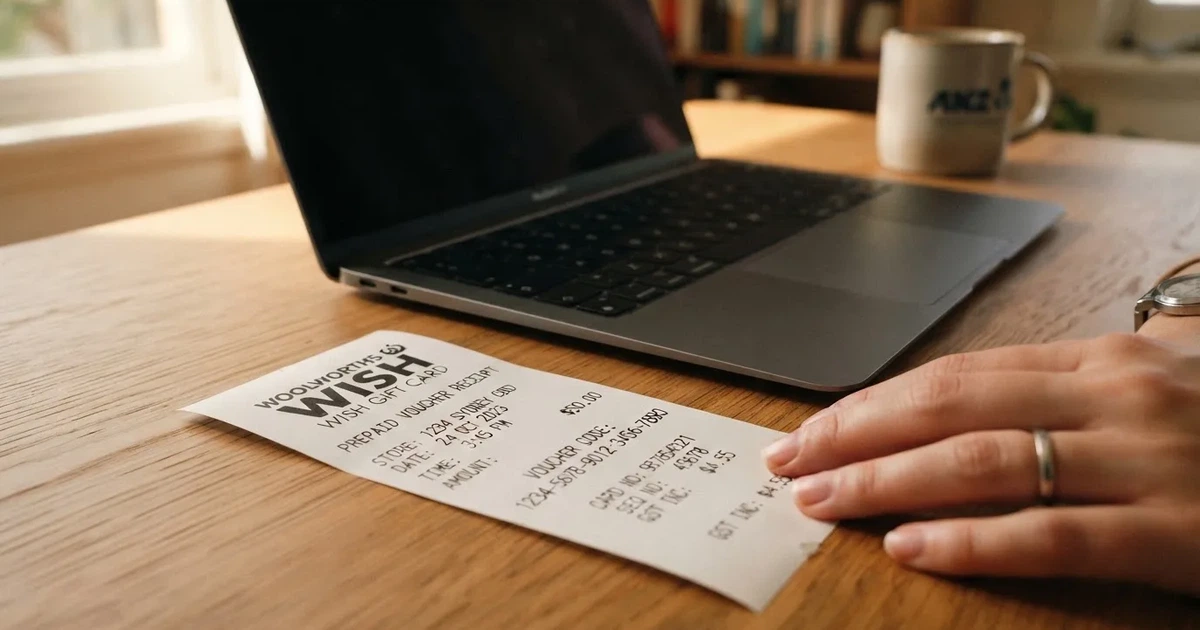
CashtoCode is one of the stranger pieces of payment plumbing in this corner of the market. A punter walks into a reseller — usually a convenience store, sometimes an online platform — buys a printed eVoucher with a 20-digit code, and feeds that code into a casino’s deposit screen. No card, no bank account, no crypto wallet, no name on the transaction. That is the whole appeal, and the reason offshore casino sites that no Australian regulator has ever licensed still list it as a deposit method for Australian customers.
The catch sits one level up. Under the Interactive Gambling Act 2001, no online casino may lawfully take a player who is physically in Australia at all. Every brand this page sets out is offshore, none of them may serve an Australian resident lawfully, and several of them have already had the ACMA write to their parent company about it. The legal question does not turn on whether the eVoucher works as advertised; it turns on whether any of these sites is allowed to take Australian money in the first place.
This page reads the CashtoCode-on-offshore-casinos market as it actually sits in 2026: how the deposit gets made, what it costs, who is on the receiving end, and which of those operators the ACMA has already acted against. The data was reviewed on 4 November 2026 against the ACMA’s published formal-warning register and the blocking-list updates the regulator has put out.
Table of Contents
- How a CashtoCode deposit actually works at an offshore casino
- The Australian legal frame as it actually applies
- What the ACMA has actually done about these brands
- Payment context for the Australian player
- The CashtoCode-accepting operators the ACMA has on its register
- Player protection as it actually applies offshore
- The numbers this page sits on
- What a reader weighing these operators should hold onto
- Frequently asked questions
How a CashtoCode deposit actually works at an offshore casino
The flow itself is short. A player signs into the casino, picks CashtoCode from the cashier, gets a token, takes it to a reseller, hands over cash, receives a 20-digit code, returns to the cashier, types the code in. The casino credits the account. None of that requires a card, a bank login or a crypto wallet, and the eVoucher’s own site describes the product as needing no personal details to use, with over 25 currencies supported and no usage fee charged to the customer. Any unused balance keeps its full value until it is spent.
For an Australian punter, two practical limits follow from that. The first is the deposit ceiling. CashtoCode eVouchers come in fixed denominations set by the reseller — €10, €20, €50, €100, €250 and similar rungs above that. The cashier screen at a typical offshore casino reflects that ceiling, not a card-friendly 200. The second is the deposit-only design. The CashtoCode site offers no withdrawal option: winnings still have to leave the casino through whatever payout rail the operator offers, which means the eVoucher takes care of the funding leg and the rest of the trip uses something else entirely.
The CashtoCode catalogue openly includes gambling game providers — Pragmatic Play, Evolution, NetEnt, Playtech — among its filters. The product is built and sold for gambling sites, not adapted to them. That is why offshore casinos list it: anonymity at the funding step matters to a market segment the licensed Australian channels do not reach.
What the cashier looks like in practice
A typical offshore casino that takes CashtoCode shows the method in its deposit list, sometimes under “Vouchers” rather than “Cards”, and routes the player to the CashtoCode portal to enter the code. Minimum deposits cluster around €/$10 — small enough to make the eVoucher denomination ladder work — though a few operators lift the floor. The actual deposit clears in seconds once the 20-digit code is accepted; the casino credits the balance in cash and the player is in. There is no separate fee on the eVoucher side; what the casino may add is a fee of its own, and that is the variable worth checking before confirming a deposit.
That speed is also why the eVoucher shows up at offshore brands the Australian banking system otherwise makes hard to reach. Major Australian banks — NAB, Commonwealth Bank, Westpac, St George — let cardholders self-activate a gambling transaction block through their banking app. Westpac’s block works at card level and refuses transactions registered under the merchant category code for betting and casino gambling; ANZ’s block extends to digital-wallet transactions on the underlying card, including Apple Pay, and lifting it requires a 48-hour wait. ANZ also warns that not every gambling transaction will be caught and some non-gambling ones might be blocked in error. A punter who has activated one of these blocks may find their card silently refuses to fund an offshore casino, and CashtoCode offers an end-run around that particular obstacle.
Where CashtoCode stops
It stops at the deposit. The casino still has to pay winnings out through its own payout rail — typically a bank transfer, occasionally an e-wallet — and the same offshore operator still has its own manual checks before any settlement lands. The CashtoCode site is explicit that the product is deposit-only and offers no withdrawal option. Anyone choosing CashtoCode for the funding step is choosing two rails at once: the eVoucher in, and whatever the operator decides out.
The Australian legal frame as it actually applies
The Interactive Gambling Act 2001, as tightened by the Interactive Gambling Amendment Act 2017, makes it an offence to provide online casino games, online pokies or in-play betting to a person in Australia. No state or territory licenses that product. What is licensable is wagering on races and sport placed before the event, lotteries and keno — in practice licensed by the Northern Territory. The Northern Territory Racing and Wagering Commission regulates 52 of Australia’s online bookmakers, including Sportsbet, Bet365 and Ladbrokes, licensed in the Territory for tax reasons; the commission has no full-time staff and meets once a month in Darwin. Minimum age is 18.
So an Australian-facing offshore casino is operating outside that frame regardless of whether it displays a Curaçao or Anjouan licence badge on its footer. The badge describes the regulator the operator answers to in its home jurisdiction; it does not describe any right to take Australian customers. The IGA targets the provider, not the individual player — no Australian has been prosecuted for placing a bet on an offshore site — but the operator side of the law is enforced, and the enforcement has teeth.
How the ACMA enforces it
The Australian Communications and Media Authority investigates, issues formal warnings and directs Australian ISPs to block illegal sites. By June 2026 the running total stood at 1,751 illegal gambling and affiliate marketing websites blocked since the first blocking request in November 2019, and more than 230 unlicensed gambling services had left the Australian market since enforcement was strengthened in 2017. In a single round reported on 26 June 2026 the ACMA asked ISPs to block 12 more sites: 7Signs, ChromaBet, Donbet, Duospin, Freshbet, Slots Gem, Jacks Club, Lucky Start, Pointsbetz, Spinrise, Vinyl Casino and Wildsino. The blocking cadence is steady, not occasional.
The formal warnings run on a separate track. Where blocking asks ISPs to take a site off the air at the network edge, a formal warning puts a notice on the operator’s file at the ACMA and names the parent company. Several offshore casino groups have received multiple formal warnings over the same brand or sister brands, and several brands on this page appear on the register already.
What an Australian punter gives up by going offshore
The licensed Australian channels route disputes through Australian complaints bodies and put a player’s balance inside Australian consumer-protection law. An offshore casino offers neither. There is no Australian complaints body to escalate to, no local recourse if a withdrawal is refused, and the site can be blocked with a balance still sitting on it. H2 Gambling Capital’s 2025 estimate puts annual Australian losses to illegal gambling sites at about A$3.9 billion, with the share of gambling going through legal channels falling from 74% in 2021 to 64%. The losses are real and the legal-channel share is shrinking, not growing.
BetStop — the National Self-Exclusion Register, live since August 2023 — binds Australian-licensed online and phone wagering services only. An offshore casino is not connected to it, and a self-exclusion through BetStop does not stop an offshore site from accepting a deposit. The National Gambling Helpline on 1800 858 858 is free, runs 24/7, and has chat at Gambling Help Online; both stay available whether a player uses a licensed or an offshore operator, and the page sets them out below in the section on player safety.
What the ACMA has actually done about these brands
The featured set on this page is not a ranking of best CashtoCode casinos. It is a list of brands the ACMA itself has put on its formal-warning register for offering prohibited services to Australian customers. The list is ordered by the ACMA’s own publication, not by any commercial signal. Each entry carries the parent company named in the warning, the date the warning was issued, and what the ACMA’s published record shows about the operator behind the brand. The table reads as the ACMA’s record, not as a recommendation.
The columns are: brand, ACMA action and date, operator named by the ACMA, and where the CashtoCode support for that brand is verified, listed by external sources, or not on file. Several entries in the last column are blank because no source either confirms or lists the brand’s CashtoCode support — the page does not make a claim there is none, it only does not have the data to say there is one.
| Brand | ACMA action and date | Operator named by the ACMA | CashtoCode support |
|---|---|---|---|
| RocketPlay | Formal warning, March 2026; earlier Dama N.V. warning, May 2022 | Pulsup Ltd (RocketPlay); Dama N.V. | — |
| Level Up Casino | Formal warning, May 2022 | Dama N.V. | Listings only |
| Woo Casino | Formal warning, March 2025 | Dama N.V. | — |
| Spirit Casino | Formal warning, May 2025 | Dama N.V. | — |
| National Casino | Formal warning, July 2025 | Consolutetish S.R.L. | Listings only |
| Bizzo Casino | Formal warning, July 2025; earlier 2022 warning to TechSolutions | Consolutetish S.R.L.; TechSolutions (CY) Group Limited and TechSolutions Group N.V. | — |
| Ignition Casino | Formal warning, July 2025 | Bamboo Media | — |
| Instant Casino | Formal warning, February 2025 | EOD Code SRL | Listings only |
| Jackbit | Formal warning, April 2026 | Ryker B.V. | — |
| Casino Intense | Formal warning, April 2025 | Sterplay Holding Ltd | Listings only |
| Sky Crown | Formal warning, September 2022 | Hollycorn N.V. | — |
A pattern is visible in the operator names. Dama N.V. appears four times across the list, Consolutetish S.R.L. twice, and a handful of parent companies sit behind more than one brand. The ACMA names parent companies, not brands, in its warnings — that is why one warning can cover half a dozen sister sites — which means a single enforcement action can move several offshore casino brands at once. Several brands have already been on the register twice, with a 2022 warning resurfacing as a 2025 warning under the same parent or a successor entity.
The blocking-rate picture
Since the first ACMA blocking request in November 2019 and the running total of 1,751 illegal gambling and affiliate marketing websites blocked as of June 2026, the average cadence works out to roughly 220 to 260 sites added to the block list every year over the seven-year window. That is the condition: in any given year the regulator asks ISPs to add several hundred sites, while an unknown number of operators leave the market voluntarily once a warning is on file. The result is not a closing of the offshore market; it is a steady turnover at the network edge, with new sites replacing blocked ones fast enough that the cumulative number keeps climbing.
The pace, the parent-company overlap and the re-warning pattern together describe an enforcement regime that names operators and asks ISPs to block specific domains, rather than one that closes the offshore channel. A punter reading the formal-warning register should read it as evidence the regulator is acting, not as a guarantee that a particular brand will remain reachable from an Australian IP next month.
Payment context for the Australian player
The legal wagering channels — the licensed bookmakers and the land-based clubs and pubs that run pokies — accept a defined set of payment rails. Debit card, bank transfer, PayID via Osko, and BPAY are the routes that stay inside the Australian Payments Plus framework. From 11 June 2024 licensed online wagering service providers have been banned from accepting credit cards, credit-linked digital wallets or digital currencies as payment, a requirement enforced by the ACMA with penalties of up to A$247,500 for non-compliance.
That credit-card ban is not the same as a CashtoCode ban. CashtoCode is a prepaid voucher funded with cash, so it sits outside the credit and credit-linked categories the IGA names. It is, however, also outside the set of payment rails a licensed Australian wagering service would offer, because licensed services do not offer casino games at all. The eVoucher routes money into operators that the ACMA has, in many cases, already told to stop.
Cards, wallets and the gambling block
Several major Australian banks let cardholders self-activate a gambling transaction block through their banking app. The block applies immediately when requested; lifting it can take up to two business days. Westpac’s gambling block works at card level and refuses transactions registered under the merchant category code for betting and casino gambling on eligible personal credit and debit cards. ANZ’s block extends to digital-wallet transactions on the underlying card, including Apple Pay, with a 48-hour wait to remove the block once activated, and a warning that not every gambling transaction will be caught and some non-gambling ones might be blocked in error.
The wallet landscape is moving fast regardless. By the end of 2025 Apple Pay, Google Pay and Samsung Pay transactions collectively accounted for around 45% of all card payments in Australia by number. The credit-ban law still binds those wallets when the underlying card is a credit card or a credit-linked product. A debit-funded wallet falls outside the credit-card rule but is exactly the kind of transaction the bank-level gambling block is built to refuse.
PayID and Osko for the legal channels
For the licensed bookmakers and the lottery products, Osko moves a bank transfer between participating Australian banks in under a minute, 24/7 including weekends, whether it is addressed to a BSB and account number or to a PayID. Paying to a PayID shows the name of the account holder before the transfer is sent, and AP+ warns that being asked to transfer money to a PayID on an illegal gambling site almost certainly means a scam site. That warning matters here: a PayID rail at an offshore casino is a rail to an account in a name no Australian regulator has standing to look at.
PayID-based instant transfers are available at more than 100 Australian financial institutions, and more than 25 million PayID identifiers had been registered on Australia’s New Payments Platform as of April 2025. The platform became accessible to the public on 13 February 2018 and is owned by New Payments Platform Australia Ltd, a non-profit company whose 13 shareholders include the Reserve Bank of Australia and the country’s major banks. Participants must keep the platform’s monthly outages to no more than two minutes, and in 2021 the ACCC authorised merging NPP Australia with BPAY and eftpos into a single company, Australian Payments Plus.
AUSTRAC’s threshold-transaction-report rule
AUSTRAC requires reporting of transfers of A$10,000 or more, but that threshold-transaction-report rule applies only to physical cash. Ordinary electronic bank transfers are not subject to that per-transaction reporting requirement, regardless of the amount sent. A punter moving A$1,000 to an offshore operator via PayID triggers no threshold report; a punter walking into a reseller with A$1,000 in cash to buy a CashtoCode eVoucher is also outside the threshold, because the rule is per-transaction on a single cash handover. Larger cash buys at a reseller are a different matter, and the reseller’s own AML obligations apply.
The CashtoCode-accepting operators the ACMA has on its register
The eleven brands below are the operators the ACMA has published formal warnings over for offering prohibited interactive gambling services to Australian customers. Each entry sits below the table above and goes deeper into the warning’s specifics. Where the ACMA named a parent company that already had an earlier warning on file, the page carries both. None of these entries recommends the operator; each describes what the regulator has on its own file.
RocketPlay
The ACMA issued a formal warning to Pulsup Ltd over RocketPlay in March 2026. The parent company Dama N.V. had already been the subject of a May 2022 warning covering six of its brands, RocketPlay among them. The page lists this brand under no-data for CashtoCode support because no external source either confirms or lists it; the ACMA’s register does not speak to payment methods. The brand’s value to a reader comparing options is precisely that it is on the regulator’s file twice over, once in 2022 and once again in 2026, which describes a relationship between the operator and the ACMA that has not closed.
Level Up Casino
The ACMA’s May 2022 warning to Dama N.V. covered six brands — Bambet, Dazard, Level Up, Rocketplay, Wild Tornado and Cobra Casinos. Level Up was one of those six, named on the same notice as RocketPlay, Bambet, Dazard, Wild Tornado and Cobra. The CashtoCode support for Level Up is listed by external sources only, which means a reseller or a comparison page may carry it but no confirmation sits in this page’s record. Reading the brand off the ACMA’s notice is the part that matters here: a 2022 warning sits on the parent company, and no subsequent notice has named Level Up as removed.
Woo Casino
The ACMA wrote to Dama N.V. again in March 2025, this time over Woo Casino. A separate warning in May 2025 over Spirit Casino came from the same parent. Two more Dama N.V. brands added to the register inside three months of each other, both 2025. The CashtoCode support for Woo is unverified, so the page neither confirms nor denies it; the regulator’s record is what is on the table.
Spirit Casino
Spirit Casino’s formal warning was issued to Dama N.V. in May 2025. The same parent company had been the subject of the 2022 six-brand warning and the March 2025 Woo Casino warning. Three Dama N.V. brands on the ACMA’s register across a single year, with two of them in 2025 alone, is the cleanest illustration of how a parent-company-level warning reaches several brands at once. The CashtoCode support column is blank, meaning no confirmation either way.
National Casino
The ACMA’s July 2025 warning named Consolutetish S.R.L. over National Casino and Bizzo Casino. National Casino had not previously appeared on the formal-warning register, so the 2025 notice is the brand’s first published action. The CashtoCode support is listings-only — comparison pages list the eVoucher at National Casino but the page does not confirm it on the brand’s own terms. The July 2025 warning is what carries weight for a reader weighing this operator.
Bizzo Casino
Bizzo Casino came up twice. The July 2025 warning to Consolutetish S.R.L. covered Bizzo Casino and National Casino together; an earlier 2022 formal warning had already named TechSolutions (CY) Group Limited and TechSolutions Group N.V. over Bizzo. Two warnings on the same brand across three years, with a different parent company named in 2025 than the one named in 2022, describes the parent-company churn the ACMA’s record shows up and down the offshore market. The CashtoCode support column stays blank for this brand; nothing on the page’s record either confirms or lists it.
Ignition Casino
The ACMA wrote to Bamboo Media over Ignition Casino in July 2025. Ignition is a brand name that also appears in other markets under different parent companies; the ACMA’s notice names Bamboo Media specifically. The CashtoCode support column is blank. A punter reading the ACMA’s register and asking why Ignition shows up under an unfamiliar parent name is reading the right clue — the offshore market is structured so a brand can sit under several parent companies over its lifetime, and the ACMA names the one on the file at the time of the warning.
Instant Casino
The ACMA’s February 2025 warning named EOD Code SRL over Instant Casino. Instant Casino’s CashtoCode support is listings-only — the brand is listed by external comparison sources as taking the eVoucher. The page records the listing without confirming it; the ACMA’s record is what a reader comparing options sits with, and that record shows the parent company received a formal warning in early 2025.
Jackbit
The ACMA issued a formal warning to Ryker B.V. over Jackbit and CasinOK in April 2026. Two brands named on a single warning, both Ryker B.V. properties. The CashtoCode support column is blank for Jackbit. The April 2026 warning is the only published ACMA action on the brand on this page’s record.
Casino Intense
Sterplay Holding Ltd received a formal warning over Casino Intense in April 2025. The CashtoCode support for Casino Intense is listings-only — comparison and reseller pages name the brand — and the page records the listing without adding a confirmation. A single 2025 warning, a single parent company, is what the ACMA’s record shows.
Sky Crown
The ACMA issued a formal warning to Hollycorn N.V. over its Sky Crown and Blue Leo casino services, published in September 2022. Sky Crown is the older of the two warnings on this list, and the ACMA’s record does not show a subsequent removal of the notice. The CashtoCode support column is blank for this brand. Hollycorn N.V.’s appearance here means another parent-company-level operator that the regulator has had on file for several years.
Player protection as it actually applies offshore
The licensed Australian channels route player-protection machinery through three layers: the IGA’s prohibition on unlicensed interactive gambling, BetStop as the National Self-Exclusion Register, and the bank-level gambling transaction blocks. None of those three layers reaches the offshore market in full. The IGA prohibits the supply side but the offshore operators are not in Australian jurisdiction; BetStop binds Australian-licensed services only and an offshore casino is not connected to it; the bank-level gambling blocks refuse transactions at the card stage, which is exactly the stage CashtoCode is designed to bypass.
What an Australian punter using an offshore casino actually has is the National Gambling Helpline on 1800 858 858, free and 24/7, and the chat service at Gambling Help Online. Both are funded to help anyone affected by gambling harm, whether the gambling in question ran through a licensed bookmaker or an offshore casino. They do not solve the underlying problem of an unregulated operator refusing a withdrawal; they offer a place to talk.
The other practical lever is the bank-level gambling block, which is exactly the lever CashtoCode partly defeats. A punter who has activated a Westpac or ANZ gambling block on their card has already chosen to make card-funded gambling harder; using CashtoCode is, among other things, a way around that choice. That is worth naming plainly, because a player-protection tool the player can route around with cash at a reseller is not a player-protection tool in the way the bank’s marketing suggests.
Tax for the recreational punter
Gambling winnings of a recreational player are not assessable income under section 6-5 of the ITAA 1997 and losses are not deductible, unless the person carries on a business of gambling. That is the model the ATO carries, and any punter whose situation is more involved than recreational play should check with the ATO directly. The offshore channel does not change the ATO’s framing; it just makes the bookkeeping harder, because no Australian reporting document is issued for offshore winnings.
The numbers this page sits on
The blocking-rate figure the page opens with is the ACMA’s own running total. As of June 2026 the regulator’s count sat at 1,751 illegal gambling and affiliate marketing websites blocked since the first blocking request in November 2019. Spread across roughly seven years, that works out to an average of about 220 to 260 sites added to the block list per year — a band, not a single figure, because the ACMA publishes per-round counts that vary from one blocking notice to the next. The condition is that the cumulative number keeps growing as long as the regulator asks ISPs to add sites faster than operators can spin up replacement domains. The H2 Gambling Capital estimate of A$3.9 billion in annual Australian losses to illegal sites, and the fall in legal-channel share from 74% in 2021 to 64%, sit beside that blocking-rate picture and describe the demand side the enforcement is reaching, not closing.
The CashtoCode side adds a payment-mechanism layer that the bank-level gambling blocks are designed to refuse. CashtoCode’s own eVoucher is deposit-only, free of charge to the customer, with no usage fees and a 20-digit code that needs no personal details. The product is sold for the gambling market — Pragmatic Play, Evolution, NetEnt and Playtech appear in CashtoCode’s own catalogue filters — and the eVoucher brand’s website copyright is held by Eightball Marketing Services LLC. The brand has been on the market since 2013. None of those facts describe the legality of an offshore casino taking an Australian customer’s money; they describe the design of a payment product the offshore market uses.
What a reader weighing these operators should hold onto
Three threads run through the page. The first is the IGA’s blanket prohibition on offshore online casinos serving Australian residents, with no state or territory licensing that product and a regulator that has been steadily blocking sites and naming parent companies for seven years. The second is the formal-warning register itself, with the ACMA’s published record showing which parent companies have received warnings, when and over which brands — including the brands on this page. The third is the CashtoCode mechanic, which is a deposit-only eVoucher that no Australian regulator has standing over and that the licensed Australian wagering channels do not offer.
A reader using this page should leave with three things clear. The first is that no offshore online casino is allowed to take Australian customers under the IGA, and a CashtoCode deposit does not change that. The second is that several of the brands listed here are on the ACMA’s formal-warning register, some of them more than once, and that is a fact about the regulator’s file rather than a recommendation. The third is that the player-protection machinery Australian players rely on — BetStop, the bank-level gambling block, Australian complaints bodies — does not reach an offshore casino in full, and CashtoCode partly bypasses the card-level block the banks have built.
For anyone whose gambling is getting harder to control, the National Gambling Helpline is 1800 858 858, free, 24/7, with chat at Gambling Help Online. Both services sit outside the legal-versus-offshore distinction; they help either way.
Frequently asked questions
Is it legal for an online casino to accept CashtoCode from a player in Australia?
No. The Interactive Gambling Act 2001, as strengthened by the Interactive Gambling Amendment Act 2017, prohibits the supply of online casino games, online pokies and in-play betting to a person in Australia. CashtoCode is a payment method; the prohibition sits on the operator. The ACMA enforces the IGA on the supply side by issuing formal warnings and directing ISPs to block sites. The individual player is not prosecuted, but the offshore operator is acting outside Australian law.
What is the smallest deposit a CashtoCode casino site usually asks for?
CashtoCode eVouchers come in fixed denominations set by the reseller — typically €10, €20, €50, €100, €250 — and offshore casinos that take the method usually set their minimum deposit to match the smallest denomination, around €10. Some operators raise that floor. A punter should check the cashier screen for the exact minimum, because a casino can set its floor above the eVoucher’s smallest denomination.
Does a CashtoCode withdrawal clear any faster than a card withdrawal at these sites?
CashtoCode is deposit-only; the eVoucher’s own site offers no withdrawal option. Winnings still leave the casino through whatever payout rail the operator runs — typically a bank transfer or an e-wallet. The speed of the withdrawal is set by the operator’s manual checks, not by CashtoCode, because CashtoCode is not in the payout leg at all.
Can CashtoCode be used at every offshore pokies-style site, or only some of them?
Only some of them. CashtoCode is listed at a portion of offshore casinos, not all of them, and the operator’s own cashier page is the only source that confirms it for a given brand. The eVoucher is a payment product the gambling market uses, but each operator chooses whether to integrate it.
Does depositing with CashtoCode add an extra fee at these casino sites?
CashtoCode’s own site states the eVoucher is free of charge to the customer with no usage fees. What a punter may pay is a fee added by the casino on its side of the cashier, which varies by operator. A punter should check the casino’s own deposit-fee disclosure before confirming a deposit, because the eVoucher side does not charge and the casino side may.
What should a player do if a CashtoCode deposit does not appear in a casino account?
The first step is the operator’s customer support, with the 20-digit code, the transaction reference from the reseller and the time of the purchase. The eVoucher itself is a one-time code and the reseller’s record is the proof of purchase. If the operator does not respond or refuses to credit the account, the punter has no Australian complaints body to escalate to because the operator is offshore and unlicensed in Australia, which is the structural cost of using a CashtoCode-accepting offshore casino in the first place.