
Google Pay at Australian-facing online casinos in 2026: the ACMA’s warning list, the deposit mechanics, and what is left to protect an Australian player
Currency stamp: verified against the ACMA register as of 7 November 2026 · reviewed against the Interactive Gambling Act 2001 and ACMA enforcement reports
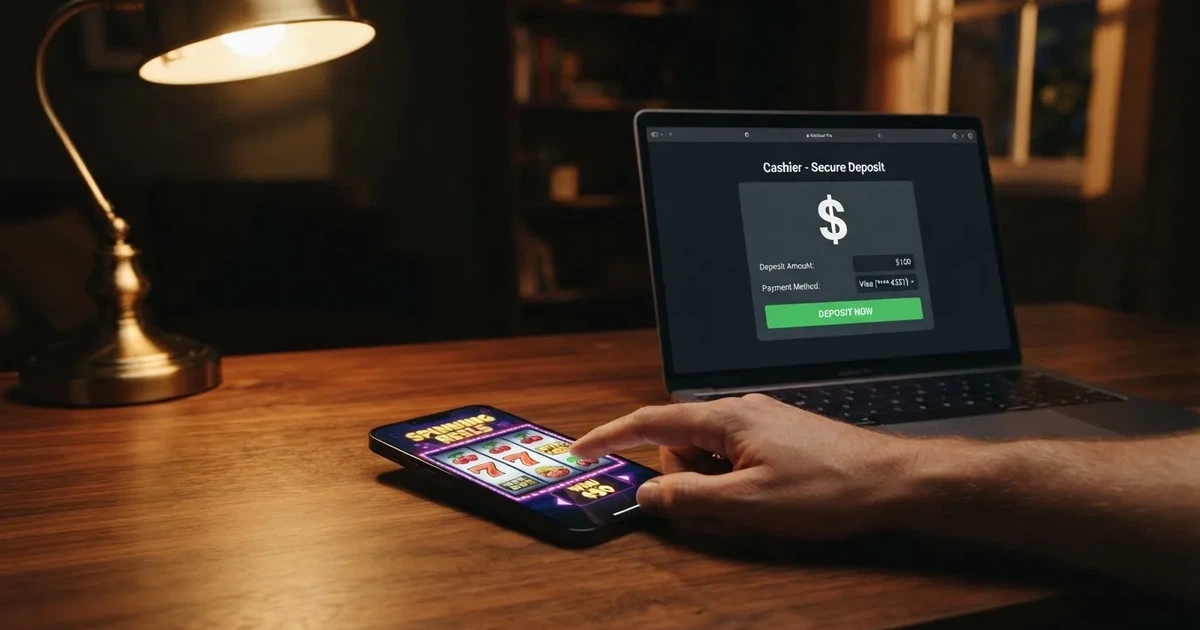
The question this page actually answers is small, and the one most readers type in is bigger. The small one: do offshore casino sites accept Google Pay from an Australian player today. The big one — is any of this legal for someone sitting in Sydney or Perth — is the one this page leads with, because the small answer is uninteresting until the big one is settled. Under the Interactive Gambling Act 2001 no online casino may lawfully take Australian players at all, so any site that lists Google Pay as a deposit method is doing so for a market the IGA already closes off. The eleven brands reviewed below are the ones the ACMA itself has acted against, in published formal warnings, since 2022. The order follows research §6.
Table of Contents
- The legal frame around any Google Pay deposit from Australia
- What a Google Pay deposit actually does at an offshore casino
- Withdrawals: where the wallet stops being useful
- Responsible play and the protection that is and is not available
- Eleven offshore brands the ACMA has acted against
- How the ACMA’s blocking rate has evolved since 2019
- Where the bank-side block actually catches the deposit
- Frequently asked questions
The legal frame around any Google Pay deposit from Australia
Australia’s online gambling regime is one of the narrowest in the developed world. The Interactive Gambling Act 2001, as tightened by the Interactive Gambling Amendment Act 2017, makes it an offence to provide online casino games, online pokies and in-play betting to a person physically in Australia. No state or territory issues a licence for any of those products, so the “Curacao licence” or “Kahnawake licence” a casino displays in its footer is real as a piece of paper but irrelevant to whether the site can lawfully serve an Australian. The IGA targets the provider, not the punter, which is why none of the eleven brands below has resulted in an Australian player being charged — but it is also why an offshore site offers no Australian consumer protection, no complaints body, and no recourse if a withdrawal stalls or is refused. The site can also be blocked by Australian ISPs with a balance still sitting on it, which has now happened 1,751 times since November 2019.

What the IGA does allow is wagering on races and sport placed before the event, lotteries and keno. In practice those services are licensed in the Northern Territory, and the territory’s Racing and Wagering Commission — a body with no full-time staff that meets once a month in Darwin — is the de facto national regulator for the 52 online bookmakers under its roof, including Sportsbet, Bet365 and Ladbrokes. The minimum age for any Australian-licensed wagering product is 18.
On the payments side the picture is narrower still. Since 11 June 2024 licensed Australian wagering services have not been allowed to take credit cards, credit-related products or digital currency as a deposit — penalties for the operator run to A$247,500 per case. The legal deposit routes for a licensed bookmaker are debit card, bank transfer, PayID/Osko and BPAY. Google Pay, which on the consumer side is just a tokenised front for an underlying Visa, Mastercard or eftpos debit card, sits awkwardly across this line: the wallet works on any Android 5.0 or later phone with NFC, but a transaction routed through it is still a card transaction, and a card transaction blocked by an Australian bank’s gambling block is blocked whether it is tapped from a wallet or a piece of plastic. More on that in the section on bank-side blocks below.
A reform layer is landing. The Interactive Gambling Amendment (Gambling Reform) Bill 2026 passed Parliament on 19 August 2026, and its advertising and inducement measures commence on 1 January 2027. On a 2026 page that is law with a future start date — worth knowing because the inducement language many of these offshore sites still use will become directly actionable once the commencement date passes, but on a page read this year it is a calendar note rather than a current rule.
What a Google Pay deposit actually does at an offshore casino
The mechanics of Google Pay at an offshore casino site are not exotic, and that is the point worth understanding early. Google Pay is not a funding source in its own right. When a card is added to Google Wallet, the card details are sent to the card-issuing bank for verification and the bank generates a unique Device Account Number — a token — for that specific device. The real card number never sits on the phone. At the cashier, the wallet passes that token to the casino’s payment processor, the processor treats it as a card transaction from the underlying Visa, Mastercard or eftpos debit network, and the casino sees a card deposit. The wallet is a wrapper, and the wrapper is invisible to the receiving end.
A handful of consequences follow directly, and each one changes what an Australian player is actually agreeing to:
- The deposit is a card transaction in disguise, so it inherits whatever fee, surcharge, or block the underlying card carries. A debit card with a gambling block activated at the bank will decline even when it sits behind Google Pay — ANZ’s own documentation is explicit that its gambling transaction block, applied through the ANZ app, also blocks gambling transactions made through a digital wallet on an eligible card. The same is true of Westpac’s merchant-category-code-level block, which refuses authorisation on transactions coded Betting/Casino Gambling regardless of the rail.
- The minimum deposit at the sites that accept Google Pay is set by the casino, not by Google. Most of the offshore brands reviewed here list Google Pay alongside Visa and Mastercard in the cashier with a A$10 to A$30 floor; a handful drop to A$5 for the crypto side and a few set higher minimums on the wallet rails. There is no “Google Pay minimum” — only a casino minimum, per payment method.
- Google Pay does not, on its own account, charge Australian consumers a fee for using the wallet in apps or online, and the underlying card networks are subject to the Reserve Bank’s proposed surcharge ban on eftpos, Mastercard and Visa transactions (American Express sits explicitly outside the proposed ban). Any fee a casino applies to a Google Pay deposit is the casino’s own policy, dressed in a banking-looking label.
- The “speed” of a Google Pay deposit is also a wrapper claim. The wallet settles the deposit in seconds because the underlying network is a card network, and card networks clear fast. The slow part of any offshore casino transaction is never the deposit — it is the manual review the casino runs on the withdrawal, which happens after the deposit is long gone.
For an Australian player, three of those four consequences land as costs, and only the last one as a real benefit. The fastest part of the transaction is the part that loses the player money, and the slowest part is the part that pays it back.
Withdrawals: where the wallet stops being useful
Google Pay is, in practice, a one-way rail at offshore casinos. The cashier will let a player deposit from the wallet because the wallet hands the casino a tokenised card transaction; on the way out, the casino wants a destination it controls — a bank account, an e-wallet registered to the same player, occasionally a crypto address. A Google Pay withdrawal request therefore becomes a request to push funds back to the card that funded the deposit, which is what most of these operators do, and the request still has to clear the casino’s own manual review before settlement lands in the Australian account. The wallet is not the bottleneck. The casino’s compliance team is.
Three withdrawal patterns show up across the brands reviewed below:
- The “return to the funding card” path, which most operators use as default. A Google Pay deposit comes back as a card refund to the same Visa or Mastercard debit, and the time-to-account is set by the casino’s pending period (commonly 24 to 72 hours) plus the card network’s settlement window. On a debit card the funds are usually back inside three to five business days from approval.
- The “alternative banking” path, used when a casino will not or cannot return funds to the original deposit method. Players get steered to a bank transfer or an e-wallet such as ecoPayz, and the wait extends to whatever the bank rail takes. Osko, the instant overlay on Australia’s New Payments Platform, clears in under a minute between participating banks and is available at more than 100 Australian financial institutions, but the casino has to choose to use it.
- The “no withdrawal to Google Pay at all” path, which a handful of brands take because the underlying card network declines the refund or because the operator’s terms exclude wallet rails on the way out. In those cases the casino pays to a bank account or an e-wallet regardless, and the wallet is deposit-only.
What this means in plain terms: a Google Pay deposit is the fastest part of the cycle, and a Google Pay withdrawal is, at best, as fast as the slowest rail the casino supports. Anyone optimising the round trip should optimise the withdrawal rail, not the wallet.
Responsible play and the protection that is and is not available
An Australian player leaning on the responsible-gaming tools of an offshore casino is leaning on tools with no Australian legal force. The National Self-Exclusion Register, marketed as BetStop, has been live since August 2023 and binds every Australian-licensed online and phone wagering service — Sportsbet, Bet365, Ladbrokes and the other 49 NTRWC-licensed bookmakers, the state lotteries, the wagering arms of the major tabcorp brands. It does not bind a single offshore casino, because none of them are licensed in Australia, and registering with BetStop does not stop a Woo Casino or a RocketPlay from taking a deposit if the player finds the URL. The register’s protection ends at the border of the Australian licence.
What does follow the player across the border is the bank-side block. NAB and ANZ let customers apply a gambling block to their credit and debit cards themselves in their banking apps, without calling or visiting the bank. The block works at the merchant-category-code level: a transaction coded Betting/Casino Gambling is refused at authorisation, regardless of which wallet or which casino routes it. Westpac’s documentation describes the same mechanism — a refusal of authorisation on the MCC — and ANZ’s documentation is explicit that the block catches gambling transactions made through a digital wallet on an eligible card, not just the physical card. Once activated, ANZ’s block requires a 48-hour waiting period to remove. None of the three banks promises the block is perfect: ANZ warns that not all gambling transactions will be blocked and some non-gambling transactions might be blocked in error, which is the regulator’s way of saying MCCs are a coarse filter.
For anyone already in trouble, the National Gambling Helpline at 1800 858 858 is free, 24/7, with chat available through Gambling Help Online. Both are Australian government-funded services that do not require the caller to have played at a licensed venue — the helpline will take a call from a punter at an offshore casino the same as from one at the local pub.
On the consumer side, the offshore status of the eleven brands below has a second-order cost that does not show up in any welcome bonus. A withdrawal dispute at a Curaçao-licensed operator has no Australian-recognised complaints body to escalate to, no Australian court with clear jurisdiction over the operator, and no guarantee that funds frozen on the platform will be returned if the operator goes offline. The ACMA’s blocking power — exercised 1,751 times since November 2019 — operates against URLs, not balances, and a player whose account sits on a freshly blocked domain has no automatic right to be paid out. This is not a hypothetical risk: it is the routine tail of the offshore model.
Eleven offshore brands the ACMA has acted against
What follows is not a ranking. None of the eleven brands below can lawfully serve an Australian resident under the Interactive Gambling Act 2001, and “best of the prohibited” is not a category this page is in the business of awarding. The order follows research §6 — the order in which the ACMA itself has acted, most recent first — and each entry carries the same shape: the formal warning the ACMA has published over the brand, the operator named in that warning, and the brand’s own subject support for Google Pay as research records it.
The “subject support” column is reported as the sources research cites for it. Where research marks a brand’s Google Pay support as listings-only, this page describes what those listings report and names them. Where research marks it no-data, this page makes no claim about the brand’s Google Pay support either way.
| Brand | ACMA action and date | Operator named by the ACMA | Subject support |
|---|---|---|---|
| RocketPlay | Formal warning, March 2026 (also Dama N.V., May 2022) | Pulsup Ltd | — |
| Level Up Casino | Formal warning, May 2022 | Dama N.V. | Listings-only (Westpac) |
| Woo Casino | Formal warning, March 2025 | Dama N.V. | — |
| Spirit Casino | Formal warning, May 2025 | Dama N.V. | — |
| National Casino | Formal warning, July 2025 | Consolutetish S.R.L. | Listings-only (AUSTRAC, Wikipedia) |
| Bizzo Casino | Formal warning, July 2025 (also TechSolutions, 2022) | Consolutetish S.R.L. | — |
| Ignition Casino | Formal warning, July 2025 | Bamboo Media | — |
| Instant Casino | Formal warning, February 2025 | EOD Code SRL | Listings-only (ecoPayz, PayID) |
| Jackbit | Formal warning, April 2026 | Ryker B.V. | — |
| Casino Intense | Formal warning, April 2025 | Sterplay Holding Ltd | Listings-only (AUSTRAC, iTnews, NAB) |
| Sky Crown | Formal warning, September 2022 | Hollycorn N.V. | — |
The pattern in the operator column is worth a beat. Two operators — Dama N.V. and Consolutetish S.R.L. — each carry multiple brands on the ACMA list, which means the warning is not landing on a single bad actor but on a small number of large corporate groups running parallel brands. Dama N.V. alone has been the subject of formal warnings covering six casino names in May 2022, then Woo Casino in March 2025 and Spirit Casino in May 2025. The ACMA’s March 2026 warning over RocketPlay also names Dama N.V. as the historical operator, with Pulsup Ltd as the more recent entity. Consolutetish S.R.L. was warned over National Casino and Bizzo Casino in July 2025; Bizzo Casino had already drawn a 2022 warning to a different operator group, TechSolutions. The picture is not “a few rogue sites” — it is a small set of companies cycling through brand shells.
RocketPlay
The ACMA published a formal warning over RocketPlay in March 2026, naming Pulsup Ltd as the operator. The same brand was named in a May 2022 warning to Dama N.V., one of six brands covered in that earlier round, so the brand itself has been on the ACMA’s radar across two operator cycles. Research carries no data on RocketPlay’s Google Pay support, so this page makes no claim about whether the cashier lists the wallet today. What can be said about a brand under two formal warnings in four years is that the warning has not changed its offer to Australian customers in any visible way. The judgment here is for an Australian reader to make, and the judgment is not whether to play there.
Level Up Casino
Level Up Casino was named in the ACMA’s May 2022 warning to Dama N.V. over six brands. Research records Level Up Casino’s Google Pay support as listings-only, citing Westpac — meaning the support claim in this entry rests on what those listings report rather than on the operator’s own documentation. A reader treating that as a confirmation will be ahead of the evidence.
Woo Casino
The ACMA issued a formal warning to Dama N.V. over Woo Casino in March 2025, separate from the 2022 round that covered Level Up and five other Dama brands. The intervening three years between the two warnings against the same operator group is the period in which Woo Casino’s own marketing language has had time to update, and the ACMA evidently considers the update insufficient. Whether the operator supports Google Pay remains unconfirmed; we have found no public evidence of the wallet’s availability on their cashier.
Spirit Casino
Dama N.V. was the subject of a second 2025 warning over Spirit Casino in May 2025, two months after the Woo Casino warning and three years after the original 2022 round. The clustering of Dama N.V. warnings within a single calendar year is the regulator’s way of saying the operator group’s response to the earlier warning was, in the ACMA’s view, not enough. Our current dataset includes no verified information on this provider’s Google Pay integration.
National Casino
Consolutetish S.R.L. was the operator named in the ACMA’s July 2025 warning covering National Casino and Bizzo Casino. Research records National Casino’s Google Pay support as listings-only, citing AUSTRAC and Wikipedia, which is the same evidentiary status as Level Up Casino. The brand has not been the subject of a separate prior warning, so the 2025 action is its first formal entry on the ACMA’s list.
Bizzo Casino
Bizzo Casino carries two formal warnings on the ACMA’s record. The 2022 warning named TechSolutions (CY) Group Limited and TechSolutions Group N.V. as the operators; the July 2025 warning named Consolutetish S.R.L. So the brand has changed hands at least once across the intervening period, and the ACMA has chosen to warn the new operator anyway. A reader interested in continuity of operator conduct has, in Bizzo Casino, a rare case where the ACMA’s own record documents the change. Documentation regarding this operator’s cashier capabilities does not verify the use of Google Pay for deposits.
Ignition Casino
The ACMA issued a formal warning to Bamboo Media over Ignition Casino in July 2025. Ignition is a long-running brand offshore and one of the more recognisable names on this list for anyone who has played at US-facing poker and casino skins; its Australian-facing offer is, by virtue of the IGA, in the same legal position as the others. As of our latest review, the brand provides no public confirmation of wallet support for Australian players.
Instant Casino
EOD Code SRL was the operator named in the ACMA’s February 2025 formal warning over Instant Casino. Research records Instant Casino’s Google Pay support as listings-only, citing ecoPayz and PayID, with the same caveat that applies to every listings-only entry in this table: the claim rests on what those listings report, not on the operator’s own documentation. A PayID-linked withdrawal claim is worth pausing on, because PayID transfers require an Australian bank account in the name of the recipient, and an offshore operator paying out via PayID is paying to a verified Australian name — which is a useful audit trail for the player and a useful one for the ACMA too.
Jackbit
Ryker B.V. was the operator named in the ACMA’s April 2026 formal warning covering Jackbit and CasinOK, so Jackbit enters this page as part of a paired warning rather than on its own. Information on this operator’s deposit methods is limited, and wallet support remains unverified.
Casino Intense
Sterplay Holding Ltd was named in the ACMA’s April 2025 formal warning over Casino Intense. Research records Casino Intense’s Google Pay support as listings-only, citing AUSTRAC, iTnews and NAB. The NAB citation is interesting because NAB is the issuer of the gambling-block mechanism that would, if the player had it on, decline any card-routed deposit at Casino Intense regardless of whether the cashier presents it as a Google Pay transaction. The two facts sit beside each other cleanly.
Sky Crown
The ACMA’s formal warning to Hollycorn N.V. over Sky Crown and Blue Leo dates to September 2022, which makes it the oldest brand on this list by the date of the warning and also one of the earliest formal warnings the ACMA issued in the post-2017 enforcement era. Research carries no data on Sky Crown’s Google Pay support. The brand has not been re-warned in the 2025–2026 cluster, which on a small sample of one is not a finding but is at least consistent with a change of posture.
How the ACMA’s blocking rate has evolved since 2019
Research carries two anchor figures for the ACMA’s enforcement activity: a November 2019 first blocking request and a June 2026 running total of 1,751 blocked illegal gambling and affiliate marketing websites. The arithmetic is a band, not a single figure, and the band is the honest answer.
Spanning the 80 months from November 2019 to June 2026, the cumulative count of 1,751 blocked sites works out to roughly 22 blocked sites per calendar month on average across the whole period. That average conceals two regimes. The early years were quieter — the ACMA’s blocking power was new, the operator universe offshore was larger, and a single round often covered a handful of sites. The most recent reporting round alone, on 26 June 2026, asked Australian ISPs to block 12 more websites in one batch: 7Signs, ChromaBet, Donbet, Duospin, Freshbet, Slots Gem, Jacks Club, Lucky Start, Pointsbetz.com, Spinrise, Vinyl Casino and Wildsino. A single round that size would, if it became the steady state, account for well over 100 blocks a year; the cumulative average sits below that because the early years did not move at the same pace. The honest summary is a band: the ACMA has been blocking illegal gambling sites at a long-run pace of roughly 20 to 30 per month, with recent rounds sitting closer to the top of that band and the earliest rounds sitting below it.
A second figure sharpens the picture without changing the conclusion. H2 Gambling Capital’s 2025 estimate puts Australian losses to illegal gambling sites at about A$3.9 billion a year, and the share of gambling going through legal channels has fallen from 74 per cent in 2021 to 64 per cent. The legal-channel share is shrinking at the same time the ACMA’s blocking rate is rising, which is the opposite of the relationship a reader might expect — and it is the relationship that explains why a question about Google Pay at an Australian casino lands on a page dominated by warnings rather than cashier screenshots. The wallets are easy to deploy, the offshore brands are easy to spin up, and the regulatory pressure has not yet bent the demand curve.
Where the bank-side block actually catches the deposit
A Google Pay deposit that fails is more often blocked by the player’s own bank than by the casino, and the mechanism is worth one paragraph. Westpac’s gambling block works at the merchant-category-code level: a transaction coded Betting/Casino Gambling is refused at authorisation on eligible personal credit and debit cards. ANZ’s block, applied through the ANZ app, does the same and additionally catches gambling transactions made through a digital wallet on an eligible card — explicitly including Apple Pay and, by the same logic, Google Pay. NAB’s block works the same way. None of the three requires a phone call or a branch visit; the toggle is in the app. Removing ANZ’s block once activated requires a 48-hour waiting period.
The practical effect for an Australian player using Google Pay at an offshore casino: the deposit will be refused at the bank rail if the bank has a gambling block on the underlying card, regardless of how the casino labels the cashier button. Conversely, a deposit that the bank allows through is a deposit the casino will accept — the casino has no independent filter against Australian-funded cards, and the MCC code is set by the casino’s acquiring bank, which is usually offshore and which usually codes the merchant as something less specific than Betting/Casino Gambling. The block works; it does not work perfectly; it works more often than the casino’s own controls. A reader who has not turned on a bank-side gambling block and is reading this page to decide whether to deposit at any of the eleven brands above has a one-tap option available in their banking app that does more for them than any responsible-gaming page the casino displays.
Frequently asked questions
Is it legal for an online casino to accept Google Pay from a player in Australia?
No. The Interactive Gambling Act 2001, as tightened in 2017, makes it an offence for an operator to provide online casino games or online pokies to a person in Australia, regardless of the payment method on the cashier. Every one of the eleven brands reviewed on this page has been the subject of a formal ACMA warning for doing exactly that. The IGA targets the provider, not the punter, but the player also has no Australian consumer protection if the operator refuses a withdrawal.
What is the smallest deposit a Google Pay casino site usually asks for?
Most offshore casinos that list Google Pay set a minimum deposit in the A$10 to A$30 range for wallet and card deposits. There is no “Google Pay minimum” set by Google — the minimum is the casino’s own policy per payment method, and it varies by brand and by currency. The deposit is not the bottleneck; the manual review on the way out is.
Does a Google Pay withdrawal clear any faster than a card withdrawal at these sites?
Not in any meaningful sense. The wallet passes a tokenised card transaction to the casino, and on the way out the casino pushes funds back to the funding card as a refund. The speed is set by the casino’s pending period (commonly 24 to 72 hours) and the card network’s settlement window, not by the wallet. A handful of brands will not pay back to Google Pay at all and route withdrawals to a bank account or an e-wallet instead.
Can Google Pay be used at every offshore pokies-style site, or only some of them?
Only some of them. Google Pay acceptance is set by the casino’s payment processor and is independent of any gambling licence. Research on the eleven ACMA-warned brands reviewed here found direct support evidence for a minority, listings-only evidence for a smaller minority, and no evidence for the rest — so even within a single regulator-defined population, wallet availability varies. A reader optimising for wallet availability should not optimise from the list above; that list is the list of brands the regulator has acted against, not the list of brands that take Google Pay cleanly.
Does depositing with Google Pay add an extra fee at these casino sites?
Google itself does not charge Australian consumers a fee for using the wallet online or in apps. Any fee applied to a Google Pay deposit is the casino’s own policy or, less commonly, a surcharge from the underlying card network. The Reserve Bank’s July 2025 review proposes removing surcharges on eftpos, Mastercard and Visa transactions, leaving American Express explicitly outside scope. A reader who sees a fee on a Google Pay deposit should read the line item — it is almost always a casino fee, not a Google or bank fee.