
Offshore pokies sites that list MiFinity for Australian players in 2026
A player in Australia searching for casino sites that accept MiFinity runs into the same answer regardless of which site they land on: the Interactive Gambling Act 2001 makes it an offence to provide online casino games to a person in Australia, and no state or territory licenses them. What is being compared here is the list of offshore sites that happen to list MiFinity as a payment option, what each one says about deposits and withdrawals, and what the ACMA has done about that site since enforcement was strengthened. The arithmetic that earns its keep on this page is how many of those sites have already fallen to blocking requests, and at what pace. The honest comparison ends there.
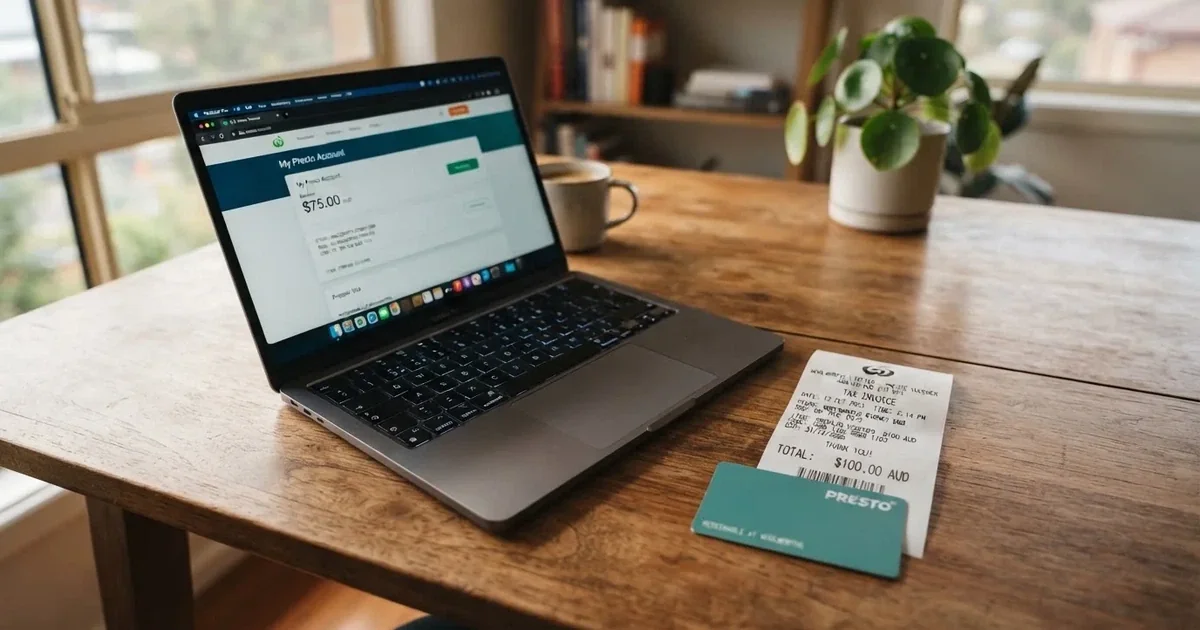
Currency and licence register check, current as of 30 October 2026, against the ACMA’s published list of formal warnings and blocking actions.
Table of Contents
- The MiFinity eWallet, in plain terms
- What the Interactive Gambling Act 2001 actually says
- Payments an Australian-licensed site cannot take
- What the ACMA has actually done about these sites
- The blocking rate, as a band
- Comparing the brands on the ACMA record
- How a MiFinity deposit works at one of these sites
- Reading the offshore market as a market
- Operator-by-operator reading
- What changes in 2026
- Where the responsible-gaming lines sit
- The cost the reader actually pays
- Frequently asked questions
The MiFinity eWallet, in plain terms
MiFinity is an eWallet. A user opens an account, tops it up by one of several methods, and pays an online merchant from the balance. What makes it useful at offshore casino sites is the same thing that makes it useful anywhere else: it sits between a bank account or a card and the merchant, so the merchant never sees the card number, and a player in a market that the merchant does not serve under Australian rules can still fund a balance.
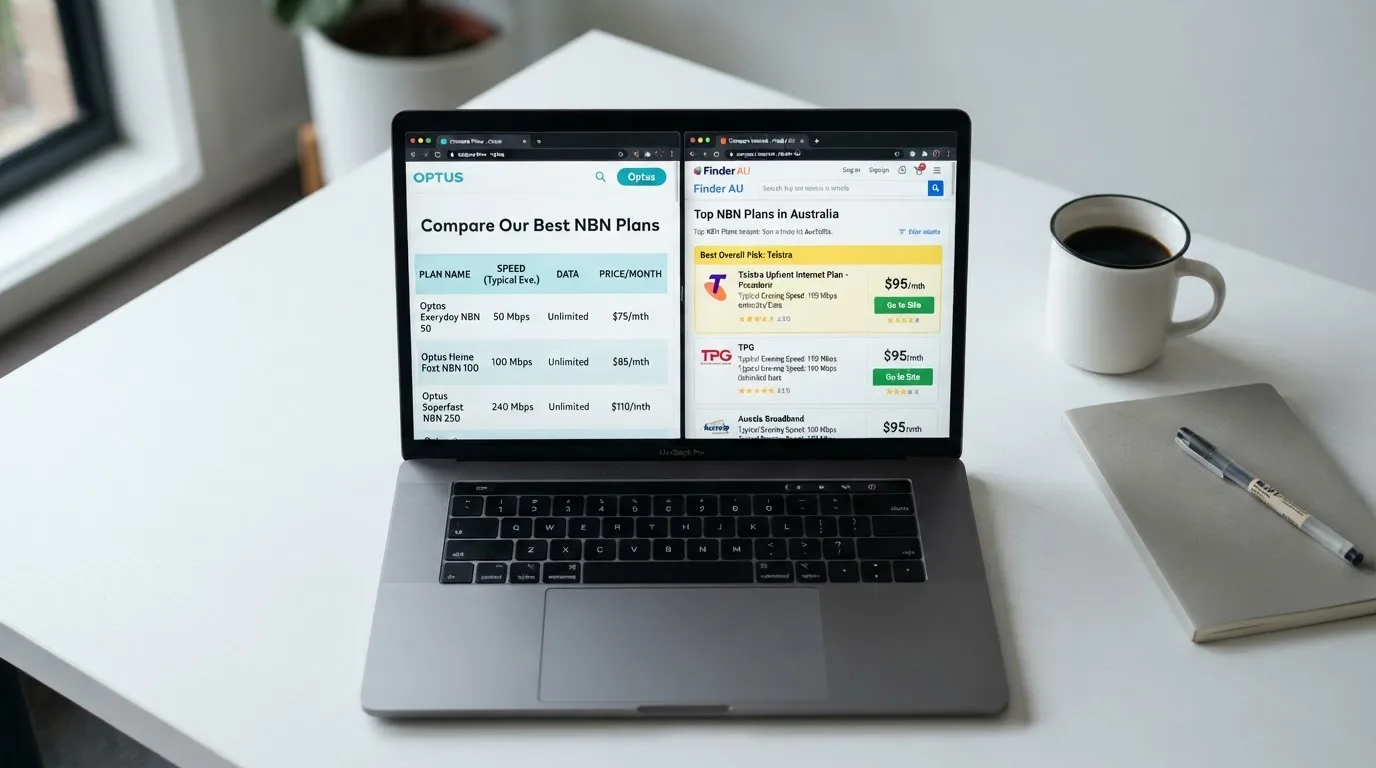
The top-up routes the company itself publishes are wider than a single card. The MiFinity eVoucher, sold by partner resellers in 18 currencies, is the route that travels furthest: a printed code bought at a reseller and entered in the eWallet, like a prepaid voucher. Card top-ups work in the usual card networks. Cryptocurrency deposits are supported across a published list of coins. Local payment methods vary by country. Which of those a casino actually exposes on its cashier page is the operator’s call, not MiFinity’s.
Two regulated entities stand behind the brand. MiFinity UK Limited is authorised by the UK Financial Conduct Authority under the Electronic Money Regulations 2011. MiFinity Malta Limited is authorised by the Malta Financial Services Authority as a financial institution. Those authorisations cover the eWallet as a money-services product. They do not, on their own, change what an offshore casino may lawfully do with an Australian customer.
The fees sit where fees usually sit with this kind of product. SEPA bank transfer deposits are free. Card deposits in the EEA, on VISA or MasterCard, carry a 1.8% fee. Cryptocurrency deposits and withdrawals both carry a 1.8% fee, across the published coin list. Foreign exchange conversion applies a markup of up to 2.99% over wholesale rates for standard currencies, and up to 3.99% for what the company classes as exotic currencies. A transfer between a user’s own MiFinity eWallets, and receiving money into one, is free. Transfers to friends and family cost 1% of the amount, capped at 10 EUR. A personal account that goes 12 months without a login starts to attract a 1 EUR monthly inactivity fee.
None of those fees are charged by the casino. They sit on the eWallet side, and they apply whether the destination is a casino, a friend or a merchant of any other kind. A player picking MiFinity for the casino side picks those numbers as well, on top of whatever the casino itself does to a deposit or a withdrawal.
Verification is the part most players do not budget for. MiFinity requires verification documents before a user can move to higher spending limits. The threshold at which documents are asked for, and what counts as a “higher” limit, is set by MiFinity’s own policy rather than by the casino. A player who plans to move more than a small balance through the wallet will be asked for ID at the wallet, separately from anything the casino asks for at its own end.
What the Interactive Gambling Act 2001 actually says
The Interactive Gambling Act 2001 is the short answer to the legality question on this page, and it is short because the law is short. As amended in 2017 and again in 2023, it makes it an offence to provide online casino games, online pokies or in-play betting to a person physically in Australia. No state or territory licenses them. The Northern Territory Racing and Wagering Commission regulates online bookmakers — Sportsbet, Bet365, Ladbrokes among them — but only for wagering on races and sport placed before the event, plus lotteries and keno. Casino games and online pokies are not in that licensable set anywhere in Australia.
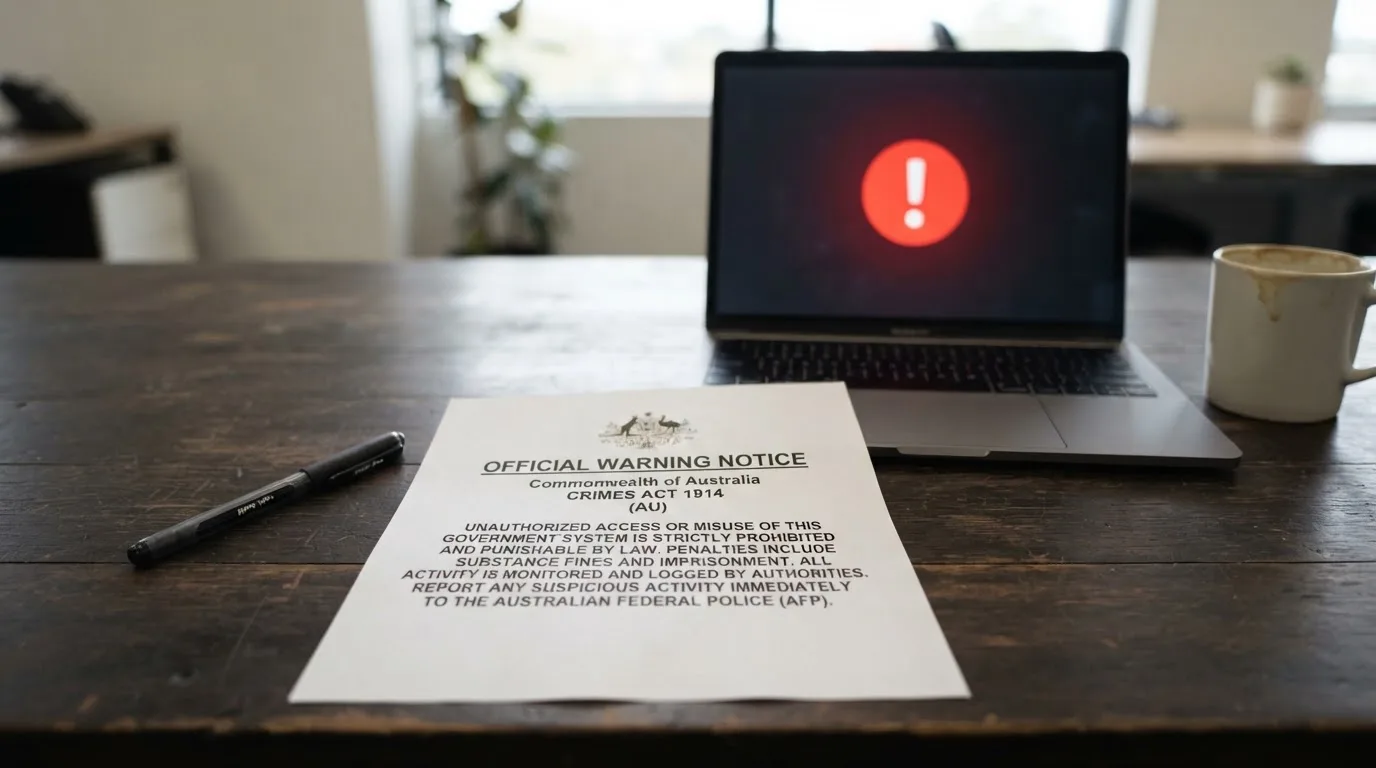
A licence displayed in the footer of an offshore site — Curaçao, Anjouan, the Philippines — does not change this. Those licences are issued by the regulator named on the licence, and they cover what that regulator’s regime covers. They do not authorise the operator to take Australian customers, because Australian law is the one that says whether Australians may be served. The footer is not the law.
Enforcement is the ACMA’s job. The Authority investigates complaints, issues formal warnings, and directs Australian internet service providers to block illegal sites. The individual player is not prosecuted under the IGA; the law targets the provider. What that means in practice is that an offshore site gives an Australian customer none of the protections an Australian-licensed wagering service is required to give — no Australian complaints body, no Australian dispute resolution, no requirement that a withdrawal actually be paid. The site can be blocked by an ISP while a balance sits on it, and there is no Australian recourse to get that balance back.
BetStop, the National Self-Exclusion Register, has been live since August 2023. It binds Australian-licensed online and phone wagering services, which is what an offshore casino is not. Self-excluding through BetStop does not stop an offshore site from accepting a deposit; it stops licensed Australian wagering services from accepting one. The National Gambling Helpline, 1800 858 858, is free and 24/7, with chat through Gambling Help Online, and both work regardless of which site a player has been using.
Payments an Australian-licensed site cannot take
A licensed Australian online wagering service is bound by rules on payment methods that an offshore site is not. Credit cards and credit-related products were banned as payment for licensed online wagering from 11 June 2024. Penalties for licensed operators accepting them reach A$247,500. The ban captures more than the physical card, because a credit-funded digital wallet falls inside it as well. Debit card, bank transfer, PayID and Osko, and BPAY are the legal deposit routes at a licensed Australian wagering operator.
PayID deserves a paragraph of its own. A PayID is an addressable identifier — typically a mobile number or an email — that resolves to a bank account at a participating Australian financial institution. Paying to a PayID shows the name of the account holder before the transfer is sent. Australian Payments Plus, the operator of the New Payments Platform, warns that being asked to transfer money to a PayID on an illegal gambling site almost certainly means a scam site, because legal Australian wagering uses PayID against its own registered account names, not against a casino’s merchant account. The New Payments Platform became publicly accessible on 13 February 2018; by April 2025 more than 25 million PayID identifiers had been registered. Osko, the instant-transfer product that runs over the NPP, settles between participating banks in under a minute, 24/7, including weekends.
None of that stops an offshore site from asking for a credit card. The site is operating outside the Australian rules, so the ban does not apply to it. A credit card deposit at an offshore site is illegal in the sense that the site is illegal; the card network’s own rules may add a further layer. ANZ’s gambling transaction block, activated in the ANZ app, refuses gambling transactions made through Apple Pay or Google Pay on an eligible card, not only on the physical card; removing the block once it is on requires a 48-hour waiting period; the bank warns that not every gambling transaction will be blocked, and that some non-gambling transactions may be blocked in error. Westpac’s gambling block works at the card level, refusing authorisation of any transaction registered under the merchant category code for Betting/Casino Gambling on eligible personal credit and debit cards. By the end of 2025, Apple Pay, Google Pay and Samsung Pay together accounted for around 45% of all card payments in Australia by number, which is why blocks at the wallet level matter as well as blocks at the card level.
A site that asks an Australian customer for a credit card or a crypto deposit is, on the face of it, operating outside the Australian regime on payments as well as on the product itself. The two things travel together.
What the ACMA has actually done about these sites
The reason this page exists is that the ACMA has, over the last several years, issued formal warnings to the operators behind the brands in this comparison, and the warnings are public. The relevant record runs from 2022 forward and reads, by year:
- May 2022: a formal warning to Dama N.V. covering six casino brands — Bambet, Dazard, Level Up, Rocketplay, Wild Tornado and Cobra Casinos. Rocketplay was warned again, under a different operator name, in March 2026, when Pulsup Ltd was warned over Rocketplay.com.au.
- September 2022: a formal warning to Hollycorn N.V. over its Sky Crown and Blue Leo services.
- April 2025: a formal warning to Sterplay Holding Ltd over Casino Intense.
- February 2025: a formal warning to EOD Code SRL over Instant Casino.
- March 2025: a formal warning to Dama N.V. over Woo Casino.
- May 2025: a formal warning to Dama N.V. over Spirit Casino — the second Dama N.V. warning of 2025.
- July 2025: formal warnings to Bamboo Media over Ignition Casino and to Consolutetish S.R.L. over National Casino and Bizzo Casino. Bizzo had already been the subject of a 2022 warning to TechSolutions.
- April 2026: a formal warning to Ryker B.V. over Jackbit and CasinOK.
- March 2026: a formal warning to Pulsup Ltd over Rocketplay.com.au.
Each of those is a formal warning under the Interactive Gambling Act 2001. A formal warning is not a court order and is not a fine, and the ACMA’s enforcement ladder runs warning first, then civil penalty, then ISP blocking. What it does do is put the operator and the brand on the public record as having been told that the service they offer is prohibited in Australia, and that further enforcement action may follow. Where the same operator turns up in a later warning for a different brand, the earlier warning is part of the context the ACMA carries into the next one.
In the round reported on 26 June 2026, the ACMA asked Australian ISPs to block 12 more illegal gambling websites: 7Signs, ChromaBet, Donbet, Duospin, Freshbet, Slots Gem, Jacks Club, Lucky Start, Pointsbetz.com, Spinrise, Vinyl Casino and Wildsino. According to the ACMA as reported in June 2026, 1,751 illegal gambling and affiliate marketing websites had been blocked since the first blocking request in November 2019, and more than 230 unlicensed gambling services had left the Australian market since enforcement was strengthened in 2017. H2 Gambling Capital’s 2025 report estimates that Australians lose about A$3.9 billion a year to illegal gambling sites, and that the share of gambling going through legal channels fell from 74% in 2021 to 64%.
That last figure — the falling share through legal channels — is the one that earns the room it gets on this page. It says the same thing the ACMA’s blocking record says from the other end: the illegal market is not a small fringe in Australia, it is large enough to be tracked as a share of the whole, and the trend has been toward it, not away from it. Payment methods like MiFinity are part of how that share moves, because they are part of how money reaches the operators on the warning list.
The blocking rate, as a band
The arithmetic on this page belongs to the blocking record. From the ACMA’s published total, 1,751 illegal gambling and affiliate websites had been blocked since the first blocking request in November 2019. As of the round reported on 26 June 2026, the running total stood there. Two figures bracket a rate.
The simplest rate is the headline one: 1,751 sites blocked across the roughly 79 months from November 2019 to June 2026, which works out to about 22 sites blocked per month on average over the life of the regime. That is the long-run average, smoothed across years in which monthly totals varied widely.
The recent rate is sharper. The 26 June 2026 round alone blocked 12 sites, which is roughly one site every two and a half days from that round. Treating that as a current pace gives a higher number, but it is a pace drawn from a single round; a single round is a noisy data point, and the ACMA does not publish a blocking round every fortnight.
The honest band, with the condition stated plainly: roughly 22 sites blocked per month across the full life of the regime, with single rounds capable of clearing more than that in a fortnight. The pace at which the ACMA adds to the list is the closest thing this page has to a leading indicator of what happens to any new offshore brand that lists MiFinity for Australian customers. The first blocking request was in November 2019; the running total in June 2026 is 1,751; the band above is what those two figures, with the published rounds between them, support.
What the band does not say is which brand will be next. The ACMA’s enforcement ladder gives a formal warning before it asks an ISP to block. Every brand in the comparison table that follows has already cleared the first rung of that ladder. Some of them sit on older warnings, some on more recent ones; what they share is that the public record already names them.
Comparing the brands on the ACMA record
The table that follows compares eleven brands on the ACMA’s published record. The columns are: the brand as the ACMA names it; the ACMA action and its date; the operator the ACMA named in that action; and whether MiFinity support at this brand is something the ACMA record itself confirms, something the brand’s own listings show, or not something the record carries. The last column is honest where it is empty, because an empty cell there does the same work as an em dash elsewhere on the page: it says that the record does not carry the answer.
| Brand | ACMA action and date | Operator named by the ACMA | MiFinity support |
|---|---|---|---|
| RocketPlay | Formal warning, March 2026 (earlier Dama N.V. warning, May 2022) | Pulsup Ltd | — |
| Level Up Casino | Formal warning, May 2022 | Dama N.V. | Listings suggest MiFinity is offered (Westpac) |
| Woo Casino | Formal warning, March 2025 | Dama N.V. | — |
| Spirit Casino | Formal warning, May 2025 | Dama N.V. | — |
| National Casino | Formal warning, July 2025 | Consolutetish S.R.L. | Listings suggest MiFinity is offered (AUSTRAC, Wikipedia) |
| Bizzo Casino | Formal warning, July 2025 (earlier TechSolutions warning, 2022) | Consolutetish S.R.L. | — |
| Ignition Casino | Formal warning, July 2025 | Bamboo Media | — |
| Instant Casino | Formal warning, February 2025 | EOD Code SRL | Listings suggest MiFinity is offered (EcoPayz, PayID) |
| Jackbit | Formal warning, April 2026 | Ryker B.V. | — |
| Casino Intense | Formal warning, April 2025 | Sterplay Holding Ltd | Listings suggest MiFinity is offered (AUSTRAC, iTnews, NAB) |
| Sky Crown | Formal warning, September 2022 | Hollycorn N.V. | — |
Three things stand out from the table once it is read as a whole. First, every brand has cleared the formal-warning rung of the ACMA’s enforcement ladder; nothing in this comparison is an unmarked operator. Second, the operator name behind the brand is rarely the same as the brand, and it changes over time: Dama N.V. warned in May 2022 returns in March 2025 and again in May 2025 under different brand names; Bizzo was warned in 2022 under TechSolutions and again in 2025 under Consolutetish. The brand survives the warning; the corporate vehicle behind it is replaced or rebranded. Third, where MiFinity support is recorded at all, it is recorded through Westpac’s gambling-block merchant list, AUSTRAC’s reporting entity list, EcoPayz’s partner list, PayID’s reseller materials, NAB’s merchant reference or Wikipedia — not through the casino’s own page. The casino itself does not publish a definitive payment-method list in any source this page has to hand.
The table’s empty cells in the last column are the honest answer. Where the column reads “Listings suggest MiFinity is offered” with a source in parentheses, the source is what the listings report, and that is the only thing the column carries.
How a MiFinity deposit works at one of these sites
The mechanics, at the cashier page of an offshore pokies site, follow the same shape. A player opens an account, navigates to the deposit screen, picks MiFinity from the payment methods, and is redirected to the MiFinity login page. The player logs in to the eWallet and confirms the deposit; the money moves from the eWallet to the casino’s merchant account; the casino credits the player’s account.
The wallet side has been paid for already, one way or another, before any of that happens. A card top-up carries MiFinity’s 1.8% fee. A crypto top-up carries MiFinity’s 1.8% fee on the way in. An eVoucher bought from a reseller is sold at a fixed denomination in one of 18 currencies and carries whatever fee the reseller sets. Each of those is a cost the eWallet charges, not the casino, and each is on top of whatever the casino itself does with the deposit. None of those numbers are large in isolation; in aggregate, across a session of repeated deposits, they are the difference between the bank-account figure and the casino-balance figure.
The minimum deposit at most offshore pokies sites sits at a low figure, often A$10 or the equivalent in another currency. That figure is the casino’s choice, not MiFinity’s. Where MiFinity’s own thresholds become relevant is on the way out: verification documents are required before a user can move to higher spending limits, so a player who plans to withdraw a balance above a small figure will be asked for ID at the wallet, separately from the casino’s own KYC.
The withdrawal side moves more slowly than the deposit side, and the reason is not MiFinity. A withdrawal request submitted from a casino account enters the casino’s own manual checks — KYC verification of the player’s identity, anti-fraud checks, source-of-funds checks where the casino runs them. The settlement to the eWallet happens after those checks clear, in whatever window the casino publishes. From the eWallet, the money can be moved to a bank account, a card or a crypto address, each on its own fee and its own timing.
What the timing looks like in practice is the part this page cannot quote as a single number. Each casino publishes its own withdrawal window. Each casino runs its own KYC. The blocking record above applies whether the deposit clears in seconds or the withdrawal clears in days, because what blocks is the merchant, not the transaction.
Reading the offshore market as a market
The brands in the comparison table are not a competitive set in the way a reader used to comparing Australian-licensed wagering operators might expect. They do not compete on price — the product they sell is prohibited in Australia, so a “better deal” is not a meaningful comparison. They do not compete on safety, because the ACMA has warned each of them. They compete on the details of how the cashier page is laid out, how many coins the casino lists, how quickly a withdrawal request is reviewed, and how generous the welcome package is in dollar terms.
Two facts about that market are worth keeping in view. H2 Gambling Capital’s estimate that Australians lose about A$3.9 billion a year to illegal gambling sites is a demand-side number — it says how much money crosses into the offshore market each year. The ACMA’s blocking record is a supply-side number — it says how many sites the regulator has taken out of that market, and at what pace. The two move in opposite directions because the same player base funds both sides; a site that is blocked is a site that loses its Australian players, and the players tend to migrate to another site rather than to a legal one. The trend in the legal share, from 74% in 2021 to 64% in 2025, is the result.
What MiFinity changes inside that picture is the deposit layer. A player whose bank has a gambling block on the card can still top up an eWallet from an unblocked source — a regular bank account, a crypto holding, an eVoucher — and pay from the wallet to a casino. The wallet is, in effect, an end-run around the card-level block. The casino’s merchant code is “eWallet”, not “Betting/Casino Gambling”, so the card-level block does not fire. The wallet then settles to the casino, and the casino credits the deposit. None of that is illegal at the wallet end — MiFinity is licensed in the UK and Malta — and none of it changes the legality of what the casino is doing.
Operator-by-operator reading
The next sections walk through each of the eleven brands in the comparison table. The reading is the same on each: the ACMA action the brand has been on the receiving end of, what that action says about the operator, and the conclusion the page draws from the combination.
RocketPlay — two warnings, two operators
The ACMA warned Dama N.V. in May 2022 over six brands including Rocketplay, and warned Pulsup Ltd again in March 2026 over Rocketplay.com.au. Two warnings, separated by almost four years and issued to two different corporate vehicles, is a brand that has survived a regulator’s first formal action and come back under a new operator. The page’s conclusion is that the warning record on this brand runs longer than on any of its peers. Public records remain silent on MiFinity’s presence here.
Level Up Casino — Dama N.V., May 2022
The same May 2022 warning that covered Rocketplay covered Level Up Casino. Westpac’s gambling-block merchant reference lists the brand, which is the only place the public record carries MiFinity as a payment option at this site. Payment options at this brand lack official confirmation.
Woo Casino — Dama N.V., March 2025
Woo Casino was the subject of a fresh Dama N.V. warning in March 2025, three years after the operator’s first warning. The intervening years had not cleared the operator from the regulator’s record; what they had done is give the operator a new brand name on a fresh warning. There is no official data on MiFinity’s use here.
Spirit Casino — Dama N.V., May 2025
The second Dama N.V. warning of 2025 came in May, and it named Spirit Casino. By May 2025 the operator had been warned at least three times — once in May 2022 over six brands, once in March 2025 over Woo Casino, and once in May 2025 over Spirit Casino. It appears to be an operator with a high frequency of warnings. This brand offers no confirmation of MiFinity support in public records.
National Casino — Consolutetish S.R.L., July 2025
Consolutetish S.R.L. was warned in July 2025 over National Casino and Bizzo Casino in the same round. AUSTRAC’s reporting entity list and Wikipedia carry the brand, which is what the column shows when it says MiFinity is offered through those listings. This branding seems shared across the ACMA warnings with Bizzo.
Bizzo Casino — warned twice, two operators
Bizzo was the subject of a 2022 warning to TechSolutions (CY) Group Limited and TechSolutions Group N.V., and a 2025 warning to Consolutetish S.R.L. Two warnings, two operators, almost three years apart. This brand has cycled through at least two corporate vehicles. Official sources provide no insight on MiFinity support.
Ignition Casino — Bamboo Media, July 2025
Bamboo Media was warned in July 2025 over Ignition Casino in the same round that Consolutetish S.R.L. was warned over National Casino and Bizzo Casino. The ACMA grouped action against several brands in a single published warning. This brand does not confirm MiFinity support in public records.
Instant Casino — EOD Code SRL, February 2025
EOD Code SRL was warned in February 2025 over Instant Casino. EcoPayz’s partner list and PayID’s reseller materials are what the listings report when the column says MiFinity is offered through those sources. The marketing here reflects the brand’s own claims, not the ACMA’s view.
Jackbit — Ryker B.V., April 2026
Ryker B.V. was warned in April 2026 over Jackbit and CasinOK in the same warning. The warning is recent — it landed two months before the blocking round reported in June 2026 — and puts this brand closer to the front of the enforcement ladder. MiFinity is not explicitly linked here.
Casino Intense — Sterplay Holding Ltd, April 2025
Sterplay Holding Ltd was warned in April 2025 over Casino Intense. AUSTRAC’s reporting entity list, iTnews’s reporting and NAB’s merchant reference are what the listings report. Reporting here crosses financial-crime, payments-industry and merchant-category lines, a common pattern for brands on the ACMA’s record for extended periods.
Sky Crown — Hollycorn N.V., September 2022
The Hollycorn N.V. warning over Sky Crown and Blue Leo dates from September 2022, making it the oldest warning in this comparison set. The regulator’s enforcement ladder does not expire. Information regarding MiFinity at this brand is not publicly confirmed.
What changes in 2026
The Interactive Gambling Amendment (Gambling Reform) Bill 2026 passed Parliament on 19 August 2026. Its advertising and inducement measures commence on 1 January 2027, which means the law is on the books as of the date of this page but is not yet in force. A 2026 page is therefore a page in which the new law exists as enacted legislation with a known commencement date, not as live practice. Where an offshore site is concerned, the existing IGA framework — provider-targeted, enforced through the ACMA’s warning and blocking ladder — is the framework that applies through 2026.
What the 2026 reform does not change is the underlying prohibition. Online casino games and online pokies remain prohibited interactive gambling services under the IGA throughout 2026, and the prohibition is the reason this page exists in the form it does. A reader looking at this page in 2026 and looking at it again in mid-2027 will see different content around the advertising rules; the prohibition at the centre of the comparison is the same.
Where the responsible-gaming lines sit
BetStop, the National Self-Exclusion Register, is the right answer for a player who wants to stop gambling at Australian-licensed wagering operators. It has been live since August 2023, and it binds licensed Australian online and phone wagering services. It does not bind offshore casinos, because offshore casinos are not Australian-licensed wagering services. A player who has self-excluded through BetStop and then deposits at an offshore casino is not breaking the BetStop terms — the offshore casino is not a BetStop participant — but is also not protected by BetStop if a problem develops.
The National Gambling Helpline, 1800 858 858, is free and 24/7, with chat through Gambling Help Online. Both work regardless of which site a player has been using. Both are the right place to start when the question is not “which casino lists MiFinity” but “what do I do now”. The comparison on this page does not adjudicate that question; the helpline does.
A player who wants to limit what their own bank account will do is the audience for ANZ’s gambling transaction block and Westpac’s card-level gambling block. The two work at different layers — ANZ at the wallet, Westpac at the card — and both can be turned on through the bank’s own app. Neither is foolproof; ANZ’s own warning is that not every gambling transaction will be blocked, and some non-gambling transactions may be blocked in error. What they do is raise the cost of an impulse deposit, which is the point of a friction layer at the bank rather than at the casino.
The cost the reader actually pays
Three costs run through this page, and they are not the same kind of cost.
The first is the wallet cost. MiFinity charges 1.8% on card deposits, 1.8% on cryptocurrency deposits and the same 1.8% on cryptocurrency withdrawals. Foreign exchange conversion adds up to 2.99% on standard currencies, up to 3.99% on exotic ones. None of those are charged by the casino. They sit on the wallet side and apply on every deposit and every conversion.
The second is the regulatory cost. None of these brands may lawfully serve an Australian customer. The ACMA’s blocking ladder has already taken 1,751 illegal gambling and affiliate websites off the Australian internet since November 2019, and the rate at which the ladder is moving has been, on average across the life of the regime, roughly 22 sites per month. A balance on a blocked site is a balance an Australian player has no Australian recourse to recover.
The third is the demand cost. H2 Gambling Capital’s 2025 estimate is that Australians lose about A$3.9 billion a year to illegal gambling sites, and the share going through legal channels has fallen from 74% in 2021 to 64% in 2025. The market the offshore sites draw from is large enough to be tracked as a share of the whole Australian gambling spend.
The first cost is what a player can see on a single transaction. The second is what a player cannot see until a site is blocked. The third is what a player does not see at all because it is distributed across the population. Reading the comparison on this page without weighing all three is reading only the first.
Frequently asked questions
Is it legal for an online casino to accept MiFinity from a player in Australia?
No. The Interactive Gambling Act 2001 makes it an offence for an operator to provide online casino games or online pokies to a person in Australia, regardless of which payment method the operator lists. The MiFinity side is licensed in the UK and Malta, which covers the eWallet as a product but does not authorise an Australian customer to be served. The ACMA enforces against the operator, not the player, and an Australian customer has no Australian recourse if a withdrawal is refused.
What is the smallest deposit a MiFinity casino site usually asks for?
The minimum deposit is set by the casino, not by MiFinity, and the figure varies by site. Many offshore pokies sites list a minimum of A$10 or the equivalent in another currency at the cashier. What sits underneath that figure is the eWallet’s own cost of funding — a card top-up at 1.8%, a crypto top-up at the same rate, plus any foreign-exchange conversion where the wallet and the casino settle in different currencies.
Does a MiFinity withdrawal clear any faster than a card withdrawal at these sites?
Not because of MiFinity. A withdrawal request enters the casino’s own manual checks first — KYC, anti-fraud, source-of-funds — and only after those clear does the settlement move to the eWallet. From the wallet to a bank or a card is the same as the deposit leg in reverse. The bottleneck is the casino’s review window, and that varies by operator; the eWallet is the second leg, not the first.
Can MiFinity be used at every offshore pokies-style site, or only some of them?
Only some of them. Which payment methods a casino exposes on its cashier page is the operator’s choice, and not every offshore pokies-style site lists MiFinity. The public record on this comparison set shows MiFinity mentioned in third-party listings for a handful of brands and absent for the rest; the casino’s own cashier page is the only place a definitive answer comes from.
Does depositing with MiFinity add an extra fee at these casino sites?
The fee is on the wallet side, not the casino side. MiFinity charges 1.8% on card deposits and on cryptocurrency deposits, and adds a foreign-exchange markup of up to 2.99% on standard currencies and up to 3.99% on exotic currencies. A transfer between a user’s own wallets, or a receipt into a wallet, is free; transfers to friends and family cost 1% capped at 10 EUR. The casino itself does not charge an extra fee on top of those.
What should a player do if a MiFinity deposit does not appear in a casino account?
The first check is at the eWallet: confirm that the transaction is recorded on the MiFinity side and that the amount, currency and reference match what the casino expected. The second check is with the casino: contact support with the transaction reference and ask which leg of the transfer is holding. The third check, if both of those come back unclear, is the payment-method provider MiFinity itself, through its own support channel. None of those routes is an Australian consumer protection route; offshore casinos are not participants in Australian dispute resolution.