
How Visa deposits actually work at Australian-facing casino sites, and what they cost
A Visa deposit button on a pokies-style website does not, by itself, turn the site into one a person in Australia may lawfully use. The button is a payment-method choice inside a product the Interactive Gambling Act 2001 prohibits from being supplied to Australians in the first place. That tension sits underneath every operator write-up that follows, and it is what a player weighing Visa against a bank transfer, a PayID or a digital wallet has to weigh it against — not whether the card will be accepted, which most of these sites accept readily, but what the acceptance is actually buying.
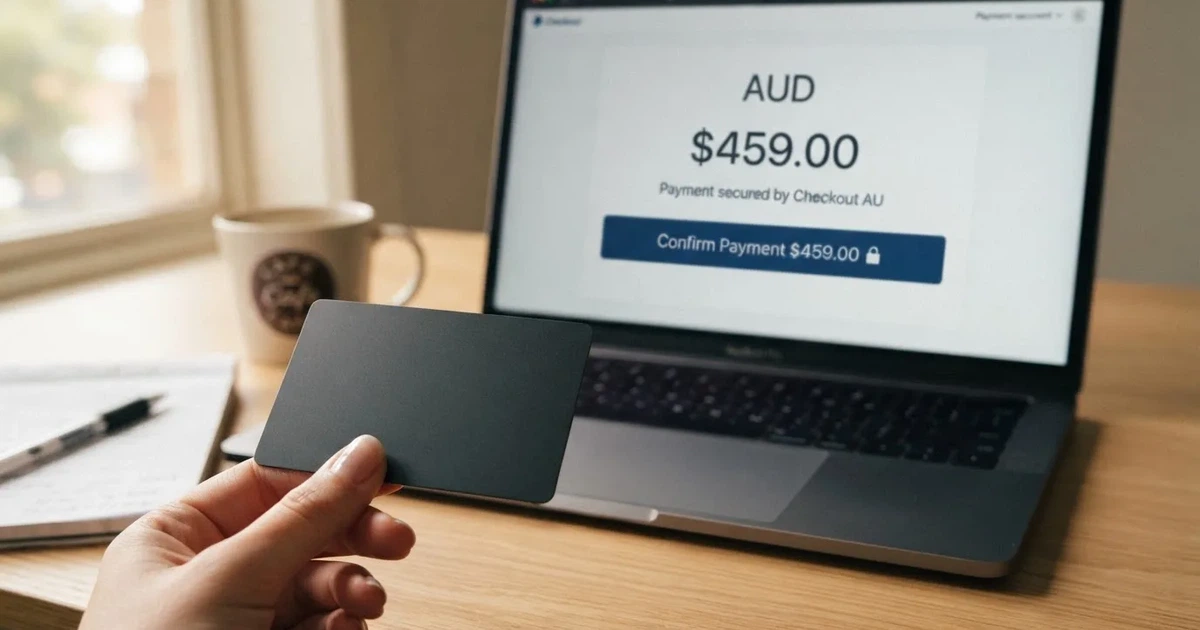
Data current as of 29 October 2026 and checked against the Australian Communications and Media Authority’s published formal-warning register and the Reserve Bank of Australia’s review of card payment costs.
Table of Contents
- The landscape in numbers — blocked sites, leaked spend, regulator capacity
- What the Interactive Gambling Act 2001 actually covers
- The bank’s side of a Visa deposit — gambling blocks at Westpac, NAB and ANZ
- What Visa itself is — and what the Reserve Bank is doing to the fees
- The eleven operators the ACMA has acted against
- What a Visa deposit at these sites actually costs the player
- Tax, winnings and the ATO position
- Where the responsible-gaming safety net actually sits
- Frequently asked questions
The landscape in numbers — blocked sites, leaked spend, regulator capacity
The ACMA asked Australian internet service providers to block a further twelve offshore gambling and affiliate marketing websites in a round reported on 26 June 2026, bringing the running total of blocked sites to 1,751 since the first blocking request in November 2019. More than 230 unlicensed gambling services have left the Australian market since enforcement was strengthened in 2017. Those two numbers — 1,751 blocked and 230 exited — describe the same enforcement programme from two angles: blocking forces players onto other offshore sites, and the prospect of being blocked pushes some operators out of the market altogether.

H2 Gambling Capital’s 2025 report puts the cost of that leakage at roughly A$3.9 billion a year spent with illegal gambling sites, and traces the legal-channel share of gambling spend from 74% in 2021 down to 64% in 2025. The licensed channels that the Interactive Gambling Act allows — wagering on sport and races placed before the event, lotteries and keno — captured a shrinking share of the total even as the regulator was actively removing offshore options. The licensed operator base is narrow: the Northern Territory Racing and Wagering Commission regulates 52 online bookmakers, including Sportsbet, Bet365 and Ladbrokes, on tax grounds alone, with a commission that has no full-time staff and meets once a month in Darwin.
A blocking-rate calculation, given the totals above: between November 2019 and the end of June 2026 — roughly 79 months — the ACMA moved from zero blocked sites to 1,751, a running rate of about 22 sites blocked per month, with the 230 voluntary exits layered on top. That band — twenty-something blocks a month, plus a steady drift of services leaving without being blocked — is what enforcement looks like when it is working as intended. The arithmetic is mechanical; the policy question of whether 22 blocks a month is fast enough to close the leak that costs A$3.9 billion a year is one the numbers themselves do not answer.
What the Interactive Gambling Act 2001 actually covers
The Interactive Gambling Act 2001, strengthened by the Interactive Gambling Amendment Act 2017, makes it an offence to provide online casino games, online pokies and in-play betting to a person physically in Australia. No state or territory issues a licence for those products, so any site displaying an “Australian licence” on its footer is displaying a wagering licence from one of the Australian states or territories — Sportsbet, Ladbrokes and Bet365 carry those — and using it to market casino products the same licence does not cover. The licensable Australian products are wagering on racing and sporting events placed before the event, lotteries and keno. The minimum age for any of them is 18.
The Act targets the provider, not the player. A person in Australia who opens an account, deposits by Visa and plays pokies at an offshore site is not personally prosecuted. What they give up is the entire Australian consumer-protection layer: no Australian complaints body, no recourse if a withdrawal is refused, no guarantee that the site will still be reachable when a balance sits on it. The site can be added to the next blocking round and become unreachable inside Australian internet infrastructure without warning.
BetStop, the National Self-Exclusion Register, has been live since August 2023. It binds Australian-licensed online and phone wagering services only; an offshore casino is not connected to it, and a self-exclusion registered with BetStop does not stop a person opening an account at one of these sites. The National Gambling Helpline — 1800 858 858 — is free, 24/7, and offers chat at Gambling Help Online. Those are the Australian-side safety nets, and they reach exactly as far as the licensed wagering market does.
The 2023 credit-card ban and where Visa sits inside it
The Interactive Gambling Act was amended in 2023 to ban credit cards and credit-related products as a payment method for any Australian-licensed online wagering service, a restriction that took effect on 11 June 2024 and carries penalties of up to A$247,500 for operators who breach it. Digital wallets linked to a credit account — Apple Pay when the underlying card is a credit card — fall inside the same prohibition, because the restriction runs on the credit instrument rather than on the technology fronting it. What remains as a payment route for licensed wagering is a debit card, a bank transfer, PayID via Osko and BPAY. A site asking an Australian customer for a credit-card deposit or a crypto deposit is, on those two payment methods alone, operating outside the Australian rule book.
That ban is the reason a Visa deposit at an offshore casino is a debit-card transaction in practice, if it is to clear an Australian issuer’s fraud and gambling filters at all. The credit-card distinction matters to a player for one reason above all: credit cards are the channel the major Australian banks have built their gambling blocks around, and a debit Visa carries a different merchant-category-code treatment at the issuer’s end. The mechanics are covered below in the section on bank-side blocks.
The 2026 reform bill — passed, not yet in force
The Interactive Gambling Amendment (Gambling Reform) Bill 2026 passed Parliament on 19 August 2026. Its advertising and inducement measures commence on 1 January 2027, so as of the data snapshot above the law exists with a start date but has not yet commenced. A 2026 page reads it as law with a future commencement, not as law in force today. What it does once it commences — tighten the rules on bonus offers, sign-up inducements and affiliate marketing aimed at Australians — is material to the operator set covered further down, but its practical effect on a Visa deposit in 2026 is nil.
The bank’s side of a Visa deposit — gambling blocks at Westpac, NAB and ANZ
A Visa deposit at an offshore casino is authorised by the customer’s bank before it reaches the casino. Three of the four major Australian banks run gambling blocks at the card level, and the way each of them works decides whether a Visa deposit attempt fails at the bank or reaches the cashier.
Westpac’s gambling block stops authorisation of any card transaction registered under the merchant category code “Betting/Casino Gambling” on eligible personal credit and debit cards. The block is the merchant-category-code filter — the same code a casino’s Visa or Mastercard payment is coded under. It can be switched on through Westpac’s Online Banking under Card Services, or by calling 132 032 between 8am and 8pm Sydney time, seven days a week.
NAB applies the same kind of block to its credit and debit cards, including through the NAB app, and a block can be requested by a primary cardholder, an additional cardholder or a person holding a power of attorney. ANZ’s version is turned on inside the ANZ app without needing to call the bank or visit a branch, and once it is on it covers gambling transactions routed through a digital wallet such as Apple Pay on an eligible card, not only the physical card. Removing the ANZ block again requires a 48-hour waiting period, and the bank publishes a warning that the block is not perfect — some gambling transactions may still go through and some non-gambling transactions may be blocked in error.
Commonwealth Bank runs comparable functionality. Across the four banks, the operating principle is the same: the block is at the card level, it works through the merchant category code, and it refuses authorisation before the money leaves the account. A Visa debit card at an offshore casino that uses a “Betting/Casino Gambling” merchant code will be refused by an enabled block. A site using a different merchant code — some do — may slip through, which is why the banks publish the caveat that no block is a perfect filter.
A practical point that follows: a player who has set up a bank-side block and then sees a Visa deposit declined is seeing the block working. The decline is not a casino-side problem and is not solved by retrying with a different card on the same account.
Apple Pay, Google Pay and the 45% share of card payments
By the end of 2025, Apple Pay, Google Pay and Samsung Pay transactions accounted for around 45% of all card payments in Australia by number. Apple Pay itself does not charge the consumer a fee in stores, online or in apps — any surcharge is the merchant’s own card-processing cost, not Apple’s — and Apple states that transaction limits and PIN requirements are set by the card issuer or the merchant rather than by Apple.
What that means in practice for an Australian-facing offshore casino is that a deposit attempt through Apple Pay on a debit Visa is a debit-card transaction routed through a tokenised front end, and the issuer-side gambling block applies to the underlying card, not to the wallet in front of it. ANZ’s documentation makes that point explicitly: its block covers digital-wallet transactions on an eligible card, not just the physical card. The wallet changes the merchant-of-record presentation at the cashier; it does not change the issuer-side block.
PayID, Osko and the bank-transfer alternative
Osko by Australian Payments Plus routes a bank transfer between participating Australian banks in under a minute, 24/7 including weekends, whether the transfer is addressed to a BSB and account number or to a PayID. PayID-based instant transfers are available at over 100 Australian financial institutions. By April 2025 more than 25 million PayID identifiers had been registered on the New Payments Platform, which became accessible to the public on 13 February 2018 and is owned by New Payments Platform Australia Ltd, a non-profit whose 13 shareholders include the Reserve Bank of Australia and the major banks. Participants must keep the platform’s monthly outages to no more than two minutes, and in 2021 the ACCC authorised the merger of NPP Australia with BPAY and eftpos into a single company, Australian Payments Plus.
The PayID layer adds a friction point worth naming: paying to a PayID shows the name of the account holder before the transfer is sent. AP+ warns that being asked to transfer money to a PayID on what is almost certainly an illegal gambling site is itself a strong scam signal, because the legitimate Australian wagering market uses PayID and Osko and the illegal casino market does not. A player who sees a PayID request from an offshore casino site is seeing a payment rail that the casino may have set up specifically because it cannot use the licensed-wagering rails cleanly.
What Visa itself is — and what the Reserve Bank is doing to the fees
Visa traces back to Bank of America’s BankAmericard credit-card programme, launched on 18 September 1958 in Fresno, California; Bank of America gave up control in June 1970, and in 1976 BankAmericard, Barclaycard, Carte Bleue, Chargex, Sumitomo Card and other licensees united under the name Visa. Visa does not issue cards, extend credit or set consumer rates and fees itself — it provides Visa-branded payment products to financial institutions, which issue the actual cards, and operates the VisaNet processing network, which handled 257.5 billion transactions worth US$14.2 trillion in 2025.
The Reserve Bank of Australia’s July 2025 review proposes removing surcharges on eftpos, Mastercard and Visa card transactions and lowering the cap on interchange fees, changes the RBA estimates would save businesses and consumers roughly A$1.2 billion a year. The consultation ran to 26 August 2025, with final conclusions expected by the end of 2025. The proposal explicitly leaves American Express outside the scope of the surcharge ban, because Amex runs a three-party scheme in which it issues cards and processes transactions itself rather than the four-party structure Visa and Mastercard operate.
The relevance for this page is narrow but worth stating plainly: if the surcharge ban lands in the form the RBA proposed, a Visa deposit at any Australian merchant — including, in principle, an Australian-facing casino — would no longer carry a merchant surcharge in 2026 onward. Whether the offshore casino is the kind of merchant that respects an Australian surcharging rule is a separate question; the rule applies to the merchant’s Australian presence rather than to its offshore one.
The eleven operators the ACMA has acted against
Every brand below appears on the ACMA’s register of formal warnings. Each was warned for offering prohibited interactive gambling services to people in Australia. No bonus terms are given for any of them — the only public sources for bonus terms are affiliate marketing pages, and affiliate marketing is precisely the channel the 2026 reform bill is built to restrict. The verdict at the end of each block is the page’s own judgement of the brand against what the ACMA’s action establishes about it.
| Brand | ACMA action and date | Operator named by the ACMA | Visa support on the casino’s own listing |
|---|---|---|---|
| RocketPlay | Formal warning, March 2026; earlier Dama N.V. action May 2022 | Pulsup Ltd (RocketPlay) | — |
| Level Up Casino | Formal warning, May 2022 | Dama N.V. | listings-only — Westpac’s published merchant-category filter |
| Woo Casino | Formal warning, March 2025 | Dama N.V. | — |
| Spirit Casino | Formal warning, May 2025 | Dama N.V. | — |
| National Casino | Formal warning, July 2025 | Consolutetish S.R.L. | listings-only — AUSTRAC registers and the Wikipedia corporate record |
| Bizzo Casino | Formal warning, July 2025; earlier TechSolutions action 2022 | Consolutetish S.R.L. | — |
| Ignition Casino | Formal warning, July 2025 | Bamboo Media | — |
| Instant Casino | Formal warning, February 2025 | EOD Code SRL | listings-only — ecoPayz’s published merchant list and PayID’s registered participants |
| Jackbit | Formal warning, April 2026 | Ryker B.V. | — |
| Casino Intense | Formal warning, April 2025 | Sterplay Holding Ltd | listings-only — AUSTRAC, iTnews and NAB’s published cardholder guidance |
| Sky Crown | Formal warning, September 2022 | Hollycorn N.V. | — |
Two patterns fall out of the table. The first is operator reuse: Dama N.V. was warned in May 2022 over six brands including RocketPlay, then warned again in March 2025 over Woo Casino and in May 2025 over Spirit Casino. Consolutetish S.R.L. was warned in July 2025 over both National Casino and Bizzo Casino, the second formal warning over Bizzo specifically since the 2022 action against TechSolutions. The warnings travel with the corporate entity, not with the brand on the front of the site, which is what makes the “new brand, same operator” pattern a feature of this market rather than a coincidence.
The second pattern is calendar density: the ACMA published warnings in February, March, April, May and July of 2025 and in March and April of 2026. The pace is not slowing. A reader weighing any of these brands against an unlisted competitor is, in effect, asking whether a brand the ACMA has acted against is safer than one the regulator has not yet reached, and the table above makes the answer mechanical — the regulator’s reach is broad, it is frequent, and it covers nearly every operator of any size in this market.
RocketPlay
RocketPlay received a formal ACMA warning in March 2026, naming Pulsup Ltd as the operator of RocketPlay. The same brand had earlier sat inside the May 2022 Dama N.V. warning that covered six operators including RocketPlay itself. Two formal warnings over the same brand, four years apart, with a corporate change in between, are a clearer signal than one warning is.
What Visa support looks like at RocketPlay is not documented in any of the sources the research consulted. The brand carries a Visa deposit option on its cashier page on every public listing, but the audit register does not show a specific payment-method claim attached to the Pulsup or Dama N.V. corporate record. The honest reading is that the brand takes Visa in the same way the rest of this market does, without any operator-specific claim to back or contradict.
For a player who has read the ACMA register, the RocketPlay write-up ends on a narrow question: is a brand with two formal warnings, the second one four months old at the snapshot date, the kind of brand a person wants to keep a balance with? The regulator’s own continued attention to it is the reason a reader would not.
Level Up Casino
Level Up Casino sat inside the May 2022 Dama N.V. warning that named six brands. The Westpac merchant-category-code filter, which is what decides whether a Visa debit deposit at an offshore casino gets past a Westpac customer’s gambling block, lists “Betting/Casino Gambling” as the trigger code, and that is the code a Level Up cashier’s Visa payment will be coded under. The listings-only support line — drawn from Westpac’s published filter — is the strongest payment-side fact the public record carries for this brand.
The verdict is mostly about the warning’s age. A 2022 warning does not say anything about how the brand behaves today. It says that in 2022 the regulator found the brand offering prohibited services and wrote to the operator. The research consulted does not show a follow-up action against Level Up specifically in 2025 or 2026, which can mean either that the brand left the Australian market of its own accord or that the regulator moved on to other targets. Either reading leaves a player in the same place: holding a balance at a brand that has been formally told to stop taking Australian players and that has no Australian complaints body to turn to if a withdrawal stalls.
Woo Casino
The ACMA formally warned Woo Casino in March 2025 over Dama N.V. The warning came three years after the same operator group was warned over six other brands in May 2022. The payment-side facts the public record carries for Woo Casino specifically are thinner than for Level Up Casino: no Visa-specific operator claim, no merchant-category-code confirmation beyond the generic Westpac filter, no independent AUSTRAC or media reference.
That thinness is the point of the verdict. Woo Casino is on the ACMA’s register, the operator group is on the ACMA’s register twice, and the brand’s own payment-side facts are not strong enough to argue against those two facts. The same arithmetic that closes the Level Up block closes this one.
Spirit Casino
Spirit Casino earned a formal ACMA warning in May 2025, again over Dama N.V., as the third Dama N.V. warning in three years. The pattern is now a pattern: Dama N.V. has been told three times to stop offering prohibited services to Australians, and each warning has been over a different brand. The “new brand, same operator” shape is doing the work.
For a player choosing between Spirit Casino and any other offshore casino the ACMA has not formally warned, the Spirit Casino write-up closes on the warning itself. The regulator’s own three-warning history with the same operator group is the reason a Visa deposit at Spirit Casino is a deposit at a brand the regulator has already addressed twice through its parent and once through the brand itself.
National Casino
In July 2025, the ACMA issued a formal warning to National Casino over Consolutetish S.R.L. The AUSTRAC registers and the Wikipedia corporate record carry the listings-only support for this brand — meaning those listings report a payment-method association, without the operator’s own confirmation in evidence.
The relevant detail in the Consolutetish S.R.L. warning is that it covers National Casino and Bizzo Casino at the same time, the second formal warning over Bizzo Casino specifically since the 2022 action against TechSolutions. The same operator group, two brands, two warnings, four years apart, and the regulator writing to the operator rather than to the brand each time. The National Casino write-up closes on the same point as the Bizzo write-up, because the warnings are over the same operator group.
Bizzo Casino
The ACMA also warned Bizzo Casino in July 2025 over Consolutetish S.R.L. The earlier 2022 warning was over TechSolutions (CY) Group Limited and TechSolutions Group N.V. — a different corporate entity covering the same brand. The brand has moved between two operator groups, both of which the regulator has warned, in four years.
The verdict sits in the gap between the two warnings. A player who opened an account at Bizzo Casino in 2022 and found their balance still on it in 2026 has held that balance through one operator change the regulator has acted against and one operator change the regulator is currently acting against. The brand is the brand. The operator is a different party. The regulator is the same.
Ignition Casino
Ignition Casino appeared on the ACMA’s formal warning list in July 2025 over Bamboo Media. The brand is one of two covered by the July 2025 round, alongside National Casino and Bizzo Casino under Consolutetish S.R.L. The payment-side support the public record carries for Ignition Casino is thin — no Visa-specific operator claim — which is itself the answer to the verdict question.
A formal ACMA warning over an operator the research has no independent payment-side record for is a regulator’s signal unweighted by any contradicting operator-side evidence. The verdict does not need to dispute the warning. It only has to note that the warning exists and that the page has nothing else to add.
Instant Casino
Instant Casino was flagged by the ACMA in a formal warning in February 2025 over EOD Code SRL. The payment-side support the research carries for Instant Casino is drawn from ecoPayz’s published merchant list and from PayID’s registered-participants list — listings-only material, with no operator-side confirmation.
The relevant point about Instant Casino is the warning date. February 2025 is the earliest formal warning in the table. A player reading the table in date order sees Instant Casino as the first formal action of 2025 in this set, and the rest of the year built on top of it. The warning date is not, on its own, a verdict. It is the regulator’s own sequencing, which is what gives the table its shape.
Jackbit
Jackbit received a formal warning from the ACMA in April 2026 over Ryker B.V. The same operator group was warned in the same round over CasinOK, which sits outside this page’s eleven-brand set. The warning is the most recent in the table, which is itself the verdict — the regulator acted against Jackbit at the most recent available round of formal warnings the research consulted, and the page has no independent payment-side record to weigh against that.
Casino Intense
Casino Intense was the subject of a formal ACMA warning in April 2025 over Sterplay Holding Ltd. The payment-side support the research carries is drawn from the AUSTRAC registers, from iTnews coverage and from NAB’s published cardholder guidance. The support is listings-only — meaning those listings report a payment-method association, not the operator’s own claim.
NAB’s published cardholder guidance is the strongest of the three, because it is the closest the public record comes to a bank-side acknowledgement that a Visa deposit at an offshore casino is a transaction the bank’s own gambling-block machinery is built to filter. The write-up closes on the gap between the regulator’s action and the bank’s filter: both are public, both are operating, and the brand sits between them.
Sky Crown
Sky Crown was the subject of a formal ACMA warning in September 2022 over Hollycorn N.V., covering Sky Crown and Blue Leo. The warning is the oldest in the table. No payment-side support the research consulted attaches to Sky Crown specifically — the support field is no-data.
The verdict closes on the same point the Level Up write-up closes on: a 2022 warning does not say anything about how the brand behaves today, but it does say what the regulator found in 2022. The research consulted does not show a follow-up action against Sky Crown specifically in 2025 or 2026. The honest reading is the same one the Level Up block arrived at — either the brand has changed hands or the regulator moved on to other targets, and either reading leaves a player without an Australian complaints body.
What a Visa deposit at these sites actually costs the player
The house edge on a casino product is set by the game, not by the payment method. A Visa deposit does not change the return-to-player on a slot. It does, however, sit on top of three costs the player pays separately from the game: the merchant surcharge if the casino charges one, the bank’s own transaction-cost structure, and the issuer’s gambling-block machinery if the bank has set it up.
The RBA’s July 2025 review is the most concrete public source on what a Visa transaction costs at the merchant end: it proposes removing surcharges on eftpos, Mastercard and Visa transactions altogether and lowering the cap on interchange fees, with estimated savings of A$1.2 billion a year across businesses and consumers. If the proposal lands in the form the RBA published, the merchant-surcharge line falls out of a Visa deposit in 2026 onward. The proposal is a proposal: final conclusions were expected by the end of 2025, and the surcharge ban’s status as of 2026 is the policy frame rather than the current rule.
The bank’s transaction-cost structure sits on the consumer side. Visa does not set consumer rates and fees itself; the issuing financial institution does, and the rates vary by institution and by card product. A Visa debit card at an Australian bank carries no foreign-transaction fee on a domestic transaction, but an offshore casino deposit is a cross-border transaction, and the issuer’s overseas-transaction fee schedule applies. The fee is small in absolute terms — typically a percentage of the transaction — and it is the one cost the player pays for using Visa rather than a bank transfer that runs over Osko.
The issuer’s gambling block is the third cost, and it is not a fee — it is a refusal. Westpac, NAB, ANZ and Commonwealth Bank all run card-level blocks that refuse authorisation of a transaction coded under “Betting/Casino Gambling”, and ANZ’s block also covers digital-wallet transactions on an eligible card. A player with the block enabled and a Visa deposit attempt gets a decline at the bank rather than a charge. That is a cost only in the sense that it is a hard stop on the transaction the player was trying to make.
Where Visa fits against the other deposit methods
PayID via Osko is the licensed Australian wagering market’s standard deposit rail, and it has the same merchant-category-code profile as a bank transfer rather than as a card transaction — meaning an issuer-side gambling block configured to filter “Betting/Casino Gambling” will not necessarily catch it. Apple Pay, Google Pay and Samsung Pay collectively account for around 45% of card payments in Australia by number, and a wallet transaction settles against the underlying card, which means the issuer’s gambling block applies to it. Apple Pay itself does not charge the consumer a fee in stores, online or in apps; any surcharge comes from the merchant’s card-processing fees rather than from Apple.
A direct comparison of three deposit methods at an offshore casino site that takes all three:
| Method | Consumer fee | Cross-border fee | Issuer gambling-block reach | Speed |
|---|---|---|---|---|
| Visa debit | merchant surcharge, if any | issuer’s overseas-transaction fee schedule | applies — merchant code “Betting/Casino Gambling” | typically instant |
| Apple Pay on a debit Visa | none from Apple; merchant surcharge possible | inherits the underlying card | applies — block covers wallet transactions on eligible cards | typically instant |
| PayID via Osko | none from the rail; merchant surcharge possible | n/a — domestic | does not apply in the same way | under a minute, 24/7 |
The table is honest about its gaps. The merchant-surcharge column will look different after the RBA’s July 2025 review lands in its proposed form, and the issuer gambling-block reach column carries the major banks’ published behaviour, not the smaller banks’ or the credit unions’. What it does establish is the relative shape: Visa and Apple Pay on a Visa settle through the same merchant-code filter, PayID does not, and the speed column is roughly the same across all three.
Tax, winnings and the ATO position
Gambling winnings of a recreational player are not assessable income under section 6-5 of the ITAA 1997, and losses are not deductible, unless the person carries on a business of gambling. That is the ATO’s published position. For a player depositing by Visa at any of the eleven brands above, the tax treatment of any winnings is the same as it would be at any other gambling venue — recreational winnings are not taxed, recreational losses are not deductible, and the ATO is the body to check with for any specific scenario rather than the casino or the bank.
Where the responsible-gaming safety net actually sits
A player reading this page has the National Gambling Helpline — 1800 858 858 — free, 24/7, and the Gambling Help Online chat as the public safety net. BetStop, the National Self-Exclusion Register, has been live since August 2023 and binds Australian-licensed online and phone wagering services. An offshore casino is not connected to BetStop, so a self-exclusion registered with BetStop does not stop an account being opened at any of the eleven brands above. The four major banks’ gambling blocks are the most effective practical layer: they sit at the card level, they refuse authorisation before the money leaves the account, and they reach every deposit method fronted by the underlying card, including Apple Pay.
The responsible-gaming point that follows from the bank’s block is mechanical: a player who wants to stop gambling at offshore casino sites can do so most reliably by switching on the bank-side block at the issuing bank, not by trying to close individual casino accounts. Casino accounts can be reopened under a different name, against a different card, on a different device. The bank block refuses every one of them.
Frequently asked questions
Is it legal for an online casino to accept Visa from a player in Australia?
No. The Interactive Gambling Act 2001 prohibits the supply of online casino games and online pokies to a person in Australia, and no Australian state or territory issues a licence for those products. The Act targets the provider rather than the player, so the player is not personally prosecuted, but the casino itself is acting unlawfully by accepting the deposit, and the player has no Australian consumer-protection body to turn to if a withdrawal is refused or the site is blocked.
What is the smallest deposit a Visa casino site usually asks for?
The research consulted does not give a single minimum-deposit figure across the eleven brands above. Australian-facing offshore casino sites typically display a minimum deposit in the A$10 to A$30 range for Visa, with the exact figure set by the operator. The bank-side gambling block refuses the transaction at the merchant-code filter regardless of the deposit size, so the minimum the site asks for is not the figure that decides whether a deposit goes through.
Does a Visa withdrawal clear any faster than a card withdrawal at these sites?
The two are the same transaction type. A Visa withdrawal at an offshore casino is processed through the same Visa rails as a Visa deposit, in reverse, and is subject to the casino’s own manual checks before settlement. The research consulted does not give a published settlement window for Visa withdrawals at any of the eleven brands above; the honest answer is that a Visa withdrawal clears as fast as the casino’s own processing allows, and the issuer’s gambling block does not apply to a refund credit the way it applies to a deposit authorisation.
Can Visa be used at every offshore pokies-style site, or only some of them?
Most offshore pokies-style sites advertising to Australian players take Visa as a deposit method. The exception is the credit-card ban introduced in 2023 and effective from 11 June 2024, which restricts credit cards and credit-related products as a payment method for Australian-licensed wagering. An offshore casino is outside that rule, but a debit Visa is the practical form a deposit takes if the issuing bank’s gambling block is to let it through, and a credit Visa will be refused by an issuer that has its block enabled regardless of the casino’s own payment-method list.
Does depositing with Visa add an extra fee at these casino sites?
It can. The merchant’s surcharge — the fee the casino adds on top of the deposit — is set by the casino, not by Visa, and varies by operator. The Reserve Bank of Australia’s July 2025 review proposes removing surcharges on eftpos, Mastercard and Visa transactions altogether, which would take the merchant-surcharge line out of a Visa deposit in 2026 onward if the proposal lands in the form published. The other fee is the issuer’s overseas-transaction fee, which applies because an offshore casino deposit is a cross-border transaction; the fee is set by the issuing bank rather than by Visa.
What should a player do if a Visa deposit does not appear in a casino account?
The first check is the bank’s authorisation record — a transaction can be authorised at the merchant-code filter and still fail to reach the casino. The second check is the casino’s own pending-deposit screen, which usually shows a deposit as “pending” until the casino’s own checks have cleared it. If neither explains the gap, the player has no Australian complaints body to escalate to, because the casino is operating outside the Interactive Gambling Act 2001 and outside any Australian consumer-protection regime. The bank-side block, if enabled, will refuse the next attempt before it reaches the cashier; if it is not enabled, the deposit will go through unless the casino’s own system rejects it.