
Real-money PayID withdrawals at Australian online casinos in 2026
Current as of 30 October 2026 · verified against the ACMA register of formal warnings and current blocking requests
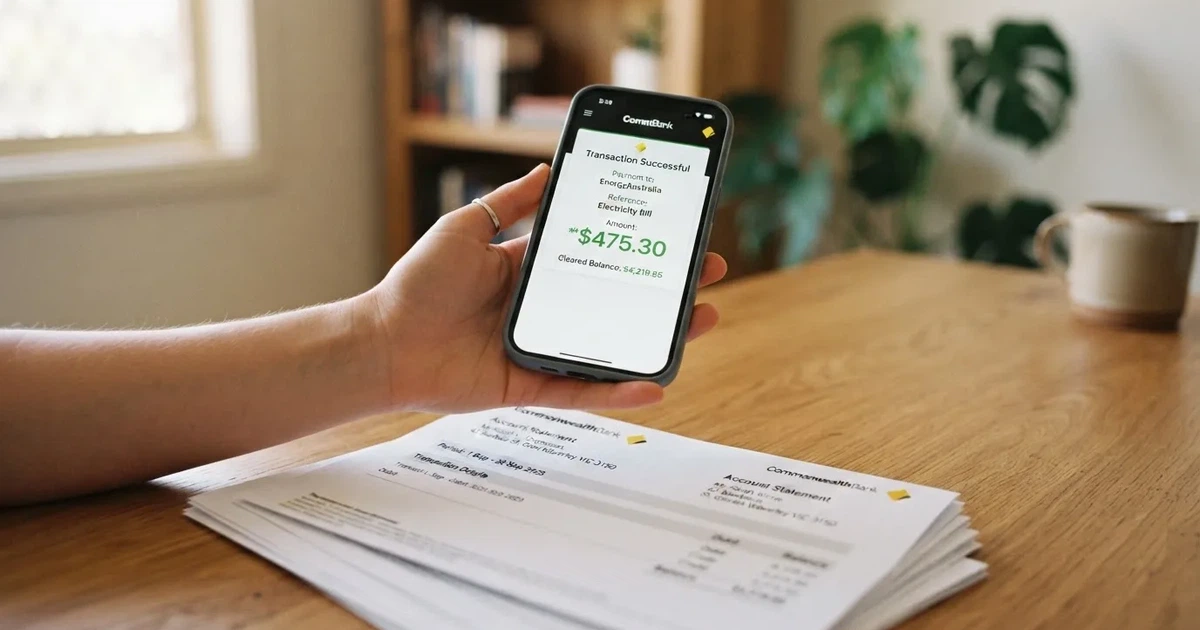
A PayID cashout looks simple from the player side: tap a finger, the balance clears, the winnings land in the linked account. The mechanics underneath genuinely are fast — PayID rides on the New Payments Platform and the same rails Osko uses, so transfers between participating banks settle in under a minute around the clock. None of that changes the more awkward fact: in Australia the law draws the line at the provider, not the rail, and no offshore casino is licensed to take an Australian bet on a slot or a hand of cards in the first place. A real-money PayID withdrawal is a payments question; whether the casino paying it is allowed to offer it is a different one entirely. This page works through both, in that order.
Table of Contents
- PayID and how the money actually moves
- The legal frame: what Australia actually prohibits
- Responsible play and the budget discipline a fast rail does not give you
- Payments, payout speed, and the identity-check gap
- The comparison: offshore casinos the ACMA has acted against
- What the table leaves out
- The blocking rate: the regulator’s pace in concrete numbers
- Reading the ACMA register as a consumer tool
- What this all adds up to for a player choosing how to cash out
- Frequently asked questions
PayID and how the money actually moves
A PayID is an easy-to-remember identifier — a mobile number, an email address, an ABN, or an Organisation Identifier — linked to a bank account and operated by Australian Payments Plus, the domestic payments body. The identifier is the address; the underlying account is where the money lands. PayID is built into the online banking of more than 100 Australian financial institutions, so a player who already has any major retail bank in Australia can send and receive through it without setting anything up.

The technical substrate is the New Payments Platform (NPP), launched in February 2018 to give Australian households, businesses and government agencies a way to make simply-addressed, near real-time payments 24/7. The Reserve Bank of Australia regulates and oversees the platform, and the same institution runs the Fast Settlement Service that closes out NPP payments individually in close to real time, day and night. PayID inherits those properties: a payment addressed to a PayID, when both banks are participants, arrives in under a minute, including on weekends and public holidays. By the end of April 2025 the register held more than 25 million PayIDs across the country.
Two design choices matter for a withdrawal context. The first is the name-display check: when paying to a PayID, the sender is shown the account holder’s name before confirming the transfer. AP+ describes this as the protection against scams and mistaken payments — a payer who has never heard of the recipient should not be sending. For a casino withdrawal this is mostly uneventful, because the player is the one sending to their own PayID, but the same rail works in the other direction too: a casino paying out by PayID could, in principle, show the player the receiving name before authorising. Most do not bother, because the typical casino payout goes to a PayID the player registered at withdrawal time.
The second is the speed floor. Osko, the consumer brand sitting on the same NPP rails, settles between participating banks in under a minute regardless of whether the payment is addressed to a BSB and account number or to a PayID. There is no business-hours constraint, no overnight queue, no next-day cut-off. A real-money PayID withdrawal can therefore legitimately be called instant in the technical sense, even when the institution on the receiving end runs a manual hold on first withdrawals — which is the wrinkle the operator write-ups later in this page deal with.
A useful sanity check on any site claiming “instant PayID withdrawals”: AP+ publishes, through its scam-alert pages, a fairly explicit warning that being asked to transfer funds to a PayID on an illegal gambling site “is almost certainly a scam website” — their term scambling, a portmanteau of scam and gambling, was coined for the offshore-casino-on-social-media pattern. So the very rail a reader is interested in is, by its operator’s own advisory, the very rail that the illegitimate parts of this market most often lean on.
The legal frame: what Australia actually prohibits
The Interactive Gambling Act 2001, as tightened by the Interactive Gambling Amendment Act 2017, makes it an offence to provide certain gambling services to a person physically in Australia. The prohibited interactive gambling services include online casino games and online pokies — that is the content category an online casino lives or dies on. In-play betting is also out. What is licensable is wagering on races and on sporting events placed before the event, lotteries, and keno, with the practical licence-issuing role sitting in the Northern Territory.
The enforcement body is the Australian Communications and Media Authority (ACMA). ACMA investigates, issues formal warnings, and can direct Australian internet service providers to block illegal sites. The blocking power has been used in repeated rounds since November 2019. By the round reported on 26 June 2026 the running total of blocked illegal gambling and affiliate-marketing websites reached 1,751 sites, and more than 230 unlicensed gambling services had exited the Australian market since enforcement was intensified in 2017.
The 26 June 2026 round itself named twelve more domains: 7Signs, ChromaBet, Donbet, Duospin, Freshbet, Slots Gem, Jacks Club, Lucky Start, Pointsbetz.com, Spinrise, Vinyl Casino, and Wildsino. A single round of twelve is not the same as the cumulative total of 1,751 — the running total counts every site ever ordered blocked across every round since 2019, while the latest round is just the most recent batch. The blocking rate, computed against the roughly six-and-a-half-year window from that first request, sits in a band of roughly one site blocked every day and a half on average, with bursts when a regulator runs a fresh audit and quiet periods in between. The headline figure is the cumulative count, but the operational pace is the one that matters: a site ordered blocked today does not necessarily stay blocked tomorrow, because the operators rebrand and re-enter.
Two corollaries flow from the law. First, an offshore casino offering slots, table games or pokies to an Australian resident is not in a grey area — it is providing a prohibited service, whatever offshore licence the page footer claims. The licence a Curaçao or Anjouan-registered operator displays has weight in its own jurisdiction and no weight here. Second, the consumer-protection consequences follow from the prohibition: an offshore operator gives no Australian complaint body, no Australian recourse if a withdrawal is refused, and the site itself can be blocked with player balances still held on it. The IGA targets the provider rather than the individual player, so a punter is not personally at risk of prosecution — but the practical recourse problem is theirs, and theirs alone.
A reader who wants a number for the alternative channel: H2 Gambling Capital’s 2025 report estimates Australians lose about A$3.9 billion a year to illegal gambling sites, and that the share of gambling going through legal channels dropped from 74% in 2021 to 64% in the latest reading. The legal-channel share falling while illegal losses stay large is the single most useful piece of context the rest of this page sits inside.
Responsible play and the budget discipline a fast rail does not give you
Fast settlement is not a budget tool. The same property that lets a winning PayID cashout land in sixty seconds is the property that lets a chasing deposit drain an account in sixty seconds. Australia has two pieces of player-protection infrastructure worth naming, and both have a limited reach by design.
BetStop, the National Self-Exclusion Register, has been live since August 2023 and binds every Australian-licensed online and phone wagering service. A player who registers with BetStop cannot open a new account with any Australian-licensed operator for the duration of their exclusion. The catch that matters here: BetStop binds only Australian-licensed services. An offshore casino not connected to the register can still accept a deposit, even from a player who has excluded themselves from every Australian-licensed bookmaker on the same day. The exclusion holds only as wide as it can be enforced.
The second piece is the National Gambling Helpline on 1800 858 858, free and available 24/7, with chat at Gambling Help Online. Both are funded to cover problems arising at licensed operators and at offshore operators alike; the helpline does not ask where a player played.
For a player who has just claimed a no-deposit bonus and is now looking at a small but real balance, the relevant discipline is to treat the balance as funds the player is willing to lose in pursuit of a small payout, not as funds the player has already won. Wagering requirements typically apply to a no-deposit bonus the same way they apply to a deposit match — the bonus carries a turn-through quota that has to be worked before any withdrawal, including a PayID one, is permitted. Trying to clear a small no-deposit bonus in a long session to chase a withdrawal that the terms may or may not allow is the pattern the helpline hears about most.
A small operational point worth keeping in mind: Westpac’s gambling block works at the card level and refuses authorisation of transactions under the merchant category code “Betting/Casino Gambling” on eligible cards; ANZ’s block, activated in the ANZ app, similarly blocks gambling transactions made through a digital wallet such as Apple Pay on an eligible card. Neither of those blocks PayID. A player who has set a card-level block to control gambling spend will find that switching to PayID defeats the block — by design, because the card-rail block was built for the card rail. The lesson is that the choice of payment method is a budget decision as well as a transaction-cost decision.
Payments, payout speed, and the identity-check gap
The promise of “instant” PayID withdrawals has a precondition most marketing pages gloss over. PayID itself settles within a minute when both ends are participating banks; that is the fast part. The slow part, where it exists, is the operator’s internal queue: anti-money-laundering checks, payment-rail screening, fraud rules, and — on a first withdrawal — the know-your-customer documentation step. A player who has already uploaded an ID and a proof of address will usually find subsequent PayID withdrawals close to instant. A player who has not done that step will find a first cashout landing anywhere from a few hours to several business days later, regardless of how fast the rail itself can move.
The standard document set on a first withdrawal: a government-issued photo ID (driver’s licence or passport), proof of address dated within the last three months (a utility bill or a bank statement), and sometimes a screenshot of the bank account or card used to deposit. Some operators also ask for source-of-funds documentation for larger withdrawals — recent payslips, a tax assessment, or a letter from an accountant. None of that is the rail’s fault; it is a regulatory obligation the offshore operator has chosen to honour, and the cost of it shows up as a one-off delay rather than as an ongoing fee.
The minimum-balance question is operator-set rather than rail-set. Many operators enforce a minimum withdrawal (commonly A$10 to A$20) below which a PayID withdrawal cannot be requested, and a maximum per transaction (often A$2,500 to A$10,000) above which the withdrawal is split across multiple PayID transactions. Both limits are operating decisions, not PayID properties; the player who hits them sees a transaction that “feels” slower not because the rail is slow but because it is being split.
A separate matter the page should name plainly: the Interactive Gambling Act 2001 as amended in 2023 prohibits Australian-licensed online wagering services from accepting credit cards or other credit-related products as payment. A consumer reading “instant PayID withdrawal” can reasonably infer the deposit side runs through PayID too — and at an offshore casino it usually does, because PayID is the cheapest rail available for an operator that is unable to use a card scheme. That is exactly what the rail was built for, on the operator’s side. The deposits the player has sent in are sitting in the operator’s pool until a withdrawal request closes the loop.
A last piece of operational plumbing: cryptocurrency is also banned as a deposit route for Australian-licensed wagering since 11 June 2024, with penalties for an operator reaching A$247,500 per offence. An offshore casino that asks an Australian player for either a credit-card deposit or a crypto deposit is, by that fact alone, not running on Australian rules.
The comparison: offshore casinos the ACMA has acted against
What follows is not a ranking. Every brand below has been the subject of a formal warning issued by the ACMA under the Interactive Gambling Act 2001 for offering prohibited online casino services to people in Australia. None of them is a lawful option for an Australian resident. The point of writing them up at all is to give a reader the ACMA’s own framing of the market they would otherwise be relying on marketing pages to describe.
The table takes the columns that actually matter for a reader comparing these brands at a glance: the brand itself, the ACMA action and date, the operator named by the ACMA, and PayID support as listings report it. An em dash in the right-hand column means neither the research nor the consulted listings returned a usable figure, not that the brand lacks the feature.
| Brand | ACMA action and date | Operator named by the ACMA | PayID support |
|---|---|---|---|
| RocketPlay | Formal warning, March 2026 (Pulsup Ltd) · earlier warning to Dama N.V., May 2022 | Pulsup Ltd · Dama N.V. | — |
| Level Up Casino | Formal warning, May 2022 | Dama N.V. | Listings report PayID support via Westpac |
| Woo Casino | Formal warning, March 2025 | Dama N.V. | — |
| Spirit Casino | Formal warning, May 2025 | Dama N.V. | — |
| National Casino | Formal warning, July 2025 | Consolutetish S.R.L. | Listings report PayID support (AUSTRAC / Wikipedia references) |
| Bizzo Casino | Formal warning, July 2025 (Consolutetish S.R.L.) · earlier warning to TechSolutions, 2022 | Consolutetish S.R.L. · TechSolutions | — |
| Ignition Casino | Formal warning, July 2025 | Bamboo Media | — |
| Instant Casino | Formal warning, February 2025 | EOD Code SRL | Listings report PayID support (ecopayz / Payid.com.au) |
| Jackbit | Formal warning, April 2026 | Ryker B.V. | — |
| Casino Intense | Formal warning, April 2025 | Sterplay Holding Ltd | Listings report PayID support (AUSTRAC / ITNews / NAB references) |
| Sky Crown | Formal warning, September 2022 | Hollycorn N.V. | — |
A note on what those “listings report” cells mean: they are what payment-method directories and review aggregators say the brand advertises, not a verified claim from the operator that the PayID payout will land in a specific time. The presence of a PayID badge on a marketing page is consistent with the operator having set up a PayID receiving account; it is not evidence that withdrawals through that PayID are being honoured, paid promptly, or paid at all.
Two patterns in the table. The first is that Dama N.V. appears across three of the eleven brands (Level Up, Woo, Spirit) plus an earlier appearance in the same corporate family for RocketPlay; the regulator is repeatedly chasing the same operator under different brand names. A reader who notices that Dama N.V. recurs in the table should read that as the regulator’s own assessment that rebranding is the operator’s preferred response to a warning. The second pattern is that the operator-of-record changes brand by brand — Pulsup, Consolutetish, Bamboo Media, EOD Code SRL, Ryker, Sterplay, Hollycorn — but the regulatory fact is the same across the whole table: every one of these brands has been formally warned for offering prohibited services to people in Australia.
RocketPlay
The ACMA issued a formal warning over RocketPlay in March 2026, naming Pulsup Ltd as the operator. A separate earlier warning in May 2022 had covered Dama N.V. as the underlying operator for a list of casino brands that included RocketPlay at the time. The same brand appearing under two operators across four years is the regulator’s documented trail of the corporate structure shifting around the same product; for a reader, what matters is the second warning more than the first, because the more recent one is the action currently in force. Research returned no usable PayID figure; the brand is presented here on the ACMA record alone.
A reader who arrived at RocketPlay through a comparison page should treat any claim of “instant PayID withdrawal” on the brand’s own marketing page as exactly that — a marketing claim. The regulator’s position on the brand’s provision of casino services to Australians is the verification that matters, and it is unfavourable.
Level Up Casino
Level Up was named in the May 2022 warning to Dama N.V., which covered six brands including Level Up, Rocketplay and Wild Tornado at the time. The brand’s listings mention PayID support via Westpac; what that resolves to in practice on a withdrawal is what a player has to find out the expensive way. The ACMA warning predates a number of rebrandings in the Dama N.V. portfolio, but the formal warning has not been withdrawn, and a brand-level warning has weight against the brand and against the operator that was running it at the time. For a player weighing this brand against others on the same list, the relevant fact is that the regulator returned to the operator of record (Dama N.V.) twice more after 2022, which is itself a behaviour pattern.
Woo Casino
Dama N.V. picked up a second warning in March 2025 covering Woo Casino. The four-year interval between the 2022 warning to Dama N.V. and the 2025 warning over the same operator is the kind of interval a regulator gives before coming back; in this case the regulator came back. A reader looking only at the brand would see a fresh face on the market; a reader looking at the ACMA register would see the same operator re-entered under a different brand. No research figure for PayID was usable here.
Spirit Casino
The May 2025 warning to Dama N.V. over Spirit Casino is the third time Dama N.V. features in this comparison. The pattern is the regulator’s signal, not the brand’s: the operator behind Spirit Casino was already on the ACMA’s record when Spirit Casino launched, and the warning that landed in May 2025 is the consequence of continuing to offer prohibited services regardless. Treat the brand’s casino offering as the regulator has treated it.
National Casino
The July 2025 warning to Consolutetish S.R.L. covered National Casino as one of two brands; the other was Bizzo Casino, written up separately. Listings mention PayID support with AUSTRAC and Wikipedia references, which is the kind of indirect mention that signals a payment-method directory has logged the brand as accepting PayID without confirming the rail on a withdrawal. A reader who finds a marketing claim of “instant PayID withdrawal” here is looking at a brand that has been formally warned twice in a year for the broader conduct.
Bizzo Casino
Bizzo appears twice on the ACMA register for two distinct reasons at two distinct times: a 2022 warning to TechSolutions (CY) Group Limited and TechSolutions Group N.V., and a 2025 warning to Consolutetish S.R.L. A warning that pre-dates a rebrand tends to track the corporate vehicle rather than the brand; a warning that post-dates a rebrand targets the brand directly. Research did not produce a usable PayID figure for Bizzo, so the column reads as an em dash rather than as a verified absence. The verdict for a player is that the brand has been warned under two operators in two years, which is the kind of accumulation a regulator’s register shows when the conduct continues regardless of who the operator-of-record is.
Ignition Casino
Bamboo Media is the operator named in the July 2025 warning that brought Ignition Casino onto the ACMA’s register. The brand name “Ignition Casino” is also the name of an offshore poker site familiar to Australian readers from the 2010s — a useful reminder that brand names travel even when the corporate vehicle does not. No PayID figure was usable from the consulted listings; the brand is described here on the ACMA record.
Instant Casino
EOD Code SRL picked up the February 2025 warning over Instant Casino. The name is generic enough that marketing pages ranking it under “instant PayID withdrawal” search terms are easy to find; the ACMA’s position is on the record. Listings mention PayID support with references to ecopayz and Payid.com.au — again the indirect form of evidence, marketing-directory entries rather than operator-confirmed payout times. A reader who clicks through here is looking at the brand the ACMA moved on first in 2025.
Jackbit
The April 2026 warning to Ryker B.V. covered Jackbit alongside CasinOK, written up under separate SKUs on the regulator’s register. The brand is presented here on the ACMA record alone, with no usable PayID figure. A warning this recent is a fresh data point on a market that has just been re-surveyed, which is the period most worth watching for reader relevance.
Casino Intense
Sterplay Holding Ltd is the operator of record for the April 2025 warning over Casino Intense. The listings consulted produced references from AUSTRAC, ITNews and NAB — three sources a reader would not normally expect to see on a casino review page, and the kind of references that signal the brand’s payment-rail surface has been picked up by mainstream financial-press coverage rather than by the operator’s own disclosures. The warning itself is what matters for the brand’s status under the IGA; the listings coverage is incidental.
Sky Crown
Hollycorn N.V. was warned by the ACMA over Sky Crown and Blue Leo under a 2022 publication; the two brands share an operator, the same way Level Up and Rocketplay did earlier in this list. Sky Crown sits at the long end of the warnings table — the most distant in time from the present, but still on the register, still formally named. The brand is presented here on the ACMA record alone, with no usable PayID figure.
What the table leaves out
The table’s shape matters as much as its content. Eleven brands, seven distinct operators of record, a single operator (Dama N.V.) returning across three brands in this set, two operators re-warned across different corporate vehicles (Dama N.V., Consolutetish S.R.L./TechSolutions). That is not an industry, it is a market under enforcement, and the rhythm of the warnings — 2022 to 2026 with multiple actions every year — is the regulator’s pace.
The column PayID support stays mostly empty for a reason that is worth stating. None of the operators in this set is licensed in Australia; the ACMA’s position is that none of them is lawfully entitled to take a deposit, let alone make a withdrawal. Asking whether the brand honours a PayID withdrawal is, at this level of analysis, a secondary question — the primary question is whether the operator should be holding Australian money in the first place. Most of the research returned no usable PayID figure, which is the second-order reason the column reads mostly as em dashes. The handful of listings entries that do appear are mentioned for completeness, with the caveat that a marketing-directory badge is not a verification.
The reader who came to this page looking for the fastest PayID withdrawal is invited to look at the table again. What it lists is the brands the ACMA moved against most recently. A fast PayID withdrawal from a brand the regulator has already blocked is a withdrawal into a service that may not be reachable by the time the funds are sent.
The blocking rate: the regulator’s pace in concrete numbers
The arithmetic the page owes the reader: how fast does ACMA enforcement actually move, measured against the cumulative count carried in research?
The cumulative count of blocked illegal gambling and affiliate-marketing websites reached 1,751 by the round reported on 26 June 2026, with the first blocking request issued in November 2019. That is roughly 6.58 years between the first request and the latest reported round, or about 2,402 days. Dividing the running total by the elapsed window gives an average of roughly 0.73 sites blocked per day — about one site every 33 to 34 hours across the whole enforcement period.
But the headline figure averages over quiet weeks and busy rounds alike, and the ACMA does not block one site per day in a smooth flow. The 26 June 2026 round blocked twelve sites in a single batch; earlier rounds have blocked similar batches at irregular intervals. So the figure is most usefully read as a band rather than as a daily rate: in the bursts when a regulator runs a fresh audit and a fresh round of orders, the running total steps up sharply; in the gaps between rounds, the total holds steady. A reader who wants the operational pace — the pace at which a freshly-blocked site gets resolved by an Australian player unable to reach it — sees the bursts, not the average.
A second-order observation: more than 230 unlicensed gambling services have left the Australian market since 2017, separately from the 1,751 blocked sites. “Left” in that context can mean a domain going dark, a brand being quietly wound down, or an operator publicly withdrawing from the Australian market while remaining reachable elsewhere. The blocked count and the departed count are not the same thing, and they sit on different sides of the ledger: a blocked site is one the regulator has actively moved against; a departed service is one that decided, for its own reasons, not to keep accepting Australian customers.
Reading the ACMA register as a consumer tool
The register itself is more useful than any single press release. The ACMA publishes formal warnings on its website, dated, naming the operator of record and the brand. Warnings are public, indexed, and stay on the register indefinitely; a 2022 warning is still searchable today. For a reader considering an offshore casino, the first sanity check is whether the brand appears on the register. The second is whether the operator of record on the marketing page matches the operator of record in the warning; a brand re-launched under a fresh operator is still the brand on the ACMA’s record. The third is whether the brand has been warned more than once, by the same operator or by different ones, because a recurrence is the regulator’s strongest signal that the conduct has continued.
The register is not the whole answer. The ACMA’s enforcement is targeted at providers rather than at players, and the register lists brands that the regulator has had time to investigate and act against — not every brand that is in fact providing prohibited services to Australians. A reader who treats the register as a comprehensive blocklist is treating it as a tool it is not. A reader who treats it as the regulator’s documented position on the brands it lists is reading it correctly.
What this all adds up to for a player choosing how to cash out
The shape of the market, in three sentences: the rail works. PayID is fast, the NPP infrastructure it runs on is reliable, the name-check is in place. The casino is the problem. None of the offshore operators in the comparison above is licensed to offer the products they offer to Australians, and the regulator’s pace is steady enough that a brand wagered on this year may not be reachable next year. The actual moment of withdrawal — the one the reader came here for — sits in the gap between those two facts.
A player who has winnings to withdraw is, practically, in one of three situations. They are playing with an Australian-licensed operator — a wagering service licensed for sport or racing in the Northern Territory, or a lottery or keno operator licensed in their state — in which case PayID is one of the standard deposit and withdrawal rails and the protections are Australian. They are playing with an offshore operator that the ACMA has not yet acted against. They are playing with one of the operators above. The first group is the only one in which an instant PayID withdrawal is also a lawful one, and the legal-channel share data suggests the first group is the smaller group by revenue.
For a reader choosing between the brands above, the comparison is between eleven unlawful options at varying recency of regulatory action, not between eleven candidates of which one is the right one. The verdict for each of them is the same shape: the brand cannot lawfully offer online casino games to an Australian resident, and any PayID withdrawal it processes sits on top of that fact rather than instead of it. The reader’s real choice is whether to play at all on this side of the market, and that choice is independent of how fast PayID is.
Frequently asked questions
Is it legal for an online casino to pay out real money through PayID to a player in Australia?
No. The Interactive Gambling Act 2001 makes it an offence for an operator to provide prohibited interactive gambling services — online casino games, pokies, and in-play betting — to a person in Australia. Whether the operator pays out by PayID, by bank transfer, or in cryptocurrency does not change that; the prohibition runs to the service, not to the rail.
What is the difference between withdrawing bonus credit and withdrawing real money through PayID?
Bonus credit is money the casino has awarded under a promotion, almost always subject to a wagering requirement that has to be cleared before any withdrawal is permitted. Real money is cash the player has deposited and any winnings earned from it. A PayID payout of real money is a payout of funds the player owns outright; a PayID payout of bonus credit is conditional on the bonus terms being met first, and many operators will void the bonus and any winnings from it if the player withdraws before clearing.
Does a no-deposit bonus balance need to be converted before a real-money PayID withdrawal is possible?
In most cases yes. A no-deposit bonus carries a wagering multiple — typically thirty to fifty times the bonus value — that has to be worked through before any withdrawal, including a PayID one, is processed. Some operators also apply a maximum-cashout cap on winnings derived from a no-deposit bonus, so a player who clears the wagering and ends up above the cap has the overage voided at withdrawal time. The conversion rule is operator-set and is in the bonus terms, not in PayID.
What identity documents are usually required before a first real-money PayID withdrawal?
A government-issued photo ID (driver’s licence or passport), a proof of address dated within the last three months (a recent utility bill or bank statement), and usually a screenshot of the deposit method on file. Larger withdrawals can require source-of-funds documentation — recent payslips, a tax assessment, or a letter from an accountant. The first withdrawal carries the cost of those checks; subsequent PayID withdrawals usually clear faster because the file is on record.
Is there a minimum real-money balance needed before a PayID withdrawal can be requested?
Yes, in most cases. Operators commonly set a minimum withdrawal between A$10 and A$20 and a maximum per transaction between A$2,500 and A$10,000; withdrawals above the maximum are split across multiple PayID transactions. Both thresholds are operator policy, not PayID properties, so the threshold at one brand is no guide to the threshold at another. The casino’s withdrawal page is where the figures for that brand are stated.
Why might a real-money PayID withdrawal take longer than an earlier bonus-funded one?
Two reasons. The first is the identity-check lag: a first real-money withdrawal triggers the full KYC process, and that queue can run from a few hours to several business days depending on the operator’s staffing and the volume of pending withdrawals. The second is the bonus-wagering clearance: a real-money payout on a bonus balance waits until the wagering requirement has been worked off, and the operator’s internal queue orders payouts by clearance date rather than by rail.