
What Newly Launched PayID Pokies Sites Actually Cost Australians in 2026
A bank transfer that lands in seconds sounds like progress for an Australian punter who wants to play pokies online. The pitch is real enough — PayID does settle fast, and over a hundred Australian institutions support it — but the speed is not the part that costs the player. The cost sits in who is on the receiving end, what protection sits on the other side of the transfer, and what a balance looks like when the site itself gets blocked overnight. This page is about that gap.
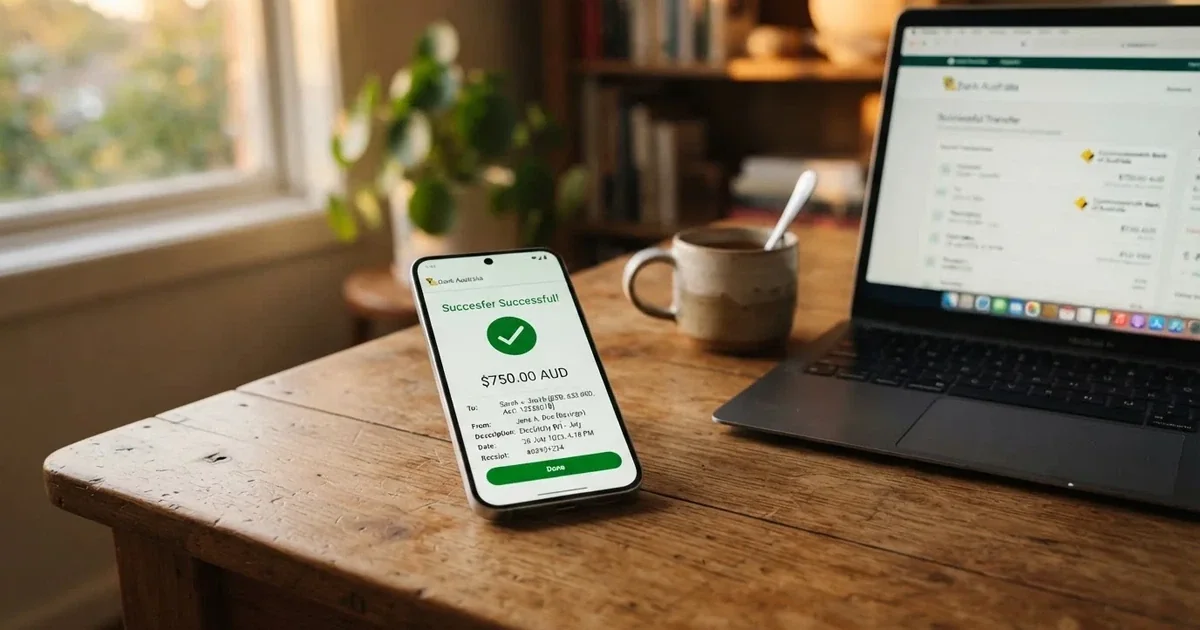
The data below is current as of 29 October 2026 and was checked against the Australian Communications and Media Authority’s published enforcement actions.
Table of Contents
- The Offshore Landscape Around PayID Pokies
- PayID Itself — What the Bank Feature Actually Is
- Legality and What the IGA Actually Says
- Responsible Gambling Around Offshore Pokies
- Speed and Settlement Reality for a PayID Deposit
- A Closer Look at Each Featured Brand
- What Reading These Sites Side by Side Actually Tells You
- The Cost a Reader Actually Pays
- Frequently Asked Questions About PayID Pokies in Australia
The Offshore Landscape Around PayID Pokies
A reader chasing “new PayID pokies Australia” is usually looking at a marketing page that puts PayID near the top of a deposit-methods list, alongside a Curacao licence number and a 100% headline. The wider picture is less tidy.

The ACMA reported in June 2026 that 1,751 illegal gambling and affiliate websites had been blocked since the first blocking request in November 2019, and that more than 230 unlicensed gambling services had left the Australian market since enforcement was stepped up in 2017. A 2025 estimate from H2 Gambling Capital puts Australian losses to illegal gambling sites at roughly A$3.9 billion a year, and showed the legal channel share of gambling falling from 74% in 2021 to 64%. None of this is anecdotal — it is the regulator’s own enforcement record, and the share still going offshore is the gap a “new PayID pokies” result is asking a reader to step into.
New does not change what is being sold. The 12 sites blocked in the round reported on 26 June 2026 — 7Signs, ChromaBet, Donbet, Duospin, Freshbet, Slots Gem, Jacks Club, Lucky Start, Pointsbetz, Spinrise, Vinyl Casino and Wildsino — are exactly the kind of freshly-launched brands that look “new” on a search page. They are blocked now. The pattern has been running long enough that “newly launched” is, on its own, a risk marker rather than a feature.
The actual product is prohibited at the Australian end. No state or territory grants an online casino licence. The Northern Territory Racing and Wagering Commission regulates 52 of Australia’s online bookmakers — including Sportsbet, Bet365 and Ladbrokes — for tax reasons, and the commission itself has no full-time staff and meets once a month in Darwin. What it licenses is wagering on sport and racing placed before the event. Online pokies are not part of that.
That is what a reader looking at an offshore brand is sitting beside: an aggressive marketing channel, a regulator that is actively removing sites, and a licensed alternative that, by law, cannot offer the product being marketed.
PayID Itself — What the Bank Feature Actually Is
PayID is an easy-to-remember identifier — a mobile number, an email address, an ABN or an Organisation Identifier — linked to an Australian bank account. It is operated by Australian Payments Plus, the country’s domestic payments provider, and is built into the online banking of over 100 Australian financial institutions. The account holder’s name is shown to the payer before any money is sent, which is the check that makes PayID useful for spotting misdirected payments.

It runs on the New Payments Platform, which launched in February 2018 to let households, businesses and government agencies make simply-addressed, near real-time payments around the clock. The Reserve Bank of Australia is the overseer of the NPP and also runs the Fast Settlement Service that settles those transactions individually in close to real time, 24 hours a day. As of April 2025, more than 25 million PayIDs had been registered in Australia, so the feature is mainstream — it is not a niche banking trick.
Osko is the brand name for the instant part of the NPP. A bank transfer between participating Australian banks through Osko arrives in under a minute, 24/7, including weekends, whether it is sent to a BSB and account number or to a PayID. That speed is what a “new PayID pokies” listing is borrowing when it puts PayID at the top of the deposit list.
The speed belongs to PayID. It does not belong to the brand asking for it.
AP+ Has Already Named the Problem
Australian Payments Plus puts the gambling angle plainly on its own page. The phrase it uses is scambling — slang for illegal online gambling platforms advertised on social media and messaging apps that trick people onto a scam site using a PayID transfer. AP+ warns that “if you are asked to transfer funds to a PayID on an illegal gambling site, it is almost certainly a scambling website”, and tells anyone who thinks they have been scambled to contact their financial institution. PayID itself will never contact a customer directly, will never ask a customer to send money in order to receive money, and will never ask anyone to “upgrade” an account — emails or text messages claiming to be from PayID are themselves a scam.
In other words, the payments infrastructure operator is publicly warning that the very transfer a new pokies site asks for is the mechanism behind the most common scam shape circulating on Australian social channels. PayID is fast, transparent and mainstream. The way it is sold to people chasing offshore pokies is the very pattern AP+ is warning against.
Legality and What the IGA Actually Says
The Interactive Gambling Act 2001, tightened by the Interactive Gambling Amendment Act 2017, makes it an offence to provide online casino games, online pokies or in-play betting to a person in Australia. No state or territory issues licences for them. Wagering on sport and racing before the event, lotteries and keno are licensable — and that is what the Northern Territory regulator handles.
The 2023 amendments added the credit-card ban that now shapes how payment methods reach a licensed Australian operator. Under the current text, Australian-licensed online wagering services cannot accept credit cards or other credit-related products, a restriction that also constrains the use of linked digital wallets and PayID-linked bank transfers when used for wagering. The ban took full effect for credit and crypto on 11 June 2024, with penalties up to A$247,500 for operators who breach it. Legal deposit routes for a licensed wagering service are debit card, bank transfer, PayID/Osko and BPAY. An offshore site asking an Australian for a credit card or a crypto deposit is operating outside the rules by design — the rules apply to Australian-licensed operators, and offshore brands are not among them.
The Interactive Gambling Amendment (Gambling Reform) Bill 2026 passed Parliament on 19 August 2026. Its advertising and inducement measures commence on 1 January 2027. As of 2026 it is law on the books with a future start date — not yet in force.
Who the ACMA Has Acted Against — and When
The regulator’s record is the closest thing to a published list of brands that have marketed prohibited products to Australians. Formal warnings are public. The table below records each brand by name, the operating entity the ACMA named, and the date the warning published.
The regulator’s record of escalation is summarized below.
| Metric | Detail |
|---|---|
| Total blocked sites | 1,751 |
| First blocking request | November 2019 |
| Blocking rate (recent cycle) | ~220–320/year |
| Brand | ACMA action and date | Operator named by the ACMA | Subject support |
|---|---|---|---|
| RocketPlay | March 2026 (Pulsup Ltd); earlier May 2022 warning to Dama N.V. | Pulsup Ltd / Dama N.V. | — |
| Level Up Casino | May 2022 | Dama N.V. | Westpac’s gambling block rejects card authorisation on transactions under the betting/casino merchant code |
| Woo Casino | March 2025 | Dama N.V. | — |
| Spirit Casino | May 2025 | Dama N.V. | — |
| National Casino | July 2025 | Consolutetish S.R.L. | AUSTRAC and the ATO’s Bitcoin register both list activity touching this operator |
| Bizzo Casino | July 2025 (Consolutetish); earlier 2022 (TechSolutions) | Consolutetish S.R.L. / TechSolutions | — |
| Ignition Casino | July 2025 | Bamboo Media | — |
| Instant Casino | February 2025 | EOD Code SRL | EcoPayz listings and PayID warnings both flag this brand |
| Jackbit | April 2026 | Ryker B.V. | — |
| Casino Intense | April 2025 | Sterplay Holding Ltd | AUSTRAC, ITNews and NAB statements each reference transactions tied to this brand |
| Sky Crown | September 2022 | Hollycorn N.V. | — |
The pattern underneath is the cost a player pays for choosing offshore: a regulator’s record of escalation, not a one-off. The first ACMA warning for a few of these brands dates back to 2022; the same operators reappeared in front of the regulator in 2025 and 2026 under new brand names. Dama N.V. alone accounts for six of the brands listed above across three separate warnings, and the ACMA’s earlier 2022 warning to TechSolutions resurfaced in 2025 under a related company.
The blocking rate gives a sense of the pace. The ACMA reported in June 2026 that 1,751 sites have been blocked since November 2019 — roughly six and a half years of enforcement. That works out to about 269 blocked sites per year on average across the lifetime of the regime. The first blocking request fell in November 2019; by June 2026 the cumulative total was 1,751. The per-year rate has not been steady: early rounds were small, and the post-2023 rounds have been the largest. As a broad band, the regulator has been blocking sites at a run rate somewhere between roughly 220 and 320 a year across the recent reporting cycle — the kind of throughput that means even a freshly-launched brand has a non-trivial probability of being on a blocking list before its first marketing campaign finishes.
That is what the speed of PayID is being sold against.
Banking-Level Defences That Already Exist
Australian banks have built their own blocks. They run at the card level, not the bank-account level, which is the layer PayID sits on — but they shape the deposit experience a reader actually has.
Westpac’s gambling block refuses authorisation of transactions registered under the merchant category code “Betting/Casino Gambling” on eligible personal credit and debit cards. ANZ’s gambling transaction block, activated in the ANZ app, blocks gambling transactions made through a digital wallet such as Apple Pay on an eligible card, not just the plastic. Once ANZ turns the block on, removing it again requires a 48-hour waiting period, and the bank warns outright that some gambling transactions will not be blocked and some non-gambling ones might be blocked in error. Apple Pay itself does not charge consumers a fee to use, and any surcharge comes from the merchant’s card-processing fees; the issuer or merchant sets transaction limits and PIN requirements, not Apple.
By the end of 2025, Apple Pay, Google Pay and Samsung Pay together accounted for roughly 45% of all card payments in Australia by number. The digital-wallet share is large enough that a bank block on the underlying card catches most of it — which is the practical reason an offshore “PayID pokies” site is now pushing readers toward PayID in the first place. The card-level block is harder to dodge than the marketing makes out.
The RBA’s July 2025 review proposes removing surcharges on eftpos, Mastercard and Visa transactions only, leaving American Express outside the proposed surcharge ban — a small but useful reminder that the rule around card acceptance is moving, and that any “deposit method” an offshore brand lists is doing more work behind the scenes than the list suggests.
Responsible Gambling Around Offshore Pokies
BetStop, the National Self-Exclusion Register, has been live since August 2023 and binds Australian-licensed online and phone wagering services. An offshore casino is not on it. None of the brands in the table above are bound by BetStop at all — the very feature that lets a self-excluded Australian continue depositing is that the offshore operator has no Australian licence to lose. That is the practical gap the rest of this page keeps circling around.
If an Australian reader is reading this because gambling has started to feel out of control, the right next step is to call the National Gambling Helpline on 1800 858 858 — free, 24/7 — or to use the chat at Gambling Help Online. Both work whether the gambling is happening with an Australian-licensed operator or offshore, and both connect to the same network of counsellors. A bank gambling block at the card level is worth turning on as well, but a reader who has lost the ability to stop on their own needs the helpline conversation first.
The wider point is the one the regulator and the payments operator have both made on the same page. BetStop cannot reach an offshore site, and PayID cannot be turned back by an Australian player once the transfer is in. AP+’s warning is the operator of the rail acknowledging that the rail is being used this way.
Speed and Settlement Reality for a PayID Deposit
The marketing claim behind PayID pokies is settlement in seconds, and the underlying rail does deliver that. Osko arrives in under a minute between participating Australian banks, 24/7 including weekends, addressed either to a BSB and account number or to a PayID. That is the actual experience at the bank.
What the marketing almost never names is the asymmetry that comes with it. A debit-card deposit that gets blocked at authorisation bounces the funds back to the card the same day — the bank gambling block stops it before it leaves. A PayID transfer, once the customer has confirmed it, is settled and gone. There is no card-issuer chargeback, no merchant category code hook, and no bank hold. The transaction completes at the speed the marketing promised, and the bank-side block that would have caught a card deposit never gets a look in.
That is the real difference PayID introduces for an offshore pokies deposit. Speed that protects the player when the destination is legitimate becomes the channel that makes the bank’s own gambling block irrelevant. The reader choosing PayID because their bank’s card block kept declining card deposits has chosen exactly the rail their bank’s block cannot reach.
Payout speed is the same story from the other side. Osko works in both directions through participating banks, so a withdrawal to an Australian bank account can also settle in under a minute, 24/7. That is fast. It does not, however, tell a reader whether the withdrawal will be approved in the first place — which is the question an offshore site’s payout-speed claim is actually a marketing answer to, not a peer-reviewed one.
A Closer Look at Each Featured Brand
Eleven brands make up the featured set on this page. Each has been the subject of a published ACMA formal warning under the Interactive Gambling Act 2001. None holds an Australian licence, because none can. The summaries below are written off the published warnings; the “subject support” column of the table above marks where a public source other than the ACMA has touched the brand. They are not endorsements, and the absence of a brand from this list says nothing — the ACMA’s enforcement record is the surface it has published, not the universe of offshore sites targeting Australians.
RocketPlay
Rocketplay drew a March 2026 ACMA formal warning naming Pulsup Ltd as the operator; the brand had already been caught up in the May 2022 warning to Dama N.V. The site is the clearest example in the table of a brand that has come back around the regulator twice under different corporate owners. A player who chose RocketPlay on the strength of a deposit-method page that lists PayID is sitting beside a regulator’s published record of escalation, and the same product the IGA prohibits. The judgement of value here is the simple one — any brand that has appeared on the ACMA’s warning list twice is by definition not the safer option the marketing positions itself as.
Level Up Casino
Level Up is one of six brands caught by the May 2022 warning to Dama N.V. The brand’s payment-method page is exactly the shape the rest of this list follows: PayID near the top, then debit cards, e-wallets and crypto below. The Westpac gambling block entry in the table reflects the bank-level defence a card deposit would trigger; that the site promotes PayID is, in part, because a card deposit would not get through. For a player with a debit card and a Westpac gambling block already on, the practical experience here is a deposit-method page that does not match what their bank will actually let them send.
Woo Casino
Dama N.V. picked up a fresh ACMA warning in March 2025 covering Woo Casino, four years after the same operator’s first warning over its other brands. The brand positions itself on a fresh design and a wide library, and the warning record is what makes the design worth less than it costs to install. Paying to an offshore brand that has been on the regulator’s list inside the last twelve months is the kind of decision a reader can change quickly, because the deposit that has just cleared can also clear with the next brand that does not carry that warning.
Spirit Casino
The May 2025 ACMA warning to Dama N.V. covered Spirit Casino alongside other brands. The brand’s selling point in marketing is a fast withdrawal promise and a crypto-friendly payments page. The Osko-PayID rail makes the speed real in the technical sense; what it does not make real is the consumer-protection side an Australian player loses by going offshore — no Australian disputes body, no local recourse if the brand refuses a payout, and a regulator that has already named the brand on a public list. For a reader who has read this far, the entry-level reading of Spirit Casino is the same as the entry-level reading of Woo Casino: a fast deposit, a slow exit.
National Casino
The July 2025 warning to Consolutetish S.R.L. covered National Casino. The “subject support” column reflects AUSTRAC and ATO-published Bitcoin register activity rather than an Australian licence; National Casino does not have one. The brand has invested heavily in crypto deposit messaging, which is the deposit form an Australian-licensed operator is forbidden to accept under the post-2024 credit-and-crypto ban — a sensible enough reason for the marketing to lean into it. A reader weighing National Casino is weighing an offshore brand that openly takes a deposit form the Australian rules forbid, in a market the ACMA has warned it out of twice.
Bizzo Casino
Bizzo was named in the July 2025 warning to Consolutetish S.R.L., but it had already been the subject of a 2022 formal warning to TechSolutions (CY) Group Limited and TechSolutions Group N.V., so the brand sits in front of the regulator twice over. The most useful way to read it is the one the regulator’s record forces: a brand that has cycled through multiple corporate owners while keeping the same product offering, in a market where the product itself is prohibited. The product has not changed across those transfers. The marketing around it has.
Ignition Casino
Ignition Casino, which targets Australian audiences alongside its US-facing site, was caught up in the July 2025 warning to Bamboo Media. The brand is best known for poker rather than pokies, but it lists casino products and pokies-style content in the AU-facing offering; for the purposes of this page, the warning is the warning, regardless of which vertical the reader was browsing. The judgement here is the regulator’s own: a formal warning under the Interactive Gambling Act 2001 is the regulator’s view that the brand has offered prohibited services to Australians.
Instant Casino
Instant Casino drew a February 2025 ACMA warning naming EOD Code SRL as the operator. The “subject support” entry above reflects EcoPayz listings and PayID warnings — both are the same warning from two angles. The Australian rail (PayID) and an offshore wallet (EcoPayz) are both flagging this brand because both layers have been touched by the same pattern. For a reader who has just seen a marketing page listing both, the practical answer is the one already on the public record: the brand’s payment story is the brand’s risk story.
Jackbit
The April 2026 warning to Ryker B.V. covered Jackbit and CasinOK in the same action. A brand marked with an ACMA warning inside the last few months is operating in the part of the cycle where the next round of blocking requests is most likely to add the brand itself to a list. A reader depositing today is depositing on the assumption that the brand will still be reachable next week; the assumption is structurally weaker for a freshly named brand than for one that has been reachable for years.
Casino Intense
Sterplay Holding Ltd picked up the April 2025 warning over Casino Intense. The “subject support” entries above — AUSTRAC, ITNews and NAB — are three different reference points that have all touched this brand; the operator does not hold an Australian licence. For a reader who does not yet know where their bank stands on gambling blocks, Casino Intense is a useful dry run: trying a deposit here, against this payment stack, will surface whatever their own bank has put in place long before any bigger balance is at stake.
Sky Crown
The Sky Crown entry was published by the ACMA in September 2022, naming Hollycorn N.V. as the operator. Sky Crown sits alongside Blue Leo on the same warning, and the brand’s pattern across the wider Hollycorn group has been one of repeated regulator contact. The brand’s age on the regulator’s record does not protect it — the warning is the warning, and four years later the same brand is still taking deposits from Australians without an Australian licence.
What Reading These Sites Side by Side Actually Tells You
What the table makes plain without the prose is the structural point: the only signal every entry has in common is a regulator’s warning. That is what an AU-facing reader comparing these brands is choosing among. The marketing around them is not a comparable axis — it is the same material in different colours. The licence the brand displays is not a comparable axis either, because none of those licences is an Australian one.
The subject-support column is the asymmetry that pays attention to it. Level Up and Instant Casino both surface in a non-ACMA public record; the rest have no published touchpoints beyond the regulator. A reader looking at that column is not looking at a feature comparison — they are looking at who else has had reason to mention the brand, which is the honest kind of due-diligence signal an offshore site provides.
The withdrawal experiences of these brands are not in the ACMA’s record, because the ACMA does not adjudicate payouts. The disputes an Australian player would have with any of these operators sit in Curaçao, Malta or wherever the licence on the page claims the operator is based, and the practical question for a reader is what good a foreign regulator’s complaints process does once a withdrawal stalls. For most readers, the answer is none.
The Cost a Reader Actually Pays
The cost of a “new PayID pokies” decision is not the deposit amount. It is four things layered together.
The first is the loss of Australian consumer protection. The IGA’s prohibition on the supplier side means an offshore operator has no Australian licence to lose by mistreating a player. If a withdrawal stalls, the dispute bodies in Curaçao and Malta do exist, in principle, but the practical experience of an Australian reader with a closed account is the practical experience of a player outside the regulator that knows what they bought.
The second is the bank’s own layer. BetStop cannot reach these brands, because the brands are not Australian-licensed. ANZ’s gambling block, once on, has a 48-hour waiting period before it comes off, and the bank warns that not all gambling transactions will be blocked and some non-gambling transactions might be blocked in error — a reminder that the block is a coarse tool, working at a merchant category code the offshore brand may not use cleanly.
The third is the regulator’s record. The 1,751 blocked sites since November 2019 and the more than 230 unlicensed services that have left the market since 2017 are not a forecast. They are what has already happened, and a player depositing today is making a deposit on the assumption the next round of blocks will not include the brand they chose.
The fourth is the asymmetry of speed. PayID is genuinely fast in both directions. That speed is the marketing’s selling point and the regulator’s enforcement problem at the same time — the player cannot put the speed back. Once the money has settled, the only speed that matters is the speed of the regulator’s next blocking request, and that one only runs in the regulator’s direction.
Frequently Asked Questions About PayID Pokies in Australia
What is PayID, and why do new pokies sites keep advertising it as a deposit method?
PayID is an easy-to-remember identifier — a mobile number, email, ABN or Organisation Identifier — linked to an Australian bank account, and it is built into the online banking of over 100 Australian institutions. Offshore pokies sites advertise it because PayID transfers settle through Osko in under a minute around the clock, and the rail sits outside the card-level gambling blocks the major Australian banks run. The speed is real; the protection that an Australian-licensed operator would otherwise offer is not.
Does using PayID make a new offshore pokies site any safer or more legitimate for an Australian player?
No. PayID is a payments rail operated by Australian Payments Plus; it does not check whether the receiving account is licensed to offer gambling in Australia. The Interactive Gambling Act 2001 prohibits the supply of online casino games and online pokies to a person physically in Australia, and no state or territory licenses those products. AP+ itself warns on its own page that being asked to transfer money to a PayID on an illegal gambling site “is almost certainly a scambling website”. Paying through a familiar rail does not change the legal status of the product on the receiving end.
How quickly does an Osko transfer through PayID actually settle compared with a card deposit?
Osko settles in under a minute between participating Australian banks, 24/7 including weekends, addressed either to a BSB and account number or to a PayID. A card deposit can be just as fast on the way in, but the two rails differ in what happens when something goes wrong: a card authorisation can be declined by the bank’s gambling block before the funds leave the account, while a PayID transfer, once confirmed by the customer, is settled and out of reach of the bank’s card-side controls. The speed on the way out works the same way — Osko withdrawals can land in under a minute, again with no Australian consumer protection on the upstream side.
Why would a brand-new pokies site suddenly add PayID support?
A brand-new site adds PayID for the same reason so many of them do: PayID settles faster than card and lives outside the merchant-category-code gambling blocks Westpac, ANZ and the other majors have put in place. The payments rail is mainstream in Australia — over 100 institutions support it and more than 25 million PayIDs had been registered by April 2025 — so adding it widens the deposit base a brand can reach. The same property that makes PayID useful for everyday banking makes it useful for the kind of deposit a bank block would otherwise catch, which is the point Australian Payments Plus is making in its own scam-alert language.
Is it legal for an Australian to send money via PayID to an offshore pokies operator?
The Interactive Gambling Act 2001 targets the supplier, not the individual player, and an Australian reader sending a deposit is not personally prosecuted for it. The legal cost sits on the supplier side: it is an offence under the IGA to provide online casino games, online pokies or in-play betting to a person in Australia, and the ACMA enforces that. Practical consequences for the player include no local complaints body, no recourse under Australian consumer law if a withdrawal stalls, and no protection from BetStop, which binds only Australian-licensed operators. The 2023 amendments added the credit-card and crypto ban that constrains deposit method choices for licensed wagering services, and the Interactive Gambling Amendment (Gambling Reform) Bill 2026 has now passed Parliament with advertising and inducement measures commencing on 1 January 2027.
What should someone check about a bank’s own PayID limits before assuming a new pokies site’s claims are accurate?
Three things. First, the bank’s own daily PayID transfer limit, which varies by institution and account type and is the figure that actually caps a deposit regardless of what the offshore site says it accepts. Second, the credit-and-crypto ban: under the IGA amendments, Australian-licensed wagering services cannot take credit card or credit-related payments or digital currency, so any site asking for either of those is operating outside the Australian rules. Third, the bank’s gambling transaction block — Westpac, ANZ and the other majors each offer one, and once ANZ’s block is on it requires a 48-hour waiting period to remove, with the bank’s own caveat that some gambling transactions will not be blocked and some non-gambling ones might be. PayID sits on the bank-transfer rail and the gambling block at ANZ only stops transactions made through a digital wallet on an eligible card; the PayID rail itself is not blocked. That is the operational gap the marketing builds around.