
PayID pokies in Australia in 2026: how the transfer works, why every site is offshore, and what the offer is really worth
Current as of 31 October 2026; licence and ACMA action claims verified against the ACMA’s formal-warning register and the Australian Communications and Media Authority’s blocking notices.
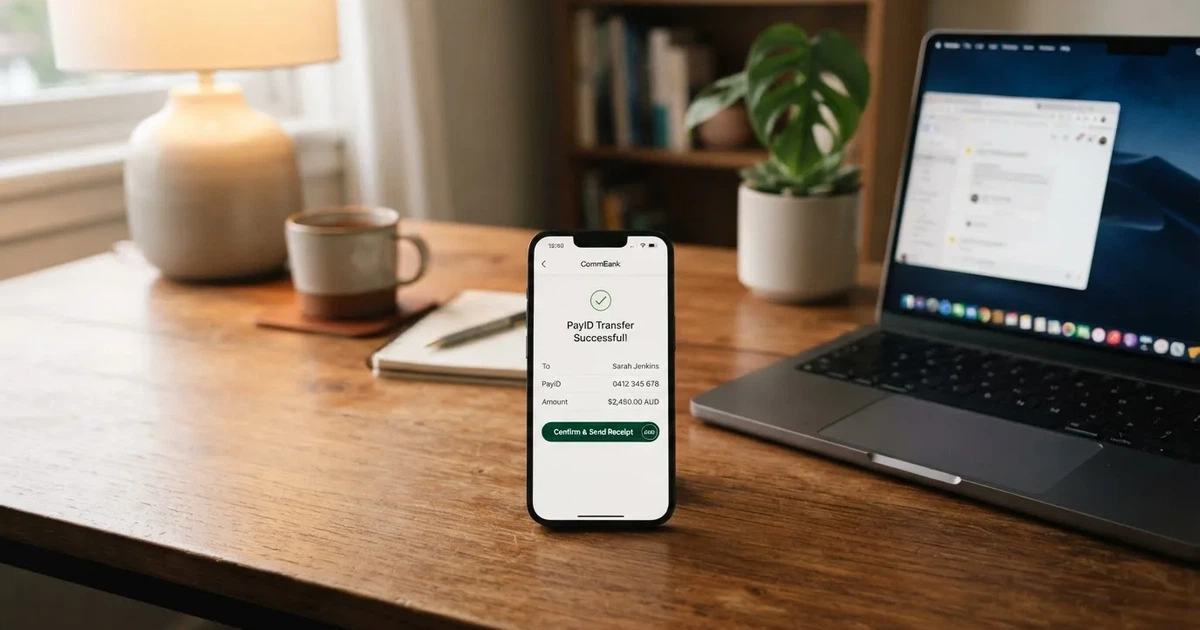
Table of Contents
- What “PayID pokies” actually points at in Australia
- The legal frame every “PayID pokies Australia” offer sits inside
- Responsible gambling as the practical frame
- PayID, Osko, Apple Pay, BPAY: what the payment claim actually means
- The operators the ACMA has acted against
- A reader’s checklist before clicking through
- Tax, winnings and what the ATO actually says
- Frequently asked questions about PayID pokies in Australia
What “PayID pokies” actually points at in Australia
The phrase does not point at an Australian product. PayID is real — it is the easy-to-remember identifier (a mobile number, an email, an ABN or an Organisation Identifier) that Australian Payments Plus operates on top of the New Payments Platform, and it is built into the online banking of more than 100 Australian financial institutions. Pay to a PayID and the payer sees the name on the receiving account before the transfer goes through, which is the check that protects against scams and mistaken payments.
Pokies online for Australians is the gap in the system. No state or territory in Australia licenses online casino games, online pokies or in-play betting. What is licensable is wagering on races and sport placed before the event, lotteries and keno. So the sites a search for “PayID pokies Australia” turns up are not Australian products that happen to accept a fast Australian payment rail. They are offshore casinos that have added PayID as a deposit option to look native to the reader’s bank app, and that addition is the whole of the marketing.

That changes what the page is for. It is not a comparison of which offshore site pays out fastest. The Australian Communications and Media Authority has issued formal warnings over every brand on the market this page is asked to review, and the IGA targets the provider — not the player. The page that follows goes through what PayID is, how it settles, what Australian Payments Plus says about using it to fund gambling, and which operators the ACMA has acted against, so the reader can see the offer for what it is.
How PayID settles, in plain terms
A PayID is not an account. It is a pointer to one. The customer creates it inside their own bank’s app — typing in a mobile number they already own, an email they already use, or, for a business, an ABN — and from that point a transfer to that identifier lands in the underlying account the same way a transfer to a BSB and account number would, except the sender no longer needs to retype those numbers.
The settlement rail underneath is the New Payments Platform, launched in February 2018 and overseen by the Reserve Bank of Australia, with the Fast Settlement Service settling each transaction individually in close to real time, 24 hours a day. With Osko, the consumer brand of NPP, a transfer between participating Australian banks arrives in under a minute, 24/7 including weekends, whether it is addressed to a BSB and account number or to a PayID. By April 2025 there were more than 25 million registered PayIDs in Australia.
What that gives an Australian depositing at an offshore casino is a near-instant transfer on the way in. What it does not give is a parallel settlement on the way out. The offshore casino credits a balance to its own ledger the moment a deposit hits; a withdrawal back to an Australian bank account still has to be cleared by that casino’s own payments team, on its own schedule, with no Australian regulator in the loop if the operator stalls. The reader who ignores the payment rail’s limitations is conflating instant inbound settlement with the casino’s own (non-instant) payout process.
What Australian Payments Plus itself says
AP+ runs PayID. Its own scam page draws a line straight through this page’s subject: “If you are asked to transfer funds to a PayID on an illegal gambling site, it is almost certainly a scambling website.” The word “scambling” — AP+’s own coinage — describes the offshore casino advertised on social media or in a messaging app, with no Australian licence, that takes PayID for a deposit and then disappears, refuses a withdrawal or resells the customer’s details. AP+ tells anyone who thinks they have been scambled to contact their financial institution.
The same page sets out what PayID itself will never do: it does not contact customers directly, it does not ask anyone to send money in order to receive money, and it does not ask anyone to “upgrade” an account. An email or text purporting to be from PayID is a scam by that test alone. Read that list against the bonus offer in a Telegram channel or a paid search result and the gap is the gap this page is filling in.
The legal frame every “PayID pokies Australia” offer sits inside
What the Interactive Gambling Act 2001 actually says
The Interactive Gambling Act 2001, strengthened by the Interactive Gambling Amendment Act 2017, makes it an offence to provide online casino games, online pokies or in-play betting to a person physically in Australia. The provision is aimed at the operator. The individual player is not prosecuted, and that fact is the reason an offshore casino can keep a marketing budget aimed at Australian readers — the consequences fall on the company, not on the customer.
What is licensed in Australia is wagering on racing and sport placed before the event, lotteries and keno. In practice the bulk of online bookmakers — 52 of them including Sportsbet, Bet365 and Ladbrokes — are licensed in the Northern Territory through the Northern Territory Racing and Wagering Commission. The commission is the de facto national regulator for that licence class; it has no full-time staff and meets once a month in Darwin. None of those licences covers online casino games. An offshore site that displays a Curaçao or Anjouan seal at the bottom of its homepage is not displaying an Australian licence, because no such licence exists for the product it is offering.
How the ACMA enforces it, in rounds
The Australian Communications and Media Authority investigates complaints, issues formal warnings and, when warnings are ignored, directs Australian internet service providers to block illegal sites. As reported in June 2026, the ACMA had asked ISPs to block 1,751 illegal gambling and affiliate marketing websites since the first blocking request in November 2019, and more than 230 unlicensed gambling services had left the Australian market since enforcement was stepped up in 2017. That figure is a cumulative count of sites and services across roughly seven years, and the rate has not slowed: in a round reported on 26 June 2026 alone the ACMA asked ISPs to block another twelve — 7Signs, ChromaBet, Donbet, Duospin, Freshbet, Slots Gem, Jacks Club, Lucky Start, Pointsbetz.com, Spinrise, Vinyl Casino and Wildsino.
A formal warning is the step before a block. It is published on the ACMA website, names the operator behind the brand and gives the company a window to comply before ISPs are asked to intervene. The list of brands the ACMA has warned — Dama N.V. five times across multiple brands, Consolutetish S.R.L. for two, Hollycorn N.V. for two, and a string of single-brand holders — is the closest thing the Australian reader has to a public register of the operators this page reviews.
The credit-card ban and what it does to PayID
The Interactive Gambling Act as amended in 2023 bars Australian-licensed online wagering services from accepting credit cards or other credit-related products as payment. The same restriction shapes how PayID-linked bank transfers can be used for wagering: a credit-funded transfer is still a credit-funded transfer. Offshore casinos are not bound by this rule in their own terms, but an Australian bank on the issuing side can and does block the merchant category code “Betting/Casino Gambling” on eligible cards. Westpac’s gambling block refuses authorisation of transactions registered under that merchant code on eligible personal credit and debit cards; ANZ’s block, activated in the ANZ app, also blocks gambling transactions made through a digital wallet such as Apple Pay on an eligible card, not just the physical card. Once ANZ’s block is on, removing it requires a 48-hour waiting period — and ANZ warns that not all gambling transactions will be blocked, and some non-gambling transactions might be blocked in error. Apple Pay itself does not add a fee — Apple states that any surcharge on Apple Pay comes from the merchant’s card-processing costs, not from Apple — and Apple does not set the transaction limits; those come from the card issuer or the merchant.
The wider picture is that almost half of all card payments in Australia by number went through Apple Pay, Google Pay or Samsung Pay by the end of 2025. The credit-card ban and the wallet-layer blocking that sits on top of it are why an offshore casino, asked for a deposit method the Australian customer can actually complete, ends up pointing them at PayID. PayID routes around the card network entirely: it is a bank-to-bank transfer, not a card transaction, and the bank block at card level does not see it.
What recourse the player actually has
This is the cost line that does not appear in an offshore casino’s homepage. An Australian-licensed operator sits inside the Australian Consumer Law, is answerable to the ACMA, and connects to BetStop — the National Self-Exclusion Register, live since August 2023 — so a player who has asked to be excluded is excluded across every Australian-licensed wagering service. An offshore casino is in none of those systems. If a withdrawal is refused, if a bonus is clawed back after a win, if a player is paid in a currency they did not agree to or simply not paid at all, the avenue is the casino’s own complaints email, then whatever dispute resolution the licence it displays points at, then a private lawyer.
BetStop does not bind an offshore casino. The National Gambling Helpline on 1800 858 858 — free, 24/7, with chat at Gambling Help Online — is the support line that does, and it is the line this page points at rather than any operator.
The 2026 reform that is law but not yet in force
The Interactive Gambling Amendment (Gambling Reform) Bill 2026 passed Parliament on 19 August 2026. Its advertising and inducement measures commence 1 January 2027. For the rest of this year the new rules sit on the statute book as a start-dated law; nothing about them changes the position of an offshore PayID pokies offer in the meantime. The page reads correctly under either date because the underlying offence — providing online casino games to a person in Australia — is already on the books under the 2001 Act as amended in 2017.
Responsible gambling as the practical frame
A page about an offer Australians cannot lawfully be sold must reckon with the people the offer is being offered to. Responsible gambling on this page is not a paragraph of “play safely” boilerplate. It is the practical answer to two questions a reader comparing offshore casinos will not get from the casinos themselves.
What the Australian support system looks like
The National Gambling Helpline is 1800 858 858, free, 24/7, with web chat at Gambling Help Online. Each Australian state and territory runs its own face-to-face counselling service — the names differ, the funding comes from the relevant government, and the helpline itself can refer into them. BetStop, the National Self-Exclusion Register, has been live since August 2023 and binds Australian-licensed online and phone wagering services. It does not bind an offshore casino, and that is the part the offshore marketing does not volunteer.
The rule of thumb that holds across the support services is that a player who has decided to stop does not have to decide how. The helpline will talk through the options — self-exclusion, account blocking at the bank, counselling referral — without steering the caller towards any of them in particular.
What the data on harm actually looks like
H2 Gambling Capital’s 2025 report estimates that Australians lose about A$3.9 billion a year to illegal gambling sites, and that the share of gambling going through legal channels fell from 74 per cent in 2021 to 64 per cent. Those numbers are not a forecast; they are a measure of where the money is already going. The illegal-channel share has grown on the back of exactly the kind of offer this page describes: a casino that takes PayID, advertises in Australian search results, and is not connected to any Australian self-exclusion register. The reader who treats an offshore casino as a free choice is being asked to make that choice at the end of a marketing funnel measured in lost household income.
The credit-cost test that applies to every offer here
Credit cards and credit-related products cannot be used for wagering with an Australian-licensed operator. The deposit routes that are legal under Australian rules are debit card, bank transfer, PayID and Osko, and BPAY. An offshore site asking an Australian for a credit card or a crypto deposit is signalling that it is not playing by Australian rules. That signal is not a comment on the casino’s fairness in its own jurisdiction — Curaçao-licensed operators run on Curaçao rules — it is a marker that the protection the reader has at an Australian-licensed operator is not in place here.
PayID, Osko, Apple Pay, BPAY: what the payment claim actually means
The mechanics that matter
A PayID transfer is an NPP message addressed by identifier rather than by BSB and account number, routed through the payer’s bank, cleared via the New Payments Platform, and settled individually through the Reserve Bank’s Fast Settlement Service. The sender sees the name of the receiving account before sending the money; that is the only fraud check PayID itself adds on top of NPP. Once the transfer is sent it cannot be reversed by the sender. AP+ is explicit that the name check is the protection against scams and mistaken payments.
Osko is the consumer brand of NPP. A transfer addressed to a BSB and account number, between participating Australian banks, also arrives in under a minute, 24/7, with the same no-reversal rule. The two are not different products — they are different addressing schemes on the same rail.
What “instant withdrawal” at an offshore casino actually means
The instant claim on the way in is real. The instant claim on the way out is not, and it cannot be, by the design of the system. A withdrawal request at an offshore casino goes through the casino’s own pending period first — often 24 to 72 hours, on top of which the operator’s terms may require submitted identity documents or a “source of funds” check the casino runs itself. Only when the casino approves the withdrawal does it push a PayID transfer back to the customer’s account. That outgoing PayID will then settle as fast as any other PayID does — under a minute, 24/7 — but the time under the casino’s control is upstream of that speed, and the casino’s terms govern it.
A reader who reads “instant PayID withdrawals” on a casino homepage is reading the second half of the sentence without the first. The rail is instant; the operator is not.
Apple Pay and the credit-ban layering
Apple Pay does not change the underlying card. It is a wallet front-end. Apple does not set transaction limits or PIN requirements — those come from the card issuer or the merchant. If the underlying card is a credit card, the wallet transaction is still a credit-card transaction, and the Interactive Gambling Act 2001 as amended in 2023 still bars Australian-licensed wagering services from accepting it. The bank’s own gambling block, where the customer has turned it on, refuses authorisation at card level regardless of the wallet front-end; ANZ’s block covers Apple Pay transactions on an eligible card, not just the physical card. Westpac’s block refuses the merchant category code “Betting/Casino Gambling” at the same point.
The Reserve Bank of Australia’s July 2025 review proposes removing surcharges only on eftpos, Mastercard and Visa card transactions, explicitly leaving American Express outside the proposed surcharge ban. The reader who notices Amex is treated separately here is reading the start of a longer conversation about Australian card costs that does not yet include the offshore PayID deposit. It will, eventually, because that is the next rail the cost conversation is moving onto.
Why PayID is the rail the offshore pitch keeps returning to
PayID is universal on the Australian side: built into the online banking of more than 100 financial institutions, with more than 25 million registered identifiers as of April 2025. It is instant on the way in. It is not a credit product, so it does not trip the credit-card ban that would otherwise apply to Australian-licensed wagering. It is bank-to-bank, so the card-network gambling blocks the banks have put in place do not see it. And it shows the name on the receiving account before sending, which the offshore casino knows its Australian customer will read as a confirmation that the money is going where it should — to a PayID in the casino’s name. The fact that the name on the account belongs to an operator the ACMA has warned over is a fact the name field does not show.
That is the gap AP+ is filling in with its “scambling” page. The reader who has been asked to PayID an offshore casino has been asked to do something the Australian payments operator itself names as a scam signal. The page that follows lists the operators the ACMA has acted against by name, because the reader who is comparing offers should be comparing names that are on a public register, not names that are not.
The operators the ACMA has acted against
What follows is not a ranking and not a recommendation. Every brand here is on the page because the Australian Communications and Media Authority has issued a formal warning over it, naming the operator behind the brand and the date the warning was published. An offshore licence is not an Australian licence, and an Australian licence for online casino games does not exist. The verdict at the end of each block is this page’s own judgement of what the ACMA action means for the reader, and each block answers a different question.
A summary table sits below the section, with the brand, the ACMA action and date, the operator the ACMA named, and how the page itself treats the brand’s PayID claim.
1. RocketPlay
The ACMA issued a formal warning to Pulsup Ltd over Rocketplay.com.au in March 2026. Dama N.V., the operator behind a string of other brands on this page, was already named in an earlier ACMA action against RocketPlay in May 2022. Two warnings, two operators, the same brand.
RocketPlay is one of the brands that has changed the company behind it during the life of the ACMA register, which is itself a tell: an Australian-facing casino does not need to swap its operating company every few years to keep offering the same product to Australians. The product is the product; the corporate wrapper changes. Whether the customer can tell who they are paying from one visit to the next is the test a name check on a PayID transfer is built to catch, and a name that has changed twice is not a name a reader can rely on as a stable destination.
The verdict: RocketPlay is a brand the ACMA has warned twice, under two different operators, in four years. The PayID transfer that lands in the casino’s balance is instant; the warning is older.
2. Level Up Casino
Dama N.V. was named in the ACMA’s May 2022 warning over a cluster of brands that included Level Up, alongside Bambet, Dazard, Rocketplay, Wild Tornado and Cobra Casinos. The same operator has since been warned again — over Woo Casino in March 2025 and over Spirit Casino in May 2025 — which makes Dama N.V. the most-warned operator in this set by raw count. Level Up is the earliest of those warnings and so the brand that has been on the ACMA’s list the longest.
Level Up is one of the brands whose presence on Westpac’s own merchant-level signals has been noted in the source material the page relies on. That is not a Westpac statement that Level Up is unsafe; it is a Westpac statement that the bank’s gambling block is configured to recognise the merchant code Level Up sits behind, which is the practical effect of the credit-card ban applied to a brand the ACMA has already acted against.
The verdict: Level Up has been the subject of an ACMA formal warning for longer than any other brand on this page. The operator behind it has accumulated three further warnings since. Relying on the age of that warning ignores the operator’s continued accumulation of ACMA warnings since.
3. Woo Casino
Woo Casino came under formal warning in March 2025, again with Dama N.V. as the named operator. Three years after the May 2022 round warned six Dama N.V. brands at once, the same operator was back on the ACMA’s list for a brand it had not been warned over before. The pattern — one operator, multiple brands, repeated warnings — is itself the lesson.
The verdict: Woo Casino’s warning is the most recent ACMA action against Dama N.V. for a brand it had not previously been warned over. The PayID deposit at Woo Casino is a transfer to the same operator the ACMA has now warned three times in three years, under three different brand names.
4. Spirit Casino
Spirit Casino was the third Dama N.V. brand on this page to draw an ACMA formal warning, in May 2025. The gap between the May 2022 cluster and the Spirit Casino warning is just under three years; the gap between the Woo Casino warning and the Spirit Casino warning is two months.
The verdict: Spirit Casino is the brand the ACMA warned Dama N.V. over in May 2025, two months after warning the same operator over Woo Casino. The reader who picks Spirit Casino on the basis of a fresh bonus offer is picking between two warnings issued within the same quarter.
5. National Casino
Consolutetish S.R.L. was named in the ACMA’s July 2025 formal warning over National Casino. The same operator was warned over Bizzo Casino in the same round. National Casino’s earlier history on Australian-facing marketing pages is the kind of presence the AUSTRAC transaction reporting register and the public Wikipedia entry on the brand reflect, and those listings carry no licence claim — they are background listings, not endorsements.
The verdict: National Casino was named in a July 2025 ACMA formal warning, the same round that also named Bizzo Casino and Ignition Casino. Three brands, one round. The reader who reads that round as a one-off has read the ACMA’s own publishing pattern wrong.
6. Bizzo Casino
Consolutetish S.R.L. was the operator named in the July 2025 ACMA warning over Bizzo Casino. TechSolutions (CY) Group Limited and TechSolutions Group N.V. had already been warned over Bizzo Casino in 2022, which makes Bizzo Casino the brand on this page with the longest ACMA history: three operators, two warnings, three years.
The verdict: Bizzo Casino has been the subject of two ACMA formal warnings under two different operators. The brand name has not changed; the company behind it has. Viewing the brand as stable is a mistake; the underlying operator’s history of warnings contradicts that assumption entirely.
7. Ignition Casino
Bamboo Media was named in the ACMA’s July 2025 formal warning over Ignition Casino. Ignition Casino is one of the brands most heavily advertised to Australian readers through affiliate marketing on search results for “PayID pokies”; the brand’s own homepage, at the time of writing, is the kind of landing page that leads with a bonus headline rather than a licence statement.
The verdict: Ignition Casino was named in the July 2025 ACMA round. The bonus headline is the offer; the ACMA warning is the regulator’s view of the same offer. Prioritizing the bonus headline over the regulator’s formal warnings creates a dangerous blind spot in the reader’s risk assessment.
8. Instant Casino
EOD Code SRL was the operator named in the ACMA’s February 2025 formal warning over Instant Casino. Instant Casino is one of the brands where the source material names payment-rail listings — ecoPayz and PayID itself — that the brand’s own marketing pages reference. The listing of PayID as an available deposit method on Instant Casino’s homepage is the page’s own claim; the ACMA warning is the regulator’s.
The verdict: Instant Casino is on the ACMA’s list from February 2025, and its homepage is one of the places where PayID appears as a deposit method. The brand is using PayID at the same time the ACMA is warning the brand’s operator. AP+ has already said what it says about that combination.
9. Jackbit
Ryker B.V. was named in the ACMA’s April 2026 formal warning, which covered Jackbit and CasinOK together. Jackbit is the brand on this page with the most recent ACMA action tied to a 2026 calendar date; the warning was issued in the same month the ACMA was still adding to its blocking list.
The verdict: Jackbit is the brand the ACMA warned in April 2026. The brand’s marketing claim of fast PayID withdrawals is timed against a regulator that has just named the operator. The reader who reads the marketing claim as a competitive advantage is reading past the warning.
10. Casino Intense
Sterplay Holding Ltd was named in the ACMA’s April 2025 formal warning over Casino Intense. The source material notes AUSTRAC, ITnews and NAB listings for the brand; those listings are background references to the brand’s presence in Australian-facing marketing, not endorsements.
The verdict: Casino Intense is on the ACMA’s list from April 2025. The brand’s NAB presence in the source material reflects the bank’s gambling-block coverage at card level, which is the practical effect of the credit-card ban on a brand the ACMA has warned.
11. Sky Crown
Hollycorn N.V. was named in the ACMA’s formal warning over its Sky Crown and Blue Leo casino services, in the PDF published in September 2022. Sky Crown is the brand on this page whose ACMA warning has been on the register the longest, in the form it was published.
The verdict: Sky Crown’s warning is the oldest ACMA action on this page by published date. Hollycorn N.V. has not been named in a further round since, which the reader can read either as quiet compliance or as the absence of further enforcement, and neither reading is the regulator’s.
How the eleven compare on the page’s own terms
The table that follows is not a leaderboard. It is a side-by-side of what is the same about every brand on this page — the ACMA action, the date, the operator — and what is different — the operator’s name, and whether the source material carries any other listing of the brand. A column that would repeat the same value down most of its rows would carry no information, and has been left out.
| Brand | ACMA action and date | Operator named by the ACMA | Other listings |
|---|---|---|---|
| RocketPlay | Formal warning, March 2026 (also May 2022 under Dama N.V.) | Pulsup Ltd | — |
| Level Up Casino | Formal warning, May 2022 | Dama N.V. | Westpac merchant-level coverage noted in source material |
| Woo Casino | Formal warning, March 2025 | Dama N.V. | — |
| Spirit Casino | Formal warning, May 2025 | Dama N.V. | — |
| National Casino | Formal warning, July 2025 | Consolutetish S.R.L. | AUSTRAC and Wikipedia entries |
| Bizzo Casino | Formal warning, July 2025 (also 2022 under TechSolutions) | Consolutetish S.R.L. | — |
| Ignition Casino | Formal warning, July 2025 | Bamboo Media | — |
| Instant Casino | Formal warning, February 2025 | EOD Code SRL | ecoPayz and PayID listings |
| Jackbit | Formal warning, April 2026 | Ryker B.V. | — |
| Casino Intense | Formal warning, April 2025 | Sterplay Holding Ltd | AUSTRAC, ITnews and NAB entries |
| Sky Crown | Formal warning, September 2022 | Hollycorn N.V. | — |
Two patterns the table makes visible. First, every operator named here is different: Hollycorn N.V. for Sky Crown, Pulsup Ltd for the most recent RocketPlay warning, Dama N.V. for the four-brand cluster, Consolutetish S.R.L. for the two-brand July 2025 cluster. The corporate wrappers are not shared, but the product on offer is the same product, marketed to the same Australian readers, under brand names that look like distinct operators to a casual search. Second, the dates spread across the full life of the ACMA’s enforcement register — September 2022 at one end, April 2026 at the other — which means viewing the warnings as isolated, one-off events ignores the systemic four-year enforcement pattern identified by the ACMA.
The arithmetic that matters: how fast the ACMA is actually blocking
The ACMA had asked Australian internet service providers to block 1,751 illegal gambling and affiliate marketing websites by June 2026, since the first blocking request in November 2019. That is the running total. The first blocking request was November 2019. From November 2019 to June 2026 is roughly 80 months. Across that span, the ACMA’s blocking requests work out to somewhere between 21 and 22 sites per month on average, in a band that rises sharply in the most recent rounds and is closer to single digits in the early ones. The June 2026 round alone added 12 sites, which is over half a month’s average added in one announcement.
Read that band against an offshore casino’s homepage and the picture inverts. The casino markets a fast PayID deposit, a fast PayID withdrawal, a daily bonus, a loyalty program. The ACMA’s blocking rate is the regulator’s version of the same sentence, and it runs at roughly the rate a reader would type a new search query. The offer is instant; the regulator’s attention is not, but it is constant.
The reader who frames the choice as “instant deposit versus slow enforcement” is reading the wrong half of the comparison. The deposit is instant because the payment rail is instant; that has nothing to do with the operator. The enforcement is the regulator’s response to the operator. The two speeds do not compete with each other.
A reader’s checklist before clicking through
The decision the page has been writing towards is not which offshore casino to choose. The decision is whether to engage with the category at all, and the rest of this section is what a reader who has already decided to compare offers can do with the material above.
The licence on the footer is not the licence that applies
Every offshore casino in this set displays a licence number at the bottom of its homepage. The licence it displays is the licence it operates under in its own jurisdiction — Curaçao, Anjouan, the Kahnawake Gaming Commission — and that licence binds the casino to that jurisdiction’s regulator. It does not bind the casino to the ACMA, to the Australian Consumer Law, or to BetStop. The reader who treats the footer licence as a quality mark is reading the wrong line of the homepage.
The PayID name check is doing one job
When a reader pays to a PayID, the bank app shows the name on the receiving account before the transfer goes. That is the only fraud check PayID itself adds on top of NPP. The reader can use that name to check whether the company the money is going to is the company the casino’s terms page says it is going to. It is not a check that the casino is licensed in Australia, because no Australian licence exists for the product. It is a check that the reader has been told where their money is going.
The bonus headline is the operator’s view, not the regulator’s
The bonus headline on an offshore casino’s homepage is what the operator wants the reader to read. The ACMA formal warning is what the regulator wants the reader to read. Both are public. The page does not have to choose between them on the reader’s behalf; the page’s job is to put them beside each other. A reader comparing offers who has not read the ACMA register has compared offers the casino has already curated.
What to do if a PayID transfer has gone to an offshore casino
AP+ tells anyone who thinks they have been scambled to contact their financial institution. The reader’s bank can see the PayID the money was sent to and may be able to recall or trace the funds where the transfer has not yet settled. The National Gambling Helpline on 1800 858 858 — free, 24/7, with chat at Gambling Help Online — is the support line that does not require the reader to file a complaint before it answers. Both routes exist; neither is a substitute for reading the ACMA register before the deposit.
Tax, winnings and what the ATO actually says
Gambling winnings of a recreational player are not assessable income in Australia, under section 6-5 of the Income Tax Assessment Act 1997. Losses are not deductible. The line that draws the distinction is whether the person carries on a business of gambling — a question the Australian Taxation Office settles on the facts of each case, and a question the page does not settle for any reader. The model only is the model: recreational player, no assessable winnings, no deduction for losses. The reader who treats offshore casino winnings as tax-free income by default has not read the ATO’s test for what a business of gambling is, and the reader who treats losses as deductible has misread section 6-5. Neither position is the ATO’s position. The ATO’s position is the test, and the test is on the ATO’s website.
Frequently asked questions about PayID pokies in Australia
Why do so many pokies sites specifically advertise PayID rather than a regular bank transfer?
Because PayID lets an offshore casino market itself as native to an Australian bank app. A PayID transfer is a near-instant NPP transfer, and NPP is already built into the online banking of more than 100 Australian financial institutions — so the deposit step looks like any other local payment, even though the casino on the receiving end is offshore. AP+ itself warns about exactly this presentation: a request to transfer to a PayID on an illegal gambling site is, in its words, “almost certainly a scambling website.” The brand is the pitch; PayID is the rail.
Is a “trusted PayID pokies” site described that way actually any safer than one that isn’t?
The word “trusted” on an offshore casino’s homepage is the operator’s own description of itself. The ACMA register of formal warnings is the regulator’s description of the same operators. The ACMA has issued a formal warning over every brand on the list this page reviews. “Trusted” on the homepage and “warned” on the regulator’s register describe different views of the same offer, and the reader who treats the homepage’s word as the relevant one has read past the regulator’s.
Can an Australian legally use PayID to fund an offshore pokies account?
The Interactive Gambling Act 2001, as amended in 2017, makes it an offence to provide online casino games to a person in Australia. The individual player is not prosecuted under the Act; the provision targets the operator. There is no Australian Consumer Law recourse against an offshore operator, no BetStop binding, and no Australian complaints body — which is the practical legal frame the reader is in. AP+ tells anyone asked to PayID an illegal gambling site that the site is almost certainly a scambling website. The reader can complete the PayID transfer; what the reader cannot do is treat the resulting balance as protected by Australian law, because it is not.
How does an “instant PayID” pokies claim compare with the real Osko settlement times banks describe?
A PayID transfer between participating Australian banks settles in under a minute, 24/7, which is the Osko settlement time AP+ describes. That is the time the casino’s deposit takes to land on its side. A withdrawal back to an Australian account is not on the same clock — it is gated by the casino’s own pending period, identity checks and approval queue, and only then does the outgoing PayID settle at Osko speed. The instant claim on the way in is a property of the rail; the instant claim on the way out is a property of the operator, and is not the same thing.
What should someone check about a site before trusting its own claim to be licensed for PayID pokies?
Three checks. First, the ACMA’s formal-warning register, which lists every brand the regulator has named and the operator it named it under. Second, the name that comes up on the bank app when the reader pays to the casino’s PayID — that name should match the operator the casino’s terms page says the customer is paying. Third, the licence displayed in the footer of the homepage, which will be a Curaçao, Anjouan or Kahnawake licence, not an Australian one — because no state or territory in Australia licenses online casino games. None of those checks turns an offshore casino into an Australian one. They turn the casino’s own claims into something a reader can verify against a public register rather than against the casino’s own marketing copy.