
Big jackpot pokies for Australians: why an honest shortlist is not the same as a long one
Data current as of 8 November 2026, verified against the ACMA’s published enforcement record and the Interactive Gambling Act 2001 as it stands in 2026.
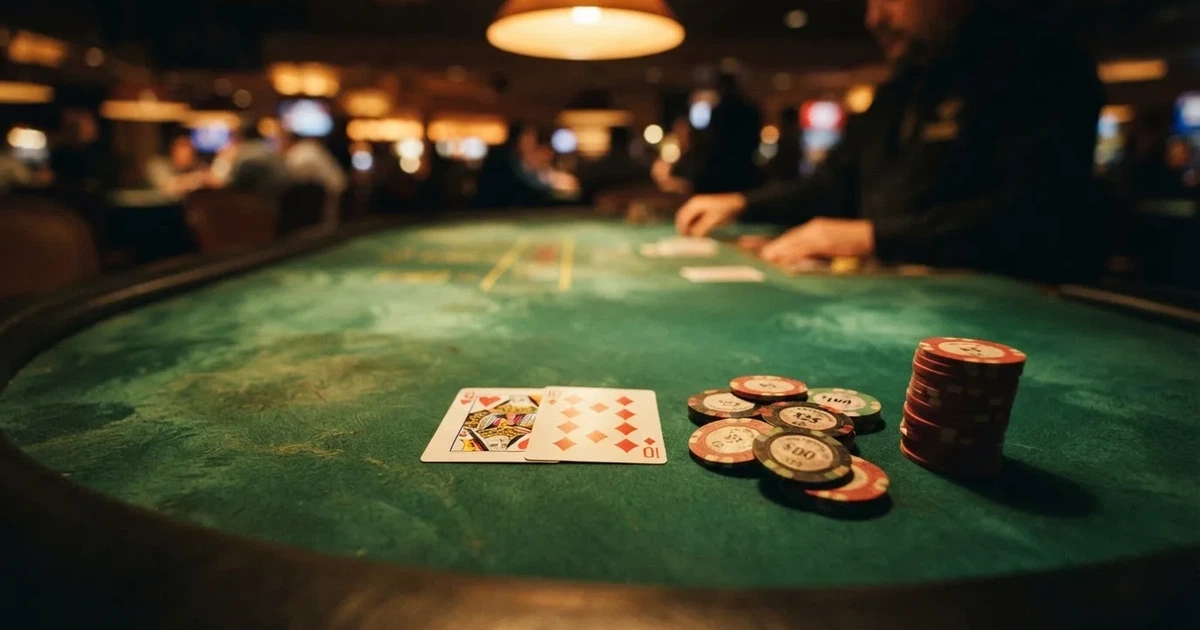
The phrase “best online casinos with big jackpot pokies” reads like a request for a top ten. For an Australian reader in 2026 it is something else. The Interactive Gambling Act 2001, in the form it has carried since the 2017 amendments, makes it an offence to provide online casino games, including online pokies, to anyone in Australia, and no state or territory issues a licence for it. A page that hands over such a list is handing over a list of services the regulator has spent 2026 working to make unreachable. This page takes the question seriously, lays out the gap in the open, names the operators the regulator has acted against, and points to what a reader in Australia can lawfully do instead.
Table of Contents
- How big jackpot pokies actually work, and why the Australian market sits outside them
- The legal frame, in plain terms
- What the ACMA has actually done in 2026 and the years just behind it
- The brands the ACMA has named, and what that record shows
- What the offshore offer actually costs a player who takes it
- Where a reader who wants a big jackpot can lawfully play in Australia
- Responsible play in a market with one regulator and one self-exclusion register
- What the table above means for a reader comparing options
- Frequently asked questions
How big jackpot pokies actually work, and why the Australian market sits outside them
Progressive jackpots have been part of casino gaming since 1986, when International Game Technology introduced the first wide-area Megabucks link in Nevada. The inaugural payout, $4,988,842.17, hit on 1 February 1987. The mechanic is simple enough to describe and stubborn enough to outlast every marketing reinvention since. A small fraction of every losing wager on a linked machine feeds a shared pool. The pool climbs. It resets when somebody wins. That is the entire apparatus, and every “must-drop” timer, every mystery tier, every flashing promotional overlay on a casino landing page is a variation on it.

The variation that matters for scale is the network. A progressive can be local — a bank of machines within one venue sharing a pot — or wide-area, with a single prize pool fed by machines across many venues, sometimes across several countries. Wide-area progressives are how a single win reaches eight figures. The record for an online slot, €19,430,723.60, fell on 27 April 2021 to a Belgian player at Napoleon Sports & Casino on Microgaming’s “Absolootly Mad: Mega Moolah”. Games Global, the business that absorbed Microgaming’s distribution, has since logged later Mega Moolah payouts of £11.5 million and £13.5 million.
What the marketing around these numbers tends to skip is the rate at which the pool climbs. A jackpot grows because players are losing, not winning. The faster it rises, the more turnover has been feeding it. A player who treats a £19 million pool as a windfall waiting to be claimed is reading the number as a promise; the math reads it as a record of losses already absorbed by the rest of the network. The house edge underneath every spin of every linked title is positive. The jackpot sits on top of the edge, paid out of it, and is paid out rarely enough that the edge still wins over the long run.
Two technical details sharpen that point. The first is the “must-hit-by” progressive, a mystery-jackpot variant in which a random number generator sets the exact payout amount inside a preset range, say $1,000 to $3,000, immediately after the previous jackpot is won. The player does not need to land a specific symbol combination; the prize fires when the counter crosses a threshold. The second is the positive-expectation case, in which the pool grows large enough that the theoretical return to player pushes above 100%. This is real in some video poker and Caribbean Stud variants, though for slot machines the calculation is usually impossible because reel layouts are not published and the player’s expected value is not knowable from the screen. Both details matter for what a reader can actually verify before deciding to play — and both are reasons to be cautious about any marketing claim that an online title is “due” a payout.
The legal frame, in plain terms
The Interactive Gambling Act 2001 is the operative statute. Its 2017 amendments widened the prohibited service definition to cover online casino games supplied to anyone in Australia, regardless of where the operator is incorporated. The penalty regime targets the provider, not the player. No individual Australian has been prosecuted for placing a wager on an offshore casino; the IGA is built around the proposition that the lawful path is to choke supply.
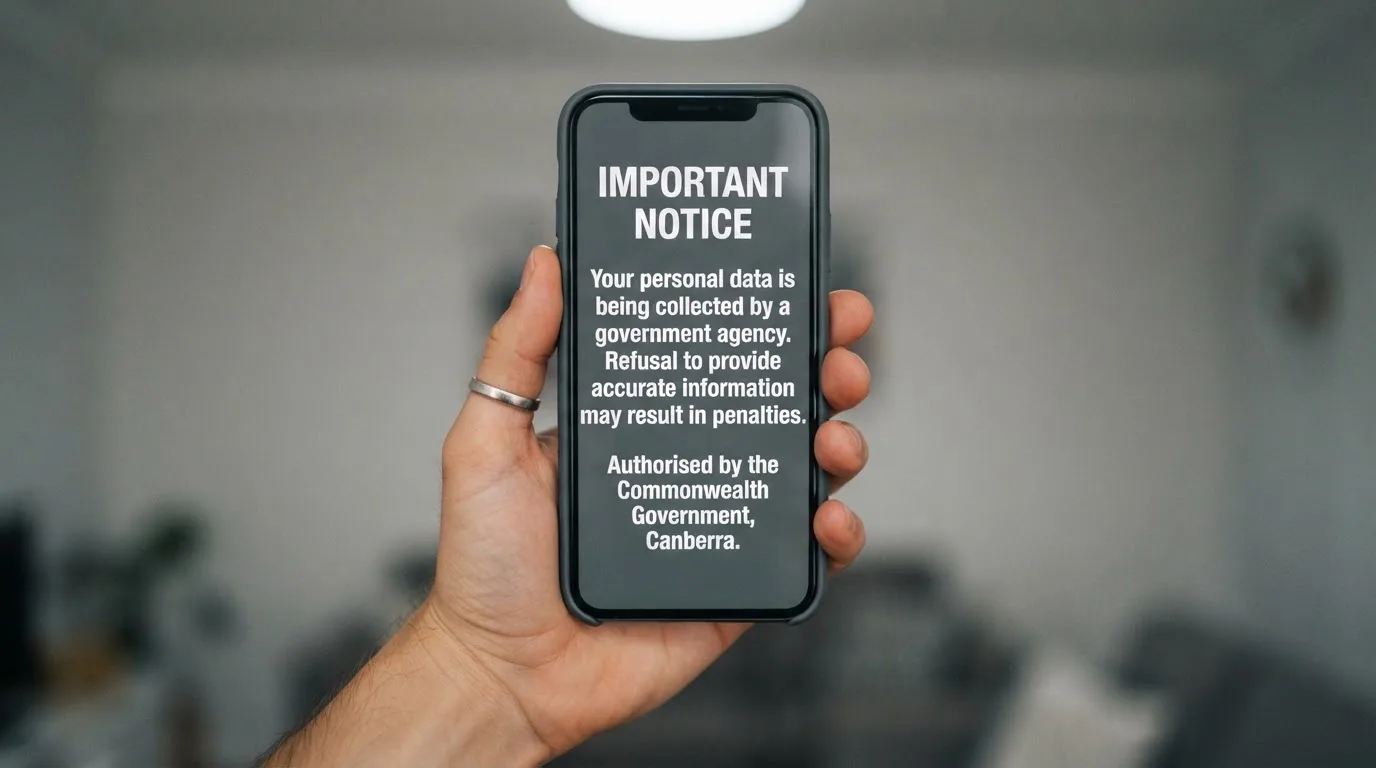
Licensing is partitioned. Online casino games, online pokies and in-play betting are not licensed in any Australian state or territory. What is licensed is wagering on races and sporting events placed before the event, lotteries and keno. In practice, racing and sports bookmakers, including the largest Australian-facing brands, are licensed by the Northern Territory Racing and Wagering Commission, a body without full-time staff that meets once a month in Darwin. The Commission regulates 52 of those bookmakers. There is no parallel body, anywhere in the country, that could in principle licence a brand to offer online pokies to Australians.
The Interactive Gambling Amendment (Gambling Reform) Bill 2026 passed Parliament on 19 August 2026. Its advertising and inducement measures commence 1 January 2027. The statute exists; the operative date for the new rules has not yet arrived on a 2026 page. For the rest of this year the picture is the one the 2001 Act, as amended in 2017, has been drawing for almost a decade.
Payment is also partitioned, and the line is sharp. Credit cards, credit-related products and digital currency have been banned as funding for licensed online wagering since 11 June 2024. The penalty for a licensed operator that accepts one is up to $247,500. The lawful deposit routes for an Australian punter using a licensed wagering service are debit card, bank transfer, PayID, Osko and BPAY. An offshore casino asking an Australian customer for a credit card or a crypto deposit is operating outside the Australian rules regardless of what licence its footer displays. The payment rail is the tell, not the licence badge.
Minimum age across the country is 18. Recreational gambling winnings are not assessable income under section 6-5 of the ITAA 1997, and losses are not deductible, except where a person carries on a business of gambling, which is a different question entirely and one the ATO settles case by case.
What the ACMA has actually done in 2026 and the years just behind it
The Australian Communications and Media Authority enforces the IGA. Two of its powers show up in the enforcement record: formal warnings under the Act, and blocking requests to Australian internet service providers that take a website off the routing table for customers in this country. Both have been used heavily.
As reported in June 2026, a total of 1,751 illegal gambling and affiliate marketing websites had been blocked since the first blocking request in November 2019. More than 230 unlicensed gambling services have left the Australian market since enforcement was strengthened in 2017. The June 2026 round alone added twelve names: 7Signs, ChromaBet, Donbet, Duospin, Freshbet, Slots Gem, Jacks Club, Lucky Start, Pointsbetz, Spinrise, Vinyl Casino and Wildsino. Each was on the wrong side of the IGA; each is now harder to reach from an Australian connection.
The blocking rate helps reveal the scale of the regulator’s activity. Against 1,751 sites blocked across roughly six-and-a-half years from November 2019, that works out to an average of roughly 270 blocking actions per year, or about five per working week. The figure is a band rather than a point: enforcement is lumpy, with quiet months and rounds of ten or twelve at a time, and the total climbed fastest after 2021 once the ACMA settled into its rhythm. What the band tells a reader is that the regulator is not posting occasional reminders. It is running a programme, and the programme has been removing sites faster than the market has been able to open new ones to replace them.
Formal warnings are the slower-moving, named-operator part of the record. They name a corporate entity, a brand, and a date. The list that follows in the next section is drawn from that record. Each operator named there is there because the ACMA itself, on the date stated, issued a formal warning under the IGA over the conduct of an interactive gambling service to Australians.
What a formal warning does not do is revoke a foreign licence. An offshore operator can hold a Curaçao or Kahnawake sub-licence and still be on the ACMA list; nothing in the foreign regulator’s framework prevents it. What the warning does is put the operator on the public record. That record is what a reader is reading here.
The brands the ACMA has named, and what that record shows
The table below is not a ranking and not a recommendation. Each brand appears because the ACMA itself has issued a formal warning over it for offering prohibited interactive gambling services to Australians. The licence lines most of these brands display in their footers do not change that. No state or territory in Australia licences online casino games or online pokies, regardless of which offshore regulator the brand points to.
| Brand | ACMA action and date | Operator named by the ACMA | Subject support |
|---|---|---|---|
| RocketPlay | Formal warning — March 2026; earlier Dama N.V., May 2022 | Pulsup Ltd | — |
| Level Up Casino | Formal warning — May 2022 | Dama N.V. | Listed as a partner on the BGaming supplier site |
| Woo Casino | Formal warning — March 2025 | Dama N.V. | — |
| Spirit Casino | Formal warning — May 2025 | Dama N.V. | — |
| National Casino | Formal warning — July 2025 | Consolutetish S.R.L. | Noted in passing on a public Wikipedia entry |
| Bizzo Casino | Formal warning — July 2025; earlier 2022 over TechSolutions | Consolutetish S.R.L. | — |
| Ignition Casino | Formal warning — July 2025 | Bamboo Media | — |
| Instant Casino | Formal warning — February 2025 | EOD Code SRL | — |
| Jackbit | Formal warning — April 2026 | Ryker B.V. | — |
| Casino Intense | Formal warning — April 2025 | Sterplay Holding Ltd | Mentioned alongside Australian outlets by ABC reporting and ACMA pages |
| Sky Crown | Formal warning — September 2022 | Hollycorn N.V. | — |
A row with an em dash in the right-hand column is one for which the inputs simply did not carry a confirmation that the brand carries the specific jackpot catalogue this page is built around. The right-hand column is what the supplier and listing pages themselves say, where they say anything, and the absence of a row there is not a denial. It is a hole in the public record, and the right thing to do with a hole is to leave it marked rather than fill it in.
RocketPlay
Pulsup Ltd drew a formal warning from the ACMA in March 2026 over RocketPlay. Dama N.V., the operator named in the earlier 2022 warning covering six brands including RocketPlay, has been a recurring name in the ACMA’s record across the last few years. There is no row for the brand in the subject-support column because no listing carries a positive confirmation that RocketPlay runs a jackpot-pokie catalogue aimed at Australians; what it runs, on the ACMA’s case, is a prohibited interactive gambling service to people in Australia. The mismatch is the point. A reader who arrives at this brand because a comparison site ranked it does not arrive at a place where Australian consumer protection applies, and the ACMA has now twice said so on the public record.
Level Up Casino
Dama N.V. received the ACMA’s May 2022 warning covering Level Up alongside five other brands. The supplier side is the one place a row in the subject-support column is justified: BGaming’s own partner listings include Level Up, which is at least a public confirmation that the brand stocks a supplier whose catalogue includes progressive jackpot titles. What it is not is a confirmation that the brand offers those titles to Australians lawfully. It does not. The 2022 warning is still on the ACMA’s page, and the warning does not expire because the supplier list updates.
Woo Casino
Dama N.V. drew a second warning in March 2025 over Woo Casino, the same operator that absorbed the May 2022 round covering six of its brands. A reader weighing Woo against the others on this list is weighing it against an operator the ACMA has now formally warned twice in three years. That is not a brand profile a comparison site tends to surface, and it is exactly the profile that decides whether the offer is reachable from Australia in the first place.
Spirit Casino
Dama N.V.’s May 2025 warning added Spirit Casino to the same operator’s existing line of entries. Two warnings against the same operator in thirteen months is the regulator’s pattern of escalation: the 2022 round as the first move, the 2025 rounds as the follow-up. Spirit Casino is on the same legal footing as every other brand in this table.
National Casino
Consolutetish S.R.L. drew the July 2025 warning alongside Bizzo Casino. The brand has a passing mention on a public Wikipedia entry, which is what the subject-support column records; it is a listing in a tertiary source, not a confirmation of any feature the brand itself markets. The 2025 warning is the operative fact.
Bizzo Casino
Consolutetish S.R.L. is the operator named for the July 2025 warning; the same brand was the subject of an earlier 2022 formal warning to TechSolutions (CY) Group Limited and TechSolutions Group N.V. The double mention is itself a record: this brand has been warned once under one corporate wrapper, and again under a different wrapper, in roughly three years. A reader who lands here because a comparison page places Bizzo in its top tier is reading a list built on the wrong evidence.
Ignition Casino
Bamboo Media is the operator named by the ACMA in July 2025. Bamboo Media does not appear elsewhere on this page. The brand’s own presence in the regulator’s record is the only thing that puts it on this list.
Instant Casino
EOD Code SRL drew a formal warning in February 2025. Instant Casino has been a recurring name on offshore comparison sites; it is not a recurring name on the ACMA’s record before this warning. The warning stands as the regulator’s first formal entry for the operator and brand.
Jackbit
Ryker B.V. drew a warning in April 2026. April was a busy month: the ACMA’s enforcement output that month covered Jackbit and CasinOK under the same corporate name. For a brand that entered the ACMA’s record this year, the warning is also the most recent data point the regulator has on file for it.
Casino Intense
Sterplay Holding Ltd drew the warning in April 2025. The subject-support row carries a mention rather than a tick because ABC reporting and ACMA material sit alongside the brand in the inputs; what the brand itself says about its jackpot catalogue is not in evidence, and the row reflects that.
Sky Crown
Hollycorn N.V. is the operator named in the September 2022 formal warning covering Sky Crown and Blue Leo. Hollycorn is one of the more frequently-named operators on the ACMA’s record; the 2022 entry is also one of the older entries still on the active list, which is itself a fact about how the regulator handles repeat offenders. Sky Crown’s profile in this picture is the same as every other brand above: offshore-licensed, named in a formal warning, no consumer protection route for an Australian player.
What the offshore offer actually costs a player who takes it
Three numbers decide what an offshore casino costs an Australian punter who reaches it before the ISP blocks it. None of them is a bonus figure, because no bonus figure has any legal standing once the operator has been told by the regulator that it should not be serving this customer in the first place.
The first is the payment ceiling. The 11 June 2024 ban on credit cards, credit-related products and digital currency applies to licensed wagering. An offshore site asking for either is operating outside the Australian rules and is, on its own payment rail, doing so in a way no Australian-licensed operator is permitted to do. A reader using a debit card from an Australian bank to fund an offshore casino account is using a payment method that is not illegal for the player, but the operator is taking a payment the IGA treats as a tell.
The second is the withdrawal risk. The IGA does not give a player a complaints body to approach if a withdrawal is refused. ACMA’s enforcement is directed at the operator, not at unpaid balances. An offshore casino that delays a withdrawal, voids winnings on a bonus term the player never saw, or simply closes the account is not on the hook to a body an Australian punter can ring. The balance sits with the operator.
The third is the block itself. A blocking request from the ACMA takes the website off the routing table for Australian internet service providers. The site can still be reached from another jurisdiction, and the offshore operator can stand up a fresh domain. The block, however, is a moving floor: by June 2026, 1,751 sites have been subject to one, and the average pace over the programme’s lifetime has been roughly five working-weekdays per week of enforcement. A reader who opens an account on a brand not yet on the list is opening an account on a brand the regulator has not yet caught up with, and the regulator’s track record is to catch up.
A fair rule of thumb across the eleven brands above: an Australian reader who reaches any of them through a comparison page is reaching a brand whose formal warning is already on the ACMA’s record. The balance is at risk of refusal, the payment rail is outside the Australian rules, and the brand itself is one blocking request away from being unreachable. That is the offer’s real price.
Where a reader who wants a big jackpot can lawfully play in Australia
The short answer is that the lawful Australian path to a big jackpot is through a licensed pokies venue, a licensed club, a licensed pub or a land-based casino, not through an online casino. The mechanics are the same in outline: a progressive jackpot, a network, a pool that grows with every losing spin, and a payout ceiling that depends on the size of the network. The IGT Megabucks link that paid out $4,988,842.17 in 1987 is the ancestor of every wide-area progressive running on a casino floor today.
The land-based venues that host jackpot pokies in Australia include the casino floors in each state. Crown Melbourne runs blackjack and table games under rules approved by the Victorian Gambling and Casino Control Commission, which replaced the VCGLR as Victoria’s casino regulator on 1 July 2022. The same regulator’s public log of approved changes to Crown Melbourne’s blackjack variants includes a renaming of the “Perfect Pairs” side bet to “Crown Pairs” on 23 December 2024 and the introduction of a “Free Bet” option with a new “Pot of Gold” side bet on 25 March 2024. The regulatory framework the Commission runs is the same framework that governs the table games on Crown’s floor. The casino’s poker machine product sits inside that framework too.
NSW runs the equivalent regime under the Casino Control Act 1992. Section 66 requires a casino operator not to permit a game to be played unless the game and its rules are approved by the regulator, and the operator must make a copy of the approved rules available to patrons on request. The same machinery extends to jackpot pokies, with each game’s rules and payout schedule approved by the relevant state regulator before the machine goes on a floor.
The jackpot sizes on a land-based Australian floor are not on the same scale as the offshore online record. A wide-area progressive linking machines across clubs and casinos in one state, or across a chain of venues under one operator, can climb into the high five figures or low six figures in AUD; the eight-figure payouts the offshore record carries are products of wide-area networks that span multiple countries and a turnover base the Australian market does not have. The trade-off is one a reader can weigh for themselves: a smaller, lawful payout in a venue they can walk into, or a larger offshore payout on a brand the regulator has formally warned.
Responsible play in a market with one regulator and one self-exclusion register
The Australian responsible-gambling architecture has two pieces that matter for a reader weighing the offshore path. The first is BetStop, the National Self-Exclusion Register, which has been live since August 2023. A self-exclusion lodged through BetStop binds every Australian-licensed online and phone wagering service. The register does not extend to an offshore casino. An Australian punter who has self-excluded through BetStop can still reach an offshore casino through the same routes the regulator has spent the last six years trying to close. The register is doing what it can; it is not doing what an offshore-licence-free environment would need it to do.
The second is the National Gambling Helpline, 1800 858 858, free, available 24 hours a day, with chat offered through Gambling Help Online. Both the phone line and the chat service are funded by state and territory governments and staffed by counsellors trained in gambling harm. They are reachable from Australia without going through any operator at all, which is the point of an independent service.
A reader who has decided to play online, and who is reading this from outside Australia, should know that the picture in their jurisdiction will be different. The page is written for an Australian reader, and the legal facts are the Australian facts. Outside Australia, the offshore brand’s licence may be operative, the regulator’s authority will not extend to the reader, and the responsible-gambling architecture described above will not apply.
What the table above means for a reader comparing options
The eleven brands sit in one column because the regulator has put them there. Two of them, RocketPlay and Bizzo Casino, have been warned twice under different corporate wrappers, which is a record a reader should not have to assemble themselves. Three of them — Woo Casino, Spirit Casino and Casino Intense — were warned in 2025 alone, with their operators still on the ACMA’s record from 2022 or earlier. The others sit at one warning each, which is the regulator’s first formal step rather than its last.
A reader who arrived at this page looking for a shortlist of online casinos for big jackpot pokies and who reads to this point has the data the regulator itself has put on the record. A reader who arrived here looking for a recommendation and who reads to this point has, instead, the regulator’s case against each of the eleven brands on the regulator’s most-recent list. The page does not reconcile those two readings because the regulator has not. The brands on the list are the brands the regulator has named. A page that ended on anything else would be a page written against the regulator’s record rather than from it.
Frequently asked questions
What is the largest jackpot ever recorded on an online slot?
The record is €19,430,723.60, won on 27 April 2021 by a Belgian player at Napoleon Sports & Casino on Microgaming’s “Absolootly Mad: Mega Moolah”. Games Global, the successor to Microgaming’s distribution arm, has since reported later Mega Moolah wins of £11.5 million and £13.5 million. These are offshore, online-only payouts; the Australian IGA 2001 prohibits offering online casino games to Australians and no Australian licence covers the games that produced them.
How does a progressive jackpot pokie differ from a fixed-prize one?
A fixed-prize pokie pays a set amount for a set combination, regardless of how long the machine has been in operation. A progressive jackpot grows with each losing wager across a linked network of machines, then resets to a predetermined minimum once it is won. Wide-area progressives link machines across many venues, sometimes across countries, and that is how a single payout reaches eight figures. Local progressives stay within one venue, with smaller pools and quicker resets.
Is it legal for an online casino to offer jackpot pokies to Australians?
No. The Interactive Gambling Act 2001, as strengthened by the Interactive Gambling Amendment Act 2017, makes it an offence to provide online casino games, including online pokies, to anyone physically in Australia. No state or territory issues a licence that would permit it. The penalty regime targets the provider, not the player. Credit cards and digital currency are also banned as payment for licensed online wagering since 11 June 2024, with penalties up to $247,500 for operators that accept them.
Can a free version of a jackpot pokie show the real jackpot total?
No. A free-play version of a jackpot pokie, where one exists, runs on simulated balances and a simulated jackpot counter. The real wide-area progressive pool is fed by real losing wagers across the linked network, and the live figure is only accurate on the live-money game. A free version that displays a multi-million-dollar jackpot is showing a marketing number, not a reachable one.
Are jackpot-style pokies common on licensed Australian club and pub floors?
Yes. The Australian club and pub market runs networked jackpot pokies under state-level approvals. Pools are smaller than offshore wide-area progressives because the network is smaller, but the games run under approved rules and are reachable by any adult who walks into the venue. The NSW Casino Control Act 1992 and the Victorian Casino Control Act 1991 both set the framework that governs table games and poker machines in their respective states.
What determines how quickly a progressive jackpot grows?
The size of the network, the volume of losing wagers on the linked machines, and the share of each wager the operator routes to the pool. The wider the network and the higher the turnover, the faster the pool climbs. A wide-area progressive running across a network of offshore casinos will grow faster than a local progressive running across a bank of machines in one Australian club, because the turnover base is larger. The pool always grows out of losses, not wins, and the speed of the climb is a record of how much money the rest of the network has fed into it.