
What a progressive jackpot slot is, and what one actually costs an Australian player
A progressive jackpot slot is a slot machine whose top prize grows every time someone plays and loses, then resets to a floor once it is won. The mechanic has been around since 1986 — International Game Technology’s Megabucks paid its first jackpot of nearly A$5 million on 1 February 1987 — and online it now produces payouts measured in tens of millions of euros. The headline figure is real, but it is the rarest outcome in the game: a bet designed so that most of what flows in stays in the game, and only one spin in millions actually triggers the top pool. This page walks through how the pool grows, what the offshore sites that advertise it mean for someone playing from Australia, and what the operator landscape looks like for players who are weighing where (and whether) to play.
Data current as of 8 November 2026, verified against the ACMA’s formal warning register and the IGA prohibition framework as published.
Table of Contents
- The mechanics underneath a rising prize pool
- Why the offshore jackpot sites cannot be licensed in Australia
- Responsible gambling around a product designed to keep paying in
- What the paytable actually says
- How a shortlist of progressive jackpot slots is actually put together
- What a player deciding offshore play should weigh
- The figures the maths actually puts on the table
- Frequently asked questions
The mechanics underneath a rising prize pool
A progressive jackpot works by skimming a slice of every losing wager and feeding it into a shared pool. The pool ticks up with each spin until someone hits the qualifying combination, at which point it pays out (or, in some variants, drops into a “must-hit-by” range decided by a random number generator the moment the previous jackpot was won) and resets to a preset minimum. Casinos fund the growth from a portion of their margin, which is why the pool keeps climbing between wins rather than topping out at a fixed ceiling.

That last point is what the marketing leans on. A jackpot that climbs past €19 million reads like a sum that has to be won eventually; in practice, the contribution rate is set so the pool’s expected time-to-win stretches across millions of spins. A player feeding the machine a few hundred spins does not narrow the time-to-win in any meaningful sense — they are paying for the chance, and the machine keeps the slice.
Where the pool lives is the other thing worth understanding. A standalone progressive is contained inside one machine, so the clock ticks only when that machine is played and the ceiling stays modest. A wide-area progressive links hundreds or thousands of machines (or, online, thousands of player accounts) across one network, so every spin anywhere on the network pushes the pool up. The headline-grabbing jackpots — Mega Moolah’s record €19,430,723.60 win at Napoleon Sports & Casino in Belgium on 27 April 2021, and the £11.5 million and £13.5 million wins Games Global has announced since — are wide-area progressives: a small contribution from a very large player base compounds into a very large pool.
Three structural facts follow from this:
- The base return-to-player on a progressive is usually lower than on a fixed-jackpot slot of the same denomination, because the machine is paying into the pool on every losing spin.
- A positive-expectation window opens only when the pool grows large enough that the theoretical return crosses 100%, and only in some games (Caribbean Stud variants are the textbook example). For slots the threshold is hard to calculate precisely because the reel layouts are not published.
- “Must-hit-by” progressives remove the symbol combination entirely — a random number generator picks the win within a preset band right after the previous jackpot pays out, so the player does not need a specific reel outcome to win.
The €19.4 million figure, taken at face value, sounds like a payday one spin away. Taken as a contribution-weighted probability across millions of accounts feeding the network, it is the payout at the end of a very long expected wait. Most players never come close.
Why the offshore jackpot sites cannot be licensed in Australia
Online casino games, online pokies and in-play betting are prohibited interactive gambling services under the Interactive Gambling Act 2001, strengthened by the Interactive Gambling Amendment Act 2017. No state or territory in Australia licenses them. The framework distinguishes the licensed product from the prohibited one cleanly: pre-event wagering on racing and sport, lotteries and keno are licensed and legal; an online slot that pays out a progressive jackpot is not.
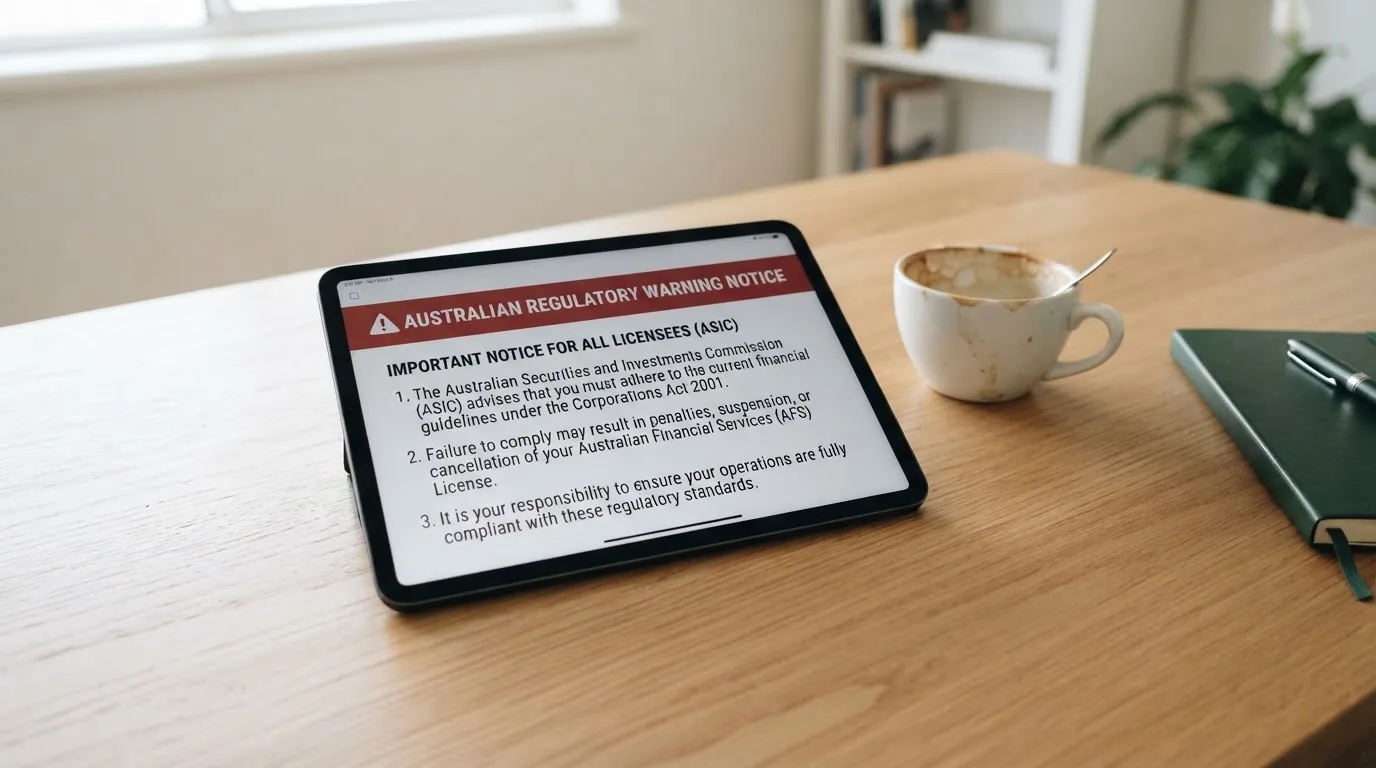
That is the legal shape of every operator a punter in Australia will see advertising a progressive jackpot online. The offshore brand displays a Curaçao or Anjouan licence at the foot of its homepage, but no Australian regulator has oversight of it. A balance held offshore is not covered by any Australian consumer protection regime. If a withdrawal is refused, the punter has no local complaints body to appeal to and no Australian court to bring the matter before. If the ACMA directs local internet service providers to block the site, the balance can be locked inside a domain an Australian can no longer reach.
The ACMA’s enforcement actions are aimed at the provider, not the player. The individual punter is not prosecuted. The site is. As of the round reported in June 2026, the ACMA had directed Australian ISPs to block 1,751 illegal gambling and affiliate marketing websites since the first blocking request in November 2019, and more than 230 unlicensed gambling services had left the Australian market since enforcement was strengthened in 2017. The most recent round in that window asked providers to block twelve sites at once: 7Signs, ChromaBet, Donbet, Duospin, Freshbet, Slots Gem, Jacks Club, Lucky Start, Pointsbetz.com, Spinrise, Vinyl Casino and Wildsino.
H2 Gambling Capital’s 2025 estimate puts Australian losses to illegal sites at around A$3.9 billion a year, with the share of gambling going through legal channels falling from 74% in 2021 to 64% by 2025. That gap is what the ACMA’s blocking programme is trying to close.
What enforcement looks like in practice
The ACMA’s enforcement ladder runs from formal warning to blocking to civil penalty. A formal warning is published on the regulator’s website with the operator’s name and the date; a blocking request goes to Australian ISPs with a list of domains; a civil penalty proceeding can reach the Federal Court. Each step is aimed at the provider, never at the customer.
The formal warnings against operators that have advertised progressive jackpot slots to Australian customers include:
- Pulsup Ltd over Rocketplay.com.au (March 2026).
- Ryker B.V. over Jackbit and CasinOK (April 2026).
- Dama N.V. over Bambet, Dazard, Level Up, Rocketplay, Wild Tornado and Cobra Casinos (May 2022), with further warnings over Woo Casino (March 2025) and Spirit Casino (May 2025).
- Bamboo Media over Ignition Casino and Consolutetish S.R.L. over National Casino and Bizzo Casino (July 2025); Bizzo had already been the subject of a 2022 warning to TechSolutions.
- EOD Code SRL over Instant Casino (February 2025).
- Sterplay Holding Ltd over Casino Intense (April 2025).
- Hollycorn N.V. over Sky Crown and Blue Leo (September 2022).
These are the operators whose names reappear across the offshore progressive jackpot market for Australian players. They are not a ranked shortlist; the ACMA’s actions do not produce a verdict on which one is “best”. They produce a register of brands that have advertised a prohibited service to Australians, and the register is long.
Responsible gambling around a product designed to keep paying in
A progressive jackpot slot is built to keep the player playing. The pool grows visibly, the spin-to-spin losses feel small, and the headline number is a constant invitation. That is the product, and a player who understands it is the one best placed to decide whether the cost is worth paying.
Three safeguards matter here, and they apply differently depending on where the player actually plays.
BetStop — the National Self-Exclusion Register went live in August 2023 and binds every Australian-licensed online and phone wagering service. A punter who signs up is excluded from those services for a chosen period and the operators are required to honour it. BetStop does not extend to offshore casino sites, because those sites are not licensed in Australia and not connected to the register. A player who excludes themselves under BetStop and then opens an account with an offshore progressive jackpot site is still playing with money the register was designed to keep out of the game.
The National Gambling Helpline on 1800 858 858 is free, runs 24/7 and offers chat through Gambling Help Online. It is independent of the operator and of the regulator, and it is the right first call for a player who feels the game is moving faster than their budget. The helpline works regardless of whether the player is using a licensed Australian bookmaker or an offshore casino; the harm is the same, and the support does not depend on which side of the legal line the play is happening on.
The payment rules for licensed Australian wagering are the structural safeguard that does most of the quiet work. Since 11 June 2024, credit cards, credit-related products and digital currency cannot be used to fund a licensed Australian wagering account, with penalties of up to A$247,500 for operators that break the rule. The legal deposit routes are debit card, bank transfer, PayID/Osko and BPAY. An offshore site that asks for a credit card or a crypto deposit is operating outside the Australian framework; the same payment that is barred from a Sportsbet account is the way an offshore casino gets paid.
A player who decides to play offshore is choosing to step outside every one of those safeguards. The right framing is not that offshore play is riskier than licensed play by a small margin — it is that offshore play has none of the local safeguards at all. The block on the ACMA’s domain list, the refusal of a withdrawal, the absence of BetStop, the absence of an Australian complaints body — these are not edge cases, they are the structure.
What the paytable actually says
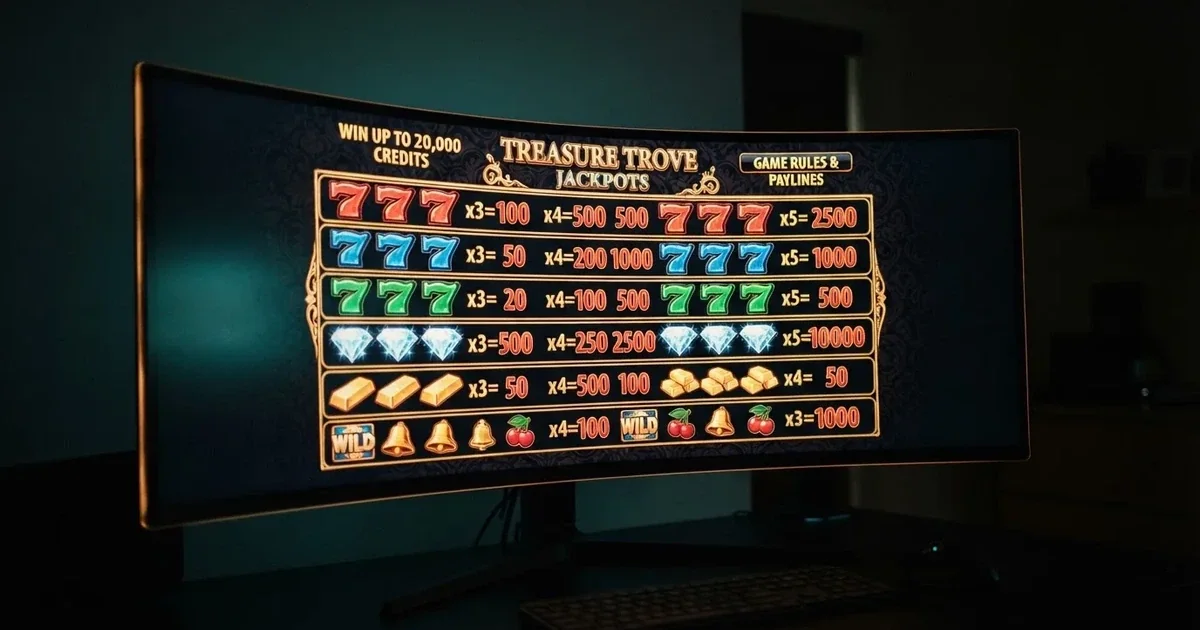
A paytable on a progressive jackpot slot splits the screen into two stories. The first is the symbol combinations a player can land on any spin and the payouts each carries — the bread-and-butter line pays, scatter features, free-spin rounds. The second is the jackpot tier: the qualifying combination (a specific symbol on a specific reel at max coin, or a bonus-game outcome), the current pool, and the minimum pool the machine resets to once the pool is won.
The reading that matters is the second story. A player who treats the progressive slot as a normal slot will size their bet, spin through a session and not be told by the paytable how the machine decides when the jackpot pays. The paytable does not state the probability of triggering the jackpot; the game provider holds that figure, and in most cases does not publish it. The visible pool is the only public signal, and even that is a number whose expected growth rate the player has to take on trust.
The RTP picture follows the same line. On most progressive slots the base RTP — the return the player can expect from the non-jackpot features across millions of spins — sits below the base RTP of a comparable fixed-jackpot slot. The gap funds the contribution rate. A few percentage points of RTP sounds modest; across a session of hundreds of spins it is the difference between a session that loses slowly and one that loses faster, and the headline jackpot is the upside that justifies it for the one player in millions who actually hits it.
What the paytable does not say is equally important. It does not say which other games are feeding the same network pool, so a player cannot tell whether the pool they are watching is one they are contributing to meaningfully or one fed by tens of thousands of accounts elsewhere on the network. It does not say how long the pool has been climbing, which matters because a pool close to its statistical trigger is a different proposition from one that has just been won and reset.
A player who reads the paytable carefully is reading the offer — what the game promises, what it withholds, and what the headline figure is actually worth given the contribution rate underneath it. That is the reading the page leans on through the rest of this comparison.
How a shortlist of progressive jackpot slots is actually put together
Any ranking of progressive jackpot slots has to choose what it is ranking on, and the choices a comparator makes tell the reader more than the list itself. Three rankings are common and they answer different questions.
A pool size ranking lists the slots whose current pool is highest at the moment of writing. It is the easiest ranking to produce (a snapshot of network totals) and the easiest to game (the snapshot decays fast — a slot that topped the list on Monday can be reset by Tuesday). It tells the reader where the largest visible pools sit and nothing else.
A historical payout ranking lists slots by the size of the largest single payout ever recorded on them. It is durable (Mega Moolah’s €19.4 million record is now five years old) but it privileges network size and game age — a slot that has been live for years and is fed by a global network will accumulate bigger headlines than a newer title, regardless of how it plays today.
A game-design ranking lists slots by the structure underneath the pool — the contribution rate, the base RTP, the volatility class, the bonus structure, and the qualifying condition for the jackpot. It is the hardest ranking to produce (the provider does not publish the contribution rate or the symbol probability), but it is the one a player who plans to play more than a single session has any reason to look at.
A comparator that lists only pool sizes is sorting by the marketing number. A comparator that lists only historical payouts is sorting by what the slot has already done, not what it will do for the next player. The comparison on this page leans on the third ranking and treats the first two as context — the visible pool tells the reader what the headline is right now; the historical record tells the reader how large the network has grown; the design underneath tells the reader what the slot actually costs to play.
The list below is a comparison of the offshore operators that have advertised progressive jackpot slots to Australian players and that the ACMA has acted against. The product is prohibited onshore; the comparison is for a player who is weighing where (and whether) to play offshore, and what the cost of doing so is.
The operator landscape
| Brand | ACMA action and date | Operator named by the ACMA | Subject support |
|---|---|---|---|
| RocketPlay | Formal warning, March 2026 | Pulsup Ltd | — |
| Level Up Casino | Formal warning, May 2022 | Dama N.V. | listings only (Bgaming.com) |
| Woo Casino | Formal warning, March 2025 | Dama N.V. | — |
| Spirit Casino | Formal warning, May 2025 | Dama N.V. | — |
| National Casino | Formal warning, July 2025 | Consolutetish S.R.L. | listings only (en.wikipedia.org) |
| Bizzo Casino | Formal warning, July 2025; earlier 2022 | Consolutetish S.R.L.; earlier TechSolutions | — |
| Ignition Casino | Formal warning, July 2025 | Bamboo Media | — |
| Instant Casino | Formal warning, February 2025 | EOD Code SRL | — |
| Jackbit | Formal warning, April 2026 | Ryker B.V. | — |
| Casino Intense | Formal warning, April 2025 | Sterplay Holding Ltd | listings only (Abc.net.au, acma.gov.au, Crownmelbourne.com.au) |
| Sky Crown | Formal warning, September 2022 | Hollycorn N.V. | — |
What the table actually shows is a regulator’s ledger. Eleven operators, none of them licensed in Australia, all of them the subject of an ACMA formal warning for offering prohibited interactive gambling services to Australians. The list spans Dama N.V., Hollycorn N.V., Consolutetish S.R.L., Bamboo Media, EOD Code SRL, Sterplay Holding Ltd, Ryker B.V. and Pulsup Ltd — eight corporate groups, with the Dama N.V. warnings alone covering six of the brands on the list. Two of those brands (RocketPlay and Bizzo) have been warned about twice under different operating-company names.
The “subject support” column is what game providers and reference sites say about progressive jackpot coverage for each brand. For most of the list, no major provider or reference site publishes a progressive jackpot catalogue under that brand name. Level Up Casino and National Casino appear in Bgaming.com and Wikipedia listings respectively; Casino Intense appears across news coverage of ACMA and Crown Melbourne matters. The other seven — RocketPlay, Woo Casino, Spirit Casino, Bizzo Casino, Ignition Casino, Instant Casino, Jackbit and Sky Crown — have no visible catalogue of progressive jackpot games published under their name by a third party. That is not the same as a verified catalogue of games. It is what the listings report.
What the blocking rate tells the reader
| Metric | Data | Context |
|---|---|---|
| Total blocked sites | 1,751 | Since November 2019 |
| Unlicensed services exited | > 230 | Since 2017 |
| Current blocking rate | ~20–30/mo | Long-run average |
The blocking programme is the regulator’s most public signal of how the offshore market is responding. The cumulative total of 1,751 blocked domains since November 2019, against the twelve-site blocking round in June 2026 alone, gives a blocking rate that sits between the order of a few dozen sites a year and the occasional spike month. The arithmetic is straightforward: 1,751 sites blocked over roughly seventy-nine months from November 2019 to June 2026 works out to an average of just over twenty-two sites blocked per month across the programme, with the rate varying sharply from month to month. The figure sits somewhere in the band of twenty to thirty blocks a month as a long-run average, with individual rounds much higher — the June 2026 round alone cleared twelve sites in a single direction. The condition that matters is that a single blocking direction removes access for new players but does nothing about balances already on the books at the affected domains; a player whose account is closed by an offshore operator cannot recover those funds through any Australian channel.
The blocking rate is not a metric of how many Australians play offshore — H2 Gambling Capital’s A$3.9 billion estimate puts the loss flow far above what the blocking rate alone would imply. It is a metric of how aggressively the regulator is acting against the visible supply. The reader’s question is whether the site they are considering is one the regulator has already moved against, or whether it is one that has simply not yet appeared in the formal warning list. Both outcomes matter.
RocketPlay
RocketPlay sits at the top of the ACMA’s recent activity. The March 2026 formal warning names Pulsup Ltd as the operator of Rocketplay.com.au — distinct from the May 2022 warning to Dama N.V. over the same brand under a previous operating structure. Two warnings four years apart for the same brand is the regulator signalling that the warning was heard, the brand survived, and the operator changed. For a player weighing the brand, the relevant fact is that RocketPlay has been on the ACMA’s list twice. The site displays an offshore licence and accepts players from jurisdictions that permit it. For an Australian player, the site is offering a prohibited service. The product on offer is progressive jackpot slots among other casino games, with the marketing leaning on the headline pool. The verdict for an Australian reader: a brand whose regulator history is the most public on this list, and one that the regulator has returned to rather than quietly retired.
Level Up Casino
Level Up Casino was named in the May 2022 Dama N.V. warning alongside five other brands, all of them using the same corporate vehicle. The Bgaming.com listing places Level Up Casino in the catalogue of providers that distribute games via that route, which is a third-party signal of what the platform carries without being a verification of any individual game’s RTP or contribution rate. The brand has not appeared in a subsequent ACMA warning, which can mean either that the brand dropped out of the Australian-facing market or that it continues to operate and the regulator has not yet moved again. The relevant reading is the same for the whole list: an offshore licence, no Australian protection, and a regulator’s history that names the brand. Verdict: a brand the regulator acted against and that the listings track, with no current Australian-facing claim the regulator has had to revisit.
Woo Casino
Woo Casino’s March 2025 warning is one of two Dama N.V. warnings in the same year (Spirit Casino is the other). The pattern is the operator running multiple brands through the same corporate structure, with the regulator acting against each one as it surfaces. For a player, the Woo Casino brand is the same vehicle as the Spirit Casino brand — same operator, same warning cycle, same Australian-facing proposition. The site carries the standard offshore progressive jackpot catalogue. The relevant fact is that the regulator acted against Woo Casino a year and a half ago and that no further action has been published. Status: a regulator-warned brand in the recent cycle, sharing a vehicle with other entities on the list.
Spirit Casino
Spirit Casino sits alongside Woo Casino in the May 2025 Dama N.V. warning. The structural reading is identical: same operator, same month of action, same offering. The brand is one of two the regulator acted against in that window, and it shares the corporate vehicle with five other brands warned about earlier. Verdict: a brand the regulator has named once, in a pair of warnings issued in the same window under the same corporate vehicle. The reader’s question is not which of the two Dama N.V. brands of 2025 is the better choice — it is whether either of them is the right place to play at all.
National Casino
National Casino was named in the July 2025 warning to Consolutetish S.R.L., which also covered Bizzo Casino. The Wikipedia listing places National Casino in the catalogue of brands covered by reference sources, which is a third-party signal of what the platform offers without being a verification of RTP or contribution rate. The warning cycle is recent: July 2025 sits inside the ACMA’s most active stretch of formal warnings against casino operators. For an Australian player, the brand is offering a prohibited service and the regulator’s most recent action against the corporate group is the July 2025 round. Note: one of several brands warned about in that July 2025 activity.
Bizzo Casino
Bizzo Casino carries two warnings — the 2022 warning to TechSolutions (CY) Group Limited and TechSolutions Group N.V., and the July 2025 warning to Consolutetish S.R.L. that also covered National Casino. Two warnings under two different operating structures for the same brand is the regulator saying the brand has outlived the corporate vehicle the first warning named. The Australian-facing proposition is the same across both warnings: a prohibited service. The relevant fact is the recurrence — the brand the regulator warned about in 2022 is the brand the regulator warned about again in 2025, with a different operating company behind it. Verdict: the brand on this list with the longest ACMA history, and the one where the regulator has acted against the brand itself rather than just the corporate vehicle behind it.
Ignition Casino
Ignition Casino was named in the July 2025 warning to Bamboo Media. The brand does not appear in a subsequent ACMA warning, and no third-party reference source publishes a progressive jackpot catalogue under that brand name on the listings reviewed. For an Australian player, the relevant reading is the warning itself — Bamboo Media was acting against the Australian-facing proposition the brand runs, and the regulator acted against it. Status: warned operator in the recent wave.
Instant Casino
Instant Casino’s February 2025 warning to EOD Code SRL is the earliest in the most recent wave of ACMA action against casino operators. The brand does not appear on the listings reviewed. The warning is the public record, and for an Australian player the same reading applies: an offshore brand offering a prohibited service, named in a regulator’s formal warning. Summary: regulator warned brand in the early 2025 wave.
Jackbit
Jackbit’s April 2026 warning to Ryker B.V. also covered CasinOK. Two brands under the same corporate vehicle, named in the same regulator action, with the action dated inside the regulator’s most recent window. Jackbit does not appear on the listings reviewed. The relevant reading is the same as for the rest of the list — an offshore brand, a prohibited service, a regulator that has acted against the operator. Verdict: a brand the regulator acted against in the most recent window, sharing a corporate vehicle with a sibling brand in the same warning.
Casino Intense
Casino Intense was named in the April 2025 warning to Sterplay Holding Ltd. The brand appears across news coverage of ACMA and Crown Melbourne matters on the listings reviewed — a third-party signal of where the brand has been discussed in coverage rather than a verification of what its progressive jackpot catalogue contains. The warning cycle is the standard one for the recent wave: a single formal warning against an offshore operator offering a prohibited service. Status: Warned in the 2025 ACMA round.
Sky Crown
Sky Crown carries the longest-published warning on the list — the September 2022 formal warning to Hollycorn N.V., which also covered Blue Leo. The brand does not appear on the listings reviewed. The relevant reading is the same as for every other operator on the list: an offshore licence, no Australian protection, a regulator’s formal warning as the public record. Summary: named in the 2022 ACMA formal warning round.
What the comparison is actually for
The table and the operator reviews above are not a recommendation. The product is prohibited onshore, and the comparator’s job is to show the reader what the offshore market looks like when it is laid out by the regulator’s own actions rather than by the marketing the brands publish themselves.
The structural reading is the same for every brand on the list. They run on offshore licences. They are not connected to BetStop. They are not covered by Australian consumer protection. They are not bound by the Australian payment rules. They are subject to the ACMA’s blocking programme, and several of them have already been blocked and re-emerged under a new corporate vehicle. A player who decides to play is choosing to step outside the entire local framework, and the framework is what the rest of the comparison leans on.
The differences between the brands are largely the differences between warnings and corporate vehicles. RocketPlay and Bizzo carry two warnings each; the rest carry one. Dama N.V. is the operator behind three of the brands on the list; Hollycorn N.V., Consolutetish S.R.L., Bamboo Media, EOD Code SRL, Sterplay Holding Ltd, Ryker B.V. and Pulsup Ltd each back one or two. None of those differences changes the underlying offer or the underlying legal status. What they change is the public history a player can read before deciding.
What a player deciding offshore play should weigh
A player who decides to play offshore is making a choice the framework does not make for them. Three questions are worth weighing before that choice becomes a deposit.
Is the site licensed anywhere the player can act on? An offshore licence from Curaçao or Anjouan is the licence most of these brands display. It does not give an Australian player a complaints route; it gives the operator a registration in a jurisdiction that does not regulate the offer it makes to Australians. The site’s licence is real; it does not extend to the player.
Is the payment method one the Australian rules would allow? A licensed Australian wagering account cannot be funded by credit card, credit-related product or cryptocurrency as of 11 June 2024. An offshore site asking for those payment types is not running inside the Australian framework. A player who funds an offshore account with a credit card is paying through a channel the Australian regulator has explicitly barred from the licensed market.
What does the player lose by stepping outside the local protections? BetStop does not extend to offshore sites. There is no Australian complaints body for an offshore withdrawal dispute. There is no Australian court to bring the matter before. If the ACMA blocks the domain, the player can be locked out of an account that still holds a balance. Those are not edge cases — they are the shape of the offer.
A player who decides the offshore play is worth those costs is the player the comparator is written for. A player who decides it is not has the local market to look at instead: Sportsbet, Bet365 and Ladbrokes, all licensed by the Northern Territory Racing and Wagering Commission, with full access to BetStop and the Australian complaints framework. The Northern Territory regulator covers fifty-two online bookmakers and meets once a month in Darwin — a thin regulator by volume, but the regulator that binds the local licensed market.
The figures the maths actually puts on the table
The page is built on the idea that the comparison should be honest about what an offer costs. Three numbers do that work and all three come from the inputs.
The blocking rate is roughly twenty-two sites per month across the ACMA programme since November 2019, with sharp month-to-month variation. The condition that matters is that a single blocking direction removes access for new players but does not recover balances already on the books.
The cost of illegal play is the H2 Gambling Capital 2025 estimate of A$3.9 billion per year — a loss figure that does not break down by product, but that is the order of magnitude the regulator is acting against.
The scale of the headline payout is the €19.4 million record at Napoleon Sports & Casino in April 2021 — a number that exists once in the Mega Moolah network’s history and that the marketing returns to because it is the largest available.
What the maths does not do is tell a player how long they would have to spin to reach the contribution rate that justifies any one of those numbers. The probability of hitting the qualifying combination on a wide-area progressive is not published by the provider, and the contribution rate is not on the paytable. The honest reading is that the headline payout is the payout at the end of a very long expected wait, and a player funding a session at a stake of a few dollars is paying for a chance whose expected wait stretches across millions of spins.
Frequently asked questions
How does a progressive jackpot slot’s prize pool actually grow between wins?
Each losing wager contributes a small slice — typically a fraction of a percent of the stake — to a shared pool. The pool ticks up with every spin until someone hits the qualifying combination, at which point it pays out and resets to a preset minimum. Wide-area progressives link thousands of machines or accounts across one network, so even a tiny per-spin contribution compounds into a very large pool over the network’s volume.
What’s the difference between a standalone jackpot and a network-wide progressive jackpot?
A standalone progressive is contained inside a single machine, so the pool grows only when that machine is played and the ceiling stays modest. A network-wide progressive links hundreds or thousands of machines or accounts, so every spin anywhere on the network pushes the pool up. The headline-grabbing jackpots — Mega Moolah’s €19.4 million record, the £11.5 million and £13.5 million wins Games Global has announced — are network-wide progressives.
Do licensed Australian pokies venues offer progressive jackpot machines?
Australian-licensed venues operate under state-level casino and gaming machine regulations. Some land-based venues do operate linked jackpot arrangements on their gaming machine floors; the regulatory framework is state-specific. The product covered by this page is the online progressive jackpot slot, which is a prohibited interactive gambling service under the Interactive Gambling Act 2001 and cannot be licensed in Australia for online supply.
Why do progressive jackpot slots typically have a lower base return-to-player than fixed-jackpot games?
Because every losing spin on a progressive is contributing a slice to the shared pool, the base RTP — the return a player can expect from the non-jackpot features across millions of spins — is reduced by the contribution rate. A fixed-jackpot slot keeps the full RTP in its line pays and feature payouts. The progressive trades some of that base return for the chance at the headline pool, and the headline pool is the upside that justifies the trade.
How is a record progressive jackpot payout verified?
A record payout is verified by the game provider (in Mega Moolah’s case, Games Global, the business formerly known as Microgaming) and by the casino that hosts the winning account, with the figure published in industry press and on the provider’s own media channels. The €19.4 million win at Napoleon Sports & Casino on 27 April 2021 was confirmed by both the operator and the provider, with independent reporting from European Gaming and Gaming Intelligence. The verification chain is the provider and the host casino, not a regulator.
What triggers the jackpot round on a typical progressive jackpot slot?
Most progressive jackpot slots require a specific symbol on a specific reel at maximum coin to qualify for the top pool, with smaller tiers tied to less restrictive combinations. “Must-hit-by” progressives work differently: a random number generator picks the payout amount within a preset range right after the previous jackpot pays out, and the trigger is hitting the must-hit-by value rather than landing a specific combination. The paytable states the qualifying combination; the probability of hitting it is not published.