
Best video slots in Australia in 2026: what the bonus email never tells you
The phrase “best video slots Australia” travels in two opposite directions at once. Offshore casino brands use it to sell inducements to a market they are not licensed to serve, while state-based clubs and pubs sit on tens of thousands of the same kind of machine that Australians have played since the 1950s. The reader asking the question is usually caught in between — attracted by the bright catalogue on a bonus email and unsure whether the offer is worth what it costs, or whether it is even lawful to take. This page works through both halves: what a modern video slot actually is, why offshore brands keep ending up on the ACMA’s warning list, and where the legal Australian alternative sits. The angle is cost — what an offer takes out of a player’s pocket, what the house edge makes inevitable, and what the consumer has no way to recover when the site is offshore.
Current as of 8 November 2026, verified against the ACMA register of formal warnings and the IGA register of blocked sites.
Table of Contents
- What a “video slot” actually is, and how it differs from a classic pokie
- The legal frame: why offshore video slots are not a lawful Australian option
- The ACMA’s running total: blocks, warnings and what they reveal about the offshore market
- Responsible play: the limits the Australian system does and does not reach
- Bonus offers on video slots: what “free spins” really cost
- Mobile and app play: what carries over and what does not
- The licensed alternative: what the Australian market actually offers
- How this ranking was put together
- RocketPlay
- Level Up Casino
- Woo Casino
- Spirit Casino
- National Casino
- Bizzo Casino
- Ignition Casino
- Instant Casino
- Jackbit
- Casino Intense
- Sky Crown
- What this page’s verdict is
- Frequently asked questions
What a “video slot” actually is, and how it differs from a classic pokie
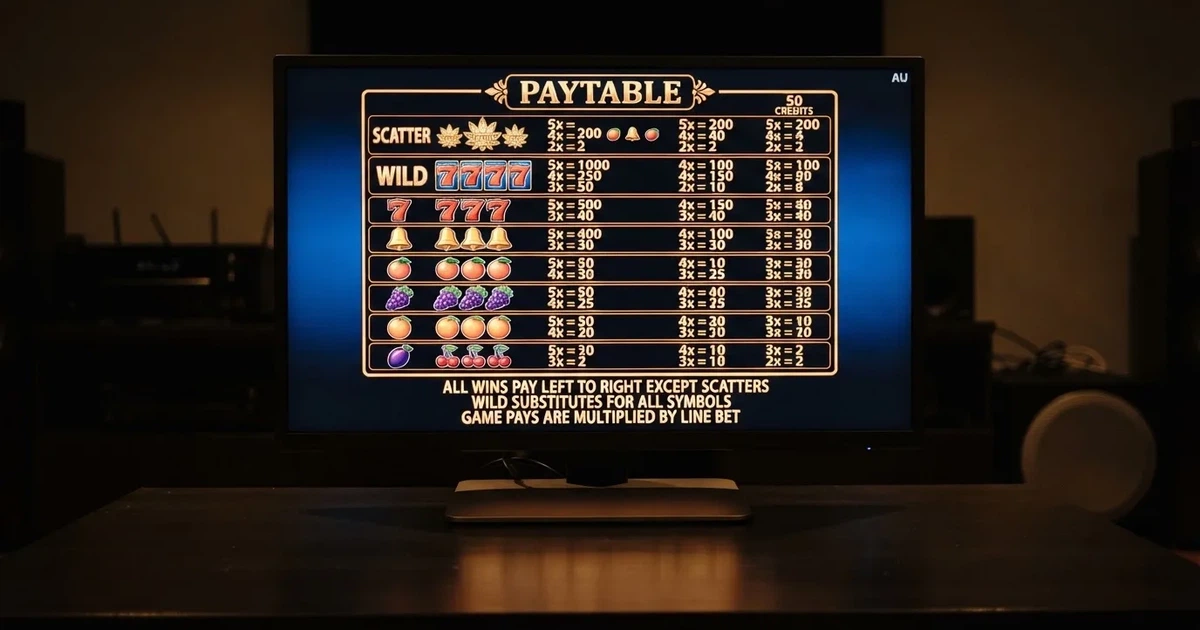
The technical distinction matters because most of the marketing aimed at Australian players rests on it. A classic three-reel machine — what Australians call a pokie — runs a fixed set of mechanical or virtual symbols across a small grid, usually one payline, paying a fixed multiple of the stake on each combination. A video slot is the modern descendant: five reels or more, dozens of symbols per reel, often hundreds of paylines, layered with bonus rounds, free-spin features, expanding wilds, scatter pays and progressive jackpots. The first video slot was developed in 1976 by Fortune Coin Co. in Kearny Mesa, California, and the format took off through the 1990s and 2000s once regulators in Atlantic City and Las Vegas approved it for casino floors.

What changes is the odds surface. A classic three-reel machine with about ten symbols per reel offers roughly 1,000 possible combinations. A modern video slot with five reels and 50 or more symbols per reel can produce odds as high as 300 million to one against the top combination. That sounds like a long shot — and it is — but it is the deliberate shape of the game: rare, dramatic wins funded by a steady drip of small ones, with a return-to-player ratio set by the software. The bonus round is the format’s signature. It exists to break the rhythm of base-game spins and to give the player the feeling that the machine is “giving something back,” even though the mathematics of the round was baked into the RTP before the first spin.
Two further points are worth holding onto. First, the house edge on a video slot is not set by a regulator in Australia — there is no Australian minimum for online machines because there are no Australian-licensed online machines to set one for. State-level minimums apply only to land-based EGMs in pubs, clubs and casinos. US comparisons are sometimes quoted to give a feel for the band: Nevada requires at least 75 per cent payout, Mississippi 80 per cent, New Jersey 83 per cent. Online video slots are usually pitched in the 94–97 per cent RTP range, with the house keeping the rest. Second, “volatility” is not a synonym for RTP. Two video slots at 96 per cent RTP can behave very differently — one paying small wins often, the other paying rarely and heavily — and that is the point of the volatility label the casino displays beside the game.
The legal frame: why offshore video slots are not a lawful Australian option
The Interactive Gambling Act 2001, as tightened by the Interactive Gambling Amendment Act 2017, makes it an offence to provide online casino games, online pokies or in-play betting to a person physically in Australia. No state or territory licenses them. What is licensable is wagering on races and sport placed before the event, lotteries and keno — in practice licensed by the Northern Territory, where the Northern Territory Racing and Wagering Commission regulates 52 online bookmakers including Sportsbet, Bet365 and Ladbrokes. The commission runs on a part-time model: no full-time staff, monthly meetings in Darwin. That is the regulator’s footprint for the entire Australian online wagering sector.

The player is not the target of the IGA. The Act is aimed at the provider, which is why no Australian reader of this page has been prosecuted for playing offshore. The consequences sit elsewhere. An offshore site gives no Australian consumer protection, no complaints body and no recourse if a withdrawal is refused or a bonus is voided after the fact. The site can also be blocked by Australian ISPs with a balance still sitting in the account, and it can vanish altogether — leaving the player to argue with an overseas operator under a Curaçao or Anjouan licence, in a language they may not speak, in a court system that is not theirs.
The Interactive Gambling Amendment (Gambling Reform) Bill 2026 passed Parliament on 19 August 2026. Its advertising and inducement measures commence on 1 January 2027. The law exists with a start date; on a 2026 page it is law made but not yet in force, and what it changes — tighter rules on sign-up offers and affiliate marketing — does not yet bind anyone. The block-and-warn regime under the existing IGA is what is enforceable now.
The ACMA’s running total: blocks, warnings and what they reveal about the offshore market
The ACMA’s two enforcement tools are formal warnings (a written notice that a service is being provided in breach of the IGA) and blocking requests to Australian internet service providers. They are not interchangeable. A formal warning is named and dated; a blocking request is a list that grows over time. The headline figure the ACMA publishes is the running total of both.
As reported in June 2026, the ACMA’s blocking register held 1,751 illegal gambling and affiliate marketing websites blocked since the first blocking request in November 2019. More than 230 unlicensed gambling services had left the Australian market since enforcement was strengthened in 2017. A blocking round reported the same day named twelve more sites: 7Signs, ChromaBet, Donbet, Duospin, Freshbet, Slots Gem, Jacks Club, Lucky Start, Pointsbetz, Spinrise, Vinyl Casino and Wildsino.
The arithmetic behind those numbers provides a sense of the market’s scale. From the first blocking request in November 2019 to the snapshot in June 2026 is about 79 months — call it roughly 6.5 years. Across that span, the ACMA moved from a blank register to 1,751 entries blocked, an average of around 22 blocked sites per month. That average is not a flat line: blocks bunch when the ACMA runs a coordinated round, then go quiet. The recent 12-site round, taken alone, fits the cadence — and so does the 230 services that have voluntarily withdrawn from the Australian market over the longer enforcement arc, a slow attrition rather than a single mass exit.
What that band tells a reader is the shape of the supply. The market is not shrinking to zero, and it is not being closed overnight either. New offshore brands appear faster than the regulator can act against any one of them, and the ACMA’s throughput is high enough to be visible at the national level but low enough that an individual player can still find an unblocked site on any given week. That is the asymmetry the IGA leaves open: the regulator works the long game, the offer lands today.
Responsible play: the limits the Australian system does and does not reach
The Australian player-protection stack looks strong on paper and narrower in practice. BetStop, the National Self-Exclusion Register, has been live since August 2023 and binds every Australian-licensed online and phone wagering service. The minimum age for any form of gambling in Australia is 18. The National Gambling Helpline at 1800 858 858 is free and operates 24/7, with web chat at Gambling Help Online. For land-based play, every state and territory runs its own self-exclusion scheme covering pubs, clubs and casinos — New South Wales, Victoria, Queensland, South Australia and the ACT each carry their own register.
The narrow point is what these tools do not cover. BetStop binds Australian-licensed operators; an offshore casino is not connected to it. A player who excludes themselves from Sportsbet and Ladbrokes can still open an account with a Curaçao-licensed brand offering video slots, because that brand has no obligation to check the BetStop register. The same gap applies to deposit limits, time-outs and reality checks: Australian-licensed wagering sites carry the full set; offshore casino sites carry whatever their own terms say, and the player has no Australian complaints body to appeal to if the limits are not honoured.
The national helpline does not distinguish by where the player is gambling. Anyone calling 1800 858 858 — Australian, on any game, on any platform — gets the same intake path. The peer-support and counselling services behind that number are the one part of the system that reaches the offshore player. Everything else stops at the border.
Bonus offers on video slots: what “free spins” really cost
Bonus offers around video slots have a standard shape: a deposit match, a bundle of free spins, or both, with wagering requirements attached before any winnings can be withdrawn. A “free spin” is not a free spin in the sense a reader might expect — it is a spin paid for by the bonus balance, with the resulting win credited as bonus money that has to be turned over a stated multiple of times before it converts to cash. The marketing language around these offers is built to make the bonus sound like a gift. The arithmetic shows it is a loan.
The fixed formula for an offer’s real cost works like this. Required turnover equals the bonus amount multiplied by the wagering factor. Spins required to clear the bonus equals turnover divided by the stake per spin. Time to clear, assuming a five-second spin interval, equals spins times five divided by 3,600 — the hours the player must keep spinning at the stated stake to convert the bonus to cash. The expected loss over that clearing work equals turnover times one minus the RTP of the game the bonus is locked to. That is the offer’s cost in plain money, before any cap on cashable winnings is applied.
The cost is not zero. A$100 bonus with a 40x wagering factor means A$4,000 of turnover required. Locked to a 96 per cent RTP game at A$1 per spin, that is 4,000 spins, roughly 5.6 hours of continuous play, and an expected loss of A$160 from the clearing work alone — before any single real-money bet the player makes from their own pocket. A max-cashout cap on free-spin winnings — A$100, A$200, the figures vary by brand — shrinks the upside without shrinking the turnover. That is the shape of “free” in this market: the player does the work, the house keeps the edge, and the cap on the upside is the only thing standing between the player and the bonus’s nominal headline value.
This is where the marketing language meets the consumer. “Win up to A$5,000 in bonus spins” reads one way in an email subject line and another way after a reader has looked at the wagering factor, the RTP of the locked game and the max-cashout clause. The page is not arguing that bonuses are never worth taking — for a player who would have played those spins anyway, the bonus is a discount. For a player who is drawn in by the bonus alone, the bonus is the most expensive part of the session.
Mobile and app play: what carries over and what does not
A modern video slot is built to scale to a phone screen. The reels compress, the paytable collapses into a tap, the spin button sits under the thumb. Most providers ship a single code base that targets desktop browsers, mobile browsers and native apps, and the underlying maths does not change between them. A 96 per cent RTP game on the desktop is a 96 per cent RTP game in a phone browser; a free-spin trigger on the laptop fires the same way on a touch screen. What does change is everything around the game: load time on a flaky 4G connection, battery drain over a long session, the layout of the cashier, and whether the app asks for permissions the browser version does not need.
The choice between browser play and a downloaded app usually comes down to operator preference. Most offshore brands push the browser route, partly because app-store rules in Apple’s ecosystem make real-money casino apps hard to publish in Australia. The Australian-licensed wagering brands — Sportsbet, Bet365, Ladbrokes and the like — have native apps, but their product is sports and racing, not casino. For video slots specifically, the browser is the default delivery channel, and the user experience on a modern phone is close enough to the desktop that the difference is ergonomic rather than mechanical.
Two cautions. First, mobile play is where session length quietly doubles — a long commute plus a waiting room plus a lunch break adds up to hours the player did not sit down to spend. Second, data usage on a mobile network is non-trivial: a video slot with heavy animation can pull several hundred megabytes an hour, which is a real cost on a capped plan. Neither of these is a reason to avoid mobile play. They are reasons to know what mobile play is costing.
The licensed alternative: what the Australian market actually offers
The lawful Australian way to play a modern video slot is in a pub, club or casino, on an electronic gaming machine approved by the relevant state or territory regulator. New South Wales legalised slot machines in 1956; by 2010 Australia operated an estimated 97,103 gaming machines outside casinos — a per-capita rate about five times that of the United States. The current snapshot of machines outside casinos: 87,298 in New South Wales (June 2023), 26,380 in Victoria (2021–22), 21,122 in Queensland (October 2023), 11,672 in South Australia (September 2023) and 3,587 in the ACT (November 2023). New South Wales carries the bulk of the country’s EGMs by a wide margin, and the next-largest three states combined still fall short of NSW on its own.
The cluster of offshore video slot brands Australians see advertised is a different category entirely. They are not licensed to offer online casino games to Australian players, and the ACMA has issued formal warnings to most of them over the past four years. The catalogue on offer is real — five-reel, multi-feature, bonus-laden — but the wrapper around it is not Australian-licensed and the consumer protection does not follow Australian rules. That is the line the rest of the page draws: what the offshore brand looks like, what the ACMA said about it, and what the player has no way to recover when the wrapper disappears.
How this ranking was put together
This is not a buyer’s guide in the conventional sense. The eleven brands below were chosen because the Australian Communications and Media Authority itself issued a formal warning to the operator behind each of them under the Interactive Gambling Act 2001, for offering prohibited interactive gambling services to people in Australia. The ACMA register is the single source for the warning itself; the table beside this section sets out the operator named in the warning, the date the warning was issued and the brand it covered. Where research carries a separate listing of the brand by a third party, that listing is reported as a listing — not as the operator’s own claim about what it offers.
The ranking does not score these brands on game quality, payout speed or bonus generosity. Those figures are not in the public record for offshore operators in any verifiable form, and the only sources for them were affiliate marketing pages, which is exactly the kind of source the page is not going to lean on. The order is the order of the ACMA’s enforcement record, and the verdict on each brand is the page’s own reading of what the record shows.
| Brand | ACMA action and date | Operator named by the ACMA | Subject support |
|---|---|---|---|
| RocketPlay | Formal warning, March 2026 (Pulsup Ltd); earlier formal warning, May 2022 (Dama N.V.) | Pulsup Ltd; Dama N.V. | — |
| Level Up Casino | Formal warning, May 2022 | Dama N.V. | Listed on a third-party provider index (BGaming) — that is what the listings show |
| Woo Casino | Formal warning, March 2025 | Dama N.V. | — |
| Spirit Casino | Formal warning, May 2025 | Dama N.V. | — |
| National Casino | Formal warning, July 2025 | Consolutetish S.R.L. | Listed in a general-purpose online reference — that is what the listing shows |
| Bizzo Casino | Formal warning, July 2025 (Consolutetish S.R.L.); earlier formal warning, 2022 (TechSolutions Group) | Consolutetish S.R.L.; TechSolutions Group N.V. | — |
| Ignition Casino | Formal warning, July 2025 | Bamboo Media | — |
| Instant Casino | Formal warning, February 2025 | EOD Code SRL | — |
| Jackbit | Formal warning, April 2026 | Ryker B.V. | — |
| Casino Intense | Formal warning, April 2025 | Sterplay Holding Ltd | Listed across a small set of public references — that is what the listings show |
| Sky Crown | Formal warning, September 2022 | Hollycorn N.V. | — |
Every brand in the table above is, by definition of its row, a brand the ACMA has told in writing that it is providing a prohibited service to Australians. None of them holds an Australian licence to offer online casino games or online pokies. The licence displayed on the site is almost always a Curaçao or Anjouan master licence; that licence does not authorise the operator to take Australian players for casino games under the IGA, and it does not give the player Australian consumer protection.
RocketPlay
The ACMA issued a formal warning to Pulsup Ltd over Rocketplay in March 2026, and a separate earlier warning to Dama N.V. over the same brand in May 2022. The site carries a multi-reel video slots catalogue from a range of providers and markets itself with a deposit-match welcome package, but no Australian licence covers online casino play and the ACMA has now said so in writing twice. The brand has had the rule explained to it once, changed hands at the operator level, and re-entered the ACMA’s sights under a new corporate wrapper. A reader looking at the welcome offer is looking at an inducement from a brand the regulator has had to warn twice — and that is the relevant fact about the offer, before any of its terms are read.
Level Up Casino
The ACMA’s May 2022 warning to Dama N.V. covered six brands, and Level Up was one of them. The brand appears in a third-party provider’s index — BGaming’s site lists Level Up as a host for its games, which is what that listing shows and nothing more. The brand carries the same offshore structure as the rest of the Dama N.V. group and the same lack of Australian cover. A player who lands on the site will see a video slots catalogue of the kind the marketing trades on; what the catalogue sits on top of is an offshore wrapper that the ACMA has named.
Woo Casino
The ACMA issued a formal warning to Dama N.V. over Woo Casino in March 2025 — the second Dama N.V. brand on this page after the 2022 round. The point of the warning is the same: the IGA prohibits what the site is offering to Australians, and the ACMA is putting that on the record. A reader who finds the site on a comparison list is reading a list assembled by an affiliate, not by the ACMA. The site’s catalogue and bonus structure are presented in the marketing register; the regulator’s view of the same site is the one a player should weight more heavily.
Spirit Casino
Spirit Casino attracted its own Dama N.V. warning in May 2025. The pattern across the Dama N.V. brands on this page is the same operator, multiple skins, repeated warnings — which is itself the clearest signal in the table. A new brand name with the same operator behind it is not a fresh offer in any meaningful sense; it is the same offer dressed differently. A reader who sees a Spirit Casino bonus email should understand they are being approached by the same operator the ACMA warned about Woo Casino three months earlier.
National Casino
The ACMA’s July 2025 warning to Consolutetish S.R.L. covered National Casino and Bizzo Casino together. National Casino appears in a general-purpose online reference — that is the extent of the third-party footprint research turned up. The brand is a recent entrant to the ACMA’s register, having attracted no earlier formal warning under the previous operator. What the page can say about it is bounded: the regulator has named it once, the catalogue is the kind of catalogue every offshore video slots brand carries, and the consumer protection regime is not Australian.
Bizzo Casino
Bizzo Casino sat under the same July 2025 Consolutetish S.R.L. warning, and the ACMA had already warned its previous operator — TechSolutions (CY) Group Limited and TechSolutions Group N.V. — back in 2022. Two warnings, two operators, one brand. The pattern is the one the page has already described: the brand name carries across a corporate change and the marketing keeps running between warnings. A reader weighing Bizzo against a brand with a single ACMA entry is weighing two different levels of regulatory attention, and the difference is information.
Ignition Casino
The ACMA issued a formal warning to Bamboo Media over Ignition Casino in July 2025. Ignition is one of the longer-running offshore brands aimed at Australian video slots players and carries a catalogue that competes with the rest of the table on volume. The ACMA’s action against it is recent and specific to the IGA breach. What the brand offers is the standard offshore mix; what the regulator has said about that offer is the more useful piece of information for the reader.
Instant Casino
The ACMA’s February 2025 warning to EOD Code SRL over Instant Casino was one of the early entries in the recent enforcement arc. The brand sits in the same offshore licence wrapper as the rest of this ranking and presents a video slots catalogue aimed at Australian traffic. EOD Code SRL has not appeared elsewhere in the ACMA’s formal warnings in the public record, so the Instant Casino entry is a single warning to a single operator. The reader still has no Australian cover.
Jackbit
The ACMA issued a formal warning to Ryker B.V. over Jackbit and CasinOK in April 2026 — the most recent warning on this page. Jackbit markets itself as a casino-and-sportsbook hybrid with a heavy video slots catalogue, and the brand’s recent appearance on the ACMA’s register puts it among the newest entries on the regulator’s list. A reader seeing a Jackbit bonus should understand they are looking at an inducement from a brand the regulator named four months ago.
Casino Intense
The ACMA issued a formal warning to Sterplay Holding Ltd over Casino Intense in April 2025. Casino Intense appears across a small set of public references — news coverage, the ACMA register itself, and Crown Melbourne’s responsible-gaming materials — which is what those listings show and nothing more. The brand has a single warning to its name and sits in the standard offshore structure. The page’s verdict on it is bounded by what the ACMA and the listings together establish: the regulator has named it once, the references acknowledge its existence, and there is no Australian cover behind either.
Sky Crown
The ACMA issued a formal warning to Hollycorn N.V. over its Sky Crown and Blue Leo casino services, published in September 2022 — the earliest warning on this page. Sky Crown has been on the regulator’s register longest of any brand in this ranking, which is not a point in its favour. The brand’s catalogue and bonus terms are the standard offshore mix; what distinguishes it from the rest is the age of the warning. A reader who sees Sky Crown on a comparison list and does not check the ACMA register is reading a list that has been quietly out of date since 2022.
What this page’s verdict is
Eleven brands, eleven ACMA warnings, one offshore licence structure. No brand on this page holds an Australian licence to offer online casino games or online pokies, and the ACMA has said so in writing to each operator behind them. The brand that has been on the register longest is Sky Crown, with a Hollycorn N.V. warning going back to September 2022; the most recent is Jackbit and CasinOK, with a Ryker B.V. warning issued in April 2026. The Dama N.V. group accounts for four of the eleven, and the group has been warned as recently as May 2025.
The cost picture is the same across the table. The video slots catalogue is real — these brands do carry multi-reel, multi-feature, bonus-laden games, and the games work as advertised. The wrapper around the catalogue is not Australian, and the consumer protection does not follow Australian rules. A player on one of these sites has no Australian complaints body, no BetStop coverage, no guaranteed withdrawal and no recourse if a bonus is voided after the fact. The site can be blocked with a balance still in the account. That is the gap between the marketing and the reality, and it is the same gap on every brand in the table.
The lawful Australian alternative is the EGM on the floor of a pub, club or casino in the player’s state. The 87,298 EGMs in New South Wales, the 26,380 in Victoria, the 21,122 in Queensland, the 11,672 in South Australia and the 3,587 in the ACT are not the same product as an offshore video slots brand — there is no mobile browser, no deposit bonus, no catalogue of 3,000 games. But they are licensed, regulated, age-verified, connected to the relevant state self-exclusion register, and the consumer protection regime is the one an Australian player actually has standing in. That is the comparison the page is set up to draw, and the reader is the one who decides which side of it they sit on.
Frequently asked questions
What makes a video slot different from a classic three-reel pokie?
A classic three-reel pokie runs a small symbol set across one payline, while a modern video slot uses five or more reels with 50 or more symbols per reel, often hundreds of paylines, and layered bonus rounds. The odds surface changes with it: a classic machine offers roughly 1,000 possible combinations, while a modern video slot can reach odds of 300 million to one against the top combination. The house edge sits in a different place on each.
Do video slots typically include bonus rounds that classic machines don’t have?
Yes. The bonus round is the signature feature of the modern video slot — a separate game phase triggered by scatter symbols or bonus combinations, usually offering free spins, pick’em prizes or some kind of mini-game. Classic three-reel machines generally do not carry a bonus round; their payouts are paid line-by-line on the base reels. The bonus round is where most of a video slot’s entertainment value and most of its expected loss is concentrated.
Are video slots on a mobile browser the same game as the desktop version?
Yes, in the sense that matters. A modern video slot is built on a single code base that targets both desktop and mobile browsers, and the underlying mathematics — the RTP, the volatility, the bonus triggers — does not change between platforms. What does change is the wrapper: load time on a mobile network, battery drain over a long session, the layout of the cashier, and data usage. The game plays the same; the session around the game does not.
How many paylines does a typical modern video slot use?
There is no single answer, because the format covers a wide range. A standard five-reel video slot may run 20 to 40 paylines, while more elaborate titles use the “ways to win” or “243 ways” structure, which counts adjacent symbol combinations rather than fixed lines. Some titles run 1,024 ways or more. The payline count is one of the main mechanical differences between adjacent titles in the same provider’s catalogue.
Why do video slots vary in volatility even within the same provider’s catalogue?
Because volatility is a design choice about how a fixed RTP is distributed across the play session. A low-volatility video slot pays small wins often; a high-volatility one pays rarely and heavily. Two titles at 96 per cent RTP can have very different player experiences, and providers tune the volatility per game to give their catalogue a spread — some players prefer the steady drip of small wins, others want the long-shot feel of a session that mostly loses but occasionally pays big. The volatility label is what tells the player which one they are sitting down to.
Which Australian state has the most licensed gaming machines outside casinos?
New South Wales, by a wide margin. The state carried 87,298 EGMs outside casinos as of June 2023, more than three times the next-largest state’s count. Victoria reported 26,380 EGMs outside casinos in 2021–22, Queensland 21,122 in October 2023, South Australia 11,672 in September 2023 and the ACT 3,587 in November 2023. The total across the five jurisdictions is just under 150,000 licensed machines, and NSW holds the bulk of them.