
Dragon Link online pokies in Australia: the cabinet game that the internet does not get to sell you
Current as of 8 November 2026, cross-checked against the Australian Communications and Media Authority’s published formal-warning register.
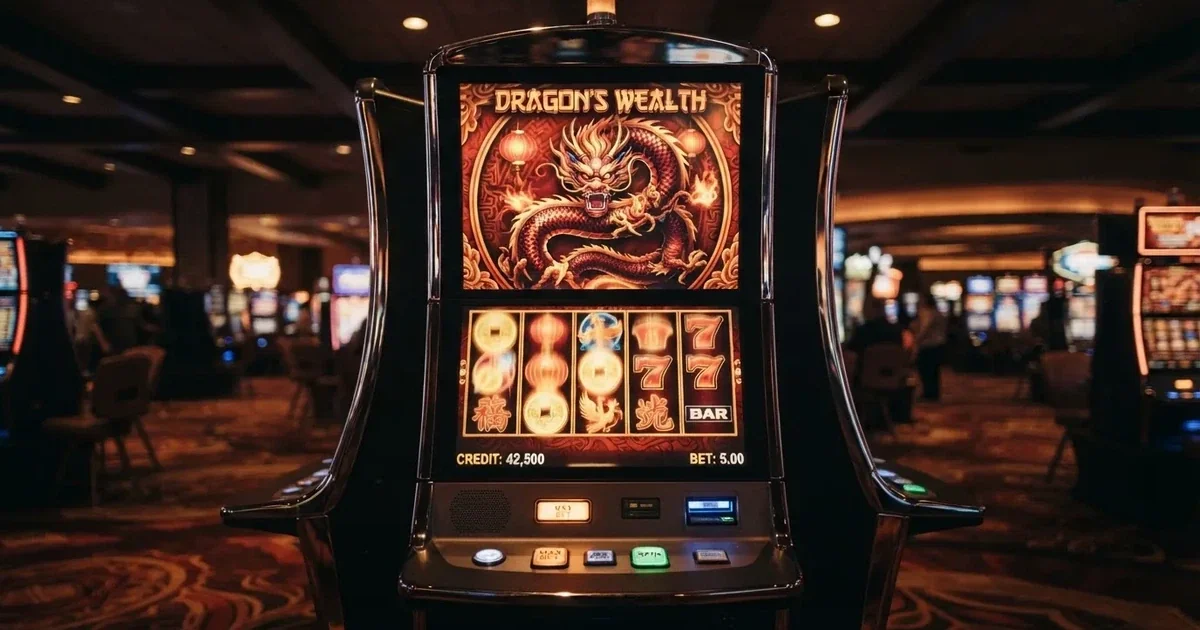
The reel format most Australian players know as Dragon Link began as a land-based cabinet game, and the legal frame around it has not changed since: the Interactive Gambling Act 2001, as tightened by the Interactive Gambling Amendment Act 2017, makes it an offence to provide an online casino game — an online pokie, in the local term — to a person physically in Australia. Dragon Link is no exception. Every brand named on this page has been on the receiving end of a formal warning from the regulator for doing exactly that. What follows is not a recommendation and not a ranking: it is the case, written up so a reader can see why the comparison here is, in the strict legal sense, the wrong shape of question.
Table of Contents
- What Dragon Link actually is, and where it can lawfully be played
- The Interactive Gambling Act 2001, and what it actually says about an online pokie
- The cost the reader pays for playing anyway
- Responsible play inside the cabinet, where the rules still apply
- The mobile app pitch, and what the law says about it
- Dragon Link against the rest of the casino floor
- The eleven operators the ACMA has acted against
- The arithmetic of the ACMA’s blocking record
- What the choice looks like from the player’s side
- What the 2026 reform changes, and when
- What changes when an offshore site is blocked
- Frequently asked questions
What Dragon Link actually is, and where it can lawfully be played
Dragon Link is Aristocrat Leisure’s linked-progressive format: a family of reel sets — the most cited being Happy and Prosperous, alongside Peking Luck, Autumn Moon, Rising Fortunes and others — that share a jackpot feature but vary in theme, volatility band and minimum bet per line. Aristocrat launched the format as a poker-machine cabinet intended for clubs, pubs and casino floors, not for an internet browser. The mechanics are simple enough to describe in plain language, which is what the rest of this section does.

The reel sets themselves are tied to a linked jackpot tier. When a player wagers on any cabinet in the network, a slice of each bet feeds the four jackpot pools — Mini, Minor, Major and Grand. The pools display above the reels and tick upward in real time. The bonus round — which is what every search for “dragon link slot bonus” is after — is triggered by landing six or more of the orb scatter symbol anywhere on the reels in the base game. The triggering orbs lock in place, the player receives three re-spins, and any further orb that lands resets the re-spin counter to three. The round ends when three consecutive re-spins pass without a new orb, at which point the feature pays the sum of the orb values visible on the screen, plus the jackpot associated with the final orb if one is shown.
That mechanic travels with the brand. Aristocrat has licensed variants of Dragon Link to online aggregators under its own content deals, and several of the offshore sites named later in this article list a game titled Dragon Link in their lobby. What does not travel with the brand is the licence to offer it to a person in Australia. Aristocrat itself has been explicit on that point: the company does not authorise online play of Dragon Link to Australian residents. A player who lands on a Dragon Link tile at an offshore casino is therefore not playing a licensed Australian product in another wrapper; they are playing an unlicensed product that happens to carry the name.
The land-based alternative is straightforward. Every Australian state and territory except Western Australia allows poker machines in pubs and clubs, with Crown Perth the single WA venue permitted to operate them. New South Wales alone had 87,298 gaming machines outside casinos across 2,195 venues as of June 2023, with player losses of A$8.18 billion in 2022-23; Queensland had 21,122 across 351 venues in October 2023; Victoria capped the statewide count at 30,000, with 26,380 outside Crown Melbourne in 488 venues in 2021-22. Dragon Link cabinets are deployed across these networks and at Crown venues under each state’s own technical and rules approval — the exact same NSW Casino Control Act 1992 framework that governs baccarat and blackjack tables is the one that approves a Dragon Link cabinet for a club floor.
The legal minimum return-to-player varies by jurisdiction. NSW, the Northern Territory, Queensland and (generally) Victoria require 85%; the ACT and Tasmania 87%; South Australia 87.5%; Western Australia 90%. Those are the floor numbers — the actual RTP on a Dragon Link cabinet sits above the floor and varies by denomination, reel set and whether the player is on a base game or a feature buy. The point for the reader is the bottom number: in the lowest-RTP Australian jurisdiction, the house keeps at least fifteen cents of every dollar that crosses a credit meter.
The Interactive Gambling Act 2001, and what it actually says about an online pokie
The IGA, in its current form, defines a “prohibited interactive gambling service” as one provided to a person in Australia that involves gambling by way of a carriage service — which, for practical purposes, means anything reachable through an internet browser or a mobile app. Casino games, online pokies, and in-play wagering all sit inside that definition. Pre-event wagering on races and sport, lotteries and keno are carved out and may be licensed; online casino games and online pokies cannot be licensed anywhere in Australia, regardless of what the footer of an offshore site claims.

Enforcement runs through the ACMA. The regulator investigates complaints, issues formal warnings, and — the action that bites hardest — directs Australian internet service providers to block offending sites at the network level. As of June 2026, the ACMA’s published running totals are stark: 1,751 illegal gambling and affiliate-marketing websites have been blocked since the first blocking request in November 2019, and more than 230 unlicensed services have withdrawn from the Australian market since enforcement was strengthened in 2017. The most recent published round, dated 26 June 2026, added twelve more names: 7Signs, ChromaBet, Donbet, Duospin, Freshbet, Slots Gem, Jacks Club, Lucky Start, Pointsbetz.com, Spinrise, Vinyl Casino and Wildsino. A site can sit on that list one day and disappear the next, taking any account balance with it.
There is a layered jurisdictional picture underneath the headline ban. Online bookmakers — sportsbooks — are licensed by the Northern Territory Racing and Wagering Commission; Sportsbet, Bet365 and Ladbrokes are among the fifty-two licensees. The NTRWC has no full-time staff and meets once a month in Darwin; it is, by any reasonable measure, a tax-collection vehicle that happens to issue licences. Poker-machine design and venue operation are state matters, with each jurisdiction setting its own rules: Tasmania moved oversight from the long-standing Federal Group monopoly to the Tasmanian Liquor and Gaming Commission in November 2021, and has been working toward mandatory pre-commitment cards for poker-machine play, with implementation delayed until late 2025. Western Australia has held the line against poker machines in pubs and clubs since Crown Perth opened in 1985; Crown Perth itself has grown from about two hundred machines at opening to roughly 2,500 today, all approved individually by the state’s Gaming and Wagering Commission. None of these state-level frameworks creates a route for an online pokie to reach a person in Australia.
The 2026 reform sits on top of this. The Interactive Gambling Amendment (Gambling Reform) Bill 2026 passed Parliament on 19 August 2026; its advertising and inducement measures commence on 1 January 2027. The bill tightens what licensed wagering services can do — it does not change the underlying prohibition on online casino games — but it will tighten what an Australian sees in marketing before the year is out.
The player is not the target of the IGA. The statute goes after the provider, not the punter. That is a genuine protection rather than a courtesy, and it is the reason the comparison invited does not produce a ranked list of “good” sites: there is no lawful Australian online pokie market for Dragon Link to be ranked inside.
The cost the reader pays for playing anyway
The arithmetic on the offshore option is ugly, and it does not require a calculator to see. H2 Gambling Capital’s 2025 estimate puts Australian losses to illegal gambling sites at about A$3.9 billion a year, and the share of gambling going through legal Australian channels fell from 74% in 2021 to 64%. The drift is in one direction.
The cost is not only the loss rate. A site blocked by the ACMA can disappear mid-session, with a balance the player has no Australian-law claim over. An offshore operator is not connected to BetStop, the National Self-Exclusion Register that went live in August 2023, because that register binds only Australian-licensed services. A punter who has self-excluded, or who wants to, has no tool the offshore site is required to honour. The complaints body does not exist offshore; the small-claims route runs through the operator’s home regulator, often unreachable, and in practice it does not run at all. Credit cards, credit-related products and digital currency have been banned as payment for licensed online wagering since 11 June 2024, with penalties up to A$247,500 for operators; an offshore site that takes a credit card or a crypto deposit is signalling, before the first spin, that it is operating outside the Australian rules.
The mathematical cost is the easier one to put on the page. Across Australia as a whole, in 2020-21, players bet almost A$150 billion through gaming machines and lost A$12.18 billion on them; Australia holds roughly 3% of the world’s pub and club poker machines with about 0.3% of the global population. The per-spin loss rate on a Dragon Link cabinet is set by the RTP floor of the jurisdiction it operates in, plus the denomination and feature choices of the player. On the lowest floor — 85% in NSW, the NT, Queensland and most of Victoria — the house edge is 15 cents on the dollar; at the WA Crown Perth floor of 90%, it is 10 cents. The bonus round does not change the arithmetic in the player’s favour: the orbs that lock in place pay out of the same RTP pool that funds the base game, and the linked jackpots take a slice of every wager that crosses the credit meter.
The reader who has decided to play anyway is choosing between two non-recoverable losses: the spin-level house edge, and the platform-level risk that the balance vanishes when the regulator’s next blocking round lands. The better of those two losses is the one the player can see in front of them — which is the one in the cabinet, not the one in the browser.
Responsible play inside the cabinet, where the rules still apply
A linked-progressive format is engineered to keep a player watching the reels. The four jackpot pools tick upward in real time; the bonus round locks the orb scatter and resets the re-spin counter; the feature pays out the orb values plus the associated jackpot on the final spin. None of those mechanics are designed to encourage the player to leave the machine. That is the first thing a person sitting down at a Dragon Link cabinet should know, and it is the reason a fixed time limit matters more than any in-game prompt.
The statutory and regulatory levers that do exist are state-by-state and venue-by-venue. A poker-machine player in a NSW club can ask for a voluntary self-exclusion through the venue, and the venue is required to honour it. The national register, BetStop, is the cleanest tool for online and phone wagering services, and it does not extend to a land-based cabinet. Tasmania has been working toward mandatory pre-commitment cards for its poker machines, but implementation of that reform was delayed until late 2025. Western Australia’s venue-level restrictions are the tightest in the country. None of these mechanisms reach an offshore site.
The supports that are universally available are the ones to keep to hand. The National Gambling Helpline — 1800 858 858 — is free, operates 24/7, and routes to Gambling Help Online, which also runs a chat service. A punter who feels the session running longer than planned, or who has begun chasing a loss, can stop the reels and make the call. The helpline is the one number that belongs in a phone’s contacts before the cabinet is approached.
The wider player-protection argument is the one that gives the legal frame its weight. A 0.3% share of the world’s population running about 3% of its poker machines is not a market; it is a public-health signal. The legal frame treats it that way. A reader who walks into a Crown Melbourne baccarat pit, a NSW club poker-machine lounge or a WA casino floor is inside a regime that sets a minimum RTP, approves the game’s rules, and provides a complaints path. A reader who opens a browser tab and types the name of this format into an offshore site is not.
The mobile app pitch, and what the law says about it
A search for “Dragon Link pokies app” returns, almost without exception, listings for offshore casino apps. The mechanics are identical to the desktop pitch: a wrapper, a lobby, a Dragon Link tile, a credit meter. The legal status is identical too. The IGA reaches interactive gambling services regardless of how they are packaged — the test is whether the service involves gambling by way of a carriage service and is provided to a person in Australia, not whether it loads through a browser, an APK, a PWA or a native iOS bundle.
Apple’s App Store and Google’s Play Store both prohibit real-money gambling apps in jurisdictions where the service is prohibited, and Australian-facing listings of real-money Dragon Link apps have been removed from both stores at various points. The apps that do surface tend to live on the operator’s own site, distributed via direct download links that bypass the storefront review. The argument for downloading one — convenience, a thumb-sized reel layout, push notifications — is not an argument the regulator recognises.
The reader who wants Dragon Link on a phone in Australia has two lawful routes. The first is to play it at a land-based venue that has the cabinet on the floor. The second is to play a different game — Aristocrat’s online content is available through licensed Australian wagering operators on titles that are not Dragon Link, and through international sites that are outside the Australian frame.
Dragon Link against the rest of the casino floor
Dragon Link is one reel format among many. The same Aristocrat-linked-progressive family it sits inside also contains Buffalo Diamond, Lightning Link and Dollar Bomb; each shares the linked jackpot mechanic, and each is licensed for venues only. The same rule applies to baccarat, blackjack and the rest of the table-game inventory: Crown Melbourne offers three baccarat variants — Traditional Baccarat, Crown Baccarat and 2 to 1 Baccarat — as approved table games regulated by the Victorian Gambling and Casino Control Commission (the body that replaced the VCGLR on 1 July 2022); blackjack tables across Australian venues use rule sets whose RTP depends on whether the dealer hits or stands on a soft 17 and how many splits the player is allowed. The rules differ; the licensing frame is the same.
The numbers behind those games are worth a paragraph because they set the shape of the cost. With optimal strategy, blackjack’s house edge is about 0.28% under liberal Las Vegas Strip rules (dealer stands on soft 17, double on any two cards, double after split, resplit aces, late surrender) and about 0.43% under Atlantic City rules. Baccarat’s house edge is 1.06% on the Banker bet, 1.24% on the Player bet and 14.36% on the Tie. Punto banco — the variant most played today — banks the game at all times and plays both hands by fixed drawing rules, dealing from a shoe of six or eight decks. None of these edges compares favourably to a poker machine’s: 15% at the NSW floor, 10% at the WA floor. The Dragon Link cabinet is one of the higher-edge games on a casino floor, which is part of why the format is so widely deployed.
The eleven operators the ACMA has acted against
The brands below are not a recommended shortlist. They are the eleven operators the ACMA itself has published formal warnings over for offering prohibited interactive gambling services to Australians — which, given the shape of the IGA, is precisely the population of offshore sites marketing Dragon Link or its online stablemates to Australian residents. The block-rate they have faced, the dates of the regulator’s actions, and the operating-company names the ACMA named are the only comparison worth running between them. A ranked list of “best Dragon Link casino” implies a market that the law does not recognise.
A note on the table itself. “Subject support” means whether a research source outside the ACMA register lists the brand as carrying the Dragon Link title; “no-data” means no such source surfaced, and the brand is described only on its ACMA record. None of this is a licence, an endorsement, or an indication that any of the eleven sites is a safe place to keep a balance.
| Brand | ACMA action and date | Operator named by the ACMA | Subject support |
|---|---|---|---|
| RocketPlay | Formal warning, March 2026; earlier formal warning to Dama N.V., May 2022 | Pulsup Ltd (Rocketplay.com.au); Dama N.V. | — |
| Level Up Casino | Formal warning, May 2022 | Dama N.V. | Listings note the brand on a third-party aggregator |
| Woo Casino | Formal warning, March 2025 | Dama N.V. | — |
| Spirit Casino | Formal warning, May 2025 | Dama N.V. | — |
| National Casino | Formal warning, July 2025 | Consolutetish S.R.L. | Listings note the brand on a third-party aggregator |
| Bizzo Casino | Formal warning, July 2025; earlier formal warning to TechSolutions, 2022 | Consolutetish S.R.L.; TechSolutions (CY) Group Limited and TechSolutions Group N.V. | — |
| Ignition Casino | Formal warning, July 2025 | Bamboo Media | — |
| Instant Casino | Formal warning, February 2025 | EOD Code SRL | — |
| Jackbit | Formal warning, April 2026 | Ryker B.V. | — |
| Casino Intense | Formal warning, April 2025 | Sterplay Holding Ltd | Listings note the brand across Australian-aggregator pages |
| Sky Crown | Formal warning, September 2022 | Hollycorn N.V. | — |
The eleven share a single legal position: no online casino game can be licensed in Australia, whatever licence the site footer displays, and the ACMA’s enforcement action is the same in kind against each of them. What differs is the operating company — Dama N.V. alone accounts for four of the eleven, with two warnings issued in 2022 and two more issued in 2025 — and the date the formal warning was published. The reader is comparing how recently each brand came onto the ACMA’s radar, not whether one of them is “safe” in the sense that word can carry in this context.
RocketPlay
The ACMA published a formal warning against Pulsup Ltd over Rocketplay.com.au in March 2026 — the most recent action in this group — and against Dama N.V. over the same brand back in May 2022. The 2022 warning covered six Dama N.V. brands, RocketPlay among them, and the 2026 warning shows that the same trading name resurfaced under a different operating company after the first round. A site that has been warned twice in four years is, by definition, not the site that the ACMA’s process is designed to deter. The brand is consistently among the most visible in the listings-only aggregator pages that market to Australian search traffic, a pattern of prominence that puts it directly on the regulator’s radar.
Level Up Casino
Level Up’s only ACMA entry is the May 2022 formal warning to Dama N.V., which covered six brands in one batch. Aggregator pages continue to list the brand, which means it has remained in the offshore marketing funnel even after the warning was issued. The single warning, the long tail: that is the Level Up profile.
Woo Casino
The ACMA issued a formal warning to Dama N.V. over Woo Casino in March 2025. The 2025 date is a generation newer than the 2022 batch, which means the regulator’s enforcement reach has continued to catch the same operator-company name after the first wave. Woo’s appearance in the listings is on par with the other Dama brands.
Spirit Casino
A second 2025 warning to Dama N.V., this one over Spirit Casino in May 2025. Two Dama warnings in 2025 — Woo and Spirit — added to the two in 2022 — RocketPlay and Level Up — give Dama N.V. four entries on the ACMA’s published record. The cluster is not a ranking; it is a pattern.
National Casino
The ACMA published a formal warning over National Casino in July 2025, naming Consolutetish S.R.L. as the operator. National Casino is one of two brands the warning covered — the other is Bizzo — and one of two in this list where a third-party aggregator carries an explicit listing note. The 2025 warning is the only ACMA action on record for this brand.
Bizzo Casino
Bizzo carries two warnings: the July 2025 formal warning to Consolutetish S.R.L. and an earlier 2022 formal warning to TechSolutions (CY) Group Limited and TechSolutions Group N.V. Two operators, two warnings, three years apart. The brand is one of the more persistent on the ACMA’s record, and the second entry on this list with a third-party aggregator listing.
Ignition Casino
A July 2025 formal warning to Bamboo Media. Ignition is one of the more recognisable offshore brands in the Australian market — it has run poker and casino verticals under the same name for years — and the warning is the only ACMA entry on the record.
Instant Casino
The ACMA published a formal warning to EOD Code SRL over Instant Casino in February 2025. The early-2025 date places Instant near the front of the second wave of warnings that has continued through to the 2026 round.
Jackbit
A formal warning to Ryker B.V. in April 2026, covering both Jackbit and CasinOK. Jackbit is the most recent Dama-adjacent action on the table; it is the only 2026 entry other than RocketPlay’s Pulsup action.
Casino Intense
A formal warning to Sterplay Holding Ltd in April 2025. Casino Intense is the third brand in the eleven with an explicit third-party aggregator listing, alongside National Casino and Bizzo.
Sky Crown
The oldest formal warning in the set, published by the ACMA in September 2022 and naming Hollycorn N.V. as the operator across Sky Crown and Blue Leo. Hollycorn has been on the regulator’s radar longer than any other operator named in this article.
The arithmetic of the ACMA’s blocking record
The ACMA’s running totals make a single comparison across the eleven brands possible. The first blocking request in November 2019 was the starting gun for the network-level enforcement regime; the 1,751 blocked sites reported in June 2026 is the running total at the time of writing. The arithmetic belongs to the page.
The blocking request is the lever the ACMA pulls last, after a site has been investigated, warned, and given the opportunity to withdraw from the Australian market. Most of the eleven brands on this page have been warned, not yet blocked — the warning is the precursor step, and the blocking round is what follows when the operator does not comply. The block-rate over the period from November 2019 to June 2026 is therefore the rate at which the ACMA has been willing to escalate to the network-level lever, not the rate at which the warnings above have produced blocks. With 1,751 blocked sites across roughly six and a half years, the ACMA is blocking sites at a running pace that puts the network-level action as the routine outcome of enforcement, not the exception.
The reader’s takeaway is the pace, not the precision. The blocking list is updated frequently, the warning list is updated more frequently still, and the formal warnings on this page are the most recent published record of the regulator’s interaction with each of the eleven brands. None of them is on the ACMA’s “withdrawn from the Australian market” list; none of them is safe on that ground.
What the choice looks like from the player’s side
The shape of the choice is the same for every reader. A Dragon Link cabinet on a licensed Australian floor sits inside a regime that approves the game’s rules, sets a minimum return-to-player, and gives the player a complaints path. An offshore site offering a Dragon Link tile sits outside that regime, on a regulator’s warning list, and is one blocking round away from being unreachable.
The cost of the second option runs in two columns. The first column is the spin-level house edge, which is the same as a land-based cabinet in the same jurisdiction and varies by the rules of the jurisdiction the player would otherwise have been in. The second column is the platform-level risk: a balance that can vanish when the ACMA’s next blocking round lands; a self-exclusion register the offshore site is not connected to; a complaints body that does not exist; a payment method that signals, before the first spin, that the site is operating outside the Australian rules. The first column is the cost a player can see; the second is the cost a player finds out about later.
The reader who decides to play anyway should do so inside the Australian frame. That means a land-based cabinet, with the time limit set before the seat is taken and the National Gambling Helpline — 1800 858 858 — already in the phone’s contacts. The reader who decides to play online is choosing to put the second column on the page.
What the 2026 reform changes, and when
The Interactive Gambling Amendment (Gambling Reform) Bill 2026 passed Parliament on 19 August 2026, and its advertising and inducement measures commence on 1 January 2027. The bill tightens what Australian-licensed wagering services can market — inducements, sign-up offers, the language of “free” — and it leaves the underlying prohibition on online casino games intact. From 1 January 2027, an Australian-facing reader will see less marketing from licensed wagering services, and no new opening for an online Dragon Link. The reform does not legalise the activity asked about; it cleans up the marketing around the activity that is legal.
A reader who is reading this page before 1 January 2027 is reading it inside a transitional frame: the IGA as it stands, the ACMA’s enforcement record as it stands, and a reform that has been passed but is not yet in force on the advertising side. The reform’s commencement does not move the legal position on online Dragon Link, and the eleven warnings above do not expire.
What changes when an offshore site is blocked
A blocked site is unreachable from an Australian IP address through the major ISPs. That is the technical effect; the practical effect is that the player’s account, balance and withdrawal history remain on the operator’s servers, accessible in principle through a non-Australian route, but in practice unreachable for most Australian residents. The ACMA does not seize balances; it cuts the connection.
The block-rate is the ACMA’s measure of how effective the regime is. With 1,751 sites blocked since November 2019 and more than 230 services withdrawn since 2017, the running pace of the blocking regime is what keeps the offshore market from expanding faster than the regulator can reach it. The eleven brands on this page have not been blocked yet — they have been warned — and the warning is the precursor step to the block that follows.
Frequently asked questions
Is it legal to play Dragon Link online pokies for real money in Australia?
No. The Interactive Gambling Act 2001, as tightened by the Interactive Gambling Amendment Act 2017, makes it an offence for an operator to provide an online casino game — an online pokie — to a person in Australia. Dragon Link is no exception, and no Australian state or territory licences online casino games. The brands named on this page are listed because the ACMA itself issued formal warnings against them for offering prohibited services to Australian residents.
What triggers the bonus round on a Dragon Link pokies machine?
The bonus round triggers when six or more of the orb scatter symbol land anywhere on the reels in the base game. The triggering orbs lock in place, the player receives three re-spins, and any further orb that lands resets the re-spin counter to three. The round ends after three consecutive re-spins without a new orb, paying the sum of the orb values visible on the screen, plus the linked jackpot associated with the final orb if one is shown.
Is Dragon Link available at regulated land-based venues in Australia?
Yes. Dragon Link cabinets are deployed across Australian clubs, pubs and casino floors — except in Western Australia, where poker machines are restricted to Crown Perth under a regime approved by the state’s Gaming and Wagering Commission. The state-by-state rules apply: NSW had 87,298 gaming machines outside casinos across 2,195 venues as of June 2023, Queensland had 21,122 across 351 venues in October 2023, and Victoria capped the statewide count at 30,000 with 26,380 outside Crown Melbourne in 488 venues in 2021-22.
How does the linked jackpot feature on Dragon Link differ from a standalone jackpot?
A linked jackpot pools a slice of every wager across every cabinet in the network into four tiered pools — Mini, Minor, Major and Grand — which display above the reels and tick upward in real time. A standalone jackpot pools the slice from a single cabinet. The linked pool is therefore larger and grows faster, which is why a Grand-tier hit is the format’s headline payout; the trade-off is that the RTP contribution to the jackpots is taken out of the base game on every cabinet in the network.
Does a Dragon Link app on a phone offer a different game to the desktop version?
No. The legal test is whether the service involves gambling by way of a carriage service to a person in Australia, not whether it loads through a browser, an APK or a native iOS bundle. An app is an interactive gambling service the same way a website is. The game behind the app and the game behind the browser are typically the same RNG-backed build; the package around them is what changes. The legal status does not.
What separates the different Dragon Link reel sets from each other?
The Dragon Link family shares a linked jackpot mechanic across its reel sets — Happy and Prosperous, Peking Luck, Autumn Moon, Rising Fortunes and others — but varies in theme, volatility band and minimum bet per line. The orbs and the linked jackpot feature are common to all of them; the paytable, the symbol set, the bonus-round frequency and the base-game RTP differ by denomination and reel set. The reel set matters because the same linked jackpot feeds into different base-game mathematics.