
Lightning Link Online Pokies in Australia: The Honest Account for 2026
Anyone typing “Lightning Link online pokies Australia” into a search bar is usually after one of three things: the bonus round, the app, or a promo code that unlocks free spins. Each of those wants an answer that the Australian market does not permit an honest page to give. Lightning Link began life as a cabinet game made for the floors of pubs and clubs, and the version people are searching for is the same game franchised out across dozens of internet casinos — none of which holds an Australian licence, because no such licence exists. The Interactive Gambling Act 2001 prohibits the provision of online casino games and online pokies to a person physically in Australia, and it has done so since 2017. That single fact is the frame every other fact in this article sits inside.
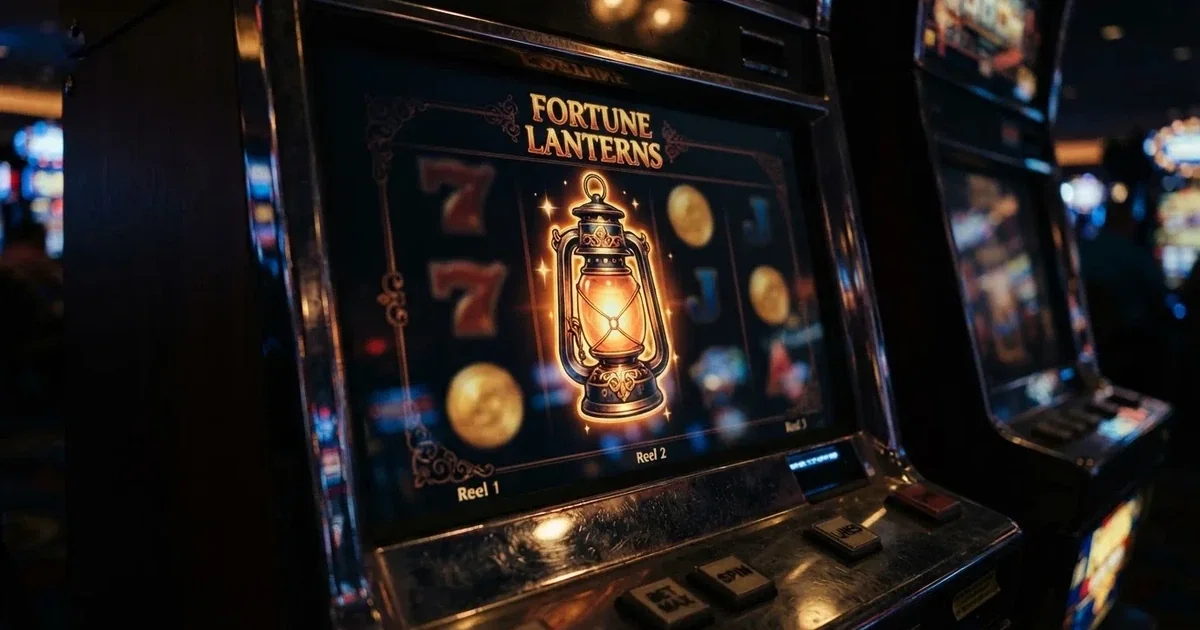
This page treats that prohibition as the starting point rather than a footnote. It explains the game’s actual hold-and-spin mechanic in plain language, names the regulators who have acted against offshore operators serving Australian residents, lists the brands the Australian Communications and Media Authority has formally warned by name, and walks through the protections an Australian player loses when they take their bankroll to an unlicensed site. It does not recommend a casino, because no casino on this list is one an Australian resident can lawfully use.
Data current as of 8 November 2026, verified against the ACMA’s published formal-warning register and the public blocking list.
Table of Contents
- What Lightning Link Actually Is — and Why “Online” Changes Everything
- How the Hold-and-Spin Bonus Round Works, in Plain Language
- The Legal Frame: Why No Online Casino Holds an Australian Licence
- Responsible Gambling When the Game Is Built to Keep You Playing
- Bonus Spins and Promo Codes: The Vocabulary, Carefully Read
- Apps and Mobile: Why a Phone Does Not Change the Law
- The Lightning Link Pokies Landscape: Cabinet, Theme and Variants
- The Brand-by-Brand Picture: Who the ACMA Has Acted Against
- What the Blocking Rate Looks Like Over Time
- The Choice That Is Not a Choice
- Frequently Asked Questions
What Lightning Link Actually Is — and Why “Online” Changes Everything
Lightning Link is a series of linked-progressive slot titles built by Aristocrat for Australian-style gaming machines. The version punters know best uses a hold-and-spin bonus round: six or more coin-shaped “orb” symbols anywhere on the reels trigger a re-spin mode, during which each new orb locks in place and resets the counter to three re-spins. Fill the screen, and the feature pays out the sum of the locked values, plus a “grand” jackpot symbol if every position is covered. That is the mechanic the marketing material talks around, and it is the mechanic that makes the game worth searching for.
The reason those searches end up at unlicensed offshore sites is structural. Aristocrat’s Lightning Link cabinets are licensed for use in pubs, clubs and casinos in every Australian state and territory except Western Australia, where the format is restricted to Crown Perth. New South Wales alone had 87,298 gaming machines outside casinos across 2,195 venues as of June 2023, and player losses on those machines ran to A$8.18 billion in 2022–23. Queensland ran 21,122 machines in 351 venues in October 2023, Victoria 26,380 outside Crown Casino in 2021–22, all under a 30,000-machine statewide cap. Western Australia banned poker machines in pubs and clubs in 1985 when Crown Perth opened; that single venue now operates about 2,500 approved machines, a count that has grown steadily since the original 200. The combined Australian pokie fleet is, in round terms, 3% of the world’s pub and club machines sitting in front of 0.3% of the global population.
That is the licensed, regulated, taxable environment. It is also the environment an internet search for “Lightning Link online pokies” cannot reach. The internet results are invariably variants of the same cabinet theme — Happy Lantern, Sahara Gold, High Stakes, Magic Pearl — hosted on offshore casino sites whose licence is issued by Curaçao, Malta, Anjouan or a comparable jurisdiction, and whose servers are physically outside Australia. The IGA prohibits them from offering their product to an Australian resident, but offering it is what they do, and the ACMA’s enforcement record since 2017 is the proof.
| Jurisdiction | Status / Limit |
|---|---|
| New South Wales | 87,298 machines (June 2023) |
| Queensland | 21,122 machines (Oct 2023) |
| Victoria | 26,380 machines (2021-22) |
| Western Australia | Banned in pubs/clubs |
From the player’s seat the experience looks the same: reels, orbs, the same animation, a paytable in Australian dollars. What changes is everything the screen does not show — the licence, the regulator, the dispute path, the deposit route — and what changes is exactly where the IGA, the ACMA and this page draw the line.
How the Hold-and-Spin Bonus Round Works, in Plain Language
The game’s signature feature is built around a fixed number of reel positions, usually fifteen, with orbs as the trigger. Six orbs anywhere in view at the end of a paid spin starts the feature. Each orb carries a value, either a coin amount or one of three jackpot labels (mini, minor, major, grand depending on the theme). The player gets three re-spins. Any new orb that lands during a re-spin also locks in place and resets the re-spin counter back to three. When the counter runs out without another orb landing, the feature pays the sum of every locked value.
That is the appeal, and the arithmetic behind it: a feature that almost always hands back something, occasionally pads it with a jackpot, and never costs the player an extra bet beyond the spin that triggered it. It is also the reason the game is the target of every second affiliate site on the search results page. A bonus round with a visible reset-to-three counter and a clearly labelled “grand” symbol is easy to advertise. It is harder to advertise honestly, because the reset counter is the engine of session length: most features end quickly, the player gets a small return, and the next spin is already paid for. Designers build the cadence; players experience it as momentum.
The RTP figures for individual Lightning Link titles vary by theme and by jurisdiction, and the Australian state-by-state floor differs. The legal minimum return-to-player sits at 85% in New South Wales, the Northern Territory, Queensland and (generally) Victoria, climbing to 87% at Crown Melbourne, 87% in the Australian Capital Territory and Tasmania, 87.5% in South Australia and 90% in Western Australia. Those numbers are minimums, not the actual RTP of any given title, and they apply to licensed cabinets on Australian floors. An offshore site running a Lightning Link clone under an Anjouan or Curaçao licence is not bound by any of these floors, and the RTP it advertises is a self-declared number that the regulator behind the licence does not audit at the level the Australian state regulators do.
The Legal Frame: Why No Online Casino Holds an Australian Licence
The Interactive Gambling Act 2001, tightened by the Interactive Gambling Amendment Act 2017, makes it an offence to provide online casino games, online pokies or in-play betting to a person physically in Australia. No state or territory issues an Australian online casino licence, because the federal prohibition overrides any state-level permission. What is licensable, and what operates under Australian licences, is wagering on races and sporting events placed before the event, lotteries and keno — the actual licensed online wagering market. That market is regulated largely through the Northern Territory Racing and Wagering Commission, which supervises 52 of Australia’s online bookmakers — Sportsbet, Bet365 and Ladbrokes among them — from a Darwin office that has no full-time staff and meets once a month.
The IGA targets the provider, not the player. An Australian resident opening an account with an offshore casino is not committing an offence. What they are doing is surrendering every protection the licensed Australian market is built around. There is no Australian dispute resolution body that can compel a payout from an offshore operator. There is no BetStop registration that binds the site to a self-exclusion request. There is no Australian deposit limit, no mandatory pre-commitment card, no requirement that the operator hold player funds in segregated Australian trust accounts. The consumer protection the IGA 2001 assumes exists is the protection of choosing not to play on that site at all.
Enforcement has built too. By the ACMA’s own published record, 1,751 illegal gambling and affiliate marketing websites have been blocked since the first blocking request in November 2019, and more than 230 unlicensed gambling services have left the Australian market since the regime was tightened in 2017. The latest published blocking round, reported on 26 June 2026, asked Australian ISPs to block 12 more names — 7Signs, ChromaBet, Donbet, Duospin, Freshbet, Slots Gem, Jacks Club, Lucky Start, Pointsbetz, Spinrise, Vinyl Casino and Wildsino. Each round of blocks also tends to remove a clutch of mirror domains and affiliate sites pointing at the same operator. H2 Gambling Capital’s 2025 report puts the Australian annual loss to illegal offshore sites at roughly A$3.9 billion, and the share of gambling going through legal channels fell from 74% in 2021 to 64% — a ten-point slippage in four years.
What an Australian Player Loses by Going Offshore
The trade is straight enough to set out plainly. An Australian-licensed online wagering account sits inside a regime that bans credit cards, credit-related products and digital currency as a deposit method since 11 June 2024, with penalties of up to $247,500 for operators who breach; legal deposit routes are debit card, bank transfer, PayID/Osko and BPAY. KYC and source-of-funds checks are mandatory. The National Self-Exclusion Register, BetStop, has been live since August 2023 and binds every Australian-licensed wagering service. Identity is verified at sign-up, dispute resolution is available through the operator’s nominated ADR provider, and funds are held under rules set by the state regulator.
Take the bankroll to an offshore site and almost every one of those protections disappears. Credit cards may be accepted on a site that ignores the Australian prohibition. KYC may be performed at withdrawal rather than at sign-up. BetStop does not bind the operator, because the operator is not licensed in Australia. ADR bodies like eCOGRA or the Curaçao Gaming Authority do not have the same standing, the same timeline, or the same access to Australian complaint channels as an Australian ADR. A player who has been self-excluded through BetStop can open an offshore account the same day. If the operator refuses a withdrawal, the dispute path runs through a regulator in another jurisdiction, on that regulator’s timeline, with that regulator’s idea of what evidence matters. The pace of offshore disputes is months; the pace of Australian disputes is weeks.
A separate practical point sits on top of these. The ACMA’s blocking list applies to Australian ISPs. A site can be blocked in Australia with a balance on a player’s account still unwithdrawn. The block does not return the money; it closes the door the player came in through. Every player who has lost a withdrawal to a blocked site has also lost the appeal path that begins at the same door.
Responsible Gambling When the Game Is Built to Keep You Playing
Lightning Link’s hold-and-spin feature is engineered to extend a session. The reset-to-three counter is the simplest possible mechanism for keeping a player at the machine: every locked orb is visible progress, every new orb resets the count and signals another chance, and the grand symbol is always one more die hard. The state regulators who licence the cabinets know this, and several have built structural responses into the way the machines operate. Tasmania planned nation-leading mandatory pre-commitment cards — a system that forces a player to set a time and money limit before they can play — but implementation of the reform was delayed until late 2025. Western Australia’s per-machine RTP floor of 90%, well above every other state, is another structural answer to the same question. New South Wales runs the largest pokie fleet in the country and the heaviest losses; its 85% floor is the lowest in the nation and, in volume terms, the costliest.
None of those structural responses follow a player offshore. The time and money limits a player should set themselves are the same limits that should govern any session on any slot machine — set a budget, set a clock, set a stop-loss, and stop when any of them trips. The features inside Lightning Link are not designed to remind a player of those limits; they are designed to make the next spin feel earned. That is the design intent. The player’s response to it is their own decision, and the only setting a player can rely on, on or off a licensed floor, is the one they set before they sit down.
For an Australian player who has decided to stop, BetStop — the National Self-Exclusion Register — is the binding mechanism, and it binds every Australian-licensed wagering service from the moment a registration is made. The National Gambling Helpline at 1800 858 858 is free, 24/7, with chat at Gambling Help Online. Both services are funded to help anyone who has decided they want to stop, including people who have already been playing offshore.
Bonus Spins and Promo Codes: The Vocabulary, Carefully Read
The terms “bonus,” “free spins” and “promo code” appear in almost every search result for “Lightning Link casino” or “Lightning Link pokies.” Each one is a piece of marketing language that resolves to a specific mechanism, and the mechanism is what costs the player, not the label.
A “Lightning Link casino bonus” on an offshore site is, in nearly every case, a deposit match — the operator credits the player’s account with a percentage of their deposit, on the condition the player wagers the combined amount a fixed multiple of times before any winnings become withdrawable. The wagering multiple on Lightning Link–themed bonuses typically sits between 35 and 50 times the bonus amount, occasionally higher. A A$100 deposit with a 100% match and a 40x wagering requirement on the combined A$200 produces A$8,000 of required turnover before any withdrawal is permitted. Game weightings on slots are usually 100%, meaning every dollar wagered on a Lightning Link title counts in full toward the requirement. Maximum bet sizes during the wagering period are commonly capped at A$5 per spin. Maximum cashout caps on winnings earned from a “free spin” allocation are routine, and they sit at figures well below what a player might expect from a long hold-and-spin feature.
“Free spins” attached to a Lightning Link theme are not free in any meaningful sense. They are a fixed number of spins at a fixed stake value, credited to the player’s account as a bonus balance, with the same wagering requirement and the same maximum-cashout cap that attach to the deposit offer. The “free” in free spins refers to the absence of an additional stake from the player’s balance; the cost is built into the wagering requirement.
“Lightning Link casino promo codes” resolve to the same offer architecture with a string the player enters at the cashier. The promo code does not change the wagering requirement, the game weighting, the max bet or the max cashout. It only changes which offer the player is opted into.
The structure is identical across nearly every brand an Australian search returns, because the platform software is shared — SoftSwiss, Dama N.V.’s platform, Hollycorn’s platform — and the bonus terms are configured to match what the affiliate pages will say about them. The marketing language around any of these offers deserves to be read against the wagering requirement and the cashout cap, not against the headline. A 100% match bonus that takes A$8,000 of turnover to clear, on a game with an RTP under 95%, costs more in expected loss than the bonus pays out in headline credit.
Apps and Mobile: Why a Phone Does Not Change the Law
A Lightning Link app — whether the search is for “lightning link casino app,” “lightning link pokies app” or “lightning link slot app” — is the same unlicensed offering, packaged for a smaller screen. The IGA’s prohibition is medium-neutral: it applies to “an interactive gambling service” provided to a person in Australia, and an interactive gambling service covers a phone app as readily as a desktop site. Geo-restrictions put in place by the app store do not change the IGA’s effect, and an app that confirms an Australian player is in Australia is in breach from the moment the player is accepted.
The actual product on the app is a licensed Aristocrat game delivered through an aggregator or a directly licenced clone, with the same hold-and-spin mechanic as the cabinets and the same offshore operator behind it. The app may offer biometric login, faster loading, push notifications for promotions and a mobile-only bonus. None of these features address the prohibition. The faster path to a banned activity is still a path to a banned activity.
The legal and practical protections a player loses by going offshore are also unchanged on mobile. BetStop does not bind the operator; the ACMA can direct an Australian ISP to block the app’s backend domain; the operator can refuse a withdrawal on the same terms as on desktop. There is no mobile-specific consumer protection that follows an Australian player across to an offshore app, and there is no app-store protection that prevents the ACMA from acting against the operator.
The Lightning Link Pokies Landscape: Cabinet, Theme and Variants
Lightning Link is a brand umbrella over several distinct cabinet themes, each with its own paytable, art and reel behaviour. Happy Lantern is the original. Sahara Gold, High Stakes and Magic Pearl are common companions. The titles share the hold-and-spin feature but vary on the number of reel sets, the size of the grand jackpot and the volatility band. A high-volatility theme pays less often but with a longer tail; a low-volatility theme pays more often with smaller features. None of the variants change the fundamental shape: paid spin, six-orb trigger, three-re-spin reset, locked-value payout, grand jackpot on a full screen.
Variants on the bonus round itself are limited. Some themes offer extra features during hold-and-spin, including a multiplier on the final payout or an extra reel-set expansion. Aristocrat’s own parlance treats the family as one product line with shared intellectual property, and that is how the licensing works: an operator pays for the right to host the family, not each title. A search for “lightning link casino pokies” on an offshore site will turn up most or all of the family under the one licence.
Outside Lightning Link itself, the pokies market that surrounds it includes both other Aristocrat cabinet titles (Buffalo, 50 Lions, More Chilli, Where’s the Gold) and a long tail of clones. Aristocrat’s Australian-listed cabinets hold a dominant share of the licensed pub and club fleet. The offshore sites offering the same titles do not hold an Australian licence, which is the point at which the hold-and-spin discussion meets the legal discussion again.
The Brand-by-Brand Picture: Who the ACMA Has Acted Against
The following list covers the operators the ACMA has named in formal warnings for offering prohibited interactive gambling services to Australians. Each entry names the operator behind the brand, the date the warning was published, and the line of business the warning covered. None of the brands in this list holds an Australian licence, because no such licence is available; the warnings are about the act of providing the service to Australian residents, not the licensing status. The page is not a recommendation: it is a record of the brands the regulator itself has acted against.
| Brand | ACMA action and date | Operator named by the ACMA | Subject support |
|---|---|---|---|
| RocketPlay | Formal warning under the IGA, March 2026 | Pulsup Ltd | No support |
| Level Up Casino | Formal warning under the IGA, May 2022 | Dama N.V. | Listed on aggregator pages |
| Woo Casino | Formal warning under the IGA, March 2025 | Dama N.V. | No support |
| Spirit Casino | Formal warning under the IGA, May 2025 | Dama N.V. | No support |
| National Casino | Formal warning under the IGA, July 2025 | Consolutetish S.R.L. | Listed on aggregator pages |
| Bizzo Casino | Formal warning under the IGA, July 2025 (also 2022) | Consolutetish S.R.L. (also TechSolutions) | No support |
| Ignition Casino | Formal warning under the IGA, July 2025 | Bamboo Media | No support |
| Instant Casino | Formal warning under the IGA, February 2025 | EOD Code SRL | No support |
| Jackbit | Formal warning under the IGA, April 2026 | Ryker B.V. | No support |
| Casino Intense | Formal warning under the IGA, April 2025 | Sterplay Holding Ltd | Listed on regulator pages |
| Sky Crown | Formal warning under the IGA, September 2022 | Hollycorn N.V. | No support |
What the table records is not a comparison. A comparison would assume the brands compete on equal legal footing, and none of them does. The table records the same prohibition running into eleven different operator names across four years, with Dama N.V. and Consolutetish S.R.L. each appearing more than once — a pattern that suggests a single corporate group cycling through brand shells faster than the ACMA can name them.
RocketPlay
The ACMA’s March 2026 formal warning to Pulsup Ltd over Rocketplay is the most recent action against a Dama-platform brand. The site is not an Australian-licensed operator and has never been one; the warning is the regulator telling the company to stop offering the prohibited service to Australian residents. Earlier in 2022, the same Rocketplay brand had been the subject of a wider Dama N.V. warning covering six casino names. No Australian-facing bonus terms are advertised by the ACMA, because the ACMA does not advertise bonuses; the only terms that travel with the brand sit on its own cashier page. The practical fact is that RocketPlay is on the ACMA’s enforcement record, and the offshore dispute path is a dead end for any consumer seeking recourse.
Level Up Casino
Level Up Casino sits inside the May 2022 Dama N.V. warning that named six brands at once. Aggregator listings still surface it as a real-money casino, which is what the listing means when it says “listings-only” support: the brand exists on affiliate pages and aggregator directories, and nothing more specific is carried by the sources. The warning covers the brand itself, and the IGA covers the offering. Level Up Casino’s marketing direction confirms the site operates outside the legal framework entirely.
Woo Casino
Woo Casino’s March 2025 formal warning came more than two years after the 2022 Dama N.V. warning that covered the wider group. The ACMA’s pattern here is clear: the operator changed name or surface, the regulator named it again. The cycle is expensive for the regulator and trivial for the operator. The cycle costs the Australian player the protections that would otherwise attach to a licensed site, and the marketing cost of being on the warning list is small enough to absorb.
Spirit Casino
Spirit Casino’s May 2025 warning sits three months after Woo’s. Same Dama N.V. parent, same prohibition, same warning letter. The two warnings together give the clearest possible picture of an operator group that treats ACMA formal warnings as a cost of doing business in Australia, and an Australian player who opens an account on either brand is opting into that arrangement without any say in it.
National Casino
Consolutetish S.R.L. took the July 2025 warning over National Casino alongside a second brand, Bizzo Casino, the same day. Aggregator listings carry National Casino as a real-money casino, and that is the depth of the support the listings offer — it exists, it is listed, and the ACMA has named it. The 2025 warning is the most recent regulatory action against the brand.
Bizzo Casino
Bizzo Casino’s July 2025 warning came on the same day as National Casino’s, and both names belong to Consolutetish S.R.L. Bizzo had already been the subject of a 2022 formal warning to TechSolutions (CY) Group Limited and TechSolutions Group N.V., a separate operating staff at two registered entities. Two operators, three corporate entities, two warning cycles — a small case study in how the offshore licence structure spreads a single brand across enough shells to keep the warning letters arriving at different addresses.
Ignition Casino
Bamboo Media’s July 2025 warning over Ignition Casino followed the same template: a formal warning under the IGA, an instruction to stop offering the prohibited interactive gambling service to Australian residents, a published letter on the ACMA’s website. The brand has been on the Australian-facing search results for long enough to have its own affiliate footprint; the warning does not affect that footprint, because the affiliate pages are not the ones the ACMA acts against.
Instant Casino
EOD Code SRL took a February 2025 formal warning over Instant Casino. The brand positions itself as a “no-account” casino in some markets — fast sign-up, quick withdrawal — which does not change the IGA’s effect on its offering to Australian residents. The ACMA’s warning letter is the same shape as every other on this list, because the prohibition is the same shape.
Jackbit
Ryker B.V.’s April 2026 formal warning over Jackbit and the parallel CasinOK brand arrived in the same round. Jackbit’s product is a crypto-deposit casino, which on its own would already fall foul of the Australian prohibition on credit-related and digital currency deposits for licensed wagering. The IGA’s prohibition on the offering runs alongside that. An Australian player depositing in crypto on Jackbit is operating outside both the IGA and the deposit-method rules.
Casino Intense
Sterplay Holding Ltd’s April 2025 warning over Casino Intense is the cleanest case in the list. The brand appears in regulator and regulator-adjacent coverage alongside its own operator name; aggregator listings are the only place the subject-support marker has anything to anchor to. The brand’s profile is the same as every other on the list: a foreign licence, an offshore server, and a clear signal that the operator is outside Australian regulatory oversight.
Sky Crown
Hollycorn N.V.’s September 2022 warning over Sky Crown and its parallel Blue Leo brand was one of the early published warnings under the strengthened 2017 regime. The brand has cycled through marketing surface and bonus configurations since, none of which changes the IGA’s effect on the offering. The 2022 warning is the foundation of the ACMA’s record against the operator, and that record is what an Australian player is signing into.
What the Blocking Rate Looks Like Over Time
The ACMA’s blocking regime has been running for more than six years. The first blocking request was issued in November 2019, and by the ACMA’s own published record 1,751 illegal gambling and affiliate marketing websites have been blocked since that first request. The blocking rounds have come at irregular intervals: a clutch of brands in 2020, a longer tail through 2021 and 2022, and a steady cadence since. Treating the published total as a running count against the November 2019 starting date gives a band of roughly 280 to 290 blocked sites per year on average across the six-and-a-bit-year window. The latest published round, on 26 June 2026, added 12 more sites in a single tranche — a typical blocking batch size and a snapshot of the rate the ACMA is currently working at.
The band is wide because the ACMA does not publish monthly counts, and because the rate is uneven: quieter months and active rounds alternate. What the band does show is that the ACMA’s blocking work has continued steadily through the strengthened 2017 regime and into the post-2024 enforcement environment, with no sign of slowing. Every round of blocks also removes a tail of affiliate pages and mirror domains that point at the same operator, which is why the count of 1,751 is higher than the count of distinct operators. An Australian player who is choosing where to take their bankroll sees the rate of blocking as the rate at which their access to a withdrawal can be cut.
The Choice That Is Not a Choice
The Australian online casino market is closed by law. There is no licensed Australian online casino, no licensed Australian online pokies site, and no brand — RocketPlay, Woo Casino, Sky Crown, Casino Intense or any of the others named above — that an Australian resident can open a real-money account with and stay on the right side of the Interactive Gambling Act 2001. The IGA targets the provider, but it also defines what an Australian player can and cannot be offered, and the “cannot” is the answer to every search that ends on one of these sites.
For a player who wants Lightning Link specifically, the licensed product sits in pubs, clubs and Crown Perth, with the same hold-and-spin mechanic the marketing material talks about, in front of a regulator that audits the RTP, enforces the state-by-state floor, and runs the responsible-gambling framework that the offshore sites do not. For a player who wants online casino games more broadly, the licensed Australian market offers wagering on sport and racing, with the consumer protections that follow. Both options are lawful, both are taxable, and both sit inside the regime the ACMA enforces. Everything else is an unlicensed offshore site, and the ACMA’s enforcement record is the proof.
Frequently Asked Questions
Is it legal to play Lightning Link online pokies for real money in Australia?
No. The Interactive Gambling Act 2001, strengthened in 2017, prohibits the provision of online casino games and online pokies to a person physically in Australia, and no state or territory issues a licence for the activity. The IGA targets the provider, not the player, but an Australian resident opening an account with an offshore casino gives up every Australian consumer protection that would otherwise apply to their bankroll.
What triggers the hold-and-spin bonus round on a Lightning Link machine?
Six or more orb symbols anywhere on the reels at the end of a paid spin. The feature awards three re-spins, locks any new orbs that land, and resets the re-spin counter back to three for every additional orb. When the counter runs out without another orb appearing, the feature pays the sum of every locked value, plus the grand jackpot if every position is filled.
Is Lightning Link available at regulated land-based venues in Australia?
Yes. Lightning Link cabinets are licensed in pubs, clubs and casinos in every state and territory except Western Australia, where they are restricted to Crown Perth. New South Wales alone operated 87,298 gaming machines outside casinos as of June 2023, with player losses of A$8.18 billion in 2022–23.
Do Lightning Link promo codes work the same way across different cabinet themes?
On the licensed cabinets there is no promo code layer at all — the game runs at the stake the player sets, with no deposit match or bonus balance. On offshore sites running Lightning Link clones, promo codes resolve to the same offer architecture: a deposit match, a wagering requirement between roughly 35 and 50 times the bonus, capped bet sizes and a maximum-cashout cap on free-spin winnings.
Does a Lightning Link app on a phone offer a different game to the desktop version?
No. The hold-and-spin mechanic, the paytable and the bonus round are the same product on both surfaces. The IGA’s prohibition applies equally to a phone app and to a desktop site, and an Australian player using the app is in the same legal and consumer-protection position as a player using the desktop site: no Australian licence, no BetStop binding, no Australian dispute path.
What separates the different Lightning Link reel sets from each other?
The titles in the family share the hold-and-spin mechanic but differ in paytable, art, reel count, jackpot size and volatility band. Happy Lantern is the original; Sahara Gold, High Stakes and Magic Pearl are common companions. The differences affect how often the feature pays and how large the payouts run; they do not change the fundamental shape of the bonus round.