
Pokies tips and tricks in 2026 — the honest version
The currency stamp on this page: data current as of 8 November 2026, checked against the Australian Communications and Media Authority (ACMA) and the formal warning notices it publishes, the Wikipedia “Gambling in Australia” overview, and reporting carried by igamingbusiness.com and Abc.net.au. Anything that names an operator ties back to a specific ACMA action.
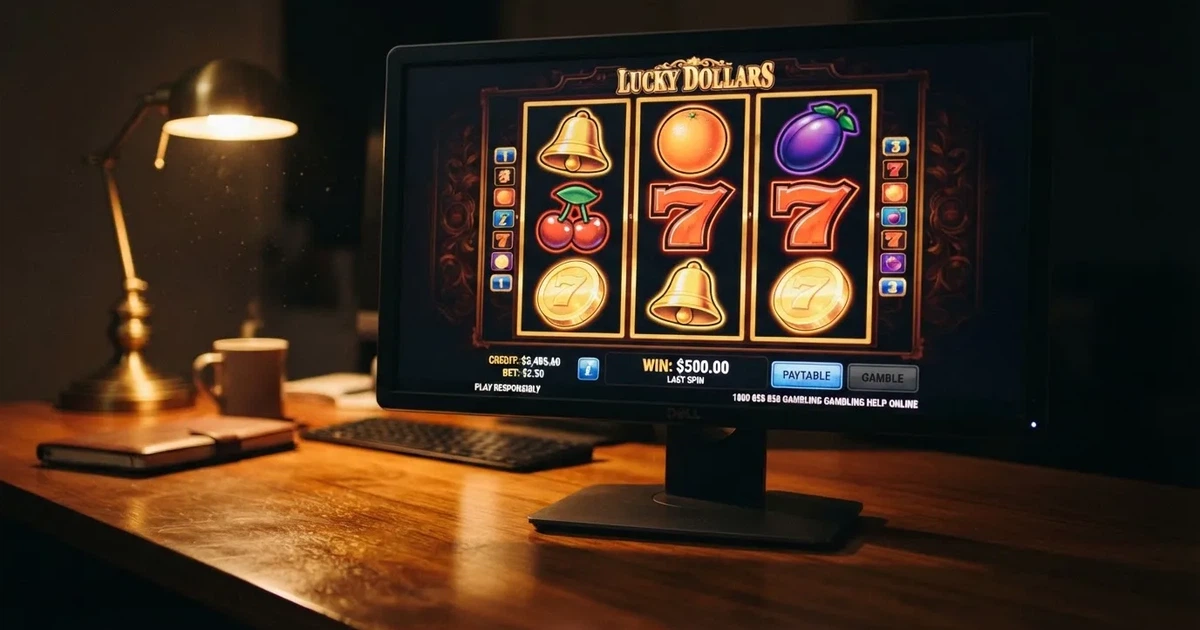
Every article that promises “tips to win pokies” asks for one thing first: belief. Buy into the system, follow the routine, time your spin, switch machines after a near miss, and the next pull will land. It is a tidy pitch. It is also wrong in a particular way: not because the routine fails on its own terms, but because the machine it claims to bend is the wrong object. A poker machine in a Sydney club, an offshore “online pokie” pitched at an Australian from Curaçao, and the random number generator sitting behind the reels are three different things, and only the first is legal for a person on Australian soil. The tips and tricks sold for the other two are built on a misunderstanding that any honest guide needs to clear up before it gets to anything else.
This page is built on that clearing-up. It works through how a modern pokie decides what lands on the reels, why bet size, machine choice, timing and “hot or cold” patterns do not change the probability of the next outcome, where the legal line falls in Australia for anyone searching for a way to put these ideas into practice, and what the regulator has actually been doing to offshore operators who market those systems here. The angle is cost — not just the cents an Australian loses to the house edge, but the time spent, the licence exposure, and the absence of any consumer protection once a withdrawal is refused by an operator sitting outside Australian law.
Table of Contents
- The pokie landscape in Australia before any “trick” matters
- How a pokies machine actually decides the next result
- The paytable and the one thing a player can read from it
- Why “tips to win pokies” get the math wrong
- Legality: what an Australian can and cannot use to test a system
- What the ACMA has been doing about offshore operators
- What an offshore pokies site costs an Australian player
- Responsible gambling: where to go if the routine stops being a routine
- A note on “Dragon Link tips” and other title-specific strategies
- The brands the ACMA has acted against
- Baccarat and blackjack: the only house edges worth knowing for context
- The arithmetic the page was built to surface
- Reading a “tips and tricks” article after this page
- Frequently asked questions
The pokie landscape in Australia before any “trick” matters
Australia runs more poker machines per head than almost any other country. According to the Wikipedia overview “Gambling in Australia”, in 2020-21 Australians bet almost A$150 billion through gaming machines and lost A$12.18 billion on them — and the country holds roughly 3% of the world’s pub and club poker machines with only 0.3% of the global population. The industry is not a niche; it is one of the heaviest gambling footprints on the planet, and most of it sits in clubs and pubs rather than casinos. New South Wales alone had 87,298 gaming machines outside casinos across 2,195 venues as of June 2023, with player losses of A$8.18 billion in 2022-23. Queensland had 21,122 machines in 351 venues by October 2023, and Victoria had 26,380 outside Crown Casino in 488 venues under a 30,000-machine statewide cap in 2021-22.

These numbers matter for any “tips and tricks” page because they frame the player pool. The audience searching for a pokies strategy is, statistically, sitting in front of a machine in a registered club, a pub or a casino — not an online site. The first thing an honest answer needs to do is name that gap. Articles that promise a system for “online pokies” are pitching at a product Australians cannot legally use at home, while the machines Australians actually play are state-regulated, with mandated return-to-player floors that no “system” can move.
What that leaves, in practical terms, is this: any strategy worth reading is one a player can act on inside the legal market. The rest is theatre, and a careful reader should be able to tell which is which before the second section.
How a pokies machine actually decides the next result
The mechanism most “tips and tricks” articles skip past is the one that decides everything: the random number generator. Every modern poker machine, in a pub or an online game, runs a program that picks a number for each reel position every fraction of a second, regardless of whether anyone is playing. When the player presses spin, the machine does not “decide” a result on the spot. It stops on the number that was already chosen at the moment the button was hit. Each spin is independent. The previous result, the size of the last bet, the time since the last feature, the player’s mood — none of it is fed back into the generator. The reels are a display; the maths already happened.

That is the design, and every regulatory regime that licenses a poker machine accepts it. New South Wales sets the legal minimum return-to-player at 85%, with the Northern Territory, Queensland and (generally) Victoria matching that figure outside Crown Melbourne’s 87%; the Australian Capital Territory and Tasmania set theirs at 87%, South Australia at 87.5%, and Western Australia at 90%. These floors are the only thing a player can actually rely on: across enough spins, the machine will return at least that share of the money taken in. The minimum is fixed, set by the regulator, and no routine the player runs moves it.
What does change is volatility, which is the size and spacing of wins around that average. A low-volatility pokie pays small amounts often. A high-volatility one pays rarely, and the wins can be large when they land. Tips and tricks articles sometimes discuss this as a “strategy” — “pick low volatility to grind”, “pick high volatility to chase the feature” — and it is the only choice that has any real effect on the player’s experience. It changes the shape of the session, not the long-run return.
A few practical implications follow from the design. Bet size does not change the probability of a winning combination on any given spin; it changes the dollar value of the payout when a win lands. A machine that has just paid a jackpot is no more or less likely to pay again on the next spin than it was five minutes earlier. Switching machines, pausing for a count, or pressing the button at a particular rhythm does not feed back into the generator. The “near miss” — two jackpot symbols and a third just off the line — is a designed visual cue, not a signal that the next spin is closer to a feature. Every reputable guide to how slots work says the same thing in different words, and the marketing pages that say otherwise are selling a feeling, not a method.
The paytable and the one thing a player can read from it
The paytable is the single document that tells the player anything concrete about a specific title. It lists the symbol values, the bonus feature triggers, the lines or ways to win, and any caps on the maximum payout. It is published by the game provider and reproduced on the machine or in the help screen of an online version, and it is the only part of a pokies experience that is not generated in the moment.
What the paytable does not contain is equally informative. It does not list the return-to-player as a single fixed number — that figure is set at the regulatory floor and varies slightly by title and configuration, and the operator does not have to publish the exact percentage on the cabinet. It does not list the probability of hitting the top jackpot; that is proprietary and changes from title to title. And it does not, anywhere, contain a strategy section that the player can follow to alter the math. The paytable describes a payout structure that is fixed before the player sits down.
What a careful reader can do with a paytable is comparatively narrow. Compare the cost per spin at minimum bet versus the cost per spin at maximum bet, and decide which is in budget. Check whether the bonus feature is buyable, and at what price relative to the base game. Note the maximum payout cap — some titles cap a feature win at a fixed multiple of the bet, which is the difference between a “big” win in marketing language and an actual life-changing sum. These are choices about how to spend a session, not choices about how to beat the machine.
Why “tips to win pokies” get the math wrong
The pattern is consistent enough to be worth naming. Articles that promise a system usually make one or more of three errors.
The first is the assumption that past results predict future ones. The gambler’s fallacy, dressed up as a routine. A machine that has not paid a feature in two hours is “due”. A machine that paid ten minutes ago is “cold”. Both readings treat the random number generator as a memory device, which it is not. The next spin’s probability is the same regardless of what came before.
The second is the assumption that the player can change the odds by acting on the machine. Bet size, button-press timing, “stopping the reels” with a stop-spin button on an online version — none of these reach back into the generator. They feel as though they do, and the design of the interface is built around that feeling. It is the same trick a roulette player falls into when they “find” a dealer’s signature.
The third is the assumption that there is a “loose” machine somewhere in the venue. Venues in Australia do not configure machines below the regulatory minimum, but neither do they configure them above it by much. The differences between titles, and between low- and high-volatility setups, are real and visible in the paytable — but they are differences in shape, not in long-run return to a fixed budget.
There is one more category worth naming separately, because it carries the most weight in this market: the article that frames a tips and tricks system as a way to win at “online pokies”. For an Australian player, that framing assumes a product the law does not allow. The Interactive Gambling Act 2001 makes it an offence to provide online casino games to a person physically in Australia; no state or territory licenses them. The strategy itself may be theoretically meaningless, but the channel it points to is also unlawful.
Legality: what an Australian can and cannot use to test a system
The legal frame for pokies in Australia splits cleanly in two. The land-based machine is licensed and regulated state by state. Every Australian jurisdiction runs its own regime, and the regulatory floors on return-to-player run from 85% in New South Wales, the Northern Territory, Queensland and most of Victoria to 90% in Western Australia. Registered clubs in New South Wales have operated the country’s first legal poker machines since 1956. Crown Perth is the only venue in Western Australia permitted to host poker machines — banned elsewhere in the state when it opened in 1985, the casino’s machine count has grown from about 200 then to roughly 2,500 today, each approved by the state’s Gaming and Wagering Commission. Tasmania ended the Federal Group’s decades-long monopoly over its machines through legislation passed in November 2021, with oversight moving to the Tasmanian Liquor and Gaming Commission, and the state planned mandatory pre-commitment cards — nation-leading at the time of announcement — with implementation delayed until late 2025.
The online channel is the opposite. The Interactive Gambling Act 2001, strengthened by the Interactive Gambling Amendment Act 2017, makes it an offence to provide online casino games, online pokies or in-play betting to a person in Australia, and no state or territory licenses them. What is licensable is wagering on races and sport placed before the event, lotteries and keno. The Northern Territory Racing and Wagering Commission (NTRWC) regulates 52 of Australia’s online bookmakers — including Sportsbet, Bet365 and Ladbrokes — licensed in the Territory for tax reasons; the commission has no full-time staff and meets once a month in Darwin.
For a person searching for tips and tricks, the practical translation is short. Any venue in Australia — pub, club, casino — is a legal place to play a poker machine under the rules of the relevant jurisdiction. Any site asking an Australian to register, deposit and spin “online pokies” is operating outside those rules, regardless of what licence the site displays.
What the ACMA has been doing about offshore operators
The Australian Communications and Media Authority (ACMA) is the enforcement body for the Interactive Gambling Act on the supply side. The individual player is not prosecuted — the law targets the provider. The regulator’s tools are investigations, formal warnings to operators, and directions to Australian internet service providers to block illegal services.
The scale of that action has grown.
| Metric | Detail |
|---|---|
| Total sites blocked (Nov 2019 – June 2026) | 1,751 |
| Average blocks per year | ~265 |
| Blocking round of June 2026 | 12 sites |
According to the ACMA as reported in June 2026, a total of 1,751 illegal gambling and affiliate marketing websites had been blocked since the first blocking request in November 2019, and more than 230 unlicensed gambling services had left the Australian market since enforcement was strengthened in 2017. In a single round reported on 26 June 2026, the ACMA asked Australian ISPs to block 12 more illegal gambling websites: 7Signs, ChromaBet, Donbet, Duospin, Freshbet, Slots Gem, Jacks Club, Lucky Start, Pointsbetz.com, Spinrise, Vinyl Casino and Wildsino. H2 Gambling Capital’s 2025 report estimates that Australians lose about A$3.9 billion a year to illegal gambling sites, and that the share of gambling going through legal channels fell from 74% in 2021 to 64%.
The blocking request figure carries the page’s arithmetic. From the ACMA’s first blocking request in November 2019 to the running total reported in June 2026, the regulator’s blocking record grew to 1,751 sites. That works out, in broad terms, to roughly 265 sites blocked per year on average over that span — somewhere between 250 and 280 a year once the early ramp-up is averaged in, which is the band worth quoting rather than a single rounded number. The figure does not include the 230-plus operators that withdrew without a formal block, and it does not include the affiliate marketing pages pulled down in the same rounds. It is also a snapshot of a moving target: the June 2026 round alone added 12 domains in one batch. The picture the number draws is of a regulator that issues blocking requests on a near-weekly cadence, and of an offshore industry that responds by rotating through new domains as old ones are pulled.
Formal warnings are the public record of operator-level action. In March 2026 the ACMA issued a formal warning to Pulsup Ltd over Rocketplay.com.au. In May 2022 the ACMA issued a formal warning to Dama N.V. covering six casino brands: Bambet, Dazard, Level Up, Rocketplay, Wild Tornado and Cobra Casinos. The same operator group received further warnings in March 2025 over Woo Casino and in May 2025 over Spirit Casino. In July 2025 the ACMA issued formal warnings to Bamboo Media over Ignition Casino and to Consolutetish S.R.L. over National Casino and Bizzo Casino; Bizzo had already been the subject of a 2022 formal warning to TechSolutions. In February 2025 the ACMA issued a formal warning to EOD Code SRL over Instant Casino. In April 2026 the ACMA issued a formal warning to Ryker B.V. over Jackbit and CasinOK. In April 2025 the ACMA issued a formal warning to Sterplay Holding Ltd over Casino Intense. And the ACMA issued a formal warning to Hollycorn N.V. over Sky Crown and Blue Leo.
These are not recommendations of any brand. They are the public record of regulator action, and the page reproduces them so that a reader searching by brand name can see what the ACMA has done.
What an offshore pokies site costs an Australian player
The legal frame is one cost. The financial frame is another. The promotional offers marketed alongside “pokies tips and tricks” on offshore sites promise matched deposits, free spins and cashback — and the small print carries terms the marketing page never quotes. Wagering requirements in the 35x to 50x range on the bonus amount are common, which means a A$100 bonus requires A$3,500 to A$5,000 in turnover before any of it can be withdrawn. Maximum cashout caps on free-spin wins are routine, and game weighting often reduces the contribution of pokies to wagering clearance to a fraction of the stake. None of these figures are published with the offer, and the audit a reader cannot run from inside an Australian account is exactly the audit the local regulator would run if the operator were licensed here.
Then there is the consumer-protection gap. The Interactive Gambling Act targets the provider, not the player, and offshore operators fall outside its reach. A withdrawal refused, a bonus term applied retrospectively, a win voided for “irregular play” — the reader has no Australian complaints body to escalate to. BetStop, the National Self-Exclusion Register that has been live since August 2023, binds Australian-licensed online and phone wagering services; an offshore casino is not connected to it, so a self-exclusion does not propagate. A site can be blocked by an ISP direction with a balance still on it. A player who hits a problem at an offshore site has, at most, the licence regulator in the operator’s home jurisdiction — Curaçao, Anjouan, the Philippines — none of which has the standing or the practical reach to recover a disputed withdrawal for an Australian consumer.
The payment frame closes the loop. Credit cards, credit-related products and digital currency have been banned as payment for licensed online wagering since 11 June 2024, with penalties of up to A$247,500 for operators. Legal deposit routes for licensed wagering are debit card, bank transfer, PayID/Osko and BPAY. A site asking an Australian for a credit card or a crypto deposit is operating outside the Australian rules — and the financial fingerprint of that deposit is, in itself, a marker that the operator is not part of the local regime.
On the tax side, gambling winnings of a recreational player are not assessable income under section 6-5 of the ITAA 1997, and losses are not deductible. The only exception is a person who carries on a business of gambling, which is a different matter from the model the reader is likely to fit. Anyone uncertain about their own position should check with the ATO.
Responsible gambling: where to go if the routine stops being a routine
A page that talks about how to play is obliged to talk about when to stop. The National Gambling Helpline on 1800 858 858 is free, available 24/7 and offers chat at Gambling Help Online. BetStop, the National Self-Exclusion Register, has been live since August 2023 and covers Australian-licensed online and phone wagering services — registering excludes the person from those services across every participating operator. Tasmania’s planned mandatory pre-commitment cards, designed to set a hard limit on what a player can put through a poker machine in a session, have been delayed into late 2025; the principle — that the machine enforces the limit rather than the player — is the one any honest guide wants the reader to take seriously regardless of jurisdiction.
A few warning signs are worth listing because they predate the support call. Chasing losses is the classic one, and almost every tips and tricks page that suggests a “recovery strategy” is, in effect, telling a player to chase. Borrowing to play is another. Hiding the activity from family or friends is a third. Any of these is a reason to register with BetStop, call the helpline, or both.
The support line is not a marketing footnote; it is the only part of the page that costs nothing and may save the reader everything else.
A note on “Dragon Link tips” and other title-specific strategies
A large share of “pokies tips and tricks” searches in Australia name a specific title — Dragon Link in particular — and ask for strategies that work on it. The honest answer is short. Dragon Link is a high-volatility multi-denomination game by Aristocrat, played in venues across the country, and the same design principles apply: the random number generator decides the result, the paytable describes the payout structure, and no player routine changes the probability of the next spin. Some articles frame Dragon Link as “looser” than other titles; the licensing regime does not allow machines to be configured below the regulatory floor, and the practical differences between titles are differences in volatility and feature frequency, not in long-run return to a fixed budget.
What changes between titles is the cost per spin, the frequency of the bonus feature, and the size of the maximum payout. A player who likes the long, quiet stretches between features can pick a low-volatility title and accept smaller wins. A player who prefers the rarer big hit can pick a high-volatility one and accept longer dry runs. Both choices are about how the session feels, not about how to beat the math.
The search volume on Dragon Link tips is high because the title is recognisable, not because it is mechanically unique. Any guide that promises a system specifically for Dragon Link is selling familiarity, not an edge.
The brands the ACMA has acted against
The block below is not a ranking and not a recommendation. Every brand named here is listed because the ACMA itself issued a formal warning over it for offering prohibited services to Australians. The common thread is the ACMA action and date, the operator entity the regulator named, and the underlying fact that online casino games cannot be licensed in Australia, whatever licence the site displays.
| Brand | ACMA action and date | Operator named by the ACMA | Subject support |
|---|---|---|---|
| RocketPlay | Formal warning, March 2026 (earlier warning to Dama N.V. in May 2022) | Pulsup Ltd | — |
| Level Up Casino | Formal warning, May 2022 | Dama N.V. | Listed by Bgaming.com as a partner brand |
| Woo Casino | Formal warning, March 2025 | Dama N.V. | — |
| Spirit Casino | Formal warning, May 2025 | Dama N.V. | — |
| National Casino | Formal warning, July 2025 | Consolutetish S.R.L. | Listed on Wikipedia’s Gambling in Australia coverage |
| Bizzo Casino | Formal warning, July 2025 (earlier warning to TechSolutions in 2022) | Consolutetish S.R.L. | — |
| Ignition Casino | Formal warning, July 2025 | Bamboo Media | — |
| Instant Casino | Formal warning, February 2025 | EOD Code SRL | — |
| Jackbit | Formal warning, April 2026 | Ryker B.V. | — |
| Casino Intense | Formal warning, April 2025 | Sterplay Holding Ltd | Listed on Abc.net.au and acma.gov.au, with Crown Melbourne coverage on Crownmelbourne.com.au |
| Sky Crown | Formal warning (Hollycorn N.V., September 2022) | Hollycorn N.V. | — |
The pattern that runs through the table is corporate: the same operator groups surface repeatedly, often under multiple brand names. Dama N.V. received separate warnings in May 2022, March 2025 and May 2025, and the warnings cover different brands each time. TechSolutions and Consolutetish S.R.L. both had the Bizzo brand flagged across separate warnings in 2022 and 2025. Reading the table row by row treats each brand as a fresh case; reading it column by column shows how lightly the warnings weigh against an operator that can launch a new brand and resume marketing within weeks.
RocketPlay is the clearest example of the cost picture this page is built around. It received a formal warning from the ACMA in May 2022 under Dama N.V., was the subject of further regulatory attention in the years that followed, and received another formal warning in March 2026, this time naming Pulsup Ltd as the operator of Rocketplay.com.au. Two warnings, four years apart, on the same brand, through different corporate wrappers — the kind of pattern that tells a reader the enforcement system works on a slow clock, and that a player’s protection is whatever the operator chooses to do in between.
Level Up Casino carries a similar history, named in the May 2022 Dama N.V. warning that covered six brands at once. The brand’s presence in third-party listings, where it appears as a partner brand of Bgaming.com, is a useful counter-example to a common reader assumption: that a game provider’s listing of an operator is a quality signal. It is not a regulatory signal, and it carries no Australian licence weight.
Woo Casino and Spirit Casino are the next pair worth naming together. Both are operated by Dama N.V., both received formal warnings from the ACMA in 2025 — Woo Casino in March and Spirit Casino in May — and the gap between the two warnings is short enough that an Australian reader can see the rhythm of the regulator’s action against a single operator group within a single year.
National Casino and Bizzo Casino are the pair linked to Consolutetish S.R.L., both warned in July 2025. Bizzo is the more complex case: it was the subject of an earlier 2022 warning to TechSolutions (CY) Group Limited and TechSolutions Group N.V., so the brand has cycled through two operator groups and two warning cycles within four years. The practical read for a player is the same: the brand name on the landing page is not a stable identifier of who is on the other end.
Ignition Casino, warned in July 2025 under Bamboo Media, is one of the more recognisable offshore brands marketed to Australians over the last decade. The warning does not change the marketing footprint overnight; the ACMA’s ISP blocking record is what eventually removes access, and that record carries the page’s arithmetic.
Instant Casino received its warning in February 2025 under EOD Code SRL. Jackbit and CasinOK were named together in an April 2026 warning to Ryker B.V., which is the freshest action in the table and the closest the regulator comes to a real-time response to a brand’s launch. Casino Intense was warned in April 2025 under Sterplay Holding Ltd. Sky Crown was warned in September 2022 under Hollycorn N.V., and the September 2022 warning also named Blue Leo.
What the table leaves out is the consumer layer. None of these brands offers an Australian complaints pathway. None connects to BetStop. None accepts a deposit through the legal Australian payment routes — debit card, bank transfer, PayID/Osko and BPAY — and any of them that takes a credit card or a crypto deposit is operating outside the Australian rules.
Baccarat and blackjack: the only house edges worth knowing for context
A pokies strategy page sits inside a wider gambling landscape, and the comparison other casino games offer is part of the cost picture. Two house edges from the Wizard of Odds reference put the slot machine in context.
Baccarat has a house edge of 1.06% on the Banker bet, 1.24% on the Player bet, and 14.36% on the Tie. The game is played across most Australian casinos and is one of the few table games whose outcome is genuinely close to even-money under optimal play. Punto banco, the variant most played today, was developed in Havana during the 1940s and is dealt from a shoe of 6 or 8 decks; chemin de fer, French for “railway”, is a two-player variant that emerged from baccarat banque in the late 19th century and is named for being quicker to play than the original. Crown Melbourne offers three baccarat variants — Traditional Baccarat, Crown Baccarat and 2 to 1 Baccarat — regulated by the Victorian Gambling and Casino Control Commission, which replaced the VCGLR as Victoria’s casino regulator on 1 July 2022. Under section 66 of the NSW Casino Control Act 1992, a casino operator must not permit a game such as baccarat to be played unless the game and its rules are approved by the regulator.
Blackjack, with optimal strategy, carries a house edge of about 0.28% under liberal Las Vegas Strip rules and about 0.43% under Atlantic City rules. The game is older than its modern name — vingt-un was its immediate predecessor, veintiuno appears in Cervantes’ Rinconete y Cortadillo written around 1601-1602, and the name “blackjack” took hold around 1899 during the Klondike Gold Rush. A starting two-card total of 21 is the strongest hand; the dealer must draw to 17 or higher. Variants like Spanish 21, Double Exposure Blackjack, Blackjack Switch and Super Fun 21 adjust the rule set in player-favourable ways.
What these figures show, by comparison, is how heavy the pokies edge is. A player making the Banker bet at baccarat is losing about A$1.06 for every A$100 wagered, on average. A blackjack player using perfect basic strategy is losing closer to A$0.30. A pokies player at a New South Wales club, with a 85% return floor and a typical configuration, is losing roughly A$15 on every A$100 — and that is the floor, with the house edge on most titles above it. The “tips and tricks” pitch is, in part, an attempt to recover that gap. The math does not allow it.
The arithmetic the page was built to surface
The page’s calculation is the blocking rate. The ACMA’s first blocking request was issued in November 2019. The running total of blocked sites, as of the round reported in June 2026, was 1,751. Across the years between those two dates — roughly 6.5 years from November 2019 to June 2026 — that is an average of around 270 sites blocked per year, with the precise figure sitting in a band between roughly 260 and 280 a year once the early ramp is averaged in. The figure is a snapshot, not a guarantee: a single round in June 2026 alone added 12 domains, and the weeks with no new blocks balance the weeks with five or more. The number is also a count of sites, not of operators; many of those sites are affiliate marketing pages that point to a smaller number of operator groups, and many operators rotate domains as quickly as the ACMA blocks them.
What the figure tells the reader is the regulator’s working speed. Roughly a site per working day, on average, for the last six and a half years. That is not the same as one per day — some weeks see none, some weeks see a dozen — but it is a working pace that has not slowed in 2026, and that has, if anything, accelerated as the round-by-round reporting has tightened.
Reading a “tips and tricks” article after this page
The honest guide to a pokies tips and tricks article is the same as the honest guide to the article itself: read the small print, name the regulatory position, and do not let marketing copy substitute for math. A tips article that does not mention the random number generator is missing the only mechanism that matters. One that does not mention the Interactive Gambling Act and the ACMA’s enforcement record is missing the only frame an Australian reader can act inside. One that frames a system as a way to win at “online pokies” is pitching at a product the law does not allow.
What the reader is left with, once those tests are applied, is a clearer picture of where the cost actually sits. The cost of a pokies session is the long-run return to player, set by the regulator at the floor, plus the volatility of the chosen title, plus the time the player spends in front of the machine. The cost of an offshore pokies session is the same math plus the absence of an Australian consumer protection, plus the chance the site is blocked with a balance still on it, plus the absence of a BetStop connection. The “tips and tricks” that promise to reduce either cost are selling something the design does not allow.
The page is not a recommendation to play. It is a map of where the money actually goes.
Frequently asked questions
Do any genuine tips or tricks change the odds on a pokies machine?
No. A modern poker machine decides each spin through a random number generator, which picks a number for every reel position on a continuous basis, regardless of whether anyone is playing. The next spin is independent of every spin before it, so bet size, machine choice, timing and past results do not change the probability of the next outcome. What changes between titles is volatility — the size and spacing of wins around the long-run average — and that is a choice about how a session feels, not a method to move the odds.
What’s different about tips for Dragon Link compared with pokies generally?
Nothing that matters for the math. Dragon Link is a high-volatility Aristocrat title with a recognisable bonus feature, and articles that promise a “Dragon Link system” usually lean on its familiarity rather than any mechanical difference. The random number generator decides the result, the paytable describes the payout structure, and the regulatory floor on return-to-player is the same. The differences between Dragon Link and other titles are cost per spin, feature frequency and maximum payout, not the probability of any given spin.
Is there a legal way for an Australian to try out pokies strategies using licensed land-based venues?
Yes. Pub, club and casino poker machines are licensed and regulated state by state, with return-to-player floors from 85% in NSW, the NT, Queensland and most of Victoria to 90% in Western Australia. Strategies and habits can be tried on those machines within the local regulatory frame. Online pokies, by contrast, cannot be licensed in Australia — the Interactive Gambling Act 2001, strengthened in 2017, makes it an offence to provide them to a person in Australia — so any “strategy” that requires an online channel is operating outside the law.
How does bet size actually affect the odds on a typical pokies machine, if at all?
Bet size does not change the probability of a winning combination on any spin. What it changes is the dollar value of the payout when a win lands — a A$1 spin pays ten times less on a winning line than a A$10 spin, but the probability of that line hitting is the same at both bets. The relevant choice is budget, not strategy: pick a stake that lets the session run for the length of time the player wants.
What do ‘tips to win pokies’ articles usually get wrong about how random number generators work?
Three things, consistently. They treat past results as predictive — the gambler’s fallacy dressed up as a routine. They assume the player can act on the machine in a way that feeds back into the generator — bet size, button-press timing, “stopping” the reels — which the design does not allow. And they frame “online pokies” as a venue for testing a system, which for an Australian is a product the Interactive Gambling Act 2001 prohibits supplying. The paytable describes a payout structure that is fixed before the player sits down, and the long-run return is set by the regulator at the floor.
Why do so many pokies tips pages specifically mention Dragon Link rather than other titles?
Because Dragon Link is recognisable, not because it is mechanically unique. The title has high search volume in Australia, and articles that name it in the headline ride that volume. The math is the same as for any other licensed poker machine: a random number generator, a paytable, a regulatory floor, and a fixed long-run return. The shape of the session — long quiet stretches and the occasional big hit — is the same shape any high-volatility title delivers.