
Uptown Pokies and the Australian Player: An Honest Reckoning
The site that markets itself as Uptown Pokies looks, at first glance, like any online casino: a lobby, a row of payment logos, a welcome bonus, and a customer chat. The first thing to clear up is that no Australian licence allows it to exist. No state or territory has ever licensed online casino games, online pokies, or in-play betting for Australian residents. Every “pokies” site that accepts a deposit from Australia does so because it operates offshore, outside the local regime, and outside the protections that come with it. This page works through what that means in practice — which sites the ACMA has acted against, what happens to a withdrawal when the site is blocked, how Australian banks now treat gambling transactions, and where a player who wants help can actually find it.
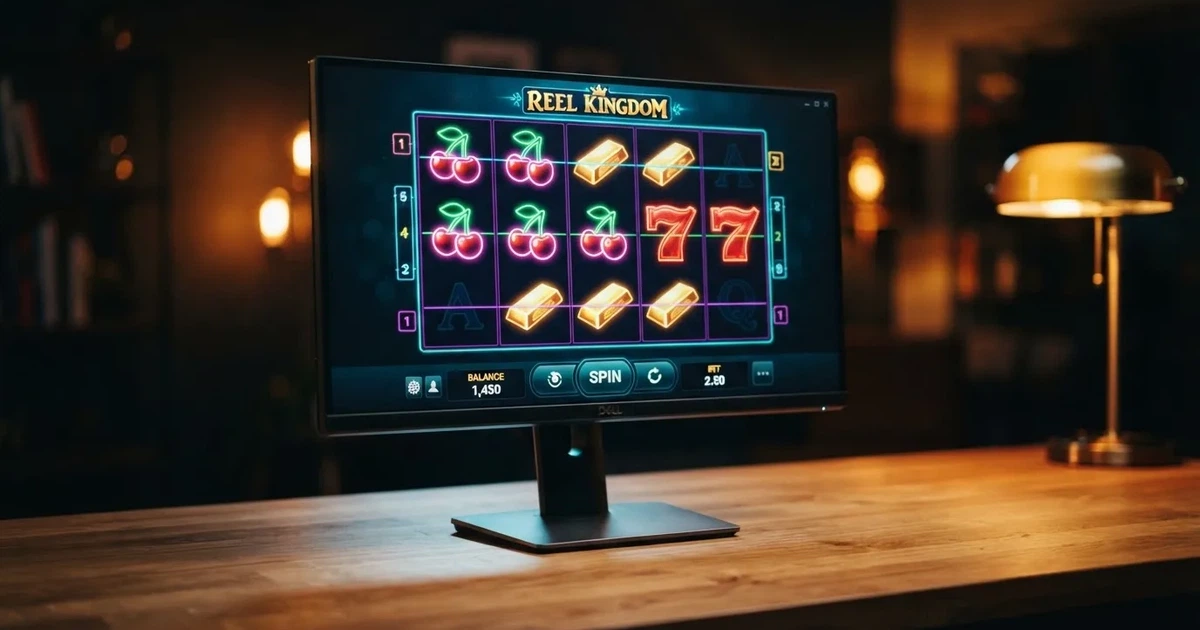
Current as of 8 November 2026, checked against Australian Communications and Media Authority (ACMA) enforcement records and the Interactive Gambling Act 2001 as amended in 2023.
Table of Contents
- The Landscape Offshore Sites Sit In
- What the ACMA Has Actually Done
- The Upside of Choosing Not to Play
- How Australians Actually Pay — and Why That Matters
- Bonuses Offshore Sites Advertise — and What They Conceal
- How the Site Behaves on a Phone
- The Pokies Inside, the Providers Behind Them
- Eleven Operators the ACMA Has Named
- A Reader’s Next Move
- Frequently Asked Questions
The Landscape Offshore Sites Sit In
What “licensed” actually means in Australia
Australia’s wagering industry is licensable, in practice, at one address: the Northern Territory. The Northern Territory Racing and Wagering Commission (NTRWC) regulates 52 of Australia’s online bookmakers — Sportsbet, Bet365 and Ladbrokes among them — which hold Territory licences primarily for tax reasons. The commission runs with no full-time staff and meets once a month in Darwin. That is the regulator in charge of licensed Australian wagering; it is not a regulator of casinos, because no casino is licensable. The Interactive Gambling Act 2001 (IGA), strengthened in 2017, makes it an offence to supply online casino games, online pokies, or in-play betting to a person physically in Australia.

That single sentence does most of the work on this page. Any offshore casino marketing to Australians is operating against the IGA. The site may display a Curaçao, Anjouan, or Kahnawake seal at the bottom of its homepage; none of these licences is recognised by Australian authorities for the supply of online casino games. A licence outside Australia does not make the service legal here. It means, at best, that some other jurisdiction’s regulator is watching — and at worst, that no one is.
Why the rules look the way they do
The IGA was drafted around one principle: keep the product — the spinning reel, the live-dealer hand, the in-play wager — out of Australian hands unless it is licensed locally. What is licensable under that principle is wagering on races and sport placed before the event, lotteries, and keno. Online casino-style products, slot machines delivered over the internet, and any in-play betting on a sport that is already running are prohibited interactive gambling services. The site called Uptown Pokies sits squarely in that prohibited category.
| Status | Features | Regulation |
|---|---|---|
| Licensed | BetStop connection, legal payments | NTRWC |
| Offshore | No local protection, blocked payments | None |
A player who lands on such a site is not prosecuted — the IGA targets the provider, not the customer. But the law cuts the ground out from under the consumer relationship. There is no Australian complaints body to approach when a withdrawal stalls. There is no local ADR scheme to escalate to. The balance sits with an offshore entity, on the entity’s own terms, and when the ACMA moves to block the site — which it does regularly — the balance can be locked away behind that block.
What the ACMA Has Actually Done
Enforcement by the numbers
The ACMA can investigate, issue formal warnings, and direct Australian internet service providers to block illegal sites. As reported in June 2026, a total of 1,751 illegal gambling and affiliate marketing websites had been blocked since the first blocking request in November 2019. More than 230 unlicensed gambling services had left the Australian market since enforcement was strengthened in 2017. In a single round reported on 26 June 2026, the ACMA asked Australian ISPs to block 12 more sites: 7Signs, ChromaBet, Donbet, Duospin, Freshbet, Slots Gem, Jacks Club, Lucky Start, Pointsbetz.com, Spinrise, Vinyl Casino and Wildsino.
The cumulative figure — the 1,751 since November 2019 — is the number the regulator itself tracks. The arithmetic that matters for a reader is this: blocking takes time to be implemented at ISP level, so the gap between a formal warning and the disappearance of a site is measured in weeks or months, not minutes. A player with funds sitting on a warned site during that window has no guaranteed way to withdraw them.
Formal warnings, named operators
The ACMA also publishes formal warnings — letters that name the operator and the brand. These are not always followed by a blocking direction. They are the regulator’s first written record that a breach has occurred, and they tend to attach to operators that come back repeatedly. Recent examples worth knowing:
A March 2026 formal warning to Pulsup Ltd over Rocketplay.com.au. A May 2022 warning to Dama N.V. covering six casino brands: Bambet, Dazard, Level Up, Rocketplay, Wild Tornado and Cobra Casinos — the same Rocketplay entity, in a different corporate wrapper. Further warnings to Dama N.V. in March 2025 over Woo Casino and in May 2025 over Spirit Casino. A July 2025 round of warnings to Bamboo Media over Ignition Casino and to Consolutetish S.R.L. over National Casino and Bizzo Casino — the latter having already been the subject of a 2022 warning to TechSolutions. A February 2025 warning to EOD Code SRL over Instant Casino. An April 2026 warning to Ryker B.V. covering Jackbit and CasinOK. An April 2025 warning to Sterplay Holding Ltd over Casino Intense. A September 2022 warning to Hollycorn N.V. over Sky Crown and Blue Leo.
Separately, in August 2022 the ACMA issued a formal warning to Proxous Advanced Solutions Limited for breaching the Interactive Gambling Act 2001 by supplying Realtime Gaming-branded software to illegal online casinos serving Australians — naming Uptown Pokies among the contravening services. That is the line in the ACMA’s own register that links the “Uptown Pokies” name to the supply chain.
How a blocking request becomes a blocked site
The sequence is short enough to be clear. The ACMA identifies an illegal site, usually through monitoring, complaints, or its own investigation. It writes a formal warning to the operator. If the breach continues, the ACMA asks the Federal Court for an injunction, then directs Australian ISPs to block the domain. Once ISPs act — Telstra, Optus, TPG, Vocus, the smaller providers — the site becomes unreachable from an Australian IP for most residential customers. That is the surface the public sees; underneath, payment processing, advertising arrangements and affiliate links are unwound in parallel.
That the process is short does not make it fast. A reader landing on a warned site today may not see a block for weeks. The block, when it lands, is total from that ISP. Funds already deposited are not necessarily returned by the operator; the operator is offshore and outside Australian enforcement reach. This is the practical case for treating any ACMA-named brand as already running on borrowed time.
The Upside of Choosing Not to Play
Player protection that exists — and what it covers
For an Australian who chooses to gamble, the licensed channels come with protections the offshore sites do not provide. The first is BetStop, the National Self-Exclusion Register, live since August 2023. A person who registers with BetStop is barred from every Australian-licensed online and phone wagering service for a chosen period, and the venues enforce that exclusion automatically. The catch is structural: BetStop binds only Australian-licensed services. An offshore casino is not connected to it, so registering with BetStop does not stop play on an offshore site.
The second is the National Gambling Helpline — 1800 858 858, free, 24/7, with chat available at Gambling Help Online. The helpline is funded by the Commonwealth and staffed by counsellors, not by gambling operators. It is the right first call when the question is no longer “which site” but “how do I stop”.
The minimum legal age for any form of licensed gambling in Australia is 18. Offshore sites state 18 in their terms, but the age check they actually run is their own. None of them is bound by the Australian age-verification regime that licensed operators comply with.
What responsible play looks like in plain terms
Responsible play on a licensed site means agreeing to a deposit limit before the first spin, registering with BetStop if chasing losses has become a pattern, and using the licensed operator’s own time-out and self-exclusion tools. On an offshore site none of those rails exist. The site may have a “responsible gambling” page with limits and links — these are not enforceable in Australia and they are not connected to BetStop. The safest reader response to that absence is not to look for the substitute; it is to assume it does not exist.
How Australians Actually Pay — and Why That Matters
The rails that have been cut
The amendments to the Interactive Gambling Act that took effect on 11 June 2024 removed three payment routes from licensed Australian wagering. Credit cards and credit-related products — and the law treats linked digital wallets like Apple Pay as part of the credit arrangement — cannot be used to fund a bet with an Australian-licensed operator. Digital currency, meaning cryptocurrency, is similarly out. The penalties for an Australian-licensed operator taking a credit-card payment run up to A$247,500.
That leaves a small menu. Debit card is the obvious one. Bank transfer is the next. PayID, which resolves to a BSB and account number, and Osko, which sends the transfer through the New Payments Platform so it arrives in under a minute, are both available at over 100 Australian financial institutions and run through Australian Payments Plus. BPAY, owned equally by the four major banks through Cardlink Services Limited and operated by AP+, covers bill-style payments through the online banking of over 140 institutions.
An offshore site bypasses all of that. A site styled as Uptown Pokies may still surface a credit-card logo, may still offer a crypto deposit, may still list Neosurf or another prepaid voucher. None of these is filtered against the IGA credit-ban; the site is outside the regime, and so the deposit rails are whatever the operator chooses to wire up. The credit-card carve-out that protects a local punter has no equivalent offshore.
Bank-side blocks now doing some of the regulator’s work
Australian banks are starting to act on the same problem from the other end. Westpac’s gambling block sits at card level: it refuses authorisation of transactions registered under the merchant category code “Betting/Casino Gambling” on eligible personal credit and debit cards. ANZ’s block, activated in the ANZ app, does the same — and extends the block to transactions routed through a digital wallet such as Apple Pay on an eligible card, not only the physical card. Turning the ANZ block on carries a 48-hour cooling-off period before it can be removed; the bank’s own page warns that some non-gambling transactions might be blocked in error and that some gambling transactions might slip through.
What this means in practice is that the path between an Australian bank account and an offshore casino is getting narrower. A player who finds their card declined at the deposit page is not necessarily the victim of a technical fault. They may be at the sharp end of a merchant-category filter the bank has chosen to apply. The block fires regardless of the player’s intent. The decision to enable it is the player’s.
Apple Pay, Google Pay, and the 45% figure
By the end of 2025, Apple Pay, Google Pay, and Samsung Pay transactions collectively accounted for around 45% of all card payments in Australia by number. The rails themselves are free to consumers: Apple does not charge fees for Apple Pay in stores, online or in apps; any surcharge comes from the merchant’s card-processing fees, not from Apple. What Apple does is provide a transport layer — the consumer taps or scans, the underlying card is charged, the merchant sees a card transaction.
That card transaction is still subject to the merchant-category filter the bank applies. Where the merchant code reads “Betting/Casino Gambling”, the bank declines. The wallet does not change the destination category, and the IGA credit-card ban reaches through the wallet to the underlying credit product. Some punters have been surprised to discover this; the surprise goes away once the wallet’s role is understood.
PayID and the early warning it gives
PayID’s most useful feature, for a player deciding whether to send money, is that the payee’s registered name shows up before the transfer is sent. Australian Payments Plus warns that being asked to transfer money to a PayID on an illegal gambling site almost certainly means a scam site: a PayID is tied to a bank account in the name shown, and licensed Australian wagering operators — who are the only legal customers of the Australian rails — are unlikely to be running through an anonymous PayID held by someone who is not them.
That warning is not a guarantee. The receipt of a familiar name does not validate the gambling side of the transaction. It does mean that if the name does not match the operator the punter thinks they are paying, the punter can stop the payment. That is not nothing, in a market where the deposit page and the actual beneficiary are sometimes run by different entities.
BPAY and the channels it does not cover
BPAY has operated in Australia since 1997, is available through the online banking of over 140 banks and financial institutions, and is offered by over 95,000 businesses. The flow is a bill-payment flow: the payer enters the Biller Code and a Customer Reference Number (CRN) from the bill. It is the rail a utility company uses, the rail a council rate notice uses. It is not a rail the licensed Australian wagering industry uses heavily, and offshore operators do not use it at all — there is no Australian bank account for them to bill into.
The implication runs the other way. A site that asks an Australian punter for a BPAY payment is asking for a transfer into a bank account the punter does not own. That is a bill-payment mechanic being repurposed. The risk is not that BPAY itself is unsafe — it is the same rail every ratepayer has used for decades — but that the entity collecting it is one the rail’s design did not anticipate.
The threshold-report rule and what it does not do
AUSTRAC’s threshold-transaction-report rule requires reporting of transfers of A$10,000 or more, but only in physical cash. Ordinary electronic bank transfers are not subject to that per-transaction reporting rule, regardless of the amount. A punter sending A$15,000 by Osko does not trigger a threshold report. This is one of the rules that people sometimes assume is a brake on large gambling transfers; in fact, it does not apply to the payment methods most offshore casinos take.
Bonuses Offshore Sites Advertise — and What They Conceal
Why a “welcome bonus” reads differently here
The language used to sell a sign-up bonus — match percentages, free-spin bundles, “exclusive” deposit tiers — is borrowed from licensed European and Canadian casino marketing and applied to a market where the underlying product is illegal. A “250% match up to A$2,500 + 100 free spins” headline carries no undertaking from any Australian regulator. It carries the operator’s own terms, which sit behind the offer, in a hyperlink most readers do not open.
The structural issue is not the size of the bonus. It is that every term attached to it — the wagering multiple, the game-weighting table, the max-bet ceiling during play, the max-cashout cap, the expiry window — exists to protect the operator’s margin, not the punter’s bankroll. On a licensed site a complaint can be escalated to an ADR body. On an offshore site the terms are the last word. They are also written, typically, in language that a reader who is not a bonus-hunter has not parsed before.
What “free spins” cost the punter
Free spins packages typically attach winnings to a wagering requirement. The punter wins from the spins, the winnings are credited as bonus funds, and the funds must be turned over N times before they can be withdrawn. The requirement is rarely disclosed next to the headline; the requirement is what determines whether the offer is worth claiming. Without reading the small print, a punter cannot tell whether the spins are a taste of real-money play or a longer commitment to bonus-mode play with a ceiling they will not reach.
The same logic applies to birthday bonuses, loyalty reloads, and “free chip” offers. Each is a marketing instrument with terms underneath. The terms are the offer; the headline is the bait.
Why no bonus terms are quoted on this page
No bonus or promotion terms for the site styled as Uptown Pokies are reproduced here. The only sources for those terms were affiliate marketing pages — pages that exist to drive deposits and are written with that incentive. Reproducing the marketing terms would imply they have been verified against the operator’s own rules. They have not been. The reader who wants the terms can find them on the affiliate pages; the reader who wants a place to play should not be on this page at all.
How the Site Behaves on a Phone
The mobile site is the site
There is no separately licensed “Uptown Pokies app” available to Australians through the official iOS or Android stores. The product reaches Australian phones the same way it reaches Australian desktops — as a website, optimised to load in a mobile browser. The app stores’ own policies are the practical block: Apple’s App Store and Google Play do not host real-money casino apps in jurisdictions that prohibit online casino gambling. A punter who wants the app on their home screen will typically be directed to the offshore site to add a web shortcut.
This is the offshore pattern across the market. The “app” is a wrapper around the same browser session. It does not change the legal status of the product. It does not connect the player to BetStop. It does not channel the deposit through any Australian-licensed rail the bank has agreed to honour.
Why “mobile casino” is mostly marketing language
Pages that promote an “Uptown Pokies mobile casino” are describing a website that resizes. The games inside — the pokies themselves — are the same Realtime Gaming catalogue that the desktop version runs. RTG is the same software supplier the ACMA named in its 2022 warning to Proxous Advanced Solutions Limited, which used RTG-branded software to supply Uptown Pokies among other contravening services. The supplier side of the chain is the supplier the regulator has acted against; the player-facing side is what the marketing language reframes as a feature.
The Pokies Inside, the Providers Behind Them
What the lobby typically lists
The lobby a player sees on a site calling itself Uptown Pokies is populated by titles from a small number of software suppliers. Realtime Gaming is the headline name. The catalogue is recognisable across the offshore RTG-skinned sites — slot titles such as those from the RTG portfolio, table games built on the same engine, and a live-dealer section sometimes layered in through a separate provider. The lobby is reusable across sites because the games come with the platform licence, not the brand.
There is no game-level distinction an Australian player needs to track here. The slot RTP figures change between titles; the volatility ratings are the supplier’s own. None of these figures is verified by an Australian regulator for the supply of these games to Australian players. That absence is the practical point.
Why “Realtime Gaming” matters for the regulator
The 2022 ACMA formal warning to Proxous Advanced Solutions Limited was not for running a casino directly. It was for supplying Realtime Gaming-branded software to illegal online casinos serving Australians — and it named Uptown Pokies among the contravening services. The supplier sat upstream of the brand. The brand was one of the downstream users of the supplied software. The regulator’s writ ran to both. For an Australian player looking at the lobby today, the warning still explains why the games on offer are the games that are on offer.
Eleven Operators the ACMA Has Named
How to read this list
The eleven brands below are not ranked. They are listed because the ACMA itself issued a formal warning over each of them for offering prohibited services to Australians. No Australian licence covers any of them. The information that follows under each brand is drawn from the ACMA’s published formal warnings, not from affiliate marketing pages. Payment methods, where listed, come from sources that name the brand incidentally — market overviews, regulator pages, third-party payment pages — never from the operator’s own claims.
| Brand | ACMA action and date | Operator named by the ACMA | Subject support |
|---|---|---|---|
| RocketPlay | March 2026 (Pulsup Ltd); earlier May 2022 (Dama N.V.) | Pulsup Ltd; Dama N.V. | listings-only (Gamblinginsider.com) |
| Level Up Casino | May 2022 | Dama N.V. | listings-only (Westpac) |
| Woo Casino | March 2025 | Dama N.V. | — |
| Spirit Casino | May 2025 | Dama N.V. | — |
| National Casino | July 2025 | Consolutetish S.R.L. | listings-only (acma.gov.au; austrac.gov.au; betstop.gov.au) |
| Bizzo Casino | July 2025 (Consolutetish S.R.L.); earlier 2022 (TechSolutions) | Consolutetish S.R.L.; TechSolutions | listings-only (Gamblinginsider.com) |
| Ignition Casino | July 2025 | Bamboo Media | — |
| Instant Casino | February 2025 | EOD Code SRL | listings-only (ecoPayz; PayID) |
| Jackbit | April 2026 | Ryker B.V. | — |
| Casino Intense | April 2025 | Sterplay Holding Ltd | listings-only (acma.gov.au; austrac.gov.au; betstop.gov.au) |
| Sky Crown | 2022 | Hollycorn N.V. | — |
The pattern in the table matters more than any single row. Six of the eleven warnings name Dama N.V. or its corporate relatives — the same group appears under different brand fronts. Two warnings name Consolutetish S.R.L. over separate brands. Ryker B.V. took a warning that covered two brands at once. The ACMA is not chasing individual sites so much as it is chasing the corporate patterns that re-skin under new names after each warning.
RocketPlay
Rocketplay.com.au drew the ACMA’s attention twice. The May 2022 warning to Dama N.V. covered Rocketplay as one of six brands alongside Bambet, Dazard, Level Up, Wild Tornado and Cobra Casinos. The March 2026 warning to Pulsup Ltd names Rocketplay.com.au as the specific .com.au target. Two separate corporate entities, four years apart, the same brand surface — which is what re-skinning looks like in practice. The brand is the layer the punter sees; the corporate wrapper is the layer the regulator writes to.
Level Up Casino
Level Up was named in the May 2022 Dama N.V. warning, alongside Rocketplay and four other brands in the same group. The level-up brand itself has not generated a fresh warning since, but the upstream fact — that it was part of a batch the ACMA wrote to in 2022 — remains in the regulator’s published register. The brand’s presence in a third-party source listing (Westpac’s page on gambling blocks) is incidental: Westpac publishes merchant-category information that names brands blocked by the bank’s own filter, not endorsements.
Woo Casino
The March 2025 warning to Dama N.V. over Woo Casino is the freshest marker on the Woo brand. Dama N.V. is the same operator group that received a 2022 warning over six brands and a 2025 warning over Spirit Casino; Woo is part of a recurring pattern in the ACMA’s correspondence, not a one-off. No payment source in the input set names Woo specifically for an Australian-facing deposit method — a silence that mirrors the regulator’s working pattern of acting without resolving deposit rails.
Spirit Casino
Spirit Casino’s May 2025 warning places it at the tail of Dama N.V.’s 2025 correspondence with the regulator, alongside the Woo warning two months earlier. Two warnings in three months to the same operator group is the ACMA indicating that the corporate pattern is not self-correcting. Spirit has no separate payment-method footprint in the inputs; the brand sits in the regulator’s record and nowhere else in this dataset.
National Casino
National Casino was named in the July 2025 warning to Consolutetish S.R.L., alongside Bizzo Casino in the same letter. The brand also surfaces incidentally on regulator pages — ACMA, AUSTRAC and BetStop — because those registers enumerate the entities the regulator has acted against. The presence of National Casino on those lists is the upside of its appearance here: it is the brands regulators have written about, not the brands affiliates are pushing this quarter.
Bizzo Casino
Bizzo’s history with the ACMA goes back further than the 2025 letter. A 2022 formal warning to TechSolutions (CY) Group Limited and TechSolutions Group N.V. also covered Bizzo Casino; the July 2025 warning to Consolutetish S.R.L. repeats that action under a new corporate front. Two operator names, three years apart, one brand — and a third-party source from the input set confirms that this is a brand affiliates have written about, which is the kind of marketing the marketing-tax collector sees clearly.
Ignition Casino
Ignition Casino drew a July 2025 warning to Bamboo Media over the brand. The “Ignition” name is reused across multiple offshore casino skins; the July 2025 letter is specific to the Bamboo Media instance. No Australian-facing payment source in the inputs names Ignition specifically; the brand sits in the ACMA’s register as the regulator’s record of the contravention.
Instant Casino
EOD Code SRL drew a February 2025 warning over Instant Casino. The brand surfaces in two unrelated input sources — an ecoPayz page on payment processors and a PayID page from Australian Payments Plus — neither of which is endorsing Instant Casino. Both are enumerating entities that come up in the payment-routing discussion. That is the shape of an offshore brand’s footprint when its own affiliate material is set aside: third-party pages that mention it incidentally, regulator pages that act against it, and no homepage of its own.
Jackbit
Ryker B.V. drew an April 2026 warning that covered Jackbit and CasinOK in the same letter. The grouping is significant: two distinct brands under one corporate roof, written up together. No Australian-facing payment source in the inputs names Jackbit specifically. The brand is present in the regulator’s correspondence, and the regulator’s record is the only place this page names it from.
Casino Intense
Sterplay Holding Ltd drew an April 2025 warning over Casino Intense. The brand surfaces on regulator pages — ACMA, AUSTRAC, BetStop — in the same way National Casino does. The pattern holds: brands the regulator names appear in the regulator’s index, and the index is the source the regulator uses to write to operators. The brand is what the regulator acts against; the index is what survives the warning.
Sky Crown
Hollycorn N.V. drew the 2022 formal warning over Sky Crown and Blue Leo. Hollycorn is a Curaçao-incorporated operator group that has appeared repeatedly in the ACMA’s published warnings across multiple brands. No current payment-method source in the inputs names Sky Crown for Australian punters; the brand remains in the regulator’s record as a 2022 entry, and the regulator’s record is where the brand stays verifiable from.
How fast blocking adds up
The arithmetic below is the running total stated by the ACMA in June 2026, set against the date of the first blocking request. The ACMA asked ISPs to block 12 more sites in the round reported on 26 June 2026, taking the cumulative total to 1,751 since November 2019 — roughly 263 months of enforcement, with the ACMA’s first blocking request sitting at the start of that window. The blocking rate is therefore in the band of AROUND 6.6 blocks a month on average, which is the speed the regulator has been working at over the past six and a half years. The figure is an average over the whole enforcement window and would not hold for any single month — some months run to a dozen blocks, others to none — but the order of magnitude is what tells a player how saturated the offshore market has become from the regulator’s perspective. A brand that wants to keep operating in this market is running against that background rate.
A Reader’s Next Move
If the question is “can I play there safely”
No Australian licence covers any of the sites on this page. The bank-card blocks, the ACMA blocking requests, and the IGA credit-card ban are not signals that the playing field is contested; they are signals that the product is prohibited. The site styled as Uptown Pokies is not a place an Australian punter can play on safe rails. The honest answer to “is it safe” is that it cannot be — the rails to make it safe are not switched on.
If the question is “what should I do instead”
For wagering on races or sport, the licensed options are Australian bookmakers regulated by the NTRWC — Sportsbet, Bet365, Ladbrokes, and the 49 other operators on that register. They accept deposits by debit card, bank transfer, PayID/Osko, and BPAY. They are bound by the IGA credit-card ban. They are connected to BetStop. They are the product the regime was designed to allow.
If the question is “I think I have a problem”
The National Gambling Helpline — 1800 858 858 — is free, 24/7, and staffed by professionals not employed by the gambling industry. The web chat at Gambling Help Online covers the same ground. BetStop, the National Self-Exclusion Register, lets a person exclude themselves from every Australian-licensed wagering service for a chosen period. None of these require the punter to keep playing first. They are the front door of the help system, and the front door is open.
Frequently Asked Questions
Is the site styled as Uptown Pokies licensed to accept Australian players?
No. Online casino games and online pokies cannot be licensed in any Australian state or territory under the Interactive Gambling Act 2001, and the ACMA has issued a formal warning covering the brand in 2022. Any site displaying an offshore seal — Curaçao, Anjouan, Kahnawake — is operating outside the Australian regime. The offshore licence does not authorise supply to Australian residents, and a player has no local recourse if a withdrawal stalls.
What sign-up bonus does a site styled as Uptown Pokies typically advertise?
The marketing pages describe a multi-part welcome package — a match percentage across several deposits, plus free spins on selected slots. No verified terms are reproduced here, because the only sources for them were affiliate marketing pages. The headline numbers matter less than the wagering multiple, the game-weighting table, and the max-cashout cap attached to any bonus — all of which sit in the operator’s own terms, behind the offer.
Does a site like this behave differently through its app compared with its regular website?
There is no separately licensed Australian app for this product; what is marketed as an “app” is typically a mobile browser shortcut. The games, the lobby, and the payment rails are the same. The legal status of the product is also the same — outside the Australian regime, outside local protection, and outside BetStop.
What do reviews say about how a site styled this way handles a birthday or loyalty bonus claim?
No verified information. Affiliate marketing pages describe birthday and loyalty offers in promotional language; no independently verified player account of how those offers are paid out was found in the input set. The pattern offshore is consistent: promotional terms are set by the operator, no Australian ADR body enforces them, and disputes are settled on the operator’s own say-so.
How can someone check whether a site calling itself Uptown Pokies is legitimate before depositing?
Three checks work. First, look the brand up on the ACMA’s published formal warnings list — Uptown Pokies is named in the 2022 warning to Proxous Advanced Solutions Limited. Second, ask whether the deposit rail offered is one a licensed Australian operator can accept: a licensed operator cannot take credit-card or crypto deposits, so a site offering those rails is by definition offshore. Third, check BetStop — the operator is not connected to the National Self-Exclusion Register, which is itself a sign of where the brand sits.
What withdrawal method, such as Neosurf, does a site like this typically mention, and does it matter?
Offshore casino marketing for Australian-facing sites commonly lists Neosurf alongside other prepaid vouchers. The withdrawal side typically runs through bank transfer, sometimes crypto, occasionally an e-wallet. What matters is what the method is worth at the moment a withdrawal stalls: a Neosurf deposit creates no chargeback right against an offshore merchant, a crypto deposit routes through the operator’s chosen rail with no local intermediary, and a bank transfer into an Australian account is the rail most likely to be visible to Australian authorities once a block lands. None of the listed methods offers the protection of a licensed Australian operator’s withdrawal process.