
Playson online casinos in Australia: what’s real, what’s licensed, and what an offshore site is actually offering
Verified against the ACMA register and current enforcement figures as of 8 November 2026.
A reader searching for a Playson-branded casino in Australia is, in practice, asking a question the offshore sites work hard to keep them from asking plainly: is there any way to spin a Playson title online from inside Australia without standing on an offshore site that the regulator has already moved against? The honest answer is no. The Interactive Gambling Act 2001 prohibits the supply of online casino games and online pokies to anyone in Australia. No state or territory issues the licences those sites tend to wave at the bottom of their home pages. What those offshore brands sell is access; what they collect is the deposit. The page that follows walks through the legal frame, the way the regulator has been acting, the offshore brands the ACMA has already named in formal warnings, and the licensed, onshore alternatives that actually exist for someone who wants to play Playson-equivalent machines without breaking the law.
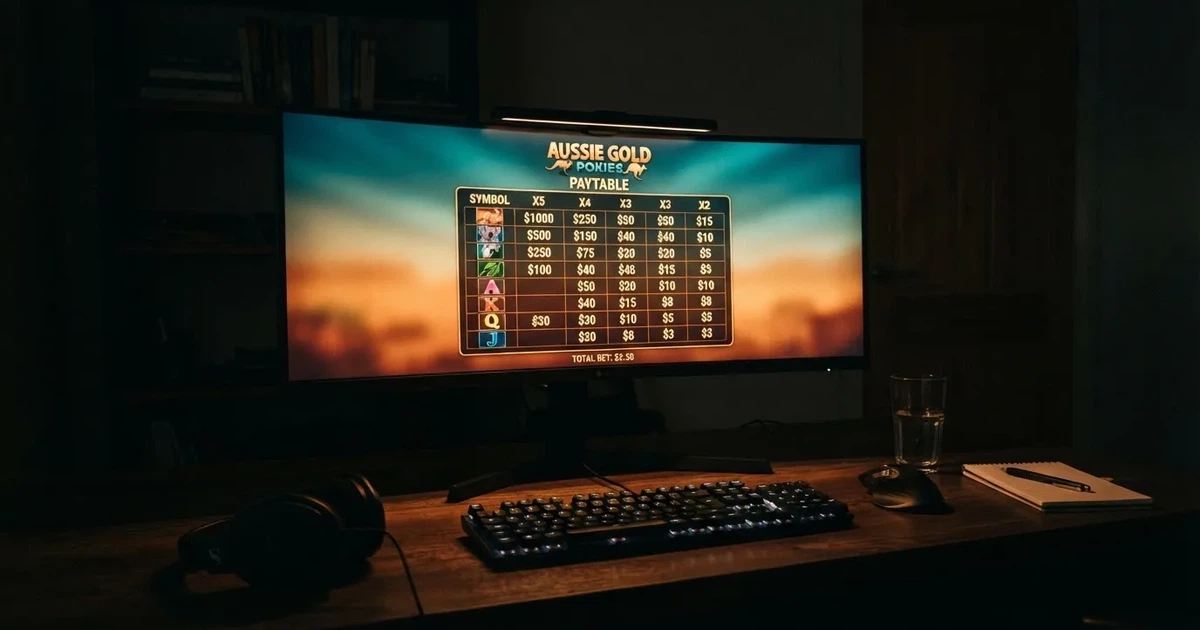
The headline point, written out at the top so it doesn’t have to be inferred: every Playson title on a site accessible from Australia is an offer from an offshore operator that the ACMA has acted against, or could. There is no “best” offshore Playson casino for Australians, because the market they describe does not legally exist.
Table of Contents
- What Playson is, and what it isn’t
- Why “best Playson casino” is the wrong question in Australia
- What enforcement looks like in practice
- The regulator’s view of offshore brands that market Playson games
- Where the same games actually live under Australian law
- Responsible gambling, and what an offshore site does not give
- Why offshore sites keep marketing Playson games to Australian visitors
- How offshore sites compare to each other in a market where none of them is legal
- A note on the numbers in this page
- What the brands on the ACMA register look like up close
- Frequently asked questions
What Playson is, and what it isn’t
Playson Limited is a real company, and a real slot studio. It is registered in Malta at 12 Tigne Place, Office M4, Tigne Street, Sliema, and it holds active remote licences with the UK Gambling Commission — a software licence under account 041337-R-321523-016 that has run continuously since 1 July 2015, and a remote casino licence under the same account from 14 April 2016. Those licences authorise Playson to supply its software and games to operators licensed in the UK. They do not authorise Playson to supply games directly to Australian players; no foreign licence does, because the prohibition sits on the operator offering the service to an Australian customer, not on the studio that wrote the code. The distinction matters because it explains why an offshore casino can advertise a Playson title at an Australian reader without the studio itself being in breach of Australian law, while the casino doing the advertising is.
Playson’s catalogue is the standard slot-studio mix — video slots, a small live-dealer footprint, plus a handful of promotional mechanics. The games themselves run on the same engines other studios use. Nothing about the catalogue is the differentiator an offshore marketing page claims. The differentiator, when one exists, is that the studio’s branding is recognisable to a player who has seen the games in another jurisdiction, and that recognition is precisely what the offshore sites are selling. They are not selling a regulated Playson experience, because there is no such thing for an Australian player online. They are selling a familiar logo over a wallet that has no Australian protection on it.
Why “best Playson casino” is the wrong question in Australia
A list of the “best” offshore casinos assumes that some are better than others in a way a reader can choose between. In the Australian context that assumption breaks at the first step, because every site on the list operates under the same statutory prohibition. The Interactive Gambling Act 2001, as tightened by the Interactive Gambling Amendment Act 2017, makes it an offence to provide an online casino game, an online pokie, or in-play betting to a person physically in Australia. No Australian state or territory issues the licences the offshore sites display at the foot of their home pages — Curaçao, Malta, the Isle of Man, the Comoros. None of those licences extend to taking bets from Australians. So the comparison a reader is being sold — “this casino offers 2,000 games, that one offers 1,800” — is a comparison inside a product the sites cannot legally sell to them. The figures may be true, the games may be on the platform, but the transaction the reader is asked to complete is itself the offence.
The regulatory consequences are not symmetric either. The IGA targets the provider, not the individual player. An Australian depositing at an offshore casino is not personally at risk of prosecution. They are at risk of everything else: an account that can be frozen by the operator without Australian recourse, a balance that disappears when the ACMA directs Australian ISPs to block the site, no complaints body to take a dispute to, no guarantee that a withdrawal will be paid. The law is mild on the player; the offshore operator is not mild at all on the player’s money.
There is also the more recent layer. On 19 August 2026 Parliament passed the Interactive Gambling Amendment (Gambling Reform) Bill 2026, with advertising and inducement measures commencing on 1 January 2027. The bill is law with a start date, not yet in force. Once those clauses commence, the offshore sites will find it harder to put a Playson-branded bonus offer in front of an Australian visitor; until then, the inducements continue. The point worth carrying forward is that the direction of travel is toward more restriction, not less, and the current landscape is a temporary one.
What enforcement looks like in practice
The Australian Communications and Media Authority does three things a reader will run into. It investigates complaints, it issues formal warnings that publish the operator’s name and the brand at issue, and it directs Australian internet service providers to block illegal sites at the DNS level so they stop resolving for Australian customers.
The blocking regime is the lever the public sees most clearly. According to the ACMA’s June 2026 update, 1,751 illegal gambling and affiliate marketing websites have been blocked since the first blocking request was issued in November 2019, and more than 230 unlicensed services have left the Australian market since the regulator began strengthening enforcement in 2017. The most recent tranche reported on 26 June 2026 added 12 more sites to the list: 7Signs, ChromaBet, Donbet, Duospin, Freshbet, Slots Gem, Jacks Club, Lucky Start, Pointsbetz.com, Spinrise, Vinyl Casino and Wildsino. Each name sits in the public register; each one is one the reader can check before deciding whether to chase a Playson title advertised on it.
The cost of that pattern is not abstract. H2 Gambling Capital’s 2025 report estimates Australians lose about A$3.9 billion a year to illegal gambling sites, and the share of gambling going through legal channels has fallen from 74% in 2021 to 64%. The losses have a real counterpart: a regulator blocking sites, players losing balances when the blocks land, and an offshore operator with no obligation to make anybody whole. The trend matters because the offshore market is not a static backdrop; it is a moving enforcement target the reader is being invited to stand on.
A note on payment: the same legal frame that prohibits supply also bans credit cards, credit-related products and digital currency as a payment method for licensed online wagering in Australia, with effect from 11 June 2024. Penalties for operators accepting them run up to A$247,500. A site asking an Australian reader for a credit card or a crypto deposit is operating outside the Australian rules, which is its own data point about whether the rest of its terms can be trusted. The legal deposit routes for licensed Australian wagering are debit card, bank transfer, PayID/Osko and BPAY. None of those routes are what the offshore Playson casinos ask for.
The regulator’s view of offshore brands that market Playson games
Formal warnings are the regulator’s public instrument. They name an operator, a brand, and a date, and they stay on the ACMA’s register. They are not quiet notes to the operator; they are a record a reader can search. What follows is the public picture of brands that have marketed casino-style games, including Playson titles among others, to Australian visitors.
| Brand | ACMA action and date | Operator named by the ACMA | Subject support |
|---|---|---|---|
| RocketPlay | Formal warning, March 2026 (Pulsup Ltd over Rocketplay.com.au); earlier May 2022 (Dama N.V.) | Pulsup Ltd | — |
| Level Up Casino | Formal warning, May 2022 | Dama N.V. | Listed in third-party studio catalogues as carrying Playson |
| Woo Casino | Formal warning, March 2025 | Dama N.V. | — |
| Spirit Casino | Formal warning, May 2025 | Dama N.V. | — |
| National Casino | Formal warning, July 2025 | Consolutetish S.R.L. | Listed in third-party studio catalogues as carrying Playson |
| Bizzo Casino | Formal warning, July 2025 (Consolutetish S.R.L.); earlier 2022 (TechSolutions Group) | Consolutetish S.R.L. | — |
| Ignition Casino | Formal warning, July 2025 | Bamboo Media | — |
| Instant Casino | Formal warning, February 2025 | EOD Code SRL | — |
| Jackbit | Formal warning, April 2026 | Ryker B.V. | — |
| Casino Intense | Formal warning, April 2025 | Sterplay Holding Ltd | Listed in third-party studio catalogues as carrying Playson |
| Sky Crown | Formal warning (Hollycorn N.V., Sky Crown and Blue Leo) | Hollycorn N.V. | — |
Two facts sit under that table. First, it is not the complete picture; it is the set the ACMA’s published register supports. There are other Playson-carrying offshore brands the regulator has not yet moved against, and there will be more once the 2027 advertising reforms commence. Second, the date of a warning is not the date the offence started. The ACMA acts on a complaint, an investigation or a referral, and the warning is the public step. A reader who wants to know whether a brand has been warned can search the ACMA register directly; a reader who does not check is trusting the marketing.
Where the same games actually live under Australian law
A reader who wants Playson-style video slots under Australian regulation has one legal route: a licensed land-based venue, regulated by the relevant state or territory authority. The games in those venues are not branded Playson. They are pokies from local manufacturers — Aristocrat Leisure is the dominant Australian maker — running on machines that are independently tested, that publish a return-to-player figure, and that sit behind a venue’s responsible-gambling controls. The experience is different in obvious ways: you drive to the venue, you use a player card, you cannot deposit from a credit card into the machine, and the venue is subject to the state body that issued its licence.
This is worth saying plainly because the offshore marketing works by erasing the distinction. A Playson-branded video slot in an offshore browser window is not the same product as an Aristocrat Lightning Link in a regulated club; the maths is in a similar shape, but the legal wrapper is entirely different. The onshore machine offers consumer recourse, harm-minimisation features that are required by the venue’s licence, and a complaints path. The offshore browser tab offers none of those.
Aristocrat Leisure Limited is itself a useful reference point. It is an Australian gambling-machine manufacturer, headquartered in North Ryde in Sydney, with offices in South Africa, Russia and the United States; it develops electronic gambling machines, casino management systems, online real-money gambling technology, iLottery products and social casino games. The company was founded in 1953, listed on the Australian Securities Exchange in 1996 under the ticker ALL, and reported 2025 revenue of A$6.30 billion with 7,400 employees. It is described as the largest gambling-machine manufacturer in Australia and the second-largest slot-machine manufacturer worldwide. Its regulated online real-money-gambling arm, Aristocrat Interactive, was formed in April 2024 by combining its Anaxi unit with the NeoGames group — a US$1 billion acquisition announced in 2023. Aristocrat’s earlier attempts at industry consolidation include a US$3.7 billion bid for Playtech that was rejected by shareholders in 2021. The numbers matter here only in one respect: this is what licensed Australian gaming looks like at scale. It does not run through offshore casino brands. It runs through state-licensed venues and through licensed wagering operators, the latter supervised by the Northern Territory Racing and Wagering Commission, which regulates 52 of Australia’s online bookmakers including Sportsbet, Bet365 and Ladbrokes — a commission with no full-time staff that meets once a month in Darwin. The contrast in scale and in oversight between that licensed segment and the offshore Playson market is the comparison the page is built around.
A second licensed path exists for someone who wants wagering without casino-style play: a licensed Australian bookmaker, regulated under the wagering provisions of the IGA and subject to the credit-card and crypto payment ban from 11 June 2024. Sportsbet, Bet365, Ladbrokes and the rest of the NTRWC’s 52-strong roster do not carry Playson slots, because wagering licences do not extend to casino games. The point of mentioning them is to give the reader the right alternative when an offshore site tries to sell a casino game as a betting product.
Responsible gambling, and what an offshore site does not give
A page about casino products in Australia that did not address harm would be incomplete; a page that promised harm-minimisation on an offshore site would be misleading. Three things a reader needs to know up front.
The first is that the offshore casino is not connected to BetStop, the National Self-Exclusion Register. BetStop went live in August 2023 and binds every Australian-licensed online and phone wagering service; an Australian player who registers with BetStop is closed out of every licensed bookmaker in the country. The same exclusion does nothing at an offshore casino, because that casino has not agreed to honour it, has no Australian obligation to honour it, and may not even know the player has registered. A reader relying on self-exclusion to manage a gambling problem cannot rely on it across an offshore casino.
The second is the help line. Gambling Help Online, on 1800 858 858, is free, 24/7, with chat. It is funded for Australian residents regardless of where they play; an offshore casino does not displace it. If a reader has any sense that their play is drifting past what they intended, that is the first call, before any other step.
The third is the legal frame for winnings. Gambling winnings of a recreational player are not assessable income under section 6-5 of the ITAA 1997, and losses are not deductible, unless the person is carrying on a business of gambling. The tax point matters because it is the kind of detail an offshore site will not volunteer; the ATO is the source for it. None of this changes the underlying legal issue: the supply is prohibited whether the winnings are taxable or not.
Why offshore sites keep marketing Playson games to Australian visitors
There is a straight economic answer, and it is the only one that does justice to the persistence of the marketing. The Australian offshore market is large — A$3.9 billion a year in estimated losses — and the customer-acquisition cost is met by a banner ad on an affiliate site, a bonus offer that arrives in the inbox, or a domain that resolves to a Playson-branded lobby the first time it loads. The cost to the operator of finding an Australian player is, in marketing terms, small. The ACMA’s blocking programme raises the cost on the operator side by cutting off access at the ISP level, which is why 230 services have left the market since 2017. The marketing that remains is what has not yet been blocked, or what is using a new domain that has not yet been referred.
The marketing language follows a familiar pattern. The bonus offer is heavy — the kind of headline number that would be conspicuous on a regulated market because regulators cap inducements there. The turnover multiple is buried in the terms. The maximum withdrawal from a “free” bonus is capped well below the headline. The deposit method is credit card or crypto, neither of which is legal for an Australian-licensed operator. The page this reader is on does not transcribe those terms, because the only sources for them are affiliate marketing pages whose figures are an inducement, not a specification; the audit trail for a bonus on an offshore site is the marketing itself. What the page does do is name the shape of the offer so the reader can recognise it.
That is also why the offshore brand list keeps growing. The ACMA’s June 2026 tranche added 12 names. The April 2026 warning to Ryker B.V. covered Jackbit and CasinOK. The March 2026 warning to Pulsup Ltd covered Rocketplay.com.au. Each name is a brand a reader will meet if they search Playson today; each one is one the ACMA has already moved against. The marketing is not a sign that the offshore market is healthy. It is a sign of the regulator catching up.
How offshore sites compare to each other in a market where none of them is legal
A reader who has read the page this far and still wants to understand the offshore landscape will find the same pattern in every brand. The bonus headline is large and the conditions are heavy. The withdrawal time is “instant” on the marketing page and “up to five business days” in the fine print. The licence at the foot of the page is Curaçao or Anjouan, neither of which is an Australian licence and neither of which gives the player Australian recourse. The game library is broad because the platform is shared with dozens of other brands — RocketPlay and Level Up and Woo Casino all run on the same Dama N.V. parent, which is why the ACMA’s May 2022 warning covered six of its brands at once, and why the subsequent March 2025 and May 2025 warnings added two more.
That shared parentage is the practical point. The differences between the brands on the offshore list are largely cosmetic — a colour scheme, a homepage layout, a bonus ladder — because the underlying operator, the licence, the payment rails and the responsible-gambling posture are the same. Picking the “best” offshore brand for Playson play is therefore a comparison of cosmetic differences between brands that all share the same exposure to the same ACMA action.
The two ways the offshore market does vary are in the ACMA timeline and in the underlying payment stack. On the ACMA side, RocketPlay carries two warnings — May 2022 and March 2026 — which is one more public step than Woo Casino (March 2025), Spirit Casino (May 2025), Casino Intense (April 2025) or Jackbit (April 2026) carry individually. On the payment side, the offshore sites that ask for crypto are running on rails that are illegal for an Australian-licensed operator to take; the offshore sites that ask for a credit card are running on rails that have been banned for Australian-licensed operators since 11 June 2024. Both signals are independently informative; together they describe an operator that is not subject to Australian rules in any part of its offering.
A note on the numbers in this page
The figures carried here come from three places: the ACMA’s published register and press releases, H2 Gambling Capital’s 2025 industry report as reported by industry trade press, and the licensed bookmaker roster as published by the Northern Territory Racing and Wagering Commission. The Playson licence figures come from the UK Gambling Commission’s public register, which is the public record. Where the figure is from a specific event — a warning issued in a given month, a statute taking effect on a specific date, an acquisition completed in a named year — that year is kept as written. Where the page refers to the current calendar year, the placeholder 2026 is used; the publication date and the regulator snapshot are written as 8 November 2026.
The blocking rate is worth pulling out as the page’s single piece of derived arithmetic. The ACMA’s running total reached 1,751 sites blocked in June 2026, measured against the first blocking request issued in November 2019. That is roughly 260 sites a year blocked over the life of the regime, with the recent rate running ahead of the early years as the regulator’s capacity has grown. The right way to read that figure is not “260 sites a year will be blocked forever” — it is “the ACMA is currently adding sites at a steady cadence, and any offshore casino an Australian reader is looking at today is one blocking request away from disappearing”. The arithmetic belongs to the reader, and the conclusion is qualitative: the offshore market is shrinking under enforcement, not expanding.
What the brands on the ACMA register look like up close
Each of the eleven brands the ACMA has named is the same shape with different paint. The detailed walk-throughs that follow are not endorsements, and the verdicts at the end of each are not recommendations. They are the editor’s reading of what the ACMA’s action and the brand’s known footprint add up to.
RocketPlay
The ACMA’s most recent action against RocketPlay was a formal warning issued in March 2026 to Pulsup Ltd over Rocketplay.com.au; an earlier warning in May 2022 covered Dama N.V. brands including Rocketplay alongside five others. Two formal warnings across four years, against the same consumer-facing brand, is a public trail an Australian reader can find without much effort. The ACMA does not name a Playson-specific count in its action; RocketPlay is a multi-studio brand carrying dozens of providers.
Evaluating RocketPlay for a reader seeking Playson access in Australia: it is a brand the regulator has acted against twice. This repetition is significant because the regulator rarely returns to a brand unless the non-compliant conduct persists.
Level Up Casino
Level Up Casino was named in the ACMA’s May 2022 warning to Dama N.V., one of six brands covered in that single action. The studio catalogues a reader may find online list Level Up as carrying Playson among other providers, which is why it appears in this set at all. The brand is otherwise a standard multi-studio offshore platform running on the parent’s licence.
Regarding Level Up’s suitability for Playson slots in Australia: the brand belongs to a cluster sharing a single parent, Dama N.V., meaning the 2022 omnibus action covers all six brands. The decisive factor is this shared parentage, ensuring ongoing regulatory scrutiny regardless of brand-specific updates.
Woo Casino
Woo Casino was named in the ACMA’s March 2025 warning to Dama N.V., one of two follow-up actions against the same operator after the 2022 omnibus warning. The fact that the regulator came back to Dama N.V. four years later tells a reader two things at once: the first warning did not produce the conduct change the ACMA’s process expects, and the operator has continued to market prohibited services to Australian visitors.
For anyone considering Woo Casino as a Playson destination: the second warning issued against the parent company is more informative than the brand itself. This signals that the initial intervention failed to achieve the necessary conduct change.
Spirit Casino
Spirit Casino was named in the ACMA’s May 2025 warning to Dama N.V., alongside Woo Casino two months earlier. The pattern is the same — a parent that received a 2022 omnibus warning and continued to operate in the Australian market, prompting two further actions in 2025.
Assessing Spirit Casino against the Australian prohibition of Playson slots: the 2025 follow-up warnings against Dama N.V. remain the central issue. Its standing is identical to other brands under the same parent.
National Casino
National Casino was named in the ACMA’s July 2025 warning to Consolutetish S.R.L., alongside Bizzo Casino in the same action. Studio catalogues list National Casino as carrying Playson among other providers, which is why it is in the set. Bizzo Casino had previously been warned in 2022 under TechSolutions Group, so the July 2025 action is a return engagement with the same brand under a new operator — a reminder that the offshore market changes corporate shells faster than the regulator changes its mind.
Regarding National Casino’s suitability for Playson slots in Australia: the brand persists due to corporate-shell rotation, where new parents acquire warned brands. The core issue is that the underlying non-compliant behaviour remains constant despite ownership changes.
Bizzo Casino
Bizzo Casino was named in the ACMA’s July 2025 warning to Consolutetish S.R.L. and previously in a 2022 warning to TechSolutions (CY) Group Limited and TechSolutions Group N.V. Two operators, the same brand, both warned. The 2022 warning is one of the more useful data points on the page because it tells the reader that the regulator acted once, the operator changed its corporate structure, and the regulator had to act again.
Evaluating Bizzo Casino for a reader seeking Playson access in Australia: the regulatory history serves as the defining detail. The cycle of warning, restructuring, and subsequent warning defines the brand’s lifespan in this market.
Ignition Casino
Ignition Casino was named in the ACMA’s July 2025 warning to Bamboo Media. The brand is one of the older offshore casino brands in the market; its appearance on the ACMA’s register at this date reflects the regulator’s continuing work through its queue rather than a sudden expansion of Australian-targeted marketing.
Regarding Ignition Casino’s suitability for Playson slots in Australia: a 2025 formal warning marks this long-standing offshore brand. The date is critical, as it reflects the regulator’s most recent assessment of the operator’s activities.
Instant Casino
Instant Casino was named in the ACMA’s February 2025 warning to EOD Code SRL. EOD Code SRL is a smaller corporate entity than the better-known Dama N.V. cluster, and the warning reflects the regulator’s reach into the long tail of offshore operators rather than the largest names.
Assessing Instant Casino against the Australian prohibition of Playson slots: this action demonstrates the regulator’s reach into smaller operators beyond the major names. The key takeaway is that ACMA’s enforcement scope exceeds typical public expectations.
Jackbit
Jackbit was named in the ACMA’s April 2026 warning to Ryker B.V., alongside CasinOK. Ryker B.V. is one of the more recent corporate vehicles to be warned, and Jackbit’s crypto-first marketing posture puts it squarely outside the Australian payment rules. The April 2026 date is recent enough that any reader searching for Jackbit today will find the warning on the ACMA’s register without having to dig.
The verdict on Jackbit for a reader who wants Playson play under Australian law: the April 2026 warning is recent, and the brand’s crypto posture is a second independent signal that it is not running within the Australian rules. This is important because recent enforcement combined with an illegal payment stack confirms the brand’s total non-compliance.
Casino Intense
Casino Intense was named in the ACMA’s April 2025 warning to Sterplay Holding Ltd. Studio catalogues list Casino Intense as carrying Playson among other providers, which is why it is in the set. The brand is one of the smaller names on the ACMA’s list, but the formal warning gives it the same standing as any other.
The verdict on Casino Intense for a reader who wants Playson play under Australian law: the ACMA’s reach into smaller offshore brands is the closing point. The reader’s question is not whether Casino Intense is unique — it is whether the regulator has moved against it, and the answer is yes.
Sky Crown
Sky Crown was named in the ACMA’s formal warning to Hollycorn N.V., covering Sky Crown and Blue Leo, published in September 2022. The 2022 date makes Sky Crown one of the older entries in the current picture, but the warning remains on the register and the operator has not been removed from it.
The verdict on Sky Crown for a reader who wants Playson play under Australian law: the warning is the closing fact. The brand has been on the regulator’s published list since 2022, and the absence of an update is not the same as the absence of a problem.
Frequently asked questions
Is Playson legally available to players in Australia?
No. Playson is a slot studio with UK Gambling Commission licences that authorise it to supply software to UK-licensed operators, not to Australian customers directly. The Interactive Gambling Act 2001 prohibits the supply of online casino games and online pokies to anyone in Australia, and the prohibition sits on the offshore operator offering the service. A Playson-branded title on an offshore casino accessible from Australia is the operator’s breach, not the studio’s.
What kinds of games does Playson make?
Playson makes video slots and a small number of live-dealer and promotional-mechanic titles, in the same shape as other slot studios. The studio’s branding is what the offshore sites sell, not a regulatory arrangement that gives Australian players any protection they would not otherwise have.
Are Playson games offered at land-based venues in Australia?
Not under the Playson brand. Land-based Australian venues run pokies from Australian and international manufacturers — Aristocrat is the dominant Australian maker — under state and territory licensing, with independently tested return-to-player figures and required harm-minimisation features. The product is similar in shape to a Playson video slot but regulated in an entirely different way.
How can Australians check whether a Playson title is fair before ever considering play?
The Australian consumer’s protection is the venue or platform the game sits on, not the game itself. Licensed Australian venues are regulated by state and territory authorities; licensed Australian wagering operators are regulated by the Northern Territory Racing and Wagering Commission. An offshore casino is not regulated by any Australian authority, and the consumer has no Australian recourse if a withdrawal is refused. The fair-play question is the wrong one in that frame; the right question is whether the operator is licensed at all.
Why do offshore sites keep advertising Playson games to Australian visitors?
Because the Australian offshore market is large — H2 Gambling Capital’s 2025 estimate is A$3.9 billion a year in losses to illegal sites — and customer acquisition is cheap relative to the deposit the operator hopes to collect. The ACMA’s blocking regime has removed 1,751 sites since November 2019 and more than 230 services have left the market since 2017, but the marketing that remains reaches the readers the regulator has not yet caught. The 2027 commencement of the Interactive Gambling Amendment (Gambling Reform) Bill 2026 advertising measures will tighten that further.
What should an Australian do if they see a Playson game promoted by an unlicensed site?
The first move is to check the ACMA’s register of formal warnings and blocked sites, both of which are public. The second is to recognise that any deposit to such a site is at risk of being trapped when the site is blocked, that no Australian complaints body will help, and that self-exclusion via BetStop does not extend to the offshore casino. Anyone who has concerns about their own gambling can call Gambling Help Online on 1800 858 858, free and 24/7, before any other step.